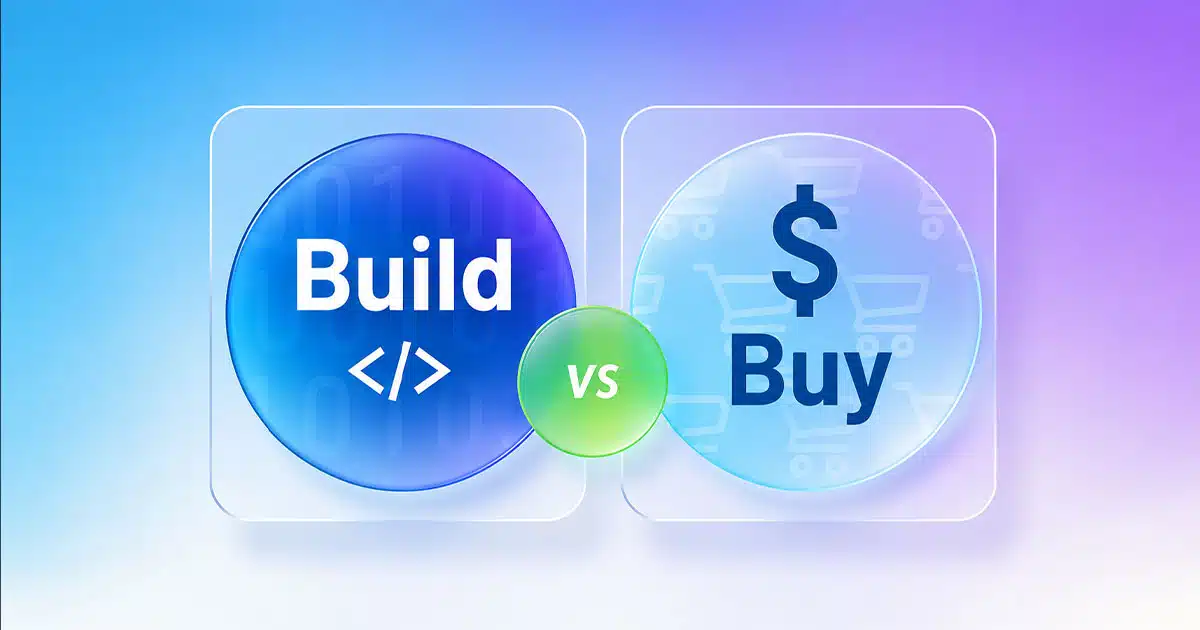
Many organizations face a critical build vs buy software decision as a company grows and technology demands increase. Choosing between building software in-house and buying software from the market directly affects cost, control, and long-term success.
A custom software or custom solution delivers full control, tailored functionality, and alignment with business rules, while off-the-shelf software and other existing solutions offer faster time to market and lower upfront investment. Every software solution influences resource allocation, development costs, vendor lock-in, and future updates. Business users often depend on existing tools connected across multiple data sources, yet unique needs still require custom functions.
This guide explores build vs buy and hybrid approach paths to help each organization confidently answer which option creates the best solution, competitive edge, and total cost balance for customers and stakeholders.
What Is Building Software?
Building software means creating a software solution from the ground up to match specific business needs and organizational goals. A software build approach allows a company to design custom functions, core features, and workflows that align with internal business rules. Many organizations choose to build custom software when existing solutions or shelf software fail to support unique requirements, complex processes, or multiple data sources. Software development teams often work in-house or with dedicated partners to ensure full control over functionality, technology choices, and system architecture.
Building software requires careful planning, resource allocation, and ongoing support. Development costs, maintenance, and future updates must align with available resources and long-term objectives. While the process can feel time-consuming, building software in-house often delivers complete control, reduces vendor lock-in, and creates a competitive edge as the company grows.
What Is Buying Software?
Buying software means selecting an existing solution from the market to meet an immediate business need without starting a full software build process. Many organizations choose to buy software when shelf software or off-the-shelf software already delivers core features such as payment processing, reporting, or customer management. A buy decision often reduces time to market, limits upfront development costs, and allows business users to start using new software quickly. Vendors typically provide licensing fees, ongoing support, and regular updates as part of the package.
Buying software also introduces tradeoffs. Existing tools may lack specific functionality or flexibility needed for unique needs and evolving organizational needs. Vendor lock-in, limited control, and rising long-term costs can appear as the company grows. A buy analysis helps teams weigh total cost, maintenance, and future updates against available resources and strategic goals.
Build Vs Buy Software: Side-By-Side Comparison
Build vs buy software decisions become clearer when key factors appear side by side. A structured comparison highlights cost, control, flexibility, and long-term impact, helping each organization evaluate which software solution aligns best with business needs, resources, and growth plans.
| Comparison Factor | Build Software | Buy Software |
|---|---|---|
| Development Approach | Building custom software in-house or with partners | Buying off-the-shelf software from a vendor |
| Time To Market | Slower and more time-consuming | Faster deployment for immediate need |
| Upfront Cost | Higher development costs | Lower initial cost with licensing fees |
| Customization | Full control with custom functions | Limited to available features |
| Control And Ownership | Own software with complete control | Vendor retains primary control |
| Scalability | Designed for future updates and growth | Dependent on the vendor roadmap |
| Integration | Built around existing tools and data sources | May face limits with existing systems |
| Long Term Cost | Higher early cost but optimized total cost | Long-term costs increase over time |
| Vendor Lock In | No vendor lock-in | High dependency on the vendor |
| Competitive Advantage | Strong competitive edge through unique needs | Shared features across many organizations |
Key Differences Between Build And Buy Software
Build vs buy software decisions shape how an organization controls technology, manages cost, and supports long-term growth. Each approach affects ownership, flexibility, resources, and risk in different ways, making a clear comparison essential before choosing the best solution.
Ownership And Control
Building software gives a company full control over its software solution, from architecture to custom functions. Own software allows teams to define business rules, security policies, and workflows without vendor restrictions. Many organizations choose to build custom software to avoid vendor lock-in and maintain authority over future updates. Full control also supports rapid changes as organizational needs evolve.
Buying software shifts control to the vendor. Off-the-shelf software follows a predefined roadmap, limiting influence over new features or changes. While this reduces internal responsibility, it can restrict flexibility and long-term strategic control as the company grows.
Cost Structure
A software build requires higher upfront development costs and careful resource allocation. Expenses include software development, testing, deployment, and ongoing support. Over time, this approach often lowers total cost by avoiding licensing fees and reducing dependency on external vendors. Many businesses view custom software as a long-term investment.
Buying software spreads costs through subscriptions and licensing fees. Initial spending stays low, but long-term costs can rise as users increase or additional functionality becomes necessary. A detailed buy analysis helps compare opportunity costs against future expenses.
Customization And Functionality
Building software enables complete customization. Teams design specific functionality, custom functions, and core features aligned with unique needs and business processes. A custom solution supports complex workflows, multiple data sources, and industry-specific requirements that existing solutions rarely match.
Buying software limits customization to vendor options. Shelf software works well for standard use cases but struggles with specialized demands. Many organizations accept feature gaps or use workarounds, which can affect productivity and user satisfaction over time.
Time To Market
Buying software offers faster time to market and immediate access to proven features. New software can support customers and business users quickly, which suits urgent needs or fast-moving markets. Vendors handle deployment and maintenance, reducing internal effort.
Building software requires more time and planning. Software development cycles extend launch timelines, especially for complex systems. While time-consuming, this approach delivers a tailored software solution that supports long-term goals rather than short-term speed.
Maintenance And Support
Custom software places maintenance responsibility on the organization. In-house teams manage updates, security, and performance based on available resources. This approach ensures alignment with internal priorities and technology standards while supporting future updates.
Buy software includes vendor-managed maintenance and ongoing support. This reduces operational burden but limits control. Update schedules and support quality depend on the vendor, which can affect reliability and responsiveness as organizational needs change.
Scalability And Growth
Building custom software supports SaaS scalability tailored to company growth. Architecture adapts to new features, users, and data without external constraints. Many organizations gain a competitive edge by evolving software alongside business expansion.
Buy software scales within vendor limits. Pricing, performance, and feature access depend on predefined plans. As the company grows, constraints may appear, forcing a reassessment of build vs buy decisions and long-term strategy.
Risk And Strategic Fit
Build vs buy choices carry different risks. Software build introduces development risk, timeline pressure, and internal dependency. Strong planning and clear goals reduce uncertainty and align technology with strategy.
Buying software reduces initial risk but creates dependency on a vendor. Vendor lock in, roadmap changes, and pricing shifts can impact long-term control. Strategic fit improves when leaders balance immediate needs with future flexibility and control.
Pros & Cons Of Build Software
Building software decisions affect ownership, development cost, and long-term flexibility. Many organizations choose to build custom software to support unique needs and gain full control, while also accepting higher development effort and responsibility.
Pros Of Build Software
- Full control – Own software ensures authority over functionality, data, security, and future updates without vendor restrictions or external dependency.
- Custom fit – A custom solution aligns closely with business rules, workflows, and specific functionality that existing solutions cannot fully support.
- No vendor lock in – Software build removes reliance on third-party vendors, pricing changes, and licensing fees that increase long-term costs.
- Scalable design – Custom architecture supports growth, new features, and changing organizational needs as the company evolves.
- Competitive advantage – Unique software capabilities create a competitive edge that off-the-shelf software cannot easily replicate.
Cons Of Build Software
- Higher upfront cost – Development costs, infrastructure, and resource allocation demand significant early investment before measurable returns appear.
- Longer delivery time – Software development cycles extend time to market compared to buying software with ready core features.
- Maintenance burden – Ongoing support, updates, and security management remain the responsibility of in-house or contracted teams.
- Resource dependency – Building software requires skilled teams, available resources, and continuous focus from other stakeholders.
- Delivery risk – Timeline delays, scope changes, and opportunity costs can affect business priorities and overall return on investment.
Pros & Cons Of Buy Software
Buy software choices focus on speed, availability, and reduced internal effort. As previously mentioned, a benefit of purchasing software from a vendor instead of building it is automatic updates and maintenance
Pros Of Buy Software
- Quick time to market – Buying software delivers an immediate software solution with ready core features, ideal for urgent business requirements and fast deployment.
- Lower initial investment – Licensing fees replace large development costs, helping organizations manage total cost and preserve existing resources.
- Vendor managed support – Vendors handle maintenance, updates, security, and ongoing support, reducing pressure on in-house teams.
- Proven market fit – Off-the-shelf software reflects market-tested functionality used successfully by many organizations.
- Simple setup – Existing tools integrate quickly with standard workflows and support business users with minimal training.
Cons Of Buy Software
- Limited flexibility – Buying software restricts custom functions, business rules, and specific functionality needed for unique needs.
- Vendor lock in risk – Long-term dependence on a vendor affects control, pricing stability, and future updates.
- Increasing long-term costs – Licensing fees, add-ons, and user-based pricing raise total costs as the company grows.
- Integration limits – Existing solutions may struggle with multiple data sources or specialized internal systems.
- Reduced ownership – Organizations lack full control over software, features, and strategic technology decisions.
When Growing Teams Should Choose To Build Software
Growing teams often reach a stage where existing solutions no longer support scale, complexity, or strategic goals. Building software decisions make sense when control, differentiation, and long-term efficiency matter more than speed, especially as organizational needs, data volume, and user demands expand.
Unique Business Requirements
Custom software fits teams with unique needs that shelf software cannot address. Business rules, workflows, and approval logic often differ across organizations, especially in regulated or process-heavy environments. Building custom software allows full alignment with internal operations rather than forcing teams to adapt to generic tools.
As a company grows, specific functionality becomes essential for efficiency and accuracy. A custom solution supports tailored core features, custom functions, and role-based access that reflect how business users actually work. This level of fit often improves adoption and long-term productivity.
Need For Full Control
Build software suites that teams require complete control over their software solution. Own software gives authority over data ownership, SaaS security standards, and system architecture without vendor limitations. This control becomes critical as customer data, payment processing, and compliance needs increase.
Full control also supports confident decision-making around future updates and technology choices. Teams avoid vendor lock-in and product roadmap dependency, which reduces risk as the company evolves. Control over software often aligns closely with long-term strategic planning.
Complex Integrations
Growing organizations rely on multiple data sources, internal platforms, and third-party tools. Existing solutions often struggle to integrate smoothly across complex environments. Building software enables seamless integration with existing tools, databases, and internal systems.
Custom software development allows teams to design APIs, workflows, and AI automation that match operational reality. This approach reduces manual work and data inconsistency. Over time, integration-driven efficiency delivers measurable value across departments and stakeholders.
Long-Term Cost Efficiency
Build vs buy evaluations often shift when long-term costs outweigh short-term savings. While development costs appear higher upfront, building custom software removes recurring licensing fees and usage-based pricing. Over time, total cost becomes more predictable and controllable.
As user counts and feature needs increase, buying software often becomes expensive. Custom software supports scale without proportional cost increases. For many organizations, long-term financial efficiency justifies the initial software build investment.
Competitive Differentiation
Custom software supports a competitive edge, whereas off-the-shelf software has limitations. Unique workflows, automation, and customer experiences help a company stand out in the market. Building software enables teams to create functionality that competitors cannot easily replicate.
Competitive advantage often comes from how technology supports customers and internal teams. A tailored software solution aligns product strategy with business goals, strengthening market position as the company grows.
Strong Internal Resources
Building software works best when existing resources support in-house or partnered development. Skilled teams, clear ownership, and defined priorities reduce delivery risk. Strong internal alignment ensures software development stays focused on business outcomes.
Resource readiness also supports ongoing support and maintenance. Teams that invest in capability building often gain flexibility, speed, and confidence over time. For growing organizations with available resources, building custom software becomes a sustainable long-term strategy.
When Growing Teams Should Choose To Buy Software
Growing teams often prioritize speed, simplicity, and fast execution over deep customization. Buy software decisions work best when immediate value, predictive analysis, and minimal internal effort matter more than full control, especially during early growth or rapid market expansion. It is very important for feature prioritization.
Immediate Operational Needs
Buy software that suits teams with an immediate need that cannot wait for a long development cycle. New software from the market delivers ready functionality that supports daily operations without delay. This approach helps teams respond quickly to customers, internal demands, or compliance deadlines.
Fast access to a reliable software solution prevents workflow disruption. For growing organizations, meeting short-term operational goals often outweighs long-term optimization, making buying software the best bet during critical growth phases.
Limited Available Resources
Teams with limited available resources often benefit from buying software rather than managing in-house development. Software development requires skilled talent, management focus, and technical infrastructure, which may stretch a growing organization too thin.
Buying software shifts responsibility to the vendor and reduces internal dependency. This allows teams to focus on core business priorities while still gaining access to essential technology without heavy investment.
Faster Time To Market
Buy software supports a rapid time to market in competitive environments. Shelf software allows teams to launch features, services, or internal systems quickly without waiting for custom builds.
Speed often plays a decisive role when market conditions change quickly. Organizations that value quick execution over a tailored design system often rely on buying software to maintain momentum and relevance.
Clear Buy Analysis Advantage
Buy analysis often favors purchasing when requirements match common market offerings. Many existing tools already address standard processes such as analytics, communication, or operations management.
When software needs remain stable and well-defined, buying software reduces opportunity cost. Teams avoid long development timelines and redirect focus toward growth, sales, or customer engagement.
Vendor Expertise And Reliability
Vendors invest heavily in technology, security, and feature development. Buying software gives teams access to proven expertise and mature platforms shaped by broad market feedback.
Vendor-backed solutions also reduce technical risk. Established providers offer reliability, support, and compliance standards that growing organizations may struggle to manage independently.
Market-Tested Features
Buy software that delivers features refined through real market usage. Many organizations benefit from tools validated across industries and customer segments.
Market-tested functionality reduces uncertainty and adoption risk. Business users often adapt faster to familiar tools, which supports productivity during periods of rapid growth.
Short To Mid Term Strategy
Buy software that fits teams with short-term to mid-term objectives or an uncertain future direction. Flexibility remains higher when organizations avoid long-term commitments to a single custom build.
This approach also supports a hybrid approach later. Teams can start with buying software and shift strategy as organizational needs, resources, and clarity increase over time.
How GainHQ Supports Product Teams Evaluating Build Vs Buy Software
GainHQ helps product teams make confident build vs buy decisions through structured insight, evidence, and alignment. Teams evaluate software choices by connecting business needs with real user feedback, usage data, and stakeholder input. GainHQ centralizes insights from customers, internal teams, and research, which clarifies whether existing solutions meet specific needs or whether a software build offers stronger value.
Product teams compare benefits, cost, control, and risk without guesswork. GainHQ highlights gaps in shelf software, surfaces demand for additional functionality, and validates assumptions before major investment. This approach reduces opportunity cost, improves resource allocation, and supports buy analysis with real context. As organizations grow, GainHQ enables teams to choose the best solution with clarity, speed, and long-term confidence.
FAQs
Is Build Vs Buy Software A One-Time Decision?
No. Build vs buy software often changes as business needs, available resources, and market conditions evolve. Many organizations revisit the decision as scale, complexity, or strategic priorities shift over time.
Can An Organization Combine Build And Buy Software Approaches?
Yes. A hybrid approach allows teams to buy shelf software for standard needs while building custom software for core functionality that drives competitive advantage and supports unique needs.
Does Buying Software Always Reduce Development Costs?
No. Buying software lowers upfront development costs, but licensing fees, add-ons, and user-based pricing can increase total cost over the long term as the company grows.
Is Building Software Only Suitable For Large Enterprises?
No. Growing teams with clear business rules, specific functionality, and available resources can benefit from building custom software, even without enterprise-scale budgets.
How Does Vendor Lock-In Affect Long-Term Flexibility?
Vendor lock in limits control over updates, pricing, and roadmap decisions. Over time, dependency on a vendor can restrict flexibility and slow response to changing organizational needs.
What Role Does Opportunity Cost Play In Build Vs Buy Decisions?
Opportunity cost reflects time, focus, and resources diverted from core business goals. A strong buy analysis weighs the delayed time to market against long-term control and competitive edge.
Which Option Works Best For Rapidly Changing Business Models?
Custom software often suits rapidly changing models better. Full control, flexible architecture, and custom functions support frequent adjustments without reliance on vendor priorities.