Key Takeaways
- Custom software development involves creating tailored solutions specifically designed for your organization’s unique workflows, rather than adapting to generic off-the-shelf software limitations.
- Modern custom development encompasses web applications, mobile apps, cloud-native platforms, legacy modernization, and emerging technologies like AI and IoT in a cohesive digital strategy.
- Successful projects follow a structured process from discovery and requirements analysis through design, development, testing, deployment, and ongoing support with clear milestones and stakeholder involvement.
- While initial investment may be higher than commercial alternatives, custom solutions deliver measurable ROI through improved operational efficiency, reduced manual tasks, and competitive differentiation.
- Choosing the right software development partner requires evaluating technical expertise, domain knowledge, security practices, and cultural fit for long-term collaboration success.
Introduction
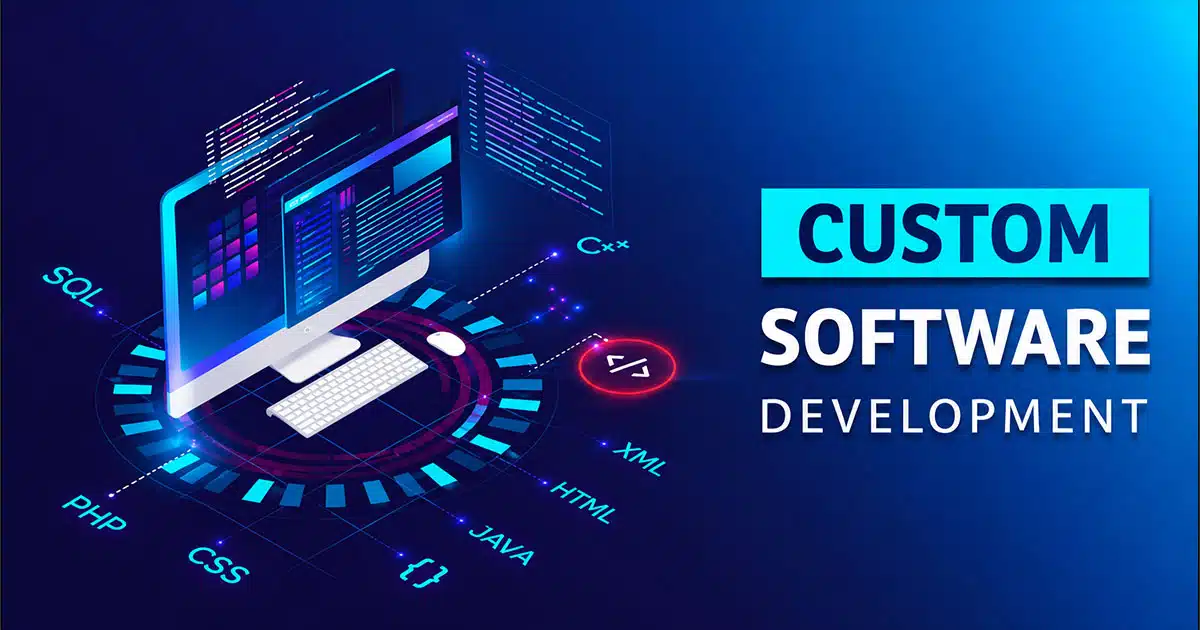
Custom software development is the process of designing, building, deploying, and maintaining software that is specifically tailored to meet the unique needs of a particular organization or group of users.This guide covers the key concepts, benefits, process, and best practices for custom software development, aimed at business leaders and IT decision-makers seeking tailored technology solutions to drive growth and efficiency.
Companies in 2026 increasingly choose custom software development over off-the-shelf solutions to gain competitive advantages and address unique business challenges. Unlike generic software that forces organizations to adapt their processes, custom solutions are built around specific workflows, regulations, and strategic objectives. This tailored approach enables seamless integration with existing systems while providing full control over features, data, and future enhancements.
Modern custom development can address multiple technology needs simultaneously, from web and mobile applications to cloud infrastructure, legacy system modernization, and cutting-edge technologies like AI, IoT, and blockchain. This comprehensive approach ensures all digital initiatives work together as part of a unified strategy rather than creating disconnected technology silos.
What Is Custom Software Development?
Custom software development is the process of designing, building, deploying, and maintaining software tailored specifically to meet the unique needs of an individual organization or group of users.
Custom software development is the systematic process of designing, building, deploying, and maintaining specialized computer programs tailored precisely to an organization’s unique requirements, workflows, and business objectives. Unlike off-the-shelf products like Salesforce or SAP that serve broad market needs, custom software solutions are crafted specifically around your company’s processes, eliminating the need for costly workarounds or process compromises.
This approach ensures the software addresses particular challenges, integrates seamlessly with existing systems, and drives revenue generation by aligning directly with your organization’s dynamics and target audience. Rather than forcing adaptation to generic solutions, custom development creates tools that enhance your competitive advantage through proprietary features and optimized workflows.
The 2025–2026 custom software development market continues experiencing robust growth, with projections indicating hundreds of billions of USD in market value by the early 2030s. This growth reflects increasing recognition that digital transformation requires more than standard software subscriptions – it demands strategic technology investments that support long-term business evolution.
Custom software finds common application in three key areas:
- Internal tools like ERP extensions and workflow automation systems that streamline operations
- Customer-facing applications including portals and eCommerce platforms that enhance user experience
- Industry-specific systems for healthcare, banking, logistics, and manufacturing that meet regulatory requirements and specialized operational needs
The primary advantages include:
- Complete ownership of code and product roadmap
- Elimination of vendor lock-in risks
- Deep integration capabilities with legacy systems
- Perfect alignment with long-term digital strategy
Organizations maintain full control over data security, compliance measures, and feature development priorities without depending on external vendors’ roadmaps or pricing changes.
Types of Custom Software Development Services
A mature custom software development company typically provides a comprehensive portfolio of service types, from greenfield development to modernization and system integration. This broad capability ensures clients can address multiple technology needs through a single partnership, reducing complexity and improving coordination across digital initiatives.
The following service types represent the core offerings that enable organizations to build complete digital ecosystems rather than isolated applications. These services can be combined into multi-phase programs, for example, starting with a cloud migration in 2026 and adding AI-powered features in a second phase later in 2026, ensuring continuous evolution aligned with business growth.
Custom Web Application Development
Custom web application development involves building bespoke web applications such as customer portals, partner extranets, line-of-business systems, and complex B2B platforms using modern technology stacks. Popular front-end frameworks like React and Vue provide responsive user interfaces, while back-end frameworks like Node.js and Java deliver robust server-side functionality and seamless integration capabilities.
These applications prioritize scalability, performance, and security requirements typical for mid-market and enterprise clients, including role-based access control and compliance with regulations like GDPR. For example, a manufacturing company might implement a custom web platform that consolidates sales, support, and billing data into a single interface, reducing manual data entry by 60% while improving data accuracy and decision-making speed.
Integration scenarios commonly include connections with CRM systems, ERP platforms, payment gateways, identity providers for single sign-on (SSO), and analytics tools. This seamless integration creates a unified digital experience for employees and customers, eliminating data silos and reducing the time spent switching between multiple systems throughout daily workflows.
Custom Mobile Application Development
Mobile development represents a core component of custom software strategies, covering native development with Swift and Kotlin as well as cross-platform approaches using Flutter for iOS and Android devices. This flexibility allows organizations to reach users on their preferred devices while maintaining consistent functionality and brand experience across platforms.
Common business applications include:
- Field service apps for technicians that work offline and sync when connected
- Mobile banking applications with biometric security
- Retail shopping apps with personalized recommendations
- Executive dashboards providing real-time KPIs accessible from anywhere
The development process encompasses discovery workshops, UX/UI design optimized for mobile interactions, offline-first capabilities, secure local data storage, API integration with back-end systems, and app store publishing support.
A concrete example involves a logistics company that deployed a custom mobile app for delivery drivers in 2024, reducing paper forms and manual input for on-site deliveries. The app integrated GPS tracking, digital signature capture, and real-time route optimization, resulting in 25% faster delivery completion and significantly improved customer satisfaction through accurate delivery notifications.
Cloud-Native and SaaS Development
Cloud-native development focuses on building applications specifically designed for AWS Cloud infrastructure, utilizing microservices architecture, containerization, and serverless functions to achieve automatic scaling and cost optimization. This approach delivers benefits including automatic scaling during peak loads, pay-as-you-go infrastructure costs, high availability across multiple regions, and simplified global rollouts without managing physical infrastructure.
Typical components include:
- Managed databases for reliable data storage
- Message queues for asynchronous processing
- API gateways for secure external access
- CI/CD pipelines that support faster, more reliable releases
A practical example involves creating a multi-tenant SaaS product during 2023–2026 for multiple clients, incorporating considerations like tenant isolation to ensure data security, billing integration for automated subscription management, and feature flagging to enable gradual rollout of new capabilities. This approach allows rapid scaling to serve hundreds or thousands of customers while maintaining individual customization options.
Legacy System Modernization
Legacy system modernization enables companies to upgrade older systems built on technologies like COBOL, VB6, or outdated .NET and Java versions without disrupting daily business operations. This process involves careful analysis of existing functionality, data dependencies, and business rules to ensure continuity while gaining modern capabilities and improved user experiences.
Common modernization strategies include:
- Re-platforming applications to cloud infrastructure
- Re-architecting monolithic systems into modular microservices
- Refreshing user interfaces while preserving core business logic
- Implementing progressive modernization using strangler patterns that gradually replace old components
A representative scenario involves migrating a 15-year-old on-premise inventory management system to a modern, cloud-based architecture. The modernization resulted in 40% better system performance, 60% reduction in maintenance costs, improved mobile accessibility for warehouse staff, and enhanced integration capabilities with modern supply chain partners.
System Integration and API Development
System integration connects custom solutions with existing enterprise software including ERP systems like SAP and Oracle, CRM platforms like Salesforce, HR systems, payment processors, and marketing automation tools. This connectivity creates unified digital ecosystems where data flows securely and in near real-time, eliminating manual data re-entry and improving operational efficiency.
The integration process utilizes APIs, enterprise service bus (ESB) platforms, integration platform as a service (iPaaS) solutions, and event-driven architectures to create seamless data exchange between systems. Software integration services ensure reliable data synchronization, error handling, and monitoring to maintain business continuity and data integrity across all connected systems.
A concrete integration example involves synchronizing order, inventory, and shipment data across an eCommerce platform, warehouse management system, and logistics providers. This integration eliminated manual data entry between systems, reduced order fulfillment errors by 50%, and provided customers with real-time shipping updates, significantly improving the overall customer experience and operational efficiency.
Benefits of Custom Software Development
Organizations across finance, healthcare, retail, and manufacturing invest in bespoke software solutions instead of relying solely on standard commercial tools because custom development delivers measurable business advantages that directly impact competitiveness and operational performance. The business case for custom software centers on achieving perfect alignment between technology capabilities and business objectives, rather than forcing process adaptations to accommodate generic software limitations.
Key Benefits
- Perfect fit for unique workflows that eliminates costly workarounds
- Long-term cost efficiency through reduced licensing fees and maintenance overhead
- Increased security and compliance through tailored protection measures
- Enhanced scalability that grows with business demands
- Improved user experiences that boost productivity and satisfaction
- Competitive differentiation through proprietary capabilities not available to competitors
A manufacturing company achieved 35% reduction in order processing time after replacing spreadsheet-based workflows with a custom inventory and production scheduling system. The solution automated routine tasks, enforced business rules consistently, and provided real-time visibility into production capacity, enabling better customer service and resource utilization while reducing human errors.
Custom software solutions can evolve continuously with new modules and integrations added over years, supporting digital transformation initiatives rather than requiring periodic wholesale platform replacements. This extensibility ensures technology investments remain valuable long-term, adapting to changing business needs, market conditions, and regulatory requirements without disrupting core operations.
Additional benefits include improved employee satisfaction due to intuitive, purpose-built tools that eliminate frustrating workarounds, and more accurate, timely data available for decision-makers through integrated reporting and analytics capabilities. These improvements compound over time, creating sustainable competitive advantages that become increasingly difficult for competitors to replicate.
Strategic and Competitive Advantages
Custom software development directly supports business strategy by enabling new business models, accelerating innovation cycles, and creating differentiated customer experiences that competitors cannot easily copy. Organizations gain strategic control over their technology roadmap, allowing rapid response to market opportunities and customer demands without depending on vendor release schedules or feature priorities.
Custom analytics dashboards, recommendation engines, dynamic pricing tools, and personalized customer portals can drive measurable revenue growth and customer loyalty. For instance, retailers implementing buy-online-pick-up-in-store flows or manufacturers enabling predictive maintenance through custom IoT dashboards during 2020–2026 gained significant competitive advantages by offering capabilities their competitors lacked.
Owning software and data makes experimentation, A/B testing, and iterative improvement much easier since organizations control the entire development and deployment process. This agility enables rapid testing of new features, business models, or market approaches without external approval or technical limitations imposed by off the shelf software vendors.
The intellectual property created through custom development becomes a business asset that can support new revenue streams, partnership opportunities, or even licensing to other organizations. This ownership provides long-term value beyond immediate operational benefits.
Operational Efficiency and Cost Optimization
Custom solutions automate repetitive tasks, streamline approval workflows, reduce paperwork, and enforce business rules consistently, leading to measurable reductions in processing time and human errors. These improvements compound across large organizations, delivering substantial cost savings and productivity gains that justify the initial development investment.
For example:
- Automating invoice processing can reduce processing time from hours to minutes while improving accuracy and audit trail completeness.
- Digitizing compliance reporting eliminates manual data collection and reduces the risk of regulatory violations through automated validation and submission processes.
- Connecting warehouse scanners to real-time inventory systems provides immediate visibility into stock levels and movement, enabling better purchasing decisions and reduced carrying costs.
While initial custom software investment may exceed subscription tool costs, total cost of ownership over several years often favors custom solutions due to eliminated licensing fees, reduced manual work, fewer system integration costs, and avoidance of multiple overlapping software subscriptions. Organizations also avoid vendor price increases and feature restrictions that commonly affect commercial software users.
Integrating analytics capabilities into custom systems helps identify additional process improvement opportunities and supports continuous optimization efforts. This built-in intelligence enables data-driven decision making and helps organizations identify trends, bottlenecks, and opportunities that might otherwise remain hidden in disconnected systems.
Security, Compliance, and Data Ownership
Custom software can be designed specifically around industry regulations such as HIPAA, PCI DSS, GDPR, and other national data protection laws in force during 2024–2026, ensuring comprehensive compliance rather than hoping commercial software configurations meet regulatory requirements. This tailored approach reduces compliance risks and associated penalties while providing audit trails and documentation required for regulatory reviews.
Organizations can implement precisely the access controls, encryption standards, audit logging, and data retention policies that match their security requirements and regulatory obligations. This granular control extends to data handling procedures, user authentication methods, and integration security protocols that protect sensitive data throughout its lifecycle.
Full data ownership provides control over data storage location (specific cloud regions or on-premise), backup procedures, disaster recovery approaches, and data retention schedules. This control becomes especially important for organizations with data sovereignty requirements, intellectual property protection needs, or specific compliance obligations that commercial software may not address adequately.
Custom development eliminates the security risks associated with shared infrastructure and multi-tenant commercial software, where vulnerabilities affecting one customer can potentially impact others. Organizations can implement zero-trust security models, advanced threat detection, and custom monitoring solutions tailored to their specific risk profile and security requirements.
Our Custom Software Development Process
Our software development process follows a structured yet flexible approach, divided into clear phases from initial discovery through long-term support and evolution. This methodology ensures transparency, risk management, and stakeholder alignment throughout the software development lifecycle, whether for three-month pilots completed in 2026 or multi-year transformation programs with several parallel workstreams.
The development process emphasizes continuous communication through collaboration tools, regular workshops, sprint reviews, and demonstrations that keep stakeholders informed and engaged. This collaborative approach ensures the final solution meets business objectives while incorporating feedback and adjustments throughout the development timeline.
Each phase includes defined deliverables, acceptance criteria, and milestone reviews that provide clear progress indicators and decision points. This structure supports project management best practices while maintaining flexibility to adapt to changing requirements or emerging opportunities discovered during development.
Development Process: Key Phases
- Discovery and Requirements Analysis
- Solution Design and Architecture
- Planning, Estimation, and Roadmapping
- Development and Iterative Delivery
- Testing, User Acceptance, and Deployment
- Support, Maintenance, and Evolution
1. Discovery and Requirements Analysis
The discovery phase focuses on understanding your organization’s business context, strategic goals for 2026 and beyond, current technology landscape, and specific problems the custom software should solve. This comprehensive analysis typically involves stakeholder interviews across different departments, process mapping workshops, and documentation review to ensure complete understanding of requirements and constraints.
Our team creates detailed business requirements documentation, user personas representing different stakeholder groups, user journey maps showing current and desired workflows, and initial success metrics such as targeted reductions in processing time or improvements in user satisfaction scores. This foundation ensures the solution addresses real business needs rather than perceived technical requirements.
The discovery process also identifies constraints including regulatory requirements, data residency obligations, existing vendor contracts, budget limitations, and timeline expectations. Understanding these constraints early enables more accurate planning and prevents costly changes later in the development process.
This phase concludes with a comprehensive requirements document that serves as the foundation for solution design and project planning, ensuring all stakeholders share a common understanding of project objectives and scope.
2. Solution Design and Architecture
During the design phase, our architects and senior engineers create the system’s high-level structure, select the optimal technology stack, and define integration patterns with your existing systems. This technical planning ensures the solution can scale with your business growth while maintaining performance, security, and maintainability standards.
Key deliverables include:
- Detailed architecture diagrams showing system components and data flows
- API specifications for integrations
- Comprehensive data models ensuring data integrity
- Initial UX/UI wireframes that make the solution tangible for business stakeholders
Technology trade-offs such as build versus buy decisions, cloud provider selection, and architectural patterns (monolith versus microservices) are evaluated with clear rationale tied to your specific priorities, budget constraints, and long-term objectives. This careful consideration ensures optimal alignment between technical decisions and business requirements.
Security measures and compliance considerations are embedded throughout the architecture design rather than added as afterthoughts, ensuring robust protection for sensitive data and adherence to relevant regulations from the foundation up.
3. Planning, Estimation, and Roadmapping
The planning phase transforms technical designs into realistic delivery plans with specific timelines, resource requirements, and project milestones. Work is typically organized into phases or releases, starting with minimum viable product (MVP) delivery followed by subsequent iterations that add functionality and refinement based on user feedback.
Feature prioritization uses proven methods such as MoSCoW (Must have, Should have, Could have, Won’t have) analysis or value versus complexity matrices to ensure the most important capabilities are delivered first. This prioritization enables early value realization while managing project scope and budget constraints effectively.
Estimation techniques including story points, t-shirt sizing, or detailed task breakdowns provide budget ranges and timeline projections based on team capacity and technical complexity. These estimates account for testing, integration, deployment, and documentation requirements to ensure realistic project expectations.
Risk identification and mitigation planning addresses potential challenges such as unclear integration requirements, data migration complexities, or resource availability constraints. Proactive risk management reduces the likelihood of project delays or budget overruns while establishing contingency plans for addressing issues that do arise.
4. Development and Iterative Delivery
The development phase implements the technical design through agile software development methodologies, typically organized into one to three-week sprints with regular demonstrations for stakeholders. This iterative approach enables continuous feedback incorporation while maintaining steady progress toward project objectives.
Front-end, back-end, database, and integration development workstreams proceed in parallel using version control systems, automated code reviews, and continuous integration pipelines that ensure code quality and system reliability. Our development team follows established coding standards and security best practices to create maintainable, scalable solutions.
Automated unit tests and integration tests are created alongside application code, ensuring quality standards are maintained throughout development and regressions are caught early. This test-driven approach reduces debugging time and improves overall system reliability.
Transparency practices including sprint reviews, progress reports, and burndown charts provide clients with clear visibility into development progress, completed features, and remaining work. Regular communication ensures any issues or changes can be addressed promptly without impacting overall project timeline.
5. Testing, User Acceptance, and Deployment
Comprehensive quality assurance encompasses:
- Functional testing to verify feature requirements
- Performance testing to ensure scalability
- Security testing to identify vulnerabilities
- Usability testing to validate user experience across different scenarios and devices
Testing occurs on dedicated staging environments that mirror production conditions.
User acceptance testing (UAT) sessions involve real end users working with the software to validate that it meets expectations and supports intended workflows effectively. These sessions often reveal opportunities for last-minute improvements before production deployment and ensure user readiness for the new system.
Deployment strategies such as blue-green deployments, canary releases, or phased rollouts minimize risk when transitioning from test to production environments, especially for mission-critical business systems. These approaches enable rapid rollback if issues are discovered while reducing impact on ongoing operations.
Documentation, training materials, and knowledge transfer sessions ensure your internal team can effectively support and use the system from day one. This preparation includes administrator guides, user manuals, troubleshooting procedures, and ongoing support contact information.
6. Support, Maintenance, and Evolution
Post-launch support includes:
- Proactive system monitoring
- Bug fixes
- Performance optimization
- Security patches to ensure continued reliable operation
Support services can be structured through service level agreements (SLAs) with defined response times for different severity levels, providing predictable support expectations.
Continuous monitoring tools track system performance, user activity, and potential issues, enabling proactive problem resolution before users are impacted. This monitoring provides valuable insights into system usage patterns and opportunities for optimization or enhancement.
Long-term evolution involves adding new features and integrations based on user feedback, changing business priorities, and emerging opportunities. These enhancements are often implemented through additional development phases or ongoing retainer relationships that support continuous improvement.
Typical evolution work in 2026 includes adding AI-based recommendations, advanced analytics capabilities, new integration channels such as chatbots, or mobile applications that extend existing web-based systems to field users.
Technology Stack and Emerging Technologies
Choosing the appropriate technology stack is crucial for ensuring long-term maintainability, optimal performance, and scalability of custom software solutions. The technology selection process considers business requirements, team capabilities, integration needs, and long-term support considerations rather than following trends or vendor marketing claims.
Modern custom software development utilizes proven technologies organized into logical categories: front-end frameworks for user interfaces, back-end programming languages for business logic, databases for data management, cloud platforms for infrastructure, and DevOps tools for deployment and monitoring. Each category offers multiple options with specific strengths for different use cases.
Emerging technologies including artificial intelligence, machine learning, Internet of Things (IoT), and blockchain are increasingly integrated into custom solutions as practical business tools rather than experimental features. These cutting edge technologies provide measurable value when applied appropriately to specific business challenges.
The key principle guiding technology decisions is alignment with business objectives and long-term maintainability rather than adopting new technologies for their novelty. Successful custom development balances innovation with stability, ensuring solutions remain reliable and supportable throughout their operational lifetime.
Core Languages, Frameworks, and Tools
Modern custom software projects typically utilize key programming languages including JavaScript/TypeScript for versatile web development, Kotlin for Android mobile applications, and Swift for iOS development. These languages provide strong community support, extensive libraries, and long-term vendor backing that ensures ongoing development support and security updates.
Popular front-end frameworks include React and Vue, which enable responsive, interactive user interfaces with component-based architectures that support maintainability and code reuse. Back-end development commonly employs Node.js frameworks and Java-based solutions that provide robust server-side functionality and excellent integration capabilities with existing enterprise systems.
Database selection depends on specific requirements, with relational databases like PostgreSQL, MySQL, and SQL Server providing strong transactional support and data consistency, while NoSQL options like MongoDB offer flexibility for rapidly evolving data schemas and high-volume scenarios. The choice depends on factors including data relationships, query patterns, and scalability requirements.
DevOps toolchains support reliable software delivery through Git-based source code repositories, continuous integration and deployment servers, containerization using Docker for consistent environments, orchestration with Kubernetes for scalable deployment, and comprehensive monitoring stacks for observability and performance tracking.
AI, Data, and Automation in Custom Solutions
Practical artificial intelligence applications in custom software include:
- Predictive maintenance systems that reduce equipment downtime
- Personalized recommendation engines that increase sales conversion
- Fraud detection systems that protect financial transactions
- Intelligent chatbots that improve customer service
- Automated document processing that eliminates manual data entry
Data pipelines, data warehouses, and real-time streaming systems support these AI capabilities while maintaining proper data governance, privacy protection, and regulatory compliance. These systems must be designed with appropriate access controls, audit logging, and data retention policies that match organizational requirements.
Current capabilities during 2024–2026 include integrating large language models through APIs to automate customer support responses, analyze documents for key information extraction, and generate personalized content at scale. These integrations require careful prompt engineering and output validation to ensure accuracy and appropriateness for business contexts.
Successful AI implementation requires proper model monitoring, retraining strategies based on new data, and human oversight mechanisms for business-critical decisions. This approach ensures AI systems remain accurate and aligned with business objectives while providing transparency and accountability for automated decisions.
IoT, Blockchain, and Other Specialized Technologies
Internet of Things applications connect physical devices to custom software dashboards and alerting systems, enabling real-time monitoring and control of equipment, facilities, and processes. Common use cases include:
- Connected factory equipment for production monitoring
- Fleet tracking for logistics optimization
- Smart building systems for energy management
- Environmental sensors for compliance monitoring
Blockchain and distributed ledger technologies provide value for specific applications such as supply chain traceability where product authenticity is critical, secure audit logs for regulatory compliance, and digital asset management for intellectual property protection. These technologies should be considered when immutable record-keeping and decentralized verification provide clear business advantages.
A practical example involves a logistics provider implementing GPS trackers and environmental sensors that feed real-time data into a custom visibility platform, enabling proactive shipment monitoring, automated exception alerts, and improved customer communication about delivery status and condition.
Specialized technologies require careful architecture decisions regarding scalability, interoperability with existing systems, and regulatory compliance before integration into custom solutions. The business case should clearly demonstrate value beyond what conventional technologies can provide.
Engagement Models and Pricing Options
Different organizations prefer various levels of control, responsibility, and flexibility in their custom software development partnerships, which is why multiple engagement models and pricing structures exist to match client preferences and project requirements. The optimal approach depends on factors including internal technical capacity, project complexity, timeline requirements, and risk tolerance.
Engagement models range from full project outsourcing where the provider handles all aspects of delivery, to dedicated development teams that function as extensions of internal staff, to team augmentation that adds specific skills to existing teams. Each model offers distinct advantages for different scenarios and organizational preferences.
Pricing approaches include fixed-price contracts for well-defined projects, time and material arrangements for evolving requirements, and retainer-based models for ongoing development relationships. The selection depends on project scope certainty, budget flexibility, and desired level of control over development activities.
Regardless of the chosen model, governance frameworks, reporting procedures, and communication expectations are established at the beginning of collaboration to ensure predictability, transparency, and successful outcomes throughout the partnership duration.
Engagement Model Comparison Table
| Model | Control | Flexibility | Cost Structure | Best For | Provider Responsibility |
|---|---|---|---|---|---|
| Full Project Outsourcing | Low-Medium | Medium | Fixed or T&M | Organizations seeking end-to-end delivery | All technical aspects |
| Dedicated Teams | High | High | T&M or Retainer | Ongoing product development, large portfolios | Team management, delivery |
| Team Augmentation | Highest | Highest | T&M | Skill gap filling, urgent projects | Specific skills, integration |
Full Project Outsourcing
Full project outsourcing involves the custom software development company taking complete responsibility for end-to-end delivery, from initial discovery through deployment and support, while clients focus on strategy, feedback, and business integration. This model works well for organizations that need custom solutions delivered within specific timelines but prefer not to build or expand internal software engineering capabilities.
The service provider handles all technical aspects including project management, architecture design, software development, testing procedures, and DevOps implementation, while maintaining regular communication through status updates, demonstrations, and milestone reviews. Clients remain involved in requirements validation, user acceptance testing, and strategic decision-making without managing day-to-day development activities.
This engagement model can utilize fixed-price contracts when project scope is clearly defined and unlikely to change significantly, or time and material arrangements when discovery reveals that requirements may evolve based on user feedback or changing business conditions. The choice depends on scope certainty and client preference for budget predictability versus flexibility.
Success factors include clear communication channels, well-defined acceptance criteria, regular progress reviews, and established change management procedures that handle scope adjustments efficiently while maintaining project momentum.
Dedicated Teams and Managed Squads
Dedicated teams function as long-term, semi-autonomous development squads composed of software developers, QA engineers, and often a product owner or scrum master, all focused exclusively on a client’s product roadmap and business objectives. This model provides significant development capacity and team continuity while the service provider handles recruiting, onboarding, and people management responsibilities.
This approach delivers substantial benefits including:
- Consistent team members who develop deep understanding of business requirements
- Dedicated capacity that can be scaled up or down based on changing needs
- Reduced management overhead compared to building equivalent internal teams
Nearshore and offshore options enable time zone alignment and cost optimization without sacrificing collaboration quality or code standards.
Dedicated teams are especially suitable for ongoing product development, large application portfolios where priorities shift quarterly, and long-term digital transformation initiatives that require sustained development effort over multiple years. The model supports both greenfield development and maintenance of existing custom systems.
Successful dedicated team relationships require clear communication protocols, defined success metrics, regular performance reviews, and cultural alignment between team members and client organization values and working styles.
Team Augmentation
Team augmentation adds specific technical skills such as senior cloud architects, AI engineers, or mobile developers to existing internal teams for defined time periods, typically ranging from several months to over a year. This model enables organizations to access specialized expertise quickly without the time and cost associated with permanent hiring.
Augmented team members integrate directly into client processes, utilize existing tools and methodologies, and report to internal managers while the service provider handles administrative aspects including contracts, benefits, and performance management. This approach enables rapid capacity scaling for urgent projects in 2026 when hiring permanent staff would be too slow or not cost-effective.
The model works particularly well for:
- Specific technology initiatives
- Skill gap filling during peak development periods
- Knowledge transfer to internal teams
- Situations where specialized expertise is needed temporarily rather than as a permanent capability
Success factors include careful screening for technical skills and cultural fit, clear role definitions and expectations, effective onboarding processes, and knowledge transfer planning to ensure internal teams benefit from the collaboration beyond the engagement period.
Industry-Specific Custom Software Examples
Custom software development delivers concrete value across diverse industries by addressing specific operational challenges, regulatory requirements, and competitive opportunities that generic software cannot adequately support. The following examples demonstrate how tailored solutions create measurable business improvements in various sectors.
Each industry faces unique technology requirements driven by regulatory compliance, operational complexity, customer expectations, and competitive pressures. Custom development enables organizations to address these requirements precisely while integrating with existing systems and supporting long-term strategic objectives.
These real-world applications showcase the practical benefits of custom software including improved efficiency, enhanced customer experience, regulatory compliance, and competitive differentiation that justify the investment in bespoke solutions over off-the-shelf alternatives.
Finance and FinTech
Financial institutions commonly implement custom solutions including digital banking applications, risk scoring engines, payment gateway integrations, automated KYC/AML compliance tools, and sophisticated trading platforms that support specific investment strategies. These applications must meet stringent security standards and regulatory requirements including PSD2 in the European Union, PCI DSS for payment processing, and various national banking regulations.
Custom financial software enables precise compliance with evolving regulations while providing competitive advantages through innovative features and superior user experiences. For example, a mid-size regional bank launched a custom mobile banking application during 2023–2024 featuring personalized financial insights and real-time spending alerts, resulting in 40% increased user engagement and significant improvement in customer satisfaction scores.
Integration with core banking systems, fraud detection services, credit bureaus, and regulatory reporting platforms represents a key technical challenge that custom development addresses through secure APIs, real-time data synchronization, and comprehensive audit logging. These integrations enable seamless operations while maintaining the security and compliance standards required in financial services.
Advanced analytics and machine learning capabilities built into custom financial platforms support risk management, customer segmentation, and personalized product recommendations that drive revenue growth while maintaining appropriate risk controls.
Healthcare and Life Sciences
Healthcare organizations implement custom solutions including electronic health record (EHR) integrations, telemedicine platforms, patient portal systems, appointment and billing management, and specialized clinical decision support tools. These systems must comply with strict regulations including HIPAA in the United States and GDPR health data requirements in Europe, necessitating robust encryption, access controls, and audit capabilities.
Custom healthcare software supports improved patient outcomes through better care coordination, reduced administrative burden on medical staff, and enhanced patient engagement through convenient digital access to health information and services. A hospital network implemented a comprehensive custom scheduling and triage system during 2020–2022, later enhanced with telehealth capabilities in 2024, resulting in 30% reduction in wait times and improved resource utilization.
Integration challenges include connecting with existing EHR systems, medical devices, laboratory information systems, pharmacy networks, and insurance verification services. Custom development enables these complex integrations while maintaining data security and supporting clinical workflows without disruption.
Emerging opportunities include AI-assisted diagnostic tools, predictive analytics for population health management, and IoT integration with medical devices that provide continuous patient monitoring and automated alert systems for clinical staff.
Retail, eCommerce, and Customer Experience
Retail organizations utilize custom software including personalized eCommerce platforms, omnichannel order management systems, loyalty program engines, inventory optimization tools, and in-store digital experiences that create seamless customer journeys across all touchpoints. These solutions support revenue growth through improved conversion rates, increased average order values, and enhanced customer retention.
Advanced recommendation systems, real-time inventory visibility, and integrated customer service platforms enable retailers to compete effectively against large eCommerce players by offering personalized experiences and operational efficiency. A specialty retailer implemented a custom click-and-collect solution with integrated CRM capabilities in 2023, resulting in 25% increase in cross-selling opportunities and improved customer convenience.
Technical challenges include integrating with existing point-of-sale systems, warehouse management platforms, payment processors, shipping providers, and marketing automation tools. Custom development creates unified data flows that support real-time decision making and consistent customer experiences across channels.
Analytics and A/B testing capabilities built into custom retail platforms enable continuous optimization of conversion rates, pricing strategies, and promotional campaigns based on detailed customer behavior analysis and market trends.
Logistics, Transportation, and Manufacturing
Logistics and manufacturing organizations implement custom solutions including fleet management systems, real-time tracking platforms, warehouse management tools, production scheduling systems, and predictive maintenance dashboards that optimize operations and reduce costs. These applications often integrate with IoT sensors, GPS tracking, barcode scanning, and RFID systems to provide comprehensive operational visibility.
Custom logistics software enables competitive advantages through improved delivery reliability, reduced transportation costs, and enhanced customer communication about shipment status and delivery timing. A regional logistics company launched a comprehensive driver mobile app and dispatcher portal in 2024, achieving 35% reduction in late deliveries and significant improvement in customer satisfaction.
Manufacturing applications include custom Manufacturing Execution System (MES) modules that monitor production throughput, equipment downtime, quality metrics, and energy consumption in real time. These systems provide operators and managers with actionable insights that support continuous improvement and operational excellence.
Integration with enterprise systems, supplier networks, customer portals, and regulatory reporting platforms creates end-to-end visibility that supports supply chain optimization and regulatory compliance in complex operational environments.
Education, Training, and Corporate Learning
Educational institutions and corporations implement custom learning management systems (LMS), assessment platforms, onboarding portals, and microlearning mobile applications that support diverse learning objectives and compliance requirements. These solutions often integrate with HR systems, video conferencing platforms, collaboration tools, and performance management systems.
Custom learning platforms enable personalized learning paths, adaptive assessments, social learning features, and comprehensive analytics that improve learning outcomes and engagement rates. A large corporation developed a custom onboarding portal during 2022–2024 that reduced new hire time-to-productivity by 40% while improving compliance training completion rates and knowledge retention.
Advanced features include AI-powered content recommendations, automated progress tracking, competency mapping, and integration with external certification providers. These capabilities support continuous learning and professional development while maintaining detailed records for compliance and performance evaluation purposes.
Mobile learning applications enable just-in-time training access, offline content consumption, and social learning features that support modern workforce needs for flexible, accessible professional development opportunities.
How to Choose a Custom Software Development Partner
Selecting the right development partner is as critical as choosing appropriate technologies, especially for multi-year digital transformation initiatives that will significantly impact business operations and competitive positioning. The evaluation process should assess both technical capabilities and cultural fit to ensure successful long-term collaboration.
Key selection criteria include:
- Domain expertise relevant to your industry
- Technical proficiency with required technologies
- Process maturity for reliable project delivery
- Communication style and cultural alignment
- Security practices and compliance experience
- Demonstrated ability to support solutions long-term through changing business requirements
Practical evaluation steps include reviewing detailed case studies with similar scope and complexity, checking references from recent clients, conducting small pilot projects to assess working relationships, and evaluating how vendors handle discovery workshops and requirements analysis. These activities provide insight into actual working relationships beyond marketing presentations.
Contract terms should address collaboration models, intellectual property ownership, documentation standards, data security requirements, and post-launch support expectations before final selection. Clear agreements prevent misunderstandings and establish foundations for successful partnerships.
When considering development partners, it’s worth noting that companies like Gain Solutions have demonstrated expertise in delivering AI-powered SaaS solutions such as payrun.app for payroll management, easydesk.app for help desk automation, and gain.io for CRM analytics, along with their corresponding mobile applications. This track record of successful SaaS development and mobile integration showcases the type of comprehensive capability that modern businesses require.
Evaluating Technical and Domain Expertise
Technical evaluation should focus on proven experience with relevant technologies including cloud-native development, AI/ML integration, mobile applications, and other capabilities specific to your project requirements. Request concrete examples of similar projects delivered within the last 3-5 years, including detailed information about technology stacks, project timelines, team sizes, and measurable outcomes achieved.
Industry domain expertise proves equally important, as developers who understand your sector’s workflows, regulations, and competitive challenges can propose valuable improvements beyond basic requirement implementation. Look for partners with case studies in your industry, relevant certifications, and demonstrated understanding of sector-specific compliance requirements.
Professional certifications from major technology providers, contributions to open-source projects, and active participation in technology communities indicate ongoing skill development and commitment to technical excellence. These factors suggest the partner stays current with emerging technologies and best practices.
Strong partners should propose architectural improvements, suggest alternative approaches based on experience, and identify potential challenges or opportunities that may not be obvious from initial requirements. This consultative approach indicates deep expertise and commitment to optimal outcomes rather than simply fulfilling orders.
Assessing Process, Quality, and Security Practices
Development process evaluation should examine methodology adoption including agile or hybrid approaches, presence of dedicated quality assurance teams, and clarity of project governance structures. Well-defined processes indicate reliable delivery capabilities and reduced risk of project delays or quality issues.
Quality standards such as ISO 9001 certification and security frameworks like ISO 27001 demonstrate commitment to systematic approaches for project delivery and data protection. While not mandatory for all projects, these certifications indicate process maturity and risk management capabilities that benefit complex development initiatives.
Code quality practices including systematic code reviews, automated testing implementation, comprehensive documentation standards, and environment management procedures directly impact solution maintainability and long-term success. Request examples of coding standards, testing frameworks, and deployment procedures used on recent projects.
Security practices should encompass secure coding standards, regular vulnerability scanning, data protection measures during development, and production environment security. Verify how security requirements are addressed throughout the software development lifecycle rather than added as an afterthought after development completion.
Communication, Culture, and Long-Term Fit
Communication effectiveness significantly impacts project success, particularly for complex custom development initiatives requiring close collaboration between technical teams and business stakeholders. Evaluate language skills, responsiveness, clarity of explanations, and ability to work effectively across different time zones if applicable.
Cultural fit assessment should consider how vendors conduct early conversations and workshops, as these interactions typically reflect ongoing collaboration style throughout project duration. Look for transparency about challenges and limitations rather than unrealistic optimism about timelines and budgets.
Long-term collaboration potential includes capacity to scale teams based on changing requirements, willingness to support solutions for years after initial launch, and flexibility to adapt to evolving business needs and technology requirements. Some projects require ongoing development support that extends well beyond initial deployment.
Transparency in risk communication, honest assessment of project complexity, and clear explanation of trade-offs indicate professional maturity and trustworthiness that support successful long-term partnerships rather than simply winning initial contracts.
FAQ
Q1: How long does custom software development typically take and what factors influence the timeline?
A1: Development timelines typically range from 8–12 weeks for focused MVP solutions to 12–18 months or more for comprehensive enterprise platforms. Key factors affecting timeline include scope complexity, number of system integrations required, regulatory compliance requirements, development team size, and decision-making speed from stakeholders. Projects with well-defined requirements and experienced teams generally deliver faster results.
Q2: How much does it cost to build custom software compared with off-the-shelf alternatives?
A2: Custom software costs range from tens of thousands to several million USD depending on features, scale, and quality requirements. While upfront investment exceeds standard software subscriptions, long-term savings through improved efficiency, eliminated licensing fees, and competitive advantages often justify the expense. Total cost of ownership calculations should include reduced manual work, avoided workarounds, and strategic value over 5-7 years.
Q3: Can custom software integrate with the tools and platforms we already use?
A3: Integration represents a core component of most custom development projects. Modern systems typically expose APIs or data export capabilities that enable connections with CRM platforms, ERP systems, payment providers, analytics tools, and legacy databases. Experienced developers can create unified workflows that eliminate data silos and manual re-entry between systems.
Q4: How do I reduce the risk of project failure or budget overruns in custom development?
A4: Risk mitigation strategies include comprehensive discovery and scoping phases, clearly defined success metrics and acceptance criteria, established change management procedures, iterative delivery with frequent stakeholder demos, and selecting partners with proven track records and transparent communication. Starting with smaller pilot projects can validate approaches before larger investments.
Q5: Who should be involved on our side for a successful custom software project?
A5: Successful projects require a core team including an internal product owner or sponsor with decision-making authority, representatives from key user groups who understand daily workflows, IT or security stakeholders for technical requirements, and occasionally legal or compliance experts for regulatory matters. Team members should be empowered to provide timely feedback and make necessary decisions throughout the development process.