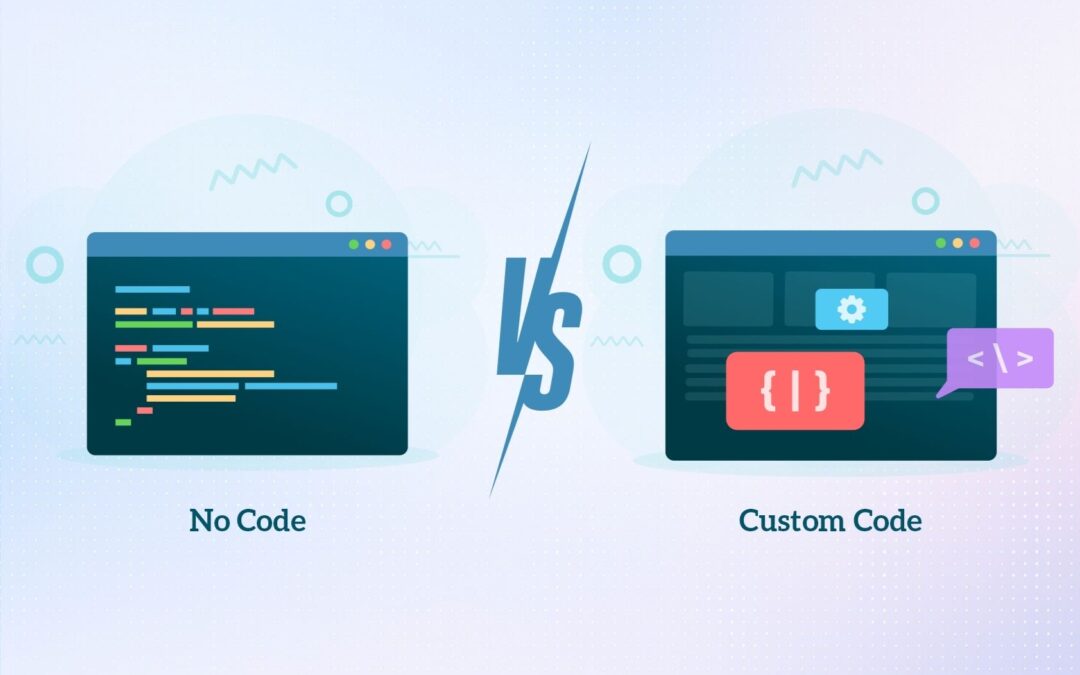
The debate around no code vs custom development plays a critical role in modern software development decisions. No-code platforms and low-code development focus on speed, cost-effective delivery, and rapid prototyping through drag-and-drop functionality, visual interfaces, pre-built components, and pre-built templates. No-code development offers an accessible path for simple apps, internal tools, workflow automation, and minimum viable product launches without writing complex code or managing a full development team.
Custom development takes a different development approach. Custom software development relies on skilled developers, programming languages, and traditional code to deliver full control, advanced functionality, deep system integrations, and tailored features. Custom development delivers stronger data management, better protection for sensitive data, and long-term growth for complex projects, large-scale projects, and specific business needs. Clear insight into these key differences supports smarter choices for web apps, mobile apps, and custom-built solutions.
What Is No Code Development?
No-code development refers to a software development approach that allows teams to build web apps, mobile apps, and internal tools without writing code. No-code platforms rely on visual interfaces, drag and drop functionality, pre-built templates, and pre-built components to simplify app development. Also, this development approach supports rapid prototyping, workflow automation, and simple apps that serve specific business needs. Small businesses often adopt no-code solutions to reduce development costs and shorten delivery timelines.
No code development offers speed and accessibility but comes with platform constraints and limited customization. No code tools work best for projects with standard workflows, basic data management, and minimal complex functionality. Platform pricing changes, vendor lock-in, and security risks around sensitive data also require careful evaluation before selecting no-code platforms for long-term growth.
What Is Custom Development?
Custom development refers to a software development approach where a skilled development team builds applications through traditional code and programming languages. This method relies on writing code from scratch to create custom software development solutions tailored to specific business requirements. Custom code supports advanced functionality, complex features, and deep system integrations with existing systems. Many complex projects and large-scale projects depend on custom development to achieve full control over architecture, performance, and data management.
Custom development delivers flexibility and precision that no code solutions can match. Custom-built solutions handle sensitive data, real-time data processing, and complex integrations more effectively. Longer development timelines and higher development costs often accompany this approach, but full control, tailored features, and long-term growth make custom development the preferred choice for complex functionality and mission-critical software projects.
No Code Vs Custom Development: Side-By-Side Comparison
This side-by-side comparison highlights the key differences between no code vs custom development across speed, cost, control, scalability, and long-term growth. The table below helps teams evaluate the right development approach based on business needs and project complexity.
Aspect
No Code Development
Custom Development
Development Speed
Very shows fast delivery with rapid prototyping
Slower due to longer development timelines
Development Costs
Cost-effective with lower upfront investment
Higher costs due to skilled developers and a full development team
Customization
Limited customization due to platform constraints
Full control with tailored features and custom code
Scalability
Suitable for simple apps and internal tools
Built for complex projects and large-scale projects
Functionality
Best for basic workflows and simple logic
Supports advanced functionality and complex features
Integrations
Limited deep integrations with existing systems
Enables deep system integrations and complex integrations
Data And Security
Potential security risks and vendor lock-in
Strong control over sensitive data and security
Long Term Growth
Restricted by platform pricing changes
Ideal for long-term growth and custom-built solutions
Key Differences Between No Code And Custom Development
In this section, we will break down the most important differences between no code vs custom development across control, speed, scalability, and cost. Each factor below helps teams evaluate the right development approach based on software complexity, business needs, and long-term growth goals.
Level Of Control
No code development limits control because no code platforms operate within predefined rules, visual interfaces, and platform constraints. Teams rely on drag-and-drop elements, pre-built components, and pre-built templates, which restrict how deeply a product can adapt to specific workflows. This approach works for simple apps, internal tools, and basic automation, but creates challenges for complex functionality.
Custom development provides complete control over architecture, logic, and data flow. Skilled developers write custom code using programming languages that align with the software project’s exact requirements. This freedom supports tailored features, advanced functionality, and precise system behavior. Businesses that require full control often choose custom development to avoid vendor lock-in and maintain long-term flexibility.
Development Speed And Delivery
No code tools prioritize speed and rapid prototyping. Visual builders and drag-and-drop functionality allow development teams to launch a minimum viable product quickly without writing complex code. This advantage suits small businesses, startups, and teams that need fast validation with limited resources. Shorter timelines also reduce initial development costs.
Custom development follows longer development timelines due to planning, best practices of coding, testing, and deployment phases. A full development team manages architecture, performance, and quality assurance. While slower at the start, this approach creates stable foundations for complex projects, large-scale projects, and software that demands precision from day one.
Customization And Flexibility
No-code solutions offer limited customization because features depend on what code platforms support. Platform constraints restrict advanced workflows, complex code logic, and unique user experiences. Changes outside platform capabilities often require workarounds that affect performance and SaaS scalability.
Custom development enables unmatched flexibility. Developers build a custom solution from scratch, allowing full adaptation to specific business rules and workflows. Custom-built solutions evolve without dependency on external platform limitations. This flexibility supports unique use cases, deep customization, and product differentiation in competitive markets.
Scalability And Performance
No code platforms handle moderate workloads well but struggle with complex integrations and real-time data processing at scale. As usage grows, performance limits, platform pricing changes, and infrastructure restrictions become noticeable. These challenges affect long-term growth for data-heavy or mission-critical systems.
Custom development delivers strong scalability through optimized architecture and custom code. Development teams design systems that support complex functionality, large user bases, and high data volumes. This approach ensures consistent performance for web apps, mobile apps, and enterprise software as business demands increase.
Security And Data Management
No code development introduces security risks when handling sensitive data. Data storage, access control, and compliance depend on third-party platforms, which limit oversight. Vendor lock-in also affects data portability and long-term risk management.
Custom development places security under direct control. Developers implement custom security protocols, encryption standards, and access rules aligned with regulatory requirements. This control supports advanced data management, compliance, and secure integration with existing systems, making custom development suitable for regulated industries.
Cost Structure And Ownership
No code development appears cost-effective at the start due to lower upfront investment and reduced staffing needs. Over time, platform pricing, usage limits, and feature restrictions increase operational expenses. Ownership remains tied to the platform provider.
Custom development requires higher initial development costs and skilled developers. Long-term ownership remains fully with the business, without platform dependency. This model supports predictable scaling costs, full intellectual property ownership, and sustainable growth for complex software products.
Pros & Cons Of No Code Development
No code development brings both clear advantages and practical limitations for the modernization of software projects. Speed, cost efficiency, and accessibility attract teams that need fast results, while platform constraints and scalability concerns raise important trade-offs. The points below outline how no-code solutions perform across real-world business needs, technical complexity, and long-term growth considerations.
Pros Of No Code Development
Fast Development Speed: No code platforms enable rapid prototyping and faster delivery through visual interfaces and drag-and-drop functionality. Teams build simple apps, internal tools, and workflow automation quickly, which supports faster launches and early validation with minimal technical overhead.
Lower Initial Costs: No code development reduces upfront development costs by removing the need for skilled developers or a full development team. Small businesses and startups benefit from cost-effective entry, predictable platform pricing, and reduced spending during early software project stages.
Ease Of Use: No code tools rely on pre-built components, pre-built templates, and drag and drop elements. Product teams manage app development without deep knowledge of programming languages or writing code, which improves collaboration between technical and non-technical stakeholders.
Quick MVP Creation: No-code development offers a practical way to build a minimum viable product fast. Teams test ideas, validate assumptions, and collect user feedback early, which helps refine features before committing resources to custom software development.
Simplified Maintenance: Platform providers handle hosting, updates, and basic ongoing maintenance tasks. This setup reduces operational effort and allows teams to focus on product management, data organization, and improving user experience instead of infrastructure management.
Cons Of No Code Development
Limited Customization: No-code solutions restrict flexibility due to platform constraints and fixed feature sets. Complex functionality, unique workflows, and advanced logic often remain difficult to implement, which limits product differentiation and tailored features over time.
Scalability Challenges: No-code platforms struggle as usage grows and data volumes increase. Large-scale projects, real-time data processing, and complex integrations expose performance limits that affect long-term growth and system reliability.
Vendor Lock-In Risks: Businesses depend heavily on code platforms for hosting, features, and data storage. Platform pricing changes, policy updates, and export limitations reduce control and create challenges when switching to custom development later.
Security Limitations: No code tools provide limited control over security architecture and compliance standards. Handling sensitive data depends on third-party policies, which increases security risks for regulated industries and data-intensive applications.
Restricted Long-Term Growth: No code development suits simple apps and early-stage tools, but limits expansion into advanced functionality. Platform constraints make it difficult to support complex projects, deep system integrations, and custom-built solutions at scale.
Pros & Cons Of Custom Development
Custom development offers full control and advanced capabilities but comes with higher investment and longer timelines. The following advantages and limitations help teams evaluate whether custom software development aligns with project scope, technical demands, and long-term business goals.
Pros Of Custom Development
Complete Control: Custom development delivers full control over architecture, logic, and data flow. Development teams write custom code that aligns precisely with business rules, performance requirements, and security standards, without platform constraints or third-party limitations.
Advanced Functionality: Custom software development supports complex functionality, complex code, and tailored features. Skilled developers build systems that handle real-time data processing, deep system integrations, and unique workflows that no-code platforms cannot support.
Scalability And Performance: Custom development enables a scalable architecture designed for long-term growth. Teams optimize performance for large-scale projects, high user volumes, and data-intensive workloads across web apps and mobile apps.
Stronger Security Control: Custom development places full security ownership in the hands of the business. Developers implement encryption, access control, and compliance measures to protect sensitive data and meet regulatory requirements.
Full Ownership: Custom-built solutions provide complete ownership of source code and intellectual property. Businesses avoid vendor lock-in and maintain flexibility to evolve software without dependency on external code platforms.
Cons Of Custom Development
Higher Development Costs: Custom development requires a higher upfront investment due to skilled developers, project management, and infrastructure needs. Development costs exceed those of no-code solutions, especially during early stages.
Longer Timelines: Custom development follows longer development timelines because of planning, coding, testing, and deployment phases. Teams need patience before reaching production readiness and measurable returns.
Resource Intensive: Custom development demands a full development team, ongoing maintenance, and technical oversight. Staffing and operational requirements increase complexity for small businesses and early-stage teams.
Maintenance Responsibility: Ongoing maintenance, updates, and performance optimization remain the responsibility of the business. Teams must allocate resources for bug fixes, security patches, and system upgrades.
Complex Project Management: Custom software development requires structured project management and coordination across teams. Poor planning increases risk, delays delivery, and raises costs for complex software projects.
When SaaS Teams Should Choose No Code
No code development suits SaaS teams that prioritize speed, cost efficiency, and fast validation over deep customization. This approach works best when product scope remains simple, timelines stay tight, and early results matter more than advanced functionality or full architectural control.
Fast MVP Launch
No code development fits SaaS teams that need a minimum viable product quickly. No code platforms support rapid prototyping through drag and drop functionality, visual interfaces, and pre-built templates. Teams validate ideas, test assumptions, and reach users faster without writing complex code or assembling a full development team.
Early feedback plays a critical role during this stage. No code tools allow quick feature adjustments, simple workflow automation, and basic data management. This speed helps SaaS founders reduce risk before committing to custom software development or longer development timelines.
Limited Budget Constraints
No code solutions suit SaaS teams that operate with limited budgets. Lower upfront development costs make no-code platforms attractive for startups and small businesses that cannot hire skilled developers early. Platform pricing usually follows predictive analysis and monthly plans during early growth stages.
This cost-effective entry allows teams to focus resources on marketing, customer acquisition, and product strategy. No code development offers enough flexibility for simple apps, internal tools, and early customer portals without heavy financial pressure.
Internal Tools And Automation
No code development works well for internal tools that support operations, reporting, and AI automation. No-code platforms simplify app development for dashboards, admin panels, and data management systems without deep system integrations.
SaaS teams use no-code tools to automate repetitive processes, connect existing systems, and manage internal workflows. These tools reduce operational overhead and allow teams to improve efficiency without dedicating engineering resources to non-core products.
Non-Technical Teams Ownership
No code development benefits SaaS teams that rely on product managers, operations staff, or marketers to own tools. Visual interfaces and drag-and-drop elements remove dependency on programming languages and traditional code.
Teams update features, adjust workflows, and manage simple apps independently. This autonomy speeds decision-making and reduces bottlenecks caused by limited developer availability. No code development offers flexibility for teams that value independence over deep customization.
Early Stage Product Validation
No code platforms support SaaS teams that focus on validation rather than scale. Early-stage products often require fast iteration, simple features, and basic user flows. No code solutions handle these needs without platform complexity.
Market feedback shapes product direction during this phase. No code development allows teams to pivot quickly, experiment with features, and confirm demand before choosing custom development for complex functionality, advanced integrations, and long-term growth.
When SaaS Teams Should Choose Custom Development
Custom development becomes the right choice for SaaS teams that require full control, advanced functionality, and long-term scalability. This approach fits products with complex requirements, strict security needs, and growth plans that exceed the limits of no-code solutions.
Complex Product Requirements
Custom development suits SaaS teams that build products with complex functionality, advanced workflows, and complex code logic. No code platforms struggle with feature depth, conditional logic, and unique system behavior required by sophisticated software products.
Skilled developers design custom solutions that match precise business rules and user flows. Custom code supports tailored features, flexible data models, and refined user experiences. This level of precision helps SaaS products stand out in competitive markets.
High Scalability Needs
Custom development fits SaaS teams that plan for large-scale growth from early stages. Products with high user volumes, heavy data processing, and performance-critical workloads demand a scalable architecture.
Custom software development allows teams to optimize infrastructure, databases, and APIs for long-term growth. This approach supports web apps and mobile apps that require consistent performance under increasing demand.
Deep System Integrations
Custom development works best for SaaS platforms that depend on deep system integrations with existing systems. Complex integrations often require custom APIs, real-time data synchronization, and specialized workflows.
Custom-built solutions connect securely with third-party services, legacy systems, and enterprise platforms. This flexibility ensures reliable data exchange and supports advanced automation without platform constraints.
Sensitive Data Handling
Custom development supports SaaS products that manage sensitive data and strict compliance requirements. No-code solutions provide limited security customization, which raises concerns for regulated industries.
Custom code allows developers to implement encryption, access controls, and audit mechanisms aligned with industry standards. Full control over data management reduces security risks and improves compliance readiness.
Long-Term Product Vision
Custom development aligns with SaaS teams that prioritize long-term growth and product ownership. Platform pricing changes, vendor lock-in, and feature limits create barriers for scaling no-code solutions.
Custom development delivers full ownership of code, architecture, and intellectual property. This control enables continuous evolution, advanced functionality, and strategic flexibility as the SaaS product matures.
How GainHQ Supports Product Teams Managing No Code Vs Custom Development
GainHQ helps product teams bring structure and clarity to decisions around no code vs custom development. Product teams centralize feature requests, user feedback, and internal ideas in one system, which makes it easier to evaluate whether no-code solutions or custom development fits real business needs. Clear visibility into customer demand reduces guesswork during software project planning.
GainHQ also supports cross-functional collaboration between product managers, development teams, and stakeholders. Teams track complexity, effort, and impact across requests tied to no-code platforms, low-code development, or custom software development. This structured approach helps teams prioritize the right development approach, manage trade-offs, and align roadmap decisions with long-term growth, development costs, and technical constraints.
FAQs
Can No Code Platforms Support Low Code Development?
Yes, many no-code platforms also support low-code development through optional custom code blocks and logic extensions. Low-code platforms offer more flexibility than pure no-code solutions while still reducing the need to write complex code.
Is Custom Development Always More Expensive Than No Code?
No, custom development does not always cost more long-term. Development costs balance out when platform pricing changes, scaling limits, and ongoing fees from no-code platforms increase over time.
Does No Code Work Well For Data-Heavy Applications?
No, no code tools struggle with data-heavy workloads, real-time data processing, and complex data management. Custom development handles complex functionality and performance requirements more effectively.
Can No-Code Apps Transition To Custom Development Later?
Yes, many SaaS teams start with no code development for rapid prototyping and move to custom software development as product complexity and user demand increase.
Which Approach Offers Better Control Over User Experience?
Custom development provides full control over design, workflows, and interactions. Custom code allows teams to deliver tailored features and advanced functionality without platform constraints.
How Do Platform Pricing Models Affect Long-Term Planning?
Platform pricing often scales with usage, features, or data volume. These costs impact long-term growth decisions and influence whether teams shift toward custom-built solutions.
What Role Does Project Management Play In Development Choice?
Strong project management helps teams assess scope, complexity, and timelines. Clear planning supports smarter decisions between no code vs custom development and reduces delivery risks.
Off-the-shelf software limitations often become clear once teams move beyond basic needs. Many businesses start with off-the-shelf software because it promises speed and simplicity. These ready-made options, sometimes called shelf software or shelf solutions, are designed for broad use cases and quick adoption. While they work for common tasks, they rarely fit every workflow perfectly.
As companies grow, relying on off-the-shelf tools can create friction between software products and real business processes. Generic software may lack flexibility, create workarounds, or slow teams down over time. Understanding where off-the-shelf solutions fall short helps businesses make better technology decisions and avoid tools that look convenient at first but limit progress in the long run.
What Is Off-The-Shelf Software
Off-the-shelf software refers to pre-built applications designed for a mass market rather than a specific organization. It is often called commercial software because it is sold to many customers with the same features and functionality. These tools are created to address common needs across industries, making them easy to purchase and deploy quickly.
When comparing software vs tailored alternatives, off-the-shelf options come with clear advantages and disadvantages. They usually offer faster setup and lower upfront effort, but limited flexibility. Such software is built to serve general use cases, which means it may not fully align with unique workflows or long-term business goals.
When Do Businesses Choose Off-the-Shelf Software
Businesses often turn to off-the-shelf software at specific stages of growth or under certain operational pressures. These tools are usually selected when speed, budget, and simplicity matter more than long-term customization.
Low Upfront Cost
Many businesses choose off-the-shelf software because of its low upfront cost. Compared to custom-built solutions, these tools require minimal initial investment, making them attractive for startups and early-stage teams. Budget constraints often push decision-makers toward solutions that can be adopted without significant financial risk.
This lower entry barrier allows teams to experiment with tools quickly. For organizations testing new ideas or validating processes, minimizing upfront spending feels like a safer choice.
Rapid Deployment Needs
Rapid deployment is another major reason businesses adopt off-the-shelf solutions. These tools are ready to use almost immediately, with little configuration required. Teams can implement them quickly and start operating without long setup cycles.
When timelines are tight, speed becomes a priority. Off-the-shelf software helps businesses respond fast to operational needs without waiting for long development phases.
Cost Effective Solution For Early Stages
For early operations, off-the-shelf tools are often seen as a cost effective solution. They cover common requirements without the expense of building software from scratch. This makes them suitable for basic workflows and standard processes.
At this stage, efficiency matters more than precision. Businesses prefer tools that work “well enough” rather than investing heavily in tailored systems too early.
Availability Of Community Support
Community support also influences adoption. Popular off-the-shelf software usually has active user communities, forums, and documentation. This shared knowledge helps teams troubleshoot issues without relying solely on vendors.
Access to community insights reduces dependency on internal expertise. Teams feel more confident adopting tools that others already use and discuss openly.
Common Choice For Many Businesses
Many businesses rely on off-the-shelf software because it feels like a proven and safe option. Widespread adoption creates trust and lowers perceived risk. Decision-makers often follow familiar paths rather than exploring custom alternatives.
This reliance grows when tools are widely recommended or already used by peers. However, what works initially may not always support long-term growth or unique requirements.
Where Off-The-Shelf Software Falls Short
Off-the-shelf software often works well at the surface level, but limitations start to appear as businesses mature and workflows become more complex. These gaps usually show up when generic tools fail to adapt to real operational needs.
Misalignment With Business Processes
Generic software is built around standard workflows, not real-world business processes. Teams are often forced to adjust how they work just to fit the tool, rather than the software supporting existing operations. This misalignment creates inefficiencies and workarounds that slow productivity over time.
As processes evolve, the gap widens. What once felt manageable becomes restrictive, especially when processes require flexibility or cross-team coordination.
Poor Fit For A Particular Business
Every organization operates differently, but off-the-shelf tools are designed for broad use, not a particular business. Industry nuances, internal approvals, or customer-specific workflows are rarely supported out of the box.
This lack of fit leads teams to compromise. Instead of optimizing how they work, they settle for what the software allows, which limits long-term effectiveness.
Inability To Support Business’s Unique Workflows
Many businesses have business’s unique ways of handling operations, reporting, or customer engagement. Generic software struggles to support these differences without heavy customization or external tools.
Over time, teams spend more effort bending the software than improving outcomes. This friction reduces adoption and increases frustration across departments.
Gaps In Meeting Business’s Requirements
As organizations grow, business’s requirements expand beyond basic functionality. Off-the-shelf solutions often fail to keep pace with new needs such as advanced reporting, integrations, or role-specific controls.
When requirements outgrow the tool, teams face difficult choices: accept limitations, add more tools, or replace the system entirely.
Missing Features And Unnecessary Complexity
Off-the-shelf tools often lack features teams actually need, while offering more features that go unused. This imbalance creates clutter without solving core problems.
Unused features add complexity, while critical gaps force teams to rely on manual processes or external tools. Over time, this combination reduces efficiency and increases operational overhead.
When Off-The-Shelf Software Becomes A Limitation
Growth often exposes gaps in generic tools as complexity increases. Off-the-shelf systems struggle to keep pace, turning convenience into constraints once operational scale and financial pressure rise across expanding organizations.
Challenges As The Business Grows
As a company expands, expectations around performance, reporting, and flexibility increase. When the business grows, teams begin to notice friction in daily workflows and delays in execution. What once supported a small team starts slowing down decisions and collaboration.
Growth introduces new processes and dependencies. Generic software rarely adapts smoothly, forcing teams to work around limitations instead of focusing on progress.
Limited Scalability Over Time
Many generic platforms suffer from limited scalability as usage and data volumes increase. Performance bottlenecks, rigid workflows, and system constraints become more visible with higher demand.
Scalability issues push teams to add tools or manual steps. Over time, systems become fragmented and harder to manage.
Difficulty To Scale Effectively
Scaling effectively requires software that adjusts to evolving operations. Off-the-shelf tools often lack flexibility for new roles, processes, or integrations.
Teams react to growth challenges rather than plan for them. This reactive approach slows momentum and increases operational strain.
Hidden Costs Over Time
Initial affordability often hides long-term expenses. Hidden costs appear through add-ons, upgrades, and feature restrictions that require paid workarounds.
Over time, spending increases without proportional value. Budget predictability becomes harder as complexity grows.
Ongoing Fees And Subscription Pressure
Recurring pricing models introduce ongoing fees that rise with usage. Subscription fees increase as teams add users or unlock essential features.
Long-term commitments reduce flexibility. Businesses may feel locked into tools that no longer support their direction.
How Off-The-Shelf Software Impacts Business Growth
Growth places pressure on systems that once felt sufficient. Generic tools often struggle to adapt, creating friction across teams, slowing decisions, and limiting how organizations evolve in a fast-moving market.
Impact On Business Operations
Off-the-shelf software can disrupt core business operations as complexity increases. Standardized workflows rarely adapt to changing needs, forcing teams to work around rigid processes. Over time, operational efficiency declines as systems fail to support evolving requirements.
Operational gaps often lead to manual workarounds and disconnected tools. These inefficiencies compound as organizations expand, reducing clarity and control across functions.
Disruption To Day-To-Day Activities
Daily execution depends on tools that align with real workflows. When software cannot support day-to-day activities effectively, teams experience delays, duplicated effort, and confusion. Productivity drops as employees spend more time managing limitations than completing work.
Routine tasks become harder to complete efficiently. Small inefficiencies repeated daily create a significant drag on overall performance.
Loss Of Competitive Edge
Growth requires speed, flexibility, and differentiation. Generic software limits innovation by offering the same capabilities to everyone, reducing opportunities to build a competitive edge. Businesses struggle to respond quickly to market changes.
Without adaptability, organizations fall behind competitors that use more flexible systems. Long-term differentiation becomes difficult when tools cannot evolve with strategy.
Challenges In The Business World
The business world demands agility and responsiveness. Off-the-shelf software often lacks the flexibility required to adapt to shifting priorities, regulations, or customer expectations. Static systems slow strategic execution.
As markets change, businesses need tools that evolve. Generic solutions make adaptation slower and more costly.
Constraints For Modern Businesses
Modern businesses depend on technology that supports growth rather than restricting it. Off-the-shelf tools limit flexibility, reducing the potential for allowing businesses to scale processes smoothly. Growth becomes constrained by system boundaries.
Sustainable expansion requires adaptable platforms. Without them, organizations face increasing friction as scale and complexity rise.
Common Limitations Of Off-The-Shelf SoftwareSoftware
Generic software solutions often appear convenient at first, but structural limitations surface as complexity increases. Rigid design, shared roadmaps, and limited control create long-term challenges that affect performance, security, and adaptability.
Integration Challenges
Integration challenges arise when off-the-shelf tools fail to connect smoothly with other platforms. Many products are designed to work in isolation, making it difficult to align them with existing workflows or data pipelines. As teams add more tools, gaps appear between systems.
Disconnected integrations lead to manual syncing, duplicate data entry, and inconsistent reporting. Over time, these inefficiencies slow operations and increase dependency on workaround processes instead of seamless automation.
Compatibility Issues
Compatibility issues occur when software cannot align with operating systems, devices, or other applications already in use. Updates or changes in one system can break functionality in another, creating instability.
As organizations grow, compatibility problems multiply. Teams spend time resolving conflicts instead of focusing on core work, reducing overall productivity and confidence in the software stack.
Security Vulnerabilities
Off-the-shelf software is widely used, which can make it a frequent target for security vulnerabilities. Shared codebases increase exposure, and users rely heavily on vendors to identify and resolve risks.
Limited control over security architecture creates uncertainty. Organizations must wait for fixes rather than proactively addressing threats, increasing potential risk during critical periods.
Regulatory Compliance Limitations
Meeting regulatory compliance requirements becomes difficult when software is not designed for specific regional or industry rules. Generic tools often provide baseline controls that may not fully align with evolving regulations.
Compliance gaps expose businesses to audits, penalties, and reputational damage. Adapting generic software to meet strict requirements often requires external tools or manual processes.
Dependency On Security Patches
Security updates depend entirely on the vendor’s release cycle. When issues arise, organizations must wait for security patches rather than deploying fixes independently.
Delays increase exposure during vulnerable windows. Lack of control over patch timing creates risk, especially for businesses handling sensitive data or operating in regulated environments.
Slow Access To New Features
Access to new features is determined by vendor priorities, not business needs. Updates are released for a broad audience, which means critical capabilities may be delayed or never delivered.
Innovation slows when teams cannot influence product direction. Businesses must adapt their processes to available features instead of evolving software to support growth goals.
Key Challenges Businesses Face With Generic Software
As organizations evolve, generic software often struggles to support growing complexity. What starts as a simple setup gradually turns into a network of disconnected tools, rising costs, and operational friction.
Difficulty Working With Existing Systems
Generic software rarely fits neatly into existing systems. Many platforms are designed as standalone solutions, which makes alignment with internal workflows difficult. Teams often face limitations when trying to connect new software with established processes.
Over time, gaps appear between tools and workflows. Instead of supporting efficiency, software creates extra steps to bridge mismatched systems.
Fragmentation Across Existing Tools
Most businesses already rely on multiple existing tools to manage operations. Introducing generic software often adds another layer rather than replacing outdated solutions.
This fragmentation increases complexity. Teams switch between tools, lose context, and struggle to maintain consistent data across platforms.
Conflicts With Current And Other Systems
Compatibility problems emerge when generic software interacts with current systems or other systems in use. Updates, integrations, or configuration changes in one tool can disrupt others.
These conflicts lead to downtime and troubleshooting efforts. Productivity suffers as teams spend time resolving technical issues instead of focusing on outcomes.
Reliance On Third Party Services
To fill functional gaps, businesses often depend on third-party services. While these add-ons extend functionality, they also introduce dependencies and risk.
Managing multiple vendors increases overhead. Each service adds complexity to support, billing, and maintenance.
Data Migration And Rising Licensing Costs
Moving information between platforms creates challenges during data migration. Transferring historical data accurately requires time, testing, and validation.
At the same time, licensing costs grow as user counts and feature needs expand. Over time, these expenses reduce flexibility and increase long-term operational burden.
How GainHQ Solves Off-the-Shelf Software Limitations
Growing teams need software that adapts to real workflows, not the other way around. GainHQ focuses on flexibility, alignment, and long-term value, helping organizations move beyond the constraints of generic tools.
Purpose-Built And Specifically Tailored Solutions
GainHQ supports teams that outgrow generic tools by enabling custom software approaches aligned with real business needs. Instead of relying on rigid shelf products, teams can adopt a custom solution designed around how work actually happens. This approach supports bespoke software and custom-built software strategies that fit unique workflows.
Unlike mass tools, GainHQ enables tailored solutions that are specifically tailored to support decision-making, feedback, and planning. This flexibility ensures the software solution works for the organization, not against it.
Seamless Integration With Existing Systems
One major limitation of generic tools is poor connectivity. GainHQ is designed to integrate seamlessly with existing systems, allowing teams to integrate smoothly without disrupting operations. It works alongside CRM platforms, ERP systems, and other critical software tools already in use.
Support for ERP software, including custom ERP software and a custom ERP solution, helps teams connect planning, feedback, and execution. Instead of replacing systems, GainHQ complements such systems while reducing dependency on fragmented third party services.
Smarter Development And Cost Balance
Custom development often raises concerns about development costs and higher upfront investment. GainHQ helps balance this by focusing on value-driven software development rather than unnecessary complexity. The software development process prioritizes clarity, outcomes, and scalability.
While an initial investment may be higher than off-the-shelf tools, long-term efficiency offsets the cost. Teams avoid recurring limitations, constant upgrades, and hidden inefficiencies that generic tools introduce over time.
Built To Support Real Business Functions
GainHQ supports common business functions such as planning, insights, and project management without forcing teams into fixed structures. It adapts to business needs instead of imposing predefined workflows. This flexibility allows teams to evolve processes as they grow.
By supporting integration with existing tools and avoiding unnecessary overlap, GainHQ reduces tool sprawl. Teams can focus on outcomes rather than managing software, similar to how specialized tools like Adobe Photoshop serve a clear, focused purpose within broader workflows.
FAQs
What Are Off-The-Shelf Software Limitations?
Off-the-shelf software limitations refer to the constraints businesses face when using generic tools built for mass use. These include limited customization, scalability issues, integration challenges, and difficulty aligning with unique business processes.
Why Do Businesses Outgrow Off-The-Shelf Software?
Businesses often outgrow off-the-shelf software as operations become more complex. Growing teams, evolving workflows, and increasing data needs expose gaps that generic tools are not designed to handle long-term.
Is Custom Software Always Better Than Off-The-Shelf Software?
Custom software is not always necessary at early stages, but it becomes valuable when generic tools no longer support business needs. A custom or tailored solution offers flexibility and alignment that off-the-shelf options cannot provide.
What Hidden Costs Come With Off-The-Shelf Software?
Hidden costs often include subscription increases, add-ons, licensing fees, integration expenses, and productivity losses caused by workarounds. Over time, these costs can exceed the price of a custom-built solution.
How Does GainHQ Help Overcome These Limitations?
GainHQ helps by offering a flexible, scalable platform that integrates smoothly with existing systems. It supports tailored workflows, better alignment with business needs, and long-term value beyond generic software constraints.
Cloud native development has transformed how modern software teams design, build, and scale applications in the cloud. Instead of relying on rigid infrastructure and monolithic systems, this approach uses flexible architectures that support speed, resilience, and continuous innovation. Businesses adopt cloud native strategies to meet growing user demands, improve application performance, and reduce operational complexity.
By combining microservices, containers, automation, and scalable cloud infrastructure, teams deliver software faster and with greater reliability. Cloud native development also supports rapid experimentation, efficient resource usage, and seamless updates without service disruption. As cloud platforms continue to evolve, understanding cloud native principles becomes essential for teams that aim to build future-ready applications and maintain a competitive edge in dynamic digital environments.
What Is Cloud Native Development
Cloud native development is a modern software development approach that builds and runs applications specifically for a cloud environment. It follows a cloud native approach where the entire application uses microservices architecture, loosely coupled systems, and native architecture principles. Unlike traditional native development tied to a data center or on premises data center, cloud native applications leverage cloud computing, cloud infrastructure, and dynamic environments to achieve scalability and resilience. This cloud computing model allows software developers to build cloud native apps that deploy independently and adapt quickly to change.
Cloud native application development relies on cloud native technologies such as containers, CI CD, continuous integration, continuous delivery, and robust automation. Cloud native systems run efficiently on a cloud platform or cloud provider, including hybrid clouds and cloud servers. These cloud native solutions support distributed computing, service discovery, immutable infrastructure, and efficient resource allocation. By reducing human error and improving the software development lifecycle, cloud native software enables development and operations teams to deploy cloud native applications faster while gaining the full advantage of modern cloud services.
Core Principles Of Cloud Native Architecture
Cloud native architecture defines how modern applications achieve scalability, resilience, and speed in cloud environments. These principles guide teams to design systems that adapt easily to change, support continuous delivery, and operate reliably at scale across dynamic infrastructure.
Microservices Architecture
Microservices architecture breaks applications into small, independent services that focus on specific business capabilities. Each service runs independently, communicates through APIs, and deploys without affecting the entire system. This structure improves flexibility and allows teams to develop, test, and release features faster.
Cloud native systems benefit from microservices because failures remain isolated. One service issue does not disrupt the full application. Teams also scale only the services that need more resources, which reduces infrastructure costs. This approach supports faster innovation, clearer ownership, and better alignment between development and business goals.
Containerization
Containerization packages applications with their dependencies into lightweight, portable units. Containers ensure consistent behavior across development, testing, and production environments. This consistency reduces deployment errors and simplifies application lifecycle management in cloud native systems.
Cloud platforms handle containers efficiently, enabling rapid scaling and resource optimization. Tools like Docker and Kubernetes allow teams to manage containers at scale with automation. Containerization also supports faster startup times, better resource utilization, and easier application portability across cloud providers or hybrid environments.
Dynamic Scalability
Dynamic scalability allows applications to adjust resources automatically based on demand. Cloud native architecture relies on elastic infrastructure to scale services up during peak usage and scale down during low activity. This principle ensures performance stability without overprovisioning resources.
Automatic scaling improves user experience while controlling operational costs. Cloud platforms monitor metrics such as traffic, memory, and CPU usage to trigger scaling actions. Dynamic scalability helps businesses handle growth confidently, support global users, and maintain application responsiveness under varying workloads.
Resilience And Fault Isolation
Resilience ensures applications continue to operate despite failures. Cloud native systems expect failures and design around them through redundancy, self-healing, and fault isolation. Services restart automatically, traffic reroutes intelligently, and unhealthy components recover without manual intervention.
Fault isolation limits the impact of errors to specific services. This design protects the overall system from cascading failures. Resilient architecture improves uptime, strengthens reliability, and builds trust with users. It also reduces downtime costs and operational stress for engineering teams.
Automation And CI CD
Automation forms the backbone of cloud native development. Continuous integration and continuous deployment pipelines automate code testing, building, and deployment. This process reduces manual errors and ensures consistent releases across environments.
CI CD pipelines support faster delivery cycles and frequent updates. Teams validate changes early, deploy confidently, and respond quickly to feedback. Automation also improves collaboration between development and operations, enabling DevOps practices that increase efficiency, quality, and release speed in cloud native systems.
Observability And Monitoring
Observability provides deep visibility into application behavior across distributed systems. Cloud native architecture uses logs, metrics, and traces to monitor performance, detect issues, and understand system health in real time. This insight supports proactive issue resolution.
Effective monitoring helps teams identify bottlenecks, optimize resources, and improve reliability. Observability tools enable faster root cause analysis and informed decision-making. With clear system visibility, teams maintain high availability, ensure performance consistency, and continuously improve cloud native applications.
Business Benefits Of Cloud Native Development
Cloud native development delivers measurable business value by improving speed, scalability, and operational efficiency. Organizations that adopt this approach gain the flexibility to respond to market changes, optimize costs, and deliver reliable digital experiences without the limitations of traditional infrastructure.
Faster Time To Market
Cloud native development enables rapid software delivery through automation and modular architecture. Teams release features independently without waiting for full system updates. This flexibility shortens development cycles and supports continuous product improvement.
Frequent releases help businesses respond quickly to customer feedback and market demand. Faster delivery also reduces competitive risk by allowing organizations to test ideas, refine solutions, and launch updates with confidence. Speed becomes a strategic advantage rather than a technical challenge.
Improved Scalability
Cloud native applications scale automatically based on real-time demand. This capability ensures consistent performance during traffic spikes while avoiding unnecessary infrastructure costs during low usage periods. Businesses gain predictable performance without manual intervention.
Scalable systems support growth without architectural redesign. Organizations expand to new markets, support global users, and handle seasonal demand smoothly. Cloud native scalability protects customer experience while maintaining operational efficiency at every stage of business growth.
Lower Operational Costs
Cloud native development optimizes resource usage through elastic infrastructure and service-level scaling. Businesses pay only for the resources they use, which reduces waste associated with overprovisioned systems. Automation further lowers operational overhead.
Reduced infrastructure maintenance and fewer manual processes lead to long-term cost savings. Teams focus more on innovation instead of system upkeep. Cost efficiency improves budgeting accuracy and allows better allocation of technology investment across business priorities.
Higher System Reliability
Cloud native architecture improves application reliability through redundancy and self-healing mechanisms. Services recover automatically after failures, which minimizes downtime and service disruption. Fault isolation protects the overall system from localized issues.
Reliable systems build customer trust and protect revenue streams. Businesses avoid costly outages and maintain consistent digital transformations. High availability also supports mission-critical operations where performance stability directly impacts customer satisfaction and brand reputation.
Enhanced Team Productivity
Cloud native development supports independent workflows and clear ownership across teams. Developers deploy, test, and update services without dependency on centralized release schedules. This autonomy improves collaboration and accountability.
Productivity increases as teams reduce manual tasks and focus on high-value work. Faster feedback loops improve code quality and morale. Cloud native practices empower teams to innovate efficiently while maintaining operational discipline.
Stronger Security Posture
Cloud native platforms integrate security across every stage of development. Automated testing, access controls, and policy enforcement reduce exposure to vulnerabilities. Security becomes a continuous process rather than a final checkpoint.
Service isolation limits the impact of security incidents. Businesses gain better visibility into system behavior and compliance requirements. A strong security foundation protects sensitive data, ensures regulatory alignment, and strengthens customer confidence in digital services.
Greater Business Agility
Cloud native development enables rapid adaptation to change. Businesses adjust features, scale services, or enter new markets without major infrastructure constraints. This flexibility supports experimentation and faster strategic decisions.
Agile systems allow organizations to respond effectively to competitive pressure and evolving customer expectations. Cloud native agility transforms technology into a growth enabler, helping businesses innovate continuously and stay resilient in dynamic markets.
Key Technologies Of Cloud Native Systems
Cloud native systems rely on a set of modern technologies that support scalability, automation, and resilience. These tools work together to help teams build distributed applications that deploy faster, adapt to demand, and maintain consistent performance across cloud environments.
Containers
Containers provide a standardized way to package applications with all required dependencies. This approach ensures consistent behavior across development, testing, and production environments. Teams avoid configuration conflicts and reduce deployment risks across cloud platforms.
Cloud native platforms run containers efficiently, which improves resource utilization and startup speed. Containers also support portability across public, private, and hybrid clouds. This flexibility allows organizations to avoid vendor lock-in while maintaining control over application delivery and infrastructure strategy.
Kubernetes
Kubernetes serves as the orchestration layer for containerized applications. It automates deployment, scaling, and recovery across clusters. Teams define desired application states, and Kubernetes ensures systems remain stable and available.
This platform improves operational efficiency through self-healing, load balancing, and automated rollouts. Kubernetes also integrates with cloud services and DevOps tools, which simplifies complex workflows. As a result, teams manage large-scale distributed systems with greater confidence and consistency.
Microservices
Microservices divide applications into small, independent services that communicate through APIs. Each service focuses on a single function, which improves clarity, flexibility, and development speed. Teams deploy updates without impacting the entire system.
This architecture supports independent scaling and fault isolation. Businesses reduce downtime risks and align services with business domains. Microservices also enable faster innovation, as teams experiment, iterate, and deliver features with minimal disruption to existing operations.
CI CD Pipelines
CI CD pipelines automate code integration, testing, and deployment. This automation ensures faster release cycles and consistent quality across environments. Teams identify issues early and reduce manual errors during software delivery.
Automated pipelines support frequent updates without service interruption. They also improve collaboration between development and operations teams. With CI CD, organizations achieve reliable releases, faster feedback loops, and greater confidence in production deployments.
Cloud Infrastructure Platforms
Cloud infrastructure platforms provide on-demand computing, storage, and networking resources. These platforms enable elastic scaling and high availability without heavy upfront investment. Businesses access global infrastructure through simple configuration.
Managed cloud services reduce operational complexity and improve system reliability. Organizations focus on application development rather than hardware maintenance. Cloud platforms also support advanced services such as monitoring, security, and data management, which strengthen overall cloud native architecture.
Security Best Practices For Cloud Native Environments
Cloud native environments introduce new security challenges due to distributed systems, dynamic infrastructure, and frequent deployments. Strong security practices help organizations protect data, reduce risk, and maintain trust while preserving the speed and flexibility that cloud native development provides.
Zero Trust Security
Zero-trust security assumes no user, service, or network is trusted by default. Every request requires verification through identity, context, and policy enforcement. This model fits cloud native environments where workloads communicate across dynamic and distributed systems.
Strict access controls reduce the risk of lateral movement during security incidents. Authentication and authorization occur continuously rather than once at the network boundary. Zero trust strengthens protection for APIs, microservices, and cloud workloads while supporting modern remote and hybrid work environments.
Identity And Access Control
Identity and access management defines who can access systems and what actions they can perform. Cloud native platforms rely on fine-grained permissions instead of broad privileges. This approach limits exposure and reduces the impact of compromised credentials.
Role-based access control ensures users and services receive only required permissions. Strong identity policies improve compliance and audit readiness. Clear access boundaries also simplify security operations and protect sensitive data across cloud native applications.
Secure Container Images
Secure container images form the foundation of cloud native workloads. Trusted base images reduce vulnerabilities and ensure consistency across environments. Image scanning identifies known security issues before deployment.
Private registries and version control improve image integrity and traceability. Regular updates address vulnerabilities without disrupting applications. Secure images reduce attack surfaces and support faster, safer deployments across containerized environments.
Network Segmentation
Network segmentation limits communication paths between services. This practice prevents unauthorized access and restricts the spread of potential breaches. Cloud native networks rely on service-level policies rather than traditional perimeter defenses.
Service meshes and network policies enforce communication rules automatically. Segmented networks improve visibility and control across microservices. This structure enhances security posture while maintaining performance and scalability in distributed systems.
Continuous Security Automation
Ai automation embeds security into every stage of the development lifecycle. Automated checks validate code, dependencies, and configurations before deployment. This approach reduces manual errors and ensures consistent enforcement of security standards.
Security automation supports rapid release cycles without sacrificing protection. Teams detect vulnerabilities early and address issues before production exposure. Automated security processes align well with DevOps and cloud native workflows.
Monitoring And Threat Detection
Monitoring provides real-time insight into system behavior and potential threats. Logs, metrics, and alerts help teams identify anomalies and suspicious activity quickly. Visibility becomes critical in dynamic cloud native environments.
Threat detection tools analyze patterns across workloads and networks. Early detection reduces response time and limits damage. Strong monitoring practices support incident response, compliance, and long-term security improvement across cloud native systems.
Future Trends In Cloud Native Development
Cloud native development continues to evolve as businesses demand faster delivery, stronger resilience, and smarter automation. Emerging trends focus on simplifying operations, improving developer experience, and maximizing cloud efficiency while supporting large-scale distributed systems.
Serverless Architectures
Serverless architectures shift infrastructure management entirely to cloud providers. Developers focus on code and business logic without provisioning or maintaining servers. This model supports rapid deployment and automatic scaling based on real-time demand.
Costs align closely with actual usage, which improves budget control. Serverless platforms also reduce operational complexity and accelerate innovation. As cloud ecosystems mature, serverless adoption expands across event-driven and data-intensive workloads.
Platform Engineering
Platform engineering creates internal developer platforms that standardize tools, workflows, and infrastructure access. Dedicated platform teams reduce cognitive load for developers by abstracting complexity behind self-service interfaces.
This approach improves consistency, security, and productivity across cloud native environments. Teams ship features faster while maintaining governance and reliability. Platform engineering becomes essential as organizations scale cloud native operations.
AI-Driven Operations
AI-driven operations enhance system reliability through predictive analytics and automated remediation. Machine learning models analyze logs, metrics, and traces to detect anomalies before outages occur.
Automated insights reduce manual troubleshooting and improve incident response. AI also supports capacity planning and performance optimization. As data volumes grow, intelligent operations play a key role in managing complex cloud native systems.
Edge Computing
Edge computing brings cloud native workloads closer to users and devices. This approach reduces latency and improves performance for real-time applications such as IoT, streaming, and analytics.
Distributed edge platforms extend cloud capabilities beyond centralized regions. Organizations deliver faster experiences while maintaining centralized control. Edge adoption grows as low-latency and location-aware applications gain importance.
Multi-Cloud Strategies
Multi-cloud strategies reduce dependency on a single provider and improve resilience. Organizations deploy workloads across multiple cloud platforms to improve availability and flexibility.
This approach supports regulatory requirements and cost optimization. Cloud native tools simplify portability and orchestration across environments. Multi-cloud adoption continues as businesses prioritize features and vendor independence.
Developer Experience Focus
Developer experience becomes a strategic priority in cloud native development. Simplified tooling, automation, and clear workflows reduce friction and improve productivity.
Strong developer experience leads to higher code quality and faster delivery. Organizations invest in better documentation, observability, and self-service platforms. This trend strengthens innovation and long-term engineering efficiency.
Sustainable Cloud Practices
Sustainable cloud practices aim to reduce energy consumption and environmental impact. Efficient resource usage and workload optimization support greener operations.
Cloud native architectures enable precise scaling and reduced waste. Organizations align sustainability goals with performance and cost efficiency. As environmental responsibility gains importance, sustainable cloud design becomes a core development consideration.
Common Challenges Of Cloud Native Development
Cloud native development introduces powerful capabilities, but it also creates new technical and operational challenges. Teams must address architectural complexity, tooling decisions, and organizational readiness to ensure cloud native systems deliver long-term value across dynamic cloud environments.
Architectural Complexity
Cloud native architecture replaces a single system with multiple distributed components. Microservices architecture, service discovery, and loosely coupled systems increase flexibility but also raise design complexity. Each cloud native application architecture requires careful planning to ensure services communicate reliably across a cloud environment.
Distributed systems introduce challenges around latency, data consistency, and fault tolerance. Development and operations teams must understand cloud native concepts and cloud native techniques to avoid fragile designs. Without strong architectural discipline, cloud native applications may become difficult to maintain, test, and scale across cloud platforms and cloud providers.
Operational Overhead
Cloud native systems shift responsibility from infrastructure management to operational coordination. Operations teams manage cloud native deployment, cloud servers, cloud services, and dynamic environments instead of a centralized data center. This change increases operational demands.
Cloud native software relies on monitoring, observability, and incident response across distributed computing environments. Without proper processes, operational overhead grows quickly. Clear ownership, automation, and DevOps practices help teams maintain control while running cloud native applications at scale.
Skill And Knowledge Gaps
Cloud native application development requires new skills beyond traditional native development. Software developers must understand cloud computing, container platforms, CI CD, and cloud native tools. Many teams face learning curves during the cloud native journey.
Limited experience with cloud native technologies slows adoption and increases risk. Training and hands-on practice help teams gain confidence. Strong collaboration between development and operations teams also reduces friction and supports cloud native strategy execution.
Tooling And Integration Challenges
Cloud native solutions depend on multiple tools across the software development lifecycle. CI CD pipelines, version control systems, cloud native services, and monitoring platforms must integrate smoothly. Poor tool alignment creates inefficiencies.
Each cloud provider offers unique services, which complicates tool selection. Hybrid clouds add another layer of complexity. Teams must choose tools that support cloud native development without locking the entire application into a single cloud platform or cloud vendor.
Security And Compliance Risks
Cloud native deployment expands the attack surface through distributed systems and cloud enabled applications. Security controls must protect cloud native microservices, APIs, and cloud infrastructure across environments.
Compliance becomes more complex as workloads span cloud servers and regions. Identity management, access control, and policy enforcement require consistency. Strong security practices protect cloud native benefits while supporting regulatory requirements and business trust.
Cost Management And Resource Usage
Cloud native computing offers efficient resource allocation, but poor visibility leads to rising costs. Cloud native applications leverage elastic scaling, which may increase spending without proper controls.
Dynamic environments require continuous monitoring of cloud services and usage patterns. Clear governance, automation, and cost awareness help teams achieve the full advantage of the cloud computing model while maintaining predictable budgets.
Cultural And Process Changes
Cloud native development transforms the development process and team structure. DevOps practices, continuous integration, and continuous delivery demand closer collaboration. Organizations rooted in siloed workflows often struggle with this shift.
Change management plays a critical role in success. Leadership support, clear goals, and gradual adoption help teams align people and processes. A strong cloud native strategy ensures technology changes deliver sustainable business outcomes.
Cloud Native Development With GainHQ
GainHQ helps teams build, deploy, and scale modern applications with greater speed and control. GainHQ supports cloud native workflows by aligning microservices, automation, and scalable infrastructure into a unified development experience. Teams manage distributed systems more efficiently while maintaining reliability and performance across cloud environments.
GainHQ enhances productivity through streamlined processes, clear visibility, and reliable system coordination. Cloud native teams benefit from faster releases, reduced operational complexity, and improved collaboration between development and operations. By supporting continuous delivery, scalability, and secure cloud practices, GainHQ enables organizations to adopt cloud native development confidently and build applications that grow with business demands.
FAQs
Is Cloud Native Development Suitable For Small Teams?
Yes, cloud native development works well for small teams because it reduces infrastructure management and supports automation. Teams ship features faster, scale only when needed, and focus more on product development instead of operations.
Does Cloud Native Development Require Advanced DevOps Skills?
Yes, cloud native development benefits from DevOps knowledge, but teams do not need deep expertise at the start. Managed cloud services, automation tools, and platforms simplify adoption and reduce the learning curve over time.
Can Existing Legacy Applications Move To Cloud Native Architecture?
Yes, legacy applications can transition to cloud native through gradual modernization. Teams often start with containerization or service decomposition, which lowers risk and allows step-by-step migration without disrupting core business systems.
Is Cloud Native Development Vendor Lock-In Free?
No, cloud native development reduces lock-in risk but does not eliminate it entirely. Containers, Kubernetes, and open standards improve portability, while thoughtful architecture choices maintain flexibility across cloud providers.
How Long Does Cloud Native Adoption Usually Take?
Cloud native adoption timelines vary based on application complexity and team readiness. Some organizations see value within months, while larger transformations may take longer through phased implementation and modernization strategies.
What Skills Are Most Important For Cloud Native Teams?
Cloud native teams benefit from skills in distributed systems, container platforms, automation, and cloud platforms. Strong collaboration, system thinking, and continuous improvement practices also play a critical role in long-term success.
Which Industries Benefit Most From Cloud Native Development?
Industries such as SaaS, fintech, eCommerce, media, and healthcare gain strong value from cloud native development. These sectors benefit from scalability, reliability, faster releases, and the ability to adapt quickly to user demand.
DevOps best practices have changed the software development world, with 99 percent of organizations seeing positive effects from their implementation. Teams using these practices achieve remarkable results. Elite teams now release software 208 times more often and 106 times faster than teams at the bottom.
The DevOps world keeps changing faster as we approach 2026. Market projections show growth at 19.7% yearly, reaching $25.5 billion by 2028. Many development and operations teams still find it hard to make DevOps work well. Our experience shows successful DevOps methods put resilience first, not just speed. The 2024 DORA report backs this up – the best teams excel at staying resilient.
In this article, we will share what really works, based on our 10 years of implementing DevOps strategies in organizations of all sizes. We’ll get into proven DevOps practices that show real results, from continuous integration to security measures.
What DevOps Best Practices Mean
DevOps best practices describe a structured DevOps approach that aligns development and operations teams across the entire development lifecycle. These best practices combine DevOps principles, agile project management, and a strong cultural shift toward shared responsibility, allowing teams to manage the software development lifecycle with speed and stability. The goal of DevOps transformation focuses on continuous improvement, faster software delivery, and meeting changing market demands.
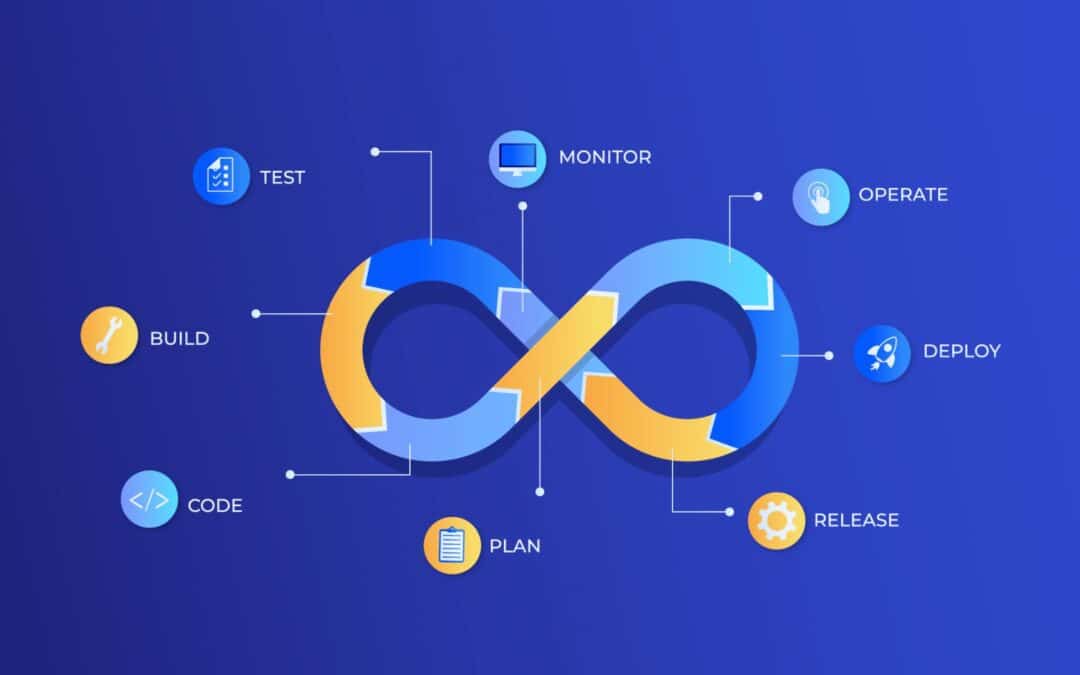
Effective DevOps practices rely on CI CD, continuous integration, continuous delivery, and a reliable DevOps pipeline. Automation tools, automated tests, integration tests, version control, and code repositories help DevOps teams protect code quality, reduce cognitive load, and prevent introducing bugs during the development cycle. These DevOps processes improve deployment frequency, system performance, and operational efficiency.
Strong security measures remain essential throughout the DevOps lifecycle. Teams must incorporate security early, apply security testing, security checks, access controls, and continuous monitoring to fix vulnerabilities early. Monitoring systems, real-time monitoring, and incident response ensure optimal performance, protect the production environment, and drive long-term DevOps success through continuous feedback and customer feedback.
Core Principles Of DevOps
DevOps principles define how modern organizations align people, processes, and technology across the entire development lifecycle. These principles help development and operations teams deliver reliable software faster while maintaining software quality, strong security measures, and long-term operational excellence.
Collaboration And Shared Responsibility
DevOps succeeds when development teams, operations teams, security teams, and the QA team operate with shared responsibility. Clear ownership across the software development process reduces silos and improves trust between team members. Each role contributes to the same outcome rather than isolated tasks.
This principle improves incident response, simplifies project management, and strengthens operational efficiency. Close collaboration also creates faster feedback from customer feedback and internal stakeholders. When teams align goals, DevOps success becomes measurable through better deployment frequency, fewer security issues, and consistent delivery across the production environment.
Automation Across The DevOps Lifecycle
Automation sits at the core of modern DevOps best practices. Automation tools reduce manual effort in configuration management, infrastructure components, testing, and deployment. This approach improves consistency across the development cycle and limits human error.
Automated workflows support CI CD, continuous integration, integration tests, and automated tests. These capabilities help teams manage frequent code changes without sacrificing stability. Strong automation also supports operational efficiency, allowing teams to increase scalability while meeting evolving market demands with confidence.
Continuous Integration And Delivery
Continuous integration and continuous delivery ensure that application code moves smoothly from source code to release. Frequent commits to code repositories supported by version control improve transparency and reduce risk within the DevOps pipeline.
This principle improves software delivery speed while maintaining code quality. Small, frequent releases simplify troubleshooting and reduce the impact of failures. When CI CD pipelines remain reliable, teams can deliver quality software, respond to change faster, and maintain stable system performance.
Continuous Monitoring And Feedback
Reliable DevOps systems depend on continuous monitoring and real-time monitoring across applications and infrastructure. Monitoring systems provide visibility into performance, errors, and user behavior within the production environment.
A strong feedback loop helps teams detect issues early and optimize performance. Metrics such as latency, error rates, and usage patterns guide smarter decisions. This approach supports continuous improvement, improves software quality, and ensures the product environment is based on real usage rather than assumptions.
Security Built Into DevOps Processes
Security must exist throughout the DevOps lifecycle, not as a final checkpoint. Teams should incorporate security early through security testing, security checks, and automated scans within CI CD pipelines. Early action helps fix vulnerabilities early before release.
This principle reduces security breaches and strengthens the software supply chain. Strong access controls, secure code repositories, and regular audits protect both data and systems. When security becomes part of daily workflows, teams reduce risk without slowing software development.
Continuous Improvement And Learning
DevOps relies on an iterative approach that values learning over perfection. Teams review outcomes, analyze failures, and refine DevOps processes using the right metrics. This mindset supports long-term digital transformation.
Regular retrospectives reduce cognitive load and improve team confidence. Feedback from incidents, releases, and users shapes better decisions across the development lifecycle. A culture of improvement helps organizations adapt to evolving needs while sustaining performance and reliability.
Toolchain Alignment And Right Metrics
Success depends on selecting the right tools that fit workflows rather than adding complexity. DevOps tools should support visibility, automation, and collaboration across teams and systems.
Metrics must reflect outcomes such as software quality, deployment frequency, operational efficiency, and recovery time. Clear measurement supports better project management decisions and prevents wasted effort. When tools and metrics align, teams reduce friction and focus on delivering value through a mature DevOps approach.
10 DevOps Best Practices
DevOps best practices help organizations balance speed, stability, and security across the entire development lifecycle. These practices guide development and operations teams toward reliable software delivery, better collaboration, and continuous improvement while meeting evolving market demands.
Build A Strong DevOps Culture
A successful DevOps approach starts with culture, not tools. Development and operations teams must share responsibility across the software development lifecycle. Clear communication, mutual trust, and aligned goals remove silos that slow progress and create friction during delivery.
This cultural shift improves project management and supports operational excellence. Team members understand how their work affects system performance, software quality, and customer experience. When teams value collaboration, incident response improves and accountability becomes clear across the devops lifecycle.
Leadership support plays a critical role in long-term devops success. Managers should encourage transparency, learning, and ownership rather than blame. A strong culture allows teams to adapt quickly to change, reduce cognitive load, and deliver quality software that supports evolving business needs.
Automate Repetitive Processes
Automation remains a cornerstone of DevOps best practices. Manual tasks within configuration management, testing, and deployment often lead to errors and slow delivery. Automation tools create consistent workflows that reduce risk across the development cycle.
Automated tests, integration tests, and deployment scripts support frequent code changes without compromising stability. CI CD pipelines allow DevOps teams to release updates faster while maintaining code quality and operational efficiency. These systems also support higher deployment frequency and predictable software delivery.
Automation frees teams to focus on improvement rather than routine work. This approach strengthens the software development process, improves system reliability, and helps organizations respond faster to market demands while maintaining control over infrastructure components.
Adopt Continuous Integration And Delivery
Continuous integration and continuous delivery form the backbone of modernizing software. Frequent commits to code repositories supported by version control reduce integration risk and improve visibility across development teams.
CI CD pipelines validate application code through automated tests and security checks before release. Smaller release cycles reduce failure impact and simplify troubleshooting within the production environment. This practice improves software delivery speed without sacrificing quality.
Teams that adopt DevOps practices around CI CD gain confidence in releases and improve collaboration across operations teams and QA teams. Reliable pipelines help organizations meet customer expectations while supporting long-term DevOps transformation.
Manage Infrastructure As Code
Infrastructure as code brings consistency and control to infrastructure components. Configuration files define environments in a repeatable way, reducing drift between development, testing, and production systems.
This practice supports faster provisioning and reliable recovery during incident response. Infrastructure changes follow the same review process as application code, improving traceability and accountability across DevOps teams.
Infrastructure as code improves operational efficiency and system performance. Teams reduce manual configuration errors and maintain stable environments throughout the entire development lifecycle, which leads to better software quality and predictable releases.
Monitor Systems Continuously
Continuous monitoring ensures visibility across applications, services, and infrastructure. Monitoring systems provide real-time monitoring data on latency, errors, and resource usage within the production environment.
This visibility supports faster issue detection and informed decision-making. Teams respond quickly to anomalies before users experience disruption, which protects customer trust and software quality.
A strong feedback loop from monitoring data supports continuous improvement. Metrics guide optimization efforts and help teams maintain optimal performance while scaling services to meet evolving needs.
Integrate Security From The Start
Security must exist throughout the DevOps lifecycle rather than as a final step. Teams should incorporate security early through security testing, automated security checks, and access controls within CI CD pipelines.
Early security testing helps fix vulnerabilities early and reduces development cost. Secure code repositories, dependency checks, and software supply chain reviews protect application code from common security issues.
This practice reduces security breaches and strengthens trust across development teams and security teams. Security-first DevOps processes support stable software delivery without slowing development velocity.
Use Version Control Effectively
Version control supports collaboration, traceability, and accountability within DevOps teams. Centralized code repositories allow team members to track changes, review source code, and resolve conflicts efficiently.
Clear branching strategies reduce risk during the development cycle and support parallel work streams. Version control also enables rollback during incidents, which improves incident response and system stability.
Effective version control improves code quality and supports reliable CI CD pipelines. This practice strengthens the software development lifecycle and ensures teams maintain control over frequent code changes.
Measure The Right Metrics
Metrics guide decision-making across the DevOps approach. Teams should track indicators such as deployment frequency, recovery time, error rates, and system performance rather than vanity metrics.
The right metrics align technical work with business goals and market demands. Data-driven insights help teams identify bottlenecks and optimize processes across the DevOps pipeline.
Clear measurement supports operational excellence and continuous improvement. Teams gain visibility into progress and maintain focus on outcomes that improve software quality and customer satisfaction.
Enable Continuous Feedback
Continuous feedback connects users, teams, and systems throughout the development lifecycle. Customer feedback, monitoring insights, and team reviews create a reliable feedback loop.
This practice helps DevOps teams adjust feature priorities and improve the software development process. Feedback from production systems highlights performance gaps and usability issues early.
Organizations that value feedback deliver better software delivery outcomes. Teams adapt quickly, reduce waste, and align releases with real user needs.
Choose The Right DevOps Tools
Tools support DevOps practices but never replace process or culture. DevOps tools should integrate smoothly across CI CD, monitoring systems, AI automation tools, and configuration management.
Tool alignment reduces friction and cognitive load for team members. Integrated platforms improve visibility across development teams and operations teams.
The right tools support operational efficiency, optimal performance, and long-term DevOps success. Careful selection ensures technology enables teams rather than slowing progress across the entire development lifecycle.
Common DevOps Mistakes And How Best Practices Fix Them
Many DevOps failures come from process gaps rather than technology limits. Understanding common DevOps mistakes helps development and operations teams apply DevOps best practices correctly, improve software delivery, and protect software quality across the entire development lifecycle.
Lack Of Team Collaboration
A frequent DevOps mistake involves poor collaboration between development teams, operations teams, and security teams. Separate goals and unclear ownership create delays, miscommunication, and conflict during the software development lifecycle.
DevOps best practices fix this issue through shared responsibility and aligned objectives. Cross-functional collaboration improves project management and supports faster incident response. When teams communicate openly, software delivery becomes predictable, and system performance remains stable across environments.
Overreliance On Manual Processes
Manual workflows slow the DevOps pipeline and increase the risk of errors. Configuration management, testing, and deployment performed by hand often lead to inconsistent environments and production issues.
Automation tools solve this problem by standardizing DevOps processes. Automated tests, integration tests, and CI CD pipelines reduce human error and support frequent code changes. Automation improves operational efficiency while maintaining code quality and reliable releases.
Late Security Implementation
Security applied at the final stage of delivery exposes applications to serious security issues. Late security testing allows vulnerabilities to reach the production environment and increases the risk of security breaches.
DevOps best practices incorporate security early through security checks, security testing, and access controls. Early security testing helps fix vulnerabilities early and strengthens the software supply chain without slowing software development.
Poor Monitoring And Visibility
Limited monitoring systems reduce visibility into application behavior and infrastructure components. Teams often discover issues only after users report failures, which damages trust and software quality.
Continuous monitoring and real-time monitoring address this gap. Monitoring systems provide actionable insights that improve incident response and support optimal performance. Strong visibility helps DevOps teams maintain stability and continuous improvement.
Ignoring Feedback Loops
Teams that overlook customer feedback and internal feedback lose opportunities for improvement. Without a feedback loop, DevOps processes fail to adapt to market demands and evolving needs.
DevOps best practices emphasize continuous feedback from users, monitoring data, and team reviews. Feedback guides better decisions, improves software delivery, and aligns development priorities with real business value.
Weak Version Control Practices
Inconsistent version control leads to code conflicts, lost changes, and unstable releases. Poor management of source code increases risk during the development cycle.
Strong version control practices fix this issue by maintaining clear commit histories and controlled access to code repositories. Reliable version control improves code quality, supports CI CD pipelines, and simplifies incident response.
Wrong Metrics And Tool Choices
Many teams track metrics that fail to reflect DevOps success. Vanity metrics and disconnected DevOps tools increase cognitive load and reduce operational efficiency.
DevOps best practices focus on the right metrics, such as deployment frequency, recovery time, and system performance. Careful tool selection supports DevOps transformation and helps teams maintain long-term operational excellence.
How GainHQ Supports DevOps Best Practices
GainHQ supports DevOps best practices by centralizing communication, visibility, and feedback across development and operations teams. Clear conversation history, shared inboxes, and structured workflows reduce silos and improve collaboration throughout the software development lifecycle. Teams manage incidents, customer feedback, and internal requests from one platform, which improves operational efficiency and incident response.
GainHQ also strengthens continuous feedback and monitoring efforts. Support tickets, user issues, and feature requests create a reliable feedback loop that connects real customer needs with DevOps teams. This insight helps teams fix vulnerabilities early, improve software quality, and optimize system performance.
By aligning support data with DevOps processes, GainHQ helps teams deliver stable software faster, adapt to evolving needs, and maintain long-term DevOps success without adding unnecessary complexity.
FAQs
Do DevOps Best Practices Work For Small Teams?
Yes. DevOps best practices scale well for small teams when processes stay simple and focused. Even lean development and operations teams can improve software delivery, code quality, and operational efficiency by adopting CI CD, automation tools, and shared responsibility early.
Can DevOps Best Practices Reduce Deployment Risks?
Yes. DevOps best practices reduce risk by promoting smaller code changes, continuous integration, automated tests, and reliable DevOps pipelines. These practices improve visibility across the development lifecycle and help teams detect issues before they reach the production environment.
Do DevOps Practices Require Expensive Tools?
No. DevOps success depends more on process and culture than on tool cost. Many DevOps tools offer open-source or affordable options that support version control, monitoring systems, automation, and configuration management without increasing cognitive load.
Is DevOps Only Relevant For Cloud-Based Teams?
No. DevOps practices apply to both on-premise and cloud environments. Infrastructure components, CI CD workflows, security testing, and continuous monitoring improve software quality regardless of deployment model.
Does DevOps Replace Traditional Project Management?
No. DevOps complements project management rather than replacing it. Agile project management aligns well with DevOps principles by supporting continuous feedback, faster software delivery, and adaptive planning across the entire development lifecycle.
How Long Does A DevOps Transformation Take?
DevOps transformation varies by organization size and maturity. Teams often see early improvements in deployment frequency and incident response within months, while long-term operational excellence develops through continuous improvement and learning.
Can DevOps Best Practices Improve Customer Experience?
Yes. DevOps best practices improve customer experience by enabling faster releases, better system performance, and rapid response to customer feedback. Continuous delivery and real-time monitoring help teams meet evolving needs with stable, high-quality software.
Software development continues to drive major shifts across the global tech industry as the latest trends in software development redefine how organizations build and scale digital products. Software developers to adopt new tools, programming languages, and innovative approaches. According to Fortune Business Insights, significant advancements in artificial intelligence, edge computing, and cloud services reshape the modern software development lifecycle and overall development process.
Software development trends now focus on AI tools, generative AI, machine learning, and low code development platforms to improve software delivery and operational efficiency. Software development teams use cloud native apps, independent services, and data analysis to support complex business processes and mobile-first strategies. These emerging trends help business leaders achieve better business outcomes through faster, smarter, and more resilient software solutions.
In this article, we’ll explore the ten most important software development trends that will shape the industry in 2026.
1. AI-Driven Development And Intelligent Automation
Artificial intelligence now sits at the core of modern software development. In 2026, AI-driven development reshapes how software teams write, test, and deliver software code, while intelligent automation strengthens speed, accuracy, and operational efficiency across the entire development process.
AI Role In Modern Code Development
Artificial intelligence has become a practical foundation for daily code development across the software development industry. Software developers now rely on AI-powered tools to assist with logic creation, syntax accuracy, and pattern recognition across different programming languages. These tools reduce cognitive load and allow development teams to focus on higher-value tasks within the software development lifecycle.
AI models also help software teams maintain consistency across large codebases. By understanding repositories, dependencies, and business rules, artificial intelligence supports cleaner architecture and fewer errors. This shift improves software delivery timelines and helps organizations align application development with broader digital transformation initiatives and business outcomes.
Developer Workflow Transformation With AI Tools
Developer workflows have changed significantly due to the widespread adoption of AI tools. Instead of writing every line manually, software developers now supervise AI-generated software code and refine outputs for quality and SaaS security. This approach accelerates the development process while preserving accountability and control.
Software development teams benefit from faster iterations, improved collaboration, and clearer task ownership. AI-powered tools handle repetitive tasks, while skilled developers focus on system design, data analysis, and strategic decisions. This balance improves operational efficiency and supports scalable software solutions in a constantly evolving tech industry.
Popular AI Tools Used By Software Teams
Modern AI tools offer advanced capabilities that go far beyond basic code suggestions. Many platforms analyze entire repositories, manage independent services, and coordinate changes across cloud native apps. Some tools specialize in rapid prototyping, while others excel at debugging, architectural updates, or threat detection.
Software teams often combine multiple AI-powered tools to match specific project needs. This flexible approach supports cloud computing, edge computing, and mobile-first strategies. As emerging technologies mature, AI tools continue to integrate seamlessly with cloud services and low-code platforms to enhance overall software delivery.
Intelligent Automation Benefits In Development Process
Intelligent automation pairs artificial intelligence with workflow automation to improve productivity across software development teams. Automated testing, deployment, and monitoring reduce human error and lower development costs. These systems also improve energy efficiency and operational costs through optimized resource usage.
Data-driven insights from automated systems support faster decision-making and better risk management. Software teams gain valuable insights into performance, security gaps, and delivery bottlenecks. This structured approach strengthens operational efficiency and helps business leaders achieve consistent results from digital transformation efforts.
Challenges And Future Of AI In Software Engineering
AI-generated code introduces challenges that software teams must address carefully. Security vulnerabilities, technical debt, and complex data flows require strong review processes and experienced oversight. Without skilled developers, AI outputs can harm long-term software quality.
Despite these risks, AI remains central to future development trends. Market growth and new technologies continue to create demand for professionals who can guide AI models effectively. Success in the software development industry depends on strategic guidance, human expertise, and responsible use of artificial intelligence.
2. Cloud Native Architecture And Serverless Adoption
Cloud native architecture defines how modern software development teams build scalable, resilient applications in 2026. Combined with serverless adoption, this approach helps organizations reduce infrastructure complexity, optimize operational costs, and accelerate software delivery across cloud computing environments.
Cloud Native Principles In 2026
Cloud native architecture focuses on design patterns that fully leverage cloud computing capabilities. Software development teams now build applications as independent services rather than tightly coupled systems. This structure improves fault isolation, simplifies maintenance, and supports continuous software delivery across distributed environments.
Containers and microservices form the backbone of cloud native apps. Each service runs independently and communicates through well-defined interfaces. This model allows software teams to scale individual components without affecting the entire system. As digital transformation accelerates, cloud native principles support flexibility, faster updates, and consistent performance across cloud services.
Microservices Role In Modern Applications
Microservices architecture breaks large applications into smaller, manageable units that align with specific business processes. Each service owns its data and logic, which improves clarity and accountability across development teams. This structure also supports diverse programming languages and technology stacks within a single application.
Software developers benefit from faster deployment cycles and reduced risk during updates. Teams can modify one service without disrupting others, which improves reliability and operational efficiency. Microservices also integrate well with cloud native apps and independent services, making them essential for scalable application development in the modern tech industry.
Serverless Vs Traditional Cloud Models
Serverless computing removes the need for direct infrastructure management. Cloud providers handle provisioning, scaling, and maintenance while software developers focus on code development and business logic. This shift reduces operational overhead and supports faster innovation across software teams.
Traditional automation requires active server management, capacity planning, and manual updates. Serverless adoption simplifies these tasks and improves resource utilization. Development teams gain flexibility, lower development costs, and better alignment with agile practices, especially when workloads vary across time and usage patterns.
Scalability And Performance With Serverless
Serverless platforms automatically adjust computing power based on real-time demand. Applications maintain consistent performance during traffic spikes and reduce resource usage during quiet periods. This dynamic scaling removes the risk of underprovisioned or overprovisioned systems.
Software teams also benefit from zero idle cost models, where resources scale down when functions remain inactive. This approach improves operational efficiency and supports cost-effective software delivery. For mobile devices, APIs, and event-driven systems, serverless computing ensures reliable performance without manual intervention.
Cost Control In Cloud Native Deployments
Cloud cost optimization remains a critical priority for business leaders in 2026. Many organizations waste resources due to idle services, oversized instances, and poor visibility into cloud spending. Cloud native tools now provide detailed usage insights through tagging, monitoring, and automated reporting.
Committed use discounts help reduce long-term compute expenses for stable workloads. Automated anomaly detection alerts software teams to unexpected cost spikes early. This proactive strategy supports sustainable cloud operations and aligns cloud services with measurable business outcomes.
3. Low Code And No Code Development Platforms
Low code and no code development platforms reshape the modernization of software development in 2026 by simplifying application development and accelerating digital transformation. These platforms reduce development costs, address the global shortage of skilled developers, and help software teams deliver innovative solutions faster across the software development lifecycle.
Market Growth And Technology Maturity
Low-code development platforms show strong market growth as technology trends favor speed and flexibility. Businesses adopt low-code platforms to support cloud computing, cloud services, and cloud native apps without deep reliance on traditional software code. Fortune Business Insights highlights steady expansion driven by demand for faster software delivery.
Platform maturity now includes AI-powered tools, pre-built components, and seamless data source integration. Software development teams can connect business processes, mobile devices, and related services with minimal effort. This progress supports widespread adoption across the tech industry and other technologies.
Business Drivers Behind Low Code Adoption
A global shortage of skilled developers pushes business leaders toward low code development and no-code platforms. These tools shorten the development process and help development teams maintain consistency across projects. Faster delivery improves operational efficiency and supports agile development.
Low-code tools also lower barriers for innovation. Business units create software solutions aligned with digital transformation initiatives without heavy IT dependency. This shift improves business outcomes, reduces operational costs, and allows software teams to focus on complex application development and strategic guidance.
No Code Platforms And Practical Use Cases
No code platforms enable non-technical users to build applications that support daily operations. Teams create internal tools, dashboards, and workflow automation for data analysis and reporting. These software solutions reduce repetitive tasks and improve operational efficiency.
Customer-facing applications also benefit from no-code tools. Progressive web apps, push notifications, and mobile-first strategies enhance user experience across mobile devices. This flexibility helps organizations respond quickly to emerging trends and evolving customer expectations.
Enterprise Adoption And Governance Strategy
Enterprise adoption of low code platforms continues to rise as development trends shift toward speed and control. Organizations establish governance models to guide software teams and citizen developers. Centers of Excellence define standards for security, performance, and software delivery.
This approach helps maintain consistency across distributed teams and independent services. Business leaders gain visibility into development activities while supporting innovation through new tools, emerging technologies, and low-code platforms aligned with long-term digital transformation goals.
Security, Scalability, And Long Term Limits
Low-code and no-code platforms introduce security risks that require careful oversight. Weak authentication, unsecured data flows, and third-party components increase exposure to threat detection challenges. Citizen developers often lack formal security training, which raises concern.
Scalability also limits complex applications. Pre-built components restrict customization, and collaboration across software development teams becomes difficult at scale. Skilled developers remain essential to review architecture, ensure performance, and protect long-term software quality in a constantly evolving landscape.
4. Microservices Architecture For Scalable Systems
Microservices architecture has become a simple structural approach that development teams use to build adaptable systems. This design pattern breaks applications into smaller, independent services that communicate via APIs. The flexibility it creates surpasses what traditional architectures can offer.
How Microservices Differ From Monoliths
Microservices architecture stands in stark contrast to monolithic design. The original monoliths packed all functionality into a single codebase, which created bottlenecks as systems grew. Microservices split applications into loosely coupled, self-contained services that teams can deploy independently. Each service runs its own process and manages its own database, unlike monoliths that share a single database. A failure in a microservice stays isolated to that service, while in monoliths, one failure can bring down the entire system.
Benefits For Large-Scale Applications
Complex, large-scale applications gain many advantages from microservices. Teams can work at the “human scale,” which prevents the communication overhead that happens with large teams working on monolithic codebases. Individual components scale based on actual needs instead of scaling the entire application. Microservices let teams pick different programming languages that work best for specific tasks. They also reduce regulatory surface area because only relevant services must comply with frameworks like PCI or HIPAA.
Common Tools And Frameworks
Managing microservices needs specific tools. Kubernetes leads the pack as the standard for container orchestration in microservices environments. Monitoring tools like Prometheus are vital for visualizing and tracking unusual patterns in distributed services. Teams can develop microservices with various programming frameworks. Spring Boot works well for Java applications, Go Micro suits Go programming, and Eclipse Vert. X handles event-driven development.
Challenges In Managing Microservices
Microservices bring their share of complexity. Teams must oversee many services, each with its own technology stack, which need reliable tools and processes. Service-to-service communication poses challenges that require secure data exchange protocols. Data consistency becomes tricky to maintain across distributed systems. The operational workload increases because teams must handle the deployment, monitoring, and scaling of multiple independent services.
5. DevOps Evolution With DevSecOps Practices
DevSecOps represents a natural progression beyond traditional DevOps in today’s software development world. Teams now build secure applications from scratch without compromising on development speed through this integrated approach.
What DevSecOps Adds To DevOps
DevSecOps enhances DevOps by embedding security practices throughout the software development lifecycle. Security becomes part of the process rather than an afterthought. Traditional DevOps workflows often delayed security checks until the end, which led to fixes that got pricey and caused delays.
Moving security earlier into active development stands as the primary goal of this approach. Development teams can spot vulnerabilities during the coding stage. This helps them strengthen deployment security and compliance by tackling problems right away.
Security Integration In CI/CD Pipelines
Protection measures spread across continuous integration and delivery pipelines form the basis of CI/CD security. Secure software delivery depends on this integration because teams can detect and alleviate vulnerabilities early. Organizations implement automated security checks at each pipeline stage for this reason.
Key components of secure CI/CD pipelines include:
Static application security testing (SAST) – scans source code for vulnerabilities early in development
Software composition analysis (SCA) – inspects open-source components for weaknesses
Secrets management – securely handles sensitive data like API keys and credentials
Popular DevSecOps Tools In 2026
DevSecOps tools have grown more sophisticated as development processes advance. AI-powered tools now give context-aware security feedback directly in developer IDEs. Policy-as-Code and Zero Trust automation through tools like Open Policy Agent (OPA) and Vault have become crucial for cloud-native security.
Software supply chain security tools that create Software Bill of Materials (SBOM), sign artifacts, and manage dependencies have become standard practice. These tools help tackle the rising threat of supply chain attacks.
Cultural Shifts In DevOps Teams
DevSecOps adoption needs major cultural changes. Organizations must eliminate barriers between development, operations, and security teams. Success depends more on cultural adoption and collaboration than on tools alone.
This transformation reaches beyond technical teams and promotes continuous improvement across organizations. Studies show that 94% of organizations with strong DevSecOps practices report better collaboration between security and development teams.
Six steps help achieve this cultural change: establishing change readiness, securing executive sponsorship, engaging stakeholders, communicating effectively, developing capabilities, and arranging organizational structures.
6. API First Development And System Integration
APIs have grown beyond simple technical connectors to become the backbone of state-of-the-art technology. They silently power how digital products combine smoothly, scale, and evolve in 2026. This fundamental change has altered the map of software creation at every level.
Why API First Is The New Standard
API First Development has become the default strategy, moving beyond just a best practice. More than 80% of development teams now use some form of API-first workflow. This strategy puts APIs at the heart of product design from the beginning, instead of adding them later.
The benefits stand out clearly:
Development speed – Teams work in parallel with front-end and back-end developers, building independently against the same API contract
Better scalability – APIs let you reuse services in a variety of products, regions, and platforms
Improved collaboration – Clear interfaces cut down rework, reduce integration errors, and make maintenance simpler
Many businesses now build their platforms with an API-first mindset. They create the API before the front-end to build a solid foundation. This method supports quick experimentation and reduces risk, both vital in competitive markets.
REST Vs GraphQL In 2026
RESTful APIs still lead the market, but GraphQL has gained significant ground. Over 61% of developers used GraphQL in production by 2025, and this trend continues into 2026.
Teams choose between them based on specific needs. RESTful interfaces work well with standard HTTP methods for resource operations. GraphQL lets clients request exactly what they need, which prevents data over-fetching and under-fetching.
The choice depends on your specific needs. Mobile apps with complex data requirements work better with GraphQL, while simple CRUD microservices usually prefer REST.
Best Practices For API Design
Good API design matters because it defines system communication. Resource-oriented design should come first; organize your API around business entities rather than operations. Resource names need nouns, and collection URIs need plural nouns.
Clear naming conventions and consistent URL structure make a difference. The relationships between resources should stay simple and flexible to avoid complex URIs.
Documentation has become non-negotiable in 2026. Professional development teams prove their worth through well-documented APIs. OpenAPI/Swagger tools help describe endpoints, request/response models, and authentication methods clearly.
How APIs Enable System Interoperability
APIs create standard pathways for various elements to share data across platforms. This connectivity reshapes the scene in industries from healthcare to security by linking isolated systems.
Healthcare systems overcome connectivity challenges through APIs that define clear transmission and security rules. Federal organizations have started including API strategies to meet interoperability standards.
APIs cut integration costs by making the process straightforward and reducing the need for custom solutions. Organizations can use their resources more effectively, which boosts overall system performance without breaking the budget.
7. Edge Computing For Faster Data Processing
Edge computing has become one of the most important trends in software development as developers push for faster data processing. This distributed computing framework processes data closer to its source. It optimizes performance and minimizes data travel distance across applications.
What Edge Computing Solves
Edge computing tackles three major challenges in modern applications. Local processing of data on devices or nearby gateways reduces latency. Every millisecond counts for time-sensitive applications that need quick responses. The system uses bandwidth more efficiently by sending only essential or preprocessed data to the cloud. Edge solutions also keep services running during cloud connectivity issues.
Use Cases In IoT And Real-Time Apps
Edge computing shows its value in real-life applications across industries. Autonomous vehicles need it to process data from radar, LiDAR, and traffic cameras right on the spot. Smart traffic systems make intersections safer and improve flow by analyzing data at the edge. Medical professionals receive patient data instantly through edge computing, which supports robot-assisted surgeries and remote monitoring. Retail stores make use of information from edge computing to enhance customer experience and run advanced analytics.
Edge Vs Cloud: When To Use Each
Your choice between edge and cloud depends on what you need. Edge computing shines when you need up-to-the-minute processing, quick responses, or to handle large data volumes that cost too much to transmit. Cloud computing works best for apps that need massive computing power, reliable internet, and centralized data analysis. Many successful solutions combine both – edge handles immediate processing, while the cloud takes care of storage and complex analytics.
Security And Maintenance At The Edge
Edge computing brings unique security challenges. Each device becomes a potential entry point in this distributed system, which creates more attack surfaces. Edge device maintenance must address hardware differences, connection issues, and identity management. A detailed security plan should include encryption, authentication, monitoring, and regular updates.
8. Cybersecurity Focus In Modern Software Development
Cybersecurity has evolved from an optional add-on to become a vital part of software development. The year 2026 brings new digital threats that make security a pioneering development priority.
Top Security Threats In 2026
Security threats have become more sophisticated and harder to detect. AI-powered phishing and social engineering attacks are the main concerns now. Attackers use generative and agentic AI to create impersonations that look almost real. Social engineering poses a special danger because it targets human psychology instead of technical security gaps.
Other major threats include:
Automated malware that finds vulnerabilities, creates exploits, and launches attacks within hours
Identity and access attacks, including credential theft and MFA fatigue tactics
Ransomware attacks have grown more complex and cause substantial financial damage
Third-party exposure creates entry points for cybercriminals through weak vendor system security
Zero Trust Architecture Explained
Zero Trust Architecture (ZTA) has become the leading security model that replaces traditional perimeter-based approaches. ZTA works on three core principles: verify explicitly, use least privilege access, and assume breach. Traditional models trust everything inside the corporate firewall. ZTA verifies each request as if it came from an untrusted network.
ZTA secures all communication between data sources and computing services as resources, whatever their network location. Dynamic policies control access to resources based on user identity, application state, and environmental attributes. This model trusts no asset by default.
AI-Powered Threat Detection
Modern threat detection needs AI to help security teams spot and respond to threats faster than humans can. AI systems analyze network traffic, user behavior, and system logs to create normal activity baselines.
Ethical AI makes detection better through live data analysis. It spots anomalies that traditional methods miss and reduces false alarms substantially. Behavior-based analysis helps identify known threats and zero-day attacks by finding unusual patterns.
Compliance And Data Privacy Trends
Regulatory requirements keep getting stricter as state and federal authorities enforce them more rigorously. Twenty states now have consumer privacy laws. Kentucky, Rhode Island, and Indiana recently added their rules to this digital world.
State attorneys general work together more often to enforce rules, especially for opt-out mechanisms. The FTC has made protecting minors its feature prioritization through strict enforcement of updated COPPA regulations.
9. Remote First Development And Distributed Teams
Remote work has brought a fundamental change to software development, transforming how teams work together and build products in 2026. A temporary solution during global disruptions has grown into a strategic advantage for organizations worldwide.
How Remote Work Has Evolved
Remote work’s trip goes back further than most people think. NASA engineer Jack Nilles first coined the term “telecommuting” in the 1970s, but the real surge happened in the last decade. Remote workers increased by 400% since 2010. Technology consulting services make more sophisticated collaboration possible, and this trend keeps gaining momentum. The pandemic became a catalyst that forced mass adoption and altered the map of organizational thinking about distributed workforces. Many companies now differentiate between being “remote-friendly” (traditional with flexible options) and “remote-first” (designed from the ground up for distributed work).
Tools That Support Distributed Teams
Today’s distributed teams depend on specialized tools:
Team Communication: Slack and Microsoft Teams serve as digital headquarters for remote teams and centralize conversations that would scatter across email otherwise
Version Control: Git-based systems make smooth code collaboration possible across time zones
Project Management: Asana and Trello bring clarity and accountability to remote project coordination
Real-time Collaboration: VS Code Live Share and similar tools help developers solve problems together, turning debugging from an individual task into shared work
Challenges In Collaboration And Culture
Technology advances haven’t eliminated unique obstacles for distributed teams. Communication gaps emerge without face-to-face interactions and can lead to misunderstandings. Time zone differences complicate scheduling and can isolate team members with limited overlap. Clear goals and tracking systems help maintain productivity and prevent common remote work distractions. Remote work intensifies security concerns because each home-based network becomes a potential weak point.
Hiring And Managing Global Talent
Global talent strategies offer compelling benefits, especially access to specialized skills and diverse viewpoints. Organizations now think like recruiters and focus on candidates’ experience throughout hiring. Developer retention needs environments where they feel like innovators, not just code writers. Successful global teams invest in cross-cultural training to bridge communication gaps and different decision-making styles. Team members’ psychological safety becomes vital – they should feel comfortable raising issues and sharing ideas freely.
10. Sustainable And Green Software Engineering
Software development teams now realize that each line of code comes with an energy cost. The computing sector generates between 1.8% and 3.9% of global greenhouse gas emissions. This makes eco-friendly practices crucial.
What Makes Software Sustainable
Software Engineering meets climate science, software practices, hardware optimization, and data center design to create sustainable solutions. The goal is to build applications that use minimal energy without losing functionality. Environmental, social, economic, and technical sustainability work as one to create software that serves today’s needs while protecting tomorrow’s resources.
Energy-Efficient Coding Practices
Best practices in coding cut environmental damage and operating costs. Developers can use algorithms that need less memory and add lazy initialization to save power when resources sit idle. C proves the most economical choice among programming languages for speed, energy, and memory usage.
Green Hosting And Infrastructure
Web hosts can shrink their environmental footprint by using renewable energy from solar and wind power. Many cloud providers aim for sustainability by adding energy-efficient cooling systems. They also optimize server use through virtualization. Breaking applications into smaller services with a microservices architecture leads to smarter resource use and better energy efficiency.
Measuring Carbon Footprint In DevOps
The right tools help measure carbon emissions effectively. Carbon Impact evaluates emissions in hybrid environments, while Cloud Carbon Footprint shows unified cost-and-carbon dashboards. These tools convert CPU, memory, and network I/O metrics into CO2 equivalent measurements. Teams can use Workload Carbon Optimizer to place workloads where they produce fewer greenhouse gas emissions.
How GainHQ Supports The Latest Trends In Software Development
GainHQ serves as a strategic technology partner that helps businesses align with the latest trends in software development. Built for modern software development teams, the platform supports cloud computing, gen AI, and automation to streamline the development process and improve software delivery. Tech leaders rely on GainHQ to translate emerging technologies into scalable software solutions that support long-term digital transformation goals.
GainHQ enables development teams to adopt innovative approaches such as AI-powered tools, data analysis, and intelligent automation without disrupting existing business processes. The platform supports distributed teams, agile practices, and secure collaboration across cloud services. These capabilities help organizations respond faster to other trends such as low-code platforms, edge computing, and evolving security demands.
By focusing on operational efficiency, compliance, and sustainability, GainHQ helps businesses reduce development costs and technical debt. Support for future-facing technologies like virtual reality and gen AI ensures that companies stay competitive as the tech industry continues to evolve.
FAQs
How Do Latest Trends In Software Development Affect Small Businesses?
Latest trends in software development help small businesses reduce development costs, improve operational efficiency, and adopt innovative solutions faster. Cloud computing, low code platforms, and AI-powered tools lower entry barriers for modern application development.
Which Programming Languages Matter Most In 2026?
Different programming languages serve different needs in the software development industry. Python, JavaScript, Go, and Rust support AI tools, cloud native apps, edge computing, and scalable software solutions across diverse business processes.
How Do Software Development Trends Improve Software Delivery Speed?
Software development trends focus on automation, cloud services, and agile practices. These approaches shorten release cycles, reduce manual effort, and help software teams deliver reliable software solutions faster.
Why Do Business Leaders Track Emerging Technologies Closely?
Emerging technologies provide valuable insights into future business outcomes. Tech leaders use data analysis, gen ai, and other trends to guide digital transformation initiatives and stay competitive in a constantly evolving tech industry.
How Does Edge Computing Support Mobile Devices And IoT?
Edge computing processes data closer to mobile devices and IoT sources. This approach reduces latency, improves performance, and supports real-time software delivery without overloading cloud services.
What Role Do AI Models Play Beyond Code Development?
AI models assist with threat detection, data analysis, testing, and software lifecycle optimization. These capabilities help software development teams maintain consistency and improve long-term software quality.
How Do Development Teams Prepare For Future Technology Trends?
Development teams invest in new tools, strategic guidance, and continuous learning. Adopting flexible architectures and monitoring emerging trends helps teams adapt quickly to new technologies and changing business demands.