

Modern cloud-native systems rely heavily on the application programming interface as the foundation for scalable architecture. Teams once depended on a code first approach, where developers wrote backend logic before defining how services communicate. That model created gaps in web development, delayed early feedback, and made it harder to build apis that aligned with business goals.
An api first company instead prioritizes designing contracts before developing apis, which clarifies why api strategy matters across the entire system. Clear specifications help teams manage internal apis, handle sensitive data, and ensure secure ways to transfer data between services.
Standard formats like query language structures also improve consistency. With this method, teams can automate processes, conduct load testing earlier, and define functionality in a single line contract that guides development beyond traditional code first limitations.
What Is API-First Architecture In Cloud-Native Development
API first architecture in cloud-native development means treating your api design as the primary deliverable before writing implementation code. Teams create an api specification using formats like OpenAPI 3.1 or GraphQL SDL, defining api endpoints, data models, and http methods upfront. This api contract becomes the single source of truth for frontend developers, backend engineers, and third party developers alike.
Industry data shows that applications must reach market in six months or less to stay competitive. The api first methodology supports this timeline by enabling parallel development workflows. Frontend teams build against mock servers while backend engineers implement the core functionality. By 2026, analysts predict that 80% of enterprises will adopt some form of api first strategy for their software development process. Cloud-native systems depend on this approach because microservices require stable, well defined apis to communicate reliably across distributed environments.
7 Benefits Of API-First Architecture
API-first architecture plays a critical role in cloud-native development by enabling scalable, modular, and integration-ready systems. Clear API contracts allow teams to build, deploy, and evolve services faster without dependency bottlenecks.
1. Faster Microservices Deployment
Microservices architecture breaks large applications into smaller, independent services that communicate through apis. When you adopt an api first design, each service gets a clear api contract before development begins. This clarity eliminates the back-and-forth confusion that typically slows down development teams working on interconnected services.
The development process becomes predictable. Engineers know exactly what api requests each service accepts and what http status code responses to expect. Swiss Federal Railways adopted mandatory api first reviews and reported significant improvements in api quality and discoverability across their entire api lifecycle. Their standardized approach reduced deployment friction because services could integrate without extensive coordination meetings.
2. Stronger System Decoupling
Decoupling means that changes in one service do not break others. API first architecture enforces this separation by treating the api as a boundary between components. Each service owns its internal logic, but the api adheres to a published contract that consumers depend on.
Consider a scenario where your billing service needs a complete rewrite. With proper api design, you can replace the entire system behind the api without touching any consuming applications. The api endpoints remain stable. The data model stays consistent. Frontend applications, mobile apps, and third party services continue working normally.
This decoupling supports team autonomy. Different development team groups can own different services without constant coordination. One team manages user authentication. Another handles inventory. A third focuses on order processing. Each team operates independently as long as their apis follow the agreed specification.
3. Scalable Service Communication
Cloud-native applications handle variable traffic loads. API first architecture makes scaling straightforward because services communicate through standardized interfaces. When one service experiences high demand, you scale that specific service without affecting others.
Rest apis with proper http methods handle this gracefully. Load balancers distribute api traffic across multiple instances of a service. The api contract remains unchanged regardless of how many instances exist behind it. Consumers send api requests to the same endpoints whether one server or fifty servers process them.
4. Seamless Multi-Cloud Integration
Modern businesses rarely run on a single cloud provider. API first architecture simplifies multi-cloud deployments because apis abstract away infrastructure differences. A service running on AWS communicates with another service on Azure through standardized api calls.
The api acts as the integration layer. It does not matter which programming language each service uses or which cloud platform hosts it. The api specification defines the contract. Any service that implements that contract can participate in the system.
5. Improved Developer Productivity
Developer experience directly impacts how much effort teams spend building and maintaining software. API first architecture improves this experience through clear documentation, consistent patterns, and automation-friendly interfaces.
Interactive documentation generated from OpenAPI specifications lets developers save time learning new apis. Tools like Swagger create browsable api documentation automatically. Developers explore api endpoints, see request and response examples, and even test api calls directly from the documentation. This reduces onboarding time for new features and new team members.
Thorough documentation also helps non technical team members understand what the system can do. Product managers reference the api documentation when planning features. Support staff check api documentation to troubleshoot customer issues. Api stakeholders across the organization benefit from clear, accessible specifications.
6. Consistent Governance And Security
Api governance ensures that all apis in your organization follow consistent standards. API first architecture makes governance practical because every api starts with a reviewable specification document.
Before any code gets written, other stakeholders review the api design. They check naming conventions, response formats, authentication requirements, and versioning strategies. Problems caught at this stage cost far less to fix than issues discovered after implementation.
Api security improves when security requirements appear in the specification from day one. OAuth 2.0 flows, api keys management, and json web tokens authentication all get defined during api design. The implementation must protect data according to the documented security model.
7. Future-Proof Architecture Flexibility
Technology changes rapidly. API first architecture protects your investment by decoupling your interfaces from their implementations. When new features, new languages, or new platforms emerge, your apis remain stable while internals evolve.
Building blocks of your system can be replaced independently. A service written in Java today might become a Rust service tomorrow if performance demands it. The api contract does not change. Consumers never know the difference.
Versioning strategies handle breaking changes gracefully. When you must change an api in ways that affect consumers, you release a new version at a different path. Old consumers continue using the previous version until they migrate. This prevents the chaos of forcing all consumers to update simultaneously.
Why Cloud-Native Systems Depend On API-First Design
Cloud-native architecture assumes that services run as independent units that communicate over networks. This distributed nature requires reliable, well documented interfaces between every component. API first design provides exactly this reliability.
Service Discovery And Communication
Services in cloud-native environments come and go dynamically. Containers start and stop based on demand. API first design means each service advertises a stable interface regardless of where it runs. Service discovery mechanisms route api traffic to healthy instances automatically.
Container Orchestration Integration
Kubernetes and similar platforms manage thousands of containers across clusters. These orchestrators need to understand how services communicate. Well defined apis with health check endpoints let orchestrators route traffic intelligently. Failing services get removed from load balancers before they degrade user experience.
Event-Driven Architecture Support
Cloud-native systems often combine synchronous api calls with asynchronous events. API first thinking applies to both patterns. Event schemas define the data model for messages just as api specifications define request and response formats. Consumers depend on stable contracts whether they receive data through api requests or event streams.
Observability And Monitoring
Distributed systems need extensive monitoring. API first architecture makes observability practical because every interaction follows documented patterns. Monitoring tools track api requests, response times, and error codes consistently. When problems occur, engineers trace api calls across services to identify root causes.
Continuous Deployment Pipelines
Cloud-native teams deploy frequently, sometimes multiple times per day. Api testing validates compatibility before each deployment. Automated testing suites verify that api endpoints return expected responses. Contract tests confirm that producers and consumers remain aligned. This testing confidence enables the rapid deployment cadence that cloud-native development demands.
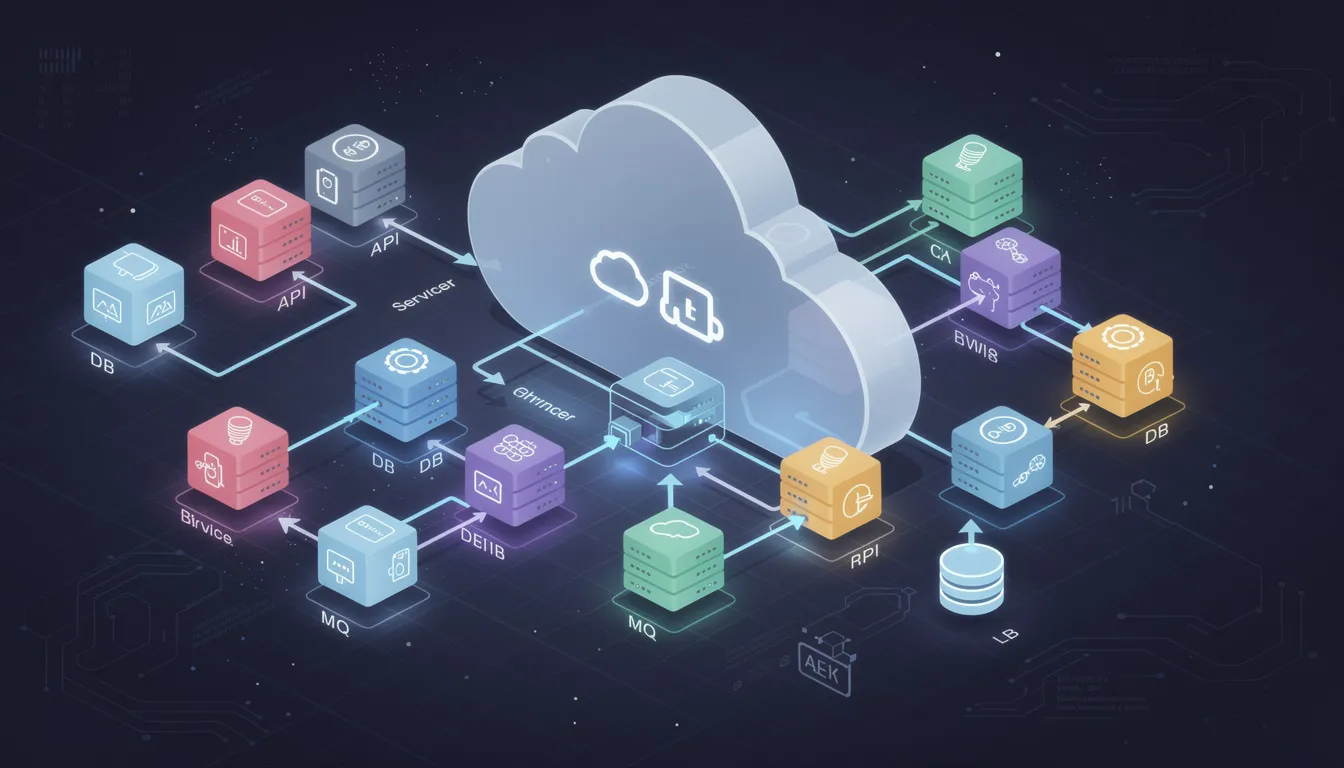
Key Components Of An API-First Cloud-Native Stack
Building an api first cloud-native system requires specific tools and practices. Each component serves a purpose in the software development lifecycle from design through production operation.
API Specification Formats
OpenAPI Specification in YAML or JSON format describes rest apis comprehensively. The specification covers endpoints, parameters, request bodies, responses, and authentication. GraphQL SDL serves a similar purpose for GraphQL apis. These machine-readable formats enable automation throughout the entire api lifecycle.
Mock Server Infrastructure
Mock servers like WireMock simulate api behavior before real implementations exist. Frontend teams build complete user interfaces against mocked responses. Quality assurance tests edge cases without depending on fragile test environments. Mock apis accelerate the development process significantly.
Contract Testing Tools
Pact and similar tools verify that api producers and consumers agree on contracts. Consumer tests define expectations. Producer tests confirm implementations meet those expectations. Mismatches fail builds before reaching production, preventing integration failures that frustrate users.
API Gateway Management
Gateways handle cross-cutting concerns like authentication, rate limiting, and routing. They sit between consumers and your services, enforcing api governance policies consistently. Modern gateways support both rest apis and GraphQL, routing api traffic appropriately based on request characteristics.
Documentation Generation
Tools generate interactive documentation from api specifications automatically. Swagger UI creates browsable interfaces where developers explore endpoints and test api calls. This api documentation stays synchronized with the actual implementation because both derive from the same specification source.
Common Challenges In API-First Cloud-Native Adoption
Transitioning to api first development involves organizational and technical changes. Understanding common challenges helps teams prepare and succeed.
Initial Design Overhead
Api first requires upfront investment in design before visible progress appears. Teams accustomed to shipping user interface prototypes quickly may feel frustrated. The api design process takes time, involving workshops with api stakeholders, domain modeling, and specification writing. This investment pays dividends later but requires patience initially.
Team Skill Gaps
Not every developer has experience designing apis as products. Skills like resource modeling, versioning strategy, and security design need development. Some teams benefit from training or consulting during initial adoption. Internal developers may need guidance on http methods, error handling patterns, and api security best practices.
Legacy System Integration
Existing systems often lack clean api boundaries. Databases expose internal schemas directly. Monolithic applications tangle business logic with data access. Creating facade apis in front of legacy systems takes effort. Teams must balance modernization against ongoing feature delivery.
Governance Process Resistance
Lightweight governance improves quality, but excessive process slows teams down. Finding the right balance requires iteration. Some organizations over-engineer review processes that frustrate developers. Others skip reviews entirely and end up with inconsistent apis. Effective api governance involves just enough oversight to maintain standards without becoming bureaucratic.
Cultural Shift Requirements
API first changes how teams think about their work. Engineers become interface designers. Product managers must understand api consumers. Success requires buy-in across the organization. Teams that treat api first as purely a technical initiative often struggle compared to those who embrace the organizational changes involved.
How GainHQ Supports API-Driven Cloud-Native Teams
GainHQ understands that modern development teams need tools designed for integration from the start. The platform applies api first architecture principles to help businesses build scalable, maintainable systems without the integration headaches that slow traditional development.
GainHQ accelerates api development through integrated api management tools. Teams design, mock, test, and deploy apis rapidly using workflows optimized for microservices architecture. The platform supports parallel development for web and mobile teams, ensuring consistent api contracts across all consumers.
Analytics capabilities track api traffic and usage patterns, helping teams optimize performance and maintain api security. Companies using GainHQ report faster time-to-market and greater reusability of services. For teams adopting api first strategy, GainHQ provides the building blocks needed to succeed. Learn more at gainhq.com.
FAQs
How Does API-First Architecture Improve Cloud Scalability?
API first architecture improves scalability by creating clear boundaries between services. Each service scales independently based on its specific load requirements. When one api endpoint receives heavy traffic, you add more instances of that service without scaling the entire system. Load balancers distribute api requests across instances automatically. This granular scaling approach uses cloud resources efficiently and keeps costs manageable.
What Is The Difference Between API-First And Service-Oriented Architecture?
Service-oriented architecture (SOA) focuses on organizing applications into reusable services. API first architecture focuses specifically on designing the interface before implementing the service. You can practice api first within SOA or microservices architectures. The key distinction is timing and priority. Api first means the api specification comes before code, while SOA describes how services relate to each other organizationally.
When Should Companies Transition To API-First Design?
Companies benefit from api first adoption when they face integration challenges, plan microservices migrations, or need to support multiple client applications from shared backends. Startups can adopt api first from their first sprint, avoiding costly rewrites later. Established companies often transition one domain at a time, creating facade apis for legacy systems while building new features api first.
How Does API-First Support Continuous Delivery Pipelines?
Api specifications enable automated testing throughout delivery pipelines. Contract tests verify that api changes remain compatible with consumers. Mock servers let teams test integrations without depending on shared environments. Code generation creates consistent client libraries automatically. These automations give teams confidence to deploy frequently, sometimes multiple times daily.
Which Tools Help Manage API Lifecycle Effectively?
Popular tools include OpenAPI for specification writing, Swagger for documentation generation, and Postman for api testing. WireMock creates mock servers for development. Pact handles contract testing between producers and consumers. API gateways like Kong or AWS API Gateway manage production traffic. Version control systems store api specifications alongside code, enabling proper change tracking and collaboration.