Team workloads continue to grow across modern organizations. Emails, reports, meetings, and repetitive tasks consume hours every day. Many teams struggle to keep up while still trying to deliver quality work.
Smarter AI tools help reduce that pressure. Automation handles routine tasks, while intelligent systems support faster decisions and smoother collaboration. Teams spend less time on manual work and more time on meaningful projects.
Businesses now rely on AI to improve productivity without increasing headcount. The right tools can simplify workflows, organize information, and support better teamwork. A curated list of smarter AI tools can help any team lighten workloads and operate more efficiently.
Team Workloads And Productivity Challenges In Modern Workplaces
Modern teams deal with constant pressure at work. Tasks arrive from many channels every day. Emails, meetings, and reports consume valuable time. Research from Asana shows employees spend nearly 58% of their time on coordination work instead of skilled tasks. Productivity often drops because of this imbalance.
Too Many Repetitive Tasks
Routine work still dominates the modern workplace. Employees spend hours writing emails, preparing meeting notes, and updating documents. McKinsey reports that nearly 45% of workplace activities can be automated with artificial intelligence, making it important to understand the differences between AI automation and traditional automation.
AI tools reduce this burden. Many AI apps handle repetitive work with just a few clicks. Tools like Notion AI inside a Notion workspace help teams create tasks, summarize information, and produce accurate text quickly. AI chatbots and virtual assistants also support everyday communication and task management.
Information Overload Across Platforms
Work information now lives in many systems. Teams use project tools, chat platforms, and cloud documents at the same time. Employees jump between web pages, dashboards, and mobile apps just to find one piece of information.
AI-powered systems solve that problem. A web-based tool can connect AI integrations with Google Workspace, Google Docs, and other apps. Modern artificial intelligence software helps teams summarize data, run data analysis, and locate important business data quickly without manual searching.
Slow Decision Making
Many organizations struggle to analyze data fast enough. Sales teams and operations leaders often wait hours or days for reports. IDC research shows companies lose nearly 30% productivity because of slow data access and analysis.
Modern generative AI tools and large language models improve this process. AI models process business data and deliver insights through natural language prompts. Platforms like Google AI Studio and dedicated predictive analytics software allow teams to test Gemini models and use advanced reasoning for faster decisions.
Growing Demand For Content Creation
Content creation requirements increase every year. Marketing teams must produce blog posts, videos, social media updates, and web pages regularly. Small teams often struggle to maintain that pace.
AI tools simplify creative work. AI image generators support image generation and image creation from a simple text prompt. Video tools now assist with video generation, video creation, and background music. Many platforms also support voice actors, voice prompts, and even voice cloning for faster production.
Limited Resources For Small Teams
Small business owners often handle many responsibilities alone. Marketing, customer support, product updates, and e-commerce tasks all compete for attention.
Best AI tools help smaller teams operate more efficiently. Many AI apps offer a free plan or free tier so businesses can test automation without risk. Some smarter software tools even provide completely free capabilities for code generation, website builder setup, and simple business workflows.
Complex Team Collaboration
Collaboration often becomes messy across multiple tools. Messages spread between AI chat platforms, email threads, and internal dashboards. Important details sometimes disappear in long conversations.
AI-powered collaboration platforms improve coordination. AI chatbots summarize meeting notes, organize discussions, and create tasks automatically. A unified platform also connects other apps and supports version control so teams can work from one central system.
Rapid Technology Change
Technology moves faster than many teams expect. New generative AI tools, AI agents, and AI models appear almost every month. Gartner reports that more than 70% of organizations now experiment with generative AI solutions.
Platforms such as Google Gemini support natural language commands, image generation, and web search capabilities. Many systems also offer granular control, api key access, and model training options. Teams that adopt the best AI tools early often gain a strong competitive advantage.
Role Of Smarter AI Tools In Reducing Team Workloads
Work pressure increases as teams manage more data, content, and communication. Manual processes slow progress and reduce productivity. Modern AI tools now automate routine tasks, analyze business data, and support faster collaboration. Organizations that adopt AI in SaaS platforms often see measurable improvements in efficiency and team performance.
Task Automation
Many teams lose hours on repetitive work. Email responses, data updates, and document preparation often repeat every day. McKinsey research shows automation powered by artificial intelligence can handle up to 45% of routine business tasks.
AI tools simplify these processes. AI assistants and AI agents can create tasks, organize schedules, and summarize meeting notes. Platforms such as notion ai inside a notion workspace also support project planning and documentation. Teams complete routine work faster and focus more on strategic activities.
Faster Data Insights
Business decisions require clear insights from data. Yet large datasets often slow teams down. Analysts spend time collecting and preparing information instead of focusing on results.
Generative AI tools solve this challenge. AI models powered by large language models can summarize data and perform data analysis quickly. AI-driven automation in SaaS platforms and tools like Google AI Studio allows teams to explore business data through natural language prompts. Tools connected with Google Workspace and Google Docs also help teams access information without complex queries.
Smarter Content Production
Content demand continues to grow across marketing and social media. Social media creators must publish posts, videos, and web pages regularly. Small teams struggle to maintain consistent output.
AI-powered tools accelerate content creation. AI image generators support image generation and image creation from a simple text prompt. Video tools also assist with video generation, background music, and video creation. In one example, AI features that increased engagement by 34% focused on guiding users through creative workflows more effectively. Voice prompts and voice cloning allow content teams to produce audio using their own voice.
Better Team Collaboration
Communication often spreads across many platforms. Messages appear in email, AI chat platforms, and project dashboards. Teams sometimes lose track of updates and discussions.
AI chatbots and virtual assistants improve collaboration. AI assistance can summarize conversations and convert them into clear meeting notes. A unified platform with AI integrations connects other apps, supports version control, and organizes workflows. Teams communicate faster and maintain clear visibility across projects.
10 Smarter AI Tools That Help Lighten Team Workloads
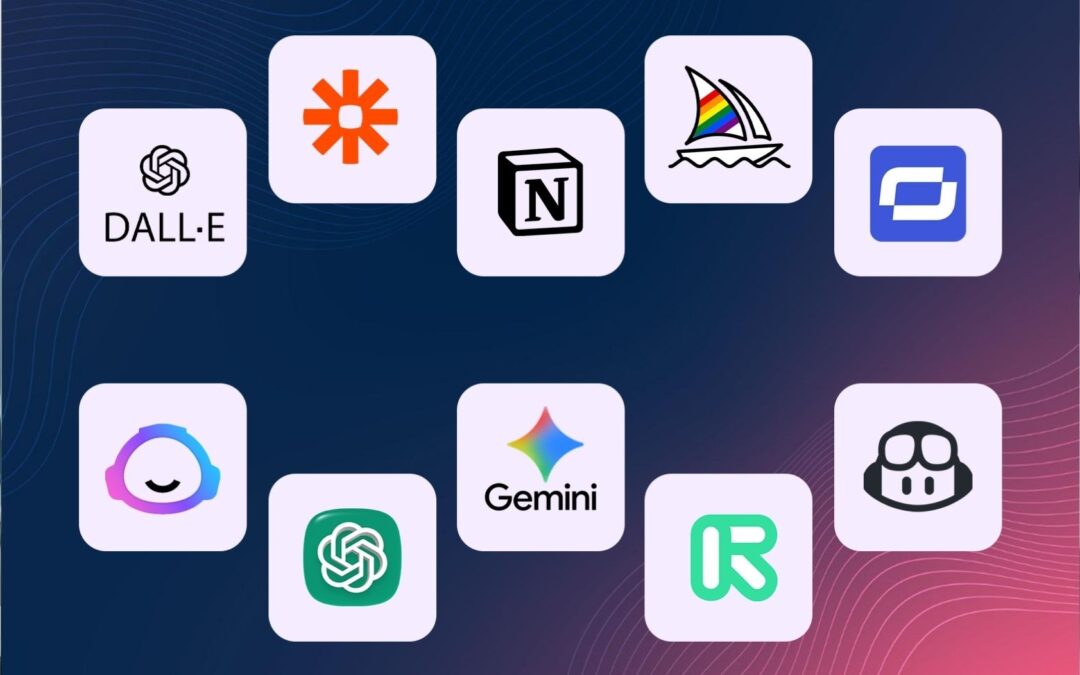
Modern teams rely on AI tools to manage communication, analyze data, and produce content faster. Artificial intelligence now supports automation across many tasks. Gartner reports that over 70% of organizations use generative AI tools in daily operations. The right platforms reduce manual effort and improve productivity.
1. Notion AI
Notion AI helps teams organize work inside a single Notion workspace. The AI assistant supports writing, planning, and summarizing data for projects. Teams can create tasks, document ideas, and manage meeting notes with natural language prompts. Many startups and sales teams rely on this AI-powered platform to manage internal knowledge and improve collaboration across web pages and documents.
Key Features
AI assistant for writing and summarizing data
Create tasks and organize work in a Notion workspace.
AI integrations with other apps
Natural language prompts for faster workflows
2. Google Gemini
Google Gemini integrates powerful generative AI capabilities into Google Workspace. Teams can write documents in Google Docs, perform web searches, and review business data quickly. Gemini models rely on advanced large language models for strong reasoning. Many companies also explore AI models through Google AI Studio to test ideas and improve data analysis.
Key Features
Integration with Google Workspace and Google Docs
Gemini models with advanced reasoning
AI chat for research and insights
Access through Google AI Studio
3. ChatGPT
ChatGPT ranks among the best AI tools for research and productivity. The AI chat platform helps teams generate accurate text, perform data analysis, and assist with code generation. Many professionals use it daily for content creation, brainstorming, and quick research tasks. Large language models inside the system understand natural language prompts and deliver useful responses within seconds.
Key Features
AI chat platform powered by large language models
Support for content creation and data analysis
Code generation for development tasks
AI integrations with other tools
4. Midjourney
Midjourney remains one of the most popular AI image generators today. Designers and social media creators use it to generate images for campaigns, blogs, and web pages. Image generation happens through a simple text prompt that guides the AI models. Teams also adjust aspect ratio and style to create high-quality visual content.
Key Features
Powerful AI image generators for image creation
Control over aspect ratio and design style
Fast image generation through text prompt
Useful for social media creators and marketers
5. Runway ML
Runway ML provides advanced video tools that simplify video creation. The platform supports video generation, visual editing, and image generation features. Marketing teams often rely on Runway ML for producing short promotional videos. The system also supports background music and visual effects, which help content creators produce professional results faster.
Key Features
AI-powered video generation platform
Tools for video creation and editing images
Background music and creative effects
Useful for content creators and marketing teams
6. Jasper AI
Jasper AI focuses on marketing and content creation. The AI assistant helps businesses produce blog articles, social media posts, and product descriptions quickly. Many e-commerce companies and small business owners rely on Jasper to maintain consistent communication across campaigns. The platform generates accurate text using advanced natural language capabilities.
Key Features
AI-powered writing for marketing teams
Templates for social media and web pages
Natural language content generation
Integration with other marketing tools
7. GitHub Copilot
GitHub Copilot supports developers through AI-powered code generation. The AI assistant analyzes code patterns and suggests improvements instantly. Software teams rely on this system to speed up development tasks and reduce manual coding work. The tool also works well with version control environments used by engineering teams.
Key Features
AI-powered code generation assistant
Support for multiple programming languages
Integration with version control workflows
Faster development for software teams
8. Synthesia
Synthesia helps companies produce professional videos without cameras or studios. The platform uses artificial intelligence avatars and voice actors to create presentations and tutorials. Users simply write a script through a text prompt. The system then produces a full video automatically.
Key Features
AI-powered video generation platform
Digital voice actors and voice prompts
Fast video creation from a text prompt
Useful for training and marketing content
9. Zapier AI
Zapier AI focuses on workflow automation between other apps. Businesses use it to create custom workflows that move business data automatically. Sales teams and operations teams rely on Zapier to connect platforms and reduce repetitive tasks. AI agents inside the system help manage automation rules more easily.
Key Features
AI agents for workflow automation
Custom workflows across other apps
Integration with AI apps and business tools
Automation support for sales teams
10. DALL·E
DALL·E stands among the most advanced AI image generators today. The tool converts natural language prompts into detailed visual content. Designers rely on it for marketing graphics, creative concepts, and web design projects. Image generation happens quickly with powerful AI models.
Key Features
AI-powered image generation from a text prompt
Control over aspect ratio and visual style
Fast image creation in just a few clicks
Useful for creative and marketing teams
How AI Tools Improve Team Productivity And Efficiency
Teams today face constant pressure to deliver results faster. Artificial intelligence helps reduce that pressure. Modern AI tools automate routine tasks, organize information, and support smarter decisions. Studies show companies using generative AI tools report productivity gains of 30–40% across many business functions.
Automation Of Routine Work
Routine work consumes large portions of a workday. Email replies, scheduling, documentation, and reporting often repeat daily. Research from McKinsey shows automation through artificial intelligence can handle up to 45% of repetitive business tasks.
AI assistants and AI agents now manage many of these activities. Teams rely on AI apps to create tasks, summarize meeting notes, and manage schedules. Platforms inside a Notion workspace also help teams organize documentation and automate simple workflows.
Faster Data Analysis
Teams often spend hours reviewing spreadsheets and reports. Data analysis becomes difficult when information comes from multiple platforms. IDC reports businesses lose nearly 30% productivity due to slow access to business data.
AI-powered tools process information quickly. Large language models analyze business data and summarize data through natural language prompts. Platforms such as Google AI Studio and Google Gemini allow teams to explore insights faster and support advanced reasoning for complex decisions.
Better Content Creation
Marketing teams constantly produce blog posts, product descriptions, and social media content. Content creation demands time and creativity. Small teams often struggle to maintain consistency.
Generative ai tools simplify that process. AI image generators help generate images for campaigns and web pages. Video tools support video generation, video creation, and background music for marketing content. Many social media creators now produce content faster with ai powered platforms.
Improved Communication
Communication challenges slow teamwork. Conversations spread across emails, chat tools, and project platforms. Important details often disappear inside long message threads.
AI chatbots and AI chat platforms improve communication. These tools summarize conversations and generate meeting notes automatically. AI assistance also helps teams organize discussions, track decisions, and create tasks directly from conversations.
Smarter Decision Making
Business leaders depend on accurate information to make decisions. Yet many teams struggle to analyze large datasets quickly. Delays in insights slow operations and growth.
AI models powered by generative AI process large amounts of data quickly. Platforms such as Google Workspace tools combine AI models with web search and business analytics. Teams receive insights faster and respond to market changes more effectively.
Stronger Collaboration Across Tools
Many organizations rely on several digital platforms at once. Teams switch between mobile apps, project systems, and communication tools during the day. This fragmentation reduces efficiency.
AI integrations connect different platforms into a unified platform. AI tools link Google Docs, website builder tools, and other apps to share information smoothly. Version control and automation also keep project updates consistent across teams.
Faster Innovation And Development
Innovation often slows when teams focus on repetitive work. Developers, designers, and marketers need tools that support creativity and experimentation, including modern AI software development practices that embed intelligence directly into digital products.
AI-powered platforms help accelerate innovation. Code generation tools assist developers in building applications faster. Image creation and editing features support designers. Emerging custom software development trends and generative AI tools also allow rapid testing of ideas, which helps teams launch products and campaigns more quickly.
Best Practices For Adopting AI Tools In Your Team
AI adoption grows quickly across modern organizations. Businesses explore generative AI tools to automate tasks, analyze business data, and improve productivity. A report from Deloitte shows that over 65% of companies actively test artificial intelligence solutions. Clear strategies help teams gain real value from these tools.
Define Clear Business Goals
Successful AI adoption starts with clear goals. Teams must identify problems they want to solve. Productivity gaps, repetitive work, or slow data analysis often become the starting points.
Organizations that define measurable goals adopt AI tools more effectively. Research from McKinsey shows companies with defined automation goals achieve up to 40% higher productivity gains. Teams can focus on tasks such as content creation, business data analysis, or workflow automation with AI apps.
Start With Simple Use Cases
Many organizations fail because they adopt complex systems too early. Teams benefit from small experiments before large deployments. Simple use cases often deliver quick results.
Examples include using AI assistants for meeting notes or AI chatbots for internal communication. Generative AI tools also help generate images or summarize data quickly. A free plan or free tier often allows teams to test capabilities without financial risk.
Choose Tools That Integrate Easily
Workplaces rely on many platforms. Teams often use Google Workspace, project management systems, and collaboration apps at the same time. Poor integration creates additional complexity.
AI integrations solve this challenge. Tools that connect with Google Docs, mobile apps, and other apps help teams maintain a unified platform. Integration also improves version control and keeps workflows organized across departments.
Train Teams On AI Capabilities
Employees must understand how artificial intelligence works. Lack of training often leads to poor results and confusion. Teams that learn AI capabilities produce better outcomes.
Training sessions can introduce natural language prompts, AI chat platforms, and generative AI tools. Platforms such as Google AI Studio also allow teams to explore AI models and test new workflows. Skilled employees use these tools more effectively for data analysis and content creation.
Protect Business Data
Data protection remains essential during AI adoption. Organizations must ensure sensitive business data stays secure when teams use external platforms. Security policies should define access control and usage guidelines.
Many ai powered systems now provide granular control over permissions. Businesses can manage api key access and monitor how ai agents process information. Adopting ethical AI software principles alongside these safeguards helps maintain compliance while teams benefit from artificial intelligence.
Evaluate Tool Performance Regularly
Technology evolves quickly. Teams should regularly evaluate whether AI tools deliver real value. Metrics such as time saved, productivity gains, and workflow improvements help measure performance.
Research from PwC suggests companies that review AI adoption regularly see 30% higher efficiency improvements. Many organizations also work with tech consulting services to compare different AI apps, generative AI tools, and AI models to identify the best AI solutions for their operations.
Encourage Responsible AI Usage
Responsible AI usage builds trust across teams. Employees should understand both the strengths and limitations of artificial intelligence tools. Human review remains important for decisions that affect customers or business strategy.
Clear guidelines also improve quality. Teams should review accurate text produced by AI models and verify insights from web search or data analysis. Responsible usage ensures ai powered tools support teams without replacing human judgment.
Future Of Team Productivity With Smarter AI Tools
Artificial intelligence continues to reshape how teams work. Companies now rely on AI tools to automate workflows, analyze data, and support faster decisions. According to PwC, AI could contribute $15.7 trillion to the global economy by 2030. Smarter platforms will continue to improve team productivity.
Rise Of AI Assistants In Daily Work
AI assistants will become a core part of everyday workflows. Many professionals already use AI apps to manage tasks, write reports, and summarize meeting notes. These tools save time and reduce repetitive work.
Large language models now power advanced AI assistants capable of handling complex requests. Platforms such as Google Gemini and other generative AI tools allow teams to interact with systems using natural language prompts. This capability will make digital tools more accessible for employees across departments.
Expansion Of Generative AI Capabilities
Generative AI continues to expand beyond text generation. Businesses now rely on AI image generators, video generation tools, and voice technologies for marketing and communication.
Content teams already use image creation and video creation tools to produce campaigns faster. Voice actors and voice cloning technologies also help generate training videos and product presentations. Gartner predicts that over 80% of enterprises will adopt generative AI APIs by 2026.
Smarter Data Analysis And Insights
Future AI systems will deliver deeper insights from business data. Companies collect large volumes of data from customers, products, and operations. Traditional analytics tools often struggle to process this information quickly.
AI-powered systems analyze business data and summarize it instantly. Platforms such as Google AI Studio allow teams to experiment with AI models for advanced reasoning tasks. AI assistance will help organizations convert raw data into strategic insights faster than ever.
Unified Platforms For Team Collaboration
Workplace software will move toward unified platforms that connect many tools together. Teams currently switch between mobile apps, project platforms, and communication tools. This fragmentation reduces efficiency.
AI integrations will connect other apps into a single environment. Tools within Google Workspace or other ecosystems will combine web search, document editing, and collaboration features. A unified platform helps teams access information, create tasks, and manage workflows more easily.
AI Agents Supporting Business Operations
AI agents represent the next step in workplace automation. These intelligent systems can perform tasks independently based on instructions and data access. Businesses already experiment with AI agents for operations, marketing, and customer support.
Sales teams and small business owners benefit from automated processes powered by artificial intelligence. AI agents can analyze trends, generate reports, and manage workflows across e-commerce platforms. Future systems will operate with greater autonomy and efficiency, often supported by agile and offshore software development approaches that help teams scale AI projects globally.
Final Thoughts
Team workloads continue to grow as businesses handle more communication, data, and content. Smarter AI tools help reduce that pressure. Artificial intelligence automates routine tasks, supports data analysis, and improves collaboration across teams.
AI assistants, AI chatbots, and generative AI tools help create tasks, summarize data, and produce accurate text in just a few clicks. Platforms connected with Google Workspace and other apps simplify daily workflows.
Many of the best AI tools also offer a free plan or free tier, which helps small business owners and teams test new technology easily. Organizations that adopt AI-powered tools early improve productivity and build more efficient workflows.
FAQs
Can Small Teams Use AI Tools Without Technical Skills?
Yes. Many modern AI tools are built as web-based tools with simple interfaces. Teams can complete tasks through voice prompts or a short text prompt. Most platforms require only a free-tier account and a basic API key setup to begin.
Are There Completely Free AI Tools For Teams And Creators?
Yes. Several AI apps offer a completely free plan with essential features. Small teams, social media creators, and marketers can test tools for image generation, content ideas, and even gift ideas before moving to paid plans with advanced capabilities.
Which AI Tools Help Generate Images And Visual Content Quickly?
AI image generators and other image generators create visuals from a simple text prompt in seconds. Tools support granular control over style and aspect ratio. Many designers use them to edit images, produce marketing graphics, and build visuals for web pages.
Do AI Tools Work With Popular Software Like Adobe Apps?
Yes. Many modern AI platforms include AI integrations with Adobe apps and other creative software. Designers can generate images, enhance image creation, and manage video tools directly within existing creative workflows.
Can AI Tools Create Videos With Voice And Background Music?
Yes. Several video tools support video generation with voice prompts and background music. Platforms can even simulate realistic voices through voice cloning and professional voice actors, which helps teams produce marketing and training videos quickly.
As the year winds down, it’s easy for work to start piling up. There are last-minute push projects, holiday schedules to juggle, and team members taking time off. Everything can start feeling a bit rushed. That’s why we like to look at automated workflow solutions before things hit full speed in December.
By sorting out a few repeat tasks now, we can take pressure off our team and stop small issues from becoming big ones. This is a good time of year to make some light improvements that save time and reduce stress without needing big overhauls. Getting ahead of the crunch now helps us end the year feeling steadier and in control.
Why Late November Is the Right Moment to Start
This part of the year offers a sweet spot. Routines are already settled from earlier months, and people are used to their current systems. That means it’s much easier to spot what slows us down or causes confusion across teams.
Slow but steady changes feel easier now than they will in December.
There’s less risk of overload when we’re still a few weeks away from peak year-end demand.
We can test small tools or tweaks while still having time to adjust.
We’re not racing the clock yet, which makes late November a great time to fine-tune daily work and see what holds up when things get busier. It’s not about getting it perfect, just getting it ready.
As autumn deepens, the daylight starts fading, and the mood at work can shift. Teams find themselves squeezing extra tasks into shorter days. Simple things, like missing a quick chat because someone logged off early or a project timeline slipping by a day or two, can cause bigger ripples than usual.
When everyone is busy planning for the holidays, there’s even less time to deal with these little bumps. Taking a step back to notice where repeated slowdowns happen helps us keep a handle on what’s coming. At this stage, we’re just aiming to keep things smooth and avoid last-minute surprises.
Signs Your Workflows Could Use a Boost
Not every system needs a full change. Often, it’s just a few spots that need better structure or support. We look for patterns, not just one-off problems. When we see the same issues come up again and again, it’s usually a sign that the process itself needs some help.
Tasks aren’t being checked off on time, or reviews get missed.
Updates take more time than the work being updated.
When someone’s out, their tasks stall instead of moving ahead.
If any of these sound familiar, it might be time to look at how things are set up behind the scenes. We don’t need to fix everything, just smooth out the spots that keep tripping us up.
Teams sometimes feel stuck when they rely on reminders that don’t always reach the right people at the right time. It only takes one missing update or a forgotten handoff to hold up a project. Maybe files are stored in different places, or notes get buried deep in chat messages and emails.
People end up spending extra time just checking on what still needs to be done, instead of actually moving work ahead. If your team is double-checking basic steps or feeling unsure about what’s happening next, it’s a good moment to think about making things clearer for everyone.
Small Shifts That Make a Big Difference
Not every change has to be major. A few smart tweaks now can stop bigger problems from creeping in later. That’s the real power behind automated workflow solutions. We’re not looking to change how we work, only to lighten the load for what happens most.
Build reminders that don’t rely on memory.
Connect the tools we already use so updates link across platforms.
Automate parts of tasks that show up again and again, like review requests or handoffs.
Gain Solutions builds both custom and out-of-the-box SaaS and AI solutions, including Payrun for HR and payroll, and EasyDesk for stress-free customer support. Once these pieces run on their own, we get back time. Things move with less checking, less guessing, and fewer dropped steps. With that sorted, everyone can focus on what actually needs their attention.
One easy shift might be as simple as turning on automatic reminders for recurring tasks or linking calendars so that meetings and deadlines show up for everyone. Another is connecting platforms so that as soon as a team member finishes their part, the next person is automatically notified, even if it’s across a different tool.
Automations like these aren’t about making things more complicated; they’re about making sure that people don’t have to carry all the details in their heads. With these sorts of shifts, there are fewer missed steps and more steady progress, even as the days get shorter and busier.
Getting Ready Without Starting Over
One reason teams avoid changes late in the year is that they’re worried it’ll be a lot to take on. But we’ve found it’s easier to work with what we already have than to scrap everything. The goal isn’t to rebuild, it’s to add what helps without getting in the way.
Choose tools that can connect to the systems already in place.
Start with one change that solves a repeated problem.
Let teams try out updates before schedules get tight.
We don’t need to fix everything at once. We just want our current setup to feel lighter and clearer. If something saves us ten minutes a day, that adds up fast by the time December rolls around.
Payrun fits right into existing HR processes, and EasyDesk links up with your day-to-day support, making adoption smoother for teams of all sizes.
Taking this kind of approach lowers stress about learning something totally new. When a tool fits in alongside daily routines, people don’t need hours of training, and there’s less resistance.
Even if it’s just one update, like putting an approval step on autopilot or tying together different communications, these solutions can take pressure off when everyone’s juggling holiday plans and last-minute requests. Bit by bit, things start running with less effort, which is exactly what’s needed at the end of the year.
Finish the Year Strong and Feel More in Control
By making these updates now, we put ourselves in a much better spot for what’s ahead. We don’t end up rushing through fixes in the middle of a holiday week, and we don’t go into January feeling worn out. When our workflows hold shape, our team does too.
The goal isn’t perfection. It’s a balance. With the right changes in place, we can close out projects with less stress and start the new year without scrambling to recover. And when everyone’s already tired and busy, that kind of calm matters more than ever.
Making time for small improvements now puts our best foot forward. It allows us to keep focus where it matters and reduces panic when last-minute changes pop up in November and December.
Little fixes can have a big effect, especially when teams are coordinating year-end wrap-ups, holiday cover, and plans for next year all at once. Each new step that works better now makes it easier to get through busy stretches later, setting up the whole team to start January with confidence.
Ready to lighten your workload as the year draws to a close? Discover how automated workflow solutions can streamline processes and reduce stress during your busiest season. At Gain Solutions, we specialise in integrating seamless improvements to help your team work smarter, not harder. Reach out today to learn how our solutions can make a difference for you.
Artificial intelligence software has moved from boardroom buzzword to everyday business tool. By 2026, companies with 10 to 500 employees will use AI tools to draft customer replies, score leads, summarize meetings, and spot patterns in data that would take humans days to find. The 2024 Nobel Prizes in Physics and Chemistry recognized AI-related breakthroughs, signaling that this technology now stands alongside electricity and the internet as a fundamental enabler of progress.
This guide walks you through what artificial intelligence software looks like in 2026, the core categories worth knowing, practical use cases that deliver real ROI, and how to evaluate, pilot, and scale AI in your organization. Whether you run a support team, lead revenue operations, or manage internal workflows, you will find actionable guidance here.
What Is Artificial Intelligence Software In 2026
Artificial intelligence software refers to applications and platforms that mimic human reasoning, perception, and language processing to automate or augment work. These systems do not simply follow rigid rules. They learn from data patterns, understand natural language, recognize images, and generate outputs that once required human effort.
The journey started with rule-based systems in the 1990s, where developers coded every possible scenario into if-then logic. Machine learning arrived in the 2010s, allowing algorithms to generalize from examples without explicit programming for each case. Then came the explosion. Between 2020 and 2024, deep learning models and large language models trained on vast text corpora transformed what software could do. GPT-4o, Claude 3.5 Sonnet, and similar ai models became capable of statistical reasoning that rivals human performance on many tasks.
By 2026, concrete examples surround us. AI assistants ingest full contracts and flag risky clauses in minutes. They summarize hour-long customer calls, capturing key intents and action items. They auto-generate analytics dashboards from raw sales data, visualizing trends and forecasts without manual spreadsheet work. They orchestrate tasks across Slack for notifications, Outlook for scheduling, and CRMs like Salesforce for lead updates.
Types Of Artificial Intelligence Software
Teams rarely use one AI tool. Most combine several ai software categories to cover daily operations, from predicting outcomes to generating content to automating multi-step workflows. The categories that matter in 2026 mirror how businesses operate.
Machine Learning And Predictive Analytics Software
Platforms like DataRobot, H2O Driverless AI, and cloud services from Google Cloud AI, Azure ML, and AWS SageMaker automate model training and deployment. They predict outcomes that matter to your business: churn probabilities from customer behavior data, demand forecasts from sales histories, payment delinquency risks from transaction logs, and anomalies in SaaS usage that signal fraud or coming cancellations.
AutoML capabilities, which began maturing between 2018 and 2020, now let non-specialists upload spreadsheets or connect databases and get working machine learning models without writing code. The system selects algorithms, tunes hyperparameters, and validates through cross-validation. In mid-market retail scenarios, this approach reduces churn prediction error by 20 to 30 percent compared to manual methods.
Generative Language And Content Software
Powered by large language models like GPT-4o, Claude 3.5 Sonnet, and open alternatives, generative ai tools produce text from prompts. Context windows now exceed 200,000 tokens, allowing these systems to process entire policy documents, ticket histories, and knowledge bases in one request.
Concrete tools span multiple categories. Chat-based assistants like Microsoft Copilot and Google Gemini for Workspace answer questions and draft content. Writing partners like Jasper and Copy.ai generate marketing copy, blog posts, and ad variants. Meeting summarizers like Otter.ai and Fireflies extract action items from recordings. Email drafters integrated into Gmail and Outlook suggest replies that match your tone. CRM copilots in HubSpot and Salesforce draft personalized outreach based on deal context.
Vision, Speech, And Multimodal Intelligence Software
Multimodal AI processes text alongside images, audio, and video using unified architectures. By 2026, this capability is standard in flagship models from OpenAI, Google, and Anthropic. Your software can now see screenshots, hear customer calls, and read documents in the same workflow.
Computer vision applications include warehouse quality checks where conveyor cameras detect defects at 99 percent accuracy. Invoice OCR extracts fields like totals and dates even from handwritten documents. Real-time speech-to-text powers voicebots that handle 80 percent of inbound calls, transcribing conversations and scoring sentiment automatically.
Stacks combine APIs like Google Cloud Vision for image recognition, AssemblyAI for speech transcription, and natural language models for understanding, all integrated into workflows via Zapier or native CRM plugins, blurring the line between traditional scripted flows and more adaptive AI automation versus traditional automation. For operations leaders, this translates to practical wins like slashing invoice processing from hours to minutes or catching quality issues before products ship.
Automation, Orchestration, And Agentic AI Software
Automation and orchestration tools form the connective tissue of modern ai workflows. No-code builders like Zapier, Make.com, and n8n let teams create flows without developers. Native workflow engines inside Zendesk, HubSpot, and similar platforms include built-in AI blocks for classification, summarization, and drafting, giving SaaS leaders a foundation for AI-driven automation in SaaS platforms.
The shift from 2020 single-turn chatbots to 2026 AI agents marks a significant evolution. Agentic systems execute multi-step playbooks: calling APIs, updating records, branching based on conditions, and pausing for human approval when needed. Current implementations show 10 to 20 percent intervention rates, meaning humans review a fraction of actions while AI handles the rest.
Use cases span departments. Web form leads get routed to CRMs with automatic qualification scoring. Support tickets are tagged, prioritized, and escalated based on urgency and topic. Post-meeting emails generate and send without manual drafting. Unusual cases surface for human review before any risky action proceeds.
Specialized AI applications outperform generic tools by fine-tuning models on industry-specific data and embedding domain workflows. Gong.io for sales call intelligence, with roots in 2022, now integrates deeply with CRMs and delivers 25 percent win-rate improvements by scoring talk ratios and sentiment. Tractable estimates auto repair costs from claim photos with 90 percent accuracy. Nuance Dragon reduces medical transcription errors by 50 percent, illustrating how AI in SaaS delivers domain-specific benefits.
Vendors combine general-purpose large language models with curated industry data, cutting setup from months to days. Instead of training custom models, you get pre-trained models fine-tuned for your vertical.
Service teams benefit from sentiment suites that triage high-frustration cases before they escalate. Financial services get compliance-tuned review for trades. Healthcare providers use HIPAA-compliant transcription that handles medical terminology correctly.
Key Features Of Artificial Intelligence Software Platforms
Artificial intelligence software platforms support organizations that want to build intelligent systems, automate operations, and extract insights from complex datasets. As artificial intelligence becomes a rapidly evolving field, companies rely on powerful platforms that combine data science, machine learning tools, and scalable infrastructure to manage modern AI projects, often through dedicated AI software development for smarter digital products.
Data Processing Capabilities
Strong data processing capabilities form the foundation of modern AI software. These platforms support data preparation, data manipulation, and data exploration before any model development begins. Teams often work with raw data collected from business applications, sensors, and digital platforms. AI systems use advanced data analytics and data analysis techniques to transform this information into structured datasets for training models.
Many platforms also integrate natural language processing to analyze text-based datasets such as customer feedback or support tickets. Organizations running AI projects often rely on cloud infrastructure such as Google Cloud Platform to store and process large volumes of business data. Efficient data management and processing tools help companies build reliable AI apps that support decision-making across different business processes.
AI Model Training And Testing
AI platforms provide environments for building and training models using advanced machine learning technologies. Developers often use deep learning frameworks or a deep learning framework developed by major technology providers to train neural networks. These frameworks support complex AI algorithms such as convolutional neural networks that power image recognition, speech analysis, and recommendation systems.
Training models requires significant computational power and a structured development environment. Machine learning platforms simplify this process by offering tools for model testing, version control, and performance monitoring. Developers can experiment with different model configurations and evaluate results before deploying them into production systems.
Integration With Business Systems
Modern AI software platforms integrate easily with enterprise tools to support real operational use cases. AI apps can connect with marketing systems, analytics platforms, and productivity software such as Notion AI to improve data-driven workflows.
These integrations allow organizations to automate business processes and repetitive tasks that previously required manual work. AI tools can analyze data from multiple systems and generate actionable insights. When businesses leverage AI capabilities effectively, they improve operational efficiency and enhance decision-making across departments.
Scalability And Cloud Infrastructure
Scalable infrastructure is essential for organizations working with large datasets and complex AI workloads. Cloud-based machine learning platforms allow teams to scale resources dynamically when building and training models. Platforms such as Google Cloud Platform provide infrastructure that supports high-performance computing, large-scale data analysis, and advanced AI projects.
Scalability becomes particularly important for companies experimenting with emerging AI trends such as generative AI, AI avatars, and AI voices. As organizations expand their AI journey, flexible cloud infrastructure ensures that systems can grow without performance limitations.
Security And Compliance Controls
AI platforms must also address security and compliance requirements when handling sensitive business data. Organizations use structured access controls, encryption systems, and monitoring tools to protect AI models and training datasets.
Secure development environments also help teams maintain governance standards across AI projects. When organizations implement proper security controls, they reduce risks related to data misuse or model vulnerabilities. This approach ensures that companies can safely leverage AI technologies while maintaining responsible development practices across their AI initiatives.
Artificial Intelligence Software Use Cases For Businesses In 2026
Later sections cover how to choose tools and implement pilots. For now, imagine the daily friction you face and see how ai solutions map to specific improvements.
Customer Support And Service Experience
AI software helps support teams deflect 30 to 50 percent of routine queries through self-service bots. Drafting tools suggest empathetic replies that match your brand voice. Context retention across email, chat, social, and phone means customers never repeat themselves, demonstrating how smarter software tools simplify day-to-day work across the organization.
Picture the workflow: an inbound email arrives, AI classifies intent as billing-related, retrieves relevant knowledge base articles, drafts a response, and logs key details back to your helpdesk. First response time drops from 4 hours to 15 minutes. Resolution happens 25 percent faster. Customer satisfaction scores rise 10 points.
Multilingual capabilities powered by models like mT5 handle 100-plus languages, enabling global coverage around the clock. For teams dealing with international customers, automated translation and localized templates mean nobody waits until morning in another timezone.
Sales, Marketing, And Revenue Operations
AI personalizes outreach at scale. Lead scoring from CRM data boosts conversion rates 15 to 20 percent by helping reps focus on high-propensity prospects. Call transcripts yield objection-handling playbooks drawn from your own winning deals, not generic internet advice, similar to how AI features increased engagement by 34 percent in a SaaS case study.
The workflow starts when a marketing campaign generates leads. AI segments them using historical win patterns, routes them to appropriate reps, and drafts first-touch emails with context from past interactions. Proposals generate from deal histories, ensuring consistency and saving hours of manual writing.
AI software for revenue teams lives inside the systems you already use: email clients, CRMs, and dialing tools like Outreach. Rather than adding another standalone dashboard, capabilities embed into existing workflows.
Operations, Project Management, And Internal Collaboration
Internal teams use AI to summarize meetings, turn long threads into clear action items, and keep shared workspaces organized. After a weekly planning meeting, AI parses the transcript, assigns owners, sets deadlines, updates project boards in Asana or Jira, and posts a summary in Slack or Teams.
Operations leaders monitor service-level agreements with AI support. The system spots bottlenecks, like a 72-hour spike in ticket handling time, before they become crises. Recurring patterns surface automatically rather than requiring manual report building.
The softer benefits matter too. Fewer status meetings mean more time for deep work. Clearer documentation reduces miscommunication when multiple stakeholders collaborate. Teams spend less time asking “what did we decide?” and more time executing decisions.
Analytics, Reporting, And Decision Support
AI software turns raw event data, ticket histories, financial records, and feedback into dashboards, narrative summaries, and explanations. Ask a natural language question like “what are our top churn drivers?” and receive an answer like “support escalations post-update account for 18 percent impact.”
By 2026, dashboards become conversation partners. Instead of static charts, leaders chat with their business data through integrated AI copilots. Questions like “which channels generate the healthiest deals?” get instant, context-aware responses.
Multimodal capabilities ingest events, tickets, and finance data together, providing unified views that would require multiple analysts to compile manually. Data visualization generates automatically based on the question asked, extending the power of modern predictive analytics software for forecasting and decision support.
How To Evaluate Artificial Intelligence Software For Your Business
Vendor stability matters too. The AI technology landscape evolves rapidly. Choose partners who can adapt to new models and regulations as 2026 becomes 2027 and beyond.
Start With Concrete Problems And Use Cases
List your top five operational pains. Long response times. Manual data entry. Inconsistent follow-ups. Scattered customer context. Link each pain to a measurable metric you can track.
Generic AI pilots often fail because they focus on impressive demos instead of well-defined workflows tied to customer or revenue outcomes. Scoped experiments succeed 70 percent of the time versus 20 percent for vague initiatives.
Design specific goals like “reduce first response time on low-complexity tickets by 30 percent within three months.” This clarity lets you measure success objectively and decide whether to continue, adjust, or stop.
Assess Data, Integrations, And Existing Tool Stack
AI software works best with access to clean, up-to-date data from CRMs, helpdesks, project tools, and communication platforms. Map which systems hold which types of data. Check whether candidate tools offer native integrations or robust APIs.
Many businesses in 2026 prefer AI that lives inside existing tools rather than adding standalone applications. A Gmail copilot that drafts replies in your inbox sees 80 percent higher adoption than a separate web app you must remember to open.
Practical concerns matter for IT teams. Single sign-on via SAML keeps identity management simple. Audit logs provide visibility into what AI accessed and when. OAuth connections mean you do not share passwords with third parties.
Security, Compliance, And Governance Considerations
Regulations influence AI adoption more than ever. The EU AI Act became effective in 2024 with high-risk tiers phasing in by 2026. GDPR enforcement continues. Sector-specific rules govern finance, healthcare, and other regulated industries, increasing the need for ethical AI software with strong governance and transparency.
Check data residency before signing contracts. Where does the vendor store your data? US servers, EU servers, or options for both? Review encryption standards, retention policies, and whether customer content trains public models. The answer should be no for enterprise tools.
Create simple internal policies about what staff should and should not share with AI tools. Even with strong vendor protections, preventing PII in prompts adds a safety layer. Role-based access controls and approval workflows around automated actions are expected features in serious ai software tools.
User Experience, Change Management, And Adoption
The best ai software in 2026 fits into existing habits. Drafting replies directly in the inbox. Summarizing tickets within the helpdesk. Suggesting next steps inside the CRM. In-app experiences drive 80 percent adoption rates versus standalone tools that struggle for attention.
Involve frontline users early. Collect feedback after the first weeks. Adjust prompts, guardrails, and workflows based on real usage. What feels helpful? What creates friction? What gets ignored?
Training matters. Quick reference guides, office hours for questions, and short video walkthroughs help people feel confident experimenting. Teams with structured enablement reach 70 percent or higher sustained usage.
What Trends Are Shaping Artificial Intelligence Software
Three trends stand out: agentic systems that execute multi-step workflows, multimodal experiences that process various content types together, and stronger governance demands that require transparency and accountability. Each creates practical consequences for how you select and deploy ai platforms, and mirrors broader custom software development trends shaping the future.
From Single Prompts To Agentic Workflows
The move from one-off chat prompts in 2022-2023 to multi-step workflows in 2025-2026 marks a fundamental shift. Modern ai agents call APIs, move data between systems, and coordinate tasks with light human oversight. Control planes orchestrate multiple agents working across browser, editor, inbox, and database.
Picture a scenario: an inbound request arrives, the agent checks eligibility in your backend system, prepares a draft response, logs actions to your ticketing system, and notifies a human reviewer for final approval. Intervention rates run around 10 to 20 percent, meaning most actions proceed automatically while edge cases get human judgment.
Businesses increasingly treat these workflows like digital team members with clear responsibilities and guardrails. Observability tools track what agents did and why, providing audit trails that satisfy both operations leaders and compliance requirements.
Multimodal And Context-Aware Experiences
Modern ai software no longer sees only typed questions. It processes conversations, screenshots, logs, recordings, and structured data in one unified view. Context windows exceeding 200,000 tokens mean entire document sets fit into a single request, which in turn demands scalable software architecture for high-growth products behind the scenes.
A support assistant reads a screenshot of an error message alongside a log file and suggests a specific fix. A service tool combines call transcripts with purchase history to guide the next interaction. Customer context persists across channels and over longer periods, supported by better memory designs.
For video analysis, multimodal systems extract insights from recorded calls, identifying objections, tracking sentiment changes, and summarizing key moments. What once required dedicated human review now happens automatically at scale.
Responsible, Governed, And Transparent AI Usage
Organizations in 2026 care deeply about bias, misuse, and brand risk. Internal AI councils evaluate deployments. Red-teaming exercises test for failure modes. Clear accountability chains define who owns each workflow.
Tools provide policy configurations, content filters, and logs of prompts and outputs for sensitive workflows. When something goes wrong, you can trace what happened and adjust.
Ask vendors specific questions. Where does training data come from? What content filters exist? How does incident response work? Responsible AI is not a marketing checkbox. It is a customer expectation, especially in support and financial conversations where trust matters most.
Monthly audits on samples of AI outputs catch issues early. Teams that review 5 percent of responses maintain quality standards and catch bias incidents before they affect more than 2 percent of interactions.
Practical Steps To Implement Artificial Intelligence Software
Knowing that AI can help differs from making it work in your organization. This playbook covers discovery, piloting, rollout, and continuous improvement in plain terms.
Picking one or two high-impact workflows beats buying ten tools at once. Complexity compounds. Start focused, prove value, then expand.
Involving both operations and technical partners early prevents rework. Shadow IT creates security gaps and integration headaches. Coordinated adoption builds sustainable systems.
Run Focused Pilots With Clear Success Metrics
Design pilots that run 6 to 12 weeks, limited to a specific team or queue, with no more than two or three primary metrics. Examples include percentage of tickets with AI-drafted replies, reduction in manual data entry time, or increased capacity per agent without lowering satisfaction.
Side-by-side tests quantify benefits. Half of agents use AI assistance while the other half continues with traditional methods. Compare response times, resolution rates, and satisfaction scores.
Capture qualitative feedback weekly. Do staff trust the suggestions? What creates friction? What gets ignored? These insights shape adjustments that make pilots succeed.
Define a go or no-go decision rule before starting. If metrics hit 80 percent of target and user feedback is positive, you proceed to broader rollout. Clear criteria prevent endless pilots that never ship.
Align People, Processes, And Policies
Successful AI adoption requires clear ownership. Someone configures prompts. Someone monitors usage. Someone adjusts workflows over time. Name these people before launching.
Create short, readable internal guidelines on acceptable uses, data sensitivity, and escalation paths when AI output seems wrong. Keep policies simple enough that busy staff can follow them.
Update standard operating procedures once AI becomes part of the process. New hires should learn the augmented workflow from day one, not discover AI tools months later by accident.
Quarterly training helps staff keep up with tool improvements. Vendors roll out new advanced features regularly. Teams that stay current get more value than those stuck on launch-day configurations.
Measure, Iterate, And Scale Responsibly
Treat AI deployments as living systems. Review metrics monthly. Inspect error cases. Adjust prompts and guardrails based on what you learn.
Create simple dashboards to watch usage, success metrics, and exceptions where human override was needed. Visibility prevents problems from compounding unnoticed.
Expand to new use cases only after the first ones show stable benefits. Staff should feel comfortable with current tools before adding more. Rushing creates confusion and abandonment.
Customer trust sits at the center of scaling decisions. Support and billing interactions carry high stakes. Expand carefully, testing each extension before going broad. Annual vendor reassessments ensure your choices stay optimal as the landscape evolves.
Final Discussion
Artificial intelligence software continues to reshape how businesses operate, make decisions, and deliver value. By combining automation, data analysis, and intelligent algorithms, AI tools help organizations improve efficiency, reduce manual work, and unlock new growth opportunities.
Modern AI systems are no longer limited to experimental use. They are now integrated into everyday applications, supporting everything from customer interactions to advanced data driven insights. As adoption increases, companies that understand how to evaluate, implement, and scale artificial intelligence software gain a clear competitive advantage.
At the same time, successful adoption depends on more than just technology. Businesses must focus on data quality, system integration, and responsible use to maximize long-term value. With the right strategy and tools, artificial intelligence software can become a core part of digital transformation, helping organizations adapt faster and operate smarter in an increasingly data-driven world.
Frequently Asked Questions
What Is The Easiest Way To Start Using Artificial Intelligence Software In My Business?
Most teams find success starting with one support or internal communication workflow. AI-drafted replies for routine tickets or automatic meeting summaries make strong first use cases. Choose a tool that plugs into your existing inbox or helpdesk without requiring new logins. Follow a simple three-step approach: select one specific use case, run a 6 to 8 week pilot with a clear metric like 20 percent faster responses, and gather weekly feedback from users. No large upfront investment or full platform replacement is needed for this initial phase.
How Much Should I Expect To Spend On Artificial Intelligence Software In 2026?
Costs range widely. SMB teams often start at $100 to $500 monthly with usage-based pricing around $0.01 to $0.05 per query or $20 per user seat. Free plan options exist for basic functionality, letting you test before committing. Model your realistic monthly usage before signing contracts. Compare subscription costs against saved hours to justify investment. If AI saves 10 agent-hours weekly at $50 per hour, that equals $50,000 in annual value, making even substantial software costs worthwhile.
Do I Need Data Scientists Or Developers To Benefit From AI Software?
Many modern tools serve non-technical users with point-and-click configuration and guided setup. Support, sales, and operations teams can get value without writing code or understanding machine learning algorithms. Technical skills become important when customizing neural network architectures, building deep integrations, or running large scale machine learning projects. Start with no-code capabilities and involve data scientists later if advanced custom model training becomes necessary. About 20 percent of use cases eventually need developer involvement.
How Can I Protect Customer Data When Using Artificial Intelligence Tools?
Choose vendors that clearly state data handling practices: encryption standards, retention policies, and whether customer content trains public models. Look for SOC2 Type II certification and options for data residency in your region. Set internal rules about what can be shared with external services. Use tools that run within your secure environment when handling sensitive information. Review access permissions and audit logs quarterly to catch any unauthorized access or unexpected data flows.
Will Artificial Intelligence Software Replace My Support Or Operations Team?
Current deployments show AI handling 40 to 50 percent of repetitive, structured tasks while humans focus on nuanced conversations and judgment calls. Teams often see role shifts rather than reductions, with staff spending more time on complex issues and proactive customer outreach. Frame AI as a tool that supports people, increasing capacity by 25 percent without adding headcount. Involve employees in designing how AI fits their daily work. Co-design builds trust and reveals insights that improve implementations. Human intelligence remains essential for relationship building and creative problem solving.
Picture this: your marketing agency signs up for a new content workflow tool in 2025. The feature list looks perfect. The pricing fits your budget. Your team dives in, schedules a few posts, and invites a client to approve some content. Then things start to unravel. The client can’t figure out where to leave feedback. Your account manager spends twenty minutes hunting for the approval button. Two weeks later, half the team has quietly gone back to email threads and shared Google Docs. Nobody officially complains. They just stop logging in.
This scenario plays out across SaaS products every single day. As the market matures, users don’t just compare feature lists. They compare how effortless a product feels when they use it for real work. Churn is no longer just a pricing or sales problem. It reflects whether users can reach value fast and repeat it with minimal friction.
In content and collaboration tools specifically, confusing UX around sharing, feedback loops, and approval processes leads to silent drop-off from clients and stakeholders. The tool might work fine for the core team, but if external collaborators can’t navigate it, adoption stalls and renewal conversations get awkward.
What SaaS Churn Really Signals About Your UX
Churn, in plain terms, means customers or accounts that stop paying within a specific period. You might measure it monthly, quarterly, or yearly, depending on your billing model. Either way, the number tells you how many users decided your product wasn’t worth keeping.
Most saas companies aim for 1–3% monthly churn once they’ve found product-market fit. Early-stage tools often see 5–7% or higher, which makes growth feel like filling a leaky bucket. Research shows B2B SaaS averages around 4.91% monthly churn, while B2C products sit closer to 6.77%. Ideal rates for small to medium businesses fall under 5%.
Here’s where UX comes in: when users log in less often, stall during onboarding, or never invite collaborators, that user behavior is an early warning sign before the cancellation email arrives. Support tickets often reveal the same patterns. Confusing navigation, unclear permissions, and approval loops that take too many clicks all point to UX friction in the product.
In collaborative saas products, there’s another signal worth watching. If clients can’t easily review and approve work, teams fall back to email and spreadsheets. That workaround might seem harmless, but it means your product isn’t sticky. When renewal time comes, the decision-maker might ask why they’re paying for a tool nobody fully uses.
Time-to-Value: The UX Lever That Quietly Cuts Churn
Time-to-value measures how long it takes from sign-up to the moment a user thinks “this is worth paying for.” That moment might be scheduling their first campaign, getting a client approval, or generating a report that saves them an hour of manual work.
In 2025, many SaaS benchmarks show that if new users don’t experience a clear win within the first 7 days, they’re far more likely to cancel at the end of a trial or first billing cycle. Research indicates 63% of users decide whether to continue during the initial experience. Speed matters.
For a content approval platform, value realization could be the moment a client approves the first post without a messy email thread. No back-and-forth. No confusion about which version is final. Just a clean, single-click approval that makes both sides feel organized.
Good ux design shortens this path to value. Fewer steps to create a project. Guided templates that make sense out of the box. Sensible defaults so users don’t have to configure everything upfront. Clear calls-to-action like “Send for approval” that tell users exactly what to do next.
Consider a fictional but realistic scenario: a small agency was losing 8% of trial users before conversion. They analyzed where first-time users dropped off and found the first-project setup took seven steps. After reducing it to three steps and adding a pre-built campaign template, their trial-to-paid conversion jumped by 24% in six weeks. That’s customer lifetime value growing without adding a single new feature.
Key UX Friction Points That Drive SaaS Churn
Most high-intent users don’t cancel because of one bug or a single bad experience. They leave because of repeated small frustrations that add up over time. These pain points make the product feel like work instead of a solution.
Confusing onboarding flows hit users right when they’re most motivated. If new users can’t figure out what to do after signing up, they lose momentum. Generic onboarding that doesn’t account for different roles or use cases leaves people feeling lost.
Cluttered dashboards create cognitive overload. When users must hunt through menus and panels to find basic actions, every task feels harder than it should. This is especially damaging for core features that people need to access daily.
Unclear access and permission settings create friction for teams. If an account manager can’t figure out how to give a client view-only access versus edit permissions, they’ll either waste time on support tickets or work around the tool entirely.
Scattered communication threads push people back to email. When comments live in one place, version history in another, and approvals in a third, users struggle to keep track. This is where many collaboration tools fail their users.
Opaque notification logic causes both overload and silence. Too many alerts train people to ignore everything. Too few mean they miss critical deadlines. Either way, stakeholders lose trust in the tool.
There’s also the mobile factor. If stakeholders review and approve work on the go, a clunky mobile experience can quietly sabotage retention. The desktop app might be polished, but if a client can’t approve a social post from their phone during a commute, that’s friction that matters.
Designing Onboarding That Builds Habits, Not Just Accounts
User experience plays a critical role in whether users stay or leave a SaaS product. Thoughtful UX removes friction, builds confidence early, and guides users toward value before frustration turns into churn.
Clarify the First Win for Each User Role
Modern saas products often serve multiple personas. An agency tool might have account managers, designers, copywriters, and external clients all using the same platform. Each persona has a different definition of success in their initial engagement.
UX can present tailored paths during onboarding based on role selection. Instead of dumping all product features on everyone, show each user type their specific first win and the shortest path to reach it.
For agencies using a content workflow tool, the “first win” looks different for each role:
User Role
First Win
Key Action
Account Manager
Campaign scheduled and sent for approval
Create project, add content, click “Send for approval”
Designer
Asset uploaded and linked to post
Upload creative, attach to scheduled content
Client
First piece of content approved with one click
Open review link, leave feedback or approve
Screen layouts should feel clean during onboarding. A short welcome message, a 2–3 step checklist, and one primary button per step. No sidebar full of advanced features. No pop-ups about integrations they don’t need yet.
Remove Friction from Setup and Collaboration
Long signup form requirements, mandatory complex settings, and forced integrations at sign-up all hurt activation. If users sign up excited and immediately face a wall of configuration, that excitement dies.
Progressive disclosure helps here. Ask for only the essentials to get started. Name, email, maybe team size. Then nudge users later to connect social channels, invite teammates, or customize workflows. Let people experience value before asking them to invest effort.
Pre-built content calendars, reusable campaign templates, and sample posts in a new account prevent the “empty state” problem. When the interface shows examples of how things should look when full, users understand the product faster than any tutorial video could teach them.
In collaborative SaaS, making it effortless to invite a client and request their approval early is one of the strongest churn-reduction moves. If teams complete tasks but never get external stakeholders into the tool, they’re only using half the product. That half-adoption becomes full churn eventually.
Everyday UX: Making Core Workflows Effortless
Everyday user experience user experience determines whether a SaaS product feels productive or exhausting. When core workflows are fast, clear, and predictable, users build habits naturally and are far less likely to abandon the product.
Streamlined Workflows and Clear Information Hierarchy
Perfect onboarding cannot save a product if day-to-day workflows feel heavy. Users interact with your product repeatedly, and each session either reinforces habit or creates frustration.
Key flows like creating a content piece, submitting for approval, and tracking status should be mapped and simplified to minimum necessary clicks. Run through your own product with fresh eyes. Count the clicks. Time the tasks. If power users complete tasks faster by memorizing keyboard shortcuts, that’s a sign your UI ux has room to improve.
Clear information hierarchy helps users navigate without thinking. Primary actions like “Submit for approval” should be visually prominent. Secondary actions stay quietly available but don’t compete for attention. Options rarely needed get hidden until someone actively looks for them.
Metrics support this approach. Reducing steps in a common task can lead to more completed approvals per week. Teams that ship more content on time tend to stay subscribed longer. There’s a direct line between workflow efficiency and customer retention rates.
Feedback, Comments, and Approvals in One Place
Scattered feedback is a core reason teams abandon collaboration tools. When comments live in email, edits happen in shared docs, and approvals require a separate login, the tool becomes one more thing to manage instead of the central hub.
Good UX centralizes all comments, versions, and approvals in one screen. A visual timeline shows what changed and when. Users don’t have to ask, “did you see my feedback?” because the answer is visible to everyone.
Imagine what this screen should feel like: clean layout with content on one side and comments on the other. Clear status labels like “Needs changes” or “Approved” at the top. Version history accessible but not cluttering the main view. Anyone who opens the link understands where things stand in three seconds.
When clients see all feedback in one organized space, they build trust in the tool. That trust makes it harder to justify switching to something else at renewal time. Loyal customers don’t happen by accident. They’re built through consistent, low-friction experiences.
Using UX to Keep Stakeholders Engaged Over Time
Stakeholder engagement depends on clarity, not constant reminders. Smart UX keeps everyone informed at the right moments, reducing confusion, missed actions, and disengagement while making collaboration feel calm, predictable, and easy to manage over time.
Thoughtful Notifications and Status Visibility
Poor notification design causes two equally damaging problems. Overload trains people to ignore everything. Silence means they miss deadlines and feel confused. Both lead to inactive users who eventually churn.
Good notification UX starts with sensible defaults. Most people shouldn’t need to configure anything. Low-priority updates get batched into digest emails. High-priority actions like “Client approved your post” or “Feedback waiting on your draft” appear immediately in-app.
Consider a content manager opening the app on Monday morning. Within seconds, they should see pending approvals, overdue items, and what’s scheduled for the week. No hunting through menus. No checking three different screens. The tool respects their time by surfacing what matters.
Clients who always know what’s waiting on them stay engaged. They don’t feel lost or forget the tool exists. That clarity prevents involuntary churn from gradual disengagement.
Analytics and Confidence-Building UX
Simple, readable analytics increase customer confidence that the subscription is worth renewing. When teams can show stakeholders clear proof of value, budget conversations become easier.
An ideal analytics UX for content tools shows stats by client, channel, and date range. Each metric includes a brief explanation of what it means. No jargon. No assuming everyone knows what “engagement rate” represents.
Use friendly wording and clean data visualizations. Limit color palettes so charts don’t overwhelm. Clear legends explain what each line or bar represents. Non-technical stakeholders should understand performance briefly.
Many teams cancel tools when they cannot easily demonstrate ROI. If proving value requires exporting data and building custom spreadsheets, that’s ux friction working against retention. Good analytics UX turns the product into a proof source that justifies its own existence.
Continuous UX Improvement: Listening Before Users Leave
Reducing churn requires continuous attention to how users behave, not just what they say. Ongoing UX improvements help teams spot friction early, fix real problems, and keep users engaged before frustration turns into exit.
Behavior-Based Insights, Not Just Opinion
Strong UX for reducing churn isn’t a one-time redesign project. It requires ongoing learning from how people use the product, not just what they say in surveys.
Practical methods include product analytics to spot drop-off points, short in app messaging surveys at key moments, and occasional interviews with both power users and at-risk accounts. Behavioral data reveals patterns that users might not articulate or even notice themselves.
Here’s a concrete example: analytics might show that many users abandon the flow when adding a client to a project. Session recordings reveal the form asks for too much information upfront. After simplifying to just name and email, completion rates jump 40% and three-month retention for accounts that invite clients improves noticeably.
Small, iterative UX fixes often move churn metrics more than massive feature launches. Most saas teams already have enough features. They need those features to be easier to use.
Designing Even the Cancellation Experience
A clear, respectful cancellation flow can still save accounts and provide qualitative insight for improvements. The goal isn’t to trap users but to understand why they’re leaving and offer alternatives when appropriate.
Best practices include a short exit survey with specific UX-related reasons like “too hard to get content approved” or “clients didn’t adopt the tool.” Offer alternatives like pausing the account instead of canceling. Include links to help articles if the real problem is confusion that support could solve.
Research shows tools can recover 15-30% of at-risk users by improving this single touchpoint. That’s significant revenue saved from accounts that were already headed out the door.
Even when users do leave, their user feedback guides the next iteration. Understanding why one profile churns prevents future churn from similar profiles. Every cancellation is data if you’re paying attention.
How Gain HQ Helps Teams Reduce Churn with Better UX
Gain HQ is a content workflow and approval platform built for marketing agencies and in-house teams tired of scattered feedback and endless email threads. The product’s UX design focuses specifically on the friction points that cause teams to abandon collaboration tools.
Time-to-value is short by design. New users get access to ready-to-use social media and content templates, clean calendar views, and an easy first-project setup. Teams can send items for client approval on day one without configuring complex workflows or learning a complicated interface.
The client-facing experience prioritizes simplicity. Clients receive clear review links, can approve or request changes in a single location, and never need to learn a complicated tool. This low learning curve means stakeholders across the user journey stay engaged instead of ignoring the platform.
Automated approvals and reminders reduce manual follow-ups. Content ships on schedule without account managers chasing clients through email. That reliability makes it easier for decision-makers to justify renewing and expanding subscriptions. Retaining existing customers costs far less than acquiring new ones.
Everything stays centralized. Comments, versions, and assets for each post or campaign live in one place. Teams can identify friction points in their process and analyze patterns in feedback. Less confusion means less rework and higher user satisfaction over time.
By focusing on predictable workflows, transparent status visibility, and client-first review experiences, Gain HQ functions as a retention engine for agencies and brands managing recurring content production. The UX directly supports business objectives by making the tool indispensable to daily operations.
FAQ: UX and SaaS Churn
How fast can UX improvements impact our SaaS churn rate?
Small UX changes like shortening onboarding or clarifying primary actions can influence early churn within 2–4 weeks as new signups move through improved flows. Larger structural changes to navigation or core workflows typically show clearer impact over 1–3 quarters as renewed cohorts reflect the improvements.
What UX metrics should we track besides churn itself?
Track activation rate (users who reach a defined first value event), feature adoption for core workflows, time-to-first-approval or equivalent value moment, session frequency per week, and invite rate for collaborators or clients. These leading indicators often reveal churn risk earlier than billing data. The Harvard Business Review has noted that focusing on engagement metrics can predict retention better than satisfaction scores alone.
How can we prioritize UX fixes with a small product team?
Focus on the most-used flows first: signup, onboarding, and one or two core tasks that drive perceived value. Use analytics to find where users struggle or hesitate, then fix those steps before adding new features. Run lightweight usability tests with 5–7 real customers to reveal the highest-impact issues. Quarterly ux audits help maintain momentum without overwhelming small teams.
Does improving UX always mean a full redesign?
Most churn-reducing UX work is incremental. Rewriting button labels, simplifying forms, adjusting layouts, adding contextual tooltips, and cleaning up navigation all make a difference. Full redesigns are rare and risky because they can confuse engaged users who’ve built habits. Steady, measured changes backed by data usually produce better retention gains than dramatic overhauls.
How can tools like Gain HQ fit into a broader churn-reduction strategy?
Products that structure collaboration and approvals, like Gain HQ, reduce ux friction between internal teams and clients. They help ensure content and campaigns move smoothly from draft to approval, improving delivery reliability. That operational consistency supports stronger relationships and makes it far less likely that customers leave for a different workflow solution.
UX research in 2026 is no longer a supporting activity. It has become a strategic discipline that influences how products are planned, built, and continuously improved. As competition increasingly centers on experience, user research helps teams replace assumptions with evidence drawn from real people and real contexts.
Modern research methods now balance speed and rigor, enabling faster learning without compromising insight quality. Rather than relying on isolated user research methods, product teams are connecting findings across discovery, design, and delivery.
Early usability testing validates ideas before costly development begins. Mature ux research looks beyond screens to understand the broader journey. Qualitative research plays a key role in revealing motivations, frustrations, and expectations that numbers alone miss.
At its core, understanding user behavior allows teams to design experiences that feel intuitive, useful, and trustworthy.
What Is UX Research?
UX research is the practice of systematically studying how people interact with digital products to inform better design and decision-making. At its core, user experience research focuses on understanding real needs, expectations, and pain points so teams can design with clarity rather than assumptions.
It combines insights drawn from quantitative data, such as patterns and trends, with deeper observations from behavioral research to explain why users act the way they do. By studying target users in real and simulated scenarios, teams can align design choices with actual goals and constraints.
UX research plays a critical role throughout the product development process, ensuring ideas are validated before and after launch. Activities like user testing help confirm whether designs are intuitive, usable, and effective in real-world conditions.
What Is the Methodology of UX Research?
The methodology of UX research refers to the structured approach teams use to study users and inform design decisions. It begins by defining clear goals aligned with the product development process, followed by identifying target users who represent real-world needs.
Researchers then select appropriate techniques to collect quantitative data that reveals patterns, alongside behavioral research that explains actions and motivations. This balanced approach ensures user experience research captures both what is happening and why it matters.
Methods are applied at different stages, from early discovery to post-launch validation, to reduce risk and guide priorities. Activities such as user testing help validate assumptions by observing how people interact with designs, ensuring solutions remain practical, usable, and grounded in real user expectations.
10 Best Practices For UX Research In 2026
UX research in 2026 demands faster learning without sacrificing depth or ethics. These best practices help teams generate reliable insights, reduce risk, and design products that align closely with real user needs and expectations globally.
1. Use AI to accelerate research, not replace human judgment
AI enhances UX research by accelerating preparation, analysis, and synthesis, while human researchers remain responsible for interpretation and judgment. Tools can summarize transcripts, cluster themes, and surface patterns faster, freeing time for deeper thinking. However, meaning still comes from context gained through user interviews and careful review of user feedback.
The strongest outcomes emerge when quantitative and qualitative research work together, allowing numbers to signal scale and conversations to explain intent. Researchers must validate AI outputs against reality, challenge assumptions, and extract qualitative insights that reflect real motivations, emotions, and constraints rather than automated averages or surface-level correlations alone today.
2. Combine moderated, unmoderated, and behavioral data for stronger insights
Stronger insights come from blending methods that capture both opinion and action. Moderated sessions reveal reasoning, unmoderated studies provide scale, and behavioral data show what people actually do. Techniques like tree testing help evaluate structure and navigation without visual bias, improving overall user experience.
Combining attitudinal and behavioral research prevents teams from relying solely on stated preferences or raw metrics. While attitudinal research explains perceptions and expectations, observed behavior highlights friction and success paths. Together, these approaches create a fuller picture, helping teams design systems that are intuitive, resilient, and grounded in how users truly interact across contexts daily globally.
3. Embed ethics, consent, and data privacy into every research workflow
Ethics and privacy are no longer background considerations in UX research. Teams must design studies that respect consent, transparency, and data protection from the start. Whether using a qualitative research method or observational techniques, it is essential to clearly explain how data will be used and stored. How users interact with a product often reveals sensitive patterns, making responsible handling critical.
Ethical research directly influences user satisfaction by building trust and reducing perceived risk. When teams conduct user research responsibly, insights become more reliable and long-lasting. Embedding these principles into the ux design process ensures research decisions support both user well-being and sustainable product growth without compromising integrity or compliance.
4. Shift from one-off studies to continuous discovery loops
Relying on isolated research projects limits learning and increases decision risk. Continuous discovery encourages teams to validate assumptions regularly rather than only at major milestones. By frequently conducting usability testing, teams can observe whether users complete tasks as intended and identify friction early. This approach keeps the target audience at the center of decision-making while balancing qualitative learning with numerical data.
Ongoing discovery also helps teams generate ideas incrementally instead of waiting for large research cycles. Over time, continuous loops create a shared understanding of evolving needs, enabling faster iteration and reducing the cost of late-stage changes across the product lifecycle.
5. Build strong ResearchOps foundations to scale UX research
ResearchOps provides the structure needed to scale research without losing quality. It supports studies conducted in a natural environment while maintaining consistency across tools, processes, and documentation. Centralized systems help teams manage user personas, research assets, and consent records efficiently. Strong operations also address misconceptions, such as the belief that AI replaces ux research, by positioning automation as support rather than substitution.
Systematically capturing user sentiment ensures insights remain accessible and actionable. When ResearchOps is integrated into the design process, teams collaborate more effectively, reduce duplication, and turn research into a repeatable organizational capability.
6. Design inclusive research by default and validate accessibility early
Inclusive UX research ensures products work for a wide range of people, not just ideal users. This starts by choosing research methodologies that reflect different abilities, contexts, and access needs. Techniques such as a b testing can reveal how variations impact usability across groups, while diary studies help capture long-term experiences often missed in short sessions.
UX researchers should involve participants with diverse physical, cognitive, and situational constraints early, rather than treating accessibility as a final checklist. Evaluating user interfaces through an inclusive lens reduces bias and uncovers barriers before they become embedded in the product. When accessibility validation happens early, teams avoid costly rework and create experiences that feel usable and respectful for everyone, not just the average user.
7. Use synthetic users cautiously and always validate with real participants
Synthetic users can help teams explore scenarios quickly, but they should never replace real human input. Methods like card sorting can be simulated to test early assumptions, yet these results must be grounded in real-world behavior. Effective ux design depends on understanding nuance, which automated models often miss.
Across different types of ux research, synthetic approaches are best used to narrow focus, not finalize decisions. Teams should always gather feedback from actual participants and apply qualitative methods to uncover motivations and emotions. Real users reveal unmet user needs that simulations cannot fully predict, ensuring designs remain practical, empathetic, and aligned with reality rather than theoretical efficiency.
8. Tie UX research outcomes to clear business and product metrics
UX research delivers the most value when insights connect directly to outcomes that matter. Quantitative methods help teams measure progress, while observing user interactions explains why changes succeed or fail. Activities such as concept testing allow teams to compare ideas before committing resources. By grounding findings in the most common research techniques, teams can link usability improvements to behavioral data like conversion flow or task completion. Combining this with customer feedback creates a clear narrative between research and results. When UX insights are tied to measurable impact, research becomes a strategic driver of product and business decisions rather than a supporting activity.
9. Raise the quality bar for remote research execution
Remote research is now a standard part of the UX research process, but quality varies widely without strong discipline. Clear planning, consistent moderation, and well-defined tasks help ensure reliable research findings. Applying common research techniques thoughtfully prevents remote sessions from becoming superficial or overly scripted. When teams treat remote execution seriously, the value of ux research becomes more visible across the organization.
High-quality remote studies improve user engagement by capturing authentic behavior rather than forced responses. Careful recruitment and preparation of research participants also reduce noise caused by poor environments or technical issues. A rigorous approach ensures remote research delivers insights that are as credible and actionable as in-person studies.
10. Standardize synthesis and storytelling to drive action
Research only creates impact when insights are clearly communicated and acted upon. Standardized synthesis helps teams identify patterns in how users navigate products, making findings easier to compare over time. Techniques such as remote testing generate large volumes of data, which must be distilled into clear narratives rather than raw outputs.
Capturing user opinions during research is valuable, but decision-making depends on how those perspectives are framed. Effective storytelling connects observations to outcomes, transforming raw data into user insights that teams can apply confidently. When synthesis follows a consistent structure, research influences decisions faster and avoids misinterpretation across stakeholders.
Why UX Research Matters More Than Ever in 2026
UX research has become a critical driver of product success in 2026, helping teams understand real users, reduce uncertainty, and make informed decisions in increasingly competitive, complex, and fast-moving digital markets.
Rising user expectations demand evidence-based decisions
Digital users in 2026 expect products to be intuitive, fast, and reliable across every touchpoint. Small usability issues can quickly lead to abandonment when alternatives are only a click away. UX research helps teams move beyond assumptions by grounding decisions in observed behavior and real-world context.
By focusing on how people actually experience a product, teams gain personal insights that reduce guesswork and prevent costly redesigns later. This evidence-based approach ensures design and product choices align with real needs rather than internal opinions.
Product complexity requires a deeper understanding of users
Modern products are more complex, with multiple features, integrations, and user journeys. Without research, teams risk building solutions that work in isolation but fail as a whole. UX research helps uncover key insights about how different features interact and where friction emerges.
This understanding becomes critical as products scale and serve diverse user groups with varying goals, skills, and constraints. Research provides clarity on which experiences matter most and where simplification delivers the highest impact.
UX research reduces risk across the product lifecycle
From early discovery to post-launch optimization, UX research acts as a risk management tool. It allows teams to validate ideas before committing engineering resources and to refine solutions based on evidence.
Evaluative research plays a central role here, helping teams assess whether designs meet usability and performance expectations. By identifying issues early, organizations avoid expensive fixes, reduce rework, and improve time-to-market while maintaining quality.
Better alignment between teams and stakeholders
UX research creates a shared understanding across design, product, and engineering teams. Instead of debating opinions, teams can align around observed evidence and documented findings. This shared clarity reduces friction in decision-making and helps prioritize work more effectively. When stakeholders see consistent insights supported by research, confidence in product direction increases, leading to faster approvals and stronger collaboration.
Markets, technologies, and user needs evolve rapidly. UX research enables continuous learning, ensuring products remain relevant over time rather than becoming outdated. Ongoing discovery helps teams track changes in behavior, expectations, and usage patterns, allowing them to adapt proactively. This long-term perspective supports sustainable growth and prevents products from stagnating as conditions change.
UX research drives measurable business outcomes
Beyond usability, UX research directly influences metrics such as retention, engagement, and conversion. When teams design experiences that align with real needs, products perform better in the market. Research-informed decisions lead to clearer onboarding, smoother workflows, and fewer support issues. In 2026, UX research is not just important for design quality; it is a strategic capability that supports business performance and competitive advantage.
How to Implement UX Research Best Practices in Real Teams
Implementing UX research best practices requires more than tools or templates. Teams must build habits that connect research to everyday decisions, while adapting methods to real constraints such as time, budget, and team size.
Start with generative research to shape early direction
Effective implementation begins before design work starts. Generative research helps teams explore problems, motivations, and unmet needs without jumping to solutions. By observing behaviors and asking open-ended questions, teams gain clarity on what truly matters.
This approach prevents teams from solving the wrong problems and sets a strong foundation for strategy. When applied early, generative research informs product vision, prioritization, and long-term planning rather than reacting to surface-level issues later.
Use ethnographic research to understand real-world context
Ethnographic research allows teams to see how products fit into everyday environments. Instead of relying only on interviews, teams observe users in natural settings to understand constraints, habits, and workarounds. This method reveals insights that rarely surface in controlled sessions. Even lightweight ethnographic approaches, such as remote observation or contextual inquiry, help teams design solutions that align with reality rather than idealized workflows.
Recruit the right test participants for meaningful insights
Research quality depends heavily on who participates. Teams should define clear criteria and recruit test participants who represent real usage patterns, roles, and experience levels. Poor recruitment leads to misleading conclusions and wasted effort. By investing time in screening and diversity, teams ensure findings reflect genuine needs and challenges. Accurate recruitment strengthens confidence in decisions and improves the relevance of outcomes.
Integrate research into everyday team workflows
To scale research, it must fit naturally into how teams work. Short research cycles, shared documentation, and regular insight reviews help normalize research activity. When designers, product managers, and engineers engage with findings directly, research becomes a shared responsibility rather than a separate function. This integration increases adoption and ensures insights influence decisions continuously.
Turn research findings into clear actions
Implementation succeeds when insights lead to action. Teams should translate findings into prioritized recommendations tied to specific outcomes. Clear ownership, timelines, and follow-up validation ensure research drives progress rather than sitting unused. By closing the loop, teams build trust in research and reinforce its value across the organization.
How Gain HQ Turns UX Research Into Real Product Impact
Gain HQ focuses on converting UX research into decisions that deliver visible business results. Instead of treating research as documentation, the team anchors insights to measurable data that supports prioritization, validation, and iteration across the product lifecycle. Research findings are translated into clear actions that improve usability, reduce friction, and guide development with confidence.
By aligning research outcomes with performance indicators, Gain HQ helps teams track progress beyond opinions and assumptions. Improvements are evaluated through adoption patterns, task efficiency, and experience quality, ensuring every change is accountable. This approach strengthens customer satisfaction by addressing real needs surfaced through continuous research rather than reactive fixes.
Ultimately, Gain HQ ensures UX research informs strategy, design, and delivery together, enabling teams to build products that perform well in the market and remain grounded in real user value over time.
FAQs
What is UX research, and why is it important?
UX research helps teams understand user needs, behaviors, and expectations so products are designed using evidence rather than assumptions. It reduces risk and improves the overall quality of the user experience.
What are the most common UX research methods?
Common methods include user interviews, usability testing, surveys, diary studies, card sorting, and behavioral analysis. Teams often combine multiple approaches for deeper insights.
When should UX research be conducted?
UX research should be conducted throughout the entire product lifecycle, from early discovery and design to post-launch optimization and improvement.
How is UX research different from usability testing?
UX research has a broader scope, focusing on understanding motivations and behaviors, while usability testing evaluates how easily users can complete specific tasks.
Can small teams conduct effective UX research?
Yes. Small teams can run lightweight research such as quick interviews or simple tests that still deliver meaningful insights when done consistently.
How do you measure the impact of UX research?
The impact is measured by connecting research findings to metrics like user engagement, retention, conversion, and reduced support issues.
Does AI replace UX research?
No. AI supports speed and analysis, but human judgment remains essential for understanding context, emotions, and real user behavior.
Used by Google Analytics to determine which links on a page are being clicked
30 seconds
_ga_
ID used to identify users
2 years
_gid
ID used to identify users for 24 hours after last activity
24 hours
_gat
Used to monitor number of Google Analytics server requests when using Google Tag Manager
1 minute
_gac_
Contains information related to marketing campaigns of the user. These are shared with Google AdWords / Google Ads when the Google Ads and Google Analytics accounts are linked together.
90 days
__utma
ID used to identify users and sessions
2 years after last activity
__utmt
Used to monitor number of Google Analytics server requests
10 minutes
__utmb
Used to distinguish new sessions and visits. This cookie is set when the GA.js javascript library is loaded and there is no existing __utmb cookie. The cookie is updated every time data is sent to the Google Analytics server.
30 minutes after last activity
__utmc
Used only with old Urchin versions of Google Analytics and not with GA.js. Was used to distinguish between new sessions and visits at the end of a session.
End of session (browser)
__utmz
Contains information about the traffic source or campaign that directed user to the website. The cookie is set when the GA.js javascript is loaded and updated when data is sent to the Google Anaytics server
6 months after last activity
__utmv
Contains custom information set by the web developer via the _setCustomVar method in Google Analytics. This cookie is updated every time new data is sent to the Google Analytics server.
2 years after last activity
__utmx
Used to determine whether a user is included in an A / B or Multivariate test.
18 months
PostHog is used to collect anonymous usage statistics and product interaction data to help improve website performance and user experience.
Used by PostHog to store anonymous analytics and track user interactions.
1 year
Functional cookies enable additional features such as live chat and personalized interactions. Some features may not work properly if these cookies are disabled.
Enables live chat functionality and session continuity.
Name
Description
Duration
chat_session_id
Maintains the user’s chat session during interactions with live chat.