Dedicated Team Vs Agency-How To Choose The Right Model

by Rhea Collins | May 12, 2026 | Software Development Insights
Table of Contents
- Dedicated Team And Agency Models Explained
- Key Difference Between Dedicated Team Vs Agency
- Situations Where A Dedicated Development Team Works Best
- Scenarios Where A Development Agency Is A Better Fit
- Cost Comparison And Hidden Costs In Dedicated Team Vs Agency
- Decision Framework To Choose Between Dedicated Team And Agency
- Why Choose GainHQ As Your Dedicated Development Team Partner
- Frequently Asked Questions
Founders and product leaders building B2B and SaaS products between 2020 and 2026 face a fundamental choice when external development capacity is needed. The options typically narrow to two models: a dedicated development team that integrates as a long-term extension of your organization, or a software development agency that delivers outcome-focused projects within fixed scopes and timelines.
Global SaaS funding reached $145 billion in 2021 alone, according to CB Insights, and US tech unemployment remained below 2% from 2021 to 2023 per BLS data. Many startups found themselves relying on external models for 60 to 70 percent of early-stage development, as reported in Deloitte’s 2024 Global Outsourcing Survey. McKinsey notes that mismatched delivery models contribute to 30 percent of project failures in enterprise software, making this decision far from trivial.
The choice between a dedicated team and an agency hinges on whether deep, ongoing product ownership or specific, specialized expertise is needed for your situation.
Dedicated Team And Agency Models Explained
A software delivery model defines how you structure the relationship between your organization and the engineers building your product. For B2B and SaaS companies, this choice directly impacts how fast you reach the market, how well you respond to customer feedback, and how sustainable your development process becomes over time.
A dedicated development team functions as a stable squad of engineers, typically including developers, QA engineers, and a tech lead, reserved exclusively for one client over 6 to 12 months or longer, mirroring how custom software development services are often delivered as long-term, integrated partnerships. Consider a fintech firm developing a PSD2-compliant mobile app for EU banks.
A dedicated team from Poland or Ukraine might integrate daily via shared Jira boards and Slack channels, iterating on features like strong customer authentication as regulations evolve. A dedicated development team is a stable, long-term team that works exclusively on your product, providing continuity and accountability for outcomes. Clutch’s 2025 report shows 78 percent of dedicated teams use agile sprints, fostering deep codebase familiarity that reduces bugs by 40 percent over time per internal vendor benchmarks.
The ownership structure differs fundamentally between these approaches, especially when you compare how different software development pricing models allocate risk, control, and decision-making between client and vendor.
Key Difference Between Dedicated Team Vs Agency
Both models leverage comparable technical skills and tech stacks like React, Node.js, or Python. However, they differ sharply in ownership structures, team continuity, engagement durations, and how they handle changing requirements. A dedicated development team is best suited for long-term product development with an evolving roadmap, while a software development agency is more efficient for fixed-scope projects with clear deadlines. The dedicated team model provides continuity and ownership of the codebase, which is crucial for projects requiring ongoing maintenance and iterative development.
Dimension | Dedicated Development Team | Software Development Agency |
|---|---|---|
Roadmap Ownership | Client product leaders control priorities daily | Agency PM owns delivery to statement of work |
People Management | Shared between client product leads and vendor operations | Fully managed by agency |
Team Continuity | Fixed team members for 6 to 24+ months | Resources rotate across multiple projects |
Engagement Duration | 6 to 24+ months typical | 1 to 12 months typical |
Billing Model | Monthly FTE retainers ($15k to $60k per team) | Fixed-price ($50k to $500k per project) or time and materials |
Change Management | Absorbed via backlog reprioritization | Formal change orders adding 15 to 25% to costs |
Risk Sharing | Collaborative through shared sprints | Agency bears delivery risk to defined scope |
Ownership And Accountability
In a dedicated development team model, the client’s product owner and engineering leadership keep strategic control. The vendor provides a stable squad accountable for throughput and quality metrics like 80 to 90 percent story completion rates tracked in tools like Jira. Hiring a dedicated development team typically results in greater accountability and commitment to the project, as they work exclusively on that product.
Agencies usually own project management and delivery to a defined statement of work. This approach can help startups that lack internal product leadership, and aligns closely with broader outsource software development models, but it can reduce flexibility once the MVP is delivered. Agencies are usually focused on delivering specific, short-term, project-based results, which suits certain situations but limits ongoing adaptation.
Cost Structure And Hidden Costs
Dedicated teams are usually billed monthly per full time equivalent, which makes burn rate predictable but requires a longer commitment within a broader spectrum of software development pricing models. In 2025, Clutch data shows Eastern European and South Asian rates at $4,000 to $10,000 per developer monthly, 40 to 60 percent below US equivalents of $12,000 to $20,000 including overhead. Choosing a dedicated development team can improve cost predictability and avoid long ramp-up times compared to in-house development, which often incurs many hidden costs.
Agencies often bill per project or via blended day rates of $100 to $250 per hour. However, agencies can be more expensive due to project management overhead that gets built into project pricing. Fixed price contracts can lead to friction if the project scope is not well-defined, as change requests can trigger additional costs and renegotiation.
Hidden costs in agency engagements include change requests averaging 28 percent scope increase per PMI 2024 data, handover gaps requiring 3 to 6 months of equivalent effort per GoodFirms, and refactoring when an internal team later takes ownership of the codebase, all of which mirror patterns highlighted in broader software development hidden costs analyses.
The hidden costs of in-house software development often include hiring costs, onboarding and ramp-up time, retention and turnover, HR and operations overhead, and tooling and infrastructure expenses, many of which become clear when comparing in house vs outsourcing software development.
Development Process And Speed
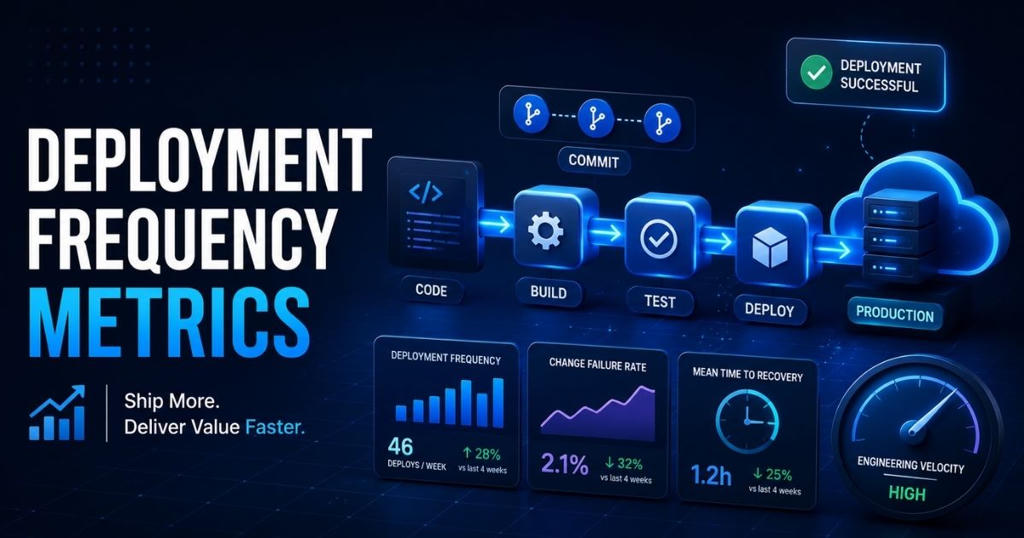
Dedicated teams usually follow a continuous agile development process with 2-week sprints, shared tools like Jira, GitHub, and CI/CD pipelines, increasingly adopting modern DevOps best practices around automation, monitoring, and shared ownership. This approach supports long-term roadmap delivery with sustained velocity. EliteCoders benchmarks show dedicated teams achieving 2 to 3 times velocity gains after 3 months of collaboration. DORA research from 2018 to 2023 ties stable teams to 2,555 deployments per year versus low-performers’ 122 deployments.
Many agencies work in phased models covering discovery, design, build, and handover. This structure can work well for a well defined MVP but can become slow when priorities shift every month. A SaaS company iterating toward product-market fit needs to pivot features quarterly, making the dedicated development team model more suitable than a rigid project-based agency contract.
A dedicated development team is best suited for projects that require ongoing product evolution, such as continuous releases and new features based on user feedback, which aligns closely with end-to-end SaaS product development lifecycles. The Spiral Scout analysis notes dedicated teams achieve 15 percent higher on-time delivery for complex, long-term goals compared to agency fixed scopes.
Talent Composition And Continuity
A dedicated team usually includes a fixed mix of roles such as tech lead, back-end and front-end developers, QA engineers, and optionally UX or DevOps specialists. A dedicated development team provides comprehensive expertise in one place, allowing for better organization and communication compared to fragmented arrangements. The team’s composition remains stable across many releases, building deep product familiarity.
Agencies juggle multiple clients, which may result in lower commitment to any single project. Agency teams dynamically reassign designers, developers, and testers between concurrent projects, causing more context switching and weaker ownership of a single product. Krishang Tech reports 25 to 30 percent velocity dips from repeated ramp-up cycles when teams change frequently.
According to Atlassian studies, context switching creates a 40 percent productivity hit, which becomes even more pronounced when scaling engineering teams for growth without clear ownership and stable squad structures. McKinsey’s 2024 engineering benchmarks rank team stability as a top productivity driver. Consider healthcare IT where knowledge about HIPAA compliance requirements matters deeply, similar to other regulated sectors where custom software has transformed companies by encoding domain-specific rules and workflows. Dedicated teams retain regulatory nuance over 18 months, reducing compliance rework by 50 percent versus agency rotations.
Risk Profile And Long Term Relationship
The main risks with an agency model include vendor dependency for critical knowledge, rushed handovers, and working with an agency often results in a loss of deep product familiarity once the project is completed. Gartner reports 35 percent handover failures when code documentation is insufficient, leaving the project difficult to maintain by an in house development team.
The main risks with a dedicated team include over-reliance on one vendor for core components, potential vendor lock-in if IP and access are not clearly defined, and difficulty scaling down abruptly. Contracts for both models should clearly specify code ownership, access to repositories and cloud infrastructure, and exit processes to reduce long-term risk.
A hybrid approach, such as starting with an agency for discovery and then shifting to a dedicated team for ongoing development, can reduce risk. Tula’s 2025 analysis shows this pattern cuts risks by 25 percent for complex multi-year products. Many fintechs successfully transition post-MVP using this approach, combining agency speed with dedicated team continuity.
Situations Where A Dedicated Development Team Works Best
Dedicated teams excel for long-term, evolving products where backlog and priorities change as you learn from users, especially when you are managing a dynamic SaaS product roadmap that must stay aligned with shifting customer needs. The model works best when product ownership is crucial and continuous iteration drives your competitive advantage. A dedicated team model is particularly beneficial when product ownership is crucial, as it allows for continuity and knowledge retention across development cycles.
Long Horizon Product Roadmaps
A B2B SaaS product with a 24-month roadmap, frequent customer feedback cycles, and planned expansion into multiple regions benefits from dedicated team continuity, but it also requires careful planning around SaaS development costs and budget trade-offs over that period. Stable squads can handle new feature development, refactoring, and technical debt reduction in parallel, which is difficult to organize through short agency projects.
High-growth SaaS firms in 2024 and 2025 report that continuity of the core development team is crucial to hitting quarterly release targets. Spiral Scout data shows dedicated teams achieve 4 times quarterly releases compared to rotating project teams. Shared sprints foster 30 percent better OKR alignment across several quarters, making long-horizon roadmaps more achievable.
Complex Domains And Integrations
Industries like healthcare, fintech, logistics, and manufacturing have strict compliance requirements and many third party integrations. A dedicated team that builds long-term domain expertise delivers better outcomes than rotating agency squads who must relearn the same complexities repeatedly.
Consider integrating a payment gateway, fraud detection, and PSD2-compliant strong customer authentication. Deep knowledge of the ecosystem matters more than raw coding speed. Research from healthcare IT sectors shows higher failure and rework rates when teams frequently change and domain knowledge is lost. Dedicated developers progressively learn the client’s data models, security posture, and edge cases, reducing bugs and incidents over time by up to 40 percent in regulated fields.
Scaling Product Companies From Seed To Series B
Many startups after seed or Series A have validated demand but lack a large in house development team, forcing a decision between hiring developers vs outsourcing as they plan their next growth phase. A dedicated development team becomes a bridge toward eventual internal scaling. Choosing a dedicated development team is ideal when you need to scale delivery without the burden of full hiring processes, allowing for flexibility in team composition and seniority.
A startup in 2026 wanting to double its release frequency within 12 months can assemble a 6 to 10 person dedicated team faster than hiring those roles in competitive markets, particularly when leveraging structured offshore software development models. LinkedIn 2025 data shows senior engineering hires in North America or Western Europe often exceed 3 to 4 months. Venture trends indicate 65 percent of backed startups now use hybrid models with offshore dedicated cores. A dedicated team model allows for easier scalability, enabling businesses to adjust team size based on project needs, while alternatives may require more time to find replacements or additional resources.
Limited Internal Hiring Capacity
Many scaleups and non-tech companies lack the HR and engineering leadership bandwidth to recruit and manage a full house team. A dedicated team provider handles sourcing, interviewing, onboarding, and retention while still giving the client a say in the final selection and technical direction.
Consider a traditional manufacturing firm building an IoT platform that cannot compete for local senior software developers but can access a global talent pool through a dedicated team model, especially when combining agile and offshore software development to balance speed and cost. This approach converts unpredictable recruiting costs into a predictable monthly investment of $30,000 to $50,000 tied to clear delivery goals, which you should evaluate alongside a realistic custom software development cost breakdown for your roadmap. Leadership saves 500+ hours annually on recruiting per Deloitte estimates. Dedicated teams offer high ownership without the HR overhead that comes with building an in house team from scratch.
Deeper Integration With Your House Team
Dedicated teams can adopt the same coding standards, tools, ceremonies, and documentation practices as the internal team, effectively acting as one extended development team. A hybrid setup where in house engineers own architecture and core services, while a dedicated team handles new modules, integrations, or front-end development, creates powerful synergies.
Regular joint retrospectives, architecture reviews, and shared repositories reduce friction by 50 percent and help treat all engineers as one product team. Sprint ceremonies foster one-team velocity that is unachievable with multi-project agencies serving multiple clients simultaneously. This close alignment builds knowledge retention that compounds over quarters of collaboration.
Scenarios Where A Development Agency Is A Better Fit
Agencies still play a crucial role for discrete, leadership-light initiatives where turnkey outcomes matter more than continuity, fitting well within broader outsourced software development strategies for non-core or short-term projects. Gartner 2025 data shows agencies capture 45 percent of short-term outsourcing engagements. Agencies provide flexibility, allowing for scaling services up or down according to project needs without long-term commitments.
Fixed Scope And Deadline Projects
Situations like building a regulatory reporting tool that must go live before a fixed compliance deadline suit agency delivery well. When the scope is reasonably clear and the organization prefers turnkey delivery, agencies structure work into phases, estimate effort, and commit to milestones. Agencies can deliver projects quickly if the scope is fixed and well-defined, satisfying strict procurement and budgeting rules.
A 4 to 6 month engagement where the outcome is a clearly defined mobile application or portal works well with an agency model. The predictability of a fixed-price or carefully scoped time and materials contract can be more important than long-term flexibility for such project requirements. Strong change control remains essential to avoid scope creep and cost overruns, which PMI data shows averages 15 percent for fixed-scope projects.
Early Stage Discovery And Validation
Specialized product studios within agencies excel at ideation workshops, customer interviews, prototyping, and initial UX flows when a company is just exploring an idea. Agencies provide immediate access to a wide bench of specialists who already work together, reducing technical risk during discovery phases.
A corporate innovation unit wanting to validate three potential product ideas within one quarter benefits from a nimble agency supplying designers, researchers, and a small external team temporarily. This front-loaded discovery work often precedes a decision to either build an in house development team or engage a dedicated development team for the selected idea. Agencies bring cross-industry experience that helps challenge assumptions and avoid designing in isolation, delivering prototypes 30 percent faster than internal teams according to Mind IT Systems surveys.
Design Heavy Or Brand Driven Initiatives
Full website redesigns, cross-channel brand refreshes, or complex UX overhauls often require specialized design agencies with deep creative and research capabilities. A company rebranding across 2026 that needs new design systems, illustration styles, motion guidelines, and marketing site templates may need expertise beyond what a typical dedicated development team provides.
A marketing agency or design-centric studio often offers integrated services like user testing labs and analytics reviews to support evidence-based decisions. Once visual language and UX patterns are defined, a dedicated team or in house developers can implement and extend them over time. The brand voice and communication style work benefits from agency creative depth, complementing later dedicated implementation.
Minimal Day To Day Management Capacity
Some organizations, especially smaller non-technical businesses, do not have a product owner or technical lead who can invest several hours each week guiding a development team. Agencies can provide both project management and light product management, taking more responsibility for decisions within an agreed scope through dedicated project managers on the agency side.
A regional services company wanting a new booking platform but unable to assign internal staff to daily standups or backlog grooming benefits from agency project based outsourcing. A small business or startup founder with limited management bandwidth can invest fewer than 5 hours weekly versus the 10 to 15 hours a dedicated team typically requires. This reduces management overhead but also reduces direct control and may lead to solutions needing adjustment as the business grows.
Non Core Or Experimental Projects
Companies often use agencies to build tools that are helpful but not core IP, such as marketing microsites, internal dashboards, or proof-of-concept automation scripts. Short term projects with uncertain futures suit quick agency spins without overcommitment.
A retailer testing a new loyalty microsite for a single region before deciding whether to roll it into the main platform exemplifies this scenario. Hiring dedicated developers would be excessive for such experiments. Agencies can quickly spin up a team for a few months without long-term commitments. If the experiment succeeds and becomes strategic, ownership might then migrate to an in house team or a dedicated development team for ongoing optimization and evolution.
Cost Comparison And Hidden Costs In Dedicated Team Vs Agency
Total cost of ownership for software products extends far beyond headline day rates, as detailed in many software development hidden costs breakdowns that factor in rework, maintenance, and transition overheads. Choosing between a dedicated team vs agency requires understanding rework, delay, management time, and transition costs that can add 20 to 40 percent to the apparent price. The comparison below illustrates how pricing structures differ across a typical 9-month engagement.
Cost Dimension | Dedicated Development Team | Software Development Agency |
|---|---|---|
9-Month Total Estimate | $300,000 to $150,000 | $100,000 to $300,000 |
Monthly Rate Structure | $15-$18,000 team average | Fixed price plus changes |
Rate Range (Eastern Europe) | $4,000 to $10,000 per developer | $100 to $200 hourly blended |
Rate Range (North America) | $12,000 to $20,000 per developer | $150 to $300 hourly blended |
Change Request Impact | Absorbed in backlog | 20 to 30% cost increase |
Handover Cost | Minimal (team stays) | 3 to 6 months equivalent effort |
Ramp-Up Period | 4 to 8 weeks at 50 to 70% productivity | 1 to 2 weeks |
Ongoing PM Requirement | 10 to 20 hours weekly from client | 3 to 5 hours weekly from client |
Direct Cost Components
Major direct cost elements include hourly or daily rates, project management overhead, license fees, QA and DevOps services, and support or maintenance add-ons. Dedicated teams usually bundle PM, QA engineers, and sometimes DevOps into the team pricing, creating predictable monthly costs. Agencies may quote these as separate line items depending on contract type.
Central and Eastern European rates run $50 to $100 per hour for dedicated teams, while Western Europe and North America command $100 to $200 or more. Time and materials versus fixed price choices impact how risk and buffers get priced into the contract. When evaluating an outsourcing partner, focus on the structure of what is included rather than raw rate comparisons alone, and map it against the most suitable software development pricing model for your risk tolerance and governance style.
Hidden Costs In Agency Engagements
Common hidden costs include additional change requests due to unclear or evolving scope, prolonged acceptance testing, and the cost of handover to an internal or different outsourced team. PMI 2024 data shows fixed-price projects often require 20 to 30 percent extra features after user testing, significantly increasing the final invoice.
The risk of paying twice for the same work emerges when a new team must refactor hard-coded assumptions or rewrite low-quality parts delivered under time pressure. Control over architecture decisions rests mostly with the agency, influencing long-term maintenance costs and licensing choices. Strong upfront discovery and realistic scoping reduce these risks but rarely eliminate them entirely. Freelancers may lack liability and formal contracts, which can lead to risks regarding sensitive business data, whereas dedicated teams operate under formal agreements that ensure confidentiality and accountability.
Hidden Costs In Dedicated Development Team Setups
Hidden costs include the initial onboarding period where productivity is lower, the need for a committed product owner, and potential friction if the client’s business processes are immature. The first 4 to 6 sprints may involve substantial time aligning on coding standards, environments, and workflows, which pays off later but should be planned for.
If the client lacks clear priorities, a dedicated team can end up building low-value features. This represents an indirect cost of weak product management rather than the model itself. Effective management of a dedicated team involves clear communication, defined roles, and a structured project management process to ensure accountability and alignment with project goals. Governance practices like clear sprint goals, regular retrospectives, and transparent reporting keep the dedicated team cost effective. Initial savings from cheaper rates can be offset by unclear ownership if internal management capacity is insufficient.
Cost Effectiveness Over Different Time Horizons
Agencies may be more economical for short engagements under 4 to 5 months. For multi-year initiatives, dedicated teams or in house teams usually yield better value when total cost of ownership is considered. Clutch and Deloitte 2025 reports confirm dedicated teams save 30 to 50 percent total overhead versus Western in-house options over 12 months.
A 3-month prototype favors agency speed. A 9-month MVP and scale phase begins to tip toward dedicated teams. Multi-year product evolution strongly favors dedicated continuity. For long-term roadmaps, renegotiating project contracts repeatedly causes friction and unplanned gaps, whereas a stable dedicated team maintains momentum. Industry observations show the total cost of frequent vendor switching and ramp-up often exceeds perceived savings on hourly rates.
Regional Pricing And Evaluating Rates Fairly
Geography impacts both agency and dedicated team pricing. Nearshore and offshore vendors often offer lower rates without necessarily compromising quality if governance is strong. Compare not just hourly rates, but also seniority mix, churn rates, code quality practices, and inclusion of QA and DevOps when evaluating proposals.
In 2025 and 2026, many companies use blended models with product management onshore and a dedicated development team offshore to balance cost efficiency and communication, following best practices from modern offshore software development guides. Simple metrics like cost per deployable feature or cost per successful release prove more meaningful than hourly rate comparisons alone. Request detailed breakdowns from vendors to avoid surprises around what services are included versus extra.
Decision Framework To Choose Between Dedicated Team And Agency
Rather than asking which model is universally better, leaders should map their situation against criteria like scope clarity, roadmap volatility, internal management capacity, and strategic importance of the software. Choosing between a dedicated development team and a software development agency often depends on the project’s scope, timeline, and the need for ongoing support and flexibility.
Criteria | Dedicated Team Indicator | Agency Indicator |
|---|---|---|
Roadmap Volatility | High (frequent changes) | Low (stable scope) |
Internal Product Capacity | 30%+ PO time available | Limited PO availability |
Time To Market Pressure | Sustained delivery over 6+ months | Urgent single deadline |
Strategic Importance | Core platform or IP | Supporting asset |
Engagement Duration | 12+ months planned | Under 6 months |
Budget Structure | Monthly retainer preferred | Fixed-price preferred |
Specialized Expertise Need | Deep domain over time | Short-term niche skill |
Scope And Roadmap Stability
Projects with well-defined, relatively stable scope and limited plans beyond initial release suit agency models. Evolving roadmaps and frequent reprioritization point toward dedicated teams. A marketing microsite with a fixed launch date differs fundamentally from a multi-tenant SaaS platform expecting quarterly feature drops and customer-driven changes.
Assess volatility by estimating major scope changes expected per quarter, uncertainty in target user segments, and dependency on user feedback loops. If you expect more than modest change each quarter, the dedicated development team model handles that better than a string of fixed-scope agency projects. Key differences in adaptability become apparent when market opportunities shift and priorities must adjust quickly.
Internal Product And Engineering Capacity
Strong internal product ownership and at least some engineering leadership are prerequisites for extracting value from a dedicated team. Someone must set priorities and define quality standards through clear understanding of business goals. A dedicated team model allows for scalability, enabling businesses to adjust team size and composition based on project needs without the burden of full hiring processes when the right internal capacity exists.
Contrast this with situations where internal capacity is low and a full-service agency can temporarily fill product and delivery roles alongside engineering roles. Ask whether you have a product owner with at least 30 to 40 percent of their time available, and whether you have an internal technical lead who can review decisions regularly. A startup founder who is technical differs from a traditional company without in house engineering leadership. Building some internal ownership, even gradually, is essential for long-term success regardless of model.
Time To Market Pressure
Urgent timelines, such as needing a demo ready for a specific conference date or regulatory deadline, might influence the choice toward agencies that can immediately deploy multiple specialists. Agencies often provide faster onboarding and time-to-hire for specific tasks when project requires immediate action. Predictable delivery to a single milestone suits agency strengths.
Dedicated teams can also start fast if the outsourcing partner has ready talent on the bench, but they are designed for sustained delivery rather than one-off sprinting to a single launch. A fintech startup needing a compliant MVP in six months might use an agency for initial build, then a dedicated team to maintain and extend the product. Frame time to market not only as the first release date, but also the ability to release new features over the next 12 months to capture market opportunities.
Strategic Importance And IP Sensitivity
For systems that encode core intellectual property, such as pricing engines, risk models, or proprietary workflows, many organizations prefer either in house development teams or long-term dedicated teams under strict IP and security arrangements. Contracts must clearly specify technical expertise ownership and access rights.
Non-core assets like informational websites or campaign landing pages often work fine with agencies and present less risk. Classify your initiative into core platform, adjacent product, or supporting asset, and choose models accordingly. Security and compliance standards like PCI DSS or HIPAA may also influence choice toward partners with demonstrated track record in long-term collaborations. NDAs, data processing agreements, and repo access should be clearly defined regardless of model to maintain full control where needed.
Hybrid And Phased Approaches
Practical hybrid patterns include starting with an agency for discovery and proof of concept, then transitioning to a dedicated development team once problem-solution fit is clear and you need to hire dedicated developers for ongoing work, echoing broader hire developers vs outsourcing strategies that evolve as products mature. Another approach uses an in house team for core services, a dedicated team for feature development, and agencies occasionally for marketing or UX experiments through team augmentation, effectively combining in house and outsourced development models in a single portfolio.
Hybrid strategies smooth budget peaks and reduce risk by not over-committing to one model before uncertainties are resolved. A phased path across 18 to 24 months for a digital product might use agency discovery for months 1 to 3, transition to a dedicated team from months 4 to 6, and scale the dedicated team for months 7 to 24. Staff augmentation approaches offer flexibility when existing team needs temporary expansion. More control comes from not forcing all work into a single model from day one.
Why Choose GainHQ As Your Dedicated Development Team Partner
GainHQ focuses on building stable, high-performing dedicated development teams that integrate closely with client product organizations. Rather than operating as a third party agency with rotating resources, GainHQ assembles cross-functional squads with tech leads, dedicated developers, QA, and optionally DevOps or UX specialists, applying the same principles used to design flexible custom software solutions tailored to each client. Each team is tailored to the client’s roadmap rather than one-off tasks.
GainHQ strengths include 95 percent retention rates, SOC2 compliance, and 25 percent faster ramp-up compared to industry averages. Transparent communication through sprint-based reporting keeps delivery moving while documenting architecture and decisions reduces vendor lock-in risks. Technical skills across the team are matched to your project development needs rather than generic staffing, supported by strategic tech consulting services that ensure architecture, tooling, and processes fit your long-term goals.
The focus on data-rich fintech, logistics, and SaaS platforms means GainHQ teams build the deep understanding that complex domains require, similar to the domain-led approach seen in many custom software transformation stories. Clients report a 2 times velocity improvement after onboarding completes, with several successful SaaS launch case studies illustrating how this translates into faster market entry and growth. When your project scope requires more control and core competencies in software development, the dedicated team model through GainHQ provides key benefits that agency teams cannot match.
Frequently Asked Questions
How Long Should I Commit To A Dedicated Development Team Contract Initially
Many companies start with 6 or 12-month commitments to allow enough time for onboarding, delivery, and measurable outcomes. Very short engagements rarely unlock the benefits of a dedicated team because the ramp-up period consumes a significant portion of the value that knowledge retention provides. Trial periods of 1 to 2 months can be built into longer agreements with predefined review points to adjust team size or the team’s composition.
Can I Transition From An Agency Project To A Dedicated Development Team Later
Transitioning is common and often represents the best path for products that prove their value. Key steps include ensuring proper documentation, joint code reviews, and overlapping collaboration between the outgoing agency and the incoming dedicated team. A 4 to 6 week overlap where both teams have access to the same repositories, environments, and backlogs reduces knowledge loss by up to 50 percent. Starting with the end in mind by requiring documentation and clean architecture from agencies makes later transitions much smoother.
How Much Time Does My Team Need To Manage A Dedicated Development Team
While a dedicated team reduces hiring and HR workload, it still requires regular engagement from a product owner and a technical lead or architect. Expect a product owner to invest 5 to 10 hours weekly in backlog refinement, sprint reviews, and planning, especially during the first few months when the team directly needs more guidance. Over time, as the dedicated team gains context and a clear scope emerges for each sprint, management overhead per feature usually decreases, improving overall cost efficiency.
How Do I Protect Intellectual Property And Data Security With External Teams
Robust contracts, NDAs, and data processing agreements are essential regardless of whether you choose a dedicated team or an agency. Practices like client-owned repositories, least-privilege access to production data, and clear rules around using third-party services or open-source components protect your interests effectively.
When Is It Better To Build An In House Development Team Instead Of Using External Models
Many companies still start with agencies or dedicated teams to reach the market faster, then gradually build an internal development team while external partners handle overflow or specialized work. Venture data shows 70 percent of startups in 2025 use some form of external development during early stages, often relying on structured outsourcing software development strategies before building full in-house capabilities. View external models as a way to accelerate learning and delivery moving forward, not as a permanent substitute for strategic internal capability when software is central to your value proposition and competitive advantage, as shown in our software build vs buy case study where a custom platform ultimately delivered superior long-term value.