Since around 2020, growing B2B and B2C companies have outgrown generic CRMs and now rely on custom CRM development to scale operations across regions, channels, and products. The fundamental issue is that off-the-shelf CRMs follow a one-size-fits-most approach that rarely aligns with how businesses actually operate.
A custom CRM is designed around a specific company’s business processes, roles, and KPIs. The software adapts to your workflows rather than forcing you to adapt. Concrete operational scaling needs include managing tens of thousands of leads per month, multi-country customer bases, and multi-brand product catalogs.
GainHQ helps businesses move from fragmented spreadsheets and inflexible SaaS tools to a unified, extensible CRM core. The rest of this article focuses on seven key benefits of custom CRM development, how to plan a scalable CRM system, and what to expect from a development partner.
What Is Custom CRM Development
Custom CRM development means designing, building, and evolving customer relationship management software specifically tailored to a company’s workflows, data model, and growth plans. The critical difference from configuring an off-the-shelf platform lies in control and ownership.
Configuration allows selection and adjustment of predefined features within a vendor’s constraints. Custom development means engineering a CRM solution owned, controlled, and extended entirely according to business priorities. With a custom solution, you own the code and infrastructure. This eliminates common risks associated with commercial CRM products: sudden pricing increases, deprecated features, platform shutdowns, or forced migrations.
Rather than adapting your sales processes to software capabilities, custom CRM software development reverses this equation. The software is engineered to mirror your exact workflows, pipelines, reporting structures, and customer journeys. A custom CRM system offers superior flexibility, security, and long-term cost efficiency compared to off-the-shelf options.
7 Benefits Of Custom CRM Development For Scalable Operations
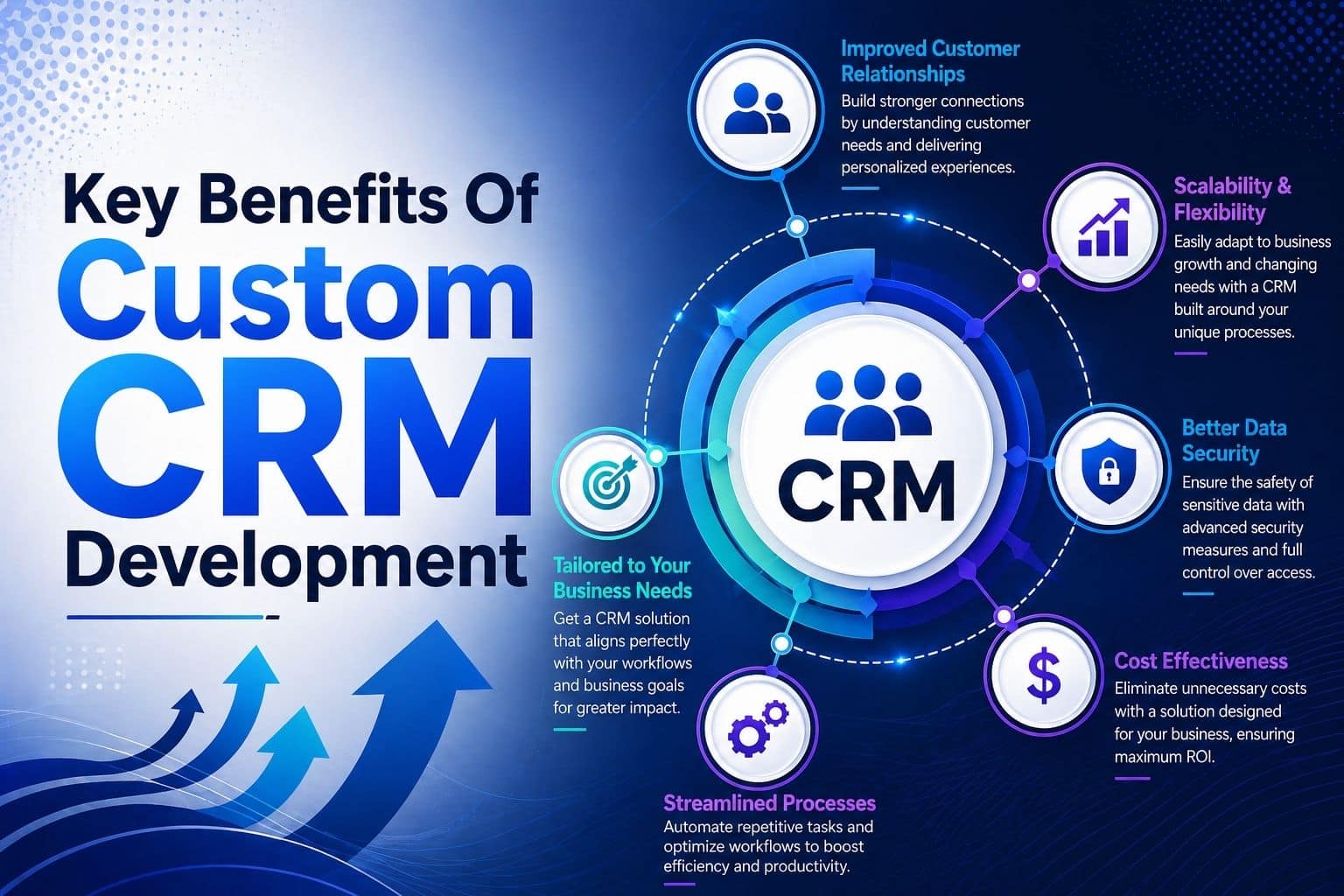
These benefits regularly appear in projects delivered between 2021 and 2026 for fast-growing teams, mirroring how custom software transformed companies that replaced fragmented tools with tailored platforms. Each benefit directly supports scalability through process efficiency, data quality, or technology architecture. Focusing on these benefits early in a CRM development project dramatically lowers future rework when volumes grow.
Benefit 1: Operational Workflows Tailored To Your Business
Custom CRM development allows every key workflow to be modeled exactly as the business operates. Lead management, quote approvals, onboarding, and renewals all follow your unique processes rather than generic templates.
Standard systems force companies to adapt their business operations to fit the software. A company managing both retail and wholesale clients with different sales approaches can support separate workflows for each client type instead of forcing both into a single rigid structure. Custom CRMs can include features such as lead capture, account management, sales tracking, and customer feedback management to meet specific business needs.
Consider a B2B company introducing multi-step deal approvals for contracts above certain values. The approval chain can route based on contract value, geography, product line, or customer segment. Custom CRM solutions provide a tailored fit to business processes, ensuring that every feature serves a specific purpose for the company.
Tailored workflows also make training new staff easier during rapid hiring phases. The crm system guides employees step by step through defined processes, eliminating informal workarounds that become bottlenecks when transaction volumes increase.
Benefit 2: Centralized Customer Data For Accurate Decisions
A custom CRM consolidates leads, accounts, contacts, orders, customer interactions, support tickets, and billing data into a single source of truth. This eliminates the fragmentation that occurs with multiple disconnected systems.
Specific operational issues solved include duplicate records, inconsistent customer information, and conflicting revenue reports between teams. When managing tens of thousands of customers, data quality issues compound exponentially. Duplicate records create false pipeline reporting. Inconsistent information leads to miscommunication with potential customers.
Central, reliable customer data improves forecasting accuracy by providing a complete view of customer journey stages, deal history, and probability factors. Territory planning and capacity planning become more accurate when based on consolidated account data. With proper data modeling and indexing, a custom CRM can deliver fast reporting even when the business triples its customer base.
Businesses using custom crm software have shown much higher customer retention rates. Reliable, unified data is critical for executives making quarterly decisions on hiring, marketing budgets, and product strategy.
Benefit 3: Scalable Architecture That Grows With Demand
A custom CRM can be built with cloud-native components, horizontal scaling, and modular design so it continues to perform when user counts and transactions grow sharply. Rather than requiring progressively larger server hardware, cloud-native architecture distributes load across multiple instances.
Consider a company expanding from one domestic market in 2024 to five regions by 2026. Without scalable architecture, the CRM would experience slowdowns during peak hours, timeouts during integration processes, and report generation delays. A scalable crm solution absorbs this increased demand through distributed database replicas, caching layers, and load balancing.
Custom CRMs offer scalability and flexibility, allowing businesses to add new features as needed without waiting for vendor updates, especially when built on scalable software architecture for high-growth products. Early architectural choices around database sharding, caching, and asynchronous processing directly influence future scaling capacity. Scalable architecture avoids the need for disruptive replatforming at critical growth stages, protecting day-to-day business operations.
Benefit 4: Deep Integration Across The Tech Stack
Custom CRMs integrate cleanly with ERP systems, accounting software, marketing automation platforms, support desks, and internal tools to support end-to-end processes, relying on disciplined custom software development services to keep integrations robust and maintainable. Custom CRM systems can integrate seamlessly with existing IT ecosystems, breaking down data silos and improving overall operational efficiency.
A B2B company closes a deal valued at $50,000. In an integrated system, marking this deal as closed-won automatically triggers invoice creation in accounting software, onboarding checklists in project management tools, and welcome emails through marketing automation. This entire sequence occurs without manual data entry, eliminating errors and accelerating time-to-first-value.
Well-designed APIs and event-driven integrations reduce re-entry, lower error rates, and speed up order processing. Seamless integrations are essential for scalable operations because disjointed software stacks break down under higher volumes. Custom integrations can be phased in, starting with mission-critical existing systems before extending to secondary applications.
Benefit 5: Advanced Automation And Productivity Gains
Custom CRM development allows complex automation logic tailored to the business, building on the broader meaning and benefits of custom software development. Time-based follow-ups, multi-step nurturing, and cross-team escalations can all be automated based on your specific sales pipeline and service workflows.
Organizations report cutting manual data entry time for sales reps by 30 percent through automated field population and task creation. For routine tasks like lead scoring and assignment, automation frees staff from repetitive work so they can focus on higher-value conversations. Key features of a custom CRM often include customizable dashboards, automation of repetitive tasks, and integration with existing tools.
Automation rules can be adjusted over time as strategies, territories, and products change without needing complete system redesigns. Practical metrics that improve include faster response times to customer inquiries, shorter sales cycles, and higher case resolution rates. A custom CRM can provide mobile accessibility, allowing team members to access sales data and update records on-the-go.
Benefit 6: Improved User Experience And Adoption At Scale
Custom CRM interfaces can be designed specifically for different roles. SDRs focus on lead management and qualification. Account executives need pipeline visibility and opportunity tracking. Support agents need ticket queues and customer history. Managers need performance dashboards.
Role-based dashboards, simplified forms, and context-specific actions reduce clicks and cognitive load during busy workdays, reflecting core custom software development benefits, types, and process applied specifically to CRM UX. This matters during scaling phases where dozens or hundreds of new employees need quick, consistent training. Intuitive interfaces dramatically reduce onboarding friction and support burden.
Higher adoption leads to better data quality, which strengthens reporting and automation reliability. When users find the crm functionality intuitive and efficient, they enter complete customer data and use the system consistently. User acceptance testing during the development process ensures the system meets real work patterns before launch.
Benefit 7: Long-Term Cost Control And Ownership
One of the main challenges of custom CRM development is the higher initial cost compared to off-the-shelf solutions, which a custom software cost comparison guide for 2026 can help you evaluate in terms of long-term ROI. Building a crm from the ground up requires significant investment in development and infrastructure. However, evaluating total cost of ownership over three to five years often favors custom development.
Custom CRM development costs typically range from $30,000 to $200,000 depending on the number of users, integrations, and automation features. Basic CRMs for small teams cost between $30,000 and $60,000. The cost of custom CRM software development varies based on functional scope, customization needs, integrations, data migration, user licenses, and ongoing support, with prices ranging from $15,000 to $250,000+.
Owning the codebase allows organizations to prioritize essential features, avoid forced upgrades, and plan multi-year roadmaps aligned with strategy. Despite a higher upfront investment, custom solutions eliminate recurring per-user license fees and reduce costs for workarounds or third-party plugins. The ability to extend the CRM in-house or with a trusted development team protects against vendor lock-in.
Key Features To Support Scalable Custom CRM Operations
Not all CRM features equally support scalability, and they should be aligned with broader enterprise scalability strategies for growth in 2026. Certain capabilities become mission-critical once teams and data volumes start growing quickly. The following core feature areas represent where custom CRM development adds the most differentiated value compared to configurable crm platforms.
Role-Based Dashboards And Reporting
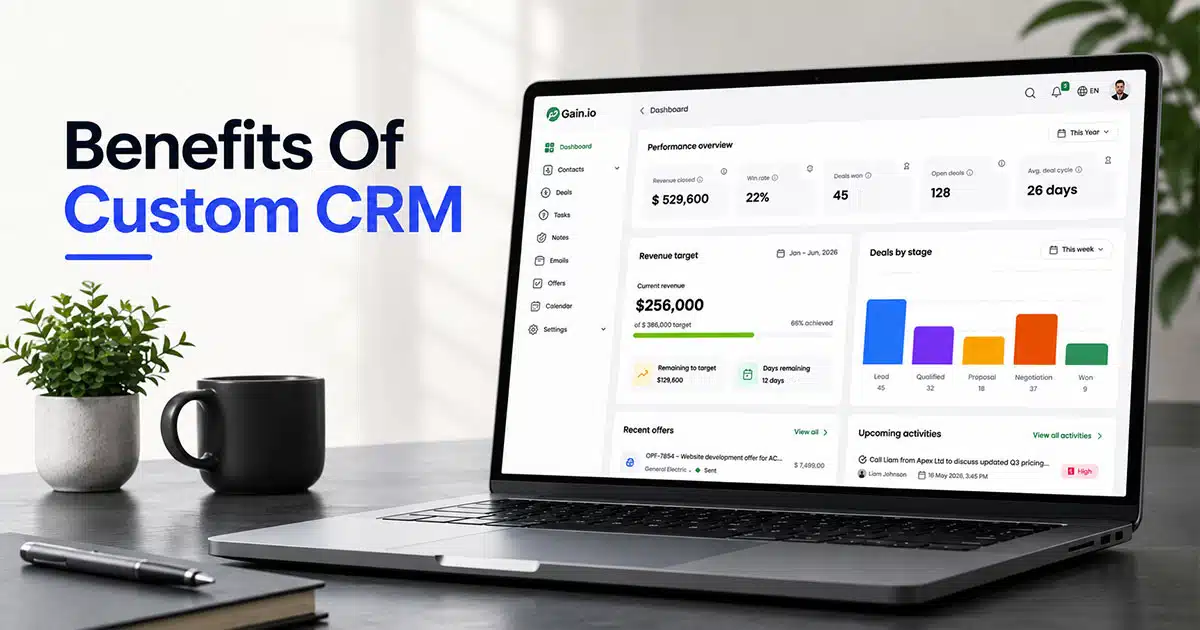
Dashboards tailored for executives, sales teams, customer success, and operations show KPIs such as pipeline health, churn risk, and ticket queues. Real-time and scheduled reports help leaders track performance daily, weekly, and monthly as the organization scales.
Filters, drill-downs, and saved views help teams quickly react to changing conditions without relying on manual exports. Well-designed reporting supports board-level reviews, investor updates, and annual planning with accurate historical data. Flexible reporting tools prevent the proliferation of disconnected spreadsheets across departments, especially when they are part of flexible software solutions designed for evolving teams. Healthcare CRMs require strict regulatory compliance, while retail CRMs focus more on personalization and large-scale customer segmentation.
Configurable Workflows And Automation Rules
Non-technical administrators can adjust workflows such as lead scoring, assignment rules, and escalation paths as the business evolves, applying similar discipline to MVP feature prioritization when deciding which automations to introduce first. Visual workflow builders make it easier to manage complex branching logic at scale.
When marketing changes qualification criteria, administrators update the CRM configuration without code-level changes. This configurability shortens the cycle from strategy decision to operational execution. Admin panels and governance rules keep automation manageable even as rules multiply. Agile development methodologies allow continuous refinement throughout the development services engagement.
Granular Permissions And Security Controls
Role-based access control, field-level security, and audit logs protect sensitive data such as pricing, contracts, and personal customer information, echoing principles from broader SaaS security architecture best practices. Data security is critical in custom CRM systems, as they often handle sensitive customer data that must be protected from breaches and unauthorized access.
Implementing robust security measures, such as encryption and role-based access, is essential for protecting sensitive data. Growing organizations need strict controls when adding new regions, partners, or external vendors into CRM workflows. Good security design simplifies compliance with regulations like GDPR and HIPAA, especially when managing sensitive customer data. These controls must be flexible enough to adapt to organizational changes without major redevelopment.
Scalable Data Model And Performance Optimization
The underlying entities such as accounts, contacts, products, and activities are modeled to prevent data duplication and performance bottlenecks. Proper indexing, query optimization, and caching ensure fast page loads and search results as data grows.
Response times remain stable even after the CRM stores several years of interaction history. Poor early data modeling decisions are expensive to change later and can hold back growth. Data architecture should be planned with long-term retention and predictive analytics needs in mind from the first design phase.
Flexible Integration Layer And APIs
A robust API layer, webhooks, and integration middleware connect the CRM to marketing tools, finance systems, and data warehouses. The CRM can publish customer updates that downstream systems consume in near real time.
Standardized integration patterns reduce complexity when adding new tools or replacing legacy systems. This flexibility is critical when companies acquire other businesses or launch new business models. Thorough documentation and testing ensure reliability during high-traffic periods. The tech stack should support both current and anticipated integration requirements.
How To Plan A Custom CRM For Scalable Operations
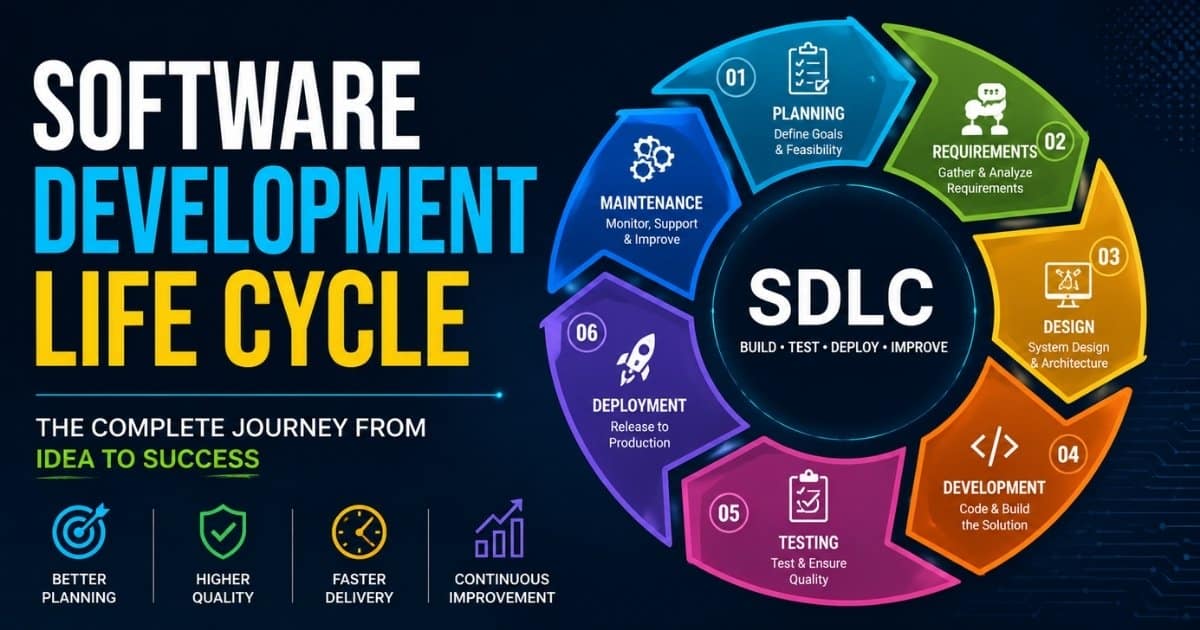
Planning determines whether a custom CRM becomes a growth enabler or a future constraint and should follow the same structured thinking used when evaluating the meaning and benefits of custom software development. The custom CRM development process typically involves several key steps: planning and defining requirements, choosing the technology stack, designing the CRM, developing and testing, and finally deploying and maintaining.
Align CRM Strategy With Business Growth Goals
Define three to five clear objectives such as reducing sales cycle length, improving retention, or increasing upsell revenue by specific percentages. During the planning phase, identify the business problems the CRM should solve and the goals it aims to achieve.
Map these goals to measurable metrics in the CRM so progress is visible over quarters and years. Document anticipated growth including projected customer counts, regions, and product lines through at least 2028. Strategy alignment helps avoid building features that do not support long-term business requirements. Periodic strategy reviews keep the crm implementation in sync with business direction.
Prioritize Use Cases And Minimum Viable Scope
Identify the highest-value workflows to include in the first release, such as lead management, contact management, or support ticketing, using the same disciplined scope approach shown in how a startup launched an MVP in 90 days. Determine the necessary features and modules required before building a custom CRM.
Starting with a focused minimum viable product allows teams to go live faster and gather real feedback. A challenge of custom CRM development is the longer development time required, which can take several months, whereas off-the-shelf solutions deploy much more quickly. Phased approaches reduce risk and help maintain operations while the system is introduced. Prioritizing essential features fits realistic budget and timeline constraints without sacrificing scalability.
Design Data Governance And Quality Standards
Define ownership for key data entities, naming conventions, and validation rules before launch. Policies for deduplication, record merging, and handling incomplete information prevent data quality issues at scale.
Clean data is a prerequisite for accurate analytics and automation. Periodic data quality reviews coordinated between business and IT stakeholders catch systematic issues early. Practical data governance frameworks should be sized appropriately to the organization’s maturity level.
Plan User Experience, Training, And Adoption
Involve future users in requirements, prototypes, and usability testing sessions. The design phase includes mapping out the user interface and data flow, ensuring the system is user-friendly and meets specific business needs.
Training plans should cover onboarding for existing staff and repeatable processes for new hires, similar to the structured enablement used in successful SaaS launch stories. Concise internal guides or short video walkthroughs support common CRM tasks. Leadership reinforcement through KPIs, dashboards, and regular review meetings drives strong adoption that sets the foundation for customer satisfaction.
Define Technical Standards, Security, And Maintenance
Document coding standards, deployment processes, and monitoring requirements from the outset, borrowing proven SaaS scalability strategies to ensure the CRM can grow without performance issues. Testing is a critical phase involving functional tests on each feature, validation of data security, and user acceptance testing.
Backup, recovery, and incident response procedures must handle larger user bases and data sets. Post-deployment, ongoing maintenance is necessary to fix issues, update the system, and improve features as business needs evolve. Long-term support models keep custom CRMs reliable and secure while the development cost remains predictable.
Common Challenges In Scaling Custom CRM Solutions
Custom CRM projects sometimes struggle when growth proves faster or more complex than expected. Understanding these challenges helps organizations design safeguards into the crm software development process.
Overly Complex Requirements And Feature Creep
Trying to replicate every existing process in software without simplification leads to a bloated, hard-to-use CRM. Constant addition of new features during development delays launch and complicates ongoing maintenance.
Separating must-have features from nice-to-have items and using release phases manages scope effectively. Product owners and steering committees keep priorities aligned with business impact. Regular scope reviews and agile methods balance flexibility with delivery discipline in any custom crm project.
Integration Bottlenecks With Legacy Systems
Older ERPs, bespoke databases, or on-premise tools can slow down projects when they lack modern APIs or have poorly documented interfaces. Poorly planned integrations become single points of failure as transaction volumes increase.
Middleware, staging areas, or phased replacement of problematic legacy systems reduce risks. Realistic integration timelines and dedicated testing cycles prevent surprises. Early technical assessments uncover integration risks before the development process begins.
Performance Degradation As Data Grows
Slow page loads, long report generation times, and timeouts damage user trust and productivity. Such issues often stem from unoptimized queries, missing indexes, or infrastructure limits.
Routine performance testing under realistic loads catches problems before major releases and validates that your scalable software architecture for high-growth products is behaving as designed. Monitoring tools capture response times, error rates, and database health metrics. Performance should be treated as a continuous concern rather than a one-time milestone in any custom crm application.
User Resistance And Low Adoption
Users may cling to spreadsheets or older tools if they see the new CRM as complicated or misaligned with daily work. Low adoption undermines data completeness, reporting accuracy, and ROI on the project.
Involve representatives from each user group in design decisions and pilot programs. Feedback loops and small interface improvements demonstrate responsiveness to user needs. Strong executive sponsorship and clear communication build support during change and improve customer relationships.
Underestimating Ongoing Support And Evolution
A CRM is not a one-time launch but a core operational system that must evolve with products, markets, and regulations. Risks emerge when organizations do not budget for enhancements, bug fixes, and security updates.
Establishing governance processes for requesting, prioritizing, and approving changes maintains alignment. A dedicated internal owner or product manager keeps the customizable CRM focused on business needs. Project management discipline extends beyond initial deployment.
How GainHQ Supports Custom CRM Development For Scalable Operations
GainHQ is a development partner focused on building and evolving custom crm solutions that support sustained growth across sales, marketing, and service operations, backed by its broader custom software development services. The organization follows a structured approach including discovery, architecture design, implementation, integration, and long-term support tailored to each client’s scale and complexity.
When choosing a custom CRM development partner, prioritize industry-specific expertise, technical proficiency in modern tech stacks, high customization flexibility, robust data security, and transparent communication, following guidance on how to choose a custom software development partner. Partners should provide long-term support and demonstrate a strong, relevant portfolio in custom crm development services. Ensure the partner builds to your workflow with the ability to add custom modules as your sales team grows.
GainHQ collaborates closely with stakeholders, runs iterative demos, and validates assumptions using real data before full rollout, similar to the build-vs-buy decisions outlined in the software build vs buy case study. Choosing a development partner for a custom CRM solution requires strategic evaluation of their technical capabilities, industry knowledge, and long-term support structure. The team prioritizes performance, data quality, usability, and security as core pillars through every phase of the crm development services engagement, sharing lessons through the GainHQ blog and supporting clients with ongoing tech consulting services.
FAQs
How Long Does It Typically Take To Build A Custom CRM Ready For Daily Use
A focused minimum viable CRM handling core processes often takes around three to five months from discovery to first production rollout, depending on team availability and integration complexity. More extensive software solutions with advanced automation, advanced analytics, and multiple integrations can extend to nine to twelve months in total, often delivered in stages.
What Budget Range Should We Expect For A Scalable Custom CRM
Factors that impact the custom crm development cost include project scope and complexity of features, platform considerations, integration requirements, data migration, scalability, and the expertise and location of the dedicated development team. Budgets for small to mid-sized teams often begin in the $30,000 to $60,000 range for basic CRMs, while complex multi-country deployments with extensive custom integrations can reach $200,000 or more.
Can We Start With An Off The Shelf CRM And Later Move To A Custom Solution
Many organizations begin with configurable SaaS CRMs and later migrate to their own crm system once they clearly understand their processes and limitations. Important considerations include data export options, integration patterns, and minimizing heavy customizations that are hard to migrate. Planning for eventual migration early by documenting business workflows and keeping data structures clean reduces future disruption.
How Do We Decide Between Custom CRM Development And Further Customizing Our Current Platform
Assess whether current limitations relate mainly to missing features and configurations or to deeper issues such as licensing, performance ceilings, or architectural constraints. If the existing platform still has room to grow and integrates well with supporting systems, extending it may be more cost-effective in the short term. Custom development becomes more attractive when workarounds dominate daily operations or when planned growth conflicts with vendor constraints and you need to build custom crm software.
What Internal Team Do We Need To Successfully Implement A Custom CRM
Key internal roles include an executive sponsor, a business owner or product manager, process experts from each department, and IT representatives for security and infrastructure. Allocate time from end users for workshops, testing, and feedback cycles to ensure the solution fits real work patterns. The development team handles technical implementation while internal stakeholders provide decisions, subject matter expertise, and ongoing governance for the custom crm apps.