
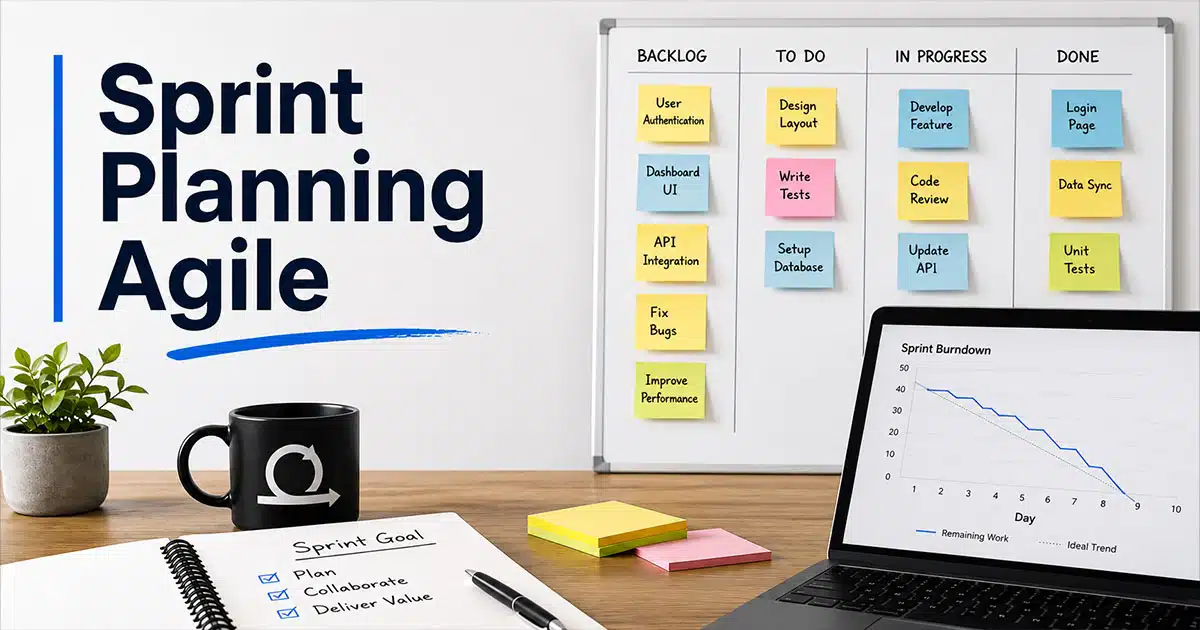
Sprint planning agile can make or break your entire sprint. When done right, your team moves with clarity and purpose. When done poorly, confusion and delays take over fast. Many teams struggle here, not because they lack skills, but because the planning process feels unclear or rushed.
A strong sprint plan gives direction. It helps teams focus on what truly matters. It also keeps everyone aligned from day one. No guesswork. No wasted effort.
This guide breaks everything down in a simple way. You will learn how sprint planning agile works, what to avoid, and how to improve every sprint. If you want better results without extra complexity, you are in the right place.
What Is Sprint Planning Agile
Sprint planning agile is a core part of the Scrum framework. It helps the scrum team decide what to deliver in the upcoming sprint. During the sprint planning meeting, the product owner presents the product backlog and highlights priority user stories. The development team reviews backlog items, checks team capacity, and defines a clear sprint goal. Everyone works toward a shared understanding so the entire team stays on the same page.
In a typical two-week sprint, the planning session includes estimating effort with story points and reviewing historical data from past sprints. The Scrum Master supports smooth team collaboration and avoids unrealistic expectations. A good sprint plan sets specific objectives, ensures clear acceptance criteria, and builds strong sprint commitment. This process helps agile teams deliver a successful sprint with better sprint outcomes.
Key Goals Of Sprint Planning In Agile Teams
Sprint planning agile sets the direction for the upcoming sprint. It aligns the scrum team on what matters most. A clear plan reduces confusion and improves focus. Each sprint planning session builds shared understanding and helps the entire team move with confidence.
Define Sprint Goal
A clear sprint goal gives purpose to the sprint. The product owner proposes priorities from the product backlog. The development team reviews user stories and agrees on specific objectives. This keeps everyone focused on real value.
Research shows teams with clear goals improve delivery success by over 30%. A strong sprint goal also supports better team collaboration. It ensures the whole team works toward the same outcome during the upcoming iteration.
Select Backlog Items
The scrum team selects a set of product backlog items for the coming sprint. The product owner describes each item with acceptance criteria. The team checks team capacity and avoids unrealistic expectations.
Studies show over 60% of agile teams fail due to poor backlog selection. A balanced sprint backlog improves sprint outcomes. It also helps teams break work into manageable parts and stay on track.
Estimate Effort Accurately
Accurate estimating effort builds a good sprint plan. Teams use story points and historical data from past sprints. This helps predict workload based on team velocity.
Data shows teams that rely on story point estimates reduce delays by up to 25%. Clear estimation supports risk management and avoids overcommitment. It also keeps the sprint commitment realistic for the entire scrum team.
Plan Execution Approach
The development team decides how work will be done. They discuss technical approaches and divide tasks based on skills. This creates a clear path for the current sprint.
Agile teams with strong planning processes see faster delivery cycles. A defined approach improves software development flow and highlights when teams need flexible, custom software solutions instead of rigid tools, when a more structured comparison of agile vs waterfall software development methodologies is necessary for the project context, and how to shape a realistic software development timeline across project phases. It also ensures each team member knows their role before the sprint begins.
Build Team Alignment
Sprint planning discussions bring the entire team on the same page. The scrum master ensures smooth communication and removes blockers. This builds trust and clarity across the team.
Teams with high alignment report up to 20% better performance. A shared understanding improves sprint review outcomes and future sprint retrospectives. It also prepares the team for the next sprint planning session with better insights grounded in a structured startup software development process.
Sprint Planning Agile Process Step By Step
Sprint planning agile follows a clear process that guides the entire scrum team. Each step builds clarity before the sprint begins. A structured planning process reduces risk and improves delivery speed. It also keeps the team aligned on goals, effort, and outcomes.
Step 1: Prepare Product Backlog
The product owner keeps the product backlog up to date before the sprint planning meeting. Each set of product backlog items should include clear acceptance criteria. This helps the development team understand what needs to be done.
Recent reports show 65% of agile teams face delays due to poor backlog clarity. A clean backlog supports better sprint planning discussions. It also helps teams break work into smaller user stories for the upcoming sprint.
Step 2: Set Sprint Goal
The entire scrum team defines a clear sprint goal during the planning session. The product owner proposes priorities based on stakeholder feedback and business needs. The team aligns on specific objectives for the coming sprint.
Data shows teams with clear goal setting improve sprint outcomes by over 30%. A strong sprint goal builds shared understanding. It also keeps the whole team focused during the current sprint.
Step 3: Select Sprint Backlog
The scrum team selects backlog items that match team capacity. The development team reviews user stories and avoids unrealistic expectations. This step forms the sprint backlog for the new sprint.
Studies suggest over 50% of project delays come from overloading teams. A balanced sprint backlog ensures a good sprint plan. It also supports better team collaboration and smoother execution.
Step 4: Estimate And Plan Tasks
The development team uses story points and historical data from past sprints for estimating effort. Team velocity helps guide decisions. The team divides tasks and agrees on technical approaches.
Teams that use data-driven estimation improve delivery predictability by up to 25%. This step strengthens capacity planning. It also reduces risk and supports better sprint commitment.
Step 5: Confirm Sprint Plan
The entire team reviews the planned work before the sprint begins. The scrum master ensures everyone is on the same page. The team confirms acceptance criteria and final sprint commitment.
Strong alignment improves successful sprint rates by nearly 20%. A clear plan sets the stage for effective sprint planning in future cycles. It also prepares the team for sprint review and sprint retrospectives, and gives product leaders clearer input for technical roadmap planning that aligns technology with business goals.
Roles And Responsibilities In Sprint Planning Agile
Sprint planning agile works best when every role is clear. Each team member contributes in a specific way. Clear ownership reduces confusion and speeds up decisions. It also helps the entire scrum team stay aligned and deliver a successful sprint.
Product Owner Role
The product owner leads priority decisions in the sprint planning meeting. They present the product backlog and explain user stories with clear acceptance criteria. The product owner proposes what should go into the upcoming sprint based on stakeholder feedback.
Recent data shows teams with strong product owner involvement improve delivery value by over 35%. Clear communication helps the team understand goals. It also ensures the sprint goal matches business needs and project management priorities.
Scrum Master Role
The Scrum Master supports the sprint planning session and keeps the process smooth. They guide sprint planning discussions and remove blockers. They also ensure the team follows the scrum framework and avoids unrealistic expectations.
Studies show teams with active scrum masters improve efficiency by up to 25%. The role also supports risk management and team collaboration. This helps agile teams stay focused and maintain a strong planning process.
Development Team Role
The development team takes ownership of execution. They review backlog items and estimate effort using story points. They also check team capacity and decide how much work fits into the sprint backlog.
Reports suggest accurate team estimates improve delivery predictability by 20–30%. The team divides tasks and selects technical approaches, which becomes even more critical when coordinating agile and offshore software development collaboration. This ensures the planned work is realistic for the current sprint and supports a good sprint plan.
Team Member Contribution
Each team member plays a key role during the planning session. Everyone shares input during sprint planning discussions. This builds shared understanding and keeps the whole team on the same page.
Data shows teams with high participation see up to 20% better sprint outcomes. Active involvement also improves team velocity over time. It ensures each person understands their role before the sprint begins.
Whole Team Alignment
The entire team works together to confirm the sprint commitment. The goal is to align on specific objectives for the upcoming iteration. Clear alignment avoids confusion during the sprint.
Research shows aligned teams deliver up to 25% faster in software development projects. Strong team collaboration also improves sprint review results and scales even better when organizations apply deliberate scaling engineering team strategies for growth. It prepares the team for the next sprint planning session with better insights and clearer goals.
Common Mistakes In Agile Sprint Planning And How To Avoid Them
Sprint planning agile can fail when small gaps turn into big issues. Many agile teams repeat the same errors every sprint. Clear awareness helps the scrum team avoid delays. A few simple fixes can improve sprint outcomes and team confidence fast.
Unclear Sprint Goal
A weak sprint goal creates confusion for the entire scrum team. The product owner may share backlog items, but without clear direction, the team understands tasks in different ways. This breaks shared understanding and slows progress.
Studies show teams with unclear goals see up to 30% lower delivery success. A clear sprint goal solves this. The team aligns on specific objectives during the sprint planning session. This keeps everyone on the same page and improves focus in the upcoming sprint.
Poor Backlog Preparation
An unprepared product backlog leads to wasted time in the sprint planning meeting. Missing acceptance criteria and unclear user stories make the planning process longer. The development team struggles to estimate effort.
Reports suggest 60% of agile teams face delays due to poor backlog quality. The product owner should keep backlog items up to date before the planning session. Clear backlog refinement improves sprint planning discussions and helps teams break work into manageable tasks.
Overloading The Sprint
Too much planned work creates unrealistic expectations. The team often commits beyond team capacity. This leads to incomplete sprint backlog items and poor sprint outcomes.
Data shows that overcommitment reduces team velocity by nearly 25%. A better approach uses historical data from past sprints. Capacity planning helps set a realistic sprint commitment. This ensures a good sprint plan and supports a successful sprint.
Weak Effort Estimation
Inaccurate story point estimates affect the whole sprint. Without proper estimating effort, the development team misjudges workload. This creates delays and affects sprint review results.
Research shows teams that use story points and past sprint data improve accuracy by up to 30%. The team should review team velocity and past sprints during sprint planning. This supports better risk management and improves planning accuracy.
Limited Team Collaboration
Low participation in sprint planning discussions reduces team collaboration. When the whole team is not involved, decisions lack clarity. Some team members may not understand the sprint goal or planned work.
Studies show collaborative teams achieve up to 20% better sprint outcomes. The scrum master should encourage open discussion. Strong involvement creates shared understanding and aligns the entire team. This also improves future sprint retrospectives and the next sprint planning session.
Best Practices For Effective Sprint Planning Agile
Sprint planning agile becomes effective when teams follow proven habits. Small improvements can lead to better sprint outcomes. Clear structure, data use, and team alignment matter most. These practices help the scrum team plan with confidence and deliver consistent results.
Clear Sprint Goal First
A clear sprint goal sets direction for the entire scrum team. The product owner proposes priorities from the product backlog. The development team aligns on specific objectives during the sprint planning meeting.
Recent studies show teams with defined goals improve delivery success by over 30%. A focused sprint goal keeps the team on track during the upcoming sprint. It also creates shared understanding and supports a good sprint plan.
Refine Backlog Early
A well-prepared product backlog makes sprint planning smooth. The product owner keeps backlog items up to date with clear acceptance criteria. This helps the development team review user stories quickly.
Reports show 60% of agile teams face delays due to poor backlog clarity. Early refinement improves sprint planning discussions. It also helps teams break work into smaller tasks and prepare for the planning session with confidence.
Use Data For Planning
Data-driven decisions improve accuracy in sprint planning agile. The team uses historical data from past sprints and tracks team velocity. Story points help estimate effort based on real performance.
Research shows data-based planning improves predictability by up to 25%. Capacity planning ensures the sprint backlog matches team capacity. This reduces unrealistic expectations and supports better sprint commitment.
Encourage Team Collaboration
Strong team collaboration leads to better planning outcomes. Each team member shares input during the sprint planning session. The scrum master ensures open communication across the whole team.
Teams with high collaboration report up to 20% better performance. Active participation builds shared understanding. It also ensures the entire team stays on the same page before the sprint begins.
Focus On Realistic Commitment
A realistic sprint commitment helps avoid missed goals. The development team selects planned work based on team capacity. The team avoids overloading during the coming sprint.
Studies show overcommitment can reduce team velocity by nearly 25%. A balanced sprint backlog supports a successful sprint. It also improves sprint review results and prepares the team for the next sprint planning session.
Tools And Metrics That Improve Sprint Planning Agile Outcomes
Sprint planning agile improves when teams use the right tools and metrics. Clear data helps the scrum team make better decisions. Good tools also keep the product backlog organized. Strong tracking leads to better sprint outcomes and consistent delivery.
Project Management Tools
Modern project management tools and smarter software tools to simplify day-to-day work help manage the product backlog and sprint backlog with ease. Platforms like Jira and ClickUp support sprint planning meetings and track backlog items in real time. The product owner and development team stay aligned.
Reports show over 80% of agile teams rely on such tools for daily work. These tools keep data up to date and improve team collaboration. They also support the entire scrum team during the planning session and the upcoming sprint.
Team Velocity Tracking
Team velocity measures how much work the team completes in past sprints. It helps the scrum team plan realistic sprint commitment. The development team uses historical data to decide how much fits into the new sprint.
Studies show teams that track velocity improve delivery accuracy by up to 25%. This metric supports capacity planning and reduces unrealistic expectations. It also helps teams stay consistent across each upcoming iteration.
Story Point Estimates
Story points help the team estimate effort for user stories. The development team uses story point estimates during sprint planning discussions. This creates a shared understanding of workload.
Research shows teams that use story points reduce delivery delays by nearly 20%. Clear estimation improves risk management and planning process quality. It also supports better sprint outcomes and helps teams break work into manageable parts.
Capacity Planning Metrics
Capacity planning checks how much work the team can handle in a sprint. It considers team capacity, time off, and workload balance. This helps avoid overloading the sprint backlog.
Data shows poor capacity planning leads to 30% more missed sprint goals. A clear view of capacity ensures a good sprint plan. It also helps the entire team commit to planned work with confidence before the sprint begins.
Sprint Review Insights
Sprint review results give useful insights for the next sprint planning session. Feedback from stakeholders highlights gaps in the current sprint. The team uses this input to improve the planning process.
Studies show teams that use feedback loops improve performance by up to 20%. Sprint retrospectives also support better team collaboration. These insights help agile teams refine goals and deliver a more successful sprint in the coming sprint.
Final Thoughts
Sprint planning agile is the foundation of a successful sprint. It helps the scrum team align on the sprint goal, sprint backlog, and planned work for the upcoming sprint. A clear sprint planning meeting builds shared understanding and keeps the entire team on the same page. The product owner, scrum master, and development team each play a key role in this process.
Strong sprint planning discussions use story points, team velocity, and historical data from past sprints. This improves estimating effort and supports better team capacity decisions. It also reduces unrealistic expectations and strengthens sprint commitment. With the right planning process, agile teams deliver better sprint outcomes. Each sprint review and sprint retrospectives bring new insights. This helps teams improve every next sprint and achieve long-term success in software development.
FAQs
Can Sprint Planning Agile Work Without Historical Data?
Yes, sprint planning agile can work without historical data, but accuracy will be low. New agile teams often rely on rough story points and assumptions. Over time, past sprints build reliable data that improves team velocity and sprint commitment.
How Long Should A Sprint Planning Meeting Last?
Sprint planning meeting duration depends on sprint length. A two-week sprint usually needs 2–4 hours. The entire scrum team should stay focused during the planning session to ensure clear sprint goal and backlog alignment.
Can One Team Member Decide Sprint Backlog Alone?
No, one team member cannot decide the sprint backlog alone. The development team, product owner, and scrum master must collaborate. Shared understanding and team collaboration ensure realistic team capacity and better sprint outcomes.
What Happens If Sprint Commitment Fails?
Sprint commitment failure impacts sprint outcomes and team trust. The team reviews gaps during sprint review and sprint retrospectives. Agile teams use feedback and historical data to adjust the next sprint planning session and avoid repeat issues.
Is Sprint Planning Agile Useful For Small Teams?
Yes, sprint planning agile works well for small teams. It helps teams break backlog items into clear tasks. Even a small scrum team benefits from structured planning process, better goal setting, and improved software development flow.