Software has changed a lot over the years. Businesses no longer need to buy expensive programs, install them on every device, or maintain their own servers. Today, most tools work right from a browser with just an internet connection. That shift is called SaaS, and chances are you already use it every day.
From Gmail and Zoom to Slack and Netflix, SaaS powers many of the apps people rely on at work and home. Instead of purchasing software once, users pay for access while the provider handles updates, security, and maintenance. This model has made software more affordable, scalable, and easier to use for businesses of all sizes.
In this guide, you will learn what SaaS is, how it works, its benefits and challenges, and the real-world use cases shaping modern business.
What Is SaaS?
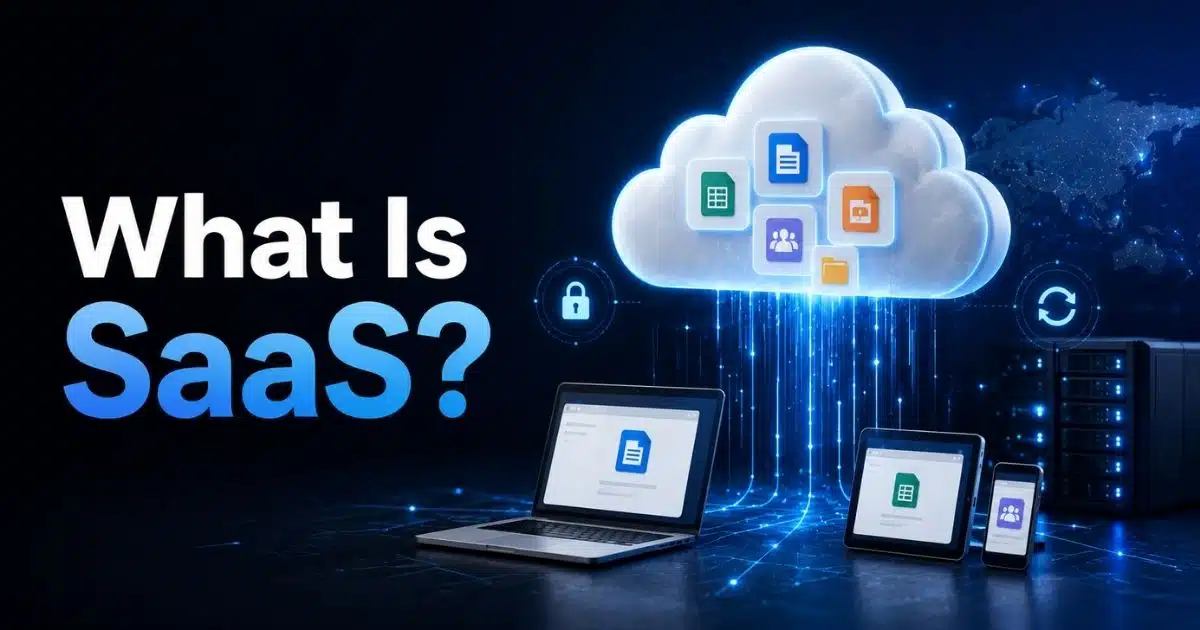
Software as a Service, or SaaS, is a cloud computing model where users access software over the internet instead of installing software on local computers. Unlike traditional software and on-premises software, SaaS applications run on a cloud infrastructure managed by a cloud service provider. Users pay recurring fees through a subscription model, while the SaaS vendor handles software maintenance, security patches, and automatic updates.
Most SaaS providers serve multiple customers through a single instance of their software application. SaaS users can access cloud-based applications from a web browser or mobile device with an internet connection. Popular SaaS products like Google Workspace and customer relationship management tools help businesses manage data storage, sales management, and enterprise resource planning. Because providers manage infrastructure and data security, businesses get rapid deployment, enhanced security, and flexible software resources without large upfront costs.
How Does SaaS Work?
SaaS works differently from traditional software. Users do not install programs on local computers or company servers. Instead, a cloud provider hosts the software and delivers it through the internet. All users need is an internet connection and user accounts to access the service from anywhere.
Cloud Hosts The Software
In the SaaS model, the provider hosts the software application in secure data centers. A cloud service provider manages the underlying infrastructure, servers, and data storage. Businesses no longer need to buy expensive hardware.
This setup reduces IT work and speeds up deployment. Most SaaS providers also handle software maintenance and automatic updates. As a result, companies can focus on growth instead of infrastructure. Public cloud spending is expected to exceed $720 billion globally, which shows how fast cloud services continue to expand.
Users Access Apps Through Browsers
SaaS users access applications through a web browser or mobile device. They can log in from almost anywhere with internet access. This flexibility supports remote working and global teams.
Unlike traditional software, there is no need for installing software on every device. Authorized users simply sign in with their credentials. Many SaaS vendors also use Zero-trust security to ensure only authorized users can reach sensitive data and customer data. Security remains critical as many enterprises use over 50 SaaS applications today.
One Platform Serves Many Customers
Most SaaS companies use a multi-tenant setup. A single instance of the software serves multiple customers while keeping data separate. This design helps manage resource usage and lowers costs.
The SaaS vendor maintains the platform for multiple users at once. Enterprise customers receive the same core features without managing infrastructure themselves. Research shows about 73% of organizations already use SaaS solutions, proving how widely the SaaS industry has adopted this model.
Providers Handle Security And Updates
Security is a major part of how SaaS works. Providers apply security patches, monitor threats, and protect data security across cloud infrastructure. Service level agreements often define uptime and support.
Most SaaS providers invest heavily in enhanced security because customer trust matters. Automatic updates ensure businesses always use the latest version of the software. This approach reduces downtime and protects sensitive data from new threats. Yet security remains important, as 75% of organizations reported a SaaS-related security incident in recent years.
Subscriptions Power The SaaS Model
SaaS software usually follows a subscription model. Users pay recurring fees monthly or yearly instead of buying licenses once. Different pricing models help businesses choose plans based on their needs, and understanding SaaS development cost drivers and budgets helps companies plan investments more effectively.
This model makes software as a service affordable for startups and large enterprises alike. SaaS products such as customer relationship management tools, enterprise resource planning systems, and collaboration apps scale easily as businesses grow. The global SaaS market could surpass $465 billion in 2026, driven by AI and emerging technologies.
Difference Between SaaS And Traditional Software
SaaS and traditional software may solve the same problems, but they work very differently. One runs through the cloud, while the other lives on company devices or servers. Knowing the difference helps businesses choose the right software based on cost, security, flexibility, and growth needs.
Feature | SaaS | Traditional Software |
|---|---|---|
Deployment | Runs on cloud infrastructure managed by a provider | Installed on local computers or company servers |
Access | Users access applications through a browser with an internet connection | Users often need a specific device or network |
Pricing | Subscription model with recurring fees | One-time license plus upgrade costs |
Setup Time | Rapid deployment within hours or days | May take weeks or months to deploy |
Maintenance | SaaS providers handle software maintenance and security patches | Internal IT teams manage updates and fixes |
Infrastructure | Cloud provider manages the underlying infrastructure | Business manages servers and hardware |
Scalability | Easy to scale for multiple users and teams | Scaling often requires new hardware |
Updates | Automatic updates happen in the background | Manual updates are usually required |
Remote Access | Works from any mobile device or browser | Remote access can be limited |
Data Storage | Data is stored in secure cloud data centers | Data stays on-premises or local servers |
Security | Most SaaS providers offer enhanced security and Zero-trust security features | Security depends on internal resources |
Cost Structure | Lower upfront costs | Higher initial investment |
Examples | Google Workspace, CRM tools, ERP systems | Legacy desktop accounting or enterprise software |
The shift toward cloud-based applications continues to grow rapidly. More than 90% of organizations now use cloud services in some form, while many continue moving workloads away from on-premises software. Enterprise cloud spending is expected to exceed $720 billion globally, showing the growing preference for SaaS solutions over traditional software.
The SaaS market itself is expanding quickly, with forecasts placing its value above $465 billion in 2026. Businesses prefer SaaS software because it reduces infrastructure costs, simplifies data management, and gives teams access from anywhere.
What Are The Main Types Of SaaS Products?
The SaaS market covers far more than email and video calls. Today, businesses use cloud-based applications for sales, finance, HR, and teamwork. As the SaaS industry grows, companies rely on specialized tools to improve efficiency and serve customers better, often partnering with SaaS development service providers to build products tailored to their workflows.
Customer Management Software
Customer relationship management software is one of the largest SaaS categories. It helps businesses track leads, manage sales pipelines, and improve customer service. Sales teams use these SaaS applications to keep customer data in one place.
Popular SaaS products in this category include CRM platforms for contact tracking and sales management. Many SaaS companies now add AI features to automate tasks and improve insights, following structured approaches to integrate AI into SaaS products. The global SaaS CRM market is expected to reach nearly $66 billion in 2026, showing strong demand from businesses worldwide.
Collaboration And Productivity Tools
Remote work changed how teams communicate. Cloud services now let multiple users work together from anywhere with an internet connection. Users access files, chat tools, and meetings through a web browser or mobile device.
Popular examples include Google Workspace and project collaboration platforms. Most SaaS providers offer real-time editing and automatic updates, which improve teamwork. The business productivity software market is valued at over $110 billion in 2026 and continues to grow as hybrid work expands.
Human Resources Software
HR SaaS solutions help companies manage hiring, payroll, benefits, and employee records. Enterprise customers use these platforms to reduce manual work and improve data management. Cloud-based HR systems also support compliance and security.
SaaS vendors manage infrastructure, security patches, and software maintenance, which saves time for HR teams. Many organizations now prefer cloud-based HR tools over on-premises software. The HR SaaS market is projected to exceed $462 billion in 2026 due to growing demand for automation and AI.
Project Management Platforms
Project management software helps teams organize tasks, share files, and track progress. Multiple customers can use the same cloud infrastructure while keeping their data separate. This SaaS model supports businesses of every size, and investing in scalable SaaS tools for global growth helps organizations handle increasing demand without sacrificing performance.
Many SaaS users prefer project tools because they allow rapid deployment and easy scaling. Service providers handle the underlying infrastructure, so companies focus on work instead of servers. The global project management software market is expected to surpass $11 billion in 2026.
Financial And ERP Systems
Financial SaaS software helps businesses manage budgets, invoices, and reports. Enterprise resource planning systems connect finance, inventory, and operations into one platform. Businesses gain better visibility across departments.
Unlike traditional software, cloud-based ERP systems reduce hardware costs and improve resource usage, especially when they follow proven SaaS scalability strategies for sustainable growth. Authorized users can access data securely from different locations. As digital transformation grows, financial and ERP SaaS solutions continue to see rapid growth across the global SaaS market. The global SaaS market is projected to exceed $375 billion in 2026 and continue rapid expansion as businesses adopt cloud-native software across departments.
How Do Businesses Use SaaS In Everyday Operations?
SaaS has become part of daily business operations across every industry. Companies use cloud-based applications to manage teams, customers, finances, and data. Since users access these tools through the internet, work becomes faster, simpler, and more flexible.
Sales And Customer Management
Sales teams rely on SaaS software to track leads and manage customer relationships. Customer relationship management platforms store customer data, automate tasks, and improve communication. Teams can view updates in real time from any device.
Most SaaS providers handle data storage and software maintenance behind the scenes. Businesses no longer need large IT teams to manage infrastructure. Studies show CRM software can increase sales by up to 29%, making it one of the most valuable SaaS solutions for growth.
Team Collaboration And Communication
Modern workplaces depend on cloud services for collaboration. Employees use messaging apps, video meetings, and shared documents to work together from different locations. Remote working has made these tools even more important.
Google Workspace is a popular example of software as a service. Multiple users can edit files at the same time with an internet connection. Research shows over 80% of organizations now use collaboration tools to support hybrid work and improve productivity.
Finance And Accounting
Businesses use SaaS products to manage invoices, expenses, and budgets. Financial software reduces manual work and improves data management. Authorized users can access reports securely from any location.
Unlike traditional software, cloud-based accounting systems receive automatic updates and security patches. Service providers also help protect sensitive data with enhanced security features. This approach lowers costs while improving accuracy and compliance.
Human Resources And Payroll
HR teams use SaaS applications to handle hiring, payroll, and employee records. Enterprise customers often prefer cloud-based HR systems because they simplify daily tasks and support growth.
A SaaS vendor manages the underlying infrastructure, which reduces IT workloads. User accounts and permissions ensure only authorized users can access employee data. The HR technology market continues to grow as companies invest in digital tools and automation.
Business Operations And Planning
Enterprise resource planning systems connect finance, inventory, and operations in one place. Businesses use these SaaS solutions to track resource usage and improve decision-making across departments.
Most SaaS companies offer flexible pricing models based on company size and needs. Since cloud providers manage data centers and infrastructure as a service resources, businesses can scale quickly. This flexibility helps organizations adapt to emerging technologies and changing market demands.
Key Benefits Of SaaS Applications
SaaS applications have changed how companies buy and use software. Businesses no longer need expensive servers or complex setups. Instead, they use cloud-based tools that are easy to access, update, and scale as needs change.
Lower Upfront Costs
Traditional software often requires large investments in hardware and licenses. SaaS software follows a subscription model, so users pay recurring fees monthly or yearly. This makes advanced tools more affordable for businesses of all sizes.
A SaaS vendor handles the cloud infrastructure, software maintenance, and updates. Companies avoid spending heavily on servers and IT resources. Gartner expects worldwide public cloud spending to reach over $720 billion in 2026, showing strong demand for cloud services and SaaS solutions.
Easy Access From Anywhere
SaaS users can access applications from any location with an internet connection. A web browser or mobile device is often all they need. This flexibility supports remote working and global teams.
Unlike traditional software, there is no need for installing software on local computers. User accounts allow authorized users to work securely from anywhere. Cloud-based applications have become essential as hybrid work continues to grow across industries, especially alongside AI-powered software tools that simplify day-to-day work.
Automatic Updates And Maintenance
Software updates can take time and create security risks. Most SaaS providers handle automatic updates, security patches, and system improvements in the background. Businesses always use the latest version of the software application.
Service providers manage infrastructure and monitor the underlying infrastructure around the clock. This reduces downtime and improves reliability. Studies show that organizations can cut IT maintenance costs significantly by moving workloads to cloud services, particularly when they adopt cloud-first SaaS development practices that optimize architecture and operations.
Better Scalability And Flexibility
Business needs often change over time. SaaS products make it easy to add new users, storage, or features without buying new hardware. Companies can scale quickly as they grow.
Cloud providers allocate software resources based on resource usage. Enterprise customers benefit from flexible pricing models that fit their needs. This approach helps businesses avoid overpaying while supporting rapid growth.
Stronger Security And Compliance
Data security is a top concern for every business. Many SaaS vendors invest heavily in protection measures such as encryption, Zero-trust security, and access controls. Only authorized users can access sensitive data and customer data.
Most SaaS providers operate secure data centers and follow strict compliance standards, often guided by SaaS security architecture best practices. Service level agreements also define uptime and security responsibilities. According to IBM, the global average cost of a data breach reached $4.88 million in 2024, which highlights the need for strong security practices.
Faster Deployment And Innovation
Businesses want new tools without long setup times. SaaS solutions support rapid deployment because providers host and manage the software. Teams can start using business applications within hours or days.
Cloud computing also helps companies adopt emerging technologies faster. Many SaaS companies now add AI features, analytics, and automation to their platforms. This speed gives businesses an advantage in a competitive SaaS market and supports long-term growth.
Common Challenges Businesses Face With SaaS Applications
SaaS offers flexibility and lower costs, but it also comes with challenges. Businesses depend on cloud services for daily work, which creates new concerns around security, integration, and control. Understanding these issues helps companies choose and manage SaaS solutions more effectively.
Data Security Risks
Data security is one of the biggest concerns in the SaaS industry. Businesses store customer data and sensitive data on cloud infrastructure managed by a service provider. This creates risks if security measures are weak.
Most SaaS providers invest heavily in encryption, access controls, and Zero-trust security. Still, human error remains a major issue. IBM reported that the average global cost of a data breach reached $4.88 million in 2024, the highest amount ever recorded. Strong security policies help reduce those risks, especially when they follow up-to-date SaaS security best practices.
Vendor Lock-In Issues
Switching from one SaaS vendor to another is not always easy. Businesses may face challenges when moving data, workflows, or user accounts between platforms. Some SaaS applications use unique formats that make migration difficult.
This dependence can limit flexibility over time. Companies should review service level agreements and export options before choosing a provider. A clear exit strategy helps businesses avoid disruption if they decide to change vendors in the future.
Internet Dependence
Cloud-based applications need a stable internet connection to work properly. If internet access fails, users may lose access to important software resources and business applications.
Unlike traditional software installed on local computers, SaaS products rely on cloud providers and data centers. Network outages can affect productivity and customer service. Businesses that depend heavily on remote working often use backup connections to reduce downtime.
Integration Challenges
Many organizations use dozens of SaaS applications every day. Connecting customer relationship management systems, enterprise resource planning tools, and other platforms can become complex.
Poor integration often creates data silos and duplicate work. While many SaaS vendors offer APIs and connectors, setup may still require technical expertise. Studies show that large enterprises use more than 100 SaaS applications on average, making integration a growing concern and increasing the need for robust AI infrastructure for intelligent applications that can connect and orchestrate these tools.
Rising Subscription Costs
The subscription model lowers upfront costs, but expenses can increase over time. As multiple users join new platforms, users pay recurring fees month after month.
Businesses may subscribe to many SaaS solutions without tracking resource usage. This issue, often called SaaS sprawl, leads to wasted spending. Research from Zylo found that organizations waste millions each year on unused software licenses and underused applications. Regular audits help companies control costs and optimize their SaaS business.
Popular SaaS Examples Across Industries
SaaS applications power nearly every industry today. From communication and sales to finance and HR, businesses rely on cloud-based tools to improve productivity and customer experience, building on modern software services across SaaS, PaaS, and IaaS. The rapid growth of the SaaS market has created solutions for companies of every size, as shown in many successful SaaS launch case studies where focused execution led to strong adoption.
Communication And Collaboration
Team communication is one of the biggest use cases for SaaS software. Businesses use cloud-based applications to chat, share files, and host meetings from anywhere. This flexibility supports remote working and global teams.
Google Workspace is one of the best-known SaaS products in this category. It allows multiple users to collaborate in real time through a web browser or mobile device. Studies show that over 70% of employees now use collaboration tools daily, highlighting the growing demand for cloud services.
Customer Relationship Management
Customer relationship management software helps businesses track leads, manage pipelines, and improve customer service. Sales teams use these SaaS solutions to organize customer data and automate tasks.
CRM remains one of the fastest-growing segments in the SaaS industry. Platforms like Salesforce have transformed how companies manage customer relationships. Gartner projects CRM software spending to exceed $100 billion globally in the coming years as businesses invest more in customer experience.
Finance And Accounting
Financial SaaS applications help businesses manage invoices, expenses, and reporting. Unlike traditional software, users access these tools through an internet connection without maintaining local servers.
A SaaS vendor manages infrastructure, software maintenance, and security patches behind the scenes. Businesses gain better data management and lower IT costs. Cloud-based accounting platforms continue to grow as companies seek faster reporting and stronger data security.
Human Resources And Payroll
HR SaaS software simplifies hiring, payroll, performance reviews, and employee management. Enterprise customers use these tools to reduce manual work and improve compliance.
Most SaaS providers host applications in secure data centers and provide automatic updates. User accounts and access controls ensure only authorized users can view sensitive data. The HR technology market continues to expand as organizations adopt digital tools and AI-driven workflows.
Project And Business Management
Project management and enterprise resource planning tools help businesses organize work and resources. Teams track tasks, budgets, and operations from one platform. This supports better resource usage and faster decision-making.
Cloud providers manage the underlying infrastructure, which allows businesses to scale quickly. Many SaaS companies now combine AI with business applications to improve efficiency. The global SaaS market is expected to surpass $460 billion in 2026, driven by growing demand for cloud computing and emerging technologies.
What Is The Future Of SaaS In The Age Of AI?
AI is changing the SaaS industry faster than ever, with AI in SaaS bringing new benefits, challenges, and trends that reshape how products are designed and delivered. SaaS companies are adding smart features that automate work, improve decisions, and personalize experiences. As cloud computing evolves, the next generation of SaaS solutions will become more intelligent and efficient.
AI-Powered Automation
AI is making SaaS software smarter. Many SaaS providers now use AI to automate repetitive tasks such as customer support, data analysis, and workflow management. This saves time and reduces manual effort for businesses, and leaders are increasingly using AI-driven automation in SaaS as a roadmap for large-scale transformation.
AI-powered SaaS applications can process large amounts of customer data in seconds. Businesses use these insights to improve sales management and customer relationship management. Gartner predicts that by 2028, one-third of enterprise software applications will include agentic AI capabilities, up from less than 1% in 2024.
Rise Of Vertical SaaS
The SaaS market is shifting toward industry-specific tools. Vertical SaaS solutions focus on sectors like healthcare, finance, retail, and education. Unlike general software, these platforms solve specialized business problems.
Many SaaS vendors now build products for niche markets and enterprise customers. This trend has also encouraged the growth of micro SaaS businesses that serve smaller audiences. Experts expect vertical SaaS to grow rapidly as businesses demand more tailored software applications.
Stronger Security Standards
Data security remains a top priority in the age of AI. Businesses store sensitive data in cloud infrastructure managed by service providers. As threats evolve, security measures must improve as well.
Most SaaS providers now invest in Zero-trust security, encryption, and advanced identity controls. Only authorized users can access critical systems and customer data. According to IBM, the average cost of a data breach reached $4.88 million in 2024, pushing organizations to strengthen security strategies.
Growth Of Low-Code Platforms
Low-code and no-code tools are changing application development. Businesses can build workflows and software solutions with little or no programming knowledge. This makes technology more accessible to teams.
Platform as a Service and infrastructure as a service offerings support this shift by providing cloud resources and underlying infrastructure, while advances in artificial intelligence software and its uses expand what low-code builders can create. Research shows the low-code market could exceed $65 billion by 2027 as adoption continues across industries.
Expansion Of Intelligent Cloud Services
Cloud providers are combining AI with cloud services to create smarter business applications. Future SaaS products will offer predictive analytics, personalized experiences, and better resource usage. Businesses will make faster decisions with less effort.
Service providers continue to invest in data centers and cloud-based technologies. Enhanced security, automatic updates, and rapid deployment will remain key advantages. As emerging technologies mature, software as a service will become even more important for businesses worldwide. Gartner forecasts worldwide public cloud spending to surpass $720 billion in 2026, highlighting the rapid growth of cloud-based software.
How GainHQ Enables SaaS Adoption And Growth
Choosing the right SaaS software is not always easy. Businesses often compare dozens of tools, pricing models, and features before making a decision. GainHQ helps teams cut through the noise and find SaaS solutions that match their goals, workflows, and budget, supported by expert insights.
From customer relationship management and HR software to project management and collaboration tools, GainHQ provides expert insights, software comparisons, and practical guides, along with tech consulting services that help modern businesses grow. Businesses can explore cloud-based applications, understand key features, and evaluate vendors with confidence. As the SaaS market continues to grow, GainHQ helps companies adopt new technologies, improve operations, and build a scalable SaaS stack for long-term growth by guiding them toward scalable SaaS tools that power global business growth and proven SaaS scalability strategies for sustainable expansion. Whether you are a startup or an enterprise, GainHQ makes SaaS decisions simpler and smarter and, through its group company, provides custom software development services for SaaS products and specialized UI/UX design services for SaaS to turn those decisions into polished, scalable solutions.
FAQs
Is SaaS Suitable For Small Businesses?
Yes, SaaS solutions are ideal for small businesses because they require low upfront costs and follow a subscription model. Users pay recurring fees instead of buying expensive hardware, which makes cloud-based applications more affordable and easier to scale.
Can SaaS Work Without An Internet Connection?
No, most SaaS applications need a stable internet connection because users access them through cloud infrastructure. If internet access fails, businesses may temporarily lose access to software resources and customer data.
Is Customer Data Safe In SaaS Applications?
Yes, most SaaS providers invest heavily in data security through encryption, security patches, and Zero-trust security models. Only authorized users can access sensitive data, while cloud providers protect information in secure data centers.
What Is The Difference Between SaaS, PaaS, And IaaS?
Software as a Service provides ready-to-use applications, while Platform as a Service supports application development. Infrastructure as a Service offers computing resources such as servers, storage, and networking that businesses use to manage workloads.
How Do SaaS Companies Make Money?
Most SaaS companies use a subscription model where customers pay monthly or yearly fees. Many SaaS vendors also offer tiered pricing models, premium features, and enterprise plans to serve multiple customers with different needs.