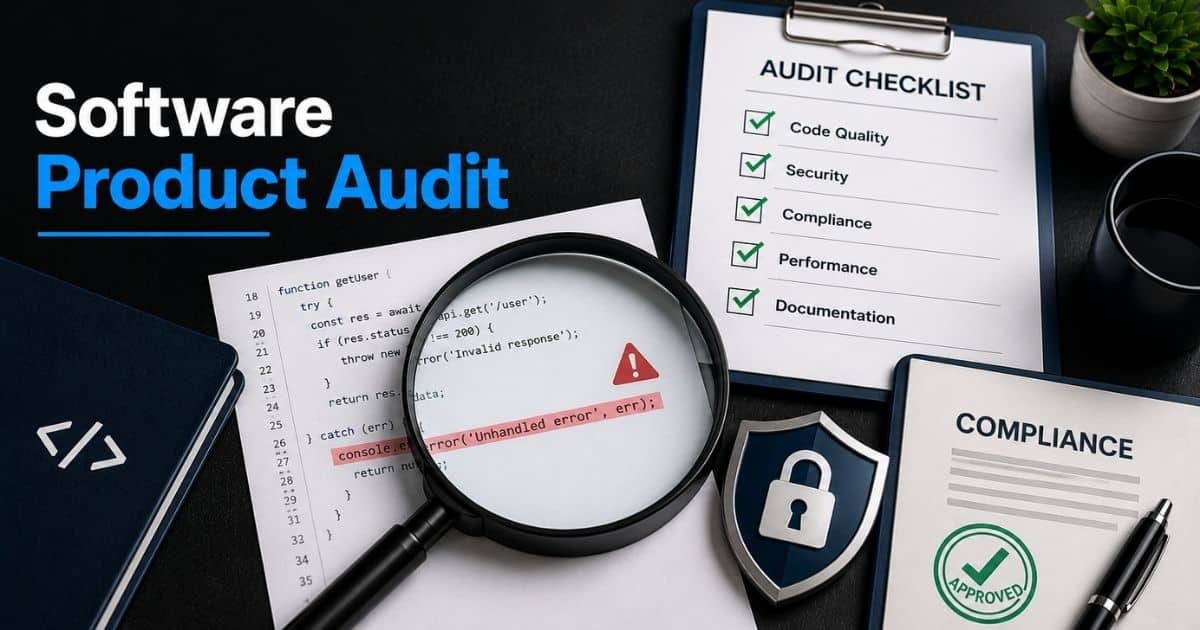
Enterprise software decisions directly affect productivity, operations, and long-term growth. Many businesses invest in new solutions without following a structured software evaluation process, which often leads to poor adoption and costly mistakes.
An effective enterprise software evaluation helps organizations assess business needs, compare ERP systems, and select the right software vendor. Beyond features and pricing, companies should evaluate scalability, security, integrations, and vendor support.
A structured evaluation process reduces risk and improves decision-making. Whether you are replacing legacy applications or investing in new enterprise platforms, a thorough software evaluation helps identify the solution that delivers long-term value and supports future business growth.
What Is Enterprise Software Evaluation
Enterprise software evaluation is the process of assessing enterprise software to determine whether it meets an organization's operational, technical, and business requirements. The ERP evaluation process helps companies compare ERP software, business software, and potential ERP vendors based on functionality, scalability, integrations, and long-term value. Organizations evaluating ERP systems also consider ERP implementation requirements, vendor support, and future growth needs. A thorough cost-benefit analysis helps decision-makers understand the financial impact and expected return on investment. Effective enterprise software evaluation reduces risk and helps businesses select solutions that support their strategic goals.
Why Most Enterprise Software Evaluations Fail Before Vendor Selection

Many enterprise software projects fail before vendor selection begins. Poor planning, unclear goals, and disconnected teams often create costly mistakes that affect software decisions, implementation success, and long-term business outcomes.
Misaligned Business Objectives
Many enterprise software projects fail because leadership teams do not agree on the expected outcomes. One department may focus on customer relationship management while another prioritizes operational efficiency or reporting. Without shared goals, the software selection process becomes confusing and inconsistent.
Enterprise resource planning initiatives often affect the entire business, making alignment essential before any ERP evaluation begins. When objectives are unclear, organizations struggle to compare vendors and identify the right software solutions.
Departmental Decision Silos
Software decisions made by a single department rarely produce successful results. Finance, operations, IT, and end users often have different requirements. A cross-functional evaluation team helps organizations understand business needs across departments.
Siloed decisions can lead to poor customer satisfaction, limited adoption, and systems that fail to support daily operations. Collaboration also helps identify industry-specific regulations and compliance requirements early in the evaluation process.
Feature-Centric Evaluation Methods
Many companies focus heavily on product features and overlook long-term business value. Modern ERP software should support scalability, seamless integration, and future growth. Buyers often ignore total cost of ownership, ongoing maintenance, support fees, and ongoing support requirements.
Customer references, vendor expertise, and implementation capabilities are equally important when evaluating ERP systems. Feature comparisons alone rarely reveal how software performs in real business environments.
Incomplete Process Documentation
Organizations that lack documented workflows often choose software that does not fit their operations. Manual data entry processes, approval workflows, and reporting requirements should be documented before evaluating solutions.
Data migration requirements, expected data volume, and existing operating systems also influence software selection. Incomplete documentation makes ERP implementation more difficult and increases project risks. Clear process mapping helps businesses evaluate software solutions against actual operational needs.
Undefined Success Metrics
Many companies begin the ERP evaluation process without measurable goals. Success metrics may include productivity improvements, reduced manual data entry, faster reporting, or higher customer satisfaction. Businesses should also evaluate implementation timelines, data migration success, and long-term operational improvements.
Defining measurable outcomes helps organizations compare vendors objectively and determine whether a software investment delivers value. Without clear metrics, businesses struggle to assess performance after implementation and justify the investment.
Key Stakeholders In The Enterprise Software Evaluation Process

Successful enterprise software evaluation requires participation from multiple teams. Each stakeholder contributes unique insights that help organizations understand business requirements, improve business processes, and select ERP solutions that support business growth and future business goals.
Executive Leadership Teams
Executive leaders define business objectives and ensure that software investments support long-term business growth. They evaluate whether cloud ERP or other ERP solutions align with strategic priorities and improve business operations, and may also decide between a build vs buy software approach for critical systems. Leadership teams also focus on ERP ROI, expected outcomes, and the ability of software to support future business expansion.
Department Managers And End Users
Department managers understand daily business processes and operational challenges. Their involvement helps identify practical business requirements related to sales, finance, customer service, and inventory management. End users provide valuable user feedback about existing problems and workflow limitations. Organizations that gather feedback from these teams often make better software decisions.
IT And Security Teams
IT teams evaluate system architecture, security requirements, and technical compatibility. They determine whether cloud based software can integrate with existing infrastructure and support business operations. Security teams assess compliance, data protection, and system reliability. Their expertise ensures that ERP solutions meet technical and security expectations.
Finance And Procurement Teams
Finance teams evaluate software budgets, implementation costs, and long-term value. They analyze ERP ROI, licensing costs, and financial risks before approving investments. Procurement teams review vendor contracts, pricing models, and service agreements to ensure the software aligns with organizational goals and available resources.
Implementation And Operations Teams
Implementation and operations teams assess how new software will affect existing business processes. They identify training requirements, resource needs, and operational changes. Their involvement helps organizations understand how cloud ERP systems will function across departments and support day-to-day business operations after deployment.
Cross-Functional Collaboration And User Feedback
Successful software evaluation depends on collaboration across departments. Organizations that gather feedback from leadership, technical teams, managers, and employees gain a complete view of operational needs. User feedback helps identify usability issues, improve adoption, and ensure that ERP solutions support both current requirements and future business objectives.
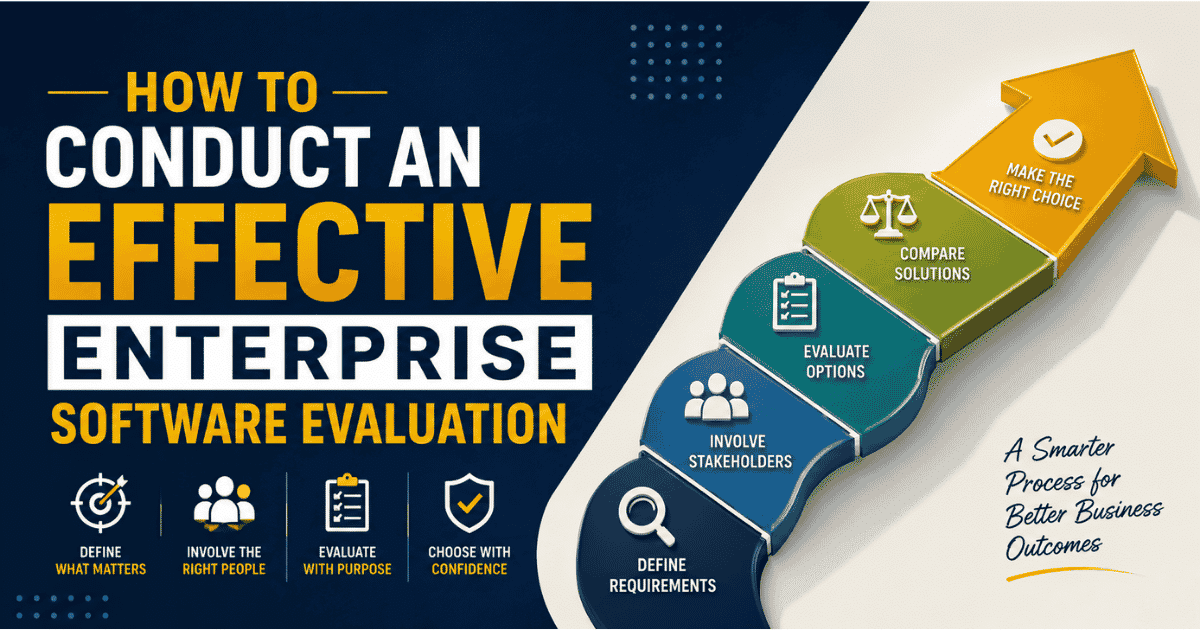
How To Conduct An Effective Enterprise Software Evaluation

A structured software selection process reduces risks and improves long-term results. Organizations that follow a clear evaluation approach can identify the right solution, reduce implementation issues, and support future business growth.
Identify The Business Problem And Evaluation Goals
Every software selection project should begin with a clear understanding of the problem. Organizations must identify operational challenges, inefficient workflows, and business goals before reviewing vendor solutions. Different business units often face unique issues that require specific solutions.
Goals may include reducing costs, improving productivity, or improving customer satisfaction. Clear objectives help teams evaluate software based on measurable outcomes instead of marketing claims. Defining success metrics early also allows organizations to measure performance after implementation.
Gather Requirements From Key Stakeholders
Successful software selection requires input from multiple departments. Finance teams, operations teams, IT staff, and end users often have different priorities. Gathering requirements from all business units creates a complete picture of organizational needs.
Teams should document workflows, reporting needs, support requests, compliance requirements, and daily operational challenges. Organizations evaluating hr software, finance platforms, or operational systems should involve employees who use these tools regularly. Early collaboration reduces resistance and improves user adoption, which is particularly important when introducing new scalable SaaS tools that power global business growth.
Establish Software Evaluation Criteria
Evaluation criteria help teams compare solutions objectively. Organizations should define the key criteria before reviewing products or speaking with vendors. Common areas include functionality, usability, security, scalability, implementation complexity, and vendor support.
Cost should not be the only factor. Organizations should also evaluate service level agreements, product reliability, user training programs, and long-term maintenance requirements. A structured evaluation framework helps teams focus on business needs rather than feature lists.
Compare Software Options And Delivery Models
Organizations must compare different vendor solutions and deployment options. Some businesses may prefer cloud platforms, while others require on-premise systems because of security or regulatory requirements, or need to weigh custom software vs SaaS options based on control, speed, and cost.
The evaluation should consider resource availability, internal expertise, and implementation timelines. Certain solutions may require extensive customization, while others offer faster deployment. Organizations should also review customer references, support capabilities, and vendor experience within their industry.
Comparing multiple options allows decision-makers to identify the software that best fits current needs and future growth plans.
Assess Technical Fit, Scalability, And Integration
Technical evaluation plays a critical role in software selection. Organizations should assess whether the chosen software can integrate with existing applications, databases, and network infrastructure.
Security teams should evaluate how the solution protects sensitive data and meets compliance requirements. Scalability is equally important because business evolves over time. Systems that cannot support growth often require expensive replacements, making it critical to invest in a future proof tech stack for scalable growth.
Teams should also review data migration requirements, system performance, and integration capabilities. Effective technical assessment reduces implementation risks and improves long-term software performance by favoring a robust, scalable software architecture for high-growth products.
Select The Best Solution And Implementation Partner
The final decision should balance business requirements, technical needs, costs, and long-term value. Organizations should evaluate vendor expertise, implementation services, and ongoing support capabilities before making a decision.
Implementation partners play an important role in deployment success. Their experience can reduce implementation complexity, support user training, and manage change effectively. Strong service level agreements and responsive support teams also contribute to successful outcomes, so organizations should carefully choose a custom software development partner.
Selecting the right software and implementation partner helps organizations maximize value, improve customer satisfaction, and ensure the chosen software continues to support the business as it grows.
Evaluation Factors Beyond Features And Pricing

Software features and pricing often receive the most attention during software selection. However, long-term success depends on several additional factors that influence implementation, adoption, and business value. Organizations that evaluate these areas can identify the right software and reduce future risks.
Integration Complexity Assessment
Modern businesses rely on multiple applications to manage operations, finance, sales, and customer service. New software must integrate seamlessly with existing systems to avoid disruptions and duplicate work, especially when planning complex initiatives such as a new platform or SaaS development cost investment.
Organizations should evaluate APIs, data synchronization, and compatibility with existing applications. Department heads can provide valuable insights into daily workflows and integration needs across different teams. Poor integrations often create operational issues and increase implementation costs.
Technical teams should assess how easily the software connects with current platforms and whether additional development work is required. Strong integration capabilities help organizations select the optimal solution for long-term efficiency.
Scalability And Future Requirements
Business needs rarely remain the same over time. Companies grow, add employees, expand services, and enter new markets. Software should support future growth without requiring a complete replacement.
Scalability should remain one of the core evaluation criteria during software selection. Decision-makers should consider future users, increased workloads, reporting requirements, and additional business functions, aligning these plans with broader enterprise scalability strategies for growth.
Department heads often understand future operational needs and can identify potential growth challenges. Software that supports changing business requirements provides greater value and helps organizations achieve their strategic objectives over time.
Security And Compliance Requirements
Security has become a critical factor in enterprise software evaluation. Organizations handle financial records, employee information, and customer data that require strong protection, often benefiting from strategic technology consulting services for modern business growth to align security with long-term digital initiatives.
Security teams should review encryption methods, access controls, backup systems, and security protocols before selecting a solution. Compliance requirements may vary depending on industry regulations and organizational policies.
Software vendors should demonstrate how their systems protect sensitive information and maintain security standards. Businesses that prioritize security during evaluation reduce operational risks and protect valuable company data.
Vendor Partnership Potential
Software vendors become long-term partners after implementation. Their expertise, support quality, and industry knowledge can influence project success.
Organizations should evaluate vendor experience, implementation capabilities, customer support, and training services. Conversations with existing customers can provide valuable insights into service quality and responsiveness, especially when selecting long-term custom software development services.
Vendors that understand business challenges and align with strategic objectives often deliver better long-term results. Strong partnerships also help organizations adapt as business needs evolve.
Total Cost Of Ownership Analysis
Initial pricing rarely reflects the complete cost of software ownership. Organizations should evaluate licensing costs, implementation expenses, training requirements, customization fees, and ongoing support costs, similar to a thorough custom software cost comparison that weighs upfront and long-term financial impacts.
Total ownership costs help businesses compare solutions more accurately and identify the optimal solution. Lower pricing may not always deliver the best value if maintenance costs or support expenses increase over time, and ignoring potential software development hidden costs can undermine an otherwise strong business case.
A complete financial assessment allows organizations to choose the right software while balancing budget requirements, business needs, and long-term return on investment.
How Stakeholder Alignment Influences Enterprise Software Decisions

Stakeholder alignment plays a major role in enterprise software decisions. When departments work together, organizations can reduce risks, improve user adoption, and select a scalable solution that supports long-term business goals and operational requirements.
Executive Sponsorship Requirements
Executive leaders provide direction, budget approval, and strategic oversight during software evaluation. Their involvement ensures that software investments align with business goals, industry trends, and future growth plans.
Executives also evaluate operational costs, expected returns, and the total cost of ownership. Strong executive sponsorship helps remove internal barriers and gives project managers the authority to move initiatives forward. Leadership support often becomes a key factor in successful implementation.
Departmental Requirement Collection
Different departments use software in different ways. Sales teams, finance teams, operations teams, and human resources departments often have unique requirements that influence software decisions, including whether custom vs off-the-shelf software is the better fit for their workflows.
Collecting requirements from multiple business functions creates a more accurate evaluation process. Department leaders can identify workflow challenges, reporting needs, and operational gaps that software must address. Early collaboration also helps reduce system complexity during implementation.
Organizations that gather requirements across departments are more likely to select solutions that support the entire business.
End User Participation
Employees who use the system daily provide valuable feedback during software evaluation. Their insights help organizations understand usability concerns, workflow issues, and practical requirements.
End user participation improves user adoption because employees feel involved in the decision-making process. Users can test software features, evaluate interfaces, and identify potential challenges before implementation begins.
Organizations that ignore employee feedback often experience lower adoption rates and higher resistance to change.
IT And Security Team Involvement
IT teams evaluate technical requirements, infrastructure compatibility, and integration capabilities. They assess whether a solution can support existing systems, future growth, and increasing user demands.
Security teams review data protection measures, access controls, and compliance requirements. They also evaluate system complexity and identify technical risks that may affect implementation.
Technical involvement ensures that the selected solution remains secure, reliable, and capable of supporting unlimited users if future growth requires expansion.
Procurement And Financial Evaluation
Procurement and finance teams analyze contracts, pricing structures, and long-term expenses. Their evaluation focuses on total cost, operational costs, licensing models, and vendor support services.
Project managers often work closely with finance teams to assess budgets, implementation expenses, and resource requirements. Financial evaluation helps organizations select a scalable solution that balances cost, value, and long-term business needs while supporting successful implementation, especially when guided by structured software development budget planning.
How To Measure Long-Term Value After Software Selection

Software selection does not end after implementation. Organizations must measure long-term performance to determine whether the investment delivers business value, improves operations, and supports future growth objectives.
Operational Efficiency Improvements
One of the clearest indicators of software success is improved operational efficiency. Organizations should measure how the new system reduces manual work, shortens approval cycles, and improves productivity across departments.
Teams can track processing times, workload reductions, and resource utilization before and after implementation. Faster workflows and reduced administrative effort often indicate that the software is delivering measurable value.
User Adoption Metrics
User adoption directly affects the success of any software investment. Organizations should monitor login activity, feature usage, training completion, and employee engagement.
High adoption rates suggest that users understand the system and find value in daily operations. Low usage may indicate training gaps, usability issues, or process challenges that require attention. Regular feedback sessions can help identify opportunities to improve the user experience.
Return On Investment Analysis
Return on investment helps organizations determine whether the software delivers financial value. Companies should compare implementation costs, licensing expenses, support costs, and productivity gains against expected business outcomes, selecting pricing and engagement structures with an appropriate software development pricing model.
ROI measurements may include labor savings, reduced operational costs, improved revenue opportunities, and decreased manual work. Regular financial analysis helps decision-makers understand the long-term impact of the software investment.
Process Performance Indicators
Key performance indicators provide measurable data about software effectiveness. Organizations can track metrics such as task completion times, reporting accuracy, customer response times, and process efficiency.
Comparing performance before and after implementation helps teams evaluate whether the software improves business operations. Consistent monitoring also helps identify areas that require additional support or process adjustments.
Continuous Optimization Opportunities
Business requirements change over time, and software should evolve alongside organizational needs. Regular reviews help teams identify new automation opportunities, workflow improvements, and feature enhancements.
Organizations should collect user feedback, monitor performance data, and evaluate changing business requirements. Continuous optimization ensures that the software remains aligned with business goals and continues to deliver value long after implementation.
Software Evaluation VS Vendor Evaluation

Software evaluation and vendor evaluation are often treated as the same process, but they serve different purposes. Software evaluation focuses on the product itself, while vendor evaluation assesses the company that provides and supports the solution.
Software Evaluation Focuses On The Product
Software evaluation examines whether a solution meets business requirements, technical needs, and operational goals. Organizations assess features, usability, scalability, integrations, security, and reporting capabilities.
Teams also evaluate how the software supports existing workflows and whether it can adapt as business needs change. The goal is to determine if the product can solve operational challenges and deliver long-term value.
Vendor Evaluation Focuses On The Provider
Vendor evaluation assesses the company behind the software. Businesses review industry experience, financial stability, implementation expertise, and customer support capabilities.
Organizations often examine customer references, service quality, and response times to understand how the vendor performs after the sale. A strong vendor relationship can significantly influence implementation success and long-term satisfaction.
Key Differences Between Both Evaluations
Software evaluation answers the question, "Is this the right solution?" Vendor evaluation answers, "Is this the right partner?"
A product may offer strong functionality but lack reliable support services. Similarly, a reputable vendor may provide a solution that does not fully meet business requirements. Both evaluations should occur simultaneously to reduce risks and improve decision-making.
Why Both Evaluations Matter
Successful software projects depend on both the technology and the provider. Organizations that evaluate products and vendors together can identify implementation risks, support limitations, and future partnership opportunities.
Combining software evaluation and vendor evaluation helps businesses select solutions that meet operational needs while ensuring reliable support, successful implementation, and long-term business value.
Final Discussion
Enterprise software evaluation is not only about comparing features, pricing, or vendors. Successful decisions require clear business goals, stakeholder alignment, technical evaluation, and long-term planning. Organizations that follow a structured evaluation process can reduce risks, improve user adoption, and maximize software value.
Measuring performance after implementation is equally important because business needs continue to evolve. By evaluating software, vendors, costs, and future requirements together, companies can select solutions that support growth, improve operational efficiency, and deliver lasting business value. The right software should not only solve current challenges but also help organizations adapt and succeed in the future.
Frequently Asked Questions
How Long Does Enterprise Software Evaluation Take?
Most enterprise software evaluations take between four and twelve weeks. The timeline depends on business requirements, stakeholder involvement, vendor evaluations, and implementation complexity.
Who Should Participate In The Evaluation Process?
Executive leaders, department managers, end users, IT teams, finance teams, procurement specialists, and project managers should participate to ensure the software meets both business and technical requirements.
What Is A Software Evaluation Scorecard?
A software evaluation scorecard is a framework that assigns scores to criteria such as functionality, security, scalability, integrations, usability, vendor support, and total cost of ownership.
How Can Companies Reduce Software Selection Risks?
Organizations can reduce risks by defining clear goals, involving stakeholders, documenting business processes, comparing multiple vendors, and conducting technical and financial evaluations before making a decision.
Why Is Vendor Evaluation Important In Enterprise Software Selection?
Vendor evaluation helps organizations assess implementation expertise, customer support, industry experience, and long-term partnership potential. Strong vendors often contribute to smoother deployments and better long-term outcomes.