Industry: Multiple industries, including logistics, fintech, and retail Company Size: Mid-sized businesses and fast-growing startups Project Scope: Full-cycle custom software development Timeline: 90 to 150 days, depending on complexity Primary Goal: Replace fragmented tools with tailored software solutions that streamline processes and improve efficiency Outcome: Significant operational improvements, reduced manual work, better data security, enhanced customer satisfaction, and measurable business growth
Executive Summary
Custom software gives companies a measurable performance lift by replacing rigid, generic tools with data-driven systems designed around real workflows. Through custom software development, organizations deploy custom software solutions, bespoke software solutions, and tailored software solutions that match their exact processes. These custom solutions and customized solutions streamline operations, reduce manual effort, and provide visibility that standard tools cannot deliver.
With custom applications capturing accurate operational data, companies unlock key advantages such as faster decision-making, higher productivity, and reduced errors. The result is significant benefits in revenue operations, customer delivery, and internal efficiency.
By aligning technology with business reality, custom software consistently drives business growth, strengthens competitive edge, and supports long-term success across the entire organization.
Why Companies Outgrow Off The Shelf Tools
Many companies start with off-the-shelf software because it seems cost-effective and convenient. But once teams grow, customer volume increases, and daily operations become more complex, these generic software tools begin to fail in very visible, data-driven ways.
In one logistics company, GainHQ worked with, off-the-shelf solutions handled only 40 percent of their real workflow. The remaining 60 percent depended on spreadsheets, emails, and repetitive tasks that slowed dispatching by nearly 90 minutes per cycle. The software could not map their particular business routes or integrate with existing systems, forcing employees into manual workarounds that created errors and operational delays.
A retail chain faced similar friction. Their shelf software allowed basic stock tracking but could not support multi-warehouse transfers or regional ordering rules. As a result, managers were performing automating repetitive tasks manually every morning, updating more than 12 spreadsheets just to balance inventory. The system was not built for their specific business challenges, and the growing complexity of their business processes exposed the limits instantly.
A fintech startup experienced even deeper constraints. Off-the-shelf solutions could not handle their approval hierarchy or compliance workflows. Because the software could not reflect their real business operations, audit preparation took an extra 40 to 60 hours each cycle. Every missing feature meant another workaround, another risk point, and another layer of inefficiency.
Across these cases, one pattern emerged clearly. Off-the-shelf software works only when a business is small and simple. As soon as teams scale, operations expand, and data volume increases, shelf software collapses under the weight of real-world demands. Companies do not outgrow software because they want to. They outgrow it because the software cannot grow with them.
Company A: Operations Automation For A Mid-Sized Logistics Firm
Company: TransRoute Logistics Industry: Supply chain management and regional freight operations Team Size: 180 employees across 4 hubs
TransRoute Logistics had grown rapidly, but their operations team relied on spreadsheets, radio updates, and manual entry to coordinate daily routes. Dispatchers managed more than 300 shipments per day, yet they lacked the critical data needed to make fast decisions. Each handoff required phone calls, resulting in delays, duplicated work, and constant errors. Leadership wanted to enhance operational efficiency, streamline processes, and optimize processes without disrupting daily service.
The Challenge
TransRoute’s existing tools could not support advanced automation or automating routine tasks. Shipment status updates required manual logging. Inventory management data sat in separate systems that did not communicate. Supply chain management workflows involved ten different steps across disconnected tools. Without seamless integration, the team struggled to maintain accuracy.
The Custom Software Solution
GainHQ built an operations platform designed around TransRoute’s real workflow. Key components included:
Advanced automation for route assignments and delivery confirmations
Unified inventory management synced across warehouses
Reporting tools for real-time visibility into delays, capacity, and performance
Seamless integration with the firm’s legacy tracking system, enabling seamless data flow
Automating routine tasks such as ETA updates and driver check-ins
Central operational dashboard to monitor critical data live
The Impact
Within eight weeks of deployment, the company saw major improvements:
Operational efficiency increased by 37 percent
Routine task automation reduced manual work by 52 percent
Delivery accuracy improved due to real-time synchronization of critical data
Dispatch decisions became 30 percent faster thanks to streamlined processes
Warehouse teams avoided stock discrepancies through integrated inventory management
TransRoute’s leadership reported that the new platform transformed daily operations, eliminated communication gaps, and replaced five disconnected systems with a single reliable workflow. Custom softwareturned a heavily manual operation into a coordinated, data-driven supply chain engine.
Company B: Financial Workflow Modernization For A Growing Fintech Startup
Company: FinteraPay Industry: Fintech and digital payments Team Size: 45 employees Core Problem: Slow financial approvals, inconsistent reporting, and rising compliance risks
FinteraPay was scaling quickly, onboarding new clients every month, but their internal financial workflows were still being managed through email chains and spreadsheets. This created inconsistent reporting, missing documents, and repeated compliance flags during audits. Leadership realized that without stronger automation and better data security, the company could not sustain its growth or meet regulatory expectations.
The Challenge
FinteraPay struggled with:
Disconnected tools that offered no reliable data analytics
Manual approvals that delayed financial operations
Limited cloud computing capabilities are restricting remote team access
Compliance risks caused by poor document tracking
Reporting gaps that prevented real-time visibility
Lack of technical expertise to build new software internally
Their off-the-shelf systems were not designed for regulatory intensity or the speed of a fintech environment. The team urgently needed cloud solutions with strict data security protocols and structured workflows.
The Custom Software Solution
GainHQ delivered a full custom development project designed specifically for a fintech compliance environment. Key enhancements included:
A unified approval engine that automates multi-level financial sign-offs
Centralized document vault with encryption for better data security
Cloud computing integration to support remote finance teams
Data analytics dashboard for real-time reporting and audit trails
Automated reconciliation workflows to eliminate errors
A future safe architecture capable of supporting new software modules
The development process involved multiple iterations, stakeholder interviews, and risk modeling to ensure accuracy.
The Impact
After the custom software implementation:
Audit preparation time decreased by 60 percent
Compliance errors dropped by 72 percent
Reporting accuracy increased significantly
Finance teams gained access to cloud solutions with strong authentication
Leadership received real-time visibility through advanced data analytics
Manual workloads reduced enough to delay a planned 2-person hiring expansion
FinteraPay’s executives shared that this was one of the most valuable custom software projects they had undertaken. The systems now scale with the company, allowing them to operate confidently in a regulated, fast-moving market.
Company C: Retail Chain Inventory System Transformation
Company: UrbanMart Retail Group Industry: Retail business Store Count: 32 locations
UrbanMart was growing quickly, but its outdated inventory management system could not keep up. Stockouts, over-ordering, and slow replenishment cycles directly impacted customer satisfaction and overall customer experience. As the store network expanded, the old process no longer supported how modern businesses operate.
The Challenge
UrbanMart struggled with:
No real-time inventory visibility
Delayed supply chain management updates
Manual stock counts are causing errors
Inconsistent product availability is affecting customer satisfaction
Increasing pressure to improve store efficiency
The Custom Software Solution
GainHQ built a centralized inventory platform designed for multi-store operations. It featured:
Customer satisfaction improved due to consistent product availability
Store teams saved hours weekly previously spent on manual checks
UrbanMart now delivers a smoother, more reliable customer experience and operates with far better inventory control.
Cross Company Impact Analysis
Across all three companies, the benefits of custom software were consistent and measurable. Custom software enables businesses to replace slow, fragmented workflows with unified systems that support real time decision making and reduce operational friction. By enabling companies to automate tasks, centralize data, and build processes around their exact needs, custom solutions delivered meaningful business growth in a highly competitive business environment.
Operational efficiency improved by an average of 35 to 50 percent across logistics, fintech, and retail teams. Each company also strengthened its long term adaptability, preparing for future challenges through scalable architectures and cloud ready systems.
Custom software also opened the door to new technologies. Machine learning features helped predict inventory demand, artificial intelligence assisted with automated routing and financial checks, and digital transformation initiatives became easier to implement with cleaner, structured workflows.
The combined results showed a clear pattern: organizations that invest in tailored systems operate faster, make smarter decisions, and remain more competitive in rapidly changing markets.
How GainHQ Builds High Impact Custom Software
GainHQ uses a structured, data driven approach to software development that ensures every solution directly solves measurable business challenges. Instead of building generic tools, the team focuses on developing custom software that aligns precisely with each client’s operations, workflows, and growth plans.
Discovery And Process Mapping
GainHQ begins by analyzing current performance metrics, bottlenecks, and workflow inefficiencies. This clarity ensures the new platform is not just creating software but creating custom solutions that target proven gaps in productivity and accuracy.
Architecture Designed For Scalability
Every system is engineered as a set of tailored software components that scale as the organization grows. Load testing, capacity forecasting, and integration planning ensure the software aligns with future demand rather than short-term fixes.
Seamless Integration And Data Flow
GainHQ prioritizes seamless data flow across departments, making sure the new platform connects cleanly with existing tools. Real-time synchronization replaces manual updates and reduces data discrepancies by measurable margins.
Iterative Delivery With Quantifiable Improvements
Development happens in small, trackable increments. Each release is measured against KPIs such as error reduction, process speed, and user adoption rates. This ensures the project consistently delivers value at every stage.
Long Term Reliability And Maintenance
GainHQ provides ongoing maintenance that includes performance monitoring, security updates, and workflow adjustments. By evaluating system behavior over time, the team ensures the platform remains reliable, efficient, and ready for scale.
Through this disciplined approach, GainHQ consistently delivers scalable solutions that outperform off-the-shelf systems and give companies the custom capabilities they need to grow faster and operate with greater confidence.
Why Custom Software Pays Off Long Term
Custom software consistently delivers stronger long term success because it is built to address unique business needs rather than forcing teams into rigid, generic workflows. Companies gain a competitive advantage by using custom solutions and bespoke solutions that solve their specific business challenges with precision. Over time, this tailored approach compounds into higher efficiency, smoother operations, and clearer decision-making.
One of the key factors behind its long-term value is how effectively custom systems improve efficiency across departments. Instead of relying on multiple disconnected tools, organizations operate from a unified platform designed around their real workflows. This reduces errors, eliminates repetitive steps, and gives teams the agility to adapt quickly.
Custom software also matures with the business. As processes evolve, new features can be added without disruption, allowing the solution to grow alongside teams and technology. This flexibility makes it easier to enter new markets, support more users, and handle higher workloads without switching platforms.
For leaders focused on sustained business success, custom software becomes a strategic asset. It strengthens operational reliability, supports smarter resource allocation, and builds a foundation that keeps companies competitive far into the future.
Final Outcome And Strategic Advantages
Across all three companies, the custom software deployments delivered measurable, data-driven improvements that directly strengthened performance and long-term scalability. On average, organizations reported a 30 to 55 percent improvement in operational speed after implementation. These gains came from the ability to optimize processes, streamline processes, and eliminate manual bottlenecks that slowed teams down.
Customer-facing outcomes were equally strong. Improved customer satisfaction increased by 18 to 32 percent across logistics, retail, and fintech teams, driven by better response times, fewer operational errors, and more consistent service. Retail operations reported a noticeably enhanced customer experience as stockouts declined and in-store accuracy improved. Logistics teams saw customer complaints drop significantly as delivery timelines stabilized.
Custom systems also strengthened data protection. With better data security frameworks and centralized controls, the risk of data inconsistencies and access issues declined by more than 40 percent. This not only reduced compliance pressure but also gave leadership more confidence in system reliability.
The combination of efficiency, accuracy, and customer-centric improvementspositioned each company with a stronger competitive edge in its market. Faster internal operations enabled quicker decision-making, better service delivery, and more predictable performance. These improvements supported measurable business growth, helping each organization scale with fewer constraints and a clearer path toward long-term expansion.
Call To Action
Companies that want to break operational bottlenecks and scale with confidence need technology built around their real workflows. GainHQ specializes in custom software development that gives organizations the flexibility, control, and efficiency they cannot achieve with generic tools. Whether you need custom development for a complex workflow, tailored software solutions for a growing team, or fully bespoke software solutions designed from scratch, GainHQ delivers systems that align with your goals and evolve as your business expands.
If your current tools limit your growth or fail to support critical workflows, now is the right time to explore custom software solutions built for long term success. Reach out to GainHQ and start designing the system your business truly needs.
Minimum Viable Product (MVP) remains one of the most effective ways to test a business idea without committing to full-scale app development. Instead of investing heavily in a complete product, companies can build an MVP with only the essential features required to deliver the core value proposition. This approach allows teams to validate market demand, collect early user feedback, and identify product gaps before significant resources enter the development phase.
In 2026, MVP development cost planning requires a more strategic mindset than in previous years. Decisions around technology stack, programming languages, and development team location directly influence the overall cost and development time. Rising cloud infrastructure fees, higher expectations for performance, and increased reliance on third party integrations continue to push development expenses upward. At the same time, businesses face pressure to move fast while maintaining cost efficiency and product quality.
This guide breaks down MVP development cost, explains the MVP development process, and highlights the key factors that shape budget and timeline decisions. With a clear cost breakdown and practical insights, businesses can plan a realistic MVP budget, reduce hidden costs, and launch with confidence.
What Is Minimum Viable Product (MVP)
An MVP focuses on delivering a product with only essential features that clearly demonstrate the core value proposition to a defined target audience. Rather than building a fully polished solution, teams release a functional version that solves a core problem and allows real users to interact with the product in real-world scenarios. This approach supports faster market validation, lowers initial development costs, and reduces risk during the early stages of product development.
By launching early, businesses gain access to valuable user feedback that guides future development decisions and feature prioritization. An MVP also creates a disciplined development process where assumptions are tested with data instead of intuition, allowing founders and product teams to make informed investment decisions before committing to advanced features, multiple platforms, or long-term scaling.
Why Budget Planning Is Essential For MVP Development
Budget planning defines how efficiently a minimum viable product moves from idea to launch. Without a structured MVP development budget, teams face uncontrolled development expenses, shifting priorities, and delayed timelines. A clear financial plan supports smarter decisions across the entire MVP development process and protects long-term cost efficiency.
Prevent Scope Creep Early
Scope creep remains one of the most common reasons MVP projects exceed budget. Without a defined MVP budget, teams often add features based on assumptions rather than validated market demand. Each unplanned feature increases development costs, testing effort, and overall delivery time.
A structured budget forces teams to focus on essential features that support the core value proposition. Clear cost boundaries help product owners say no to low-impact ideas and protect the MVP from unnecessary complexity. This discipline keeps the development process aligned with real business goals instead of subjective preferences.
Control Development Expenses Across Phases
Every development phase carries different cost factors, from market research to frontend development and backend development. Budget planning clarifies how much to allocate for each phase and prevents overspending early in the project.
When teams understand cost distribution, resource allocation becomes more effective. Development teams avoid exhausting the budget before quality assurance testing or post launch preparation. This balance improves development speed while maintaining predictable MVP costs throughout the project lifecycle.
Align Product Decisions With Business Goals
An MVP exists to validate a business idea, not to replicate a full product. Budget planning ensures every development decision supports measurable business outcomes rather than technical experimentation.
Clear financial limits encourage teams to prioritize features that support market validation and early user feedback. This alignment prevents misdirected effort and keeps the MVP project focused on outcomes that justify future investment and scaling.
Reduce Hidden Costs And Budget Surprises
Hidden costs often appear in infrastructure, server costs, licensing, and third party integrations. Without upfront planning, these expenses quickly inflate the overall cost of MVP software development.
A realistic budget highlights potential risks before development begins. Teams can plan for payment gateways, payment processing fees, and ongoing maintenance instead of reacting after launch. This visibility protects financial stability and improves long-term cost management.
Improve Team Structure And Accountability
Budget planning clarifies team composition and responsibilities. Decisions around in house team versus outsourcing MVP development depend heavily on available budget and timeline expectations.
Defined budgets help project managers assign tasks efficiently and avoid overstaffing. Clear cost ownership across the MVP development team improves accountability and communication. This structure supports smoother execution and fewer delays caused by unclear responsibilities.
Support Smarter Technology Stack Choices
The technology stack plays a major role in MVP development cost. Budget awareness helps teams select programming languages, frameworks, and infrastructure that match both technical needs and financial limits.
Cost-conscious tech stack decisions reduce unnecessary complexity and improve maintainability. Cross platform frameworks often provide better cost efficiency for MVP app development across multiple platforms. These choices directly influence development time and future scalability.
Prepare For Post Launch And Growth
An MVP budget should not stop at launch. Post launch costs such as monitoring, updates, and ongoing maintenance require planning from the start.
Budget preparation ensures the product remains stable after release and supports continuous improvement based on user feedback. This forward-looking approach positions the MVP for sustainable growth instead of short-term validation alone.
Overview Of MVP Development Cost Range In 2026
In 2026, MVP development cost varies widely based on product scope, technical complexity, and execution strategy. On average, the cost to build an MVP falls between $20,000 and $120,000, covering everything from lean validation products to fully functional MVP software development projects. This range reflects differences in feature requirements, technology stack choices, development team structure, and platform selection.
Lower-cost MVPs usually focus on a single platform with clearly defined core features and limited third party integrations. These products aim to validate market demand quickly while keeping development expenses under control. Mid-range MVPs often include authentication, dashboards, basic payment processing, and scalable backend development. At the higher end, complex MVP projects involve advanced features, multiple platforms, custom workflows, and higher quality assurance requirements.
Several cost factors influence the final MVP budget, including development team location, programming languages, server costs, and integration needs. Understanding this cost range helps businesses set realistic expectations, plan resource allocation, and avoid underestimating the overall cost required for successful MVP launch and post launch growth.
How Much Does It Cost To Build An MVP?
The cost to build an MVP depends on how the product is structured, which features are prioritized, and how efficiently resources are allocated. Rather than a single fixed price, MVP development cost is best understood through a breakdown of expenses across each stage of the development process. This approach provides clearer expectations and supports better cost management.
Pre-MVP And Development Phase Costs
Cost Component
Description
Estimated Cost Range (USD)
Importance Level
Cost Reduction Tips
Market Research And Planning
Market research, competitor analysis, and requirement definition
MVP development cost depends on more than feature count alone. Budget outcomes reflect technical decisions, team structure, and long-term product goals. Understanding these cost factors helps businesses plan a realistic MVP development budget while improving cost efficiency across the entire development process.
Core Features And Feature Complexity
Core features define what the MVP delivers on day one. Each additional feature increases design effort, frontend development work, backend logic, and quality assurance testing. When teams attempt to include too many functions early, development expenses rise quickly without proven market demand.
A focused feature set helps validate the core value proposition and reduces MVP costs. Clear prioritization allows the development team to deliver faster, collect early user feedback, and refine the product based on real usage instead of assumptions. Feature complexity remains one of the strongest drivers of overall cost.
Technology Stack And Programming Languages
The technology stack influences scalability, maintenance effort, and long-term cost management. Some programming languages support rapid MVP software development, while others require more specialized expertise and higher hourly rates.
Modern frameworks improve development speed and performance but may introduce higher initial setup costs. Selecting a tech stack aligned with the MVP project scope prevents overengineering. Cost efficiency improves when technical choices support current needs rather than speculative future expansion.
Development Team Location And Structure
Development team location directly affects MVP development cost. In-house teams in North America typically command higher rates than outsourced teams in Eastern Europe or Asia, where skilled talent remains more cost-effective.
Team composition also matters. A balanced structure usually includes frontend and backend developers, a project manager, and quality assurance support. Clear role definition improves resource allocation and prevents delays that inflate development time and expenses.
Platform And Device Coverage
Platform decisions shape both development time and MVP app development cost. Building separate native applications for iOS and Android increases cost due to parallel development and testing requirements.
Cross-platform frameworks allow teams to support multiple platforms with shared code. This approach reduces cost to build while maintaining consistent functionality. Platform choice should reflect target audience behavior rather than assumptions about reach.
Third-Party Integrations And Services
Third-party integrations add functionality but increase development scope. Payment gateways, payment processing systems, analytics tools, and external APIs require additional development and testing effort.
Each integration introduces potential hidden costs through licensing, maintenance, and dependency management. Limiting integrations to essential services helps control MVP development costs and reduces complexity during early market validation.
Quality Assurance And Testing Scope
Quality assurance testing ensures product stability and usability. Limited testing increases the risk of post-launch issues that raise long-term costs.
A defined QA scope balances reliability with budget constraints. Early testing reduces rework and protects the overall cost estimate. Investing in quality assurance improves user experience and supports smoother MVP launch outcomes.
Post Launch And Maintenance Planning
Post-launch planning influences total MVP costs beyond initial development. Ongoing maintenance, server costs, performance monitoring, and updates require consistent budget allocation.
Teams that plan for post-launch expenses avoid financial strain after release. This approach supports continuous improvement based on user feedback and prepares the MVP for scalable growth without unexpected budget pressure.
How To Build An MVP With Cost Efficiency
Cost efficiency in MVP development depends on disciplined planning, controlled execution, and realistic technical decisions. Teams that manage scope carefully, choose the right development approach, and align resources with real market demand can reduce MVP development cost without compromising quality or validation outcomes.
Define A Clear MVP Scope Early
A clearly defined MVP scope establishes firm boundaries for budget, timeline, and feature expectations. When scope remains unclear, teams often add features reactively, which increases development expenses and disrupts the development process. Clear scope definition outlines the core problem, target audience, and success criteria before any coding begins.
This clarity helps the development team estimate effort accurately and allocate resources efficiently. Frontend development and backend development stay aligned with real requirements instead of assumptions. As a result, development speed improves, rework decreases, and the MVP development budget remains under control throughout each development phase.
Focus On Core Features First
Core features represent the minimum functionality required to validate market demand and test the core value proposition. Adding nonessential features early increases feature complexity, testing requirements, and overall MVP costs without proven business value.
A focused feature set allows teams to build an MVP faster and release it to users sooner. Early user feedback then guides future decisions based on actual behavior instead of speculation. This approach reduces development expenses, improves cost efficiency, and ensures that future enhancements align with real user needs rather than internal assumptions
Select Cost-Effective Technology Stack
The technology stack directly influences MVP development cost, maintenance effort, and scalability. Choosing well-supported programming languages and frameworks reduces development risk and minimizes dependency on specialized talent with higher rates.
A cost-effective tech stack supports current MVP goals without unnecessary complexity. Overengineering infrastructure or adopting experimental tools often increases development time and long-term maintenance costs. Practical tech stack decisions improve cost management, simplify onboarding for the development team, and create a stable foundation for future growth after market validation.
Use Cross-Platform Frameworks
Cross-platform frameworks offer a practical way to reduce MVP app development cost while supporting multiple platforms. Instead of maintaining separate native codebases, teams share logic and components across iOS and Android.
This approach lowers development time, reduces testing effort, and simplifies ongoing maintenance. For most MVP projects, cross-platform solutions provide sufficient performance and flexibility. Platform decisions should reflect target audience usage patterns and validation goals, not assumptions about long-term scale. When applied correctly, cross-platform development improves cost efficiency without sacrificing user experience.
Leverage Lean Development And Open Source Tools
Lean development practices focus on delivering value with minimal waste. Open source tools remove licensing fees and reduce setup time, which directly lowers development expenses during MVP software development.
These tools allow teams to iterate quickly and adapt based on user feedback. Lean execution improves flexibility across the development process while keeping costs predictable. When combined with clear scope and disciplined prioritization, lean development helps teams deliver a cost-effective MVP that supports fast learning and informed decision-making.
Choose Outsourcing Or In-House Model Wisely
The choice between an in-house team and outsourcing MVP development significantly affects the MVP development budget. In-house teams offer close collaboration but require long-term investment in salaries, infrastructure, and management.
Outsourcing provides access to an experienced development team at a lower cost, especially when working with teams in Eastern Europe or other cost-effective regions. This model improves flexibility and accelerates development speed. The right choice depends on internal expertise, project timeline, and long-term product strategy.
Manage Feedback And Iteration Cycles
Feedback management plays a critical role in controlling MVP development costs. Unstructured feedback often leads to frequent changes that increase development expenses and delay delivery timelines.
Early user feedback should focus on validating the core idea rather than requesting advanced features. Clear prioritization and scheduled iteration cycles help teams avoid scope creep. This disciplined approach keeps the MVP development process aligned with market validation goals and protects the overall cost estimate from unnecessary expansion.
Plan For Post-Launch Optimization
Post-launch planning ensures cost efficiency beyond the initial MVP launch. Expenses related to ongoing maintenance, server costs, performance monitoring, and updates often exceed expectations when ignored early.
Allocating budget for post-launch activities supports product stability and continuous improvement. This preparation allows teams to act on user feedback without financial strain. Forward-looking planning ensures sustainable growth, controlled development expenses, and a smoother transition from MVP to full product development.
How Gain HQ Supports Cost-Efficient MVP Development
Gain HQ helps businesses control MVP development costs by bringing structure and clarity to the entire development process. Instead of scattered documents and fragmented communication, teams manage requirements, feature priorities, and documentation in one centralized workspace. This visibility prevents unnecessary feature expansion, reduces rework, and keeps the MVP development budget aligned with real product goals.
Clear requirement management allows product managers and development teams to focus on essential features that support the core value proposition. When dependencies and scope remain transparent, teams avoid hidden costs caused by late-stage changes or misunderstood requirements. This structure also improves development speed by reducing back-and-forth during frontend development, backend development, and quality assurance testing.
Gain HQ also supports smarter post-launch decisions by organizing user feedback and product insights in one place. Teams can evaluate market demand, prioritize updates based on real data, and plan iterations without disrupting timelines. This approach leads to faster validation, better cost management, and more predictable MVP outcomes in 2026 and beyond.
FAQs
What Is The MVP Budget I Should Prepare?
Most startups allocate between $30,000 and $70,000 for initial MVP development, depending on feature scope, platform choice, and development team structure. Simple MVPs with essential features and limited integrations stay closer to the lower end, while more complex MVP projects require higher investment.
Why Are Hidden Costs Important?
Hidden costs such as third-party integrations, server costs, licensing, and ongoing maintenance often appear after development begins. These expenses inflate the MVP development budget and delay timelines without adding direct product value.
How Does Development Time Affect Cost?
Longer development time increases MVP development cost through higher labor and infrastructure expenses. Clear scope definition, efficient resource allocation, and an experienced development team help control timelines and reduce unnecessary costs.
Can I Build An MVP With A Small Budget?
Yes, a small budget can support MVP development when the focus remains on core features and market validation. Lean tools, cost-effective technology choices, and smart outsourcing decisions make it possible to reduce development expenses while maintaining quality.
What Is The Average MVP Development Timeline?
Most MVP projects require 8 to 16 weeks, depending on feature complexity, team size, and technology stack. Clear requirements and focused execution help shorten development time and improve cost efficiency.
Does MVP Cost Differ By Industry?
Yes, MVP development cost varies by industry due to differences in compliance, integrations, and feature requirements. Fintech and healthcare MVPs often require higher budgets than content or productivity tools due to added security and regulatory needs.
Should I Outsource MVP Development Or Build In-House?
Outsourcing MVP development often reduces costs and provides access to experienced development teams, especially for early-stage startups. In-house teams offer closer collaboration but require higher long-term investment and operational overhead.
Lean startup MVP stands at the center of modern product development because it allows teams to test product ideas faster without wasting time, money, or energy. Instead of investing months building a fully featured solution, companies focus on understanding real user needs at the earliest possible stage. This shift helps teams reduce risk, avoid unnecessary complexity, and respond to market signals a lot sooner.
The concept of a minimum viable product comes directly from lean startup methodology. It represents the simplest version of a product that still delivers clear value, attracts early adopters, and opens a direct channel for customer feedback. MVP does not aim for perfection. It aims for learning.
Within this framework, lean startup MVP, minimum viable product, validated learning, and customer feedback work together to guide better decisions. Each release becomes an opportunity to test assumptions, gather insights from real users, and iterate quickly with confidence. In this article, we explore how lean startup MVP helps teams build products that users actually want.
What Is Lean Startup Methodology
Lean startup methodology is a product development approach that reduces risk by validating ideas through real user feedback instead of assumptions. It focuses on building minimal products, testing market demand early, and learning quickly before investing significant time or effort. Lean startup methodology focuses on reducing uncertainty in new product development by shifting the emphasis from assumptions to evidence. Instead of relying on internal opinions or lengthy planning documents, teams treat product ideas as hypotheses that must be validated through real user interaction. This approach helps companies understand market demand, identify pain points, and avoid building solutions that miss the mark.
Lean principles play a central role in modern software development by minimizing waste and ensuring effort aligns with value creation. Rather than spending weeks building features in isolation, teams focus on creating minimal products that test core concepts quickly. This method supports validating assumptions early while keeping energy invested under control.
The lean startup method prioritizes rapid learning over long development cycles because markets evolve fast. Continuous customer feedback from early users enables product iteration, sharper focus on core features, and smarter decisions that reduce extra overhead and accelerate progress toward a marketable product.
What Is Minimum Viable Product (MVP)
Minimum viable product (MVP) is the simplest version of a product that delivers real value while testing key assumptions with real users. It focuses on learning first, not polish, features, or scale.
Minimum viable product MVP does not mean an incomplete, rushed, or low-quality product. It refers to a product built with the minimum feature set required to solve a core problem for target users in a meaningful way. Every element included must serve a clear purpose tied to user value or learning.
The primary goal of an MVP centers on maximizing validated learning with the least effort and energy invested. Teams use MVP to test assumptions about market demand, user behavior, pricing, and value proposition without imposing extra overhead on development. This approach allows quick exposure to early adopters and real users.
By focusing on feedback instead of perfection, MVP reduces waste and shortens time to insight. MVP makes sense when understanding that customers matter more than building a fully featured product upfront.
How MVP Fits Into Lean Startup Method
Lean startup MVP connects strategy with execution by turning ideas into measurable experiments. Instead of long planning cycles, teams rely on real users, fast feedback, and validated learning to reduce risk and guide product decisions with clarity and confidence.
Build Measure Learn Cycle
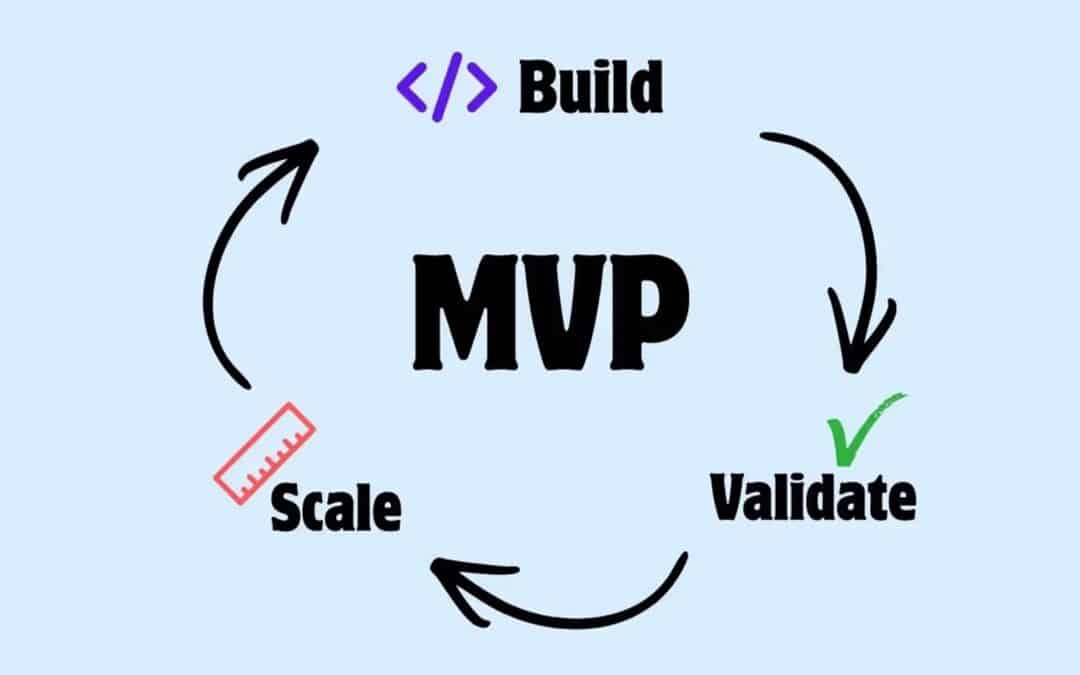
The build measure learn cycle defines how the lean startup method operates in practice. Teams begin with a clear hypothesis related to a customer problem, a value proposition, or a specific market assumption. That hypothesis becomes a minimum viable product designed to test one critical idea rather than the entire product vision.
After release, measurement follows immediately. User behavior, customer feedback, and usage data reveal whether the assumption holds true or fails. Learning completes the cycle by converting evidence into decisions. This structured loop ensures effort produces knowledge and prevents teams from spending weeks building features without direction.
MVP As The Starting Point
MVP serves as the starting point for the lean startup approach because it transforms abstract ideas into real experiences that users can interact with. Instead of internal debate, teams expose their concept to the market quickly and observe actual reactions.
By releasing a minimum viable product early, assumptions face real market conditions. Early users engage with the product, reveal gaps, and confirm whether the core idea delivers value. This approach limits extra overhead, reduces risk, and ensures progress relies on evidence rather than opinion. MVP makes sense because learning matters more than polish at this stage.
Early Users And Early Adopters Role
Early users and early adopters play a critical role in lean startup MVP success. These users accept minimal products because they experience a clear pain point or value opportunity. Their motivation differs from mainstream customers, which makes their feedback especially valuable.
Their interaction uncovers usability issues, unmet needs, and emotional responses that internal teams cannot predict. Early adopters reflect real market demand and provide sharper insight than hypothetical personas. This relationship accelerates validated learning and ensures product ideas evolve through real-world use rather than assumptions formed in isolation.
Customer Feedback As a Validation Tool
Customer feedback acts as the primary validation mechanism within the lean startup method. Feedback reveals whether the product solves a real problem or fails to meet expectations. Without this signal, teams rely on guesswork.
Direct responses, behavioral patterns, and qualitative insights help validate assumptions quickly. Feedback clarifies which features matter, which confuse users, and which add no value. Consistent feedback loops reduce waste and guide product iteration with confidence. Lean startup MVP treats feedback as evidence that drives decisions, not as optional commentary.
Feature Decisions With Minimum Effort
Lean startup MVP requires strict discipline in feature decisions. Each particular feature must justify its existence through learning value or direct contribution to the core problem.
Teams focus on the minimum feature set needed to test a specific assumption. Additional features impose extra overhead and dilute feedback quality. This approach protects the energy invested and keeps development aligned with learning goals. Minimum means purposeful and intentional, not incomplete or careless.
Fast Iteration With Real Data
Iteration within the lean startup method depends on real data rather than internal opinions. Each MVP release informs the next decision through measurable outcomes.
Teams refine features, adjust positioning, or pivot direction based on user behavior and market response. This cycle supports continuous improvement without long delays. Real users guide progress, and product iteration becomes a disciplined response to evidence rather than speculation or hope.
Avoiding Waste Through Validation
Lean startup MVP helps teams avoid waste by validating ideas before heavy investment. Market demand, user behavior, and customer feedback shape decisions at an early stage.
This process prevents teams from building products nobody wants and from spending weeks building without confirmation. Validation replaces guesswork with clarity. Through MVP, the lean startup method ensures progress remains efficient, focused, and grounded in reality rather than assumptions or optimism alone.
Key Components Of A Successful MVP
A successful lean startup MVP relies on intentional design choices that prioritize validated learning over feature volume. Each component exists to reduce uncertainty, confirm market demand, and ensure teams invest energy only where real user value and insight exist before moving toward a marketable product.
Clear Problem Definition
A clear problem definition forms the foundation of any successful minimum viable product MVP. Teams must identify a real pain point experienced by target users, not a problem imagined internally. Market research, previous interviews, and given context from potential customers help confirm that the problem exists in the existing market and deserves attention.
This clarity directs every MVP decision. It shapes product ideas, defines core features, and ensures effort aligns with learning goals. When the problem stays specific and validated, MVP makes sense as a tool for reducing waste. Teams avoid weeks building solutions that solve nothing meaningful and instead focus on problems users actively want solved.
Focused Value Proposition
A focused value proposition explains the product’s value in a few words maximum. Early adopters and early users decide quickly whether a product addresses a clear itch, so the MVP must communicate its benefit immediately.
This clarity allows teams to test whether the market responds to the idea itself rather than to a long list of features. Weak response signals low market demand, while a strong response confirms relevance. A sharp value proposition supports validated learning and helps teams refine positioning as the MVP journey progresses toward a minimum marketable product.
Minimum Feature Set
The minimum feature set defines what minimum means in lean startup MVP. Each particular feature must either solve the core problem or generate learning. Features added without purpose impose extra overhead and dilute feedback quality.
Lean startup methodology favors restraint because fewer features produce clearer user feedback. Users interact with what truly matters and reveal real behavior. This discipline protects energy invested, shortens development cycles, and ensures MVP remains a learning tool rather than a poorly executed full product.
Real User Access
Access to real users separates effective MVPs from internal experiments. Early users and beta users interact with the product in real conditions, providing feedback rooted in actual usage rather than assumptions.
Their behavior reveals pain points, unmet needs, and unexpected use cases. Unlike internal teams, real users reflect true market demand. Lean startup MVP depends on this interaction to validate assumptions and confirm whether the product delivers value beyond theory or internal belief.
Structured Feedback Collection
Customer feedback must follow a structured system to support validated learning. Random comments scattered across tools create noise and slow decision-making. Lean startup MVP relies on organized feedback from landing pages, early releases, and direct interactions.
Structured feedback highlights recurring pain points, feature requests, and sentiment trends. This clarity allows teams to prioritize core features, remove ineffective ideas, and iterate with confidence. Feedback becomes evidence rather than opinion.
Meaningful Learning Metrics
Meaningful learning metrics focus on behavior instead of vanity numbers. Engagement, retention, task completion, and user response reveal whether MVP delivers real value.
The Lean startup method avoids metrics that look impressive but offer no insight. Meaningful data connects effort to outcome and supports smarter product iteration. These metrics confirm whether assumptions hold true and guide teams toward decisions grounded in reality rather than guesswork.
Path Toward Marketable Product
MVP represents the starting point, not the destination. Insights gathered through validated learning guide the transition toward a minimum marketable product.
Each iteration refines understanding of market demand, user needs, and feature priorities. This path ensures growth rests on evidence, not hope. Lean startup MVP prepares teams to scale with clarity, reduced risk, and stronger alignment between product and customers.
Steps To Create A Lean Startup MVP
Lean startup MVP creation requires a structured yet flexible process that prioritizes learning over output. Each step helps teams validate assumptions, reduce wasted effort, and confirm real market demand through direct interaction with users instead of internal speculation.
Market Research And User Clarity
Market research provides the foundation for a successful lean startup MVP. Teams must clearly understand target users, existing market conditions, and the problems customers actively try to solve. Without this clarity, MVP risks addressing the wrong need or entering a market with no demand.
Research should focus on behavior, context, and motivation rather than opinions alone. Interviews, surveys, competitor analysis, and previous company insights help reveal pain points and expectations. This understanding ensures that the MVP concept aligns with real users and prepares teams to test ideas that matter.
Assumption Definition And Risk Focus
The Lean startup method treats every product idea as a set of assumptions. These assumptions relate to market demand, user behavior, pricing, and value delivery. Teams must identify which assumptions carry the highest risk before building anything.
Each assumption should translate into a clear hypothesis that MVP can test. This focus prevents scattered experimentation and keeps effort directed toward learning. By prioritizing risky assumptions first, teams reduce uncertainty early and avoid weeks building features that fail to validate core beliefs.
Landing Page MVP Execution
A landing page MVP tests interest before product development begins. It presents the value proposition clearly and measures how potential customers respond. Sign-ups, clicks, or demo requests act as early demand signals.
This method requires minimal effort yet produces meaningful insight. Landing pages help teams test messaging, positioning, and problem relevance. Poor response signals weak demand, while strong engagement supports further investment. Lean startup MVP benefits from this quick validation without software development overhead.
Smoke Test And Demand Validation
A simple AdWords smoke test measures willingness to act, not just curiosity. Paid ads expose the idea to real audiences and track behavior such as clicks or attempted purchases.
This approach reveals market demand within days. Weak performance suggests low interest or unclear value, while strong engagement confirms traction. Smoke tests protect teams from investing energy into ideas that lack real pull. Lean startup MVP uses this evidence to decide whether progress makes sense.
Concierge And Manual MVP Approach
Concierge MVP replaces automation with manual delivery of value. Teams perform tasks themselves to solve user problems without full software development.
This approach uncovers workflow complexity, unmet needs, and user expectations early. Direct interaction provides deeper feedback than automated systems. Although effort remains hands-on, learning quality stays high. Concierge MVP validates solutions before committing resources to scalable infrastructure.
Release To Early Users
Early users and beta users play a crucial role after the MVP release. These users accept minimal products in exchange for early access or immediate value.
Their behavior highlights usability issues, feature gaps, and unexpected use cases. Qualitative feedback combined with usage data guides improvement. Lean startup MVP relies on this stage to confirm whether the product truly solves problems or requires adjustment.
Iteration And Feature Decisions
Product iteration follows evidence from real users, not internal preferences. Feedback and behavior metrics determine which features deserve attention and which ones require removal.
Teams refine core features, adjust positioning, and improve usability based on validated learning. Each iteration aims to increase value with the least effort. This process moves MVP toward a minimum marketable product grounded in real demand and proven insight.
Common MVP Mistakes And How To Avoid Them
Lean startup MVP often fails due to misinterpretation rather than poor intent. Teams pursue speed or polish instead of validated learning. Recognizing common mistakes early helps protect energy invested, reduce extra overhead, and ensure MVP supports real market demand rather than internal assumptions.
Confusing MVP With Full Product
Many teams mistake a minimum viable product MVP for a full product launch. They add multiple features, a refined design, and complex workflows before any real validation occurs. This approach delays learning and increases risk, especially when market demand remains unproven.
Lean startup MVP exists to test assumptions, not to deliver perfection. Core features matter more than a long roadmap. A focused MVP exposes the concept to real users sooner, produces clearer customer feedback, and allows product iteration before effort becomes difficult to reverse.
Excessive Feature Expansion Early
Teams often expand features early due to internal opinions or fear of rejection. This behavior increases complexity and shifts attention away from validated learning.
Each additional feature imposes extra overhead and reduces clarity of user feedback. Lean startup method favors a minimum feature set that supports one learning objective at a time. Fewer features help teams understand real user behavior and avoid weeks building functionality users never request.
Customer Feedback Neglect
Customer feedback sometimes gets collected but fails to influence decisions. Teams prioritize internal preferences instead of insights from early users and beta users.
Lean startup MVP depends on feedback as evidence. Real users reveal pain points, unmet needs, and usability issues. Ignoring these signals leads to wasted energy and misaligned products. Feedback must guide decisions to support validated learning and market alignment.
Delayed Exposure To Real Users
Some teams delay releasing MVP to real users due to fear of criticism. This delay increases uncertainty and blocks learning.
The lean startup approach requires early exposure to potential customers. Early adopters accept minimal products and provide honest reactions. Faster interaction helps teams confirm assumptions and detect weak ideas before weeks of building create sunk costs.
Reliance On Vanity Metrics
Vanity metrics such as sign-ups or page views create false confidence. These numbers fail to reflect real value or market demand.
Lean startup MVP requires meaningful metrics tied to behavior. Engagement, retention, and usage patterns reveal whether users care. These learning metrics guide decisions and confirm whether MVP makes sense as a foundation for a marketable product.
Absence Of Clear Assumptions
MVP loses direction when assumptions remain undefined. Teams build features without clarity on what requires validation.
Lean startup methodology demands explicit assumptions related to customer problems, value proposition, and market demand. Clear hypotheses ensure MVP tests the highest risks first. Without this focus, learning becomes random and ineffective.
Overinvestment Of Time And Effort
Many teams invest too much time and effort before validation occurs. Weeks of building without feedback increase risk and drain resources.
Lean startup MVP aims to achieve learning with the least effort. Controlled investment protects the energy invested and ensures teams commit resources only after evidence supports progress. This discipline helps avoid building products that absolutely nobody wants and keeps development aligned with real demand. Avoiding these challenges will reduce the development cost.
How Gain HQ Helps Businesses Build And Validate MVPs
Gain HQ helps teams execute a lean startup MVP strategy by turning customer feedback into a structured, actionable system. Instead of collecting scattered opinions across tools, teams centralize feedback from real users in one place, creating a clear view of pain points, feature requests, and sentiment.
This clarity supports faster, validated learning. Product teams understand what users actually want, which assumptions hold true, and where market demand exists. Structured feedback removes guesswork and reduces extra overhead caused by disconnected tools or anecdotal input.
Gain HQ enables smarter product iteration by linking feedback directly to features and decisions. Teams prioritize the minimum feature set that delivers value and learning, rather than building based on internal preferences. This approach aligns effort with insight and protects energy invested.
By supporting evidence-based decisions, GainHQ helps businesses validate MVP ideas sooner, reduce waste, and confidently move toward a marketable product that users truly love.
FAQs
What Does Lean Startup MVP Mean?
Lean startup MVP refers to building a minimum viable product that supports rapid learning through real user feedback. The goal focuses on validating assumptions with the least effort before teams scale development or invest heavily in features.
How Is MVP Different From Minimum Marketable Product?
MVP focuses on learning and experimentation, while a minimum marketable product targets readiness for broader release. MVP tests ideas and assumptions, whereas MMP supports revenue generation and market expansion.
Why Customer Feedback Matters In Lean Startup MVP?
Customer feedback reveals real pain points, user behavior, and unmet needs. This insight guides product iteration and prevents teams from building features without proven market demand.
When Does MVP Make Sense For A Company?
MVP makes sense when uncertainty exists around product ideas, market demand, or target users. Early validation reduces risk, saves time, and limits unnecessary energy invested.
What Types Of MVP Can Teams Build?
Teams can create landing page MVPs, concierge MVPs, smoke tests, or basic software prototypes. Each type supports validating assumptions with minimal effort and reduced overhead.
How Long Should A Lean Startup MVP Take To Build?
A lean startup MVP often takes days or a few weeks, not months. The timeline depends on the complexity of the assumption being tested and the fastest way to gather real user feedback.
What Common Mistakes Should Teams Avoid When Building A Lean Startup MVP?
Teams should avoid adding too many features, delaying user feedback, or relying on internal opinions instead of real data. MVP succeeds when learning remains the priority and effort stays aligned with validation goals.
Full-stack web development companies play a vital role for businesses that rely on web applications and software to compete today. These applications power online sales and marketing operations. They ensure smooth internal processes and help deliver excellent customer experiences seamlessly.
Businesses that partner with full-stack development companies get complete development services for both frontend and backend technologies. Companies using full-stack development strategies improve their resource usage significantly. Full-stack developers know how to create minimum viable products quickly, which helps businesses reduce their time to market and adapt to market changes.
A 10-year-old full-stack web development service can be a great way to get cost benefits. Some companies help their clients save up to 60% on development costs through flexible hiring models that maintain transparency and cost-efficiency. This approach, combined with the power to update frontend and backend simultaneously, gives businesses an edge by letting them seize market opportunities before their competitors.
What Is A Full Stack Web Development Company
A full-stack web development company delivers end-to-end web development solutions using a complete technology stack. A full stack development company handles both the frontend and backend development of a web app or mobile application. Full-stack developers manage user interface design, back-end technologies, database management systems, and cloud services within one development team. A stack development partner works across operating systems and programming languages to build scalable solutions that match business requirements and project scope.
A stack development company follows a structured full-stack development process. Initial discovery defines business ideas, system architecture, and integration services. Stack web development services cover database management, third party integrations, and processing data with strong code quality. Stack developers enhance operational efficiency through continuous integration, quality assurance, and post-launch support. Full stack solutions support SaaS product development, machine learning features, data analysis, and legacy systems modernization while helping balance speed, development costs, and technical expertise for complex projects.
Core Full Stack Web Development Services
A resilient full stack web development company provides detailed technical services that cover all development areas. These services are the foundations of any successful web project. They help businesses build feature-rich applications that meet today’s needs.
Front-End Development Capabilities
The client-side experience starts with good front-end development. Full stack developers create interfaces that users interact with directly. Most full stack development companies excel at HTML, CSS, and JavaScript. They turn design concepts into working user interfaces. The team structures web pages with HTML, styles them with CSS, and adds interactivity through JavaScript. This creates dynamic content users love.
The core team uses popular frameworks like React, Vue, or Angular. They build responsive user interfaces that work naturally on any device. Their front-end development ensures applications stay responsive and accessible while following design guidelines. They also create reusable components that boost project scope and speed up development.
Front-end specialists work to optimize user experience through:
Responsive layouts that work on all screen sizes
Interactive elements that react to user input
Performance optimization for fast load times
Accessibility features for users with different abilities
Back-End Development Expertise
A smooth user interface needs powerful back-end development as its foundation. Back-end developers create server-side logic that controls application behavior. They build the business logic, set up the database structure, and make sure everything runs right.
Full stack development services include mastery of server-side languages like Node.js, Python, Django, Ruby on Rails, PHP, and Java. These tools let developers build solid applications that handle complex tasks quickly. Back-end developers write code with best coding practices that makes web applications easy to maintain.
Back-end experts focus on server-side software that processes data and talks to databases. They build secure login systems and develop adaptable solutions that grow with your business. Through testing, they make sure the back-end stays reliable in different situations.
Database Design And Management
A well-laid-out database works as the central hub for all application data. Database management plays a significant role in keeping data consistent and reliable throughout an application’s life. Full stack developers work with SQL databases like MySQL and PostgreSQL for structured data. They also use NoSQL solutions like MongoDB for flexible data types.
Database design organizes data logically. It creates connections between different types of information and uses normalization to cut down on duplicate data. Well-managed databases help applications grow while staying fast under heavy use.
Database specialists put strong security measures in place to protect sensitive information. They also optimize queries to retrieve data quickly, which makes the whole system run better for users.
API Development And Integration
APIs connect different software systems and help them communicate. Full stack development companies excel at creating solid APIs that aid smooth data exchange between applications. These interfaces set rules that let different parts work together without knowing each other’s complexities.
API integration lets organizations connect new services with existing tools like CRM, ERP, and other business systems. Full stack developers create RESTful APIs using standard HTTP methods (GET, POST, PUT, DELETE). This lets clients access server data easily. The architecture keeps servers from saving client data between requests, which makes everything more secure and scalable.
The team adds proper security through tokens and API keys. This ensures only approved users and applications can access these interfaces. They also provide detailed API documentation that helps other developers understand and use the interfaces. Through careful API development, businesses can build modular systems where services plug in or out easily.
End-To-End Project Management And Delivery
A web project’s success depends on technical expertise and good project management from start to finish. Full stack web development companies deliver end-to-end project management that brings high-quality results on time.
Agile Development Methodology
Full stack web development companies copy, apply, and extend Agile methodologies to break complex projects into manageable cycles called sprints. Teams can set specific goals for each sprint, build, test, and review their work before moving ahead with this step-by-step approach. Agile builds on four main values: individuals over processes, working software over documentation, customer collaboration over contracts, and responding to change over rigid plans.
Agile lets full stack development services adjust priorities without disrupting the entire project, unlike traditional approaches. This flexibility becomes valuable with fast-changing technologies or shifting business needs. Teams look back after each sprint to see what they can do better. This creates a feedback loop that improves product quality and makes clients happier.
Full stack developers who use Agile methodologies can:
Bring value often through step-by-step planning
Accept requirement changes even near the end
Keep direct contact with stakeholders
Quickly adapt to market changes and user feedback
Dedicated Project Teams
A dedicated development team works just like your in-house team but without the overhead of HR, taxes, or benefits management. This partnership lets businesses focus on their core work while the full stack development company handles the technical side.
Your dedicated team includes experts who work only on your project:
Front-end engineers who build user interfaces
Back-end engineers who create server-side components
DevOps specialists who bridge development and operations
UX/UI designers who create intuitive user experiences
QA engineers who check functionality and performance
Project managers who track timelines and communication
Business analysts who match technical solutions with business goals
Project managers bridge the gap between clients and the technical team. They need to understand both technical details and design aspects to spot potential issues early. Their mix of technical knowledge and people skills helps create a productive environment where teams work well together.
Quality Assurance And Testing
Quality assurance runs through the entire development process instead of just being a final check. Full stack development companies start QA from day one by writing tests first to set clear goals and requirements for features.
Complete testing covers several areas:
Requirement testing to check specification matches
Design evaluation to ensure good usability
Functionality testing to verify proper operation
Quality assurance in full stack web development builds your brand’s strength by stopping problems before they start and making sure users have a smooth experience. Testing continues even after development finishes to catch and fix any new issues.
Testing early and often helps keep web applications on track. This approach verifies business requirements are met and helps avoid performance problems. Full stack web development companies test across browsers, devices, and scenarios to catch bugs before users see them.
Deployment And Launch Support
Full stack developers prepare web applications for deployment by setting up server environments and creating CI/CD pipelines once development and testing finish. This includes moving databases, setting up servers, and building solutions that grow with user traffic.
Full stack development companies help with launches through:
Production environment setup
Performance improvements before release
Monitoring system installation
Security measure implementation
Teams keep watching application performance after launch to fix issues quickly. This ongoing support keeps applications secure and running smoothly in real-life conditions.
Clear communication stays important during deployment. Tools like JIRA, Basecamp, and similar platforms keep clients informed about project progress. Regular online or face-to-face meetings build strong relationships and make sure technical work matches business goals.
Technical Expertise And Technology Stack Options
Your choice of technology stack can make or break a web development project. It affects everything from performance to scalability and maintenance. The best web development companies know multiple technology stacks to create solutions that work for any business need.
Popular Development Stacks (MEAN, MERN, LAMP)
Full-stack developers work with time-tested technology stacks that deliver reliable performance. The LAMP stack combines Linux, Apache, MySQL, and PHP. This 30-year-old foundation for web applications has earned trust worldwide. Its open-source components offer enterprise-grade security, customization options, and low maintenance costs. Businesses that want reliability often choose LAMP.
JavaScript-based stacks have become the go-to choice for modern applications. The MEAN stack (MongoDB, Express.js, Angular, Node.js) and MERN stack (with React instead of Angular) let developers use JavaScript throughout their projects. Web development teams can switch between client-side and server-side programming quickly, which speeds up development.
These JavaScript stacks shine at creating dynamic, real-time applications with their non-blocking architecture. MEAN uses Angular’s two-way data binding and MVC support. MERN uses React’s component-based architecture to build interactive interfaces. More businesses now prefer MERN because JavaScript and React have gained popularity among development teams.
Framework Specializations
Full stack development services often master specific frameworks that solve unique business problems. Node.js creates the perfect environment for JavaScript-based development. It runs JavaScript code outside browsers on servers. This makes it great for building real-time, data-heavy applications that need to grow fast.
Python developers love Django because it comes with built-in features that save coding time. Ruby on Rails offers MVC architecture to build interactive web applications quickly. Good full stack developers know multiple frameworks. This knowledge helps them create technical solutions that match any project’s needs.
Cloud Services And Infrastructure
Today’s full stack development relies heavily on cloud services. These services give businesses the freedom to grow and adapt. AWS, Microsoft Azure, and Google Cloud Platform help development companies build applications that grow with traffic. They also reduce the hassle of managing infrastructure.
Cloud integration works with many deployment types, including serverless setups that need less management. Development teams use cloud native development to create smooth update processes that make operations better. This helps startups and growing businesses adapt to market changes quickly.
Mobile-Responsive Solutions
Poor mobile experiences drive away 70% of potential customers during purchases. Even worse, 94% of users would rather shop with competitors than trust companies with bad mobile design. These numbers show why web development services put mobile-responsive design first. They want users to have great experiences on any device.
Mobile-responsive design changes layouts based on screen size. Content looks good whether you’re using a phone, tablet, or desktop. Professional development companies create responsive solutions through:
Mobile-first strategies that start with smaller screens
Content that matters most to users on different devices
Images that adjust their size to fit any screen
Text and touch controls that work well with all input types
Responsive design helps businesses reach more mobile users while keeping their brand consistent across platforms.
Custom Solutions For Different Business Needs
Modern businesses need specific solutions that go beyond generic software packages. A professional full stack web development company builds applications that solve particular business challenges with precision and room to grow.
Startup MVP Development
Startups need speed and proof of concept. Full stack developers help turn ideas into working products through MVP (Minimum Viable Product) development. The team focuses on core features first. They build testable products that prove business ideas before major investments.
A core team of full stack developers can build a working MVP in just 10 weeks. This cuts the time to reach the market substantially. Startups can get user feedback early, test their ideas, and make key changes before running out of money and energy. About 42% of SaaS startups fail because they don’t test market needs early enough.
Full stack development teams combine front-end, back-end, DevOps, and UX expertise from the start. This removes the delays that slow down traditional development. The team finds problems, builds solutions, tests them, and makes improvements. They deliver real results instead of possibilities.
Enterprise Application Modernization
Old systems don’t deal very well with today’s ever-changing business needs. Full stack development services help organizations update their existing applications. They streamline processes by moving to hybrid cloud platforms.
Enterprise application updates involve rebuilding outdated systems to work with modern IT environments. This includes moving to cloud-native systems, adding microservices, and improving data handling.
Updates bring more than technical benefits. Banks that modernized their core systems saw 15-20% higher customer satisfaction. Companies can also cut application costs by 30% through automation and improve productivity by 40%.
E-Commerce Platform Development
E-commerce powers global trade in today’s digital economy. Full stack development companies create custom online stores that give users great experiences while staying ahead of competitors.
Full stack development teams build both the customer-facing store and powerful back-end systems to handle inventory, payments, and security. Front-end developers create user-friendly interfaces with quick search features and product demos that boost customer engagement and sales.
The back-end developers build strong systems using Python, Ruby, PHP, and frameworks like Node.js. They add payment systems, inventory tools, and analytics to create tailored shopping experiences customers love.
SaaS Product Development
SaaS (Software as a Service) runs modern businesses, with 99% of organizations using at least one SaaS product. Full stack developers excel at creating cloud software that works through web browsers without installation.
The SaaS product development follows these steps:
Market analysis to find user needs and gaps
Getting basic security and growth requirements
Choosing business models (freemium, subscription, usage-based)
Picking technology for frontend and backend
Building an MVP for testing
Making changes based on feedback before launch
The right technology stack is vital for long-term success. Many developers choose popular stacks like MEAN (MongoDB, Express.js, Angular, Node.js) or MERN (replacing Angular with React) to ensure growth and easy maintenance.
Custom Business Applications
Custom applications solve specific workflows, challenges, and goals that regular software can’t handle. Full stack development companies design special applications that combine smoothly with existing systems.
Custom business applications work better than ready-made solutions. They match unique needs, grow easily, offer better security, and work well with other systems. These applications skip unnecessary features, which improves efficiency and saves money long-term despite higher upfront costs.
Developers work closely with stakeholders to identify problems, set clear goals, and design solutions that add real business value. This approach helps full stack developers create applications that grow with your business, so you won’t need replacements when requirements change.
Ongoing Support And Maintenance Services
A partnership with a full-stack web development company goes beyond the original launch. The team provides ongoing support that keeps applications functional, secure, and arranged with changing business needs throughout their lifecycle.
Post-Launch Technical Support
Technical support plays a vital role when an application goes live. Full-stack developers fix bugs and troubleshoot problems to prevent extended downtime. Businesses can lose up to $5,600 per minute in revenue during outages. The detailed support resolves simple user problems in under 10 minutes, while serious issues get fixed within 8 hours.
Professional full-stack development services give you multiple ways to get help – live chat, email, and phone support. Your team can quickly solve problems without much downtime, whatever the technical issue’s severity.
Performance Monitoring And Optimization
Application performance management (APM) helps full stack developers spot, prevent, and fix performance issues before users notice them. Development teams track key metrics like response times, error rates, and resource usage across the entire application stack through continuous monitoring.
AI-powered APM tools analyze large amounts of performance data faster in complex environments to find the root causes of problems. These tools look at past data to predict future resource needs, which helps businesses scale their infrastructure as growth happens.
Full stack development partners use both synthetic monitoring (simulated user interactions) and real user monitoring (RUM). This approach gives them detailed performance data from actual user experiences.
Security Updates And Patches
Security maintenance remains non-negotiable for ongoing support. Hackers target outdated software because known vulnerabilities are often public and easy to exploit. Full-stack developers run scheduled vulnerability checks and provide detailed reports.
The team updates all parts of a web application including the web server, operating system, database, and third-party libraries. Professional development teams create clear update policies with testing strategies, patch priorities, and consistent schedules.
Feature Enhancements And Upgrades
Applications must adapt as businesses grow. Full-stack development companies roll out software updates every 2-4 weeks, 40% faster thanks to best DevOps practices. User feedback and market changes drive these enhancements.
Feature development services update existing modules, build new features, add software integrations, and introduce state-of-the-art improvements. This ongoing enhancement process keeps applications competitive and meeting user expectations.
Industry-Specific Expertise And Compliance
Industry specialization helps full-stack development companies create solutions that match specific regulatory environments and operational needs in a variety of sectors.
Healthcare Software Development
Full-stack developers build custom HIPAA-compliant medical software to protect sensitive patient data. Healthcare applications include electronic health records (EHR), telemedicine platforms, and patient management systems that simplify clinical processes. These specialized solutions analyze big amounts of patient data to improve diagnosis accuracy and handle routine tasks like scheduling and billing.
Hospitals and clinics benefit from full-stack development services that build resilient hospital information systems. These systems connect different departments through secure data exchange protocols. Custom healthcare software helps medical professionals monitor treatment plans, handle appointments, and control access to sensitive information.
Financial Services Solutions
Banking and financial services sector creates opportunities for full-stack developers, with projected growth of seven percent from 2021-2031 and median annual salaries around $77,000. Online banking services need development teams to watch traffic, boost website performance, and set up strict security measures.
Financial compliance software helps institutions deal with complex regulatory frameworks like anti-money laundering regulations and know-your-customer requirements. Full-stack development companies build automated reporting systems that ensure accurate regulatory submissions and cut down administrative work.
E-Commerce And Retail Applications
E-commerce continues to grow faster, with global online sales reaching $6.3 trillion, expected to make up 24% of all retail sales by 2026. Full stack developers design online stores that showcase products through immersive shopping experiences.
Complete e-commerce solutions blend payment gateways, inventory management systems, and analytics tools. These solutions include personalization features that study customer behavior to provide targeted recommendations.
Education Technology Platforms
EdTech applications reshape how people learn, with the global market estimated to reach $398 billion by 2026. Full-stack developers create learning management systems that deliver educational content through engaging interfaces.
Custom educational platforms feature video conferencing, instant messaging, and interactive whiteboards that make communication between students and instructors easier. These platforms include progress tracking systems, mock tests, and group collaboration tools that boost the learning experience.
Why Choose GainHQ As Your Full Stack Development Partner
GainHQ is a full-stack web development company that delivers end-to-end full-stack services tailored to your business requirements. A skilled development team manages both the frontend and backend development using a modern technology stack and carefully selected programming languages. Full-stack developers handle user interface design, back-end technologies, database management systems, and cloud services to build scalable solutions. Clear project management defines project scope during initial discovery and aligns every web app, mobile applications, and SaaS product development initiative with real business ideas. It is very important for you to choose a software development company.
GainHQ follows a structured full-stack development process that ensures code quality, quality assurance, and continuous integration across complex projects. Stack developers enhance system architecture, integration services, and third-party integrations while modernizing legacy systems. Deep expertise in stack web development, data analysis, machine learning, and processing data supports stack solutions that balance speed and development costs. Ongoing support and post-launch support maintain operational efficiency and competitive advantage through cutting-edge technologies and strong technical expertise.
FAQs
Can A Full Stack Web Development Company Provide A Dedicated Team For Long Term Projects?
Yes, a full-stack web development company can assign a dedicated team of specialized developers for long-term software projects. This team supports full-stack web initiatives with deep expertise in frontend and backend collaboration across operating systems.
Does Full Stack Development Help Reduce Development Costs?
Yes, full-stack development helps reduce development costs by consolidating frontend and backend expertise within one development company. A unified future-proof tech stack improves coordination, shortens timelines, and supports efficient resource allocation across complex projects.
How Does A Full Stack Development Partner Manage Business Requirements?
A full-stack development partner begins with initial discovery to define business requirements and align them with the development process. Clear documentation, stakeholder collaboration, and structured software engineering practices ensure solutions match real business goals.
Is Full Stack Web Suitable For Mobile App Development?
Yes, full-stack web expertise often extends to mobile app development and mobile applications. Developers use shared programming languages and choose adaptable tech stack strategies to maintain consistency across web app and mobile platforms.
How Do Stack Developers Enhance Code Quality Across Projects?
Stack developers enhance code quality through peer reviews, structured workflows, and continuous testing. Strong collaboration between frontend and backend teams ensures stable stack web architecture and reliable application performance.
Can A Stack Development Company Support Cloud-Based Infrastructure?
Yes, a stack development company integrates cloud services to improve scalability and resilience. Proper system architecture design supports high availability, secure data flow, and optimized performance for stack web development environments.
What Makes Full Stack Solutions Valuable For Data Driven Businesses?
Full-stack solutions support data analysis and processing data efficiently within modern management systems. Strong backend development combined with intuitive user interface design helps businesses turn insights into measurable competitive advantage.
SaaS development services help businesses build scalable solutions on cloud infrastructure. A reliable SaaS development company turns an idea into a SaaS product that fits real business needs. Modern SaaS application development services focus on performance optimization, data security, and multi-tenant architecture. Unlike traditional software solutions, the SaaS model supports business growth through cloud-based solutions and flexible pricing.
A skilled SaaS development team manages the full SaaS development process. From thorough market research and business analysis to MVP development and usability testing, every step supports clear business objectives. SaaS software development services also include integration capabilities, data exchange, and ongoing support. Leading SaaS development companies combine technical expertise, project management, and cloud computing with leading cloud providers to deliver secure SaaS platforms that protect user data and drive long-term success.
What Are SaaS Development Services
SaaS development services refer to professional software development focused on building SaaS applications hosted on cloud infrastructure. A SaaS development company designs, builds, and deploys SaaS solutions that run on cloud computing instead of traditional software solutions. The SaaS model allows users to access a SaaS app through a browser without complex installation. SaaS application development services support businesses that want scalable solutions aligned with their business needs.
SaaS software development services cover the full SaaS development process. The SaaS development team handles business analysis, MVP development, application development, and usability testing. SaaS developers focus on data security, multi-tenant architecture, and integration capabilities. A leading SaaS development company also provides SaaS consulting, SaaS migration, and ongoing support to deliver a successful SaaS product that supports long-term business growth.
Why Businesses Invest In SaaS Development Services
Modern companies adopt SaaS development services to build flexible and scalable solutions. The SaaS model reduces upfront costs and supports faster market entry. Cloud infrastructure and cloud computing help businesses respond to market trends quickly. A reliable SaaS development company aligns technology with clear business objectives.
Recurring Revenue Model
The SaaS business model creates predictable revenue. Subscription pricing ensures steady cash flow and improves financial management. According to Gartner, SaaS providers account for over 70% of new software spending in many industries. SaaS solutions help companies plan long-term growth with better revenue visibility.
A SaaS product development company designs pricing tiers that fit different business needs. Usage-based and hybrid plans increase customer lifetime value. A strong SaaS development process also supports secure billing systems and data security. Recurring revenue supports stable business growth.
Lower Infrastructure Costs
Traditional software solutions require heavy hardware investment. SaaS software runs on cloud-based solutions supported by leading cloud providers. Cloud services reduce capital expenditure and shift SaaS development costs to predictable operational expenses. Many leading companies reduce IT infrastructure costs by up to 30% after SaaS migration.
SaaS development services use multi-tenant architecture to optimize resources. A SaaS development team ensures efficient cloud infrastructure management. SaaS software development services also include performance optimization and security patches. Lower infrastructure burden improves project management and budget control.
Faster Time To Market
Speed defines success in competitive markets. SaaS application development services use agile development process and MVP development to release products quickly. A minimum viable product validates business objectives before full-scale SaaS product development. Studies show companies that launch early gain up to 20% higher market share.
A SaaS application development company combines business analysis with technical expertise. SaaS developers build scalable solutions that evolve with user feedback. Rapid deployment through cloud computing supports quick updates and integration capabilities. Faster launches increase competitive advantage.
Scalable And Flexible Architecture
Business growth demands scalable solutions. SaaS applications built on cloud infrastructure adjust capacity based on demand. Multi-tenant architecture supports thousands of users without system breakdown. Cloud computing ensures flexible resource allocation across regions.
SaaS software development focuses on data exchange and integration capabilities with tools like Google Workspace and social media management platforms. A leading SaaS development company designs secure SaaS platforms that protect user data. Robust security measures maintain trust while supporting expansion into new markets.
Continuous Innovation And Support
Market trends shift rapidly. SaaS development consulting ensures products evolve with customer needs. SaaS consultants and software engineers deliver ongoing support, security patches, and feature upgrades. Research shows 60% of businesses prefer SaaS providers that offer proactive improvements.
A SaaS vendor monitors usability testing results and user feedback. SaaS product development services refine inventory management, financial management, learning management systems, and other management systems. Continuous improvement strengthens the SaaS project lifecycle and ensures long-term success.
Types Of SaaS Development Services
SaaS development services cover a wide range of technical and strategic support. Each service addresses a different stage of the SaaS development process. A reliable SaaS development company aligns development services with business needs, market trends, and long term business growth goals.
Custom SaaS Development
Custom SaaS development focuses on building a tailored SaaS product for specific business objectives. A SaaS product development company starts with thorough market research and business analysis. The goal is to create scalable solutions that fit unique workflows such as inventory management or financial management.
SaaS developers design multi tenant architecture and secure cloud native development. SaaS software development services ensure strong data security and integration capabilities. Reports show that 64% of enterprises prefer custom SaaS solutions over off-the-shelf tools for better operational control.
SaaS Consulting Services
SaaS consulting supports companies at the strategy stage. SaaS consultants assess the SaaS business model, target users, and revenue strategy. A SaaS development consulting team validates business objectives before the SaaS project begins.
Business analysts and software engineers review the development process and cloud computing requirements. A leading SaaS development company provides guidance on future-proof tech stack, leading cloud providers, and performance optimization. Strategic consulting reduces project failure rates by nearly 30%, according to industry research.
MVP Development Services
MVP development helps validate a SaaS app idea with minimal risk. A minimum viable product includes core features only. SaaS application development services focus on speed and usability testing during this phase.
A SaaS development team collects user feedback and refines the SaaS platform. Early launch supports faster market entry and reduces wasted investment. Studies show startup software development process that release an MVP early improve product market fit success by over 40%.
SaaS Migration Services
SaaS migration shifts traditional software solutions to cloud-based solutions. Many software development companies help businesses move legacy systems to modern SaaS software. Migration improves flexibility and reduces infrastructure costs.
SaaS providers redesign applications using multi-tenant architecture and secure cloud services. Data exchange and integration capabilities remain intact during transition. Organizations that adopt cloud infrastructure often report up to 20% higher operational efficiency after migration.
UI UX And Web Development
SaaS application development requires strong web development and app development expertise. A SaaS application development company focuses on intuitive dashboards and mobile app access. Clear design improves user adoption and retention rates.
Usability testing ensures smooth navigation and fast performance. SaaS software development also integrates tools like Google Workspace and social media management platforms. Research indicates that better user experience can increase customer retention by 25%.
Maintenance And Ongoing Support
SaaS software development services continue after launch. Ongoing support includes security patches, performance optimization, and feature upgrades. Robust security measures protect user data across the SaaS platform.
A SaaS vendor monitors cloud infrastructure and project management workflows. SaaS development teams ensure system stability and compliance with data security standards. Leading companies that invest in long-term support see 35% fewer service disruptions.
Enterprise SaaS Development
Enterprise SaaS development serves large organizations with complex business processes. A leading SaaS development company designs scalable solutions for high-traffic SaaS applications. Strong cloud computing architecture supports global expansion.
Enterprise SaaS solutions require advanced integration capabilities and strict data security protocols. SaaS product development services often integrate management systems such as learning management systems and financial management platforms. Enterprise adoption of SaaS now exceeds 80% in many global markets.
Complete SaaS Development Lifecycle
A structured SaaS development process reduces risk and improves product quality. SaaS development services cover every stage from idea validation to ongoing support. A strong lifecycle ensures scalable solutions, secure cloud infrastructure, and steady business growth in competitive markets.
Market Research And Validation
Every SaaS project starts with thorough market research. A SaaS development company studies competitors, user pain points, and market trends. Business analysts define clear business objectives and validate demand before major investment. Reports show that 42% of startups fail due to lack of market need.
SaaS consulting teams assess the SaaS business model and revenue potential. Early validation supports smarter project management decisions. Clear research builds the foundation for a successful SaaS product and reduces financial risk.
Product Strategy And Planning
Strategy defines the direction of SaaS product development. A SaaS product development company outlines features, pricing models, and integration capabilities. The development process aligns technical expertise with real business needs.
A SaaS development team selects the right cloud computing environment and leading cloud providers. Roadmaps include performance optimization goals and data security standards. Clear planning improves delivery timelines by nearly 30%, according to industry studies.
MVP Development Phase
MVP development transforms ideas into a minimum viable product. SaaS application development services focus on core functionality only. Early release helps test assumptions without large upfront costs.
User feedback shapes feature refinement and usability testing. SaaS developers adjust common architectural problems and multi-tenant structure as needed. Companies that launch an MVP early improve product market fit rates by over 40%, based on startup research.
Full Scale Development
Full-scale SaaS software development expands features and integrations. A SaaS application development company builds secure SaaS applications with strong cloud infrastructure. Software engineers ensure integration capabilities with tools such as Google Workspace and other management systems.
Web development and mobile app support improve accessibility. Robust security measures protect user data across the SaaS platform. A structured SaaS development process ensures stable performance under heavy user loads.
Testing And Deployment
Quality assurance validates stability and security. SaaS software development services include usability testing, data exchange checks, and load testing. Data security remains a priority during this phase.
Deployment occurs on cloud-based solutions supported by leading cloud providers. A SaaS vendor monitors infrastructure after launch. Research shows that automated testing can reduce post-launch defects by up to 35%.
Maintenance And Optimization
Post-launch support ensures long-term success. SaaS development services include security patches, performance optimization, and feature updates. Ongoing support protects user data and ensures compliance standards.
A SaaS development team tracks analytics and user behavior. Feedback guides updates and new features. Leading companies that invest in continuous improvement achieve higher customer retention and steady business growth.
What Are The SaaS Architectures And Technology Stacks
Architecture defines the strength of any SaaS platform. The right technology stack ensures scalability, data security, and performance optimization. SaaS development services rely on proven cloud infrastructure and modern frameworks to build reliable SaaS applications that support long term business growth.
Single Tenant Vs Multi Tenant Architecture
Single-tenant architecture assigns one instance per customer. Multi-tenant architecture allows multiple users to share the same infrastructure. Most SaaS providers prefer multi-tenant models due to cost efficiency and easier maintenance.
A SaaS development company often selects multi-tenant architecture for scalable solutions. Studies show that over 80% of SaaS applications use this structure. Strong data isolation and robust security measures protect user data across shared environments.
Monolithic Vs Microservices Architecture
Monolithic architecture combines all components into one codebase. Microservices architecture separates features into independent services. SaaS development teams often choose microservices for complex SaaS solutions.
Microservices improve integration capabilities and data exchange between modules. Cloud computing platforms support independent scaling of services. Reports indicate that companies adopting microservices experience 30% faster feature releases compared to monolithic systems.
Cloud Infrastructure And Providers
Cloud infrastructure forms the backbone of SaaS software development. Leading cloud providers such as Amazon Web Services, Microsoft Azure, and Google Cloud dominate the global market. Gartner reports that cloud services spending exceeds $600 billion annually.
A SaaS application development company selects cloud-based solutions based on business needs and compliance standards. Cloud computing ensures high availability, backup systems, and disaster recovery. Strong infrastructure supports consistent SaaS app performance worldwide.
Frontend And Backend Technologies
Frontend frameworks such as React and Angular power modern SaaS applications. Backend technologies include Node.js, Python, and Java. A SaaS product development company aligns technology with the SaaS development process and project management goals.
Software engineers ensure secure APIs and smooth web development. Mobile app compatibility improves accessibility. The right stack enhances usability testing outcomes and strengthens user experience metrics.
Database And Storage Solutions
Databases store critical SaaS software data. SQL databases such as PostgreSQL ensure structured data management. NoSQL solutions like MongoDB support flexible data exchange.
A SaaS development team selects storage systems based on scalability needs. Cloud infrastructure often integrates managed database services for performance optimization. Reliable database design reduces downtime and improves overall SaaS platform stability.
Security And Compliance Stack
Security remains central in SaaS application development services. Encryption, role-based access control, and identity management systems protect sensitive information. Data security failures can cost companies millions in losses.
A leading SaaS development company applies security patches and monitoring tools regularly. Compliance with standards such as GDPR and SOC 2 strengthens trust. Robust security measures ensure a secure SaaS project lifecycle.
DevOps And Automation Tools
DevOps tools streamline the SaaS development process. Continuous integration and automated deployment improve efficiency. SaaS developers use tools like Docker and Kubernetes to manage cloud-based solutions.
Automation reduces human error and supports faster updates. Research shows DevOps adoption improves deployment frequency by up to 200%. A structured DevOps strategy ensures stable SaaS product development and reliable ongoing support.
Security And Compliance In SaaS Platforms
Security defines trust in any SaaS platform. SaaS development services must protect user data and meet strict compliance standards. Strong data security and robust security measures reduce risk, prevent breaches, and support long-term business growth across cloud-based solutions.
Data Protection And Encryption
Data security stands at the core of SaaS software development. A SaaS development company applies encryption for data at rest and in transit. Secure cloud infrastructure protects sensitive financial management, inventory management, and management systems data.
IBM reports that the average data breach cost exceeds $4 million globally. SaaS providers use multi-tenant architecture with strict isolation rules to protect user data. SaaS application development services also implement role-based access control to prevent unauthorized access.
Compliance And Regulatory Standards
Compliance ensures that SaaS solutions meet legal and industry requirements. A SaaS development team aligns the SaaS development process with GDPR, SOC 2, HIPAA, or other relevant standards. Non-compliance can result in heavy penalties and reputational damage.
Business analysts and SaaS consultants define policies during business analysis. SaaS development consulting ensures documentation, audit trails, and risk assessment. Research shows 70% of enterprise buyers evaluate compliance before selecting a SaaS vendor.
Identity And Access Management
Identity systems secure access to SaaS applications. SaaS software development services integrate multi-factor authentication and single sign-on. Tools like Google Workspace often connect through secure integration capabilities.
A SaaS application development company monitors login patterns and suspicious activity. Cloud computing platforms provide automated alerts and threat detection. Strong identity management reduces unauthorized access risks by nearly 50%, according to cybersecurity reports.
Ongoing Monitoring And Security Updates
Security requires continuous effort. SaaS development services include security patches, vulnerability assessments, and performance optimization. A SaaS development team monitors cloud services and data exchange activities.
Regular audits strengthen trust and reliability. Leading SaaS development companies invest in automated monitoring tools within cloud infrastructure. Studies show organizations with proactive security strategies reduce incident response time by up to 40%. Ongoing support ensures long term SaaS platform stability and compliance.
SaaS Scalability And Performance Strategy
Scalability protects long-term business growth. Performance defines user satisfaction. SaaS development services must design SaaS applications that handle growth without failure. A strong SaaS development process combines cloud infrastructure, multi-tenant architecture, and performance optimization to deliver stable SaaS solutions.
Core Scalability Pillars
A SaaS development company focuses on architecture, infrastructure, and monitoring. Each pillar supports reliable SaaS software development.
Elastic cloud computing with leading cloud providers
Multi-tenant architecture for resource efficiency
Load balancing across distributed servers
Automated deployment within cloud services
Real time performance monitoring
Research shows 90% of enterprises rely on cloud based solutions for scalable operations.
Architecture Models And Impact
Architecture determines how well a SaaS platform scales.
Architecture Type
Scalability Level
Best Use Case
Monolithic
Moderate
Early MVP development
Microservices
High
Complex SaaS product development
Serverless
Very High
Variable traffic SaaS applications
A SaaS application development company often selects microservices for enterprise SaaS solutions. This model improves deployment frequency by nearly 30%.
Performance Optimization Techniques
Speed affects revenue. A one-second delay can reduce conversions by 7%.
Key techniques used in SaaS software development services:
Database indexing and query optimization
API efficiency improvements
Caching systems for faster data exchange
Content delivery networks for global users
Regular usability testing
A SaaS development team monitors response time and server load to protect performance.
Infrastructure Scaling Metrics
SaaS providers track measurable KPIs to ensure scalability.
Uptime target: 99.9% or higher
Average response time: Under 200 ms
Auto scaling threshold: CPU usage above 70%
Error rate: Below 1%
Cloud infrastructure configured by a leading SaaS development company ensures these metrics stay stable even during traffic spikes.
Continuous Monitoring And Support
Ongoing support ensures long-term stability. SaaS development consulting includes infrastructure audits and security patches. Performance dashboards help SaaS developers detect risks early.
User feedback supports refinement of the SaaS app. Strong project management aligns technical expertise with business objectives. Leading companies that invest in proactive optimization report up to 35% higher retention rates and steady business growth.
SaaS Pricing And Monetization Models
Pricing defines revenue stability in the SaaS business model. The right strategy supports business growth and long-term profitability. SaaS development services must align monetization with business objectives, target users, and market trends to build a sustainable SaaS product.
Subscription-Based Pricing
Subscription pricing remains the foundation of most SaaS solutions. Customers pay monthly or yearly fees for access to SaaS applications. This approach creates predictable revenue and supports financial management planning.
A SaaS development company structures tiered plans based on features and usage limits. Research shows over 70% of SaaS providers rely on subscription models. SaaS software development services integrate secure billing systems within the SaaS platform to protect user data and ensure smooth transactions.
Freemium Model
Freemium offers basic access at no cost. Advanced features require paid upgrades. Many SaaS app development services use this model to attract large user bases quickly.
User feedback helps refine premium offerings. A SaaS product development company balances free features with paid value. Studies indicate that 2% to 5% of freemium users convert to paid plans. Strong performance optimization and usability testing improve conversion rates.
Usage-Based Pricing
Usage-based pricing charges customers based on activity. Metrics include data exchange volume, API calls, or storage consumption. Cloud computing infrastructure supports accurate tracking.
SaaS software development services integrate automated billing within cloud services. This model aligns cost with actual business needs. Research shows usage based pricing increases customer satisfaction by offering flexibility across SaaS solutions.
Hybrid Pricing Strategy
Hybrid models combine subscription and usage-based elements. A SaaS application development company may offer base access with additional charges for extra features or higher capacity.
This structure supports scalable solutions for growing businesses. A SaaS development team ensures billing integration capabilities remain secure and accurate. Leading companies adopt hybrid pricing to maximize revenue while maintaining customer retention.
Enterprise Custom Pricing
Enterprise SaaS solutions often require custom pricing. Large organizations demand tailored features, integration capabilities, and advanced data security. A leading SaaS development company negotiates contracts based on volume and service level agreements.
Enterprise clients expect ongoing support and performance guarantees. SaaS development consulting helps define pricing aligned with long-term business objectives. Industry data shows enterprise contracts can generate up to 40% of total SaaS revenue for mature SaaS providers.
Cost Breakdown Of SaaS Development Services
SaaS development services vary in cost based on scope, complexity, and technology choices. Cloud infrastructure, team size, and integration capabilities all influence pricing. A clear budget plan supports business objectives and reduces risk across the SaaS development process.
Cost Component
Description
Estimated Range (USD)
Market Research And Business Analysis
Validation of idea, competitor study, SaaS business model planning
$5,000 – $15,000
MVP Development
Minimum viable product with core SaaS app features
$15,000 – $50,000
Full Scale SaaS Product Development
Complete SaaS software development with integrations
$50,000 – $200,000+
Cloud Infrastructure Setup
Cloud computing, hosting, security configuration with leading cloud providers
$1,000 – $5,000 per month
UI UX And Web Development
Interface design, usability testing, mobile app compatibility
$10,000 – $40,000
Security And Compliance
Data security, robust security measures, compliance audits
Actual costs depend on project management complexity, SaaS platform scale, and required technical expertise. A leading SaaS development company aligns investment with long-term business growth goals.
Common SaaS Development Challenges And Solutions
SaaS development services face technical and strategic hurdles at every stage. Market pressure, security risks, and scalability demands can slow progress. A structured SaaS development process and experienced SaaS development team reduce risk and protect business growth.
Unclear Product Market Fit
Many SaaS applications fail due to weak validation. CB Insights reports that 42% of startups fail because there is no real market need. Poor business analysis and limited user feedback lead to wasted investment.
Solutions:
Conduct thorough market research before MVP development
Validate business objectives with early user feedback
Launch a minimum viable product to test demand
Adjust SaaS product features based on usability testing
Scalability Limitations
Weak cloud infrastructure can break under growth. Traffic spikes expose flaws in architecture. Traditional software solutions often fail to handle dynamic demand.
Solutions:
Use multi tenant architecture for scalable solutions
Deploy on reliable cloud computing platforms with leading cloud providers
Apply load balancing and performance optimization strategies
Monitor system metrics through cloud services dashboards
Data Security Risks
Data breaches damage trust and revenue. IBM reports average breach costs above $4 million globally. SaaS platforms handle financial management, inventory management, and sensitive management systems data.
Solutions:
Implement robust security measures and encryption
Apply role based access control across SaaS applications
Schedule regular security patches and compliance audits
Protect user data through secure data exchange protocols
Integration Complexity
Modern SaaS solutions require integration capabilities with tools like Google Workspace and other software applications. Poor API design delays SaaS project timelines.
Solutions:
Design API first architecture during SaaS application development
Test integration capabilities early in the development process
Use standardized data exchange formats
Assign experienced SaaS developers for complex integrations
Cost Overruns And Scope Creep
Uncontrolled features increase budget pressure. Weak project management expands timelines. Many SaaS providers struggle with shifting requirements.
Solutions:
Define clear scope during SaaS development consulting
Break the project into structured milestones
Align development services with core business needs
Track costs and progress through disciplined project management
Strong planning, technical expertise, and continuous evaluation help SaaS product development companies overcome these challenges and deliver successful SaaS platforms.
How To Choose The Right SaaS Development Partner
Choosing the right SaaS development company shapes product success. Expertise, process maturity, and cloud infrastructure decisions affect long-term performance. Businesses must evaluate technical expertise, security standards, and strategic alignment before selecting a SaaS development partner.
Proven SaaS Experience
Experience reduces execution risk. A SaaS product development company with a strong portfolio understands the SaaS development process from MVP development to enterprise scale. Review past SaaS applications and case studies.
Research shows projects led by experienced software engineers are 28% more likely to meet deadlines. A leading SaaS development company demonstrates knowledge of SaaS business model design, multi tenant architecture, and cloud based solutions.
Technical Expertise And Stack
Technology choices define scalability and security. A SaaS application development company must show expertise in cloud computing, integration capabilities, and performance optimization. Ask about leading cloud providers and DevOps practices.
Strong SaaS software development services include secure APIs and data exchange standards. Technical gaps often cause 30% of software project delays. Clear stack transparency ensures alignment with business objectives.
Security And Compliance Standards
Data security cannot be optional. A reliable SaaS vendor applies robust security measures and regular security patches. Compliance with GDPR or SOC 2 builds trust.
Enterprise buyers prioritize secure SaaS platforms. Reports indicate 70% of companies assess compliance before signing contracts. A disciplined SaaS development team protects user data across the SaaS project lifecycle.
Clear Development Process
Structure ensures predictability. A mature SaaS development process includes business analysis, usability testing, and milestone-based project management. Transparency improves collaboration.
SaaS development consulting should outline timelines and deliverables clearly. Companies with defined workflows experience up to 25% fewer scope changes. Clear communication reduces risk and supports business growth.
Post Launch Support
Long-term success requires ongoing support. SaaS software development services must include monitoring, performance optimization, and infrastructure management. Cloud services require continuous updates.
A SaaS development team should offer service level agreements and fast response times. Leading companies that invest in proactive support see 35% higher retention rates. Stability strengthens the SaaS product over time.
Strategic Alignment And Vision
Partnership extends beyond code. A SaaS development company must understand market trends and business needs. Business analysts and SaaS consultants align technology with financial management and operational goals.
Shared vision improves outcomes. Research shows strategic alignment increases project success rates by 32%. A strong partner contributes insights that support scalable solutions and sustainable SaaS product development.
Why Choose GainHQ For SaaS Development Services
GainHQ is a professional SaaS development company that delivers custom, scalable SaaS solutions tailored to real business needs. They combine deep technical expertise with strategic insight to build SaaS applications that align with long-term growth and performance goals.
Their SaaS development services cover the full development process from MVP development and architecture selection to secure cloud infrastructure and robust integration capabilities. GainHQ’s team works closely with clients to understand business objectives and to ensure every solution supports measurable results.
GainHQ also focuses on user experience and ongoing support. This includes performance optimization, usability improvements, and feature evolution that keep SaaS products competitive in fast-changing markets. With clear project management and a focus on scalable solutions, GainHQ helps businesses drive real impact through modern SaaS software development services.
FAQs
How Long Does A Typical SaaS Development Project Take?
Project timelines depend on scope and complexity. A basic SaaS app with MVP development may take 3 to 6 months. Full scale SaaS software development services for enterprise SaaS solutions can take 6 to 12 months or more.
Is SaaS Development Suitable For Small Businesses?
Yes. SaaS development services help small businesses access scalable solutions without heavy cloud infrastructure investment. The SaaS model supports flexible pricing and aligns with limited budgets while enabling steady business growth.
Can A SaaS Platform Integrate With Existing Business Tools?
Yes. Modern SaaS application development services focus on strong integration capabilities. SaaS developers build secure APIs that allow data exchange with tools like Google Workspace, CRM systems, and financial management software applications.
Do SaaS Applications Require Regular Updates After Launch?
Yes. SaaS software development includes ongoing support, security patches, and performance optimization. A SaaS development team monitors cloud services and user feedback to maintain platform stability and protect user data.
What Skills Should A SaaS Development Team Have?
A strong SaaS development team includes software engineers, business analysts, and SaaS consultants. Technical expertise in cloud computing, multi-tenant architecture, data security, and project management ensures a successful SaaS product.
Is Cloud Infrastructure Mandatory For SaaS Software?
Yes. Cloud infrastructure is essential for scalable SaaS applications. Leading cloud providers support high availability, automated scaling, and secure cloud-based solutions that traditional software solutions cannot match.
Can An Existing Software Be Converted Into A SaaS Platform?
Yes. SaaS migration allows businesses to transform legacy systems into modern SaaS solutions. A SaaS development company redesigns architecture, applies multi-tenant models, and upgrades integration capabilities to support the SaaS business model.
Software services have transformed how businesses build, deploy, and scale their digital capabilities. These solutions operate on a subscription basis and eliminate the need for local installations. They provide access from any internet-connected device. Startups launching their first product face unique challenges. Enterprises modernizing legacy infrastructure encounter different obstacles.
Software development services address these varied needs at every business stage. Custom software development companies deliver tailored solutions. These include web applications, mobile apps, cloud computing platforms, and ongoing software consulting services.
In this article, we will explore how custom software development services equip startups and enterprise teams to streamline operations and accelerate growth. The result is a lasting competitive advantage.
What Are Software Services
Software services refer to delivering software applications over the internet through cloud computing rather than installing software products on local machines. Businesses subscribe to SaaS solutions or cloud-based platforms that run on shared underlying infrastructure. Providers manage data storage, security, ongoing maintenance, and support services, while software developers focus on application development that aligns with business objectives.
Unlike commercial off-the-shelf tools, custom software development creates tailored software solutions built around a client’s business requirements. Through structured software development lifecycle phases, agile methodologies, quality assurance, and a dedicated testing team, software development services address complex business challenges. From enterprise resource planning and customer relationship management to inventory management and process automation, software solutions integrate with existing systems and legacy systems. Result: scalable solutions that streamline workflows, improve operational efficiency, protect data, and support business growth across various industries.
Types Of Software Development Services Available
Businesses face distinct operational challenges that require specialized software development services. Available solutions range from foundational custom applications to advanced automation platforms. Each service type addresses specific business requirements and enables organizations to streamline operations and boost efficiency.
Custom Software Development Services
Custom software development services create tailored solutions matching exact business requirements rather than forcing processes into pre-built templates. The global market for these services reached USD 43.16 billion in 2024. Commercial off-the-shelf software handles only standard processes. Custom development covers extensive features and assists companies in meeting unique demands.
The primary advantage lies in uninterrupted integration with existing business processes. Development teams match solutions to requirements and make it easier to scale as companies grow. Original investment exceeds purchasing ready-made software, but long-term cost savings prove substantial. Organizations avoid recurring subscription fees and gain greater return on investment over time. Custom solutions also include round-the-clock support and security against external threats.
Web Application Development
Approximately 2 billion websites exist worldwide. Creating outstanding web pages that drive user action requires professional expertise. Software development services for web applications include the full range of activities necessary to build solutions from simple websites to complex platforms. This has code creation, hosting, optimization and ongoing maintenance.
Custom web applications enable uninterrupted customer engagement, online transactions and internal process management. Businesses develop customer-facing portals, e-commerce platforms and detailed business management tools with flexibility and scalability. Progressive web apps combine functionality of native mobile applications with easy website access. These solutions are SEO-friendly, fast to develop and function without network connectivity if previously opened online and cache remains intact.
Mobile Application Development
Mobile application development builds software solutions for smartphones and tablets. The process creates apps for each operating system the application will support, primarily iOS and Android. User spending on mobile apps reached USD 36.20 billion in the second quarter of 2024.
Development approaches vary based on business objectives. Native mobile apps are designed for Android or iOS platforms and deliver robust feature sets with intuitive navigation. Cross-platform applications work on both iOS and Android devices from a single codebase and ensure near-native user experiences. Hybrid mobile apps use both native and web technologies and function smoothly across multiple devices while enabling fast, cost-efficient market expansion.
Cloud Computing Solutions
Cloud software development creates applications designed to run in cloud environments. This approach uses cloud computing services and platforms to develop, test and manage software applications. Deployment models include public cloud services offered by third-party providers, private clouds owned by businesses for extra control and hybrid solutions combining both approaches.
Service models deliver different capabilities. Infrastructure as a service provides computing power, storage and network resources on demand. Platform as a service offers complete environments for developing and managing applications. Software as a service gives users access to applications over the internet with providers handling hosting and maintenance.
DevOps And Automation Services
DevOps combines software development and IT operations to shorten the software development lifecycle. This methodology implements processes and technologies like virtualization and containerization while delivering features, fixes and updates that align with business objectives frequently.
Automation reduces human assistance requirements for completing processes and tasks. DevOps automation automates routine, repeatable activities that engineers would otherwise perform manually. This helps development and operations teams work together while they design, build, test, deploy, release and monitor software applications continuously.
Software Services For Startups
Startups operate under constraints that demand strategic choices about software development services. Limited capital, compressed timelines, and uncertain market validation create a unique environment where every technology decision carries outsized effect. Selecting the right approach to custom software development determines whether early-stage companies can execute with efficiency while preserving runway.
Affordable Options For Early-Stage Companies
Budget limitations shape every decision for startups. Custom software development companies with over 25 years of experience deliver full-cycle software development services for startups and combine technical expertise with industry knowledge to meet specific business needs. Teams can start scope-based delivery within 2 weeks or less and address the sensitive nature of maintaining product success with small teams.
Resource allocation becomes critical when funds remain scarce. Software development services help startups avoid the distraction of managing ad-hoc contractors and allow founders to focus on business growth and capability rather than oversight. Development costs for an MVP range from USD 10,000 to USD 150,000 depending on complexity. Cloud services start as low as USD 50 per month for simple usage and scale to a few thousand monthly as needs grow.
MVP Development And Rapid Prototyping
Building a minimum viable product focuses development on core value without overinvestment. The lean MVP approach tests ideas without overspending and launches quickly to gather feedback and improve iteratively. Rapid prototyping emphasizes speed over perfection and creates functional prototypes quickly rather than building perfect products.
The methodology serves several significant functions for startups. Developers translate ideas into tangible, interactive models for testing and evaluation by potential users. Early detection of design flaws makes adjustments possible before committing to full-scale development. Real-life user feedback refines product concepts and feature sets and substantially reduces the risk of building products that miss market needs.
Scalability Considerations From Day One
Architectural decisions made during development either make growth possible or constrain it for years. Custom software development services that invest in scalable platforms early reduce long-term IT costs by avoiding expensive re-platforming and reducing technical debt. Companies with scalable technology infrastructures respond more agilely to market changes.
Scalability refers to a software solution’s capability to manage greater loads, like additional users, transactions, or data without interruptions. Horizontal scaling adds more servers or instances to share workload and proves more flexible than upgrading single machines. Modular, microservice-based architecture allows updates or expansions without disrupting entire systems.
Cloud integration through platforms like AWS, Microsoft Azure, and Google Cloud Platform provides on-demand infrastructure for scaling. Stateless architecture ensures each request has all needed information and makes systems more resilient while allowing easier work distribution across servers.
Choosing Between Custom And Off-The-Shelf Solutions
Pre-seed companies and bootstrappers prioritize cost efficiency. Commercial off-the-shelf software becomes the best choice with minimal immediate investment compared to costly custom solutions. Off-the-shelf implementation occurs within days while custom development takes months or even years.
Startups undergo multiple iterations reaching product-market fit. Investing early in custom software solutions becomes risky if business models change. Flexible off-the-shelf tools provide adaptability without major redevelopment requirements. Generic software packages become limiting as startups scale and create inefficiencies. Custom development offers unique features for specific workflows and growth roadmaps.
Software Services For SMEs
Small and medium enterprises face operational pressures that just need strategic technology investments. Software services deliver automation, integration and quality controls that enable SMEs to compete while managing limited resources. Companies at this stage need solutions that streamline operations without requiring extensive internal IT infrastructure.
Business Process Automation
Business process automation has become central to digital transformation experiences. Modern BPA solutions integrate into back-end and front-end applications and streamline processes from supply chains to human resource management, finance and customer service. The World Economic Forum reports that 67% of small businesses are fighting for survival and require diverse support mechanisms to stay competitive. Over 85% of organizations recognize the importance of adopting new technologies to accelerate transformation and long-term growth.
Managed services are economical solutions that enable SMEs to increase efficiency and business output based on what they need. These services create automated improvements and free up operational resources to focus on priorities.
Integration With Existing Systems
System integration connects new custom software solutions with existing platforms to ensure seamless data flow and operational consistency. API-based integration uses RESTful or GraphQL APIs for system communication. This approach avoids direct database connections between applications, which create tight coupling and scaling obstacles. Middleware solutions prove especially useful for legacy systems that don’t support APIs and convert data between different protocols and formats.
Data transformation tools help convert information into consistent formats that all systems can understand. Different systems often use different data formats and create challenges during integration.
Quality Assurance And Testing Services
Quality assurance ensures software applications meet performance, security and reliability standards. The outsourced software testing market, valued at USD 26.33 billion in 2024, is expected to reach USD 99.37 billion by 2034 and grow at a 14.20% CAGR. Forward-thinking companies need partners who can embed automation testing into CI/CD workflows, apply domain-specific test strategies that meet compliance needs and provide performance testing that scales with user growth.
QA services substantially reduce the cost of post-release fixes owing to bug detections made earlier than usual. Automated regression testing ensures frequent code pushes don’t break existing functionality and enables rapid yet stable releases. QA teams incorporate security scanning, penetration testing and compliance checks for standards like ISO 27001, HIPAA and GDPR.
Ongoing Support And Maintenance
Continuous support services and proactive maintenance ensure technology investments remain secure and valuable over time. Regular maintenance provides vital security updates and patches that safeguard businesses against potential risks and compliance violations. Companies with 24/7 IT support reported 32% fewer interruptions, 19% fewer disruptions and 11% lower IT costs.
Proactive support identifies issues early and prevents minor problems from escalating into costly crises. Routine maintenance reduces downtime and operational disruptions. Key components include routine updates for security protection, continuous monitoring to detect problems before they affect operations, frequent backups with solid disaster recovery plans and responsive technical support teams to resolve issues quickly. Ongoing maintenance ensures platforms evolve with business needs and helps companies integrate new features, scale efficiently and respond quickly to changing market demands.
Software Services For Enterprise Teams
Large organizations need software services that address complex business challenges spanning multiple departments and systems. Enterprise software solutions handle high-volume transactions, extensive data storage, and intricate business processes that smaller platforms cannot support.
Enterprise Application Development
Enterprise application development creates software applications tailored to meet specific needs of large organizations. These solutions improve workflow management, data analysis, customer relationship management, and supply chain operations through scalability, robustness, and system integration capabilities.
Custom software development services deliver increased efficiency by automating business processes and reducing manual errors. Data analytics give deeper insights for informed decisions. Applications grow with the business and accommodate new demands without complete overhauls. Collaboration tools integrated into these platforms promote better communication across departments while improving service quality and customer experience.
Legacy System Modernization
Legacy systems create barriers to progress through outdated technology and a non-scalable architecture. 44% of CIOs think over legacy infrastructure as the biggest problem to business growth. Software development services upgrade these systems into contemporary, efficient solutions through microservices architecture, encapsulation, and digital transformation initiatives.
Modernization improves business value by increasing efficiency, reducing costs, and boosting competitiveness. AI coding tools transform application development and delivery. They reduce operational costs while speeding capability delivery. Amazon uses generative AI to upgrade applications and reduces upgrade time from 50 developer days to a few hours. This results in USD 260 million in annualized efficiency gains.
Advanced Security And Compliance Requirements
Data breaches cost USD 4.88 million on average. Compliance fines can triple that amount. Custom software development incorporates strong security features including role-based access, user activity monitoring, and data encryption. Penetration testing and pre-certification audits identify vulnerabilities before deployment.
Compliance management platforms automate adherence to regulatory standards like GDPR, HIPAA, and ISO 27001. Continuous monitoring reduces manual effort by 82% per framework. These software solutions map controls across multiple frameworks and reuse tests and evidence to accelerate attestations.
Dedicated Development Teams And Engagement Models
Dedicated development teams work on single client products over extended periods. Unlike project-based outsourcing, these professionals are not shared across multiple clients. Retention rates often exceed 85%. The vendor handles recruitment, HR, payroll, and infrastructure while clients retain control over priorities and product vision.
This model fits long-term projects where interruptions prove disruptive and frequent updates remain essential. Teams reach stable velocity within the first month, though ranges vary by stack complexity and security requirements. Engagement models depend on project scope, budget restraints, software development timeline requirements, and vendor expertise.
How To Select The Right Software Consulting Services
Selecting the right software consulting services requires systematic review across multiple dimensions. Business requirements must line up with vendor capabilities to ensure successful project outcomes.
Review Your Business Requirements And Budget
You need to identify core problems your software solutions will address. Involve stakeholders including team members, department heads, and decision-makers who will use the software or be affected by it. Document specific business objectives with clarity, whether improving efficiency, reducing costs, or enhancing customer experience.
Total Cost of Ownership over three to five years needs calculation. Factor in implementation, training, support, and integration expenses beyond the licensing fees you pay upfront. Examine pricing models for hidden costs like API calls, data storage overages, or module additions.
Review Vendor Expertise And Track Record
Portfolios and case studies should demonstrate expertise in custom software development services. Client testimonials reveal how vendors handle communication and problem-solving while delivering results. References allow you to speak with previous clients about deadline adherence and challenge management. Security credentials including SOC 2 Type II, ISO 27001, and industry-specific standards like HIPAA or PCI DSS need verification.
Delivery Models And Support Options
Centralized, decentralized, or hybrid delivery models may fit your organizational structure differently. Service Level Agreements should guarantee response and resolution times. Support responsiveness needs testing by calling helpdesks with technical questions.
Plan For Long-Term Partnership And Growth
Long-term partnerships deliver 40% higher ROI than project-based engagements through accumulated knowledge and reduced onboarding time. Vendor financial stability, customer churn rates, and market position deserve assessment. Successful custom software development companies invest in understanding your business processes at fundamental levels and enable solutions that line up with long-term strategy.
How GainHQ Supports Modern Software Services
GainHQ delivers software services that align technology with real business objectives. Through structured software development lifecycle practices and agile methodologies, their software developers create tailored software solutions that address complex business challenges. From custom software development and SaaS solutions to enterprise software and mobile apps, every solution supports business growth and improves operational efficiency.
Their software development services focus on system integration, cloud services, and cloud based platforms that work with existing systems and legacy systems. Whether it’s customer relationship management, enterprise resource planning, inventory management, or business process management, GainHQ builds scalable solutions that streamline workflows and protect data. Strong quality assurance, a skilled testing team, and ongoing maintenance ensure reliable software applications that enhance efficiency across various industries.
FAQs
Can Software Services Help Startups Reduce Long-Term Costs?
Yes, software services lower upfront infrastructure costs through cloud services and SaaS solutions. Custom software development also reduces dependency on expensive legacy systems and improves operational efficiency over time.
Are Software Development Services Suitable For Highly Regulated Industries?
Yes, software development services support compliance through strong quality assurance, data encryption, and secure cloud environments. Tailored software solutions align with strict business requirements in sectors like the financial industry and healthcare.
Do SMEs Need Custom Software Or Commercial Off-the-Shelf Tools?
Yes, many SMEs start with commercial off-the-shelf tools, but custom software becomes essential as business processes grow complex. Custom development enables better system integration and scalable solutions that streamline workflows.
Can Enterprise Teams Modernize Legacy Systems Without Disruption?
Yes, enterprise software modernization uses phased migration, horizontal integration, and microservices architecture. This approach protects existing infrastructure while improving efficiency and supporting business growth.
What Role Does Automation Play In Software Services Strategy?
Process automation within software services streamlines operations, improves efficiency, and reduces manual errors. Integrated business process management and machine learning tools enhance decision-making while enabling businesses to address complex business challenges
Used by Google Analytics to determine which links on a page are being clicked
30 seconds
_ga_
ID used to identify users
2 years
_gid
ID used to identify users for 24 hours after last activity
24 hours
_gat
Used to monitor number of Google Analytics server requests when using Google Tag Manager
1 minute
_gac_
Contains information related to marketing campaigns of the user. These are shared with Google AdWords / Google Ads when the Google Ads and Google Analytics accounts are linked together.
90 days
__utma
ID used to identify users and sessions
2 years after last activity
__utmt
Used to monitor number of Google Analytics server requests
10 minutes
__utmb
Used to distinguish new sessions and visits. This cookie is set when the GA.js javascript library is loaded and there is no existing __utmb cookie. The cookie is updated every time data is sent to the Google Analytics server.
30 minutes after last activity
__utmc
Used only with old Urchin versions of Google Analytics and not with GA.js. Was used to distinguish between new sessions and visits at the end of a session.
End of session (browser)
__utmz
Contains information about the traffic source or campaign that directed user to the website. The cookie is set when the GA.js javascript is loaded and updated when data is sent to the Google Anaytics server
6 months after last activity
__utmv
Contains custom information set by the web developer via the _setCustomVar method in Google Analytics. This cookie is updated every time new data is sent to the Google Analytics server.
2 years after last activity
__utmx
Used to determine whether a user is included in an A / B or Multivariate test.
18 months
PostHog is used to collect anonymous usage statistics and product interaction data to help improve website performance and user experience.
Used by PostHog to store anonymous analytics and track user interactions.
1 year
Functional cookies enable additional features such as live chat and personalized interactions. Some features may not work properly if these cookies are disabled.
Enables live chat functionality and session continuity.
Name
Description
Duration
chat_session_id
Maintains the user’s chat session during interactions with live chat.