What Is An MVP In Software Development? A Complete Guide
by Daniel Wright | Jan 13, 2026 | Software Development Insights
Table of Contents
- What Is MVP In Software Development
- How MVP In Software Development Shapes Product Strategy Early
- When To Build An MVP And When To Avoid It
- Types Of MVP In Software Development
- Feature Prioritization Frameworks For A Strong MVP
- How To Validate An MVP Without Large User Bases
- Metrics That Actually Measure MVP Success
- How MVP In Software Development Supports Scalable Architecture
- How GainHQ Strengthens MVP In Software Development
- FAQs
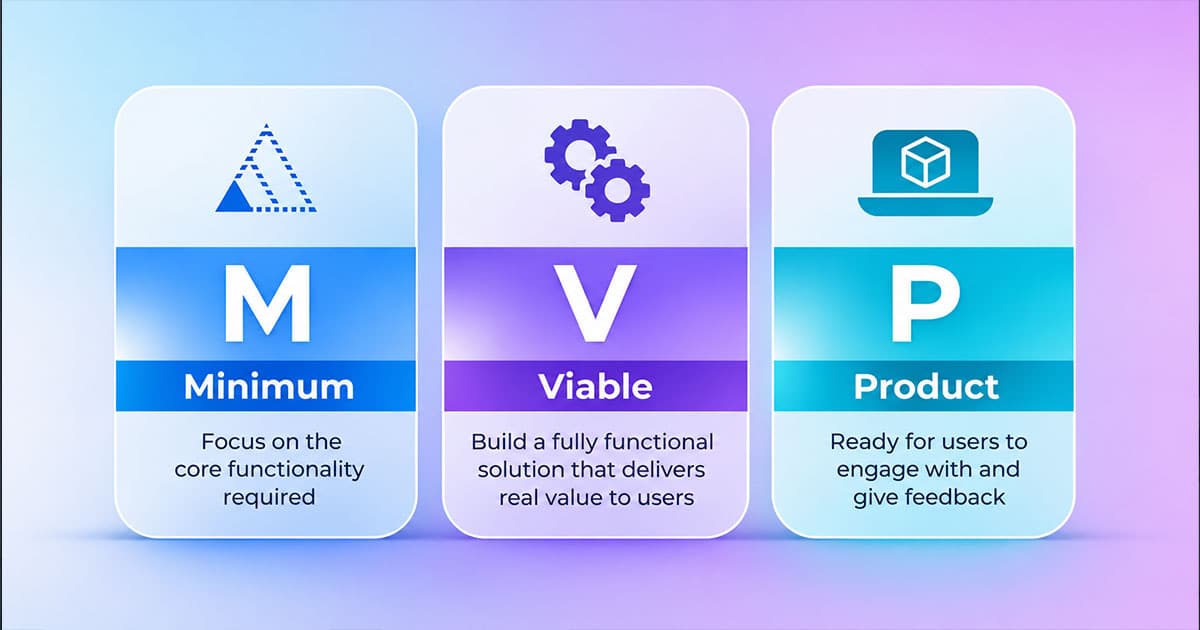
MVP in software development helps teams build a simple version of a product with only the most important features. The goal is clear. Test the idea early without spending too much time or budget. Many teams fail because they try to build everything at once. MVP helps avoid that mistake and keeps the focus on what really matters.
An MVP allows faster launch and real user feedback. You can understand user behavior and improve the product step by step. Instead of guessing, teams make decisions based on actual data. This makes the product more aligned with market needs.
For growing businesses, MVP works as a smart starting point. It reduces risk, improves clarity, and creates a strong foundation for future development.
What Is MVP In Software Development
MVP means a minimum viable product, the simplest version of a new product built with core features. The term MVP comes from the lean startup methodology and focuses on validated learning. Teams create a basic version with the least effort to test a product idea in a real market. Instead of adding extra features, product teams focus on essential features that solve key pain points.
An MVP helps gather user feedback and customer feedback from real users and early adopters. Product managers track user behavior, key metrics, and market demand during the product development cycle. A landing page or simple service can work as an MVP example. The goal is to validate the idea and understand if users love the concept.
MVP makes sense when resources are limited and strategic thinking is required, so teams must think carefully about MVP development cost and budgeting. It allows teams to iterate quickly, improve functionality, and plan future development based on user input and feedback.
How MVP In Software Development Shapes Product Strategy Early
MVP in software development helps teams shape product strategy with clarity from the start. It keeps the focus on real problems, not assumptions. Teams test ideas early, learn fast, and make smarter decisions based on user feedback and market demand while also adapting to emerging MVP development trends for startups in 2026.
Clear Problem Focus
A minimum viable product starts with a simple idea. The goal is to solve real pain points with core features. Product teams avoid extra features and focus on essential features only. This approach reduces waste and keeps the development process aligned with business goals.
CB Insights reports that 35% of startups fail due to no market need. MVP helps validate a product idea before full investment. Teams test with early users and understand if the concept fits the market.
This clarity improves strategic thinking and helps product managers define a strong user story. It sets a clear direction for future development and sharper MVP feature prioritization.
Early Market Validation
MVP helps validate market demand with real users. A basic version or even a landing page can test interest before full product development, while other approaches like prototypes or proofs of concept handle different risks in the MVP vs prototype vs POC decision. This step reduces risk and saves resources.
Dropbox used a simple explainer video as an MVP. It helped gather feedback and measure demand before building the full product. This approach confirmed strong user interest early.
Market testing with early adopters gives clear signals. Positive feedback shows product potential. Weak response helps teams adjust the idea before scaling.
Data Driven Decisions
MVP makes data the center of strategy. Teams track user behavior, key metrics, and customer feedback. Decisions rely on facts, not assumptions.
According to Harvard Business Review, companies that use data-driven strategies are 5% more productive and 6% more profitable. MVP supports this by enabling validated learning at every stage.
User input helps teams refine features and remove what does not work. This improves functionality and keeps the product aligned with user needs.
Faster Iteration Cycles
MVP approach supports quick changes. Teams iterate quickly based on feedback from real users. Agile methodology works well with MVP because both focus on speed and flexibility and fit naturally into a realistic software development timeline.
A report by McKinsey shows that agile teams can improve product delivery speed by up to 60%. MVP fits this model by enabling small, fast updates.
Each iteration improves the product. New features come from real feedback, not guesswork. This keeps the product relevant in a competitive market.
Smart Resource Allocation
MVP helps teams use limited resources wisely. The focus stays on the least amount of effort needed to deliver value. This reduces unnecessary development costs.
Startups in places like San Francisco often follow MVP to avoid waste. They build a minimum marketable product before scaling. This approach ensures that time and budget go to features users love.
Teams allocate resources based on real demand. This improves efficiency and supports long-term business growth within a structured startup software development process.
When To Build An MVP And When To Avoid It
MVP in software development helps teams decide the right move at the right time. It supports early validation, but not every product idea needs an MVP. Clear context, market demand, and technical feasibility shape that decision.
Early Stage Validation Need
A minimum viable product works best in the earlier stages of a product idea. Teams use it to validate market demand before investing heavily. Startups fail often due to poor validation. Reports show nearly 42% of startups fail because there is no real market need.
MVP development allows teams to test with early adopters and early customers. A simple landing page or functional version can attract early customers and gather user feedback, and for AI-heavy ideas a focused AI MVP development approach can speed this up. This helps validate the product concept with real users.
This stage focuses on core value and minimal features. The goal is to confirm that users interact with the product and provide feedback.
Clear Target Market Exists
MVP makes sense when the target audience is defined. Market research should already show clear user scenarios and pain points. Without a target market, MVP results can be misleading.
Product teams need to understand user behavior and user flow. Early user feedback becomes valuable only when it comes from the right audience. This improves validated learning and reduces wrong assumptions.
A focused MVP software development process ensures that only the essential features are built. This keeps the development process efficient and aligned with real demand.
Strong Learning Goal Present
MVP in software helps teams gather feedback and learn fast. If the goal is not clear, the MVP concept loses value. A strong learning goal ensures that every feature and user interaction provides insight.
Teams collect feedback through user stories, user interactions, and basic features. This supports an iterative process where each version improves based on data. Agile methodology fits well here.
Companies using agile development often release faster updates and improve user satisfaction. This makes MVP a strong tool for future development, post-MVP iteration, and structured growth after MVP launch.
Avoid When Full Compliance Needed
Some products require a complete product from day one. Industries like fintech or healthcare demand strict compliance and security. In such cases, a minimal feature set may not meet legal or technical requirements.
A basic version with just enough features may fail to satisfy early adopters if core functionality is incomplete. Technical limitations can also affect MVP functionality.
Here, a full software development approach works better. The development team must focus on stability, security, and complete user interface instead of minimal features, and in many cases plan for gradual software modernization of legacy systems.
Avoid When Concept Already Proven
MVP software development is less useful when the product concept is already validated. If previous projects or market data confirm demand, teams can move faster toward a final product.
Companies with strong monthly recurring revenue models often skip MVP and build a scalable solution directly. They rely on existing user behavior data and proven user flow.
In such cases, building an MVP may slow progress. A direct approach with all the features aligned to the target market can deliver better results and faster growth, as shown in a build vs buy custom software case study.
Types Of MVP In Software Development
MVP in software development comes in different forms based on the product idea and goals. Each type helps test market demand with minimal effort. The right choice depends on resources, target users, and the development process.
Landing Page MVP
A landing page MVP tests interest before full software development begins. It presents a clear product idea, core value, and basic features. The goal is to attract potential users and measure market demand with simple actions like signups.
Buffer started with a landing page MVP and validated demand before building the product. This approach reduced risk and guided future development.
Data shows that landing pages with a clear value proposition can convert 10–15% of visitors. That makes it a strong option to gather user feedback early and validate assumptions.
Concierge MVP
A concierge MVP delivers the service manually instead of building full software. The development team interacts directly with early users and collects detailed feedback. This helps understand user behavior without heavy investment.
Food delivery startups often used this model in early stages. They managed orders manually before building a full platform.
This MVP approach supports validated learning and helps refine core features. It also builds strong relationships with early adopters and improves future development decisions, similar to how a startup launched an MVP in 90 days with disciplined execution.
Wizard Of Oz MVP
A Wizard of Oz MVP looks like a complete product but runs manually behind the scenes. Users believe they interact with automated software, but the team handles operations manually.
Zappos followed this model in its early days. The founder listed products online and fulfilled orders manually to validate market demand.
This type helps test user interactions and user flow without building full functionality. It reduces development effort and allows teams to gather valuable feedback before scaling.
Single Feature MVP
A single feature MVP focuses on one core feature that solves a key problem. It avoids extra features and delivers a usable product with minimal complexity.
Instagram started as a simple photo-sharing app with limited functionality. It focused on one strong feature that users loved.
Research shows that products with focused features often achieve faster adoption. This MVP type helps product teams validate the core idea and plan future iterations based on real user feedback, which is central to any complete MVP in software development guide.
Feature Prioritization Frameworks For A Strong MVP
Feature prioritization defines how a minimum viable product delivers value with limited resources. Teams must choose what to build first and what to delay. Clear frameworks help reduce confusion, align the development process, and focus on core features that matter most to users.
MoSCoW Method
MoSCoW stands for Must have, Should have, Could have, and Won’t have. It helps product teams separate essential features from extra features. The focus stays on must-have items that support the core value of the product idea.
This framework keeps MVP development simple and structured. Teams avoid feature overload and reduce unnecessary effort.
Studies show that projects using structured prioritization methods improve delivery success rates by up to 20%. MoSCoW supports better decision-making and faster product delivery.
RICE Scoring Model
RICE stands for Reach, Impact, Confidence, and Effort. Product managers use it to score features based on data. It helps teams focus on features that bring the highest value with the least effort.
Each feature gets a score, and teams rank them accordingly. This supports data-driven decisions during the development process.
Intercom reported better prioritization clarity after adopting RICE. Teams improved alignment and reduced wasted development time by focusing on high-impact features.
Kano Model
Kano model focuses on customer satisfaction. It divides features into basic, performance, and delight categories. Basic features are essential, while delight features create strong user engagement.
For MVP in software development, teams focus on basic and some performance features. Delight features can wait for future development.
Research shows that improving basic features has a direct impact on user retention. This model helps teams align features with user expectations and feedback.
Value Vs Effort Matrix
Value vs effort matrix helps teams compare feature value against development effort. Features that offer high value and require low effort get priority.
This framework supports quick decisions and keeps MVP functionality focused. Teams avoid investing heavily in low-impact features.
According to ProductPlan, teams using this matrix improve prioritization efficiency by nearly 30%. It ensures that resources go toward features that matter most.
User Story Mapping
User story mapping organizes features based on user flow and user interactions. It helps teams understand how users interact with the product step by step.
Product teams break down the journey into smaller tasks and identify essential features needed for a usable product.
This approach improves clarity in MVP architecture design and supports better planning. It ensures that the product meets user needs and delivers a smooth experience from the start.
How To Validate An MVP Without Large User Bases
MVP in software development does not need a huge audience to prove value. Small and targeted validation can deliver strong insights. Teams can test product ideas, gather user feedback, and confirm market demand with limited but relevant users.
Focus On Early Adopters
Early adopters provide high-quality feedback. They understand new product ideas and are willing to test early versions. A small group of 20–50 users can offer strong insights if they match the target market.
Research by Nielsen Norman Group shows that testing with just 5 users can uncover up to 85% of usability issues. That makes small testing groups highly effective.
Product teams should focus on users who face real pain points. Their feedback helps validate the MVP concept and improves future development decisions.
Use Landing Page Testing
A landing page can validate interest without full MVP development. It presents the core value and key features. Teams track signups, clicks, and user behavior to measure demand.
According to Unbounce, average landing page conversion rates range between 9% and 12%. This data helps validate market demand early.
A clear message and strong call to action attract potential users. This method helps gather feedback and refine the product idea before building a functional version.
Run Small User Interviews
User interviews provide deep insights into user behavior and expectations. Direct conversations help teams understand pain points and validate assumptions.
Startups often conduct 10–15 interviews to identify patterns. This small sample size still delivers valuable feedback when users match the target audience.
Product managers and business analysts can use these insights to refine user stories and improve MVP functionality. This supports validated learning and better product decisions.
Track Key Metrics Early
Key metrics help measure MVP success even with few users. Teams should track user interactions, retention, and conversion rates. These indicators reveal how users respond to the product.
A report by Mixpanel shows that early retention rate is one of the strongest signals of product success. Even small data sets can show trends.
Data-driven insights help teams adjust features and improve user flow. This ensures that the MVP evolves based on real performance, not assumptions.
Leverage Prototype Testing
Prototype testing allows teams to validate ideas without full development. A clickable design or mockup can simulate user interactions and test functionality while also informing choices about the tech stack to support growth.
Tools like Figma help teams build prototypes quickly. Users can interact with the design and provide feedback before coding starts.
This approach reduces cost and development effort. It helps validate user interface, user flow, and core features while keeping resources focused on what matters most.
Metrics That Actually Measure MVP Success
MVP in software development needs clear metrics to measure real progress. Vanity numbers do not help. Teams must track data that reflects user behavior, product value, and market demand. The right metrics guide better decisions and future development along the broader software development timeline.
User Activation Rate
User activation rate shows how many users complete a key action after signup. This action can be account setup, first task, or core feature usage. It reflects how well the MVP delivers its core value.
Research from Amplitude shows that products with strong activation rates grow faster and retain more users. A 25% increase in activation can significantly improve retention.
Product teams should focus on a smooth user flow. Clear onboarding and simple functionality help users reach value quickly and improve activation performance.
Retention Rate
Retention rate measures how many users return after the first use. It shows if the product solves real pain points. High retention means users find value in the MVP.
According to Mixpanel, average 8-week retention across industries is below 20%. Products that exceed this benchmark show strong product-market fit signals, and thoughtful UX that reduces SaaS churn is often a key driver.
Tracking retention helps teams understand long-term value. It also guides future development and feature improvements based on real user behavior.
Customer Feedback Quality
Customer feedback is a key metric, not just a support tool. Detailed user feedback helps teams understand what works and what needs improvement.
Harvard Business Review highlights that companies using structured feedback loops improve customer satisfaction by up to 20%.
Teams should gather feedback through surveys, interviews, and direct user input. High-quality feedback supports validated learning and improves the MVP development process.
Conversion Rate
Conversion rate measures how many users take a desired action. This can be signup, upgrade, or purchase. It reflects how well the MVP meets market demand.
WordStream reports that average conversion rates range between 2% and 5% across industries. Higher rates indicate strong product value and clear messaging.
Improving conversion often requires refining the user interface and simplifying the user journey. Small changes can lead to better results and higher engagement.
Churn Rate
Churn rate shows how many users stop using the product. A high churn rate signals issues with functionality or user experience. It is a critical metric for MVP success.
Bain & Company states that reducing churn by 5% can increase profits by up to 25% to 95%. This highlights its importance.
Teams should analyze why users leave. Fixing those issues helps improve retention, strengthen the product, and support long-term growth.
How MVP In Software Development Supports Scalable Architecture
MVP in software development does more than validate a product idea. It sets the base for scalable architecture from the start. Teams focus on core features, flexible systems, and real user needs to support future growth without major rework.
Focus On Modular Architecture
MVP software development encourages modular design. Each component handles a specific function. This makes the system easier to scale and update over time and lays the groundwork for a future proof tech stack.
Gartner reports that modular architecture can reduce system complexity by up to 30%. It also improves maintainability.
Development teams can replace or upgrade parts without affecting the whole system. This supports future development and helps products grow smoothly as demand increases.
Select Scalable Technology Stack
Technology stack decisions during MVP development impact long-term scalability. Teams should choose tools and programming languages that support growth.
A Stack Overflow survey shows that scalable technologies like Node.js and cloud platforms dominate modern software development. They allow systems to handle increasing traffic efficiently.
The right stack ensures better performance and flexibility. It also reduces technical limitations when the product scales and attracts more users.
Design For Real User Load
MVP helps teams understand real user behavior early. This data helps design systems that can handle actual user interactions instead of assumptions.
Amazon found that a 100ms delay in load time can reduce conversions by 7%. Performance matters even at early stages.
Teams can optimize user flow and system response based on real usage. This improves scalability and ensures a better experience as the user base grows.
Support Iterative Development
MVP fits well with agile development and iterative process. Teams release a functional version and improve it through future iterations. This approach supports scalable architecture step by step.
McKinsey reports that agile teams improve delivery speed by up to 60%. Faster iterations help teams adapt to growth quickly.
Each update improves functionality and system performance. This keeps the product aligned with user needs and market demand without major rebuilds.
Reduce Technical Debt Early
MVP helps identify technical issues early in the development process. Teams can fix problems before they grow into larger risks. This reduces technical debt over time.
Stripe reports that developers spend up to 33% of their time dealing with technical debt. Early control can save time and cost.
A clean MVP architecture design ensures stability and scalability. It allows teams to focus on improvements instead of constant fixes during future development.
How GainHQ Strengthens MVP In Software Development
GainHQ supports MVP in software development with a clear and practical approach. The team helps shape a strong product idea and define core features before the development process starts. This ensures the minimum viable product focuses only on essential features. It reduces risk and saves resources in early stages.
The MVP development process at GainHQ follows agile methodology. The development team builds a functional version with just enough features to test market demand. Real users interact with the product and provide feedback. This helps validate the idea and improve user flow.
GainHQ also supports future development with scalable architecture and the right startup tech stack. Product teams gather user feedback, track user behavior, and plan future iterations based on real insights.
FAQs
How Does MVP In Software Development Fit Into Multi-Product Ecosystems?
MVP in software development can validate one product idea inside a larger ecosystem. Product teams test how the MVP connects with other services and user flow. This helps understand integration gaps before full-scale development and supports successful SaaS launch strategies.
Can MVP Development Work For Internal Enterprise Tools Instead Of Customer-Facing Products?
Yes, MVP development works well for internal tools. Development teams build a functional version with essential features for internal users. Early user feedback from employees helps improve efficiency and refine workflows before wider rollout.
How Do Teams Handle Data Privacy Risks During MVP Development?
Teams address data risks by limiting sensitive data use and applying basic security in the development process. MVP in software focuses on minimal features, so exposure stays low. Technical feasibility and compliance checks guide safer validation.
Does MVP In Software Development Support Experimenting With Different Monetization Models?
Yes, MVP software development allows testing pricing strategies with early customers. Teams validate subscriptions, freemium models, or one-time pricing. Real user behavior and feedback help identify which model fits the target market best.
How Does MVP Development Impact Cross-Functional Team Collaboration?
MVP development improves alignment between product managers, developers, and business analysts. Clear user stories and a focused product idea keep everyone aligned. This reduces confusion and supports faster decisions across the development team, especially as you apply scaling engineering team strategies.