
Engineering KPIs For Faster Releases And Better Quality
by Daniel Wright | May 7, 2026 | Technology & Innovation
Table of Contents
- What Are Engineering KPIs
- Key Engineering KPIs Every Software Team Should Track
- How DORA Metrics Shape Modern Engineering Performance
- Best Methods To Measure Engineering Productivity
- Common Engineering KPI Mistakes That Hurt Team Performance
- How To Align Engineering KPIs With Business Goals
- Tools And Dashboards That Help Track Engineering KPIs Effectively
- Best Practices To Build A Data Driven Engineering KPI Framework
- Final Thoughts
- FAQs
Engineering teams move fast. But speed alone does not guarantee success. Missed deadlines, rising technical debt, poor release quality, and team burnout can quietly slow down growth. That is where engineering KPIs become important. They help teams understand what works, what fails, and where improvement is needed.
Strong engineering KPIs give clear visibility into productivity, delivery performance, code quality, and system reliability. Managers make better decisions. Developers spot bottlenecks faster. Businesses also connect engineering efforts with real business outcomes.
Many companies track metrics, but very few track the right ones. This guide breaks down the most important engineering KPIs, how to measure them, and how high-performing teams use them to improve software delivery without creating pressure or unhealthy competition.
What Are Engineering KPIs
Engineering KPIs are key performance indicators that measure engineering performance across the development process. They help an engineering team track progress, improve code quality, control project costs, and connect engineering efforts with measurable business outcomes. Software engineering KPIs give a clear picture of how work performed by the development team affects business success, customer satisfaction, and project performance.
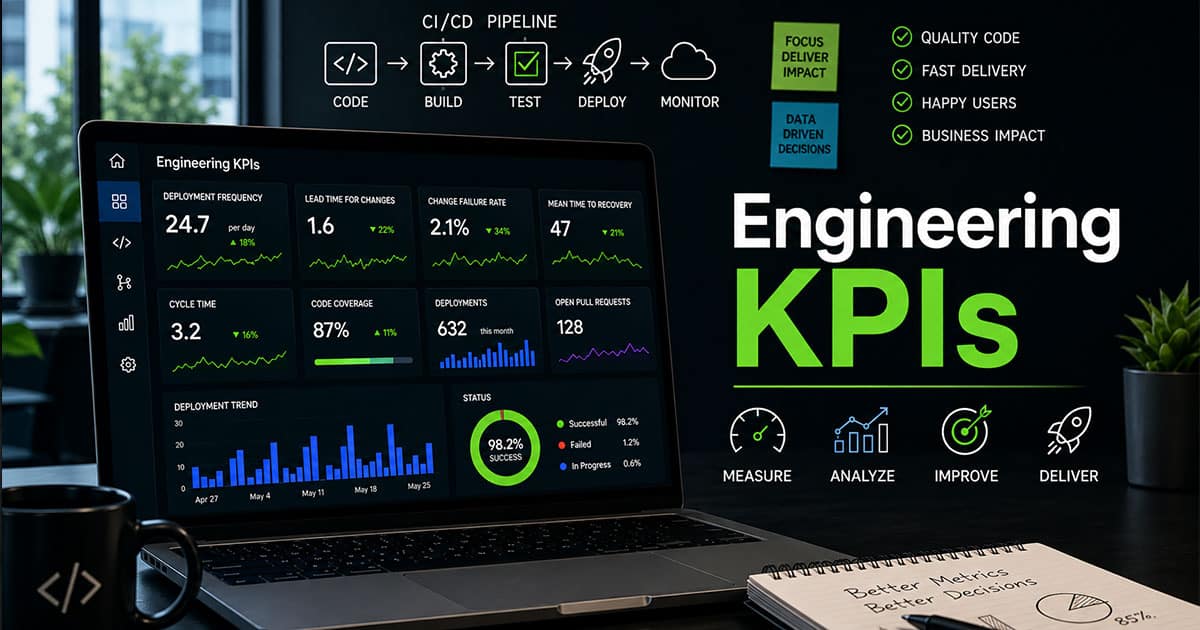
Common engineering metrics include deployment frequency, cycle time, lead time, failure rate, average downtime, sprint velocity, and code coverage. Teams also monitor pull request activity, code reviews, test coverage, developer sentiment, and developer experience. DORA metrics are also an important KPI framework in the engineering industry because they measure delivery speed and stability.
Strong metrics help an engineering team meets strategic goals, improve on-time delivery, reduce support costs, and achieve real business outcomes.
Key Engineering KPIs Every Software Team Should Track
Strong engineering KPIs help teams measure delivery speed, code quality, stability, and developer experience. The right metrics show where projects slow down and where teams perform well. Good data also connects engineering efforts with business outcomes, customer satisfaction, and long-term growth.
Deployment Frequency
Deployment frequency measures how often a development team releases code to production. High-performing teams deploy small code changes more often. That reduces risk and improves feedback cycles. DORA research shows elite teams deploy on demand or multiple times per day. Low performers may release updates once a month or less.
Frequent releases help engineering teams respond faster to customer needs. Teams also fix bugs earlier and launch every new feature with less pressure. Stable deployment frequency often points to a healthy development process, strong automation, and better collaboration between developers and operations teams.
Lead Time For Changes
Lead time tracks the average time between a code commit and production release. Short lead time usually means fewer bottlenecks in code reviews, testing, and approvals. DORA benchmarks show elite teams keep lead time under one day, while low performers may take months.
Long delays often increase project costs and reduce developer satisfaction. Slow delivery also affects customer satisfaction and business success. Teams with shorter lead time can adapt faster to market shifts. They also maintain better project performance and improve on time delivery across software engineering projects.
Change Failure Rate
Change failure rate measures how many deployments create bugs, outages, or rollback events. It is one of the most important quality metrics in software engineering KPIs. Top engineering teams usually maintain a failure rate between 0% and 5%, according to recent DORA reports.
Low failure rates improve customer trust and reduce support costs. Teams also spend less developer time fixing production issues. Stable releases create a better developer experience and improve measurable business outcomes. Strong testing, code reviews, and code coverage often help reduce deployment failures over time.
Cycle Time
Cycle time measures how long actual work takes from start to completion. It gives a clear picture of workflow efficiency inside the engineering team. Short cycle time usually means fewer blockers and better sprint planning. Teams also track pull request reviews and work scheduled versus work performed to improve accuracy.
Long cycle time often signals hidden problems in the development process and unrealistic software development timelines. Delays in approvals, unclear engineering goals, or limited internal staff can slow projects delivered to clients. Better cycle time improves productivity and helps engineering teams manage project revenue, running costs, and project margin more effectively.
Code Quality And Coverage
Code quality reflects how reliable, secure, and maintainable software remains over time. Teams usually track code coverage, pull request quality, bug counts, and technical debt. Poor code quality increases average downtime, raises total cost, and creates long-term environmental costs for the business.
Good code reviews and strong test coverage improve software stability. Developers also spend less time fixing old issues and more time building valuable features. High-quality code supports better operating cash flow and protects expected cash flows from major disruptions. Strong engineering metrics help teams balance speed with stability instead of chasing a single metric.
How DORA Metrics Shape Modern Engineering Performance
DORA metrics help software teams measure speed, stability, and delivery performance with real data. Many companies now use DORA metrics as a standard framework for engineering KPIs, especially in organizations adopting DevOps best practices. The model helps teams improve engineering performance without relying on guesswork or vanity metrics.
Deployment Frequency
Deployment frequency tracks how often a development team pushes code to production. Elite engineering teams deploy multiple times per day, according to the latest DORA research. Lower-performing teams may release updates only once a month or less.
Frequent deployments reduce risk because teams release smaller code changes. Small updates are easier to test, review, and fix. Strong deployment frequency also improves customer satisfaction because users receive faster updates, bug fixes, and new feature releases without long delays in the development process.
Lead Time
Lead time measures the average time between a code commit and production release. It helps engineering teams identify delays in code reviews, approvals, testing, or deployment pipelines. Recent DORA reports show elite teams maintain lead time under one day.
Short lead time improves project performance and developer satisfaction. Teams can respond faster to customer feedback and business needs. Faster delivery also lowers project costs because developers spend less time waiting for approvals or fixing outdated code changes during long release cycles.
Change Failure Rate
Change failure rate measures how often deployments create production failures, outages, or rollback events. High-performing engineering teams usually maintain a failure rate below 5%. That creates a more stable software environment and lowers average downtime.
Low failure rates protect business outcomes and reduce support costs. Customers trust products that remain stable after updates. Strong code quality, better test coverage, and detailed pull request reviews often help teams reduce deployment failures across software engineering projects.
Mean Time To Recovery
Mean time to recovery, also called MTTR, measures how quickly teams restore systems after failures. Fast recovery time shows strong operational readiness and healthy engineering work practices. DORA research shows elite teams often recover within one hour.
Slow recovery increases total cost and damages customer trust. Long outages also affect operating cash flow and project revenue. Teams with fast recovery processes usually maintain better monitoring systems, clearer workflows, and stronger collaboration between developers and operations staff.
Balanced Performance Metrics
DORA metrics create a complete picture of engineering performance because they balance speed and stability together. A single metric alone cannot measure business success or developer experience accurately. Fast releases mean little if systems constantly fail after deployment.
Balanced engineering metrics help leadership connect engineering goals with measurable business outcomes. Teams also gain a clearer view of project margin, delivery quality, and capacity utilization. Modern engineering organizations now use DORA metrics as a north star metric framework for long term improvement instead of chasing isolated numbers.
Best Methods To Measure Engineering Productivity
Engineering productivity should focus on outcomes, not constant surveillance. Strong engineering KPIs help leaders understand team performance without tracking every minute of developer time. Smart measurement methods improve developer experience, reduce burnout, and create better business outcomes across the development process, especially as organizations apply them to scaling engineering teams for growth.
Focus On Delivery Outcomes
High performing engineering teams focus on projects delivered, release quality, and customer satisfaction instead of raw activity numbers. Metrics like deployment frequency, lead time, and on time delivery provide a clearer picture of engineering performance than hours worked.
Recent GitLab research shows developers lose nearly 25% of productive time due to interruptions and unnecessary meetings. Teams perform better when leadership measures real business outcomes instead of monitoring every pull request or code change. Strong delivery metrics also improve developer satisfaction and support long term business success.
Track Cycle Time
Cycle time measures how long actual work takes from start to release. It helps engineering teams identify delays without creating pressure around individual productivity. Short cycle time often reflects a healthier development process and stronger collaboration between internal staff and external staff.
Long delays may signal approval bottlenecks, unclear engineering goals, or overloaded developers. Teams can improve project performance by reducing unnecessary reviews and simplifying workflows. Better cycle time also lowers project costs, improves project margin, and supports faster delivery of every new feature.
Use Developer Feedback
Developer sentiment is one of the most overlooked engineering metrics today. Surveys, retrospectives, and team feedback sessions often reveal issues that dashboards cannot show. Burnout, unclear priorities, and excessive context switching directly affect code quality and engineering efforts.
According to Stack Overflow research, developer happiness strongly influences productivity and retention. Positive feedback from developers also improves collaboration and innovation. Teams with strong developer experience usually maintain lower failure rate, better test coverage, and more stable project revenue across engineering projects.
Measure Code Quality
Code quality provides a better productivity signal than the number of lines written. Metrics like code coverage, pull request reviews, bug rates, and average downtime help teams maintain stable systems while moving fast. Strong quality metrics reduce long term support costs and protect expected cash flows.
Poor code often increases total cost because developers spend more time fixing issues later, and hidden expenses accumulate across projects, similar to broader software development hidden costs. Better code reviews and automated testing improve engineering work across the entire software lifecycle. Teams also avoid technical debt that slows future development and affects measurable business outcomes.
Align Metrics With Business Goals
Engineering KPIs should support strategic goals instead of becoming vanity numbers. A single metric rarely gives a complete picture of team performance. Smart engineering leaders connect engineering metrics with customer retention, active clients, operating cash flow, and measurable business outcomes.
Balanced metrics help teams understand how engineering efforts affect business success. Leadership can also track project relative performance, budgeted cost, and capacity utilization more accurately. Strong alignment between engineering work and business outcomes creates healthier teams without creating a culture of micromanagement.
Common Engineering KPI Mistakes That Hurt Team Performance
Many engineering teams track metrics but still struggle with productivity, delivery delays, and poor developer experience. Weak engineering KPIs often create pressure instead of improvement. The wrong measurement strategy can hurt collaboration, reduce code quality, and disconnect engineering efforts from real business outcomes.
Too Much Focus On Output
Some engineering leaders measure productivity through the number of pull requests, commits, or hours worked. That approach creates unhealthy pressure across the development team. Developers may rush actual work just to hit activity targets instead of solving important problems.
Research from DX shows teams perform better when they focus on outcomes instead of raw activity metrics. Strong engineering performance depends on code quality, customer satisfaction, and project performance. High output means little if projects delivered fail to support strategic goals or measurable business outcomes.
Dependence On One Metric
A single metric never gives a complete picture of engineering work. Some teams focus only on deployment frequency or sprint velocity while ignoring failure rate, average downtime, or developer sentiment. That creates blind spots inside the development process.
Balanced engineering metrics help teams measure both speed and stability. DORA metrics became popular because they combine delivery performance with reliability. Strong engineering KPIs should connect code change quality, lead time, and customer experience instead of pushing teams toward one narrow target.
Ignoring Developer Experience
Poor developer experience often damages long term business success. Many companies track project costs and delivery speed but ignore developer satisfaction. Burnout, tool frustration, and constant interruptions reduce engineering performance across software engineering projects.
Recent GitHub surveys show developers lose several productive hours each week due to inefficient workflows and context switching. Better developer experience improves code reviews, test coverage, and code coverage. Positive feedback from developers also helps teams maintain stronger collaboration and lower support costs over time.
Disconnected Business Goals
Engineering KPIs should support real business outcomes. Some companies track engineering metrics without linking them to customer retention, operating cash flow, or project revenue. That weak connection makes engineering work harder to justify during business reviews.
Strong alignment between engineering goals and business outcomes creates better decision making. Teams should understand how code quality, lead time, and on time delivery affect active clients, project margin, and expected cash flows. Clear alignment also helps leadership prioritize engineering projects more effectively.
Failure To Update KPIs
Engineering KPIs evolve as teams grow, products change, and customer expectations shift. Old metrics may stop reflecting current priorities after a company scales. Some engineering teams continue tracking outdated goals that no longer support the business.
Modern software teams regularly review metrics to maintain a clear picture of project relative performance. New priorities may require stronger focus on capacity utilization, outsourcing rate, environment costs, or average time to recovery. Flexible KPI strategies help engineering teams adapt faster without hurting delivery quality or developer time.
How To Align Engineering KPIs With Business Goals
Engineering KPIs create more value when they support real business priorities. Strong alignment helps leadership connect engineering performance with revenue growth, customer satisfaction, and operational efficiency. Clear business-focused metrics also improve decision making across the entire development process.
Connect Metrics To Revenue
Engineering teams should understand how engineering work affects project revenue and business success. Faster releases, stable systems, and better code quality often improve customer retention and active clients. That direct connection makes engineering efforts easier to measure at the business level.
Companies with strong digital performance often achieve higher operating cash flow because they release features faster and reduce downtime. Better deployment frequency and lower failure rate also help businesses protect expected cash flows. Clear financial alignment gives engineering teams a stronger role in long term growth strategies.
Prioritize Customer Experience
Customer satisfaction should remain part of every engineering KPI strategy. Slow systems, frequent outages, and unstable releases damage trust quickly. Metrics like average downtime, lead time, and on time delivery help teams measure the customer impact of software engineering projects.
Recent research from PwC shows nearly one third of customers leave a brand after a single poor experience. Strong engineering metrics help teams maintain reliability while improving delivery speed. Better customer experience also creates measurable business outcomes through stronger retention and higher project margin.
Balance Speed And Stability
Some engineering teams chase faster releases without protecting stability. That approach often increases support costs and technical debt. DORA metrics solve this problem by balancing deployment frequency with change failure rate and recovery speed.
Balanced engineering KPIs create a complete picture of project performance. Teams can release every new feature faster while maintaining strong code coverage and code reviews. Better balance also improves developer satisfaction because developers spend less time fixing unstable code changes after deployment.
Use Financial KPIs
Engineering leaders should connect software delivery with financial metrics like total cost, budgeted cost, actual cost, and payback period. Financial KPIs help businesses evaluate whether engineering projects generate real business outcomes or create unnecessary running costs.
Clear financial visibility improves project relative decisions across teams and leadership groups. Engineering managers can also track net present value and capacity utilization more accurately. Better cost performance indicator tracking helps businesses reduce waste while improving long term returns from software investments.
Review KPIs Regularly
Engineering KPIs evolve as products, markets, and customer needs change. Metrics that worked during early growth stages may lose value later. Regular KPI reviews help engineering teams maintain alignment with strategic goals and business priorities.
Modern development teams adjust metrics based on developer experience, outsourcing rate, internal staff capacity, and changing customer expectations. Strong review processes also create a clear picture of work performed versus work scheduled. Flexible KPI strategies help businesses adapt faster without hurting engineering performance or developer time.
Tools And Dashboards That Help Track Engineering KPIs Effectively
Modern engineering teams rely on dashboards and analytics tools to measure delivery speed, code quality, and team performance. The right platform gives a clear picture of engineering work without manual tracking. Strong visibility also improves decision making across software engineering projects.
Jira Dashboards
Jira remains one of the most widely used tools for tracking engineering KPIs and project performance. Development teams use Jira dashboards to monitor sprint velocity, cycle time, lead time, and work scheduled versus actual work completed.
Atlassian reports that over 300,000 companies use Jira for project tracking and workflow management. Custom dashboards help engineering teams track pull request progress, deployment frequency, and delivery bottlenecks. Better visibility also improves on time delivery and supports stronger collaboration between developers, product teams, and leadership.
GitHub Insights
GitHub Insights helps teams measure code quality and developer activity across the development process. Teams can track code reviews, pull request size, code change frequency, and deployment workflows directly from repositories.
GitHub’s 2024 developer reports show high performing teams prioritize smaller pull requests and faster review cycles. Better review practices improve developer experience and reduce failure rate after deployment. GitHub dashboards also help teams maintain stronger test coverage and code coverage without adding unnecessary manual reporting tasks.
Datadog Monitoring
Datadog helps engineering teams monitor system health, application performance, and average downtime in real time, similar to broader SaaS monitoring tools used across modern cloud products. Fast alerts allow developers to respond quickly before outages affect customer satisfaction or operating cash flow.
Many modern software companies now use observability platforms like Datadog and broader software observability practices to support DORA metrics and reliability goals. Teams can monitor recovery time, infrastructure stability, and support costs from one dashboard. Better monitoring also creates a more complete picture of engineering performance across production environments.
Power BI And Tableau
Business intelligence tools like Power BI and Tableau help companies connect engineering metrics with measurable business outcomes. Leadership teams can combine engineering KPIs with project revenue, project margin, customer retention, and financial data.
Custom dashboards improve visibility across departments and strategic goals. Teams can also monitor budgeted cost, actual cost, and capacity utilization in one place. Better reporting helps engineering leaders explain how engineering efforts support real business outcomes instead of isolated technical goals.
Developer Experience Platforms
Developer experience platforms help teams measure developer sentiment, workflow efficiency, and productivity blockers. Tools like DX, LinearB, and Jellyfish focus on developer time, collaboration patterns, and engineering goals instead of vanity metrics.
Recent industry surveys show developers lose several hours each week due to interruptions and unclear priorities. Better developer experience improves code quality, deployment frequency, and customer outcomes over time. Strong dashboards also help engineering teams identify burnout risks before they affect business success or project performance.
Best Practices To Build A Data Driven Engineering KPI Framework
A strong engineering KPI framework helps teams measure performance with clarity and consistency. The right structure improves decision making, delivery quality, and business alignment. Data-driven engineering metrics also help teams reduce guesswork and focus on measurable business outcomes that matter.
Set Clear Engineering Goals
Every engineering KPI should connect directly to business success and strategic goals. Teams need clear targets before they start measuring engineering performance. Without direction, metrics quickly become confusing and lose value across the development process.
Strong engineering goals help teams prioritize code quality, deployment frequency, customer satisfaction, and project performance. Clear targets also improve developer satisfaction because teams understand how engineering work supports measurable business outcomes. Research from McKinsey shows organizations with aligned goals often achieve higher productivity and stronger project delivery results.
Use Balanced Metrics
Balanced engineering metrics create a more complete picture of team performance. Fast releases alone do not guarantee stable systems or better customer outcomes. Strong KPI frameworks combine speed, quality, stability, and developer experience instead of focusing on a single metric.
DORA metrics remain one of the best examples of balanced measurement in software engineering KPIs. Teams should track lead time, failure rate, average downtime, and code coverage together. Better balance also reduces support costs and protects operating cash flow across engineering projects and production systems.
Automate Data Collection
Manual reporting often creates inaccurate data and wastes developer time. Automated dashboards help engineering teams collect real-time insights from pull requests, deployments, code reviews, and production systems without extra work.
Modern engineering tools now integrate directly with GitHub, Jira, Datadog, and CI/CD pipelines. Automation improves data accuracy and gives leadership a clear picture of work performed versus work scheduled. Better visibility also helps teams identify bottlenecks earlier and improve project relative performance across the development lifecycle.
Review KPIs Frequently
Engineering KPIs evolve as business priorities, customer expectations, and team structures change. Metrics that worked during early growth stages may no longer fit larger engineering teams or complex software products.
Regular KPI reviews help organizations adjust engineering goals before problems affect project revenue or customer satisfaction. Teams can also refine metrics around sprint velocity, capacity utilization, and developer sentiment based on actual business outcomes. Flexible KPI frameworks support long term growth without increasing unnecessary running costs or pressure on internal staff.
Focus On Team Improvement
The best engineering KPI frameworks support improvement instead of punishment. Metrics should help development teams identify blockers, improve workflows, and strengthen collaboration. Fear-based measurement often damages developer experience and lowers code quality over time.
Healthy engineering cultures use metrics to create positive feedback loops and smarter planning. Teams with strong developer experience usually maintain lower failure rate, faster lead time, and better on time delivery. Better collaboration also improves customer trust, project margin, and overall business performance across software engineering projects.
Final Thoughts
Engineering KPIs help software teams move beyond guesswork. The right metrics create a clear picture of engineering performance, delivery speed, code quality, and business impact. Strong KPI frameworks also help teams improve customer satisfaction, reduce project costs, and support long term business success.
Modern engineering teams should focus on balanced engineering metrics instead of chasing a single metric. DORA metrics, developer experience, lead time, deployment frequency, and code coverage all play an important role in measuring real progress. Metrics should support improvement, not pressure.
A data-driven approach helps engineering teams align engineering goals with measurable business outcomes. Teams that track the right engineering KPIs can improve productivity, strengthen collaboration, and deliver better software with greater confidence.
FAQs
How Often Should Engineering KPIs Be Reviewed?
Engineering KPIs should be reviewed monthly or quarterly based on project size and business goals. Regular reviews help engineering teams track progress, improve project performance, and adjust metrics as priorities change across the development process.
Can Small Engineering Teams Use DORA Metrics?
Yes. Small engineering teams can use DORA metrics to measure deployment frequency, lead time, and failure rate without complex systems. Simple engineering metrics often give a clearer picture of code quality, developer experience, and delivery speed.
Do Engineering KPIs Improve Customer Satisfaction?
Yes. Strong engineering KPIs improve customer satisfaction by reducing average downtime, improving on time delivery, and helping teams release every new feature faster. Better code coverage and code reviews also improve software stability and real business outcomes.
Which KPI Is Most Important For Software Engineering Teams?
No single metric works as the most important KPI for every engineering project. Most high-performing teams use balanced engineering metrics like deployment frequency, cycle time, code quality, and failure rate to create a complete picture of engineering performance.
Can Poor KPI Tracking Increase Project Costs?
Yes. Weak engineering KPI tracking often increases project costs, support costs, and running costs because teams miss bottlenecks and delivery issues early. Poor visibility also affects project margin, developer satisfaction, and measurable business outcomes across software engineering projects.


