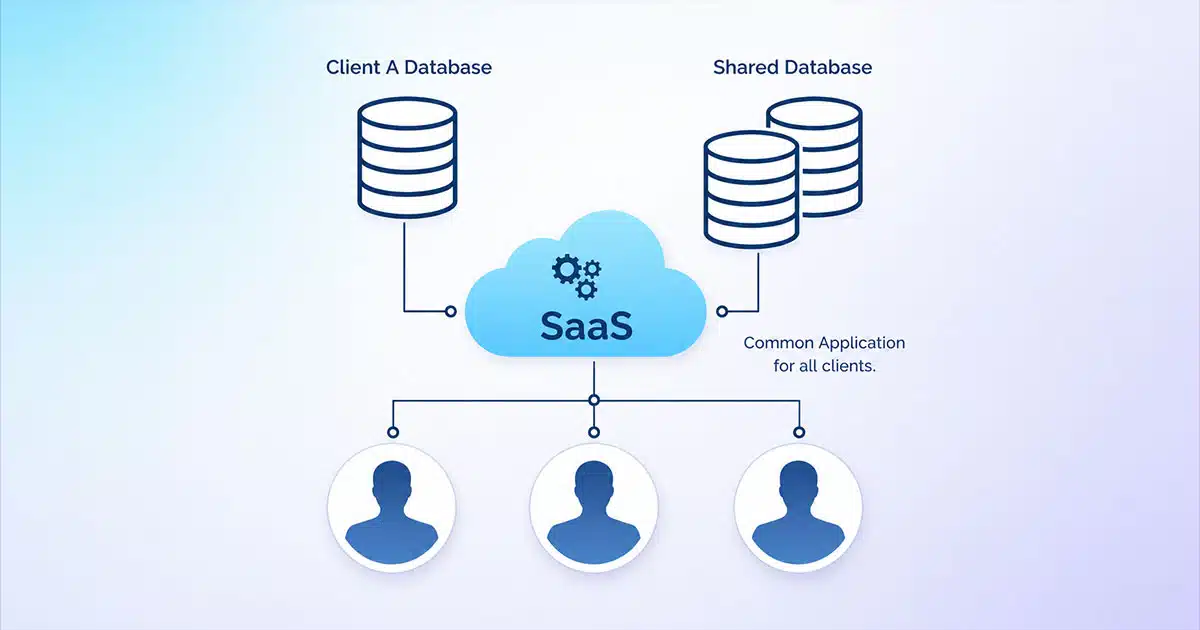
Multi-tenant architecture shapes how modern SaaS platforms scale with confidence. Businesses today must serve multiple tenants without raising costs or complexity. In a multi-tenant software architecture, a single instance of a software application supports multiple customers and multiple users. Different tenants share the same infrastructure, yet tenant data stays protected through data isolation and strict access controls.
Unlike single-tenant architecture, where one tenant runs on a dedicated instance or separate virtual machine, a multi-tenant model relies on shared infrastructure and shared resources. SaaS providers use a multi-tenant database or single database with tenant identification to protect customer data. Cloud service providers allocate computing resources, networking resources, and compute power efficiently. Multi tenancy drives cost efficiency, consistent updates, and reduce costs across multiple clients while maintaining strong data security in a shared environment.
What Is Multi-Tenant Architecture
Multi-tenant architecture is a software design model where a single instance of a software application serves multiple tenants. In this multi-tenant system, multiple customers and multiple users share the same infrastructure. Each tenant has its own data, but the application code and underlying infrastructure remain shared. A multi-tenant software architecture is common in software as a service and cloud computing platforms.
Unlike single-tenant architecture, where one tenant runs on a dedicated instance or separate virtual machine, a multi-tenant model uses shared resources. A multi-tenant database or single database stores tenant data with strict access control and tenant identification. Data isolation ensures one tenant cannot access another’s data. SaaS providers rely on this tenant architecture to reduce costs, improve cost efficiency, and deliver consistent updates across different tenants.
Single Tenant Vs Multi-Tenant Architecture
Architecture choice shapes cost, scalability, and control. Business leaders must weigh performance, security, and long-term flexibility. Single-tenant and multi-tenant architecture follow very different models. Each option fits different SaaS solutions, compliance needs, and growth strategies, and sits within broader best practices of SaaS architecture.
Resource Allocation
Single-tenant architecture assigns a dedicated instance, single server, or separate virtual machine to one tenant. Each customer uses isolated compute power, networking resources, and data storage. No other users share the same infrastructure. Performance stays predictable because computing resources remain exclusive.
Multi-tenant architecture relies on shared infrastructure. Multiple tenants use a single software instance or a single application instance. A multi-tenant system distributes capacity across multiple servers based on demand. Analysts estimate that multitenancy can improve hardware utilization by over 60% compared to single tenancy. Strong tenant isolation, tenant identification, and access control protect customer data even inside a shared environment.
Scalability And Deployment
Multi-tenant solutions scale fast. SaaS providers add capacity to the underlying infrastructure instead of creating multiple instances for every new client. A multi-tenant environment supports multiple customers inside one software instance. Gartner reports that over 70% of SaaS providers use a multi-tenant model to scale efficiently.
Single-tenant deployments require a new application instance for each customer. Each tenant may need its own schema, single database, or dedicated stack. That approach increases setup time and maintenance fees. Yet scaling for one tenant remains simple because resources do not affect different tenants.
Maintenance And Updates
Multi-tenant software architecture allows centralized updates. SaaS providers update the same application once. All tenants share the new features at the same time. Consistent updates reduce operational effort and support cost savings multitenancy delivers.
Single-tenant environments demand separate update cycles. Each dedicated instance needs patches and security upgrades. Version gaps can appear across multiple clients. That increases data center operations complexity. Over time, management costs grow as the number of tenants expands.
Cost Structure
Multi-tenant solutions offer strong cost efficiency. Shared resources and shared infrastructure reduce expenses across multiple customers. Studies show multi-tenant SaaS can lower total cost of ownership by up to 40%. Cost savings come from a single software instance serving many users.
Single-tenant architecture carries higher pricing. Enterprises often pay 15 to 30 percent more for a dedicated instance. Separate virtual machines, isolated databases, and additional logic increase infrastructure spending. That premium suits organizations that value full control over own data and strict data isolation.
Security And Compliance
Security depends on design, not just architecture type. Multi-tenant applications protect tenant data through strict access controls, tenant identification, and logical data isolation inside a multi-tenant database. Modern cloud service providers invest billions in data security across shared environments.
Single-tenant models provide physical or virtual separation by default. One tenant runs on its own dedicated instance or even on premises hardware. No risk exists of exposure to other’s data within the same infrastructure. Financial services and healthcare firms often prefer single tenant when regulatory pressure demands maximum isolation.
Single Tenant Vs Multi Tenant Architecture Comparison Table
A quick side-by-side view helps clarify the trade-offs. Business leaders, SaaS providers, and technical teams can use this table to evaluate cost efficiency, scalability, data isolation, and long-term flexibility before choosing a tenant architecture.
| Feature | Single Tenant Architecture | Multi-Tenant Architecture |
|---|---|---|
| Infrastructure Model | Dedicated instance for one tenant | Shared infrastructure for multiple tenants |
| Software Instance | Separate software instance per customer | Single instance serves multiple customers |
| Database Setup | Single database or own schema per tenant | Multi-tenant database with tenant identification |
| Resource Allocation | Dedicated compute power and networking resources | Shared resources across different tenants |
| Performance Stability | No noisy neighbor effect | Possible noisy neighbor risk without proper controls |
| Scalability | Provision multiple instances per client | Scale shared environment across multiple servers |
| Cost Structure | Higher maintenance fees and infrastructure costs | Strong cost savings multitenancy enables |
| Data Isolation | Physical or virtual separation by default | Logical data isolation with strict access control |
| Customization | High flexibility per customer | Limited deep customization per tenant |
| Maintenance | Updates applied to each application instance | Consistent updates across same application |
| Security Control | Full control over own data and environment | Strong data security with careful design |
| Ideal For | Regulated industries and compliance needs | SaaS solutions focused on scale and affordability |
Architecture choice depends on growth plans, compliance rules, and performance expectations. Single tenant fits strict isolation needs. Multi-tenancy fits scalable cloud computing and cost-efficient software as a service platforms.
Types Of Multi Tenant Architecture Models
Multi-tenant architecture does not follow one fixed pattern. Data isolation, cost efficiency, and scalability depend on the database model you choose. Each multi-tenant solution balances security, operational effort, and performance in a different way, especially when designing scalable SaaS tools that power global business growth.
Separate Database Per Tenant
Separate database per tenant offers the highest level of tenant isolation. Each customer receives a dedicated database instance inside the multi-tenant environment. Tenant data stays physically separated. Risk of exposure to other’s data drops significantly. Enterprises in finance and healthcare often prefer this model due to strict compliance rules.
Each database can scale independently and use its own encryption keys. Custom schema changes affect only one tenant. But costs rise quickly. Managing hundreds of database instances increases data center operations overhead. Industry benchmarks show infrastructure costs can rise 20–30% compared to shared models when tenant counts exceed 200.
Shared Database With Separate Schemas
Shared database with separate schemas creates logical separation inside one database engine. Each tenant has its own schema, yet all tenants share the same infrastructure. This model balances control and cost savings multitenancy provides.
Schema-level separation reduces data leakage risk compared to fully shared tables. Tenant-specific customization remains possible. However, schema updates must run across every tenant schema. As tenant numbers grow beyond 1,000, database object limits and migration time increase. Many SaaS providers choose this model when serving mid-market customers who need moderate flexibility without full dedicated instance costs.
Shared Database With Shared Schema
Shared database with shared schema represents the most scalable multi-tenant model. All tenants use the same tables. A tenant identification column separates customer data. Queries filter by tenant ID to enforce access control and data isolation.
This design maximizes resource utilization. Cloud computing studies show pooled database models can improve hardware efficiency by more than 60%. Onboarding new tenants requires no new database provisioning. Yet careful design remains critical. Missing tenant filters can expose customer data. Customization options stay limited because every tenant shares the same application code and schema structure.
Hybrid Multi-Tenant Model
Hybrid multi tenant architecture combines multiple approaches. Standard customers use a shared schema model. High-value clients receive a dedicated instance or separate database. This flexible tenant architecture supports different pricing tiers.
Large SaaS providers often adopt hybrid designs. Gartner reports that over 50% of enterprise SaaS platforms now use mixed isolation strategies to serve diverse compliance needs. Hybrid models protect sensitive tenant data while maintaining cost efficiency for smaller clients. Complexity increases, but the approach delivers both scalability and strong data security within the same infrastructure.
Core Strategies For Enterprise Multi-Tenant SaaS Implementation
Enterprise SaaS platforms must serve multiple tenants without sacrificing data security or performance. Multi-tenant architecture demands structure and discipline. Clear strategies reduce risk, control costs, and support scale across a complex multi-tenant environment, aligning closely with broader SaaS scalability strategies for sustainable growth.
Tenant Isolation And Security
Tenant isolation sits at the center of every multi-tenant system. Logical data isolation ensures one tenant never sees other’s data inside the same infrastructure. Middleware enforces tenant identification at every request. Developers should not rely on manual filters inside application code.
Encryption protects tenant data at rest and in transit. IBM reports the average data breach cost reached $4.45 million in 2023. Strong access control, row-level security, and strict validation reduce that risk, especially when aligned with forward-looking SaaS security best practices for 2026. SaaS providers must design isolation into the architecture, not treat it as an afterthought.
Resource Allocation And Performance
Resource allocation defines performance stability. A multi-tenant model uses shared resources, so limits matter. Tenant quotas prevent one customer from exhausting compute power or data storage. Throttling policies protect the shared environment from overload.
Monitoring tools track tenant-specific metrics such as query latency and API usage. Load balancers distribute traffic across multiple servers. Auto scaling policies adjust computing resources based on demand, reflecting the cloud-first future of SaaS development in a cloud-first world practices. Studies show efficient resource pooling can reduce infrastructure waste by over 30% compared to single-tenant deployments.
Customization And Configuration
Enterprise clients often require flexibility. Configurable features allow tenants to adjust workflows without breaking the same application used by others. Feature flags enable selective access to new capabilities. That approach supports controlled rollout across different tenants and complements broader evaluations of custom vs off-the-shelf software when deciding how much flexibility to build.
Tenant context must remain validated at every layer. The system should never trust raw client input for tenant identification. Secure tokens and verified IDs protect customer data. Balanced customization preserves cost efficiency while avoiding a separate dedicated instance for every request.
Deployment And Updates
Deployment strategy affects reliability across a multi-tenant environment. Centralized updates allow SaaS providers to push changes once across a single software instance, a core part of effective SaaS product development from build to scale. All tenants receive consistent updates without multiple instances to maintain.
Progressive rollout reduces risk. Deployment rings or stamps isolate update phases. One group of tenants receives changes first. If errors appear, rollback happens fast without platform-wide disruption. CI CD automation reduces human error and shortens release cycles across the underlying infrastructure.
Monitoring And Maintenance
Monitoring must go beyond system health. Tenant-specific dashboards reveal performance per customer. Logs should include tenant context to simplify troubleshooting. Clear visibility supports proactive support for multiple clients and underpins effective custom software development services that keep complex SaaS platforms reliable.
Centralized maintenance strengthens cost efficiency. Infrastructure as code ensures consistent environments across shared infrastructure. Gartner estimates automated operations can cut maintenance effort by up to 30%. Strong observability and automation keep a multi-tenant solution stable as tenant counts grow into the thousands.
Multi-Tenant Database Architecture Best Practices
A strong multi-tenant database design protects tenant data and supports long-term scale. Database decisions affect performance, cost efficiency, and data isolation. Clear best practices help SaaS providers avoid expensive redesign later and should fit into a broader custom software development guide covering benefits, types, and process.
Database Design Decisions
Database structure defines how a multi-tenant architecture behaves under growth. Single tenancy assigns one database per tenant. Multi tenancy allows multiple tenants inside a single database with logical separation. Each model affects scalability and operational effort and must align with any planned cloud migration for growing teams.
Switching models later can increase engineering costs by 20–40%, according to cloud migration studies. Schema management should align with the expected tenant count. A multi-tenant database with shared tables suits high-volume SaaS platforms. Separate databases fit enterprise clients that demand strict tenant isolation and dedicated resources.
Access Control And Isolation
Access control enforces data isolation inside a shared environment. Role-based permissions restrict what different users can access. Row-level security filters tenant data automatically through tenant identification columns. PostgreSQL and Azure SQL support native row-level security features.
Strong controls reduce breach exposure. Verizon reports that 74% of breaches involve human error. Automated enforcement inside the database reduces reliance on manual query filters. Secure design ensures one tenant never accesses another’s data, even within a shared infrastructure or common schema, and should be a key criterion when you choose a custom software development partner.
Data Partitioning And Sharding
Data partitioning improves scalability in multi-tenant systems. Silo models store tenant data in isolated databases. Pooled models store multiple clients inside shared tables with tenant identifiers. Each strategy affects cost and maintenance.
Sharding distributes tenants across multiple servers or databases. Smaller shards improve backup speed and reduce recovery time. Large SaaS providers often use shard keys mapped to tenant IDs. Proper partitioning can improve query response times by over 50% in high-volume multi-tenant applications and is critical when building scalable SaaS tools that power global business growth.
Query Performance Optimization
Query optimization protects performance across different tenants. Indexes should target frequent tenant-based queries. Partial indexes reduce storage footprint and improve lookup speed for specific tenant data.
Connection pooling reduces database overhead. Query throttling prevents noisy neighbor effects in a multi-tenant environment. Batch operations grouped by tenant lower routing complexity. Performance monitoring tools should track per-tenant metrics. That visibility ensures balanced compute power allocation inside shared infrastructure and supports broader SaaS scalability strategies for sustainable SaaS growth.
Backup And Recovery Planning
Backup strategy depends on the tenancy model. Separate database per tenant simplifies restoration. Each customer can recover from a dedicated backup without affecting others. That approach supports strong tenant isolation.
Pooled databases require careful extraction during recovery. Point-in-time recovery minimizes data loss. Industry research shows 93% of companies without reliable backup close within a year after major data loss. Clear tenant identification inside backups ensures accurate restoration and protects customer data across the entire multi-tenant solution.
Common Challenges In Multi Tenant Architecture
Multi-tenant architecture delivers cost efficiency and scalability, but it also introduces risk. Serving multiple tenants inside a shared environment demands careful design. Business leaders and SaaS providers must address performance, data isolation, and operational complexity early, in line with the future of SaaS development in a cloud-first world.
Noisy Neighbor Effect
Shared infrastructure can cause a performance imbalance. One tenant may consume excessive compute power or data storage. Gartner estimates that poor resource controls reduce SaaS performance by up to 25% in high-density environments.
Solutions:
- Set per tenant resource quotas
- Apply API throttling and rate limits
- Use workload isolation at container level
- Monitor tenant-specific performance metrics
Data Security Risks
Logical data isolation can fail if queries miss tenant identification filters. IBM reports average breach costs reached $4.45 million in 2023. Weak access control exposes customer data inside a multi-tenant system.
Solutions:
- Enforce row-level security in the multi-tenant database
- Apply strict access controls
- Encrypt tenant data at rest and in transit
- Run regular security audits
Scalability Limits
Rapid growth stresses the underlying infrastructure. A single database or single software instance may struggle with thousands of tenants. Poor capacity planning increases downtime risk.
Solutions:
- Use sharding across multiple servers
- Implement auto scaling policies
- Track tenant growth trends
- Optimize database indexes
Customization Complexity
Enterprise clients often demand tailored features. Shared application code limits deep customization. Separate logic for different tenants can increase technical debt over time.
Solutions:
- Use feature flags per tenant
- Design modular tenant architecture
- Avoid hard-coded tenant rules
- Maintain clear configuration layers
Operational Overhead
Maintenance across multiple tenants increases monitoring demands. Without automation, maintenance fees and support effort rise fast. Forrester notes automation can reduce operational workload by 30%.
Solutions:
- Use centralized update pipelines
- Automate deployment with CI CD
- Track tenant-level dashboards
- Apply infrastructure as code for consistency
How GainHQ Supports Scalable Multi-Tenant Architecture
GainHQ builds its platform on a strong multi-tenant architecture that supports multiple tenants inside a secure shared environment. A single instance of the software application serves multiple customers while maintaining strict data isolation. Tenant data stays protected through access control, tenant identification, and secure multi-tenant database design, extending the same principles used to build smarter tools with flexible software solutions.
The multi-tenant model at GainHQ optimizes computing resources and shared infrastructure. Different tenants use the same application without exposing others’ data. Centralized updates keep the single software instance consistent across all users. Resource allocation policies prevent performance issues inside the multi-tenant system. This approach delivers cost efficiency, scalability, and strong data security for SaaS providers and business leaders who rely on stable multi-tenant solutions, and is strengthened further through expert tech consulting services that help modern businesses grow.
FAQs
Is Multi-Tenant Architecture Suitable For Highly Regulated Industries Like Banking Or Healthcare?
Yes, multi-tenant architecture can meet strict compliance standards when designed with strong data isolation and access control. Many SaaS providers use encryption, tenant identification, and audit logging to protect tenant data within shared infrastructure, supported by consistent SaaS design systems for scalable products and a well-prioritized SaaS product roadmap for 2026.
Can A Multi-Tenant Database Handle Thousands Of Enterprise Customers Efficiently?
Yes, a well-optimized multi-tenant database can support multi-tenants. Sharding, indexing, and resource quotas help balance computing resources and maintain performance across a shared environment.
Does Multi Tenancy Reduce Infrastructure Costs Compared To On Premises Single Tenant Systems?
Yes, multi tenancy lowers infrastructure and maintenance fees by using a single instance across multiple customers. Shared resources and centralized updates improve cost efficiency compared to separate virtual machines or dedicated instances.
Is Data Isolation In A Multi Tenant System As Secure As Single Tenant Architecture?
No, isolation works differently. Single-tenant architecture provides physical separation by default. Multi-tenant systems rely on logical data isolation, strict access control, and secure tenant architecture to protect customer data effectively.
How Does Multi-Tenant Architecture Support Rapid SaaS Product Expansion?
Multi-tenant architecture allows SaaS providers to scale through shared infrastructure and a single software instance. New multiple users and clients join the same application without deploying multiple instances, which accelerates growth and reduces operational complexity.