Custom ERP Development For Scalable Digital Transformation
by Daniel Wright | May 14, 2026 | Software Development Insights
Table of Contents
- What Is Custom ERP Development
- Custom ERP Development Vs Off The Shelf ERP Software
- Key Features Of Every Custom ERP System
- Step-by-Step Custom ERP Development Process For Businesses
- Benefits Of Custom ERP Development For Operational Efficiency
- Common Challenges In Custom ERP Development And How To Solve Them
- ERP Integration, Security, And Scalability Best Practices
- Custom ERP Development Cost, Timeline, And ROI Explained
- Why Businesses Choose GainHQ For Custom ERP Development
- FAQs
Businesses outgrow spreadsheets and disconnected software faster than expected. Teams struggle with scattered data, manual tasks, and slow workflows. Off-the-shelf ERP systems often fail to match unique business processes. That is where custom ERP development becomes a practical solution.
A custom ERP system gives businesses better control over operations, reporting, inventory, finance, HR, and customer management from one centralized platform. It fits the way your company already works instead of forcing your team to adapt to rigid software structures.
This guide covers everything about custom ERP development, including features, benefits, development process, costs, integrations, challenges, and long-term ROI. You will also learn how businesses use custom ERP solutions to improve efficiency, scale operations, and support digital transformation.
What Is Custom ERP Development
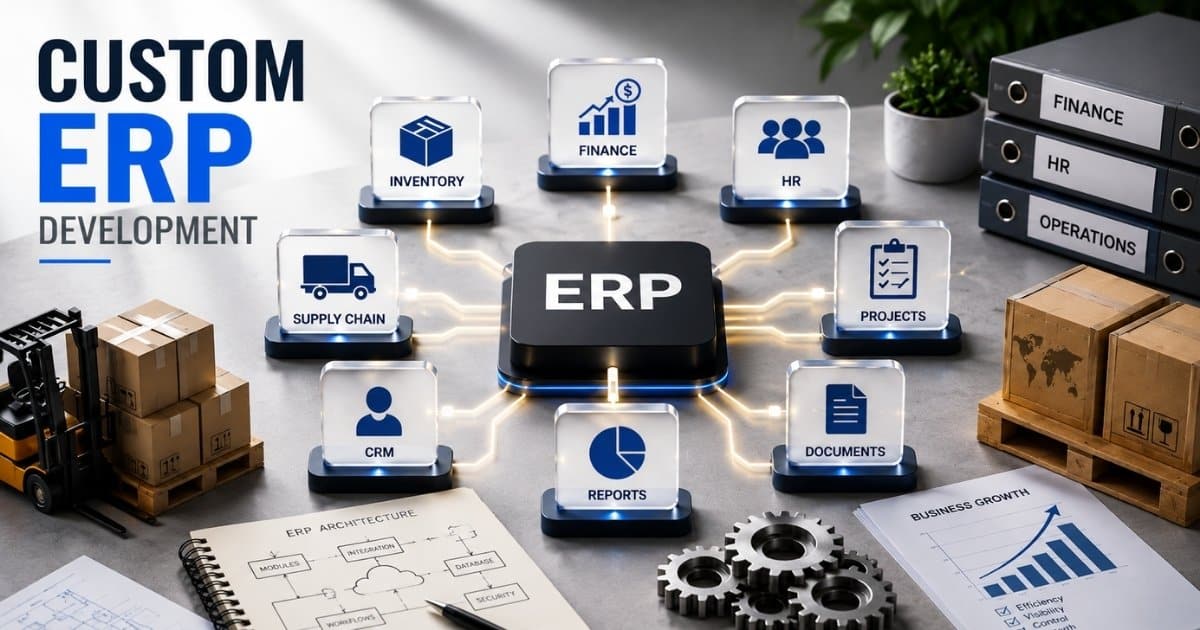
Custom ERP development is the process of creating a tailored ERP solution for a company’s unique business processes. Unlike off-the-shelf solutions, a custom ERP system fits existing business processes, workflows, and operational goals. Businesses use custom ERP software to manage inventory management, supply chain management, customer relationship management, human resource management, project management, order management, and document management from one centralized ERP platform.
ERP software development helps companies improve business operations, resource allocation, and data security through seamless integration with existing systems. A customized ERP system also supports future growth and changing business requirements without major limitations. Experienced ERP developers use the most appropriate technology stack for growth, ERP architecture, and ERP modules during the ERP development process to build an ERP system that matches business needs.
Custom ERP software development gives businesses more flexibility, stronger integration capabilities, ongoing support, and better control than shelf ERP software solutions, especially when you compare custom vs off-the-shelf software.
Custom ERP Development Vs Off The Shelf ERP Software
Businesses often compare custom ERP development with off-the-shelf ERP software before making a long-term investment. Both options support enterprise resource planning, but they differ in flexibility, scalability, integration capabilities, customization, and overall control over business operations, similar to how custom software vs SaaS differ in ownership and long-term value.
Feature | Custom ERP Development | Off-The-Shelf ERP Software |
|---|---|---|
Customization | Fully tailored to business needs | Limited customization options |
Business Processes | Matches existing business processes | Businesses adjust workflows to fit software |
Integration Capabilities | Easy seamless integration with existing systems | Integration may require third party tools |
Scalability | Supports future growth easily | Scaling may increase licensing costs |
ERP Modules | Custom ERP modules based on requirements | Fixed ERP modules |
Development Cost | Higher initial investment | Lower upfront cost |
Deployment Time | Longer ERP development process | Faster implementation |
Data Security | More control over security policies | Security depends on vendor standards |
Ownership | Full ownership of the ERP platform | Vendor controlled system |
Flexibility | High flexibility for complex process management | Less flexibility |
Ongoing Support | Dedicated ERP development services | Shared vendor support |
Technology Stack | Chosen based on project complexity | Predefined technology stack |
ERP Customization | Extensive ERP customization available | Limited ERP customization |
Business Growth | Adapts to operational changes | May require upgrades or migration |
Best For | Growing businesses with unique workflows | Businesses with standard operations |
Key Features Of Every Custom ERP System
A custom ERP system must support daily operations without creating extra complexity. Strong ERP software helps businesses manage workflows, data, teams, and resources from one platform. The right ERP modules improve efficiency, simplify business processes, and support long term business growth across multiple departments, much like broader custom software development solutions do beyond ERP alone.
Centralized Data Management
A custom ERP solution should store business data in one centralized system. Teams can access finance records, inventory management details, customer relationship management data, and project updates without switching between disconnected tools. This improves visibility across business operations and reduces manual errors.
Research from IBM shows poor data management costs businesses nearly $3.1 trillion yearly in the US alone. A customized ERP system solves this issue through better data organization and seamless integration with existing systems. Strong data flow also improves reporting, decision-making, and key performance indicators across departments.
Inventory And Supply Chain Control
Inventory management and supply chain management are core parts of ERP software development. Businesses need real-time stock tracking, warehouse management, order management, and supplier coordination from one ERP platform. This helps companies avoid delays, stock shortages, and operational confusion.
A report from McKinsey found supply chain disruptions still impact over 70% of global companies. Custom ERP software solutions help businesses respond faster with automated tracking and accurate forecasting. A tailored ERP system also improves resource allocation and reduces waste across complex process environments, as shown by many custom software transformation case studies.
Flexible ERP Modules
Every business has different workflows and operational structures. A custom ERP system should include flexible ERP modules based on business requirements instead of forcing teams to use unnecessary features. This makes ERP customization more practical and cost-effective.
Experienced ERP developers often build modules for human resources, document management, finance, customer relationship management, and project management. Businesses can also expand modules later to support future growth. This flexibility gives custom ERP development a major advantage over off-the-shelf solutions and shelf ERP software.
Strong Security And User Access
Data security is one of the biggest concerns in enterprise resource planning ERP projects. ERP systems handle sensitive financial records, employee data, customer information, and operational reports daily. A security gap can damage business trust and create compliance risks.
IBM’s latest Cost of a Data Breach report states the average global breach cost reached $4.88 million in 2024. ERP software development services now focus heavily on access control, encrypted databases, backup systems, and role-based permissions. A secure ERP architecture protects business operations while giving teams safe access to important information.
Integration And Scalability
A modern ERP solution must connect smoothly with existing systems, third-party software solutions, and business tools. Companies often use CRM platforms, accounting software, Microsoft Dynamics products, e-commerce systems, and HR tools together. Seamless integration improves workflow consistency and operational speed.
The global ERP software market is expected to surpass $78 billion by 2026 due to rising demand for scalable systems. Custom ERP software development supports future growth with flexible integration capabilities and the most appropriate technology stack. Businesses can build an ERP system that adapts as operational needs evolve over time.
Step-by-Step Custom ERP Development Process For Businesses
A successful custom ERP development project requires clear planning, technical expertise, and the right development strategy. Businesses must align the ERP development process with operational goals, workflows, and future growth plans. Each stage directly affects system performance, scalability, security, and long-term ROI.
Step 1: Business Requirement Analysis
Every ERP project starts with business requirement analysis. The development team studies existing business processes, operational gaps, and workflow challenges before building the ERP solution. This stage helps businesses define goals, ERP modules, integration needs, and user expectations clearly.
Research from Panorama Consulting shows nearly 40% of ERP failures happen because of poor planning and unclear requirements. Experienced ERP developers reduce this risk through workshops, stakeholder interviews, and workflow mapping. A detailed roadmap also helps choose the most appropriate technology stack and ERP architecture for the project, which is easier when you work with the right custom software development partner.
Step 2: ERP System Design And Planning
The next stage focuses on system structure and technical planning. ERP software development teams create the ERP architecture, database structure, user roles, and integration capabilities based on business operations, following principles of scalable software architecture. This process helps businesses avoid scalability and performance issues later.
A tailored ERP system often includes inventory management, supply chain management, human resources, customer relationship management, and document management modules. Strong planning also improves resource allocation and project management during development. Clear design decisions reduce delays and simplify the ERP software development process across teams.
Step 3: Custom ERP Development And Integration
After planning, developers start building the customized ERP system based on approved requirements. ERP development services focus on backend logic, dashboards, automation tools, and seamless integration with existing systems. Businesses may also connect Microsoft Dynamics tools, CRM platforms, e-commerce software, and accounting systems.
Statista reports the global ERP software market continues to grow rapidly because companies need more flexible custom solutions. Custom ERP software development gives businesses greater control over workflows compared to off-the-shelf solutions. A strong integration strategy also improves operational efficiency across departments and supply chain activities, and lays the foundation for future ERP modernization for digital growth.
Step 4: Testing And Data Migration
Testing helps businesses detect security issues, workflow errors, and performance problems before launch. ERP software development services usually test data security, ERP modules, automation functions, and user access permissions under real operational conditions, similar to broader custom software development services best practices.
Data migration is another critical part of ERP system development. Old records from legacy software solutions move into the new ERP platform during this stage. Gartner reports poor data quality costs organizations an average of $12.9 million yearly. Accurate migration protects business operations and ensures reliable reporting after deployment.
Step 5: Deployment And Ongoing Support
The final stage includes deployment, employee training, and ongoing support. Businesses may launch the ERP platform in phases or deploy the entire system at once depending on project complexity. User training helps teams adapt faster to the customized ERP application development environment.
ERP customization often continues after launch because business needs evolve over time. Ongoing support helps companies improve workflows, add ERP modules, and strengthen integration capabilities when operations expand. Reliable software development services also help businesses maintain performance, security, and future growth without major disruptions.
Benefits Of Custom ERP Development For Operational Efficiency
Operational efficiency becomes difficult when businesses rely on disconnected software and manual workflows. Custom ERP development solves this problem through automation, centralized data, and better workflow control. A well-planned ERP solution helps companies reduce delays, improve visibility, and manage daily business operations more effectively, mirroring the wider benefits of custom software development.
Faster Workflow Automation
Custom ERP software helps businesses automate repetitive tasks across departments. Teams can manage approvals, invoices, inventory updates, payroll, and order management from one ERP platform. This reduces manual work and speeds up daily operations.
McKinsey reports automation can improve operational productivity by up to 30% in many industries. A customized ERP system also improves workflow accuracy and reduces delays caused by human error. Businesses gain faster response times and smoother coordination across supply chain management, human resources, and customer relationship management activities.
Better Data Visibility
Many businesses struggle with scattered data across multiple existing systems. A custom ERP system solves this issue by centralizing information inside one enterprise resource planning ERP platform. Teams can access reports, dashboards, and business insights in real time.
Better visibility helps businesses track key performance indicators and improve decision-making. IBM research shows data-driven organizations are significantly more likely to outperform competitors financially. Custom ERP solutions also support seamless integration between departments, which improves collaboration and operational transparency across complex process environments.
Improved Resource Allocation
Resource allocation becomes easier when managers can track operations from one ERP system. Businesses can monitor workforce schedules, inventory levels, project timelines, and supply chain activities without switching between disconnected software solutions.
Custom ERP software development also helps companies reduce operational waste and avoid duplicated work. A tailored ERP system gives managers more control over budgeting, warehouse management, and project management workflows. This level of visibility improves productivity while helping businesses respond faster to operational changes and customer demands.
Scalable Business Operations
Business growth often creates operational challenges. Off-the-shelf solutions may struggle to support expanding workflows, users, and integration requirements. Custom ERP development gives businesses a flexible ERP architecture that grows alongside operational needs and supports broader enterprise scalability strategies.
Statista expects the global ERP software market to continue to grow strongly because companies need scalable digital infrastructure. Experienced ERP developers can add ERP modules, expand integration capabilities, and adjust workflows without rebuilding the entire ERP platform. This flexibility helps businesses maintain efficiency during future growth and organizational expansion.
Stronger Security And Compliance
Data security is critical for modern business operations. ERP software stores financial records, employee information, customer data, and operational reports in one centralized system. A security issue can create serious financial and legal risks.
Custom ERP software solutions give businesses more control over security settings, user permissions, and compliance requirements than shelf ERP platforms. IBM’s 2024 report shows the average global data breach cost reached $4.88 million. ERP development services help businesses protect sensitive information through encrypted databases, controlled access, backup systems, and secure integration with existing business processes.
Common Challenges In Custom ERP Development And How To Solve Them
Custom ERP development offers flexibility and long-term operational value, but the process also comes with challenges. Businesses often face issues related to planning, integration, data migration, and project complexity. Early preparation and the right ERP development strategy help reduce risks and improve project success rates.
Unclear Business Requirements
Many ERP projects fail because businesses start without clear goals. Teams may have different expectations about workflows, ERP modules, automation features, or integration capabilities. This confusion often delays the ERP development process and increases project costs.
Panorama Consulting reports nearly 40% of ERP implementation failures come from poor planning and unclear business requirements. Businesses can solve this issue through detailed workshops, workflow analysis, and requirement documentation before ERP software development starts. Experienced ERP developers also help companies align custom ERP solutions with existing business processes and future growth plans.
Complex System Integration
Modern businesses use many existing systems for finance, HR, CRM, e-commerce, and warehouse management. A custom ERP system must connect smoothly with all these software solutions. Poor integration can create workflow gaps and data inconsistencies across departments.
Seamless integration requires proper ERP architecture and the most appropriate technology stack. ERP development services often use APIs and middleware tools to connect the ERP platform with third-party applications like Microsoft Dynamics and customer relationship management systems, building on principles from flexible custom software solutions. Strong integration planning improves operational efficiency and prevents communication issues between business operations.
Data Migration Problems
Data migration is one of the most difficult parts of ERP system development. Businesses often move years of records from old databases, spreadsheets, and shelf ERP software into a new ERP solution. Poor-quality data can create reporting errors and operational risks.
Gartner estimates poor data quality costs organizations an average of $12.9 million yearly. Businesses should clean and organize data before migration begins. ERP software development services usually perform multiple migration tests to reduce errors. A structured migration process also protects inventory management, financial records, and order management accuracy after deployment.
Budget And Timeline Delays
Custom ERP software development projects sometimes exceed planned budgets and timelines. Project complexity, changing business needs, and poor communication between stakeholders can slow progress significantly. Long delays may affect business operations and reduce overall ROI.
Businesses can reduce this risk through phased ERP development and clear project management practices. A dedicated development team should define milestones, timelines, and responsibilities early in the development process. Frequent progress reviews also help businesses control costs while keeping the ERP project aligned with operational goals, especially when ERP work is combined with broader software modernization initiatives.
User Adoption And Training Issues
Employees may struggle to adapt to a new customized ERP system, especially when workflows change suddenly. Low user adoption reduces the value of enterprise resource planning ERP systems and slows operational improvements across departments.
Deloitte reports employee resistance remains one of the top reasons digital transformation projects fail. Businesses should provide hands-on training, role-based guidance, and ongoing support before and after deployment. A user-friendly ERP platform also improves adoption rates. Proper training helps teams use ERP customization features confidently across human resources, supply chain management, and project management workflows.
ERP Integration, Security, And Scalability Best Practices
A custom ERP system must do more than manage daily operations. Businesses also need strong integration capabilities, reliable data security, and scalable infrastructure for future growth. Proper ERP planning helps companies avoid system failures, operational delays, and security risks as business operations expand.
Choose The Right Technology Stack
The technology stack affects ERP performance, scalability, and integration capabilities. Businesses should select tools, frameworks, and databases based on operational goals, project complexity, and long-term business needs. Poor technical decisions can limit ERP customization and future upgrades, underscoring the need for a future proof tech stack.
Experienced ERP developers usually evaluate ERP architecture, cloud infrastructure, API compatibility, and database performance before development starts. Gartner predicts over 85% of businesses will adopt cloud-first strategies by 2028. A scalable ERP platform built with a future-proof technology stack supports smoother business growth and operational flexibility.
Prioritize Seamless Integration
Modern companies use multiple existing systems for accounting, e-commerce, customer relationship management, warehouse management, and human resources. A custom ERP solution should connect smoothly with all critical software solutions to maintain workflow consistency.
ERP software development services often use APIs, middleware, and automation tools to support seamless integration across departments. Integration also improves data accuracy and operational speed. Businesses using integrated ERP systems report faster decision-making and better process visibility compared to disconnected software environments. Strong integration planning also reduces manual tasks and communication gaps.
Strengthen Data Security Measures
ERP systems store sensitive business data such as payroll records, financial reports, inventory management data, and customer information. Weak security controls can expose companies to financial loss and operational disruption.
IBM’s 2024 report shows the average global data breach cost reached $4.88 million. Businesses should use encrypted databases, multi-factor authentication, role-based access control, and backup systems during ERP software development. ERP development services should also include regular security audits and compliance checks. Strong security policies protect enterprise resource planning ERP environments from internal and external threats.
Build For Future Scalability
Business operations often expand faster than expected. A customized ERP system should support new users, ERP modules, integrations, and operational workflows without performance issues. Scalability is critical for long-term ERP success.
The global ERP software market continues growing because businesses want more flexible and scalable software solutions. Custom ERP software development allows companies to expand functionality gradually instead of replacing the entire ERP system later. A tailored ERP system also supports future growth across supply chain management, project management, and order management operations.
Maintain Ongoing Monitoring And Support
ERP development does not end after deployment. Businesses must monitor performance, integration stability, and system security continuously. Small technical issues can affect business operations quickly if teams ignore them.
Ongoing support helps businesses maintain operational efficiency and improve ERP customization over time. ERP software development companies often provide system updates, performance optimization, and security improvements after launch, similar to how SaaS scalability strategies emphasize continuous optimization. Regular monitoring also helps businesses detect workflow bottlenecks, storage issues, and integration failures before they impact daily operations.
Custom ERP Development Cost, Timeline, And ROI Explained
Custom ERP development requires careful planning around budget, project timeline, and long-term business value. Costs depend on ERP modules, integration capabilities, project complexity, and business requirements. A well-planned ERP solution usually delivers stronger operational efficiency and higher ROI over time.
Project Scope Affects Cost
The biggest factor behind ERP development cost is project scope. A simple ERP platform with basic inventory management and accounting features costs far less than a customized ERP system with supply chain management, customer relationship management, and advanced automation.
ERP software development costs also depend on ERP customization, ERP modules, integration requirements, and the technology stack. Research shows the average ERP implementation budget can reach around $9,000 per user for many businesses. Businesses should define clear business requirements early to avoid unexpected expenses during the development process, just as shown in a real-world build vs buy custom software case study.
Development Timeline Depends On Complexity
A custom ERP development project usually takes several months or longer depending on operational complexity. Small ERP systems may take 4 to 6 months, while enterprise resource planning ERP projects for large organizations can continue for over a year.
Project management, data migration, ERP architecture, and seamless integration with existing systems often extend timelines. Panorama Consulting reports less than half of ERP implementation projects finish fully on time. Businesses can reduce delays through phased deployment, realistic planning, and strong communication between stakeholders and the development team.
Custom ERP Delivers Long-Term ROI
Custom ERP software development often requires higher upfront investment than off-the-shelf solutions, but long-term ROI is usually stronger. Businesses gain better workflow automation, lower operational costs, and improved resource allocation from a tailored ERP system.
Research shows 95% of companies report process improvements after ERP implementation. Businesses also improve operational visibility through centralized data, automated reporting, and better inventory management. Strong ERP development services help companies increase productivity while reducing manual tasks, duplicate work, and operational inefficiencies across departments, especially when combined with strategic tech consulting services.
Cloud ERP Reduces Operational Costs
Many businesses now prefer cloud-based ERP software because it lowers infrastructure and maintenance expenses. Cloud ERP platforms also support faster deployment, scalability, and remote access across multiple business operations.
Recent market reports show that cloud ERP solutions account for nearly 65% of ERP market revenue globally. Nucleus Research also found cloud ERP implementations can deliver over four times the ROI of traditional on-premises systems. Custom ERP solutions built on scalable cloud infrastructure help businesses manage future growth more efficiently.
Planning Improves ERP ROI
A successful ERP project requires more than software development alone. Businesses must focus on employee training, ongoing support, change management, and performance monitoring after deployment. Poor planning can reduce the value of even the best ERP software.
Gartner predicts many ERP initiatives will fail to meet original business goals because of weak strategic alignment. Businesses should work with experienced ERP developers who understand business processes, ERP system development, and integration capabilities, often supported by expert technology consulting services. Strong planning helps companies maximize ROI while improving operational efficiency and long-term business growth.
Why Businesses Choose GainHQ For Custom ERP Development
GainHQ delivers custom software development services and custom ERP development services built around real business operations, not generic software limitations. Every custom ERP system is designed to match unique workflows, reporting structures, and operational goals. Businesses can manage inventory management, supply chain management, customer relationship management, human resources, and project management from one centralized ERP platform.
The GainHQ development team focuses on scalable ERP architecture, seamless integration, and strong data security during the ERP software development process. Businesses can connect existing systems, automate complex process workflows, and expand ERP modules as operations grow. GainHQ also provides ongoing support, ERP customization, data migration, and integration capabilities to help businesses adapt faster to changing business requirements.
Unlike off-the-shelf solutions, GainHQ builds tailored ERP solutions based on long-term business growth plans. The company combines technical expertise, modern software development practices, and the most appropriate technology stack to deliver flexible and reliable enterprise resource planning ERP solutions.
FAQs
Can Small Businesses Invest In Custom ERP Development?
Yes, small businesses can benefit from custom ERP development when operations become difficult to manage manually. A customized ERP system helps automate inventory management, customer relationship management, and financial workflows without relying on multiple disconnected software solutions.
How Long Does Custom ERP Software Development Usually Take?
The ERP software development process can take anywhere from a few months to more than a year. Project complexity, ERP modules, data migration, integration capabilities, and business requirements usually affect the final timeline of ERP system development.
Does A Custom ERP System Support Remote Teams?
Yes, modern custom ERP solutions support remote access through cloud infrastructure and secure ERP platforms. Teams can manage business operations, project management tasks, and document management activities from different locations while maintaining strong data security.
What Industries Use Customized ERP Solutions Most?
Manufacturing, healthcare, retail, logistics, finance, and e-commerce businesses widely use customized ERP solutions. Companies with complex process management, supply chain management, and resource allocation needs often prefer tailored ERP systems over off-the-shelf solutions.
Can Businesses Upgrade A Custom ERP System Later?
Yes, businesses can expand ERP modules, integration capabilities, and automation features over time. Experienced ERP developers usually design custom ERP software with a scalable ERP architecture to support future growth and changing operational needs.