SaaS infrastructure cost usually takes up 6% to 12% of revenue for most SaaS companies. With the global SaaS market nearing $466 billion, infrastructure costs are no small matter. Cloud infrastructure, data storage, and cloud services shape the total cost of any SaaS platform, and following proven best practices of SaaS architecture helps keep those costs predictable as you scale. SaaS development costs and SaaS application development costs also vary significantly based on project scope, team location, and development complexity. For many SaaS startups, startup costs, fixed costs, and variable costs directly impact cash flow and SaaS revenue.
High-growth SaaS businesses must balance cost with performance. Cloud expenditures, backend development, payment gateways, and third-party integrations increase resource consumption. Poor project management, hidden costs, or unclear business objectives can inflate development expenses. Smart cost optimization, continuous monitoring, and strong financial forecasting help reduce SaaS development costs while protecting customer satisfaction and competitive edge.
What Is SaaS Infrastructure
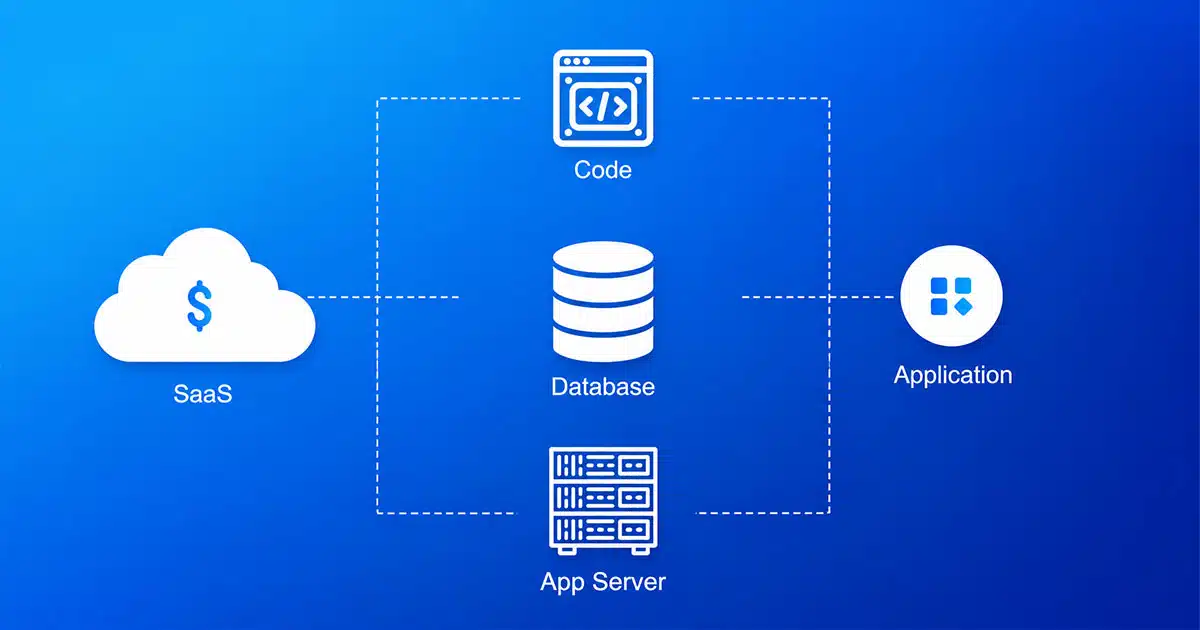
SaaS infrastructure refers to the full cloud infrastructure that supports a SaaS platform. It includes servers, data storage, networking, and cloud services delivered by cloud providers. SaaS infrastructure powers the SaaS app, backend development, payment processing, and third-party integrations. It also protects customer data and ensures seamless user experience, which should be underpinned by accessible UX design practices so infrastructure investments support every user segment. For SaaS companies, infrastructure costs form a major part of total cost and ongoing maintenance.
SaaS infrastructure also connects closely with SaaS development and the development process. Development team decisions, software licenses, project scope, and essential features all affect SaaS infrastructure cost. Resource consumption, infrastructure upgrade needs, and advanced analytics can increase cloud expenditures. Smart cost optimization and continuous monitoring help SaaS businesses balance cost efficiency with performance while supporting paying customers and long term SaaS revenue.
SaaS Infrastructure Cost Breakdown For High-Growth Teams
SaaS infrastructure cost expands fast when growth accelerates. High-growth SaaS companies face rising cloud expenditures, data storage demands, and compute pressure, which makes structured SaaS scalability strategies for sustainable growth critical to protect margins. Clear visibility into infrastructure costs helps protect SaaS revenue and gross margins. Each cost category behaves differently as paying customers increase.
Compute And Processing Power
Compute resources drive a large share of SaaS infrastructure cost. Virtual machines, containers, and serverless functions consume cloud infrastructure capacity every second. Cloud providers charge based on CPU, memory, and usage duration. Even small inefficiencies increase total cost quickly.
McKinsey reports that up to 30% of cloud spend goes to idle or oversized resources. High resource consumption often results from poor workload planning. Reserved instances can reduce compute costs by up to 72% compared to on demand pricing. Strong capacity planning protects cost efficiency without harming performance.
Data Storage And Backups
Data storage grows with every new paying customer. SaaS applications collect customer data, logs, analytics events, and backups daily, all delivered through modern cloud-based software services models. Enterprise IT teams spend over 30% of infrastructure budgets on storage and disaster recovery.
Storage tiers affect infrastructure costs differently. Hot storage costs more than archival storage. Poor lifecycle management increases variable costs. Smart data policies reduce SaaS infrastructure cost while maintaining compliance and seamless user experience.
Network And Data Transfer
Network charges often surprise SaaS businesses. Inbound traffic remains free across most cloud providers. Outbound traffic and cross-region transfers generate significant fees. IDC estimates that data egress fees account for roughly 6% of cloud storage costs.
Multi-region SaaS platforms increase bandwidth expenses. Global user bases raise network transfer volumes. Data replication for compliance also adds to cloud expenditures. Careful architecture decisions reduce unnecessary data movement and protect margins.
Third-Party Services And APIs
SaaS platforms depend on third-party integrations for payment gateways, CRM tools, analytics, and authentication. Each API call contributes to SaaS development costs and infrastructure expenses. Enterprise applications process billions of API calls annually.
Usage-based pricing models increase variable costs as customer acquisition cost grows. Payment processing fees, such as 2.9% per transaction add to total cost. Clear vendor evaluation and monitoring help balance cost and business objectives.
Security And Compliance
Security infrastructure demands ongoing investment. SaaS providers allocate 15% to 20% of operational budgets to security programs. Compliance standards such as SOC 2 and GDPR require monitoring tools and audits.
Security tools increase cloud expenditures but protect customer satisfaction and trust. Weak compliance can damage SaaS revenue and brand value. Strong governance aligns infrastructure upgrade plans with long-term financial forecasting.
Support And Maintenance
Support packages escalate as SaaS businesses scale. Premium cloud support can rise from a few hundred dollars to over $20,000 per month. Latency issues and server outages increase reliance on expert assistance.
Ongoing maintenance adds fixed costs across cloud services and backend development. Overprovisioned environments and unused resources inflate SaaS infrastructure cost. Bain research shows 84% of workloads remain overprovisioned after cloud migration. Regular audits reduce waste and improve cost optimization outcomes.
Estimated SaaS Infrastructure Cost Breakdown In Dollars
Actual infrastructure costs vary based on SaaS revenue, project complexity, and resource consumption. Below is an estimated monthly breakdown for a high-growth SaaS company generating $5 million ARR. At 8% infrastructure allocation, the annual infrastructure cost equals $400,000 or about $33,000 per month.
| Cost Category | Estimated Monthly Cost | Estimated Annual Cost |
|---|---|---|
| Compute And Processing | $12,000 – $15,000 | $144,000 – $180,000 |
| Data Storage And Backups | $5,000 – $8,000 | $60,000 – $96,000 |
| Network And Data Transfer | $2,000 – $4,000 | $24,000 – $48,000 |
| Third-Party Services And APIs | $4,000 – $6,000 | $48,000 – $72,000 |
| Security And Compliance | $3,000 – $5,000 | $36,000 – $60,000 |
| Support And Maintenance | $2,000 – $3,000 | $24,000 – $36,000 |
High-growth SaaS startups with heavier infrastructure usage may exceed 12% of SaaS revenue. Mature SaaS businesses with optimized cloud infrastructure may reduce this closer to 6%. Strong financial forecasting, disciplined project management, and continuous monitoring directly improve cost efficiency and protect long term SaaS revenue, and pairing solid architecture foundations with SaaS design systems for scalable products keeps both infrastructure and UX scalable without ballooning costs.
Primary Cost Factors In SaaS Infrastructure
SaaS infrastructure cost depends on several core components that scale with growth. High-growth SaaS companies must understand what drives infrastructure costs before planning cost optimization. Each factor affects SaaS revenue, cloud expenditures, and long term financial forecasting in different ways.
Compute Resources
Compute resources form the backbone of cloud infrastructure. Virtual machines, containers, and serverless functions power SaaS applications and backend development. Cloud providers charge based on CPU, memory, and usage duration. Even minor inefficiencies increase total cost over time.
McKinsey estimates that up to 30% of cloud spend results from idle or oversized compute. Reserved instances reduce costs by as much as 72% compared to on demand pricing. Clear workload analysis protects cost efficiency and prevents unnecessary infrastructure upgrade expenses.
Data Storage Costs
Data storage grows with customer data and analytics demands. SaaS platforms store logs, backups, transactional data, and user content. Enterprise IT teams spend more than 30% of budgets on storage and disaster recovery.
Storage tiers influence SaaS infrastructure cost significantly. High performance databases cost more than archive storage. Poor lifecycle policies inflate fixed costs and variable costs. Smart data retention planning supports compliance and reduces development expenses across SaaS businesses.
Network And Bandwidth
Network traffic increases as paying customers grow. Outbound data transfer and cross-region replication create hidden costs. IDC research shows that data egress fees account for roughly 6% of cloud storage spending.
Global SaaS platforms face higher bandwidth charges due to distributed users. Multi region deployments increase cloud expenditures further. Strong architecture planning limits unnecessary data movement and protects gross margins.
Third Party Integrations
SaaS applications rely on payment gateways, analytics tools, CRM systems, and other third party integrations. Each API call adds to SaaS development costs and infrastructure costs. Enterprise applications often process billions of API calls annually.
Usage based pricing models raise variable costs during growth. Payment processing fees, such as 2.9% per transaction, impact SaaS revenue directly. Vendor selection and monitoring help balance cost with business objectives and seamless user experience.
Security And Compliance
Security infrastructure requires constant investment. SaaS providers allocate 15% to 20% of operational budgets toward security measures. Compliance standards such as SOC 2 and GDPR demand regular audits and monitoring tools.
Security tools increase cloud expenditures but protect customer satisfaction and trust. Non compliance risks fines and revenue loss. Strong governance aligns infrastructure spending with financial forecasting and competitive edge goals.
Support And Maintenance
Ongoing maintenance forms a steady part of SaaS infrastructure cost. Premium cloud support packages can exceed $20,000 per month for larger SaaS companies. Performance issues increase reliance on expert support.
Bain research shows that 84% of workloads remain overprovisioned after cloud migration. Unused resources inflate resource consumption and reduce cost efficiency. Regular audits and disciplined project management reduce hidden costs and improve total cost control.
Growth And Feature Expansion
Growth velocity influences infrastructure spending patterns. Equity-backed SaaS companies spend 71% more on research and development compared to bootstrapped peers. New features increase development complexity and cloud services usage.
Higher customer acquisition cost often requires infrastructure scaling. Advanced analytics and new core features, especially those powered by AI-driven automation in SaaS, raise compute and data storage demands. Clear project scope and strategic planning protect cash flow and long-term SaaS revenue stability.
Estimated Cost Driver Overview
The table below shows how primary cost factors typically contribute to total SaaS infrastructure cost for scaling SaaS businesses.
| Cost Factor | Typical Share Of Infra Cost | Cost Behavior | Growth Impact |
|---|---|---|---|
| Compute Resources | 30% – 40% | Variable | Scales with user activity and feature load |
| Data Storage | 15% – 25% | Mixed | Grows with customer data and retention rules |
| Network And Bandwidth | 5% – 15% | Variable | Increases with global expansion |
| Third Party Integrations | 10% – 20% | Variable | Rises with API usage and transactions |
| Security And Compliance | 10% – 15% | Fixed + Variable | Required for trust and regulation |
| Support And Maintenance | 5% – 10% | Fixed | Increases with complexity and scale |
Clear visibility across these categories improves cost optimization decisions. Strong financial forecasting and disciplined SaaS development planning protect margins while supporting sustainable growth.
Cost Optimization Strategies For SaaS Development
Cost control in SaaS development requires smart planning from day one. SaaS infrastructure cost, development expenses, and cloud expenditures can escalate quickly without structure. Clear project scope, strong project management, and disciplined cost optimization protect cash flow and long term SaaS revenue, especially when they are embedded into a structured SaaS product development lifecycle from build to scale. High-growth SaaS businesses must balance cost efficiency with seamless user experience and rapid delivery, which depends on choosing scalable SaaS tools and development approaches that power global business growth.
Start With A Minimum Viable Product
A minimum viable product reduces initial investment and startup costs, and teams that understand what an MVP is in software development can use it strategically to control both infrastructure and build costs. SaaS startups validate market demand before committing to full SaaS app development. This approach limits SaaS development costs and lowers financial risk, and it also clarifies when to invest in an MVP versus relying on custom vs off-the-shelf software for early validation. Many early-stage SaaS companies cut development expenses by focusing only on essential features.
Research shows MVP first strategies reduce total cost by up to 30% compared to building full feature platforms upfront, and dedicated MVP development cost guides for 2026 make it easier to budget realistically for this phase. Clear validation helps refine pricing strategies and customer acquisition cost assumptions, and a disciplined Lean Startup MVP approach ensures those assumptions are grounded in real user feedback. Gather user feedback early to shape future infrastructure upgrade and feature expansion decisions.
Choose The Right Cooperation Model
Team structure directly affects SaaS application development cost, and selecting the right custom software development partner determines how effectively that structure translates into predictable delivery and spend. Outsourcing or outstaffing models can reduce fixed costs tied to in-house development teams. Labor rates vary significantly based on team location and technical expertise. This difference impacts estimated cost ranges for complex projects.
Aligned outsourcing can cut development costs by 20% to 40% depending on project complexity, especially when pairing it with agile and offshore software development benefits such as faster delivery and access to global talent. Clear contracts and defined business objectives protect against hidden costs. The right model supports backend development, payment processing, and third party integrations without inflating SaaS infrastructure unnecessarily, particularly when you follow a structured custom software development guide to scope and plan work.
Adopt Agile Development Practices
Agile frameworks improve flexibility across the development process. Short cycles help teams adapt to project complexity and evolving project scope. This structure reduces rework and prevents wasted dollar spent on low value features. SaaS businesses gain better visibility into total cost and resource consumption.
Industry reports show Agile teams complete projects up to 25% faster than traditional models, and understanding Agile vs Waterfall software development for custom projects helps teams choose the right delivery approach for their cost and risk profile. Faster releases improve customer satisfaction and shorten time to paying customers. Strong collaboration between project manager and development team keeps the SaaS project budgets aligned with financial forecasting goals, especially when guided by a detailed SaaS development cost guide for businesses.
Leverage Third-Party Services
Building every feature from scratch increases SaaS development costs and infrastructure costs. Proven software vendors and APIs reduce development complexity. Payment gateways, analytics tools, and authentication services lower SaaS app development cost without sacrificing quality.
API integration avoids duplicate software development work. Companies using third-party integrations often reduce development expenses by 15% to 20%. However, teams must monitor software licenses and variable costs. Balanced use of cloud services and external tools improves cost efficiency while supporting seamless user experience.
Prioritize High Value Features
Strategic planning during discovery defines the most controllable cost factors, and disciplined MVP feature prioritization to build the right product prevents scope creep that inflates infrastructure and development spend. Focus on core features that align with business objectives and competitive edge. Avoid feature creep that inflates SaaS infrastructure cost and delays launch timelines.
Clear prioritization protects the annual marketing budget and customer acquisition cost targets. Research indicates that 45% of software features go unused by end users. Controlled feature selection reduces resource consumption and supports rapid development. Strong market research ensures every estimated cost ties directly to measurable SaaS revenue impact, and a clear SaaS product roadmap for 2026 that prioritizes and scales effectively keeps those investments aligned over time.
SaaS Development Cost Optimization Summary Table
Cost optimization in SaaS development works best when teams map strategy to numbers. SaaS infrastructure cost, development expenses, and cloud expenditures must align with business objectives and financial forecasting. The table below summarizes key cost optimization levers, expected impact, and how they influence total cost and SaaS revenue.
| Strategy | Cost Impact | Estimated Savings | Affects Which Costs | Growth Benefit |
|---|---|---|---|---|
| Minimum Viable Product | Lower initial investment | Up to 30% lower total build cost | Startup costs, development expenses, and infrastructure costs | Faster validation and early paying customers |
| Outsourcing Or Outstaffing | Reduced fixed costs | 20%–40% lower development costs | SaaS application development cost, backend development | Access to global talent and rapid delivery |
| Agile Development | Reduced rework and delays | Up to 25% faster project completion | Project management, resource consumption | Faster releases and improved cash flow |
| Third Party Integrations | Avoid building non-core features | 15%–20% lower development expenses | Software licenses, API usage, payment processing | Faster time to market and seamless user experience |
| Feature Prioritization | Reduced scope creep | Prevents 40%+ wasted feature spend | Development complexity, cloud infrastructure | Higher ROI and better customer satisfaction |
Clear alignment between strategy and execution improves cost efficiency. Strong project scope control, disciplined SaaS development, and continuous monitoring protect total cost while supporting long term SaaS revenue growth.
How Architecture Choices Impact SaaS Infrastructure Cost
Architecture decisions directly shape SaaS infrastructure cost and long-term profitability. Early technical choices affect cloud infrastructure, development costs, and future infrastructure upgrade needs. High-growth SaaS businesses often feel margin pressure when architecture does not align with business objectives or cost optimization goals.
Monolith Vs Microservices
Monolith architecture lowers initial investment and simplifies the development process. Many SaaS startups choose this path for a minimum viable product, but teams still need to distinguish between MVP vs prototype vs POC and how to choose to avoid wasting time and infrastructure budget on the wrong artefact, as shown in a real-world example of launching an MVP in 90 days. Development complexity stays manageable, and project management becomes easier. SaaS app development cost often stays within predictable estimated cost ranges during early stages.
Microservices increase flexibility but raise infrastructure costs. Each service consumes compute, data storage, and network resources. Resource consumption grows faster with complex projects. A 2023 CNCF survey showed over 60% of large SaaS companies use microservices, yet many report higher cloud expenditures due to service sprawl and monitoring overhead.
Cloud Provider Strategy
Single cloud providers reduce startup costs and simplify software development. Teams gain volume discounts and tighter integration with cloud services. Project scope stays focused, and backend development becomes more standardized. Many SaaS companies prefer this model during rapid development.
Multi-cloud or hybrid cloud increases resilience but raises total cost, and emerging MVP development trends for startups in 2026 increasingly factor these architectural trade-offs into early product decisions. Data egress fees, network transfer charges, and third-party integrations create hidden costs. Gartner estimates that 75% of organizations will face cost overruns in cloud environments by 2026 due to poor financial forecasting and vendor complexity. Vendor lock-in also impacts long term cost efficiency and negotiation power.
Data Storage Design
Data storage decisions heavily influence SaaS infrastructure cost and are central to the future of SaaS development in a cloud-first world, where architectures must be both resilient and cost-aware. Structured databases, object storage, and analytics clusters each carry different pricing models. SaaS applications with advanced analytics and large customer data sets face higher variable costs as usage grows.
Bain research shows that 84% of workloads remain overprovisioned even after cloud migration. Poor data architecture increases cloud expenditures and inflates infrastructure costs. Smart storage tiering and lifecycle policies reduce SaaS development costs over time. Cost optimization here directly protects gross margins and SaaS revenue, and for many teams that includes carefully planned cloud migration strategies for growing teams to modernize infrastructure without runaway spend, often as part of broader software modernization for modern businesses.
Scalability Model
Auto scaling within cloud infrastructure supports seamless user experience during traffic spikes. Usage-based models align infrastructure costs with paying customers. This approach protects cash flow and improves balance cost across growth phases.
Overprovisioned environments hurt margins. Teams often allocate extra compute to avoid outages. McKinsey reports that companies waste up to 30% of cloud spend due to idle resources. Clear capacity planning and continuous monitoring reduce waste without sacrificing customer satisfaction or competitive edge.
Build Vs Buy Components
Custom backend development increases saas development costs but offers control over essential features and payment gateways, especially when delivered through end-to-end custom software development services. Development team expertise and project complexity drive saas application development cost upward. Complex projects demand higher technical expertise and longer timelines.
Third-party integrations and software vendors lower initial development expenses. However, software licenses, payment processing fees, and ongoing maintenance add to fixed costs and variable costs. Stripe and similar payment gateways charge around 2.9% plus fixed fees per transaction. Each architecture decision must align with business objectives and long-term financial forecasting.
How GainHQ Optimizes SaaS Infrastructure Cost For Scalable Growth
GainHQ helps SaaS companies control SaaS infrastructure cost through smart architecture and cloud infrastructure planning, acting as a strategic tech consulting partner that helps modern businesses grow. The team aligns SaaS development with clear business objectives and financial forecasting. Every SaaS project begins with thorough market research and a defined project scope. This reduces hidden costs and avoids unnecessary infrastructure upgrades later. Clean backend development and efficient data storage design improve cost efficiency from day one, mirroring how custom software has transformed companies across industries by tightening operations and infrastructure usage and demonstrating the value of building smarter tools with flexible software solutions.
GainHQ also focuses on cost optimization across cloud services, payment gateways, and third-party integrations. Continuous monitoring keeps cloud expenditures under control as paying customers grow. The development team balances essential features with estimated cost ranges to protect cash flow. This structured development process helps SaaS businesses reduce SaaS development costs while maintaining seamless user experience and long-term SaaS revenue growth, especially when paired with dedicated UI/UX design services for SaaS products to minimize friction and support retention.
FAQs
Does SaaS Infrastructure Cost Increase Faster Than SaaS Revenue During Rapid Growth?
Yes, SaaS infrastructure cost can rise faster than SaaS revenue in high-growth phases. Rapid user expansion increases cloud expenditures, data storage, and compute usage. Without strong cost optimization and financial forecasting, infrastructure costs can outpace new paying customers and hurt margins.
Can Poor Financial Forecasting Increase Total SaaS Development Costs?
Yes, weak financial forecasting often leads to budget overruns across SaaS development and cloud infrastructure. Inaccurate estimated cost ranges affect project scope, resource consumption, and ongoing maintenance. Clear projections protect cash flow and reduce hidden costs across the SaaS project lifecycle.
Is It Possible To Reduce SaaS Development Costs Without Sacrificing Performance?
Yes, teams can reduce SaaS development costs while maintaining performance. Clear project management, optimized backend development, and smart use of third-party integrations improve cost efficiency. Strong architecture decisions and controlled infrastructure upgrade cycles protect customer satisfaction and seamless user experience, which directly supports UX-driven reductions in SaaS churn and improved retention.
Do Payment Gateways And Third-Party Integrations Affect Long-Term Infrastructure Costs?
Yes, payment processing fees, API calls, and software licenses add to variable costs over time. As SaaS businesses scale, integration complexity increases resource consumption. Careful vendor selection and monitoring help balance cost and protect long-term SaaS revenue.
How Do Hidden Cloud Expenditures Impact SaaS Startups Over Time?
Hidden costs such as data egress fees, idle resources, and unused software licenses quietly inflate the total cost. For SaaS startups, small inefficiencies compound as customer data and usage grow. Continuous monitoring and disciplined cost optimization reduce long-term infrastructure pressure.