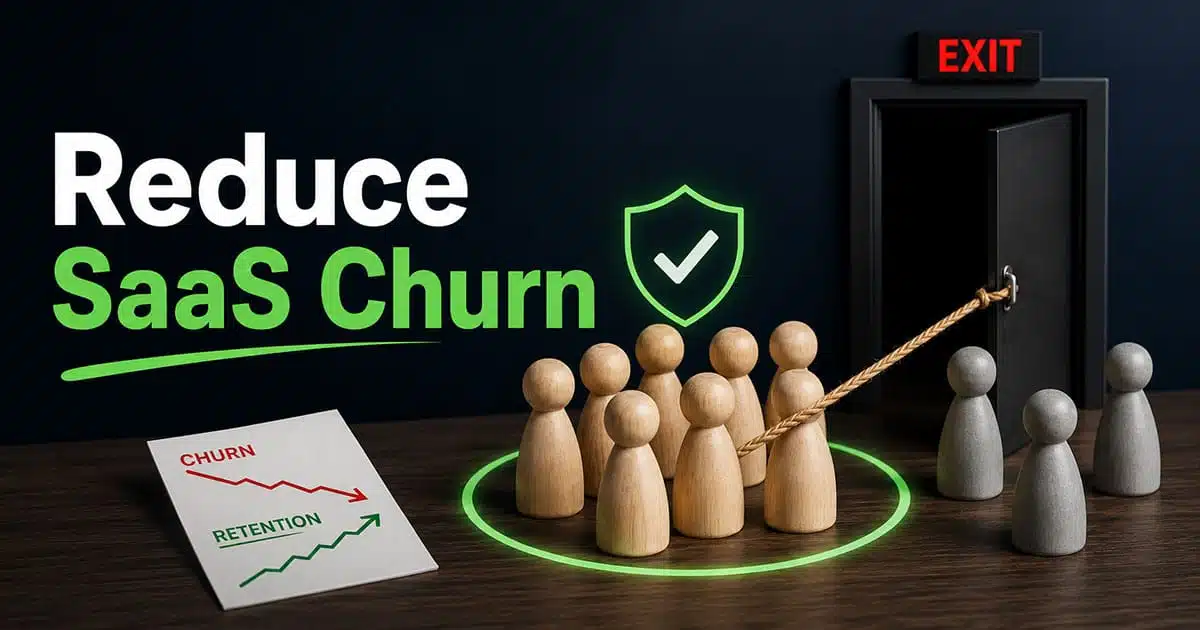
SaaS growth looks exciting until customers start leaving. Many companies focus heavily on acquisition but ignore retention. That approach creates a costly cycle. You spend more to bring users in while existing customers quietly cancel subscriptions. Over time, churn slows revenue growth and weakens customer lifetime value.
Strong retention does not happen by luck. Customers stay when they see value fast, use the product regularly, and trust your brand. Small gaps in onboarding, support, pricing, or product experience can push users away faster than most teams expect.
This guide breaks down practical ways to reduce SaaS churn with strategies that actually work. You will learn how to spot churn risks early, improve customer retention, and build a stronger SaaS business with long-term growth potential.
What SaaS Churn Really Means
SaaS churn means customers stop using or paying for a product. In simple terms, customer churn happens when users cancel subscriptions or leave for another solution. For SaaS companies, high churn rates can damage recurring revenue, monthly recurring revenue, and long-term growth. Some customers leave because of poor user experience or pricing strategy. Others leave because of failed payments, weak customer support, or low product value. Both voluntary churn and involuntary churn affect the overall SaaS churn rate.
Strong customer success helps reduce SaaS churn before customers cancel. Dedicated customer success managers and support teams track customer behavior, usage patterns, and key metrics across the entire customer journey. Customer feedback, onboarding process improvements, and self-service support also help retain customers. SaaS businesses that identify churn risks early can increase customer satisfaction, build customer loyalty, and keep customers engaged for longer.
Why Retention Is More Important Than Acquisition
Many SaaS companies chase new customers every month. That strategy looks good on paper, but it becomes expensive fast. Strong customer retention creates stable recurring revenue, improves customer loyalty, and helps reduce SaaS churn before it hurts long-term growth.
Existing Customers Cost Less
Acquiring new customers takes time, marketing spend, and sales effort. Recent reports show customer acquisition costs are now 5 to 25 times higher than retention costs for many SaaS businesses.
Existing customers already know your product and trust your brand. Your customer success team spends less time convincing them to stay engaged. Loyal customers also upgrade faster and bring referrals. That lowers pressure on paid acquisition channels and improves lifetime value over time.
Retention Increases Recurring Revenue
Customer retention has a direct impact on monthly recurring revenue and annual recurring revenue. SaaS companies with strong retention often maintain healthier net revenue retention and stronger cash flow, especially when supported by solid SaaS scalability strategies. Top B2B SaaS companies now report median NRR above 106%.
Long-term customers buy add-ons, upgrade plans, and expand usage across teams. That creates more recurring revenue without constant acquisition costs. A stable customer base also makes revenue forecasting easier and helps reduce churn risks during market shifts.
Loyal Customers Stay Longer
Customers expect value, support, and smooth product experiences. When businesses meet customer needs consistently, customer satisfaction improves naturally. That creates stronger customer loyalty and lower churn rates.
Research also shows returning customers spend far more than first-time buyers. Existing customers can spend up to 67% more over time because trust already exists. SaaS companies that focus on customer success managers, customer feedback, and support interactions usually retain customers longer than competitors.
Retention Reveals Product Value
Strong retention often proves product-market fit. When customers stay active, use key features, and renew subscriptions, it signals that the product solves real problems. Weak retention usually points to poor onboarding process, pricing issues, or poor user experience that often requires better UI/UX design for SaaS products to fix.
Customer usage data and usage patterns help teams identify churn risks early. Dedicated customer success managers can segment customers, predict churn risk, and improve the entire customer journey. That process helps SaaS businesses reduce SaaS churn rate before customers cancel.
Churn Slows Business Growth
High customer attrition hurts growth even when acquisition numbers look strong. SaaS churn reduces recurring revenue, lowers lifetime value, and weakens profitability. Industry reports show average churn rate levels still range between 3% and 8% monthly for many SaaS companies.
Poor retention also creates hidden costs. Support teams spend more time replacing churned customers instead of helping high-value customers grow. Smart SaaS companies now invest more in customer support, in-app feedback forms, onboarding, SaaS design systems for consistent UX, and customer segmentation to reduce churn and keep customers engaged.
How To Measure SaaS Churn Rate With The Right Metrics And Benchmarks
Many SaaS companies track churn but still fail to understand what the numbers actually mean. A single metric never shows the full picture. Smart teams use multiple retention metrics to identify churn risks, improve customer retention, and reduce SaaS churn more effectively.
Customer Churn Rate
Customer churn rate measures how many existing customers leave during a specific period. Most SaaS businesses calculate it monthly or annually. The formula is simple. Divide customers lost by total customers at the start of the period.
Current industry benchmarks show the average churn rate for SaaS companies usually falls between 3% and 7% monthly. B2B SaaS brands often maintain lower churn rates than B2C products. A high SaaS churn rate often points to poor onboarding process, weak customer support, or low product value.
Revenue Churn Metrics
Revenue churn focuses on lost recurring revenue instead of lost accounts. That metric matters because losing one high-value customer can hurt more than losing several small accounts. SaaS companies usually track gross revenue churn and net revenue retention together.
Strong net revenue retention above 100% shows existing customers continue upgrading or expanding usage. Many leading SaaS companies now target NRR between 110% and 120%. Revenue churn also helps customer success managers identify churn risks across different customer segments and pricing models.
Voluntary And Involuntary Churn
Voluntary churn happens when customers cancel subscriptions intentionally. Poor user experience, weak key features, or pricing strategy issues usually cause it. Involuntary churn happens because of failed payments, expired cards, or payment failures.
Research shows involuntary churn can account for up to 20% to 40% of total customer attrition for subscription businesses. Customer success teams often reduce churn by using payment recovery tools, in app notifications, and better support interactions. Simple billing fixes can protect monthly recurring revenue quickly.
Lifetime Value And Retention
Lifetime value measures how much revenue a SaaS customer generates before leaving. Higher customer retention usually increases lifetime value and improves profitability. Businesses with loyal customers spend less on acquisition and grow recurring revenue faster when supported by disciplined SaaS product development that keeps delivering new value.
Customer usage data and customer behavior help support teams identify customers with strong retention potential. Teams can segment customers based on usage patterns, customer satisfaction, and engagement levels. That approach helps SaaS businesses encourage customers to stay active longer and reduce SaaS churn rate naturally.
Benchmarks By SaaS Segment
Every SaaS business operates differently. Benchmarks vary based on company size, customer base, pricing models, and market trends shaped by the future of SaaS development in a cloud-first world. Enterprise SaaS companies often report annual churn rate levels below 10%, while smaller SaaS companies may experience much higher churn rates.
Customer segmentation makes benchmark analysis more accurate. High-value customers, mid-market accounts, and self-service users behave differently across the entire customer journey. Smart SaaS companies regularly collect feedback, analyze customer data, and apply predictive analytics software to compare performance against industry benchmarks and predict churn risk earlier.
Biggest Reasons SaaS Customers Churn Before Renewal
Most customers do not leave without warning signs. SaaS churn usually builds slowly through poor experiences, weak engagement, or unmet expectations. SaaS companies that identify churn risks early can improve customer retention, reduce churn rates, and protect recurring revenue before customers cancel.
Poor Onboarding Experience
First impressions shape the entire customer journey. A confusing onboarding process often creates frustration early. Customers expect fast setup, simple workflows, and clear product value. When that does not happen, many users stop engaging within the first few weeks.
Research shows nearly 75% of SaaS customers decide long term product value during onboarding. Poor onboarding also weakens customer satisfaction and customer loyalty. Dedicated customer success managers often use onboarding checklists, tutorials, and in app notifications to keep customers engaged and reduce SaaS churn faster.
Low Product Adoption
Many customers buy SaaS products but never fully use the key features. Weak adoption usually means customers do not see enough value to continue paying. That becomes a major driver of customer churn before renewal dates arrive.
Customer usage data and usage patterns help customer success teams identify customers at risk. Low login frequency, inactive accounts, and reduced support interactions often signal potential churn risks. SaaS businesses that encourage customers to explore features through self service support and customer education usually retain customers longer, as shown in many successful SaaS launch case studies.
Weak Customer Support
Poor customer support quickly damages trust. Slow responses, unresolved issues, and weak communication frustrate customers fast. Many SaaS customers leave because support teams fail to solve problems at critical moments.
Recent studies show over 60% of customers switch brands after poor service experiences. Strong customer support representatives and dedicated customer success managers help reduce churn by improving customer satisfaction. Fast support interactions and personalized communication also strengthen customer loyalty across different customer segments.
Pricing And Billing Issues
Pricing strategy plays a major role in SaaS churn rate growth. Customers cancel when plans feel overpriced or disconnected from actual value. Unexpected costs and confusing pricing models also increase customer attrition over time.
Involuntary churn creates another problem for SaaS companies. Failed payments, expired cards, and payment failures silently reduce monthly recurring revenue every month. SaaS businesses that use automated billing reminders, flexible pricing models, and payment recovery systems often reduce SaaS churn rate significantly.
Poor Product Market Fit
Some SaaS products simply fail to match customer needs. Weak product market fit usually creates low engagement, negative customer feedback, and declining customer satisfaction. Adopting user-centered design for SaaS platforms reduces this risk by aligning features with real workflows. Customers lost for this reason rarely return.
Market research and customer segmentation help SaaS companies understand customer behavior more clearly. Customer success managers can segment customers based on usage patterns, company size, and business goals. Applying a user-centered design approach for SaaS platforms to these insights helps teams improve the product roadmap, engage customers better, and increase net revenue retention over time.
Customer Onboarding Strategies To Reduce SaaS Churn Early
The onboarding process shapes how customers feel about a product from day one. Early experiences often decide whether users stay or leave. SaaS companies with strong onboarding systems usually improve customer retention, increase customer satisfaction, and reduce SaaS churn much faster.
Clear First Step Guidance
New customers expect clarity right after signup. Confusing dashboards and complex setup steps often create frustration early. A simple onboarding process helps users understand key features faster and improves customer confidence.
Recent data shows nearly 63% of customers consider onboarding quality before renewing SaaS subscriptions. Customer success teams often use welcome checklists, guided tutorials, and in-app notifications to keep customers engaged. Clear guidance also helps customer support representatives reduce support interactions caused by setup confusion.
Fast Time To Value
Customers want results quickly. Long setup times increase customer churn because users fail to see product value early. SaaS businesses that shorten time to value usually retain customers longer and improve customer loyalty.
Customer success managers often focus on one quick win during the first week. That strategy helps customers understand how the product solves real problems. Customer usage data also helps identify customers who struggle during onboarding. Early support reduces churn risks before customers cancel subscriptions.
Personalized Onboarding Paths
Every customer segment has different goals and customer needs. A generic onboarding process rarely works for all users. Personalized onboarding improves customer satisfaction because users see more relevant workflows and features.
SaaS companies now use customer segmentation and customer behavior analysis to customize onboarding experiences. High-value customers may receive dedicated customer success managers, while smaller accounts may use self-service support. Personalized onboarding also helps engage customers across the entire customer journey and improves net revenue retention over time.
Proactive Customer Support
Strong customer support during onboarding helps reduce churn early. Customers often leave when problems remain unresolved for too long. Fast support interactions build trust and improve customer loyalty from the beginning.
Studies show over 70% of customers expect immediate assistance during product setup. SaaS companies that combine live chat, support teams, and in-app feedback forms often increase customer satisfaction faster. Customer feedback collected during onboarding also helps improve the product roadmap and inform future SaaS application development for growth while identifying churn risks earlier.
Early Engagement Tracking
Low activity during the first few weeks usually signals potential churn risks. Customers who stop using key features early often become churned customers later. Smart SaaS businesses monitor usage patterns closely after signup.
Customer success teams track customer data such as login frequency, feature usage, and onboarding completion rates. Those key metrics help teams predict churn risk before customers lost become permanent, especially when paired with AI integrated into SaaS products that can trigger automated, personalized interventions. SaaS companies that regularly collect feedback and encourage customers to stay active often reduce SaaS churn rate more effectively.
Product Adoption Tactics To Keep SaaS Users Active Long Term
Customer retention depends heavily on product adoption. Users who actively use key features usually stay longer and generate more recurring revenue. SaaS companies that improve adoption rates often reduce SaaS churn, strengthen customer loyalty, and increase lifetime value over time.
Feature Discovery Matters
Many customers never explore the full value of a SaaS product. Hidden tools and unclear workflows often lead to poor user experience. Customers cancel subscriptions when they feel the product does not solve enough problems.
Recent studies show nearly 80% of SaaS features remain underused by customers. In-app notifications, walkthroughs, and onboarding tips help customers discover important features faster. Case studies of AI-driven features that increased engagement by 34% show how intelligent guidance can boost adoption while reducing manual support. Customer success managers also use customer usage data to identify customers who need additional guidance or support interactions.
Regular Product Education
Customers expect more than basic onboarding. Ongoing education helps users stay confident and engaged throughout the entire customer journey. SaaS businesses that teach customers regularly usually improve customer satisfaction and reduce churn rates.
Customer success teams often create webinars, tutorials, knowledge bases, and self-service support content. Those resources help customers understand advanced workflows and key features. Investing in UX that reduces SaaS churn and improves retention makes this education easier to consume and apply. Regular education also supports customer retention because customers feel more connected to the product and its long-term value.
Personalized User Experiences
Different customer segments use products differently. Personalized experiences improve engagement because customers see workflows that match their goals. Generic experiences often reduce customer satisfaction and increase churn risks.
Customer segmentation and customer behavior analysis help SaaS companies personalize recommendations, dashboards, and feature prompts. High-value customers may receive dedicated customer success managers and strategic onboarding support. Personalized communication also helps engage customers and increase net revenue retention more effectively.
Usage Tracking Prevents Churn
Low product activity usually signals customer attrition before renewal periods arrive. Customers who stop using important features often become churned customers later. Smart SaaS businesses monitor usage patterns closely to predict churn risk early.
Customer success teams analyze key metrics such as login frequency, feature adoption, and support interactions. Customer data helps teams identify churn risks and improve customer support before customers lost become permanent. SaaS companies that regularly collect feedback also improve product roadmap decisions faster.
Continuous Product Improvement
Customer expectations change quickly in competitive SaaS markets. Products that fail to evolve often lose loyal customers over time. Market trends and customer feedback help SaaS businesses understand what users actually need and should flow directly into a living SaaS product roadmap.
Research shows companies that update products consistently usually maintain lower SaaS churn rate levels. Customer support representatives and customer success managers often share customer feedback directly with product teams. That process helps improve pricing strategy, strengthen key features, and encourage customers to stay active longer when it’s wired into disciplined SaaS product development practices.
Customer Success Frameworks That Help Reduce SaaS Churn At Scale
Strong customer success frameworks help SaaS companies retain customers long after onboarding ends. Businesses that invest in customer success usually improve customer satisfaction, increase recurring revenue, and reduce SaaS churn more effectively across different customer segments and growth stages when they sit on top of scalable software architecture for high-growth products.
Dedicated Success Teams Matter
Dedicated customer success managers help customers achieve results faster. That relationship creates trust and improves customer loyalty throughout the entire customer journey. Customers often stay longer when they know someone actively supports their goals.
Recent reports show SaaS companies with mature customer success teams achieve significantly higher net revenue retention rates than competitors. Customer success managers also identify churn risks early through customer behavior and support interactions. That proactive approach helps reduce churn before customers cancel subscriptions.
Health Scores Predict Churn
Customer health scoring helps SaaS businesses measure account stability. Teams usually track customer usage data, support requests, feature adoption, and engagement levels. Weak scores often reveal potential churn risks before customers lost become permanent.
Customer success teams use key metrics to predict churn risk and prioritize outreach efforts. Low login activity, reduced usage patterns, and poor customer feedback often signal customer attrition. Many teams now embed AI capabilities directly into SaaS products so health scores can trigger personalized experiences automatically. SaaS companies that monitor health scores regularly usually reduce SaaS churn rate more successfully.
Lifecycle Communication Builds Trust
Customers expect communication after onboarding ends. Silence often creates disengagement and weakens customer satisfaction over time. Regular communication keeps customers engaged and reinforces product value consistently.
Customer success managers often use onboarding emails, product updates, in-app notifications, and renewal check-ins throughout the customer lifecycle. Personalized communication also helps encourage customers to explore key features. Strong engagement strategies improve customer retention and support long-term recurring revenue growth.
Cross-Team Collaboration Helps
Customer success cannot work alone. Support teams, product managers, and sales departments all influence customer experience. Weak collaboration often creates poor user experience and inconsistent communication.
Top SaaS companies now share customer data across teams to improve decision-making. Customer support representatives report recurring issues while product teams improve the product roadmap using customer feedback, often guided by specialized tech consulting services. That process helps SaaS businesses increase customer satisfaction and reduce churn rates more effectively.
Proactive Retention Wins
Reactive support usually arrives too late. Smart SaaS businesses focus on managing churn before renewal periods become risky. Early intervention helps retain customers and protects monthly recurring revenue more consistently.
Research shows proactive customer success strategies can lower annual churn rate levels significantly for SaaS companies. Customer segmentation and market research also help identify customers with higher churn risks. Businesses that regularly collect feedback and personalize outreach often build stronger customer loyalty and higher lifetime value.
Data-Driven Retention Strategies SaaS Companies Use To Prevent Churn
Customer retention becomes easier when decisions rely on real data instead of assumptions. SaaS companies now use customer behavior insights, churn analytics, and engagement metrics to reduce SaaS churn before customers cancel subscriptions or stop using key features.
Customer Usage Data Reveals Risks
Customer usage data helps SaaS businesses understand how customers interact with products daily. Low activity, reduced feature usage, and shorter session times often signal churn risks early. Those warning signs appear long before renewal periods arrive and are ideal inputs for predictive analytics software.
Customer success teams track usage patterns to identify customers who may leave soon. Research shows businesses that monitor product adoption closely often improve customer retention significantly. Customer support representatives also use customer data to personalize outreach and improve customer satisfaction faster.
Segmentation Improves Retention
Every customer segment behaves differently. Small businesses, enterprise clients, and self-service users usually have different customer needs and expectations. A single retention strategy rarely works for the entire customer base.
Customer segmentation helps SaaS companies create targeted onboarding process flows, pricing models, and customer support experiences. High-value customers may receive dedicated customer success managers, while smaller accounts receive automated support interactions. Personalized engagement also helps reduce churn rates and improve customer loyalty over time.
Feedback Exposes Weak Areas
Customer feedback reveals problems that analytics alone cannot explain. Poor user experience, missing key features, and weak customer support often appear through surveys, reviews, and in-app feedback forms. Honest feedback helps SaaS companies improve faster.
Studies show businesses that regularly collect feedback usually increase customer satisfaction more effectively. Customer success managers often analyze customer behavior alongside survey responses to predict churn risk. Feedback also helps product teams improve the product roadmap based on real customer expectations.
Predictive Analytics Prevents Churn
Predictive analytics helps SaaS businesses identify churn risks before customers lost become permanent. Modern retention tools analyze key metrics such as login frequency, payment failures, support interactions, and feature adoption automatically, and work best when built on solid SaaS scalability strategies that keep data pipelines and workloads stable as you grow.
Customer success teams use predictive scoring to prioritize accounts with higher customer attrition risk. SaaS companies that combine predictive analytics with disciplined SaaS performance optimization best practices often reduce SaaS churn rate more successfully than competitors. Early action also protects monthly recurring revenue and strengthens net revenue retention over time.
Retention Metrics Guide Decisions
Strong retention strategies depend on accurate metrics. SaaS companies track annual churn rate, revenue churn, lifetime value, and average churn rate to measure retention performance clearly. Those numbers help teams understand what actually impacts recurring revenue.
Market research and industry benchmarks also help businesses compare performance against competitors. Customer success managers often combine churn metrics with customer behavior analysis to improve managing churn efforts. Data-driven decisions help retain customers, engage customers longer, and increase annual recurring revenue more consistently.
Common SaaS Churn Reduction Mistakes That Hurt Customer Retention
Many SaaS companies invest heavily in customer acquisition but ignore retention problems until churn rates rise sharply. Small mistakes often create major revenue losses over time. Businesses that avoid common retention errors usually reduce SaaS churn and retain customers more successfully.
Weak Onboarding Hurts Retention
A poor onboarding process creates confusion from the beginning. Customers expect fast setup, clear guidance, and quick results. When users struggle early, customer satisfaction drops quickly and churn risks increase.
Research shows most SaaS customers decide product value within the first few weeks. Weak onboarding also reduces product adoption and customer loyalty. Customer success teams that use tutorials, onboarding checklists, and in-app notifications often improve customer retention and reduce customer churn faster.
Reactive Support Fails Customers
Many SaaS businesses wait until customers complain before taking action. Reactive customer support usually arrives too late to fix deeper issues. Customers lost through frustration rarely return after poor support experiences.
Recent studies show over half of customers switch brands after repeated bad support interactions. Customer support representatives and customer success managers should monitor customer behavior before issues grow. Proactive communication helps identify churn risks early and increases customer satisfaction across the entire customer journey.
Poor Use Of Customer Data
Customer data becomes useless when teams fail to analyze it properly. Many SaaS companies collect customer feedback, usage patterns, and key metrics but never turn insights into action. That mistake weakens managing churn efforts significantly.
Customer usage data helps businesses predict churn risk and identify customers with low engagement. Customer segmentation also reveals which customer segments face higher customer attrition. SaaS businesses that use data effectively often improve net revenue retention and increase recurring revenue more consistently.
Complex Pricing Creates Friction
Complicated pricing models frustrate customers quickly. Hidden fees, unclear contracts, and unexpected costs often push customers cancel decisions before renewal periods arrive. Pricing strategy mistakes can increase both voluntary churn and involuntary churn.
Failed payments and billing confusion also reduce monthly recurring revenue quietly over time. SaaS companies that simplify pricing and improve payment recovery systems usually reduce SaaS churn rate more effectively. Clear communication also helps loyal customers trust the brand longer.
Ignoring Product Feedback
Customer feedback helps SaaS businesses understand changing customer needs and market trends. Companies that ignore feedback often create poor user experience and outdated workflows. Customers expect products to evolve with their business goals.
Market research and in-app feedback forms help product teams improve the product roadmap based on real customer expectations. Dedicated customer success managers also help engage customers through regular conversations and support interactions. SaaS companies that regularly collect feedback often retain high-value customers and lower average churn rate levels.
How GainHQ Helps SaaS Businesses Reduce Customer Churn
Customer churn rarely happens without warning signs. Most SaaS customers show changes in customer behavior, usage patterns, and support interactions before they cancel subscriptions. SaaS companies that track customer data properly can identify churn risks earlier and improve customer retention more effectively. Platforms like GainHQ help teams manage customer relationships, workflows, and communication inside one system.
GainHQ and its parent company provide custom software development services for SaaS that adapt to complex customer success workflows. GainHQ gives customer success teams better visibility into customer usage data, support activities, and ongoing interactions. That helps customer success managers engage customers faster and reduce SaaS churn before problems grow. Automated workflows, activity tracking, and centralized customer data also improve customer satisfaction and customer loyalty over time. Their experience from real projects, including a build-vs-buy custom platform case study, shows how tailored systems can simplify operations and support lower churn. SaaS businesses can retain customers more efficiently while protecting recurring revenue, improving net revenue retention, and reducing customer attrition across the entire customer journey.
FAQs
What Is A Good SaaS Churn Rate For Growing Companies?
Yes, a lower SaaS churn rate usually signals stronger customer retention and healthier recurring revenue. Most B2B SaaS companies target monthly churn rates below 3%, while enterprise SaaS businesses often aim for under 1%.
Can Customer Feedback Help Reduce SaaS Churn?
Yes, customer feedback helps SaaS companies identify churn risks, improve customer satisfaction, and fix poor user experience faster. In-app feedback forms and support interactions also help product teams improve the product roadmap based on customer needs.
Why Does Involuntary Churn Hurt SaaS Revenue So Much?
Involuntary churn happens because of failed payments, expired cards, or billing issues instead of intentional cancellations. Studies show payment failures can cause up to 20% to 40% of total customer churn for subscription businesses.
How Does Customer Segmentation Improve Customer Retention?
Customer segmentation helps SaaS businesses understand customer behavior across different customer segments. Teams can personalize onboarding process flows, customer support, and pricing models more effectively to retain customers and increase customer loyalty.
Do Small SaaS Businesses Need Dedicated Customer Success Managers?
No, small SaaS businesses do not always need large customer success teams early on. Many startups reduce churn through automation, self-service support, onboarding improvements, and customer usage data tracking before hiring dedicated customer success managers.