Scaling Engineering Organization Without Breaking Team Velocity
Scaling Engineering Organization Without Breaking Team Velocity

Scaling engineering organization demands more than hiring more developers or adding new tools. Growth introduces complexity across architecture, workflows, communication, and ownership. Without clear systems, teams slow down, quality drops, and delivery becomes unpredictable.

Strong organizations align structure, processes, and technology with business goals from the start. Leaders must balance speed with stability while maintaining engineering culture and accountability. Clear metrics, defined roles, and scalable architectures play a critical role.

A thoughtful approach to scaling engineering organization ensures consistent output, faster releases, and long-term sustainability, even as teams expand across functions, geographies, and product lines.

What Is Scaling Engineering Organization?

Scaling engineering organization refers to how an engineering team evolves as a company grows. It is not just about hiring more engineers. It involves shaping the engineering organization structure, refining team structure, and aligning engineering leaders with clear goals. Many software development companies face this during rapid growth. Without the right model, teams work in silos, and communication challenges appear. A successful engineering team depends on strong collaboration, defined roles, and balanced technical decisions.

Scaling engineering teams also means improving team performance without adding unnecessary complexity. Senior engineers guide new team members and reduce knowledge gaps. The hiring process, onboarding process, and career paths must stay clear. Engineering leaders focus on sustainable growth, transparent communication, and predictable outcomes. This helps the entire team deliver meaningful work, maintain company culture, and gain a competitive edge.

Scaling Engineering Organization Fundamentals And Principles

Strong foundations define how an engineering organization handles rapid growth. Clear structure, aligned goals, and disciplined execution reduce chaos. Without core principles, teams face delays, quality issues, and poor coordination. The right approach ensures predictable outcomes, better team performance, and aligns with broader enterprise scalability strategies for growth and long term success.

Clear Engineering Organization Structure

A clear engineering organization structure helps teams work without confusion. Roles, ownership, and reporting lines must stay well defined. Many fast growing companies fail here. A 2023 McKinsey report shows that unclear structure reduces productivity by up to 25%. That directly impacts feature development and delivery timelines.

Engineering leaders should assign clear ownership to each team. Middle managers bridge gaps between senior engineers and new engineers. This reduces communication challenges and avoids creating silos. A strong structure also supports internal mobility and career paths, which improves retention of engineering talent.

Balanced Team Structure And Size

Team structure plays a key role in scaling engineering teams. Small teams often move faster and make better decisions. Amazon’s two-pizza team rule highlights this well. Teams of 6–10 engineers show higher efficiency and better collaboration. Larger teams often slow down due to coordination overhead.

A balanced team size helps avoid unnecessary complexity. New hires should join stable teams with clear expectations. Senior engineers guide new team members and maintain code quality. This setup improves team performance and keeps the entire team focused on user needs and meaningful work.

Strong Hiring And Onboarding Process

A structured hiring process ensures the right engineering talent joins the team. Relying solely on technical skill creates gaps later. Cultural fit and communication matter just as much. According to LinkedIn data, companies with strong onboarding improve retention by 82%.

The onboarding process should help new employees understand internal tools, team workflows, and company culture. A smooth experience reduces knowledge gaps and avoids an intimidating experience for new engineers. Engineering leaders should spend time refining the interview process to match long term goals and scaling phases.

Transparent Communication And Collaboration

Transparent communication keeps the entire team aligned. Without it, cross team collaboration breaks down. Many organizations struggle here, especially with remote work and distributed teams. A GitLab report shows that 65% of remote teams face communication challenges during scaling.

Clear expectations and regular updates improve coordination across different groups like product management and engineering. Teams work better when they share context and decisions openly. This approach prevents delays, supports better decision making, and ensures a positive experience for both existing engineers and new hires.

Focus On Sustainable Growth And Technical Decisions

Sustainable growth depends on smart technical decisions. Quick fixes often lead to technical debt. Over time, this slows down scaling engineering organization efforts. Stripe reported that developers spend up to 33% of their time dealing with technical debt.

Engineering leaders must focus on iterative thinking and long term planning. Avoid adding unnecessary complexity to systems. Choose tools and architectures that scale with the company. This helps maintain predictable outcomes and supports a clear path forward as the engineering organization matures.

Key Challenges That Slow Down Scaling Engineering Organization

Every scaling engineering organization faces obstacles that slow progress and reduce efficiency. Rapid growth exposes weak processes, unclear ownership, and gaps in communication. Without addressing these issues early, teams lose focus, productivity drops, and long term success becomes difficult.

Unclear Ownership And Roles

Unclear ownership creates confusion across the engineering organization. Teams work without defined responsibility. That leads to delays and repeated work. A McKinsey study shows that role ambiguity can reduce team performance by up to 30%. This becomes a major issue during rapid growth.

Engineering leaders must define clear ownership for each team and project. Middle managers help connect different groups and ensure accountability. Clear expectations allow engineers to focus on meaningful work. This also improves decision making and reduces friction across the entire team.

Communication Gaps Across Teams

Communication challenges increase as the team grows. Cross team collaboration becomes harder with more engineers and remote work setups. A GitLab report found that 65% of remote teams struggle with communication alignment. That directly affects feature development and delivery speed.

Transparent communication helps solve this issue. Regular updates and shared documentation keep everyone aligned. Product management and engineering teams must stay connected. This avoids confusion, supports better coordination, and ensures predictable outcomes across the engineering organization.

Poor Hiring And Onboarding Process

A weak hiring process brings long term problems. Many organizations focus only on technical skill. That often leads to poor cultural fit and knowledge gaps. According to LinkedIn, 50% of new hires fail due to mismatch in expectations, not lack of skill.

The onboarding process also matters. New engineers need clarity on internal tools, workflows, and team structure. A structured approach creates a positive experience for new employees. It helps them contribute faster and supports sustainable growth across scaling engineering teams.

Rising Technical Debt And Complexity

Technical debt grows fast during scaling phases. Teams often rely on quick fixes to meet deadlines. Over time, this creates unnecessary complexity. Stripe reports that developers spend about 33% of their time dealing with technical debt, and a structured technical debt management guide for software teams becomes critical. That slows down progress significantly.

Engineering leaders should focus on clean architecture and long term technical decisions. Senior engineers must guide the team toward better practices. Reducing technical debt improves team performance and helps the engineering organization maintain speed without sacrificing quality.

Lack Of Scalable Team Structure

An ineffective team structure limits growth. Small teams may work well early, but issues appear as the company grows. Without the right structure, teams become disconnected and silos form. This reduces collaboration and slows scaling engineering organization efforts.

The right model supports cross team collaboration and clear ownership. Engineering leaders should adjust team structure based on growth stage and business goals. A flexible approach ensures better alignment, improves engineering talent utilization, and creates a path forward for long term success.

Team Structure Models That Support Scaling Engineering Organization

The right team structure helps an engineering organization handle rapid growth without chaos. Poor structure leads to delays, silos, and low team performance. A strong model improves collaboration, ownership, and delivery speed. It also supports sustainable growth and better use of engineering talent, which is essential in end to end SaaS product development from build to scale.

Small Autonomous Teams

Small teams help scaling engineering teams move faster and stay focused. Most high-performing software development companies prefer teams of 6–10 engineers. Amazon’s two-pizza rule supports this idea. Smaller groups reduce communication challenges and speed up decision making.

Each team owns a clear area of the product. That ensures full ownership and accountability. Senior engineers guide new team members and maintain quality. This model improves feature development and helps the entire team deliver predictable outcomes with less unnecessary complexity.

Functional Team Structure

A functional team structure groups engineers by skill sets such as frontend, backend, or DevOps. This model works well during early growth stage. It helps build strong technical skill and deep expertise. According to Deloitte, specialized teams can improve efficiency by up to 20% in early phases.

However, this model may create silos as the engineering organization grows. Cross team collaboration becomes harder. Engineering leaders must ensure transparent communication between different groups. Without that, teams focus only on their domain and lose alignment with user needs and product goals.

Cross Functional Product Teams

Cross functional teams combine engineers, product management, and designers into one unit. This model improves collaboration and reduces delays. Spotify popularized this approach with squads and often pairs it with shared SaaS design systems for scalable products. It helps teams work closely on feature development and deliver faster results.

Each team owns a specific product area. That ensures clear ownership and better alignment with user needs. This structure also improves team performance and supports iterative thinking. Many fast growing companies use this model to maintain speed while scaling engineering organization.

Hybrid And Scalable Structure

A hybrid model combines functional expertise with cross functional teams. Larger companies often use this approach. It allows flexibility as the engineering organization matures. Teams can adapt based on scaling phases and business priorities.

Engineering leaders play a key role in shaping this model. They balance technical decisions with team needs. A report by McKinsey shows that adaptable structures improve productivity by up to 30% in complex environments. This model supports long term success, reduces knowledge gaps, and creates a clear path forward for scaling engineering organization.

Processes And Workflows For Scaling Engineering Organization Efficiently

Clear processes and workflows help an engineering organization handle rapid growth without losing speed or quality. Without structure, teams face delays, confusion, and inconsistent output. Efficient workflows improve team performance, reduce technical debt, and ensure predictable outcomes across scaling engineering teams.

Agile Workflows With Clear Cadence

Agile workflows support scaling engineering organization by breaking work into small, manageable cycles, especially when compared with more linear approaches like Waterfall software development methodologies. Teams use sprints, standups, and retrospectives to stay aligned. According to the State of Agile Report, 71% of companies report faster delivery after adopting Agile practices.

Clear cadence helps the entire team plan better and reduce uncertainty. Engineering leaders set expectations and ensure consistent execution, which is especially important for distributed or agile offshore software development collaborations. This approach improves feature development and keeps teams focused on user needs without adding unnecessary complexity.

Defined Code Review And Quality Standards

Code review plays a key role in maintaining quality as the team grows. Without standards, code quality drops and technical debt increases. Google research shows that structured code reviews reduce defects by up to 60%.

Senior engineers should guide new engineers through clear review practices. This reduces knowledge gaps and improves technical skill across the engineering team. A strong review culture ensures better decision making and supports long term success in scaling engineering teams.

Automation And Internal Tools Usage

Automation helps teams work faster and reduces manual effort, and is a core principle in modern DevOps best practices for software teams. Internal tools support workflows such as testing, deployment, and monitoring. According to GitHub, teams using CI/CD pipelines deploy code 2–3 times more frequently than others.

Engineering leaders should invest in internal tools that scale with the company. This reduces repetitive tasks and improves team performance. It also allows engineers to spend time on meaningful work instead of routine operations.

Strong Documentation And Knowledge Sharing

Documentation helps new team members understand systems quickly. Without it, knowledge gaps slow down progress. Stack Overflow reports that 70% of developers rely on internal documentation to complete tasks efficiently.

Clear and updated documentation supports cross team collaboration. It ensures that existing engineers and new hires stay aligned. This approach reduces communication challenges and improves onboarding process across the engineering organization.

Data Driven Decision Making And Metrics

Metrics guide better decision making in scaling engineering organization. Teams should track deployment frequency, lead time, and failure rates. DORA metrics show that high-performing teams deploy 208 times more frequently than low-performing teams.

Engineering leaders must focus on measuring success with clear KPIs. Data helps identify bottlenecks and improve workflows. This creates predictable outcomes and supports sustainable growth as the engineering organization matures.

Technology Stack Decisions In Scaling Engineering Organization

Technology stack decisions shape how an engineering organization handles rapid growth. The wrong choices create bottlenecks, increase technical debt, and slow teams down. The right stack improves team performance, supports scalability, and creates a future-proof tech stack for scalable growth that ensures predictable outcomes across scaling engineering teams.

Right Architecture For Growth Stage

Architecture must match the company’s growth stage. Small teams often start with monoliths. That works well for speed and simplicity, but over time many teams must evaluate microservices vs monolith architecture for their product. As the team grows, this model may limit scaling engineering organization. According to NGINX, over 60% of companies move to microservices during rapid growth.

Engineering leaders should avoid premature changes. Microservices add complexity if introduced too early, so any monolith-to-microservices migration must be planned carefully. Senior engineers must evaluate trade offs based on team size and product needs. The right architecture supports feature development without adding unnecessary complexity.

Scalable Infrastructure And Cloud Adoption

Cloud infrastructure supports flexible scaling for fast growing companies and becomes a core pillar of any well designed cloud migration strategy for enterprises. Platforms like AWS and Azure allow teams to adjust resources based on demand. Flexera reports that 87% of enterprises use multi cloud strategies to improve scalability.

This approach helps engineering teams handle traffic spikes and maintain performance. It also reduces operational overhead for new engineers and existing engineers, especially when following a well planned cloud migration strategy for growing teams. Engineering leaders should focus on cost control and efficiency while selecting infrastructure for long term success.

Standardized Tech Stack Across Teams

A standardized tech stack reduces confusion across the engineering organization. Different tools across teams create knowledge gaps and slow down collaboration. According to Stripe, inconsistent stacks increase onboarding time by up to 30%.

Engineering leaders should define clear standards for frameworks, languages, and tools and follow a structured approach to choosing the right tech stack for growth. This helps new team members adapt quickly. It also improves cross team collaboration and ensures consistent code quality across scaling engineering teams.

Tooling For Developer Productivity

The right tools improve how teams work and deliver results. Internal tools for testing, deployment, and monitoring help reduce manual effort. GitHub data shows that teams using automation tools improve deployment frequency by 2–3 times.

Engineering teams should focus on tools that enhance developer experience. This helps engineers spend time on meaningful work instead of repetitive tasks. Better tooling improves team performance and supports sustainable growth across the engineering organization.

Managing Technical Debt And Complexity

Technical debt grows when teams prioritize speed over quality. This becomes a major issue during scaling phases. Stripe reports that developers spend around 33% of their time fixing technical debt. That slows down progress and affects delivery timelines.

Engineering leaders must enforce clean code practices and regular refactoring, weighing whether to refactor or rebuild legacy systems as they grow. Senior engineers should guide technical decisions and reduce unnecessary complexity. This approach ensures long term stability and helps the engineering organization scale without performance issues.

Metrics And KPIs That Guide Scaling Engineering Organization

Metrics and KPIs give clarity during scaling engineering organization. Without data, teams rely on guesswork. That leads to poor decisions and inconsistent outcomes. The right metrics help engineering leaders track progress, improve team performance, and ensure sustainable growth.

DORA Metrics For Delivery Performance

DORA metrics measure how well an engineering team delivers software. Key metrics include deployment frequency, lead time, change failure rate, and recovery time. Google’s DORA research shows elite teams deploy 208 times more frequently than low performers.

These metrics help engineering leaders understand delivery speed and stability. Teams can identify bottlenecks and improve workflows. Clear tracking ensures predictable outcomes and supports scaling engineering teams without adding unnecessary complexity.

Team Velocity And Throughput

Team velocity tracks how much work a team completes in a sprint. Throughput measures completed tasks over time. These metrics help evaluate team performance and planning accuracy. According to Scrum.org, consistent velocity improves delivery predictability by over 30%.

Engineering leaders should avoid over focusing on numbers alone. Context matters. A healthy engineering organization balances speed with quality. These metrics help teams work efficiently while maintaining focus on user needs and meaningful work.

Code Quality And Technical Debt Metrics

Code quality metrics highlight issues in the codebase. Common measures include defect rate, code coverage, and static analysis results. Poor quality leads to higher technical debt. Stripe reports that developers spend about 33% of their time fixing such issues.

Senior engineers must guide the team on maintaining standards. Regular reviews and testing improve technical skill across the engineering team. Tracking these metrics helps reduce risks and ensures long term success for scaling engineering organization.

Employee Retention And Engagement

Retention and engagement metrics reflect team health. High turnover affects engineering talent and slows progress. LinkedIn data shows that companies with strong engagement see 59% lower attrition rates.

Engineering leaders should focus on career paths, internal mobility, and company culture. A positive experience helps retain new hires and existing engineers. Strong engagement improves collaboration and supports sustainable growth across the engineering organization.

Cycle Time And Lead Time Efficiency

Cycle time measures how long it takes to complete a task. Lead time tracks the full journey from idea to release. Shorter times indicate efficient workflows. According to Atlassian, reducing cycle time improves delivery speed by up to 25%.

Engineering leaders should monitor these metrics closely. They help identify delays in feature development and decision-making. Better efficiency ensures teams deliver faster without sacrificing quality, which is critical for scaling engineering teams successfully.

Best Practices And Proven Strategies For Scaling Engineering Organization

Strong strategies help an engineering organization scale without chaos. Growth brings pressure on teams, systems, and leadership. Clear practices reduce risk, improve team performance, and support long term success. The right approach keeps scaling engineering teams efficient and aligned.

Clear Ownership And Accountability

Clear ownership keeps the engineering team focused and efficient. Each team must have defined responsibilities and full ownership of their work. Without this, confusion slows progress and creates delays. McKinsey reports that clear accountability improves productivity by up to 25%.

Engineering leaders should assign ownership at both team and individual levels. Middle managers help ensure alignment across different groups. This reduces communication challenges and avoids creating silos. Clear expectations allow engineers to focus on meaningful work and deliver predictable outcomes.

Strong Engineering Leadership Alignment

Aligned engineering leaders create stability during rapid growth. Leadership gaps often lead to poor decision-making and inconsistent priorities. According to Harvard Business Review, aligned leadership teams are 1.9 times more likely to achieve strong performance.

Engineering leaders should stay connected with product management and business goals. Regular communication helps maintain focus across the engineering organization. This ensures better technical decisions and supports a clear path forward as the company grows.

Continuous Skill Development And Growth

Engineering skill sets must evolve as the team grows. New technologies and tools require constant learning. LinkedIn reports that 94% of employees stay longer at companies that invest in career development.

Senior engineers should mentor new engineers and guide their growth. Clear career paths and internal mobility improve retention of engineering talent. This helps build a successful engineering team and supports sustainable growth across scaling engineering teams.

Focus On Collaboration Over Silos

Cross-team collaboration improves efficiency and innovation. Many organizations struggle with silos as they scale. Salesforce data shows that collaborative teams are 25% more productive than isolated teams.

Engineering leaders should encourage transparent communication and shared goals. Teams work better when they understand how their work connects to others. This approach reduces knowledge gaps and improves coordination across the entire team.

Prioritize Simplicity And Avoid Complexity

Unnecessary complexity slows down scaling engineering organization. Many fast growing companies add too many tools and processes too early. This creates confusion and increases technical debt. Stripe reports that developers lose nearly one-third of their time due to complexity.

Engineering leaders should focus on simple and scalable solutions. Senior engineers must evaluate trade offs before making technical decisions. A simple approach improves team performance, supports faster feature development, and ensures long term success.

Final Thoughts

Scaling engineering organization requires more than adding more engineers or tools. A clear structure, strong leadership, and efficient workflows create the foundation for growth. Teams perform better when roles stay defined, communication remains transparent, and technical decisions support long term goals.

Engineering leaders must balance speed, quality, and sustainability at every growth stage. The right team structure, metrics, and technology stack help avoid unnecessary complexity and technical debt. Focus on collaboration, clear ownership, and continuous improvement keeps the entire team aligned.

A thoughtful approach ensures predictable outcomes, better team performance, and a strong path forward as the engineering organization matures.

FAQs

How Do Scaling Engineering Organization Efforts Impact Internal Mobility And Career Paths In Large Teams?

Yes, scaling engineering organization directly improves internal mobility when structured well. Clear career paths and defined roles help engineers move across different groups. This boosts retention and strengthens engineering talent without relying solely on external hiring.

Can Scaling Engineering Teams Maintain Innovation While Standardizing Processes?

Yes, scaling engineering teams can maintain innovation with the right balance. Standard processes reduce chaos, while small teams and senior engineers focus on creative problem-solving. This ensures team performance without adding unnecessary complexity.

What Role Does Cultural Fit Play In Scaling Engineering Organization At Rapid Growth Stage?

Cultural fit becomes critical during rapid growth. New hires who align with company culture adapt faster and improve collaboration. Poor fit leads to communication challenges and weak team performance across the engineering organization.

How Do Engineering Leaders Avoid Trade-Off Issues In Technical Decisions At Scale?

No, trade-offs cannot be avoided completely in scaling engineering organization. Engineering leaders must evaluate technical decisions based on long-term success, team structure, and user needs. Clear priorities reduce risk and ensure predictable outcomes.

How Do Fast-Growing Companies Handle Knowledge Gaps Across New Team Members?

Fast-growing companies reduce knowledge gaps through strong onboarding process and documentation. Senior engineers guide new engineers and support learning. This creates a positive experience and helps the entire team stay aligned.

Logistics Software Development-A Complete Guide In 2026
Logistics Software Development-A Complete Guide In 2026

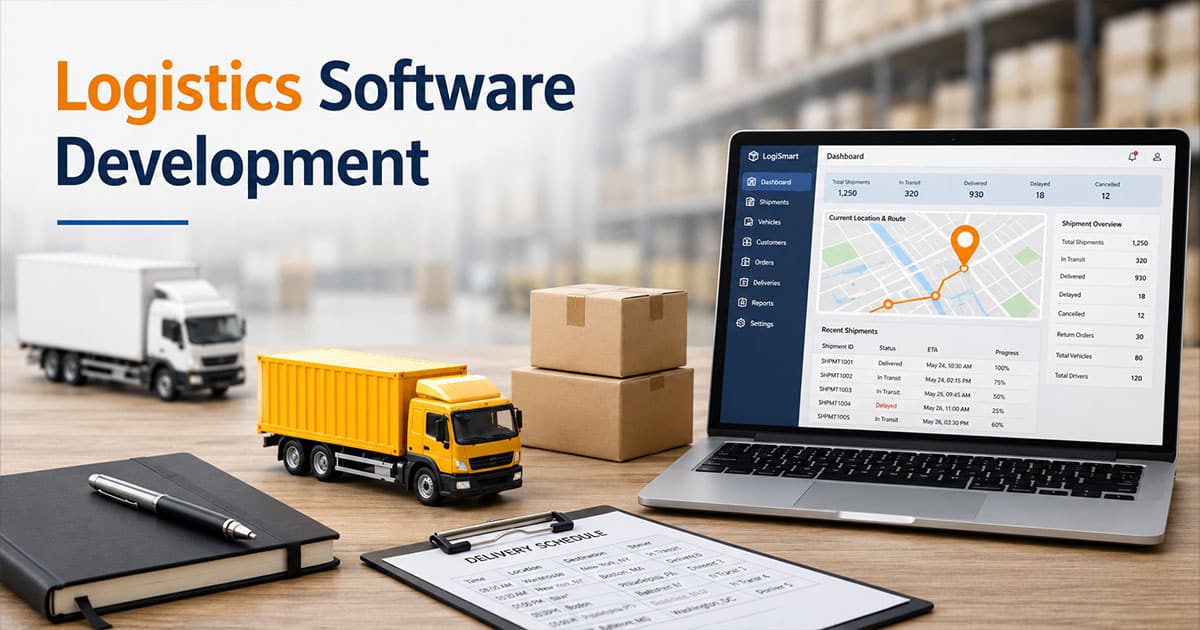
Supply chain disruptions between 2020 and 2024 exposed serious vulnerabilities across transportation and logistics businesses worldwide. Port congestion, labor shortages, and inventory imbalances pushed companies to invest heavily in digital resilience tools. By 2024, global investment in supply chain software exceeded 10 billion dollars, according to industry reports from McKinsey and Gartner. Logistics software development has become essential for companies seeking operational efficiency, supply chain visibility, and competitive advantage.

Custom logistics software development now powers everything from regional carrier networks to global omnichannel fulfillment operations. GainHQ helps logistics companies build tailored platforms that streamline supply chain operations and drive measurable results. The following guide covers everything you need to know about logistics software development in 2026.

What Is Logistics Software Development In 2026

Logistics software development refers to the process of planning, building, and maintaining digital tools that manage transportation, warehousing, and end to end supply chain orchestration. Software development companies create platforms that coordinate freight movement, optimize delivery routes, track shipments in real time, and automate billing workflows. The goal is to replace manual processes with intelligent systems that improve efficiency across every touchpoint in the logistics and supply chain.

Post-pandemic disruptions fundamentally changed how logistics providers approach technology investments. Companies discovered that spreadsheets and legacy systems could not handle sudden demand spikes or supplier failures. UK supply chain software revenue reached 1 billion dollars in 2023 with projections for 5.7 percent annual growth through 2027. Custom logistics software development became the preferred path for organizations needing platforms tailored to their specific operations rather than generic tools with limited flexibility, reflecting the broader tradeoffs in choosing between custom versus off-the-shelf software.

Core Types Of Logistics Software Solutions

Most logistics platforms fall into a few core categories that organizations can combine into one integrated ecosystem. Understanding each type helps you determine which logistics solutions match your business operations and strategic priorities.

Transportation Management Systems (TMS)

Transportation management systems centralize carrier selection, rate shopping, route planning, and execution across multiple freight modes. Advanced TMS platforms support truckload, LTL, intermodal, ocean, and air shipments from a single interface. Solutions from providers like Manhattan Associates can process over 10,000 shipments daily with 99 percent accuracy in carrier tendering. Transportation management software automates load matching, freight audit, and carrier performance scoring.

Warehouse Management Systems (WMS)

Warehouse management systems handle inbound receiving, putaway optimization, order picking via wave or zone methods, and outbound staging. High volume distribution centers use warehouse management platforms with RFID integration to achieve 99.9 percent inventory accuracy. WMS solutions direct workers through warehouse operations with mobile devices, reducing travel time and picking errors while improving throughput across busy facilities.

Fleet Management Software

Fleet management software tracks vehicles via telematics, enforces hours of service compliance, and enables predictive maintenance based on IoT sensor data. Companies using fleet tracking platforms reduce downtime by 20 to 25 percent through proactive maintenance scheduling. Fleet operations benefit from driver behavior scoring, fuel analytics, and route adherence monitoring that cut operational costs.

Inventory Management Systems

Inventory management systems provide real time stock visibility across multi site networks and support demand forecasting with 85 to 95 percent accuracy using machine learning models. Inventory tracking capabilities minimize stockouts and overstock situations that hurt profitability. Integration with ERP and eCommerce platforms ensures accurate available to promise data for customer services.

Order Management Systems

Order management systems synchronize sales channels, allocate inventory dynamically, and trigger fulfillment workflows automatically. OMS platforms prove crucial for omnichannel retailers where order accuracy must exceed 98 percent. Enterprise systems coordinate orders from web, mobile apps, marketplace, and store channels into unified fulfillment queues.

Key Business Benefits Of Custom Logistics Software

Custom logistics software delivers measurable ROI within 12 to 18 months by addressing specific pain points that generic tools cannot solve. These custom software development benefits help explain why logistics businesses invest in tailored platforms.

Operational Cost Reduction

Route optimization algorithms cut fuel consumption by 10 to 15 percent across transportation companies. Automated carrier selection minimizes detention fees through predictive bidding, while load planning software reduces empty miles by 20 to 30 percent. Real world metrics show 5 to 15 percent overall transportation spend savings after successful optimization projects. One mid sized distributor achieved 2.5 million dollars in annual savings through custom logistics software implementation.

Increased Supply Chain Visibility

Real time tracking replaces spreadsheet chaos with dashboards aggregating GPS, telematics, and ERP data into a single view. Live ETAs accurate to within 15 minutes improve dock scheduling by 25 percent and boost customer satisfaction scores by 30 percent. Geofenced alerts surface exceptions like delays immediately so planners can act before problems escalate across supply chain operations.

Higher Service Quality And Customer Experience

Self-service portals and proactive notifications slash “where is my order” inquiries by 50 to 70 percent. One retail distributor improved on-time in-full metrics from 82 to 96 percent after implementing integrated shipment tracking. Customer service teams spend less time answering basic questions and more time solving complex issues.

Process Automation And Error Reduction

Logistics automation eliminates manual tendering, Bill of Lading generation, invoicing, and accessorial calculations. Rules based workflows reduce chargebacks by 40 percent and mis shipments by 60 percent according to industry data. Robotic process automation handles repetitive tasks while freeing staff for higher value work across logistics processes.

Data Driven Decision Making

Centralizing logistics data from TMS, WMS, IoT sensors, and ERPs enables advanced data analytics and predictive analytics. Concrete applications include lane profitability analysis identifying 15 to 20 percent cost variances, fleet rightsizing with 10 to 15 percent capacity adjustments, and warehouse slotting redesigns based on velocity data. Business operations improve when decisions stem from accurate, timely information.

Scalability And Compliance

Cloud native logistics platforms handle Black Friday surges with auto scaling while maintaining sub-2-second response times. Built in compliance tools automate ELD mandates, customs filings under the ACE system, and GDPR data residency via geographic controls, following many of the same SaaS security best practices for 2026. Efficient operations at scale require infrastructure that grows with business demands without performance degradation.

Essential Features In Modern Logistics Software

Modern logistics software prioritizes real-time intelligence and automation to meet 2026 demands for accurate, resilient operations, closely aligned with broader software development trends for 2026. The following features represent baseline requirements for competitive logistics systems.

Real Time Tracking And ETA Management

GPS tracking, geofencing, and ML models enable dynamic ETAs with 90 percent accuracy across transportation networks. Interactive maps, Gantt timelines, and status heatmaps provide clarity for dispatchers and customers alike. Predictive delay alerts notify planners 2 to 4 hours ahead, cutting reactive firefighting by 35 percent. Real time tracking capabilities prove essential for logistics service providers competing on reliability.

Order, Shipment, And Freight Management

Order capture from EDI and OMS, consolidation for backhauls, automated tendering via APIs, and full lifecycle tracking to proof of delivery form the core shipment management workflow. Support for multimodal moves covers truckload, LTL, parcel, rail, ocean, and air with appropriate documentation and tracking for each mode. Comprehensive solutions handle the complete supply chain process from order to delivery.

Smart Route Optimization

Multi-stop routing respects time windows, hours of service rules, and vehicle capacities to maximize efficiency. AI recalibrates routes using live traffic and weather data to achieve 12 to 18 percent efficiency gains over static plans. Smart route optimization enables logistics companies to optimize delivery routes continuously as conditions change throughout the day.

Warehouse And Inventory Control

Directed putaway reduces travel time by 25 percent while wave picking boosts throughput by 30 percent in high volume facilities. Cycle counts via mobile RFID achieve 99.5 percent accuracy, and yard management coordinates trailer sequencing for efficient dock operations. Barcode, QR code, and RFID support enable fast scanning across multiple warehouse locations.

Tariff, Rating, And Billing Automation

Automated rating engines handle fuel surcharges, accessorials like liftgates, and complex tariff calculations accurately. Freight audit and payment workflows resolve 80 percent of disputes before invoice issuance. Transportation software solutions that automate billing reduce administrative burden while improving carrier and customer relationships.

Analytics, Reporting, And Alerting

Standard KPI dashboards track on time delivery, cost per mile, dock to stock time, and warehouse throughput across regions and partners. Configurable reports drill down into specific lanes, carriers, or facilities. Threshold based alerts via Slack or Teams notify managers when metrics deviate from targets.

Security, Roles, And Compliance Features

Role based access control, audit logs, AES 256 encryption, and SOC2 compliance reports represent baseline requirements for 2026 logistics platforms. Single sign on via OAuth with Azure AD or Okta secures access across enterprise systems. Cross border operations require GDPR and CCPA compliance features for data protection.

Technology Stack And Architecture Choices For Logistics Platforms

Modern logistics platforms require scalable architecture, low-latency data processing, and seamless integrations to handle petabyte-scale telemetry. The following technology choices support reliable, extensible transportation and logistics software.

Backend And Database Technologies

Node.js enables event-driven microservices handling over 1 million events per second for high-volume operations. Java Spring Boot provides enterprise robustness while .NET Core suits Windows ecosystems. PostgreSQL or MySQL handle ACID transactions, TimescaleDB manages telematics time series data, and MongoDB or Cassandra store shipment events at scale.

Frontend And Mobile Applications

React or Vue power responsive dashboards with real-time WebSocket updates for dispatcher consoles and control towers. Flutter or React Native delivers offline-first mobile apps that enable drivers to capture proof of delivery without connectivity. Field adoption increases by 40 percent when mobile apps work reliably in areas with poor signal.

Cloud Infrastructure And Deployment Models

AWS EKS, Azure AKS, or Google GKE provide Kubernetes orchestration for containerized microservices. Serverless functions like Lambda handle bursty optimization jobs cost effectively. Hybrid setups federate legacy WMS via Kafka bridges when organizations cannot fully migrate existing platforms immediately.

APIs, Integrations, And Data Pipelines

API first design proves critical for connecting ERPs, carrier portals, ELD providers, and marketplace platforms. REST and GraphQL support synchronous queries while webhooks push POD updates automatically. Apache Kafka or RabbitMQ stream logistics events from 100 or more carrier and telematics sources into centralized pipelines, mirroring best practices from modern custom software development services.

IoT, Telematics, And Edge Components

Telematics devices from providers like Samsara feed GPS, speed, and diagnostic data into logistics systems continuously. Temperature and humidity sensors trigger reefer alerts at 2 degree deviations to maintain cold chain compliance at 99.7 percent. Geofenced arrival events automate check in processes and improve dock scheduling accuracy.

AI, Optimization Engines, And Automation

TensorFlow or PyTorch power ETA prediction models that reduce variance by 25 percent compared to rule based estimates. OR Tools or Gurobi solvers optimize vehicle routing problems 15 percent better than heuristic approaches. Machine learning supports demand forecasting, fraud detection, and predictive maintenance scheduling across fleet operations, enabling the kind of transformation seen in how custom software transformed companies.

Step-by-Step Logistics Software Development Lifecycle

Successful logistics software projects follow agile principles adapted for high stakes operations. Enterprise platforms typically require 9 to 18 months with iterative value delivery throughout the logistics software development process.

Discovery, Process Mapping, And Requirements

Workshops with business stakeholders, dispatchers, drivers, and warehouse leads document current workflows and pain points over 2 to 4 weeks. Deliverables include BPMN process maps, 200 or more user stories, and integration catalogs covering EDI endpoints, carrier APIs, and ERP connections, forming the foundation for flexible custom software solutions. Clear KPIs like 95 percent OTIF provide measurable targets for the development team.

Solution Design And Prototyping

Architecture diagrams, entity relationship models, and UX wireframes in Figma establish the technical foundation before development begins. Clickable prototypes for dispatch boards, driver apps, and warehouse consoles validate designs with end users. Achieving 80 percent approval on prototypes before coding reduces expensive rework later.

Agile Development And Integration

Two week sprints in Jira with continuous integration via GitHub Actions or Jenkins enable frequent deliveries, aligning with best practices from a structured software development timeline guide. MVPs like TMS tendering functionality ship within 3 months using live API mocks that transition to real integrations. Early connection with carrier APIs, telematics feeds, and ERP test environments validates integration assumptions.

Quality Assurance, Performance, And Security Testing

Functional testing, regression testing, and end to end scenario tests cover 500 or more test cases with 95 percent automation. JMeter load testing simulates 10,000 shipments per hour to verify P99 latency stays below 500 milliseconds. Penetration testing via OWASP ZAP identifies security vulnerabilities before production deployment.

Pilot Rollout, Training, And Change Management

Limited pilots in one region, warehouse, or fleet capture 20 percent of volume before global rollout, similar to how disciplined MVPs like a startup launching an MVP in 90 days validate product-market fit. SCORM based e learning and floor walkthroughs achieve 90 percent proficiency among dispatchers, drivers, warehouse teams, and customer service agents. Change management plans address resistance and build champions within the organization.

Production Launch, Monitoring, And Continuous Improvement

Blue green deployments minimize downtime risk while Prometheus and Grafana dashboards maintain 99.99 percent uptime visibility. Quarterly OKR roadmaps incorporate NPS feedback and performance metrics to prioritize enhancements. Continuous improvement ensures the logistics platform evolves with changing business requirements.

Cost Factors And Budget Planning For Logistics Software Development

Budget planning for logistics software ranges from 500,000 dollars to 2 million for MVPs up to 5 to 15 million for global platforms. Understanding cost drivers helps organizations plan realistic investments for their logistics software project, especially when combined with a structured software development budget planning guide.

Scope, Complexity, And Domain Coverage

Module count directly influences cost and schedule. TMS only pilots require 4 to 6 months and approximately 750,000 dollars. Regional TMS plus WMS combinations take 9 to 12 months at around 3 million dollars. Enterprise multi site platforms with full integration require 18 or more months and 10 million dollars or higher. Microservices architecture adds 15 percent upfront but saves 30 percent over the system lifecycle.

Integrations And Data Quality Work

Connecting 50 or more carrier APIs, ELD providers, and ERPs often consumes 20 to 30 percent of project budget. Data cleansing and master data management address legacy spreadsheet chaos while migration efforts transfer historical records. Achieving 98 percent data purity requires dedicated ETL development and validation workflows.

Experience Level And Team Composition

Offshore junior developers cost approximately 50 dollars per hour while senior logistics specialists command 150 dollars per hour. Optimal 12 person teams include product owner, 2 business analysts, architect, 4 engineers, 2 QA specialists, and DevOps engineer, and organizations must weigh these choices against models like hiring developers versus outsourcing. Domain expertise from a logistics software development company delivers 25 percent faster results than generalist teams unfamiliar with the transportation industry.

UX, Mobile, And Analytics Investment

Strong UX design and driver friendly mobile apps increase adoption while reducing training costs, mirroring the impact of specialized UI/UX design services for SaaS products. Nielsen Norman UX audits and ML pipelines require 15 to 20 percent of budget but boost ROI 2x through 40 percent higher adoption rates. Investing in user experience pays dividends through faster time to value.

Hosting, Licensing, And Long Term Maintenance

Ongoing costs include 50,000 dollars monthly for AWS infrastructure supporting 1 million shipments, Twilio API fees at 1 cent per event, and 18 percent of staff costs for L3 support. Multi year total cost of ownership models project 3 year payback periods, particularly when factoring in periodic software modernization for modern businesses. Plan beyond initial build costs to ensure sustainable operations.

Why Choose GainHQ For Logistics Software Development

GainHQ delivers scalable logistics software development services tailored for modern logistics operations. With deep expertise in supply chain management and digital transformation, the team builds solutions that align with real business goals and evolving logistics industry demands, backed by its broader custom software development services.

Expertise In End-To-End Logistics Solutions

GainHQ brings strong experience across the logistics and transportation industry, covering everything from transportation software development to supply chain software development. Each logistics software development project is handled with a clear strategy, ensuring alignment with business workflows. The team works closely with transportation and logistics companies to develop custom logistics software that solves real operational challenges.

Custom Development With Modern Technology

Every business has unique needs, so GainHQ focuses on building a custom logistics solution using advanced cloud platforms and scalable architecture. From planning to execution, the development approach ensures flexibility and performance. As a trusted transportation software development company, GainHQ helps businesses develop custom logistics software that adapts as operations grow and evolve.

Reliable Partner For Long-Term Growth

GainHQ is more than a service provider; it acts as a reliable partner committed to long-term success. With a strong foundation in software development services, the team ensures continuous support and optimization, similar to its broader tech consulting services for modern businesses. This approach helps businesses stay competitive, improve efficiency, and lead in an increasingly complex logistics landscape.

FAQs

How Long Does It Take To Build A Custom Logistics Platform?

Timelines vary based on scope and complexity. Focused MVPs targeting route optimization or basic TMS functionality require 3 to 4 months across approximately 5 sprints. TMS plus WMS combinations typically take 9 to 12 months. Full suite enterprise platforms with ML capabilities need 15 to 18 months. Reusable modules accelerate delivery by 20 percent while stakeholder delays or 50 plus integrations extend schedules. Clear requirements and dedicated project teams remain the biggest factors in meeting target dates.

Should We Build Logistics Software In-House or Partner With A Vendor?

In house development suits organizations with 20 or more developers and domain subject matter experts, though teams risk 2x cost overruns from siloed knowledge. Vendor partners like GainHQ offer 30 to 50 percent faster delivery through battle tested technology stacks and proven methodologies, and organizations should apply the same rigor used when learning how to choose a custom software development partner. Choose a logistics software development company when transformation urgency outweighs IP control concerns. Decision criteria should include internal capacity, logistics domain expertise, and timeline requirements, and leaders can stay informed through resources like the GainHQ software development blog.

How Do We Future Proof Our Logistics Software Investment?

Event driven microservices, headless APIs for plug and play carrier connections, and Kubernetes deployment enable 10x scaling as business grows. Modular ML pipelines support emerging autonomous vehicle integration. Extensible data models and integration layers accommodate new carriers, automation technologies, or market expansions, whether you rely on in-house teams or a mix of in-house vs outsourcing software development. Architecture decisions made early reduce retrofit costs by 40 percent when regulations or technologies evolve.

What Security Requirements Apply To Logistics Platforms?

Baseline requirements include TLS 1.3 encryption in transit, AES 256 encryption at rest, zero trust role based access control, and SIEM audit logs retained for one year, all aligned with broader SaaS security best practices for 2026. Annual penetration testing validates defenses while PCI DSS compliance covers payment processing. Cross-border operations face GDPR PII pseudonymization requirements and China PIPL data localization mandates. Security investments protect both company data and customer trust.

How Can We Validate ROI Before a Full-Scale Logistics Software Rollout?

Launch pilots covering 10 percent of volume while tracking delta KPIs like cost per mile drops and OTIF improvements. A/B testing compares optimized versus legacy routes on parallel lanes. MVP proofs yielding 150 percent ROI signals justify wider deployment, as demonstrated in 70 percent of successful enterprise logistics software implementations. Controlled rollouts reduce risk while building organizational confidence in the new platform.

How to Scale a Development Team Without Breaking Product Delivery

How to Scale a Development Team Without Breaking Product Delivery

To scale a development team requires a careful balance between speed, quality, and coordination. As engineering teams expand, maintaining alignment across software development teams becomes more complex, especially during periods of rapid growth. Without a clear strategy, scaling engineering teams can lead to delays, communication gaps, and reduced output.

Strong project management plays a critical role in ensuring teams stay organized and focused. Clear workflows help teams track progress, manage workloads, and maintain delivery timelines. At the same time, leaders must preserve code quality and team culture while expanding capacity.

When done right, scaling creates a competitive edge by enabling faster innovation, better collaboration, and consistent product delivery without sacrificing performance or stability.

Why Is Scaling Development Teams Crucial

Scaling development teams becomes crucial as product demands grow and delivery expectations increase. Without the right approach, teams face delays, bottlenecks, and quality issues, making it essential to expand capacity while maintaining efficiency, alignment, and consistent output.

Market Pressures Demand Faster Delivery

In 2026, product cycles move faster than ever. AI integration, global market shifts, and changing customer expectations push companies to ship features quickly. Remote and hybrid collaboration has become standard across more than 70 percent of tech firms. Development teams face constant pressure to deliver while keeping technical debt under control.

Demand Is Not the Bottleneck

Many companies in 2024 through 2026 discovered something surprising. The bottleneck was not market demand. The real constraint was their ability to deliver consistently as teams grew. Post-funding rounds often reveal delivery problems that were hidden when teams were smaller. A single team of 6 engineers can often outship a poorly structured team of 20.

More People Can Slow You Down

Adding engineers does not automatically mean faster delivery. Brooks’s Law, from Fred Brooks’s 1975 book “The Mythical Man-Month,” explains why. Adding people to a late project makes it later. Studies in 2025 confirmed that teams of 18 engineers often ship only marginally more than initial 6-person squads when structures remain unchanged. Coordination overhead grows faster than output.

Scaling Is an Organizational Design Problem

Scaling transcends headcount. It requires redesigning how product, engineering, and business operations work together. Engineering leaders must frame decisions through a business lens, aligning budgets and constraints to real needs. Without this alignment, unchecked expansion leads to higher incident rates and engineer burnout.

The Friction of Growth Is Real

If you are a founder, CTO, or product leader, you have probably felt this friction. Features take longer. Handoffs multiply. New hires seem lost for months. These are signals that your current team structure cannot absorb more developers without intentional changes. The guidance in this article draws from patterns that work across organizations of different sizes and stages.

What “Scaling” a Development Team Really Means

Scaling differs from pure growth. Scaling means your ability to ship more value per person over time. Growth just adds headcount.

Here is a simple example. A team of 6 engineers shipping 2 to 3 meaningful releases per month is healthy. A team of 18 still shipping the same amount has a scaling problem. The coordination overhead has consumed the gains from adding engineers.

Healthy scaling involves four dimensions: throughput, quality, predictability, and team health. All four connect to business outcomes like revenue per engineer or customer satisfaction. Every organization’s playbook looks different, but clear ownership, strong onboarding, and small cross-functional squads appear in most success stories. Scaling is iterative, and effective engineering team scaling strategies help you adjust structure, process, and tooling as the team moves through stages.

Knowing When It’s Time To Scale Your Dev Team

Recognizing the right moment to scale your development team prevents delays and burnout. Growing workload, missed deadlines, and rising complexity signal capacity limits, making it essential to expand strategically while maintaining efficiency, quality, and delivery consistency, especially when navigating modern MVP development trends for startups.

Recognizing the Warning Signs

As a founder or head of engineering, you notice patterns. Roadmaps slip consistently. Engineers look tired. Incidents climb quarter over quarter. Lead times stretch beyond what customers will accept. These signals tell you something structural needs to change.

Backlog and Delivery Indicators

Concrete indicators help confirm your instinct. Watch for a backlog that grows 1.5 times faster than your burn-down over 3 to 4 sprints. Features that sit “almost done” for two weeks or more signal handoff problems. When incident volumes climb 25 percent quarterly or lead times exceed 10 days, your current capacity cannot meet demand.

Business Triggers That Require Scale

Business events often force the question. A Series A or B round brings expectations of faster delivery. An enterprise customer pipeline demands parallel workstreams. A product expansion into mobile or AI requires specialized skills your current employees do not have. These triggers require deliberate planning, not reactive hiring.

Distinguishing Busy from Structurally Constrained

Not every busy period means you need more engineers. A 2-month crunch before a launch may resolve through better prioritization. Structural capacity deficits look different. Velocity trends flatline below 80 percent of capacity. Skill gaps in domains like SRE cause incidents on more than 5 percent of deployments. When busy becomes chronic, scaling becomes necessary.

Audit Before You Hire

Before starting a hiring wave, audit your architecture and processes. Monolithic systems amplify bottlenecks at scale. Reports suggest 60 percent of scaling failures tie to unaddressed tech debt. One firm reduced incidents by 35 percent by splitting services before doubling headcount. Invest in scalable software architecture for high-growth products and sanity-check your foundation so you do not scale existing friction into costly mistakes.

How To Design Your Team For Scale Before You Hire

Designing your team structure before hiring ensures smooth scaling and avoids confusion later. Clear roles, defined workflows, and strong communication systems help teams grow efficiently while maintaining alignment, productivity, and consistent delivery without unnecessary complexity.

Structure Comes Before Headcount

How you form teams today will amplify or reduce complexity when you reach 20 or more engineers. Team structure decisions made early echo through every future hire. Get this right and new team members contribute faster. Get it wrong and you spend months untangling dependencies.

The Product-Aligned Squad Model

Product-aligned squads work well for scaling software teams. Each squad is a small cross-functional team of 5 to 9 members. They own a clear area of the product. They can ship independently. They share goals with product owners and project managers embedded in the team. This model lets agile teams move without waiting for other teams.

Why Functional Splits Create Problems

Splitting strictly by “front-end team” and “back-end team” creates dependencies. Every feature requires coordination across multiple teams. Delivery slows by 30 to 40 percent. Onboarding becomes harder because new engineers cannot see end-to-end context. Product development teams perform better when they own full slices of functionality.

An Example of Team Restructuring

Consider a company moving from one large 12-person team to two squads after a Series A. One squad owns onboarding and billing. The other owns core workflows and performance. Each squad has clear boundaries. Within two quarters, release velocity increases 2.5 times. Team leads report faster decisions and fewer blockers.

Define Ownership Explicitly

Use domain-driven design boundaries to clarify ownership. APIs, microservices, and bounded contexts guide where new hires contribute. Explicit ownership prevents the confusion that slows larger teams. When engineers know their domain, they make technical decisions with confidence and support broader enterprise scalability strategies. Knowledge transfer happens naturally within squad boundaries.

Hiring With Scale In Mind, Not Just Filling Seats

Strong scaling starts with intentional hiring decisions, not quick fixes. Focus on engineers who adapt, communicate clearly, and align with product goals, so each addition strengthens team capability and supports sustainable growth without creating future bottlenecks.

The Risk of Rushed Hiring

The period between 10 and 30 engineers is high risk. Every hire changes team dynamics. Post-funding hiring sprees often cause 20 to 30 percent productivity troughs. Brooks’s Law applies directly here. Full-time hiring cycles take 3 to 6 months before new hires reach full productivity. Rushing this process creates chaos.

Anchor Hiring to Outcomes

Define the outcomes you want over the next 12 to 18 months. Do you need 2 times feature velocity? 99.9 percent uptime? Expansion to mobile? Hire to those outcomes, not to fill org chart boxes. This focus helps you identify the right profiles: system designers for architecture, delivery specialists for execution, product-minded developers paired with QA automation experts.

Complementary Technical Skills Matter

Balance your hiring process around complementary skills. A team of all senior engineers with similar backgrounds creates blind spots. Mix strong system designers with execution-focused engineers. Pair people who think in architectures with people who obsess over user experience. This diversity lifts team velocity by 25 percent in balanced squads.

Soft Skills for Scaling Contexts

Soft skills amplify at scale. Mentoring through pair and mob programming transfers knowledge twice as fast. Clear documentation reduces the tribal knowledge that causes 40 percent of delays. The ability to give and receive feedback maintains team health. Look for cultural fit alongside technical excellence during the hiring process, and align expectations using a realistic software development timeline guide.

Hire in Batches and Validate

Rather than bringing in a large cohort, hire in small batches of 2 to 4 people. Validate that your onboarding process works. Check that senior engineers have time to mentor without burning out. Adjust your plan before adding more developers. Target first contributions within weeks, not months. This rhythm keeps you on the same page with reality.

When to Keep Teams Small and Autonomous As You Grow

Small, autonomous teams work best when speed, ownership, and focus matter most. As complexity increases, keeping teams lean helps reduce coordination overhead, improve decision-making, and maintain clarity while still supporting growth without slowing delivery.

The Two-Pizza Rule Still Works

The two-pizza rule suggests teams of 6 to 10 people work best. This size keeps communication paths manageable. A 7-person team has 21 communication paths. A 20-person team has 190. Small teams can own problems end-to-end without drowning in coordination overhead. This principle applies whether you have 15 or 50 total engineers across multiple teams.

Communication Paths Explode with Size

The math is simple. Communication paths in a team follow the formula n times n minus 1 divided by 2. A 14-person team has 91 paths. Split that into two 7-person squads and you have 42 paths total. Smaller, well-bounded teams reduce friction and let people focus on delivery instead of meetings.

A Concrete Split Example

A company with a 14-person team split into two product squads after a 2025 audit. One squad owned customer-facing features. The other owned internal tools and infrastructure. After three sprints, ownership clarity increased. Sprint velocity rose 35 percent. Incidents dropped 25 percent. The split paid for itself quickly.

What Autonomy Looks Like in Practice

Autonomous squads control their backlog using tools like Linear or Jira. They manage their own CI/CD pipelines and follow modern DevOps best practices. They track metrics specific to their domain. They make decisions without waiting for approval from distant team leaders. This autonomy lets them move fast and take ownership of outcomes.

Autonomy Does Not Mean Isolation

Autonomous teams still align on standards. Quarterly architecture reviews keep technical decisions consistent. Shared coding standards enforced through linting prevent drift. OKRs connect team-level goals to company strategy. Lightweight guilds let engineers across teams share knowledge. The goal is cohesion without micromanagement. Teams that balance autonomy with alignment show 50 percent higher retention.

Communication, Documentation, and Onboarding At Scale

Clear communication, structured documentation, and a defined onboarding process ensure teams stay aligned as they grow. Strong systems reduce confusion, speed up knowledge transfer, and help new team members contribute faster without disrupting workflows or delivery timelines.

The New Engineer Experience

Imagine a new engineer joining a 20-person remote team in 2026. If documentation is ad hoc and communication scattered, that engineer takes 4 to 6 weeks to become productive. Multiply this by every new hire and you lose months of potential output. The onboarding process either accelerates or blocks your scaling efforts.

Documentation as Product

Treat documentation as a core part of your software development process. Once you pass 8 to 10 engineers with multiple repositories, written knowledge becomes essential. Architecture decision records, runbooks, coding standards, and environment setup guides all reduce the time new employees need to contribute. As systems evolve through refactor vs rebuild modernization decisions, update docs as code changes.

Essential Onboarding Assets

Specific assets make onboarding smoother. Architecture diagrams using models like C4 help engineers understand the system. Service runbooks cut mean time to recovery by 50 percent. Day one checklists automate environment setup in hours instead of days. These investments compress ramp-up by 70 percent and let new hires ship code within their first week.

Asynchronous Communication Wins

Remote and hybrid teams rely on asynchronous communication. Written RFCs, recorded demos, and visible task tracking reduce meeting load by 40 percent. Tools like Slack and Linear keep discussions discoverable. When conversations happen in the open, new team members learn faster and senior engineers spend less time repeating context.

Measuring Onboarding Success

Track how quickly a new hire can make a meaningful production change with confidence. Target first PR merged within 5 days. Survey new employees about their ramp experience and iterate until satisfaction hits 90 percent. Poor onboarding costs organizations over $50,000 per engineer annually in lost productivity and increased attrition.

How To Maintain Quality And Pace As The Team Expands

Maintaining quality and delivery speed requires strong processes and clear standards. Consistent code reviews, defined workflows, and shared accountability help teams avoid slowdowns, reduce errors, and keep output reliable as complexity and team size increase.

What Usually Goes Wrong

Fast scaling creates predictable problems. More parallel work means more bugs. Rushed code reviews elevate failure rates to 20 or 30 percent. Customer frustration grows with outages. Without safeguards, the pace that feels like progress actually creates technical debt that slows future work.

Build Safety Nets Early

Investment in automated testing, CI/CD pipelines, and monitoring creates a safety net. Target 80 percent test coverage. Aim for deployment lead times under one hour. Set up alerts through tools like Datadog. These foundations, combined with cloud native development practices, let a larger team move quickly without constant regressions. DORA elite performers hit these benchmarks consistently.

Standardize Key Practices

Standardization prevents chaos. Require peer review with at least two reviewers. Define a clear “definition of done” that includes tests and demos. Allocate 10 to 20 percent of sprint capacity to technical debt reduction. These practices prevent debt from compounding at 15 percent velocity loss yearly.

Use Metrics to Detect Problems

Metrics guide your response to scale. Track deployment frequency and target daily releases for mature teams. Monitor change failure rate and keep it under 10 percent. Measure mean time to restore service and aim for under one hour. These indicators show when scaling harms quality before customers notice.

Sustainable Scaling Feels Boring

Healthy scaling looks boring from the outside. Releases happen weekly without drama. P1 incidents become rare. Engineers have capacity for innovation instead of firefighting. One firm scaling to 25 engineers maintained elite DORA status by keeping practices tight. Predictability freed 20 percent of capacity for high-impact work.

How To Choose The Right Mix Of Internal And External Talent

The right balance between internal and external talent ensures flexibility without loss of control. Internal engineers bring product knowledge and continuity, while external talent adds speed and specialized skills to support efficient scaling, as outlined in in-depth hire developers vs outsourcing guidance.

The 2024 to 2026 Hiring Reality

Talent markets in this period feature 20 to 30 percent shortages in areas like SRE and DevOps. Remote pools expand options but hiring cycles still drag 4 or more months. Product strategy shifts as AI changes what is possible. Flexibility in how you build your team matters more than rigid headcount plans.

When to Grow Internal Teams

Internal growth fits long-term product bets. Critical systems where deep institutional knowledge matters benefit from engineers who stay for years. Proprietary technology that requires 2 to 3 year ramps to master needs internal ownership, especially in post-launch phases covered in a post-MVP development growth strategy. Internal hires show 25 percent higher retention but create rigidity when needs shift quickly.

When External Talent Makes Sense

External developers and engineers help with short-term surges. A 3 to 6 month mobile pivot might need specialized skills you cannot build internally in time. Exploratory work benefits from broader skill sets that external engineers bring, which makes it critical to choose a custom software development partner that aligns with your goals. Staff augmentation activates in weeks rather than months.

Integration Is Non-Negotiable

External engineers must integrate into your processes and company’s culture. Treat them as part of the team, not a separate workstream. Shared PRs, pair programming, and regular knowledge transfer prevent siloing. Without integration, you add 15 percent overhead and risk misalignment with business needs.

Think Capabilities, Not Titles

Focus on capabilities rather than job titles. A 70/30 mix of internal to external talent adjusts as strategy shifts. Top talent in scarce domains like AI may only be available externally and should be aligned with custom software development trends shaping the future. Product management needs may flex seasonally. Build resilience by staying open to different sourcing models as your business evolves.

Final Discussion

Measuring success goes beyond output and focuses on consistency, quality, and team alignment. Many organizations struggle because they expand without building the right structure to support growth. Without clarity, teams lose focus and efficiency drops over time.

Leaders must take an in depth approach to scaling by aligning roles, responsibilities, and workflows with business goals. Strong foundations in areas like SaaS product development from build to scale help teams collaborate effectively and maintain stability even as complexity increases.

A well-structured team creates space to drive innovation while maintaining delivery standards. A shared SaaS design system for scalable products allows teams to adapt quickly without creating bottlenecks or confusion.

Sustainable scaling is not about speed alone. It is about building systems that support long term success while keeping teams efficient, focused, and aligned with product goals, including robust infrastructure planning like smooth cloud migration for growing teams.

FAQ

How Big Should Each Development Team Be When We Start Scaling?

Most organizations find a sweet spot between 6 and 10 people per team. This includes engineering, product, and QA roles. This team size keeps communication manageable while offering enough skill diversity to handle complex work. Larger teams tend to split naturally into sub-groups anyway, so starting with smaller squads prevents that informal fragmentation.

Do We Need to Change Our Tech Stack Before We Scale Our Team?

You usually do not need a full rewrite. Focus on reducing obvious bottlenecks. A monolithic service that no single person understands creates single points of failure. Weak test coverage slows releases. Manual deployments block everyone. Address these specific issues rather than rebuilding everything with a more future-proof tech stack for scalable growth. Target changes that remove friction for the engineers you plan to hire.

How Fast Is Too Fast When Hiring Developers?

If your onboarding cannot keep up, you are hiring too fast. Watch for ramp times exceeding 4 weeks. Notice if team leads and senior engineers spend most of their time firefighting instead of mentoring and doing code reviews. A good rule is no more than 1 to 2 new hires per month for every 10 existing engineers. Validate integration before accelerating and ensure your choices align with a scalable tech stack selection strategy.

What Is The First Process To Formalize When Our Team Grows Beyond 8 to 10 Engineers?

Start with a clear, shared way of planning and tracking work each sprint. Everyone should understand priorities, ownership, and how daily tasks connect to company goals. A shared backlog with visible burn-down helps teams stay coordinated and can be complemented by a clear SaaS product roadmap. This foundation supports other process improvements as teams grow further.

How Can We Keep Our Culture Intact As New Developers Join From Different Locations?

Make cultural expectations explicit. Write down values, communication norms, and decision-making principles. Reinforce them during onboarding with every new employee. Use regular check-ins and the tools your teams use daily to model expected behaviors so your culture supports robust scalability strategies for sustainable growth. Culture that lives only in unwritten rules fades as organizations grow and people work across time zones.

Node.js vs Python Backend: Which Development Environment Is Better?

Node.js vs Python Backend: Which Development Environment Is Better?

Node.js vs Python backend remains a common decision point for teams planning modern applications. The nodejs vs python comparison often depends on performance needs, scalability, and the overall development process. While Node.js operates on a javascript runtime designed for speed and real-time handling, Python focuses on simplicity and concise code that enables developers to build complex systems efficiently.

The python node discussion also extends to use cases like mobile app development, data-driven platforms, and enterprise systems. Experienced developers often weigh flexibility against execution models when entering this python debate. Choosing between these technologies requires understanding how each environment supports project goals, team capabilities, and long-term growth within backend architecture.

Node.js vs Python Backend: Key Differences

The main difference comes down to real-time performance versus comprehensive functionality.

Decision FactorNode.js (Speed & Scale)Python (Intelligence & Simplicity)
Best Use CaseSaaS apps, real-time platforms, APIs, dashboardsAI tools, data platforms, automation systems
PerformanceHandles thousands of users smoothly (high concurrency)Good performance, but weaker for real-time heavy apps
ScalabilityBuilt for fast-growing, high-traffic productsScalable with extra setup (workers, queues)
Development SpeedFast if you already use JavaScriptVery fast, beginner-friendly syntax
Ecosystem StrengthFull-stack JavaScript (frontend + backend)Best-in-class for AI, ML, and data
Learning CurveModerate (async can be tricky)Easy to learn and maintain
Where It WinsReal-time apps, marketplaces, SaaS growthAI features, analytics, automation
Final VerdictChoose this for speed, scalability, and real-time UXChoose this for data-driven or AI-powered products

Both approaches can power successful web applications, but the development experience differs significantly.

Performance Characteristics

Performance is one of the most critical factors when selecting a backend technology. The workload type, whether I/O-bound or CPU-bound, largely determines which runtime delivers better results for your specific use case.

Node.js Backend Performance

Node.js achieves remarkable throughput in I/O-bound workloads through its V8 engine optimization and non blocking I/O operations. The V8 engine compiles JavaScript code directly to machine code, enabling fast execution without interpretation overhead.

Recent benchmarks show an Express server handling approximately 55,200 queries per second with average response times around 4.5 milliseconds. This event driven nature allows Node.js to manage multiple simultaneous connections efficiently, making it ideal for chat apps, streaming services and real-time dashboards.

The architecture processes concurrent requests through a single threaded event loop, freeing resources to serve other requests rather than waiting on I/O operations. For web services requiring instant response to thousands of users, this design provides minimal overhead and consistent low latency.

However, CPU bound tasks present a challenge. Long-running computational work blocks the event loop, degrading performance for all connected users. Worker threads or separate microservices handle these scenarios, but they add architectural complexity.

Python Backend Performance

Python’s interpreted execution model through CPython runs slower per operation compared to compiled languages or JIT-compiled runtimes. The global interpreter lock ensures only one thread executes Python code at a time, which affects multi-threading performance for CPU bound tasks.

Despite these constraints, Python excels in data processing and computational workloads. Libraries like NumPy, Pandas and TensorFlow are implemented in C/C++, bypassing the GIL and delivering excellent performance for scientific computing and machine learning tasks.

Modern asynchronous frameworks like FastAPI with Uvicorn deliver respectable throughput for I/O-bound workloads. Benchmarks show FastAPI handling around 38,100 queries per second with approximately 7.8 millisecond response times. Django 6 in ASGI mode achieves roughly 850,000 JSON responses per second, narrowing the gap with Node.js for database-bound operations.

Experimental no-GIL Python builds show promise, with up to 4x improvement in execution time for parallelizable numerical workloads. These developments suggest Python’s performance profile continues improving.

Scalability and Concurrency

Different scaling approaches create distinct challenges for Node.js and Python backends. How each technology handles growing user loads and distributes work across resources impacts both infrastructure costs and system maintainability.

Node.js Scalability

A single Node.js process can handle between 80,000 to 250,000 concurrent connections for lightweight I/O-bound requests. This efficiency stems from the non blocking nature of its event loop, which processes multiple requests without dedicating threads to waiting operations.

Horizontal scaling comes naturally through clustering and containerization. The cluster module spawns multiple processes across CPU cores, each running its own event loop. Kubernetes and Docker deployments distribute load across many Node.js instances with minimal configuration overhead.

Worker threads enable offloading CPU-intensive tasks to background threads without blocking the main event loop. This pattern keeps real-time responsiveness intact while handling occasional computational work.

Memory management requires attention at scale. Each process consumes resources independently, and garbage collection pauses can affect latency under heavy load. Monitoring event loop lag and memory consumption becomes essential for high concurrency workloads.

Python Scalability

Scaling Python scales relies on process-based approaches rather than threading. Multiple worker processes through Gunicorn or Uvicorn utilize multiple CPU cores effectively, with each process handling many concurrent requests asynchronously.

ASGI servers and async frameworks like FastAPI enable high concurrency per process for I/O-bound operations. Threads release the GIL during blocking I/O, allowing practical concurrency within a single process for network-heavy workloads.

The GIL limitation means CPU-bound scaling requires multiprocessing or task distribution to specialized services. Background job systems like Celery handle computational work separately from request processing, keeping web APIs responsive.

Container deployment strategies work well with Python backends. Multiple workers across Kubernetes pods distribute load effectively, though memory footprint per worker tends higher than Node.js, affecting infrastructure costs at scale.

Development Experience and Learning Curve

The development workflow varies significantly between these technologies. Team composition, existing skill sets and project complexity all influence which runtime delivers faster results.

Node.js Development

JavaScript consistency across frontend and backend development enables developers to work throughout the entire stack with the same language. Teams avoid context switching between languages, and code sharing between client and server becomes practical.

The node package manager provides access to millions of packages, enabling rapid prototyping and feature development. Express.js, NestJS and similar frameworks offer lightweight starting points that scale with project complexity, but planning realistic milestones with a solid software development timeline is still critical as systems grow.

TypeScript adoption has matured the ecosystem considerably. Static typing catches errors during development, improves documentation through type definitions, and makes large codebases more maintainable.

Asynchronous programming patterns present the steepest learning curve. Modern async/await syntax simplifies code significantly compared to callback patterns, but debugging async operations and understanding error handling across promise chains requires experience. Stack traces can become difficult to follow when errors propagate through multiple async boundaries.

Python Development

Readable syntax and clear structure make Python code accessible to developers from diverse backgrounds. Teams including data science specialists onboard faster, and code reviews become more straightforward with less syntactic complexity.

Extensive documentation and learning resources support new developers throughout their growth. Python community support remains strong, with established patterns and best practices well documented across frameworks, much like the curated insights shared on the GainHQ software development blog.

Framework diversity provides options matching project scope. Django delivers batteries-included functionality with ORM, authentication and admin dashboards ready immediately. Flask offers minimal structure for simpler services. FastAPI combines async performance with automatic OpenAPI documentation generation.

Development speed for complex business logic often favors Python. Rich standard libraries, mature testing frameworks, and structured patterns reduce time spent on infrastructure decisions. The trade-off involves less intuitive async patterns compared to Node.js when building high concurrency applications.

Architecture and Design Patterns

Architectural approaches impact long-term maintainability and system design. The patterns each technology encourages shape how systems evolve over years of development.

Node.js Architecture

Event-driven, non-blocking architecture aligns naturally with microservices and API development. Small, focused services communicate through lightweight protocols, and each service handles its own event loop efficiently.

Real-time communication capabilities through WebSocket libraries like Socket.io feel native in Node.js. Live updates, collaborative features and streaming data flows integrate smoothly without additional infrastructure.

JS architecture patterns emphasize promise-based error handling and async control flow. Modern codebases use async/await extensively, though callback patterns persist in older libraries. Robust error boundaries prevent unhandled promise rejections from crashing processes.

Backend for Frontend patterns, API gateways and serverless functions suit Node.js deployment models. Cold start times remain low, and memory efficiency makes it cost-effective for many small functions. CPU-heavy work typically separates into dedicated services, often written in other languages optimized for computation.

Python Architecture

Synchronous execution models and structured programming approaches create predictable control flow. Django’s Model-View-Controller pattern organizes code into clear layers, with well-defined responsibilities for each component.

Modular design benefits from Python’s explicit import system and package structure. Business logic, data access and service layers separate cleanly, supporting teams working across large codebases.

Integration with data science and artificial intelligence workflows happens naturally. Data pipelines, analysis jobs and model serving share Python code and libraries with web APIs. Organizations maintaining both backend services and ML capabilities find efficiency in unified language expertise.

ASGI interface replaced WSGI for modern async capabilities, enabling WebSocket support and streaming within Python frameworks. The transition added complexity but brought Python closer to Node.js capabilities for real-time features.

Ecosystem and Library Support

Available tools and libraries significantly influence development productivity. The richness and maturity of ecosystems can accelerate development or enable specialized capabilities.

Node.js Ecosystem

The node package manager hosts over two million packages covering web frameworks, real-time tools, stream handling and beyond. Rapid development capabilities come from this breadth, with solutions available for most common problems.

Frontend integration benefits full-stack JS development teams. Shared validation logic, type definitions and utility functions work across client and server. React, Vue and Angular projects integrate smoothly with Node.js backends, especially when paired with thoughtful UI/UX design services for SaaS products to ensure the frontend experience matches backend capabilities.

Package quality varies considerably. Security vetting remains essential, and dependency management requires attention. Some packages lack maintenance, and version conflicts in deep dependency trees can create challenges. Tools like npm audit and Snyk help manage security concerns.

Performance optimizations continue improving. Newer V8 versions bring better JSON handling, optimized streaming and improved worker thread capabilities. The runtime evolves rapidly, though this pace occasionally introduces breaking changes.

Python Ecosystem

Mature library ecosystems for web development and data processing distinguish Python from alternatives. AI/ML integration through TensorFlow, PyTorch, NumPy and Pandas makes Python the default choice for data analytics and machine learning applications.

Automation capabilities extend beyond web services. Scripting, data pipelines, scientific computing and research workflows all benefit from Python’s extensive library support. Organizations often maintain Python expertise across multiple domains.

Cross-domain functionality creates efficiency. Backend developers who also work on data analysis or model training share language skills and tooling knowledge. This reduces handoff friction between teams.

C extensions and compiled backends through Cython or PyPy expand performance envelopes when needed. The ecosystem accommodates optimization without abandoning Python’s productivity advantages.

Project Type Considerations

Specific application requirements often determine the optimal backend choice.

Real-time applications favor Node.js for instant communication and live updates. The event loop handles many concurrent connections efficiently, and WebSocket support enables modern web apps requiring instant data synchronization, while data-heavy workflows or highly specialized processes may call for flexible custom software solutions on top of either runtime.

Data-heavy applications benefit from Python’s computational libraries and processing power. Analytics dashboards, reporting systems and applications requiring extensive data analysis leverage Python’s scientific computing ecosystem, and many SaaS teams now combine this with LLM integration strategies for SaaS platforms to add intelligent automation and insights.

Startups often prefer Node.js for rapid MVP development and unified JavaScript teams. Faster iteration cycles and shared frontend/backend skills reduce time to market, as shown in MVP launches achieved in 90 days through disciplined scoping and execution. The same language across the stack simplifies hiring and onboarding, and structured support for successful SaaS product launch strategies helps early teams navigate competitive markets.

Enterprise applications may choose Python for stability, extensive documentation and long-term maintenance. Django’s batteries-included approach reduces decisions, and Python’s readability supports teams maintaining codebases over many years, especially when rolling out large-scale custom software that transforms operations.

Node.js vs Python Backend: Which Should You Choose?

Choose Node.js backend development if you need real-time capabilities, high concurrency handling, unified JavaScript development teams and rapid development for modern web applications. The event driven architecture excels at managing multiple requests simultaneously with minimal latency, but many teams also benefit from strategic tech consulting services when aligning backend choices with broader digital transformation or evaluating build vs buy software decisions.

Choose Python backend development if you require extensive data processing, machine learning integration, complex business logic implementation and comprehensive framework support for enterprise-grade applications. The readable syntax and rich ecosystem support long-term maintainability.

Both Node.js and Python can power successful backend systems when matched with appropriate project requirements and development team expertise, and in some cases a software build vs buy case study shows how custom platforms on either stack can outperform generic tools when workflows are unique.

How GainHQ Helps Businesses Choose the Right Backend Technology

GainHQ helps businesses select the right backend technology by aligning technical decisions with product goals and performance metrics. Alongside language guidance, its custom software development services help ensure architecture, integrations and delivery models match long-term product strategy. Whether choosing a backend language or evaluating a high level programming language, teams get expert guidance tailored to real business needs.

The company analyzes server side requirements, scalability expectations, and system complexity before recommending the best approach. For many initiatives, this also includes selecting between agile and waterfall software development practices that fit the product’s risk profile and stakeholder expectations. From environments where a javascript runtime built system enables javascript efficiency to more structured architectures, GainHQ supports end to end software development.

With a focus on helping teams write code that scales, GainHQ ensures the chosen backend technology fits both immediate needs and long term growth strategies, including long-horizon plans for software modernization of existing systems.

Frequently Asked Questions

Which Backend Performs Better Node.js Or Python

For I/O-bound workloads with many concurrent connections, Node.js delivers approximately 40-60% higher throughput. Benchmarks show Node.js handling around 12,450 requests per second compared to Python’s 8,200 under similar conditions. For CPU-bound numerical work, Python with optimized libraries often outperforms due to C-implemented scientific computing packages.

When Should You Choose Python Over Node.js

Choose Python when your project requires heavy data science or machine learning integration, when your team has stronger Python expertise, or when you need structured frameworks with comprehensive built-in components. Python’s readable syntax and mature ORM tools suit complex business logic that benefits from clear code organization.

Is Node.js Suitable For Enterprise Applications

Yes. Netflix, PayPal, LinkedIn and Uber all use Node.js in production for APIs, real-time systems and microservices. The unified JavaScript stack reduces code overlap and speeds deployment. Enterprise adoption requires attention to security practices, package maintenance and backward compatibility planning.

Can You Combine Node.js And Python In One System

Absolutely. Many production systems use Node.js for frontend APIs and real-time features while Python handles ML inference, analytics and background processing. Message queues and microservices patterns enable clean separation. Each technology handles what it does best without compromising the other.

Which Backend Is Better For SaaS Product Development

It depends on your SaaS product’s nature. Real-time collaboration features, live notifications and high connection counts favor Node.js. Complex admin dashboards, analytics features and data-heavy processing favor Python. For rapid MVPs, Node.js enables faster iteration with unified JavaScript teams. Python’s comprehensive frameworks support faster feature development when business logic complexity grows.

A Complete Guide To Healthcare Software Development For Modern Providers

A Complete Guide To Healthcare Software Development For Modern Providers

Healthcare software development is changing how care is delivered. Hospitals, clinics, and startups now rely on digital tools to manage data, improve workflows, and support better patient outcomes. Demand keeps rising as systems move toward smarter and faster care.

Every healthcare product must balance usability, security, and compliance. From telemedicine apps to EHR systems, each solution needs careful planning and execution. A clear understanding of the process helps avoid costly mistakes.

This guide breaks down everything you need to know. You will see key types, technologies, costs, and best practices that shape successful healthcare software development.

What Is Healthcare Software Development

Healthcare software development refers to the process of creating digital tools for the healthcare industry. It includes medical software, telemedicine software, and practice management software used by healthcare providers and healthcare professionals. These healthcare software solutions help manage patient data, improve patient care, and support clinical workflows. Many healthcare organizations invest in custom software development services to build tailored solutions for specific needs.

Medical software development also covers systems like electronic health records, remote patient monitoring software, and medical billing software. These tools support patient data management, enhance patient engagement, and improve operational efficiency. A reliable healthcare software development company ensures data security, HIPAA compliance, and seamless integration with existing healthcare systems.

As a rapidly evolving industry, healthcare software development focuses on innovative software solutions that deliver better patient outcomes. It uses technologies like data encryption, natural language processing, and healthcare data analytics. From medical devices to patient portals, every healthcare software project aims to streamline operations and provide valuable insights for accurate diagnoses and better service delivery.

Healthcare Software Types Across The Industry

Healthcare software development covers a wide range of tools used across the healthcare sector. Each type solves a specific problem for healthcare providers and medical professionals. From patient data management to remote care, these healthcare software solutions improve service delivery, efficiency, and patient outcomes.

Electronic Health Records Systems

Electronic health records are core healthcare software systems used by hospitals and healthcare organizations. These systems store patient records, medical data, and clinical workflows in one place. Around 85% of hospitals worldwide now use electronic health records to manage patient data more efficiently.

EHR systems improve patient care by giving healthcare professionals quick access to health data. They also support clinical decision support and reduce medical errors. Strong data security and HIPAA compliance ensure sensitive patient data stays protected.

Telemedicine Software Platforms

Telemedicine software has become essential in the healthcare industry. It allows healthcare providers to offer remote consultations and virtual care. The global telemedicine market crossed $130 billion, driven by demand for remote patient monitoring and better patient engagement.

These healthcare solutions improve access to care in rural areas and reduce pressure on healthcare facilities. Telemedicine software also supports seamless integration with healthcare systems, which helps medical professionals deliver faster and more accurate diagnoses.

Remote Patient Monitoring Tools

Remote patient monitoring software helps track patient health outside healthcare facilities. It connects medical devices with healthcare software systems to monitor vital signs in real time. Reports show that remote monitoring can reduce hospital readmissions by up to 25%.

Healthcare providers use these tools to improve patient outcomes and manage chronic diseases. Remote monitoring also supports better resource allocation and enhances service delivery. Data encryption ensures patient data remains secure during transmission.

Practice Management Software Systems

Practice management software helps healthcare organizations handle daily operations. It includes scheduling, billing, and patient data management. Many healthcare practices rely on these systems to streamline operations and improve operational efficiency.

These systems often include revenue cycle management software and medical billing software. They help healthcare companies reduce errors and speed up payments. Better data management also provides valuable insights for improving healthcare operations.

Healthcare Data Analytics Platforms

Healthcare data analytics platforms turn health data into actionable insights. These software solutions help healthcare providers analyze patient data, medical data, and operational trends. The healthcare data analytics market is expected to exceed $100 billion by 2030.

These tools support accurate diagnoses and improve patient care. They also help medical institutions optimize clinical workflows and enhance decision-making. With advanced technologies like natural language processing, healthcare professionals can extract deeper insights from complex data.

What Are The Compliance Standards In Healthcare Software Development

Healthcare software development must follow strict rules to protect patient data and ensure safe care delivery. Every healthcare software solution must meet legal and technical standards. Compliance builds trust, reduces risks, and supports secure healthcare operations across the healthcare sector.

HIPAA Compliance Requirements

HIPAA compliance is essential for healthcare software in the United States. It protects sensitive patient data and defines how healthcare providers handle health data. Reports show that healthcare faces nearly 25% of all data breaches, which makes strong compliance critical.

Healthcare software development services must include data encryption, secure access controls, and audit trails. A healthcare software development company ensures systems meet HIPAA standards. This protects patient records and supports safe patient care across healthcare organizations.

GDPR And Global Data Protection

GDPR applies to healthcare companies that handle data from EU citizens. It focuses on data privacy, consent, and secure data management. Fines can reach up to 4% of global revenue, which makes compliance a key consideration.

Healthcare software solutions must ensure transparent data use and strong data security. Custom healthcare software development often includes privacy-by-design principles. This approach protects medical data and improves trust among healthcare professionals and patients.

HL7 And Interoperability Standards

HL7 standards support seamless integration between healthcare systems. These standards help different healthcare software systems share patient data without errors. Around 70% of healthcare organizations struggle with data silos, which highlights the need for interoperability.

Healthcare software development focuses on HL7 and FHIR protocols for better data exchange. This improves clinical workflows and enhances patient care. It also helps healthcare providers access accurate patient data across multiple healthcare facilities.

FDA And Medical Device Regulations

FDA regulations apply to software connected with medical devices. This includes remote patient monitoring software and clinical decision support tools. Medical device manufacturers must meet strict safety and performance standards.

Medical software development must follow validation and testing processes. This ensures accurate diagnoses and safe patient outcomes. Compliance also supports healthcare solutions that integrate with medical devices and healthcare systems without risks.

ISO Standards For Quality And Security

ISO standards like ISO 13485 and ISO 27001 guide healthcare software development. These standards focus on quality management and data security. Studies show that ISO-certified healthcare organizations reduce compliance risks significantly.

Custom healthcare software solutions follow these standards to ensure operational efficiency and secure service delivery. They also support better healthcare operations and protect sensitive patient data. This builds reliable and scalable healthcare software systems for the rapidly evolving industry.

Key Features Of A Healthcare Software

Healthcare software development focuses on features that improve patient care and streamline healthcare operations. Strong features ensure better data management, security, and usability. Every healthcare software solution must support healthcare providers, enhance patient outcomes, and meet industry demands.

Secure Patient Data Management

Secure patient data management is a core feature in healthcare software systems. Healthcare organizations handle large volumes of sensitive patient data every day. Reports show that healthcare data breaches cost over $10 million per incident on average.

Healthcare software development services must include data encryption, access control, and secure storage. This protects patient records and medical data from threats. Strong data security also ensures HIPAA compliance and builds trust among healthcare professionals and patients.

Seamless System Integration

Seamless integration allows healthcare software to connect with existing healthcare systems. Many healthcare providers use multiple platforms like electronic health records and medical billing software. Without integration, data silos can reduce operational efficiency.

Custom healthcare software development focuses on interoperability using HL7 and FHIR standards. This ensures smooth data exchange across healthcare facilities. Better integration helps healthcare professionals access accurate health data and improve patient care while aligning with a well-chosen technology stack.

User-Friendly Interface

A simple and clear interface is essential for healthcare professionals. Complex systems can slow down clinical workflows and increase errors. Studies show that poor usability contributes to nearly 30% of healthcare inefficiencies.

Healthcare software solutions must offer easy navigation and quick access to patient data. This improves patient care and reduces workload for medical professionals. A well-designed interface also supports faster adoption across healthcare organizations.

Remote Patient Monitoring Support

Remote patient monitoring is now a key feature in modern healthcare software. It allows healthcare providers to track patient health outside healthcare facilities. Research shows remote monitoring can reduce emergency visits by up to 20%.

Remote patient monitoring software connects with medical devices to collect real-time health data. This supports early detection and accurate diagnoses. It also improves patient engagement and enhances overall patient outcomes.

Advanced Analytics And Insights

Healthcare data analytics provides valuable insights from patient data and healthcare operations. Many healthcare companies use predictive analytics software to improve decision-making and resource allocation. The healthcare analytics market continues to grow rapidly.

Healthcare software development includes tools for clinical decision support and predictive analysis. These features help healthcare professionals deliver better patient care. They also improve operational efficiency and support long-term healthcare solutions.

Technology Stack Selection For Healthcare Software Development Projects

Technology stack decisions shape the performance, security, and scalability of healthcare software. The right stack supports seamless integration, data security, and compliance. Healthcare organizations must choose tools that align with clinical workflows and long-term healthcare software development goals.

Frontend Technologies And User Experience

Frontend technologies define how healthcare professionals interact with healthcare software systems. Tools like React and Angular are widely used for building responsive interfaces. Around 70% of modern healthcare software solutions rely on web-based interfaces for better accessibility.

A clean interface improves patient data access and reduces errors in clinical workflows. Custom healthcare app development focuses on usability and fast navigation. This helps healthcare providers deliver better patient care and improves overall service delivery across healthcare facilities.

Backend Technologies And Server Logic

Backend technologies handle data processing, storage, and system logic. Languages like Node.js, Python, and Java are common in medical software development. These technologies support scalable healthcare software solutions and secure data management.

Healthcare software development services must ensure strong backend architecture for handling medical data and patient records. A reliable backend improves operational efficiency and supports seamless integration with healthcare systems. It also ensures data security and regulatory compliance.

Cloud Infrastructure And Scalability

Cloud platforms like AWS and Azure play a major role in healthcare software development. Over 60% of healthcare organizations now use cloud-based healthcare solutions for better scalability and cost control, often following structured cloud migration planning.

Cloud infrastructure supports remote patient monitoring, telemedicine software, and data storage. It allows healthcare providers to access health data from anywhere. Cloud solutions also improve resource allocation and support secure healthcare operations with advanced data encryption.

Database Management Systems

Database systems store and manage patient data, medical data, and healthcare records. Popular options include PostgreSQL, MongoDB, and MySQL. Efficient data management is critical as healthcare data grows by nearly 36% each year.

Healthcare software systems must ensure fast data retrieval and secure storage. Custom healthcare software solutions use optimized databases to handle large volumes of patient records. This improves patient data management and supports accurate diagnoses while contributing to a future-proof tech stack.

Security Technologies And Compliance Tools

Security technologies protect sensitive patient data and ensure compliance. Tools for data encryption, identity management, and threat detection are essential in healthcare software development. Healthcare faces some of the highest cyberattack rates across industries.

Healthcare software development companies implement advanced security measures to meet HIPAA compliance and other standards. These tools protect healthcare data and maintain trust. Strong security also ensures safe service delivery and reliable healthcare solutions.

Development Process And Lifecycle In Healthcare Software Development

Healthcare software development follows a structured lifecycle to ensure quality, compliance, and performance. Each phase focuses on patient care, data security, and system reliability. A clear process helps healthcare organizations reduce risks and deliver effective healthcare software solutions.

Requirement Analysis And Planning

Requirement analysis defines the scope of a healthcare software project. Teams work with healthcare providers and medical professionals to understand clinical workflows and patient care needs. Studies show that poor planning causes nearly 45% of software project failures.

Healthcare software development services focus on clear documentation and key considerations. This includes patient data management, regulatory compliance, and integration needs. Strong planning, supported by structured software development budget planning, helps healthcare organizations avoid costly delays and ensures better healthcare solutions.

UI UX Design And Prototyping

Design plays a key role in healthcare software systems. A simple interface helps healthcare professionals manage patient records and medical data with ease. Research shows that better UI design can improve productivity by up to 30%.

Custom healthcare app development focuses on intuitive layouts and quick access to healthcare data. Prototypes help test usability before full development and validate alignment with a suitable custom software development partner. This ensures smoother clinical workflows and better patient engagement across healthcare facilities.

Development And Integration

Development is where software solutions are built and integrated with healthcare systems. Teams use modern technologies to create scalable and secure healthcare software. Around 60% of healthcare companies prioritize seamless integration during development.

Custom healthcare software development ensures compatibility with electronic health records, medical devices, and telemedicine software. This improves data management and supports better service delivery, especially when teams invest in flexible custom software solutions. Strong integration also enhances operational efficiency.

Testing And Quality Assurance

Testing ensures healthcare software meets performance, security, and compliance standards. Healthcare software systems must handle sensitive patient data without errors. Reports show that fixing bugs after release can cost up to 5 times more.

Healthcare software development includes functional, security, and compliance testing. This ensures HIPAA compliance and protects medical data. Quality assurance improves patient outcomes and builds reliable healthcare solutions for medical institutions.

Deployment And Maintenance

Deployment makes the healthcare software available for real use. Healthcare organizations must ensure smooth rollout across healthcare facilities. Regular maintenance is required as the healthcare sector continues to evolve.

Healthcare software development companies provide updates, security patches, and performance improvements. This supports long-term healthcare operations and protects sensitive patient data. Ongoing support also helps healthcare providers adapt to new technologies and improve patient care.

Cost Structure And Budget Planning For Healthcare Software Development

Healthcare software development cost depends on many factors like complexity, features, and compliance needs. A clear understanding of custom software development pricing factors and a clear budget plan helps healthcare organizations avoid overspending. Smart planning ensures better resource allocation and long-term success for any healthcare software project.

Project Complexity And Scope

Project complexity is the biggest cost driver in healthcare software development. A simple healthcare app may cost around $40,000 to $100,000. Advanced healthcare software solutions with AI, EHR integration, or analytics can exceed $300,000 or even $500,000.

Healthcare software development services must define scope early. Features like remote patient monitoring, telemedicine software, and clinical decision support increase cost. Comparing options with a custom software cost comparison guide helps teams understand why custom healthcare software development always requires higher investment due to tailored solutions and integration needs.

Feature Set And Functionality

Features directly impact healthcare software development cost. Basic features like patient portals and appointment systems cost less. Advanced features like healthcare data analytics or remote monitoring increase development time and cost.

For example, telemedicine platforms can cost $100,000 to $250,000 depending on features. Healthcare software solutions with AI or medical imaging software can exceed $500,000. Feature planning helps healthcare providers balance cost and value while improving patient care, similar to structured SaaS development cost planning.

Compliance And Security Costs

Compliance adds a major cost layer in medical software development. Healthcare software must follow HIPAA compliance, GDPR, and other standards. Around 30–40% of total cost can go into security, testing, and compliance.

Healthcare organizations must invest in data encryption, secure storage, and audit systems. These steps protect sensitive patient data and ensure safe healthcare operations while minimizing hidden software development costs linked to security gaps and rework. Strong compliance also reduces legal risks for healthcare companies.

Development Team And Location

Development cost also depends on the team and location. Developers in the US may charge $100–$200 per hour. In Asia, rates can drop to $25–$50 per hour.

Healthcare software development companies offer different pricing models. Outsourcing can reduce cost while maintaining quality. Choosing the right team, such as a provider of custom software development services, helps healthcare providers control budget and achieve better software development solutions.

Maintenance And Hidden Costs

Post-launch cost is often ignored in healthcare software projects. Maintenance can add 15–25% of the initial cost each year.

Healthcare software systems require updates, security patches, and performance improvements. Cloud infrastructure can cost $50 to $1,000+ per month depending on usage. Planning for long-term expenses, as outlined in broader software development budget planning guides, ensures stable healthcare operations and better patient outcomes.

Healthcare Software Development Cost Breakdown

Cost FactorEstimated Cost RangeImpact Level
Basic Healthcare App$40,000 – $100,000Low
Mid-Level Solution$100,000 – $250,000Medium
Advanced Software Systems$250,000 – $500,000+High
Compliance & Security30% – 40% of total budgetVery High
Maintenance (Annual)15% – 25% of initial costMedium
Cloud Infrastructure$50 – $1,000+ per monthMedium

Common Challenges In Healthcare Software Development

Healthcare software development comes with unique challenges. Strict regulations, complex systems, and sensitive patient data make projects harder to manage. Many organizations see that custom software can transform companies when these challenges are addressed early to build reliable, secure, and scalable healthcare software solutions.

Data Security And Privacy Risks

Data security remains a top concern in healthcare software systems. Healthcare organizations face the highest data breach costs, averaging over $10.9 million per incident. Sensitive patient data and medical data are prime targets for cyberattacks.

Healthcare software development services must include data encryption and secure access controls. Strong security protects patient records and supports HIPAA compliance. A reliable healthcare software development company ensures safe data management and reduces risks in healthcare operations.

Regulatory Compliance Complexity

Regulatory compliance is a major challenge in the healthcare sector. Healthcare software must follow standards like HIPAA, GDPR, and FDA regulations. Non-compliance can lead to heavy fines and legal issues.

Healthcare software development requires constant updates to meet changing rules. Custom healthcare software solutions must align with compliance from the start. This ensures smooth service delivery and builds trust among healthcare providers and medical professionals.

System Integration Issues

Integration challenges affect many healthcare software projects. Around 70% of healthcare organizations struggle with disconnected healthcare systems. Lack of seamless integration leads to data silos and poor patient data management.

Healthcare software development focuses on interoperability standards like HL7 and FHIR. These standards help connect electronic health records, medical devices, and other healthcare software systems. Better integration improves clinical workflows and enhances patient care.

High Development Costs And Budget Limits

Healthcare software development cost can rise quickly due to complexity and compliance needs. Advanced healthcare software solutions often exceed $250,000. Budget constraints can slow down innovation for healthcare companies.

Healthcare organizations must plan resources carefully and prioritize key features. Custom healthcare software development requires clear scope and cost control, supported by strategic custom vs prebuilt software cost comparisons. Smart budget planning helps deliver effective software solutions without compromising quality.

User Adoption And Training Barriers

User adoption is often overlooked in healthcare software development. Complex interfaces can reduce efficiency for healthcare professionals. Studies show that poor usability can increase errors and reduce productivity by up to 30%.

Healthcare software solutions must focus on simple design and intuitive workflows. Training and support help healthcare providers adapt to new systems. Better adoption improves patient care, enhances patient engagement, and supports smoother healthcare operations.

GainHQ Approach To Customer Software Development In Healthcare

At GainHQ, we deliver healthcare software development with a clear focus on real outcomes. We build custom healthcare software solutions that match the needs of healthcare providers and healthcare organizations. Our team studies clinical workflows, patient data management, and healthcare operations before starting any healthcare software project. This helps us create software solutions that improve patient care and operational efficiency.

We use modern technologies, secure architecture, and seamless integration to build reliable healthcare software systems. Data security, HIPAA compliance, and performance remain top priorities in every project. Our custom healthcare software development approach supports telemedicine software, remote patient monitoring, and practice management systems, combining flexible custom software solutions with the mindset of a long-term custom software development partner.

We focus on long-term value. Our software development services help healthcare companies scale, enhance patient engagement, and achieve better patient outcomes in a rapidly evolving industry.

FAQs

How To Handle Interoperability Across Healthcare Systems?

Yes, healthcare software development services use HL7 and FHIR for seamless integration. Custom healthcare software solutions connect legacy and modern healthcare systems. This improves patient data management and supports efficient clinical workflows.

Can Software Reduce Revenue Cycle Inefficiencies?

Yes, custom healthcare software development improves revenue cycle management and billing accuracy. It reduces claim errors and speeds up payments. Healthcare organizations gain better operational efficiency and financial control.

What Is The Role Of NLP In Medical Software?

Natural language processing helps analyze medical data and patient records. It supports clinical decision support and accurate diagnoses. Healthcare software solutions use it to extract valuable insights from healthcare data.

How To Ensure Scalability In Healthcare Systems?

No, scalability is not optional in healthcare software development. Cloud infrastructure and strong backend systems support growth. Healthcare software systems handle rising patient data and expanding healthcare operations.

Does Remote Monitoring Improve Patient Outcomes?

Yes, remote patient monitoring software tracks health data in real time. It helps healthcare providers take early action. This improves patient care, patient engagement, and long-term patient outcomes.

How To Hire Remote Developers For Your Company In 2026

How To Hire Remote Developers For Your Company In 2026

Hiring talent no longer depends on location. Companies now build teams across borders to access better skills and move faster. When you hire remote developers, you open the door to global expertise, flexible scaling, and cost control.

But success does not come from hiring alone. Many teams struggle with communication gaps, unclear expectations, and poor vetting. A structured approach makes a big difference.

This guide covers everything you need to know. You will learn how to hire remote developers, avoid common mistakes, and build a reliable team that delivers real results.

What Hire Remote Developers Means

To hire remote developers means building a team without location limits. Companies hire remote software developers from a global talent pool instead of relying on in-house developers. Remote developers work from different regions but stay connected through modern tools. Remote teams include software engineers, remote programmers, and senior remote developers with strong technical skills. This approach helps businesses access top talent, reduce overhead costs, and avoid office space limits.

A strong remote developer hiring process focuses on finding qualified candidates with the right technical expertise and communication skills. Teams conduct interviews, follow a vetting process, and check coding ability, system architecture knowledge, and programming languages. Experienced remote developers can handle mobile app development, API development, and performance optimization across multiple projects.

Successful remote hiring also ensures cultural fit, clear project requirements, and strong team dynamics. Remote development teams follow a structured development process, maintain code quality, and support business goals. With proper communication across time zones, distributed teams deliver maintainable code, ongoing support, and long-term value.

Why Companies Choose To Hire Remote Developers Instead Of Local Talent

Companies rethink hiring strategies as competition grows. Access to remote talent gives more flexibility and better outcomes. When businesses hire remote developers, they reduce costs, reach global teams, and secure specialized skills that local markets often lack, which raises important tradeoffs similar to those in a detailed hire developers vs outsourcing comparison.

Access To Global Talent Pool

Local hiring limits options. Remote hiring opens access to a global talent pool with top remote developers and senior level engineers. Companies can hire remote software developers from regions like Latin America, Eastern Europe, and Asia.

A report from GitLab shows over 86% of developers prefer remote work. This shift expands access to talented developers with specialized skills. Businesses can select the most qualified candidates with strong communication skills and solid technical expertise across different tech stack needs.

Lower Costs And Better Budget Control

Hiring remote developers reduces overhead costs tied to office space, equipment, and hiring logistics. Companies also save on relocation and infrastructure expenses. Remote developers work efficiently without heavy upfront fees.

According to Global Workplace Analytics, businesses save up to $11,000 per employee each year with remote work. Remote teams also allow flexible pricing models. Companies can scale dedicated developers based on project requirements without long-term financial pressure.

Faster Hiring Process And Scalability

Traditional hiring process often takes months. Remote developer hiring process shortens timelines to a few weeks. Companies use an extensive network and vetted talent platforms to hire remote quickly.

Data from LinkedIn shows remote roles receive 2.5x more applications than local roles. This increases the chances to interview candidates and select top talent faster. Businesses can build dedicated teams for multiple projects without delays.

Access To Specialized Skills And Expertise

Local markets may lack niche skills. Remote hiring solves that gap. Companies can hire remote developers with expertise in system architecture, API development, and mobile app development.

Many experienced remote developers bring a solid grasp of modern programming languages and performance optimization. Senior developers and remote engineers often work across global teams. This exposure improves code quality and ensures maintainable code aligned with project goals and business goals.

Improved Productivity And Flexibility

Remote teams often show higher productivity due to flexible work environments. Developers can work independently and focus better without office distractions. Strong communication skills and structured workflows support smooth collaboration.

A study by Stanford University found that remote workers are 13% more productive than office workers. Distributed teams manage time zones effectively with project managers and clear communication. This improves team dynamics and supports long-term growth.

Key Benefits Of Hiring Remote Developers

Modern companies look for speed, flexibility, and better talent access. When businesses hire remote developers, they gain more than cost savings. Remote teams improve scalability, productivity, and innovation while aligning technical expertise with real business goals.

Access To Top Global Talent

Companies no longer depend on local hiring limits. Remote hiring opens access to a global talent pool of software engineers, remote programmers, and senior remote developers. Businesses can hire remote software developers with specialized skills that match exact project requirements.

A report from Stack Overflow shows over 70% of developers are open to remote work. This expands access to top talent and helps companies find the most qualified candidates with strong communication skills and cultural fit across global teams.

Reduced Costs And Overhead

Hiring remote developers cuts major expenses. Companies save on office space, hardware, and hiring logistics. Remote developers work without increasing overhead costs or long-term commitments tied to in house developers.

According to Global Workplace Analytics, remote work can reduce operational costs by up to 30%. Businesses also avoid upfront fees and scale dedicated developers based on project goals. This approach improves budget control without sacrificing code quality or performance optimization.

Faster Hiring And Scalability

Traditional hiring process slows growth. Remote developer hiring process allows faster access to vetted talent. Companies can hire remote developers in a few weeks instead of months.

Data from LinkedIn shows remote roles attract 2.5x more applicants. This increases chances to interview candidates and secure top remote developers quickly. Teams can scale remote development teams across multiple projects without delays or resource gaps.

Higher Productivity And Output

Remote developers work in focused environments. Fewer office distractions improve deep work and problem solving. Remote teams often deliver faster results with better maintainable code.

A study by Stanford University found remote workers are 13% more productive. Experienced remote developers also show strong ownership and work independently. Clear communication across time zones supports efficient workflows and consistent development process outcomes.

Better Flexibility And Team Efficiency

Remote teams provide flexibility in scheduling and execution. Distributed teams operate across time zones, which supports continuous progress on projects. Project managers can coordinate tasks and maintain strong team dynamics.

Remote hiring also supports continuous learning and access to new technical expertise. Businesses build dedicated teams with a solid grasp of programming languages, system architecture, and API development, similar to what fast-moving founders consider in a startup tech stack guide for high growth teams. This flexibility helps align remote development teams with long-term business goals and ongoing support needs.

Step-by-Step Process To Hire Remote Developers Successfully

A clear process reduces hiring risks and improves outcomes. Companies that hire remote developers with a structured approach secure better talent and faster results. Each step ensures alignment with business goals, technical needs, and long-term project success.

Step 1: Define Project Requirements Clearly

A clear job description sets the foundation for remote hiring. Companies must outline project requirements, tech stack, and expected outcomes. This step helps attract qualified candidates with the right technical skills and specialized skills and also clarifies what to look for when you choose a custom software development partner.

Research from McKinsey & Company shows clear role definitions improve hiring success by over 50%. Teams should define system architecture, API development needs, and performance expectations. This clarity helps remote developers work independently and align with business goals from day one.

Step 2: Choose The Right Hiring Channels

Hiring remote talent requires access to the right platforms and networks. Companies should use an extensive network, vetted talent platforms, and referrals to find top remote developers and senior remote developers.

Data from LinkedIn shows remote roles attract 2.5x more applicants. This increases access to global talent pool options. Businesses can hire remote software developers from regions like Latin America and Eastern Europe with strong technical expertise and communication skills.

Step 3: Conduct A Strong Vetting Process

A solid vetting process ensures only the most qualified candidates move forward. Teams should conduct interviews, test coding ability, and evaluate problem-solving skills. Technical assessments should cover programming languages, code quality, and system architecture.

According to Harvard Business Review, structured interviews improve hiring accuracy by up to 2x. Companies should interview candidates for both technical expertise and cultural fit. Strong communication skills remain critical for remote teams and distributed teams.

Step 4: Evaluate Communication And Collaboration Skills

Remote developers work across time zones and rely on clear communication. Strong communication skills ensure smooth collaboration between project managers and remote teams. This step helps maintain team dynamics and avoid delays.

A report by Buffer highlights communication as the biggest challenge in remote work for over 20% of teams. Businesses should test how remote engineers share updates, handle feedback, and coordinate across global teams. This ensures efficient development process and ongoing support.

Step 5: Onboard And Manage For Long-Term Success

A structured onboarding process helps remote developers adapt quickly. Companies should provide clear workflows, access to tools, and defined project goals. This step ensures remote development teams deliver consistent results.

Data from Gallup shows strong onboarding improves employee retention by 82%. Dedicated developers perform better when expectations are clear. Regular feedback, continuous learning, and performance tracking help maintain code quality, application security, and long-term project success.

Skills, Roles, And Tech Stacks To Evaluate Before Hiring

Strong hiring decisions depend on more than resumes. Companies must evaluate technical skills, role clarity, and tech stack alignment before they hire remote developers. A structured approach ensures better performance, code quality, and long-term project success.

Core Technical Skills And Expertise

Technical skills define how well remote developers solve real problems. Companies should assess programming languages, system architecture, and problem-solving ability. A solid grasp of frameworks and tools ensures developers can write code that meets project requirements.

According to Stack Overflow, over 75% of developers use multiple programming languages. This makes versatility a key factor. Businesses should focus on technical expertise, code quality, and performance optimization to ensure maintainable code across multiple projects.

Role Clarity And Responsibility Scope

Clear roles improve team efficiency. Companies must define whether they need senior developers, remote engineers, or dedicated developers. Each role should align with business goals and development process needs.

Research from McKinsey & Company shows role clarity improves productivity by up to 25%. Senior remote developers often handle system architecture and complex decisions. Junior roles focus on execution. This balance strengthens remote development teams and project outcomes.

Tech Stack Alignment With Project Needs

Tech stack selection impacts scalability and performance. Companies should match remote software developers with the right tools, frameworks, and platforms. This includes API development, mobile app development, and backend systems, so it helps to follow an expert framework on how to choose a tech stack in 2026.

A report by GitHub shows JavaScript, Python, and Java remain top languages globally. Hiring remote talent with experience in relevant tech stack ensures faster development process and better integration across systems, especially when that stack is designed as a future proof tech stack for scalable growth.

Communication And Collaboration Ability

Strong communication skills are essential for remote teams. Remote developers work across time zones and rely on clear updates and feedback. Companies should evaluate how candidates communicate during interviews and team discussions.

According to Buffer, 20% of remote workers cite communication as their biggest challenge. Teams should prioritize candidates with strong communication skills and cultural fit. This improves team dynamics and supports smooth collaboration in distributed teams.

Security Awareness And Best Practices

Security plays a critical role in remote development. Companies must ensure remote developers follow robust security measures and protect sensitive information, budgeting for risks highlighted in a software development hidden costs guide. Knowledge of application security and secure coding practices is essential.

A study by IBM found the average data breach cost reached $4.45 million. Businesses should hire remote developers who understand security risks and follow best practices. This ensures safe systems, reliable code, and long-term project stability.

6 Best Platforms And Models To Hire Remote Developers Globally

Choosing the right platform makes a big difference in remote hiring success. Each platform offers different access to remote talent, pricing models, and vetting quality, similar to broader outsource software development models and best practices. A smart choice helps companies hire remote developers faster and with less risk.

1. Upwork

Upwork gives access to a large global talent pool of remote developers, remote programmers, and software engineers. Companies can hire remote developers for short-term or ongoing projects with full flexibility.

The platform reports over 18 million freelancers worldwide. Businesses can post a job description, conduct interviews, and select qualified candidates based on technical skills and project requirements. Quality can vary, so a strong vetting process is essential to ensure code quality and technical expertise.

2. Toptal

Toptal focuses on highly vetted talent. Companies can hire remote software developers, senior developers, and senior-level engineers with proven experience.

Toptal accepts only the top 3% of applicants. This ensures access to top remote developers with strong communication skills and deep technical expertise. Businesses benefit from reliable remote teams, better maintainable code, and faster onboarding for complex projects.

3. Turing

Turing uses AI to match companies with remote developers based on tech stack and project goals. It focuses on hiring remote talent for long-term roles, which pairs well with adopting a cloud native development approach for modern teams.

Turing claims to reduce hiring time to a few weeks. Companies can access experienced remote developers and remote engineers with a solid grasp of programming languages and system architecture. This improves hiring efficiency and ensures alignment with business goals.

4. Gun.io

Gun.io offers a curated network of remote developers. Each candidate goes through a strict vetting process before joining the platform, making it attractive for companies following an offshore software development strategy.

Businesses can hire remote developers with strong problem-solving ability and proven project experience. The platform focuses on quality over volume. This helps companies avoid hiring risks and ensures consistent code quality, performance optimization, and reliable development process outcomes.

5. Arc

Arc.dev connects companies with vetted remote developers and remote software developers worldwide. It supports both freelance and full-time hiring models and can complement an agile offshore software development approach.

Arc reports thousands of pre-screened developers across multiple tech stacks. Companies can interview candidates quickly and build remote development teams with strong cultural fit. This improves team dynamics and helps manage distributed teams across time zones effectively.

6. We Work Remotely

We Work Remotely is one of the largest remote job boards. Companies can attract remote developers, software engineers, and senior remote developers for full-time roles while planning ahead with scaling engineering team strategies for growth.

The platform sees millions of visitors each month. Businesses can reach top talent actively searching for remote roles. This approach works well for building dedicated teams with long-term commitment, strong communication skills, and alignment with company culture.

Best Practices For Managing And Retaining Remote Developers Long Term

Long-term success depends on more than hiring the right people. Companies must create systems that support remote developers, maintain productivity, and improve retention. Strong management practices help remote teams stay aligned with business goals and deliver consistent results.

Set Clear Goals And Expectations

Clear goals help remote developers stay focused and aligned with project requirements. Teams should define deliverables, timelines, and performance metrics from the start. This clarity reduces confusion and improves accountability across remote teams.

Research from Gallup shows employees who understand expectations are 2.7x more engaged. Remote developers work better when project goals, development process, and code quality standards are well defined. This leads to better maintainable code and long-term project success.

Build Strong Communication Systems

Communication drives remote team success. Remote developers work across time zones, so clear updates and feedback are critical. Companies should use structured communication channels and regular check-ins with project managers.

According to Buffer, 20% of remote workers cite communication as their biggest challenge. Strong communication skills improve collaboration, reduce delays, and support better team dynamics. This ensures remote development teams stay productive and aligned.

Support Continuous Learning And Growth

Remote developers value growth opportunities. Companies should invest in continuous learning, training, and skill development, including access to smarter software tools. This helps remote engineers stay updated with new programming languages, tools, and tech stack changes.

A report by LinkedIn shows 94% of employees stay longer at companies that invest in learning. Skilled developers with updated technical expertise deliver better performance optimization and handle complex system architecture more effectively.

Ensure Work-Life Balance And Flexibility

Flexibility improves retention (a Founder Reports study showed that 82% of remote workers prioritize flexibility over career advancement opportunities). Remote developers benefit from balanced workloads and realistic deadlines. Companies should respect time zones and avoid overloading distributed teams.

Data from Owl Labs shows remote workers are 22% happier than office workers. Developers who work independently in flexible environments show better problem-solving and productivity. This supports long-term engagement and reduces turnover in remote teams.

Recognize Performance And Build Culture

Recognition builds motivation and loyalty. Companies should reward achievements and highlight contributions from remote developers. Strong company culture helps remote teams feel connected and valued.

According to Deloitte, recognition programs improve employee retention by up to 31%. Businesses should focus on cultural fit, team dynamics, and inclusive practices. This strengthens relationships, improves collaboration, and helps retain top remote developers for long-term success.

Final Thoughts

Hiring remote developers is no longer a trend. It is a strategic move for companies that want access to global talent, better scalability, and faster delivery, especially when paired with custom software development services focused on business growth. A strong remote developer hiring process helps businesses find qualified candidates with the right technical skills, communication skills, and cultural fit.

Success depends on more than hiring. Clear goals, the right tech stack, and structured workflows help remote teams perform better. Companies that invest in strong management, continuous learning, and secure development practices see better code quality and long-term results.

A well-built remote team can handle multiple projects, adapt to changing business goals, and deliver consistent value. With the right approach, businesses can hire remote developers who drive growth and build reliable, future-ready products.

FAQs

How Do You Evaluate Senior Remote Developers For System Architecture And Scalability?

Yes, a structured vetting process can accurately assess senior remote developers. Focus on system architecture design, scalability decisions, and real-world case studies. Conduct interviews that test problem-solving, code quality, and ability to handle complex remote development teams.

Can Remote Developers Maintain High Code Quality Across Distributed Teams?

Yes, experienced remote developers can maintain high code quality with the right development process. Clear project requirements, strong communication skills, and proper code review systems ensure maintainable code across multiple projects and global teams.

What Hiring Model Works Best For Long-Term Remote Development Teams?

Dedicated developers or staff augmentation models work best for long-term goals. These models give full control over remote teams, improve team dynamics, and align technical expertise with business goals without high overhead costs or hiring logistics complexity.

How Do Time Zones Impact Collaboration With Remote Software Developers?

Time zones can affect communication, but structured workflows reduce issues. Remote teams use overlapping hours, async updates, and project managers to maintain efficiency. Strong communication skills help remote developers work independently while staying aligned with project goals.

Is It Possible To Ensure Security And Protect Sensitive Information With Remote Hiring?

No, security cannot be assumed without strict processes. Companies must enforce robust security measures, application security standards, and access controls. Remote engineers should follow secure coding practices to protect sensitive information and maintain system integrity.