Choosing business software is not as simple as it used to be. Companies today need tools that can grow with them, support daily operations, and adapt to changing customer demands. That is why the debate around SaaS vs custom software has become more important than ever. The right choice can improve efficiency and fuel growth. The wrong one can create limitations and unnecessary costs. Businesses often evaluate software based on cost, flexibility, scalability, and long-term value.
SaaS offers quick setup, lower upfront costs, and vendor-managed updates. Custom software gives businesses greater control, deeper customization, and full ownership. But there is no one-size-fits-all solution. The best option depends on your goals, budget, and future plans.
In this guide, we compare SaaS and custom software across every key factor to help you make the right decision for your business.
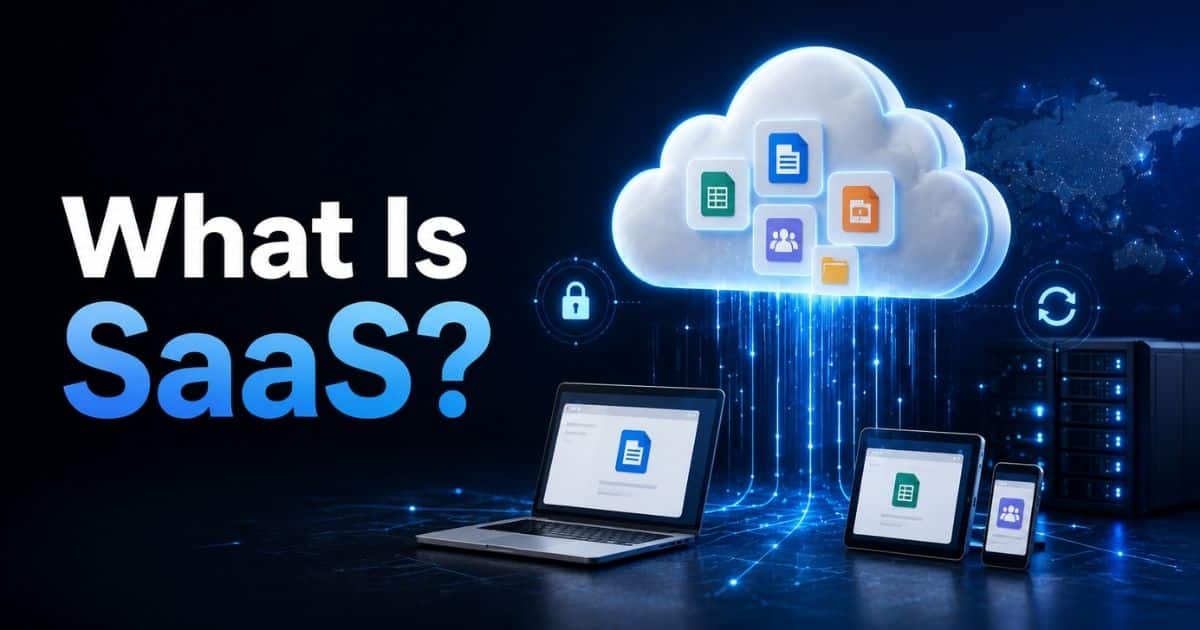
What Is SaaS Software?
SaaS software is a cloud-based application that users access through the internet. Instead of buying and installing software, businesses pay recurring subscription fees to use a SaaS platform. Popular examples include Google Workspace and basic CRM tools. SaaS solutions are built for multiple customers, which is why most SaaS tools offer standardized functions and proven functionality. SaaS vendors handle hosting, bug fixes, security updates, and ongoing maintenance, making SaaS adoption simple for growing teams.
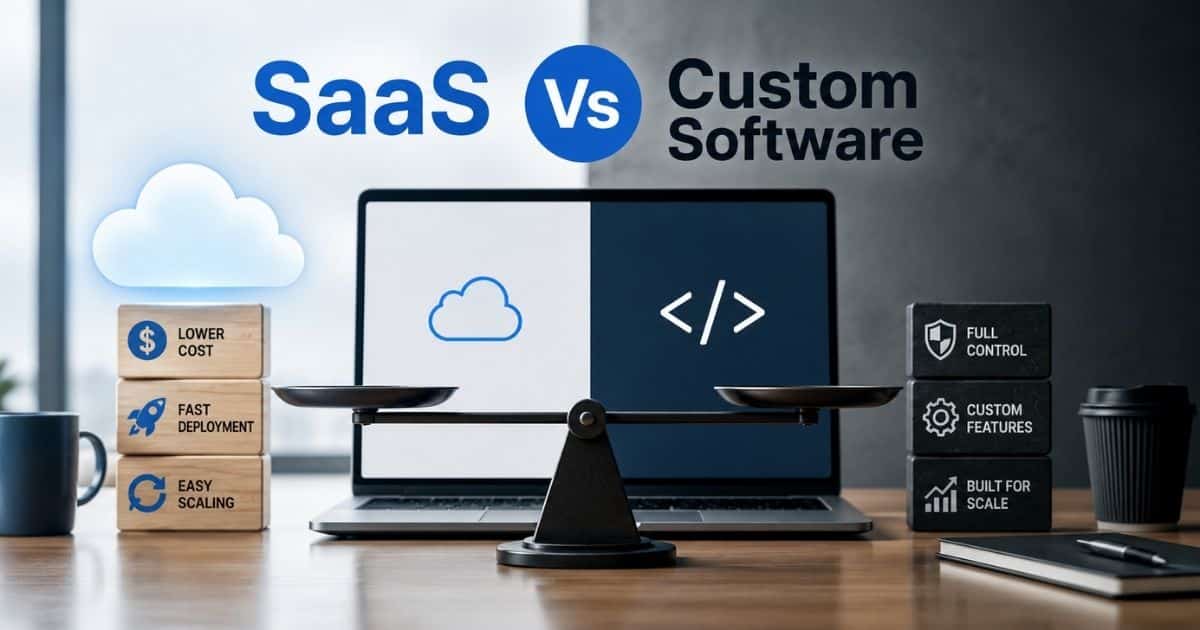
When comparing SaaS vs custom software, SaaS stands out for its low upfront costs and fast deployment. Businesses can start using a new system almost immediately without a significant upfront investment. However, SaaS tools often limit customization and follow the vendor's roadmap. As business needs evolve, companies may face hidden costs or vendor lock-in. That is why the SaaS vs custom software decision depends on your business goals, unique workflows, and long-term growth plans.
What Is Custom Software?
Custom software is built specifically for one company’s needs. Unlike SaaS software, a custom software solution is designed around unique workflows, business logic, and long-term business goals. Businesses can build custom software to support complex operations, integrate multiple systems, and manage customer data more effectively. Since every software development project is different, custom solutions offer greater flexibility than an existing SaaS tool.
When comparing SaaS vs custom software, custom development gives companies full control over features, integrations, and data governance. It also supports competitive differentiation and can become a strategic asset for business growth. However, custom software requires a higher upfront investment and ongoing maintenance responsibility. Businesses may need a reliable development partner and project manager to ensure success. For organizations with unique processes, regulated industries, or long-term growth plans, custom software development can provide a stronger technology foundation and lasting competitive advantage.
SaaS Vs Custom Software: Key Differences At A Glance
Choosing between SaaS and custom software is not always easy. One offers speed and convenience, while the other provides control and flexibility. Understanding the differences in cost, customization, scalability, and ownership can help businesses choose the right solution for long-term success.
Factor | SaaS Software | Custom Software |
|---|---|---|
Definition | Ready-made cloud software accessed through subscriptions | Software built specifically for one business |
Deployment Time | Fast implementation, often within days | Longer development and testing period |
Upfront Cost | Lower initial investment | Higher upfront investment |
Long-Term Cost | Ongoing subscription fees | No recurring license fees |
Customization | Limited to predefined settings and workflows | Fully tailored to business needs |
Scalability | Easy to scale through subscription upgrades | Scales according to business strategy |
Ownership | Vendor owns and manages the platform | Business owns the software and data |
Maintenance | SaaS vendors handle updates and bug fixes | Business manages ongoing maintenance |
Security | Provider-managed security and compliance | Full control over security architecture |
Vendor Lock-In | Higher risk of vendor dependency | Greater control and data portability |
Best For | Standard business processes and quick deployment | Unique workflows and competitive advantage |
Cost And ROI Comparison Between SaaS And Custom Software
Choosing between SaaS and custom software is not only about price. Long-term value matters just as much. A solution with lower upfront costs may become expensive later. Businesses should compare total cost of ownership, scalability, and ROI before making a decision.
Factor | SaaS Software | Custom Software |
|---|---|---|
Initial Investment | Low upfront cost with subscriptions | Higher upfront development cost |
Long-Term Costs | Ongoing subscription fees increase over time | Lower recurring costs after launch |
Scaling Expenses | Per-user pricing often raises costs | No per-user fees in most cases |
Maintenance Costs | Included in subscription fees | Managed internally or by a partner |
ROI Potential | Faster short-term returns | Stronger long-term ROI for growth |
Upfront Investment
SaaS software is attractive because it requires little money to get started. Businesses pay monthly or yearly recurring subscription fees instead of making a large purchase. This makes SaaS adoption easier for startups and small teams.
Custom software requires a higher upfront investment because the solution must be designed, developed, and tested. The cost can feel high at first. However, businesses gain a software solution built around their exact needs and business goals.
Long-Term Costs
SaaS has lower initial costs, but expenses continue for as long as the service is used. As teams grow, subscription fees often rise. Gartner reports that enterprise SaaS renewals can increase by 10% to 20% or more, putting pressure on IT budgets.
Custom software eliminates recurring subscription fees over time. While maintenance costs remain, businesses avoid paying vendors forever. A total cost analysis over 12–36 months often gives a clearer picture of actual spending, and a structured custom software cost comparison can highlight when building becomes more economical than relying on subscriptions.
Scaling Expenses
Most SaaS tools use per-user pricing. Costs rise when companies add employees, departments, or advanced features. This model works well early on but can become expensive during rapid business growth.
Custom software scales according to business strategy and needs. Companies do not usually pay extra for every new user. As organizations expand, a careful comparison of custom vs off-the-shelf software shows how custom development may become more cost-efficient than SaaS solutions for large teams.
Maintenance Costs
SaaS vendors handle server maintenance, security updates, and bug fixes. This reduces the ongoing maintenance responsibility for internal teams. Businesses can focus on operations rather than infrastructure.
Custom software requires maintenance after launch. A development partner may handle updates, security patches, and performance improvements. Although maintenance creates additional costs, businesses keep full control over upgrades and feature changes.
Return On Investment
ROI depends on business objectives and long-term growth plans. SaaS often delivers faster value because teams can deploy it immediately. The global SaaS market exceeded $400 billion in 2025, showing strong demand for flexible software solutions.
Custom software often delivers stronger ROI for companies with unique workflows and operational complexity. A custom software solution can create competitive differentiation and become a strategic asset that supports business growth for years.
Which Option Offers Greater Flexibility And Scalability?
Businesses need software that can grow with them. Flexibility helps teams adapt to change, while scalability supports growth without disruption. In the SaaS vs custom software debate, the right choice depends on how fast your company evolves and how unique your needs are.
Factor | SaaS Software | Custom Software |
|---|---|---|
Customization | Limited to predefined settings | Fully tailored to business needs |
Scalability | Instant scaling through subscriptions | Scales based on business strategy |
Flexibility | Standard workflows for many users | Supports unique processes |
User Growth | Per-user pricing often applies | No per-user limits in most cases |
Feature Expansion | Depends on vendor updates | Features added when needed |
Customization
SaaS solutions are built for multiple customers. That is why most SaaS tools offer standardized features and workflows. Businesses can adjust settings, but deep customization is often limited. Teams may need to change business processes to fit the software.
Custom software works differently. Companies build features around their exact needs. A custom software solution can support unique workflows, business logic, and industry requirements. This flexibility helps businesses create a competitive advantage that generic SaaS tools cannot always provide.
Scalability
SaaS applications scale quickly. Businesses can add users or upgrade plans in minutes. This makes SaaS adoption attractive for fast-growing companies. Research shows the global SaaS market exceeded $400 billion in 2025 and continues to grow rapidly as companies seek scalable cloud solutions.
Custom software scales differently. Businesses expand features and infrastructure based on strategy and demand. This approach takes more planning but offers greater control. Companies can align growth with long-term business goals rather than a vendor's roadmap.
Flexibility
SaaS software is ideal for routine tasks like email, project management, or a basic CRM. Many businesses use tools such as Google Workspace because they are easy to deploy and manage. However, SaaS platforms usually follow fixed structures.
Custom development allows companies to adapt software as operations change. New features, predictive analytics, and integrations can be added over time. This flexibility becomes valuable when business needs evolve or operational complexity increases, especially when you invest in flexible software solutions designed for long-term scalability.
User Growth
SaaS allows companies to add or remove users quickly. This model supports seasonal demand and remote teams. Yet costs often rise with each new user because many SaaS providers use subscription-based pricing.
Custom software eliminates many per-user fees. Once the system is built, businesses can often scale users without major licensing costs. With more organizations expanding globally, scalable systems have become critical for long-term growth plans. About 75% of business applications are now SaaS-based, showing how companies prioritize scalable software.
Feature Expansion
SaaS vendors decide when updates happen. Businesses rely on the vendor's roadmap for new capabilities, bug fixes, and advanced features. While this reduces maintenance work, it can limit innovation and create vendor lock-in.
Custom software gives businesses full control over future development. Companies decide what features to build and when to release them. This control turns software into a strategic asset that supports business growth and competitive differentiation over time.
Security And Compliance Comparison Between SaaS And Custom Software
Security and compliance play a major role in the SaaS vs custom software decision. Businesses must protect customer data, meet industry regulations, and reduce risks. The right software should support growth while keeping sensitive information secure and compliant.
Factor | SaaS Software | Custom Software |
|---|---|---|
Data Control | Data stored on vendor infrastructure | Full control over data storage |
Security Management | Vendor manages security and updates | Business defines security architecture |
Compliance | Supports common standards like SOC 2 | Tailored for specific regulations |
Custom Security | Limited security customization | Security built around business needs |
Data Portability | Migration may be difficult | Greater control over data movement |
Data Control
SaaS solutions store data on third-party servers managed by SaaS providers. This setup reduces infrastructure work and lowers costs. However, some businesses may have concerns about customer data and data governance.
Custom software gives companies full ownership of their systems and data. Organizations decide where data lives and who can access it. This level of control is important for regulated industries that require data sovereignty and strict compliance rules.
Security Management
SaaS vendors handle server maintenance, bug fixes, and security updates. Many SaaS providers invest heavily in cybersecurity because they serve multiple customers. Large vendors often provide enterprise-grade protection that smaller businesses may struggle to build themselves.
Custom software requires businesses to manage security internally or through a development partner. Companies gain full control over security architecture and access policies. This flexibility helps organizations align security with unique business processes and operational needs.
Compliance Standards
Many SaaS companies comply with standards such as SOC 2, ISO 27001, and GDPR to build customer trust. SOC 2 remains one of the most widely recognized frameworks for cloud security and data protection.
Custom software offers greater compliance flexibility. Businesses in healthcare, finance, and government sectors can build systems that meet specific regulations. This approach helps organizations address industry rules that standard SaaS solutions may not fully support.
Custom Security
Most SaaS tools provide predefined security settings designed for broad use cases. This approach works well for standard operations, but deep customization is often limited. Businesses must usually work within the vendor's roadmap and feature set.
Custom software allows organizations to create security policies around their exact business logic. Companies can build advanced controls, encryption methods, and access systems that fit unique workflows. This flexibility can become a competitive advantage in highly regulated environments.
Data Portability
Vendor lock-in remains a concern when adopting SaaS. Moving data from one SaaS platform to another can be difficult due to format limitations or migration costs. Businesses should review export options before selecting a SaaS product.
Custom software offers greater control over data models and integrations across multiple systems. Organizations can design their own APIs and data warehouse strategies. This makes future migrations easier and supports long-term business growth plans.
When Should Businesses Choose SaaS
SaaS is not the right choice for every company, but it works extremely well in many situations. Businesses that value speed, cost efficiency, and simplicity often prefer SaaS solutions. The key is matching the software to your business model, goals, and operational needs.
Fast Deployment
SaaS software is ideal when businesses need a solution quickly. Teams can start using a new system within hours or days instead of waiting months for custom development. This speed helps companies respond faster to market changes.
Many SaaS providers handle setup, hosting, and updates. That reduces technical work for internal teams. By 2025, SaaS is expected to power 85% of business applications, showing how businesses prioritize fast implementation and flexibility.
Lower Upfront Costs
Startups and small businesses often lack the budget for a significant upfront investment. SaaS uses recurring subscription fees instead of large one-time payments. This makes software more accessible and easier to budget.
A custom software solution usually requires a higher upfront investment for development and infrastructure. SaaS costs may rise later, but the lower entry barrier helps companies preserve cash during early business growth and expansion.
Standard Workflows
Most SaaS tools work best for common business processes such as email, project management, payroll, and customer support. Businesses can adopt proven functionality without building everything from scratch.
Tools like Google Workspace or a basic CRM already support millions of users worldwide. Since SaaS solutions serve multiple customers, they focus on standardized functions that meet common needs rather than unique workflows or custom features.
Limited IT Resources
Not every company has a large technology team. SaaS vendors handle security updates, bug fixes, backups, and ongoing maintenance. This reduces the ongoing maintenance responsibility for internal teams.
Research shows organizations use an average of 106 SaaS applications today, proving how heavily businesses rely on managed software services. Companies without dedicated IT departments often benefit most from adopting SaaS.
Flexible Growth
Business needs change over time. SaaS allows companies to add or remove users, upgrade plans, and connect multiple systems with minimal effort. This flexibility supports growth without major disruptions.
A business can scale back subscriptions during slower periods or expand quickly during growth phases. While vendor lock-in and hidden costs remain concerns, SaaS offers strong cost efficiency for businesses with predictable needs and long-term growth plans.
When Should Businesses Choose Custom Software
Custom software is not necessary for every business. But for companies with unique operations or strict compliance rules, it can create long-term value. The right custom software solution supports growth, improves efficiency, and becomes a competitive advantage over time.
Unique Workflows
Many businesses operate differently from their competitors. Standard SaaS tools often force teams to change their processes to fit the software. That can create friction and reduce efficiency.
Custom software is built around unique workflows and business logic. Companies can design features that match how they actually work. This approach helps businesses protect their competitive differentiation and support long-term business objectives.
Regulated Industries
Healthcare, finance, and government organizations face strict compliance requirements. Customer data must follow rules related to privacy, storage, and access. Standard SaaS solutions may not meet every requirement.
Custom software gives organizations full control over data governance and security architecture. Businesses can build systems that support industry regulations and internal policies. Choosing the right custom software development partner is crucial for regulated industries that require total data sovereignty.
Complex Integrations
Growing businesses often rely on multiple systems such as ERP tools, CRMs, and data warehouses. Connecting those systems through an existing SaaS tool can become difficult or expensive.
Custom solutions allow businesses to connect applications through APIs and shared data models. Teams can create a unified technology foundation across departments by investing in robust custom software development services. This reduces operational complexity and improves data portability across the organization.
Core Business Functions
Software that powers a company’s core business model deserves special attention. Generic platforms work well for standard tasks, but they rarely create a unique market position.
Custom software development helps businesses automate key operations and build custom features that competitors cannot easily copy. Real-world examples of how custom software transformed companies show measurable gains in efficiency and growth. Research shows the global custom software development market exceeded $50 billion in 2025 as companies invested in tailored applications for growth.
Long-Term Growth
Custom software requires a significant upfront investment and a longer development timeline. However, the value often grows over time. Businesses own the code, roadmap, and future direction of the platform.
A strong development partner and project manager can ensure project success from planning to launch. As companies scale, custom software often becomes a strategic asset that supports innovation and business growth. A broader build vs buy software decision guide can help teams assess when to invest in custom platforms versus relying on existing tools. The custom software market is projected to grow at over 20% annually through the next decade, reflecting rising demand for tailored solutions.
How To Decide Between SaaS And Custom Software For Your Business
The right software choice depends on your goals, budget, and future plans. Some businesses need speed and simplicity, while others need flexibility and control. A careful evaluation of your needs today and tomorrow, guided by a dedicated custom software vs SaaS decision framework, can prevent costly mistakes later.
Decision Factor | Choosing SaaS | Choosing Custom Software |
|---|---|---|
Budget | You need low upfront costs | You can invest for long-term value |
Speed | You need a solution quickly | You can wait for development |
Customization | Standard features are enough | You need unique workflows |
Compliance | Basic compliance meets your needs | Strict regulations apply |
Growth Strategy | Predictable growth is expected | Rapid scaling or innovation is planned |
Budget Fit
Budget is often the first factor in the SaaS vs custom software decision. SaaS uses predictable subscription fees, which makes planning easier. Businesses avoid a significant upfront investment and can start small.
Custom software requires a larger initial investment. However, long-term costs may become lower because companies avoid recurring license fees. Research shows global SaaS spending is expected to exceed $300 billion in 2026, highlighting how businesses value flexible spending models. Still, total cost matters more than starting price.
Time To Value
SaaS software is ideal when businesses need fast results. Teams can deploy an existing SaaS tool in days instead of months. This speed helps companies respond quickly to market demands and customer feedback.
Custom development takes more time because teams must design, test, and launch the software development project. Yet the extra effort can create a custom software solution that supports long-term business objectives and future growth, as shown in a software build vs buy case study where custom development ultimately delivered better outcomes.
Customization Needs
Most SaaS platforms offer proven functionality for common tasks. That works well for standard operations like project management or collaboration. However, businesses often hit limits when they need custom features.
Custom software allows organizations to build around unique processes and business logic. Teams can create workflows that support their exact business model. This flexibility, when guided by a structured custom software development process, often leads to stronger competitive differentiation and a lasting competitive advantage.
Compliance Requirements
SaaS providers often support standards like SOC 2, GDPR, and ISO 27001. This makes SaaS adoption easier for companies with general compliance needs. Many small and mid-sized businesses benefit from enterprise-grade security without large internal teams.
Custom software becomes valuable when regulations are complex. Industries such as healthcare and finance often require strict data governance and control. IBM's 2025 Cost of a Data Breach Report found that highly regulated industries continue to face some of the highest breach costs worldwide, making compliance a critical business priority.
Future Growth
Business needs rarely stay the same. A SaaS product may work today, but future expansion can create challenges such as vendor lock-in, rising SaaS costs, or limits on advanced features.
Custom software acts as a strategic asset for long-term growth plans. Businesses can add predictive analytics, connect a data warehouse, and integrate multiple systems as they scale. When planning architecture, comparing no-code vs custom development options helps teams choose the right approach for each component, while investing in flexible software solutions keeps the overall stack adaptable. Many companies even adopt a hybrid approach, using SaaS and custom software together to balance flexibility with cost efficiency.
The best choice is not always SaaS vs custom software. The best choice is the one that aligns with your business needs today and supports your goals tomorrow.
How GainHQ Helps Businesses Choose And Build The Right Software
Choosing between SaaS and custom software is not always easy. Every business has different goals, workflows, and growth plans. GainHQ helps companies evaluate their needs, select the right approach, and build software that delivers long-term value.
GainHQ specializes in custom software development, SaaS platforms, AI-powered applications, and technology consulting services. The team helps businesses build scalable products, modernize legacy systems, and create solutions that fit unique operational needs. GainHQ also develops its own products, including Payrun for HR and payroll management, EasyDesk for customer support, and Gain.io for CRM and sales operations.
Whether you need a ready-made SaaS solution, a fully custom platform, or a hybrid approach, GainHQ provides end-to-end support from strategy and design to development and scaling. This helps businesses reduce risk, improve efficiency, and build a stronger technology foundation for future growth.
FAQs
Can Businesses Switch From SaaS To Custom Software Later?
Yes, many companies start with SaaS and move to custom software as they grow. A custom software solution offers more control over business processes, integrations, and customer data. Planning for data portability early can make migration easier and reduce vendor lock-in risks.
Is A Hybrid Approach Better Than Choosing One Option?
Yes, a hybrid approach often gives businesses the best of both worlds. Companies can use SaaS tools for standardized functions like email or project management while using custom software for unique workflows and competitive differentiation. Many organizations adopt this model to balance cost efficiency with flexibility.
How Long Does A Custom Software Development Project Take?
The timeline depends on project size and complexity. Small custom development projects may take a few months, while enterprise systems can take longer. Working with an experienced development partner and project manager helps reduce delays and ensure better results.
Can SaaS Create Vendor Lock-In Risks?
Yes, SaaS vendors can create vendor lock-in through proprietary features, pricing changes, and limited migration options. Businesses should review APIs, export capabilities, and contract terms before adopting SaaS to protect long-term flexibility.
Does Custom Software Increase Business Value?
Custom software can become a strategic asset for business growth. Companies that build custom software around their business model often gain a competitive advantage through custom features, advanced analytics, and better operational efficiency. Over time, this can strengthen long-term growth plans and market position.