Technology leadership is not one-size-fits-all. As companies grow, they often face a common question: do they need an Engineering Manager or a CTO? While both roles work closely with engineering teams, their responsibilities are very different. Confusing the two can lead to unclear ownership, slower execution, and poor technology decisions.
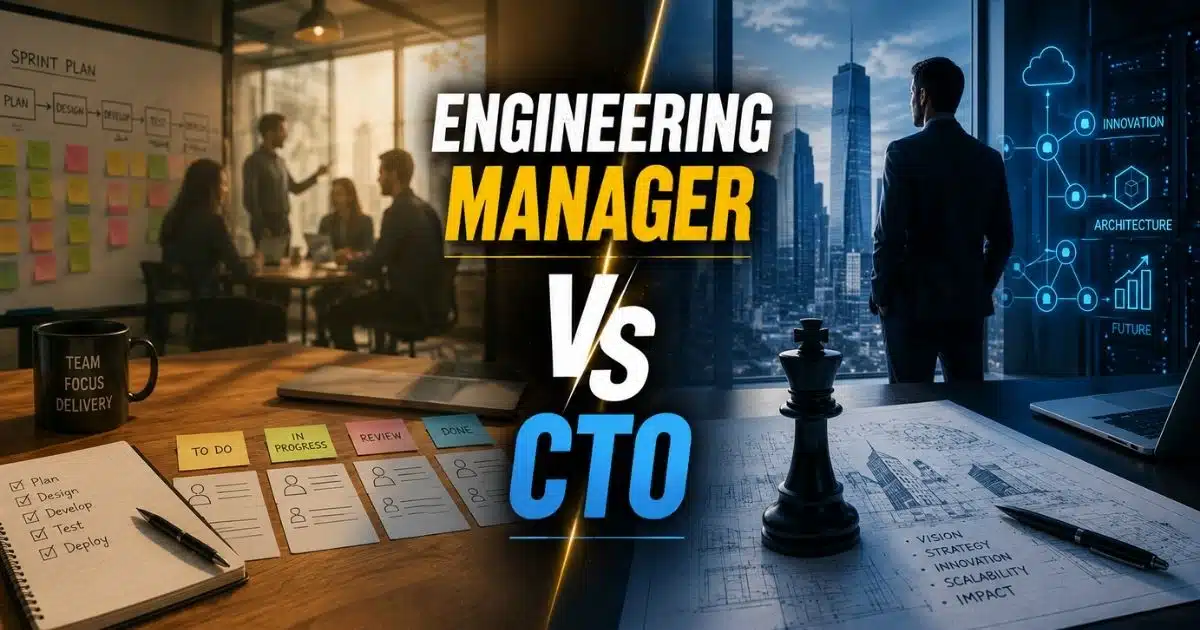
An Engineering Manager focuses on people, projects, and day-to-day delivery. A CTO looks at the bigger picture. They shape the technical vision, make long-term decisions, and align technology with business goals. In many companies, Engineering Managers report to CTOs, creating a clear chain of leadership.
If you are an engineer planning your next career move or a business leader building a tech team, understanding the difference matters. This guide breaks down roles, responsibilities, skills, salaries, and career paths so you can make informed decisions with confidence.
What Does An Engineering Manager Do?
Engineering managers sit at the center of people, projects, and technology. They help teams deliver results while keeping work aligned with business goals. Unlike CTOs, they stay close to daily execution and team performance. A great engineering manager turns ideas into real outcomes.
Lead Teams And Projects
An Engineering Manager guides engineers through complex work. They assign tasks, remove blockers, and keep projects on track. Their role in the engineering profession goes beyond writing code or designing systems.
Strong leadership matters because engineering work often involves many teams and other disciplines. Managers help teams solve problems faster and create solutions that meet human needs. In the engineering manager vs cto discussion, Engineering Managers focus on execution while CTOs focus on long-term vision.
Apply Engineering Principles
Engineering combines science, mathematics, and engineering principles to solve practical problems. Managers help teams apply scientific principles to real-world challenges. They ensure every project follows proven methods and standards.
Engineering involves work across a broad range of engineering fields such as civil engineering, mechanical engineering, industrial engineering, and electrical systems. Whether teams develop structures, improve water systems, or optimize processes, managers ensure quality under specific operating conditions.
Support Innovation And Technology
Technology changes quickly. Engineering Managers help teams adopt new technologies and improve existing systems. They encourage research, testing, and hands-on experience to turn ideas into products.
Modern engineers design autonomous systems, digital manufacturing tools, and advanced infrastructure. New materials, artificial organs, and cleaner energy solutions continue to reshape the world. Demand for engineers remains strong, with industrial engineering jobs projected to grow 11% between 2024 and 2034 in the U.S. labor market.
Balance Quality And Impact
Engineering affects daily life in many ways. Managers ensure projects improve well being while reducing environmental impacts. Good decisions protect human health and create lasting value.
Environmental engineers tackle air pollution and clean water challenges. Chemical engineer teams work with raw materials to create biofuels and biodegradable products. Engineers also contribute to nuclear energy, transportation systems, and sustainable infrastructure that supports society.
Build Careers And Future Leaders
Most engineers start with a bachelor's degree in engineering or a related technical field. Knowledge of natural sciences and fundamental laws provides the foundation for career growth. Many professionals later pursue advanced education and leadership roles.
The engineering profession offers career opportunities across Great Britain, the U.S., and the wider world. According to labor data, mechanical engineering employment is projected to grow 9% through 2034, showing strong demand for technical talent. An Engineering Manager helps teams grow while creating their own path toward senior leadership or even a CTO role.
What Does A CTO Do?
A CTO leads technology at the highest level of a company. While Engineering Managers focus on teams and delivery, CTOs focus on strategy and growth. They connect technology with business goals and guide decisions that shape the future of the organization, often leading company-wide digital transformation strategy efforts.
Set The Technology Vision
A CTO defines where the company should go next. They often look three to five years ahead and build a roadmap for growth. Their decisions affect products, systems, and customer experience.
Technology changes fast. A CTO evaluates new tools, AI, cloud platforms, and market trends. Their goal is to ensure technology supports long-term success and keeps the company competitive. Modern CTOs act as business leaders as much as technology leaders.
Make Architecture Decisions
A CTO holds authority over major technical choices. They decide which platforms, frameworks, and infrastructure best fit the business. Those decisions affect security, scalability, and performance.
Large systems must work under pressure. A CTO ensures the technical foundation can support growth and future demand, often relying on scalable software architecture for high-growth products. In many companies, they approve major architectural changes because small decisions today can create large costs tomorrow.
Align Tech With Business Goals
Technology alone does not create value. A CTO ensures every investment supports revenue, customer needs, and company strategy through clear technical roadmap planning for product strategy. They work closely with CEOs and other executives.
Research shows that 96% of CTOs now share or lead overall business strategy. Many also prioritize innovation and growth over purely technical tasks. This shift has made the CTO role more strategic than ever.
Drive Innovation Across The Company
Innovation is a core responsibility of a CTO. They explore emerging technologies and decide which ones deserve investment. Their work often shapes the company's future products and services.
AI, cybersecurity, and automation now sit at the center of many technology roadmaps. A strong CTO balances experimentation with business value, often by investing in a future proof tech stack for scalable growth. They encourage teams to innovate while keeping risks under control.
Lead Company-Wide Technology
A CTO operates at the company-wide level rather than focusing on one team. They oversee engineering, infrastructure, security, and research efforts across departments, sometimes partnering with technology consulting services for modern business growth.
Unlike Engineering Managers, CTOs rarely manage daily tasks. Their focus stays on the bigger picture. They define the technical vision, oversee the overall roadmap, and ensure every technology decision supports long-term growth. Technology strategies often cover a three-to-five-year horizon, making future planning a key part of the role.
Engineering Manager Vs CTO: Key Differences At A Glance
Engineering Managers and CTOs both lead technology teams, but their focus is very different. One drives execution, while the other shapes strategy. Understanding those differences helps companies build stronger teams and helps engineers choose the right career path.
Area | Engineering Manager | CTO |
|---|---|---|
Primary Focus | Team leadership and project execution | Technology strategy and business growth |
Scope Of Work | Department or team level | Company-wide level |
Main Goal | Deliver products on time and maintain team performance | Define the technical vision and drive innovation |
Time Horizon | Short-term goals and current projects | Long-term planning, often 3–5 years ahead |
Daily Work | Team management, hiring, coaching, and delivery | Strategy, partnerships, and investment decisions |
Decision Making | Operational and team-level decisions | Major architectural and business decisions |
Reporting Structure | Often reports to senior leaders or CTOs | Usually reports to the CEO or board |
Technology Role | Oversees engineering work and development processes | Oversees the overall technical roadmap and infrastructure |
Business Involvement | Limited to product delivery and team outcomes | Aligns technology with business goals |
Leadership Style | Hands-on management and execution | Visionary and strategic leadership |
Key Skills | Problem-solving, communication, and people management | Technology expertise, business knowledge, and leadership |
Success Metrics | Delivery speed, quality, and team health | Innovation, growth, and competitive advantage |
Team Interaction | Works closely with engineers every day | Works across departments and executives |
Career Path | Senior Engineer → Engineering Manager | Engineering Manager or VP → CTO |
Role In The Engineering Manager Vs CTO Debate | Focuses on execution and people | Focuses on vision and company direction |
Industry surveys show that CTOs increasingly spend more time on business strategy, AI adoption, and innovation rather than daily engineering operations. At the same time, Engineering Managers remain critical for team productivity, delivery, and talent growth across modern engineering organizations.
Who Has More Responsibility In A Company?
Both roles carry major responsibilities, but their scope is different. An Engineering Manager owns team success and delivery. A CTO owns the company's technology future. The bigger question is not who has more responsibility, but what type of responsibility each role carries.
Own Different Levels Of Impact
An Engineering Manager focuses on teams, projects, and day-to-day execution. Their work directly affects delivery speed, quality, and team morale. They ensure products ship on time and engineers have the support they need.
A CTO operates at the company-wide level. They define the technical vision and decide where technology investments go next. Their choices can affect revenue, customer experience, and long-term growth. In the engineering manager vs cto debate, the CTO usually carries broader organizational responsibility. Modern CTOs often serve as key business leaders, not just technical experts.
Manage Teams Versus Strategy
Engineering Managers lead people every day. They handle hiring, coaching, performance reviews, and project risks. Their success depends on strong communication and execution.
A CTO oversees technology strategy and innovation across the business. They look three to five years ahead and align technology with business goals. Research shows that the CTO role increasingly combines technology leadership with business strategy as companies rely more on digital growth.
Hold Different Decision Power
Engineering Managers make operational decisions. They decide team priorities, sprint goals, and resource allocation. Those choices keep projects moving forward.
CTOs hold authority over major architectural decisions and the overall technical roadmap. They choose platforms, security standards, and infrastructure strategies, including the underlying tech stack choices that support growth. A poor decision at this level can affect the entire company for years. Modern CTOs often oversee research, innovation, and future technologies to maintain competitive advantage.
Face Different Business Risks
Engineering Managers are accountable for team performance and delivery. Missed deadlines or low morale can impact customers and revenue. Many Engineering Managers also report to senior leaders or directly to CTOs.
A CTO carries executive-level risk. Investors, boards, and CEOs often expect them to drive innovation and growth, sometimes with support from tech consulting services that help modern businesses grow. Recent studies show that AI and digital transformation are pushing more technology leaders into the C-suite, increasing their influence and accountability.
Choose The Right Career Path
Neither role is inherently better. The right choice depends on your strengths and career goals. If you enjoy people management and execution, Engineering Management may fit your path.
A CTO role suits professionals who enjoy strategy, technology trends, and business leadership. Most CTOs build years of experience in engineering, architecture, or management before reaching the executive level. Successful CTOs blend technical expertise with business knowledge to guide company growth.
Skills Every Engineering Manager And CTO Needs
Strong leadership in technology requires more than technical expertise. Engineering Managers and CTOs solve different problems, but many core skills overlap. The best leaders combine people skills, business thinking, and technical knowledge to help teams and companies succeed.
Master Technical Foundations
Technology leaders need strong technical skills. Engineering Managers must understand systems, architecture, and software development. CTOs need even broader knowledge because they define the technical direction of the company.
Modern leaders also stay current with AI, cloud computing, cybersecurity, and data systems. A recent skills report found that 39% of core workplace skills will change by 2030, making continuous learning more important than ever. Technical knowledge helps leaders make better decisions in a fast-changing industry, especially when scaling engineering team strategies for growth.
Build Strong Leadership Skills
People follow leaders they trust. Engineering Managers guide teams through challenges, while CTOs inspire entire organizations. Both roles require empathy, accountability, and clear decision-making.
Leadership also means creating a healthy team culture. Great leaders coach employees, resolve conflicts, and support career growth. Research shows that modern CTOs are increasingly measured by the teams they build, not just the technology they oversee. Strong leadership creates better products and stronger businesses.
Communicate With Every Team
Communication is a critical skill in the engineering manager vs cto journey. Engineering Managers speak with engineers every day. CTOs communicate with executives, investors, and customers.
Complex ideas need simple explanations. Technology leaders must translate technical concepts into business value. Companies increasingly seek leaders who can bridge the gap between business and technology as digital transformation accelerates across industries.
Think Strategically About Business
Technology alone does not drive growth. Engineering Managers align projects with team goals, while CTOs align technology with business strategy. Both roles need strong business awareness.
Modern CTOs focus on revenue, customer experience, and competitive advantage. Industry experts note that successful technology leaders now balance innovation with measurable business outcomes. Strategic thinking helps companies invest in the right technologies at the right time.
Adapt To Constant Change
Technology evolves quickly. New tools, AI systems, and market shifts create fresh challenges every year. Strong leaders stay curious and continue learning throughout their careers.
Adaptability matters more than ever. Many companies now expect technology leaders to guide digital transformation and manage change across departments. Continuous learning helps Engineering Managers grow into CTO roles and keeps organizations competitive in a changing market.
Engineering Manager Vs CTO Salary And Career Growth
Salary and career growth differ significantly between Engineering Managers and CTOs. While both roles offer strong earning potential, compensation often reflects scope, leadership level, and business impact. Career paths also vary based on company size, industry, and experience.
Career Factor | Engineering Manager | CTO |
|---|---|---|
Average U.S. Salary | $170,000–$220,000 per year | $220,000–$350,000+ per year |
Bonus And Equity | Often receives bonuses and stock options | Frequently receives larger equity packages and executive bonuses |
Career Level | Mid-to-senior leadership | Executive leadership (C-suite) |
Primary Focus | Team leadership and project delivery | Technology strategy and business growth |
Reporting Structure | Usually reports to a Director, VP Engineering, or CTO | Typically reports to the CEO or board |
Scope Of Impact | Team or department level | Company-wide level |
Technical Involvement | High involvement in engineering execution | Higher focus on strategy and architecture |
Time Horizon | Quarterly and annual goals | Three to five years ahead |
Key Success Metrics | Team productivity, delivery, and retention | Innovation, revenue impact, and market growth |
Required Skills | People management, communication, and execution | Technical expertise, business knowledge, and vision |
Common Career Path | Senior Engineer → Tech Lead → Engineering Manager | Engineering Manager → Director → VP Engineering → CTO |
Business Responsibility | Limited business ownership | Aligns technology with business goals |
Decision Authority | Operational decisions | Major architectural and investment decisions |
Growth Opportunities | Director of Engineering, VP Engineering | CTO, Chief Product Officer, or CEO |
Leadership Scope | Engineering teams | Entire technology organization |
Compensation data from recent industry reports shows that CTO salaries in the U.S. often exceed $250,000 annually, with equity significantly increasing total compensation. Engineering Managers also command strong salaries due to growing demand for technical leadership across industries. As companies invest more in AI and digital transformation, both career paths continue to offer excellent long-term growth opportunities.
When Does A Company Need An Engineering Manager Or A CTO?
Not every company needs both roles at the same time. Team size, business goals, and growth stage often determine the need. Some companies start with one role and later add the other as technology and operations become more complex, or consider fractional CTO vs outsourcing options to fill leadership gaps.
Choose Based On Company Size
Small startups often begin with a CTO before hiring an Engineering Manager. The CTO sets direction, selects tools, and builds the first systems. As teams grow, daily management becomes harder for one person.
Larger organizations usually need both roles. An Engineering Manager focuses on delivery while a CTO handles long-term strategy. According to Deloitte, companies that invest in technology leadership are more likely to accelerate digital transformation and innovation across the business.
Match Leadership To Growth
Rapid growth creates new challenges. More engineers mean more projects, processes, and communication needs. At this stage, an Engineering Manager helps teams stay productive and aligned, often translating product goals from a broader SaaS product roadmap for building and scaling.
A CTO becomes essential when the business needs a clear technical vision. They oversee infrastructure, security, and future investments. As companies scale, leaders must make decisions with full cognizance of both technology and business goals to support sustainable growth.
Support Innovation And Research
Businesses that rely heavily on research often benefit from strong technology leadership. Industries such as healthcare, AI, and energy evolve quickly and demand strategic oversight, especially during post MVP development and growth.
A good example is companies that build artificial organs or advanced energy systems. Those organizations rely on new technologies and developing technology to improve human health and solve practical problems. Reports from the National Research Council have long emphasized the value of research and innovation in advancing science and technology.
Manage Complex Systems
As products mature, systems become more complex. Teams must maintain existing systems while improving performance and reliability. Existing structures may also require upgrades as customer demand grows.
Engineering practice often requires coordination across other disciplines such as product, finance, and operations. Engineers design software components much like civil engineers approach building bridges. Success depends on the creative application of knowledge, research, and experience to solve problems in the physical world.
Plan For Future Expansion
Technology leaders help businesses prepare for change. A CTO evaluates risks, explores opportunities, and creates long-term roadmaps. An Engineering Manager ensures teams execute those plans effectively.
The word engineer and the term engineering come from the same Latin root, reflecting the profession's long history of innovation. Sources such as Encyclopedia Britannica describe engineering as works utilizing science and mathematics to shape nature for human benefit. From aeronautical engineering to modern software, career paths continue to evolve as companies create new solutions for a changing world.
Can An Engineering Manager Become A CTO?
Many CTOs begin their careers as engineers and later move into management. The jump from Engineering Manager to CTO is common, but it requires more than technical expertise. Success depends on leadership, business knowledge, and the ability to think beyond daily operations.
Build A Broader Vision
An Engineering Manager focuses on teams and delivery. A CTO looks across the entire company and plans years ahead. The shift requires a broader view of products, customers, and markets.
The engineering manager vs cto journey often starts with strong technical roots. However, future CTOs must understand finance, strategy, and growth. They need full cognizance of how technology affects every part of the business. Leaders who balance engineering with business thinking often rise faster into executive roles.
Expand Beyond Engineering
Technical expertise alone is not enough for a CTO role. Leaders must work with sales, marketing, finance, and other disciplines. Strong communication becomes as important as technical knowledge.
Engineering itself has always connected multiple fields. The term engineering and the word engineer come from the same Latin root, reflecting the profession's long history of solving human challenges. According to Encyclopedia Britannica, engineering represents the creative application of science and mathematics to create solutions for society. That mindset helps leaders grow beyond pure technology roles.
Gain Strategic Experience
CTOs make decisions that shape the future. They oversee infrastructure, security, and long-term investments. Those responsibilities require strategic experience beyond team management.
A good example is cloud transformation. A CTO may decide how existing systems and existing structures evolve over time. Such decisions affect customers, costs, and growth. Industry reports show that executives increasingly prioritize AI and digital transformation, making strategic leadership one of the most valuable skills today.
Learn From Different Fields
Great CTOs often draw lessons from many engineering fields. Civil engineering teaches resilience through building bridges and infrastructure. Aeronautical engineering focuses on safety and precision under changing conditions.
Environmental engineers work to improve human health through cleaner water and lower air pollution. Researchers also create artificial organs, advanced materials, and energy solutions that benefit society. Those examples show how engineering practice shapes the physical world and helps people understand nature through innovation.
Create Your Own Path
No single path leads to the CTO role. Some leaders come from software teams, while others start in research or product development. Hands-on experience often matters as much as formal titles.
Modern companies value leaders who embrace new technologies and developing technology trends. Engineering works utilizing science, data, and experimentation continue to reshape industries. From new materials to smarter components, engineers solve practical problems every day. Career growth comes to those who create opportunities, adapt to change, and build their own path toward leadership.
Final Discussion
The engineering manager vs cto discussion is not about choosing a better role. It is about understanding different responsibilities and career goals. Engineering Managers focus on people, delivery, and team success. CTOs focus on technology strategy, innovation, and long-term business growth. Both roles are essential for modern organizations.
Engineering has always evolved with society. From civil engineering and building bridges to artificial intelligence and cloud systems, the profession continues to shape the world. Engineers design solutions that improve human health, strengthen infrastructure, and solve complex problems across industries. As technology advances, companies need leaders who can balance innovation with execution.
Whether you choose the path of an Engineering Manager or aim for the CTO office, success comes from continuous learning, strong leadership, and a clear vision. The best technology leaders do not just build products. They create teams, drive change, and shape the future of business.
FAQs
Does A CTO Need To Know How To Code?
No, a CTO does not always need to code every day. However, strong technical knowledge helps CTOs evaluate systems, review architecture, and guide engineering teams. A solid understanding of engineering principles and software development remains valuable for making strategic decisions.
Can Someone Become A CTO Without An Engineering Degree?
Yes, it is possible, but it is less common. Many CTOs begin with a bachelor's degree in engineering, computer science, or a related technical field. Deep knowledge of technology, business, and problem-solving often matters more than a specific degree.
How Do Engineering Managers Measure Team Success?
Engineering Managers track delivery speed, code quality, and team health. They also measure retention, collaboration, and project outcomes. Strong engineering practice ensures teams solve problems efficiently while meeting business goals and customer needs.
What Industries Hire Engineering Managers And CTOs?
Engineering Managers and CTOs work across a broad range of industries, including healthcare, finance, manufacturing, and energy. From digital manufacturing to clean energy systems, organizations need leaders who can create solutions, manage infrastructure, and adopt new technologies.
Why Is Ethics Important In Engineering Leadership?
Engineering decisions affect people, businesses, and the physical world. Leaders must consider environmental impacts, data privacy, and human health when building products and systems. Strong ethics help improve human health, protect communities, and support long-term well-being.