
SaaS for startups has become the backbone of modern business growth. Over 90% of companies now use at least one SaaS software platform to manage operations, marketing, sales, and customer data. SaaS companies offer flexible tools that help founders scale without heavy infrastructure costs. A co-founder can launch a website, manage projects in Google Docs, track analytics, and automate complex workflows with AI agents and work assistant apps.
Many startups backed by Y Combinator rely on the right SaaS tools to protect security, ensure compliance, and integrate services across teams. The important thing is choosing the right tools, not more tools. Wrong planning creates common challenges in integration, data silos, and wasted resources. With recent funding flowing into AI and software innovation, SaaS enables startups to focus on product, customers, and long-term success while making life easier for employees and developers.
What Is SaaS For Startups
SaaS for startups refers to cloud-based software that helps founders run and scale a business. A SaaS software platform works through a browser. No heavy installation or complex setup. Startups use SaaS tools to manage sales, marketing, customer data, analytics, security, and daily operations. A co-founder can create a website, track projects in Google Docs, manage employees, and automate processes from one platform.
SaaS companies build apps and services that integrate with each other. The right SaaS tools improve productivity and make life easier for teams and developers. AI agents and work assistant software now support writing, planning, compliance, and data analysis. Startups face common challenges like limited resources and complex workflows. SaaS enables better integration, protects customer data, and supports growth. The important thing is choosing the right tools to focus on scale and long-term success.
Why SaaS Has Become A Popular Choice For Startups
SaaS for startups has become the default choice for modern founders. Cloud-based software reduces upfront cost and increases speed. Over 90% of companies use at least one SaaS software platform to manage business operations, sales, and customer data. Startups prefer SaaS because it supports flexibility, integration, and long-term growth.
Lower Upfront Cost
Traditional software requires large capital and infrastructure. SaaS companies offer subscription pricing. Startups pay monthly or yearly fees instead of heavy development costs. Gartner reports global SaaS spending reached nearly $200 billion in 2023.
Limited resources force founders to stay lean. SaaS tools reduce IT burden and protect cash flow. Teams invest more in product, marketing, and customer acquisition. Right SaaS tools help early-stage startups avoid financial pressure.
Faster Deployment And Scale
Speed defines startup success. SaaS software deploys within hours. A co-founder can set up apps, integrate services, and manage projects quickly. McKinsey reports cloud adoption reduces product launch time by up to 40%.
Growth requires flexibility. SaaS platforms allow startups to scale users, employees, and processes without complex workflows. Plans upgrade as the company expands. This ability supports rapid expansion after recent funding or Y Combinator programs.
Better Integration And Automation
Modern startups rely on multiple tools. SaaS platforms connect through APIs and native integration. Sales apps link with marketing software. Analytics tools track customer data across channels.
AI agents and work assistant software automate repetitive tasks. Automation improves productivity and reduces manual errors. Strong integration protects data accuracy and simplifies operations for teams and developers.
Access To Advanced Technology
Enterprise-grade software is now accessible to startups. SaaS companies embed AI, analytics, and security features into one platform. Recent reports show over 65% of startups use AI-powered SaaS tools.
Advanced tools support compliance, protect customer data, and improve decision-making. Security updates happen automatically. Founders focus on building products and serving customers instead of managing infrastructure.
Focus On Core Business Growth
Founders must focus on ideas, customers, and revenue. SaaS removes technical burden from internal teams. Vendors handle updates, security, and system performance.
Data-driven SaaS tools improve sales, marketing, and operations. Real-time analytics supports better planning. Right tools enable startups to scale efficiently and overcome common challenges on the path to success.
How SaaS Supports Startup Growth From Day One
SaaS for startups creates momentum from the first week of the company launch. A cloud-based software platform removes infrastructure barriers and speeds up execution. Over 70% of startups rely on SaaS tools in their first year. Early access to scalable software improves productivity, protects customer data, and supports fast growth without heavy resources.
Faster Product Launch
Speed determines survival in early-stage startups. SaaS tools allow founders to create a website, manage projects, and deploy apps within days. No complex installation or hardware setup is required. According to McKinsey, cloud adoption can reduce development cycles by up to 40%.
Developers use SaaS platforms to test ideas quickly. Integration with analytics tools helps track customer feedback from day one. Early data improves product decisions. Startups move from concept to market without long delays.
Lean Operations Model
Limited capital forces discipline. SaaS companies offer subscription-based software that reduces upfront investment. Startups avoid server costs and large IT teams. Gartner estimates global SaaS spending will exceed $230 billion in 2024.
Right SaaS tools simplify operations across teams. Employees manage tasks, documents in Google Docs, and internal processes in one platform. Lean operations protect cash flow and support stable growth during early funding stages.
Data Driven Decisions
Growth depends on accurate data. SaaS analytics platforms collect customer data in real time. Founders monitor sales metrics, marketing performance, and user behavior from dashboards. Research shows data-driven startups grow 30% faster than competitors.
AI-powered tools and work assistant apps support deeper insights. AI agents analyze patterns and automate reports. Better visibility improves planning and reduces wrong assumptions. Data becomes a key asset from the start.
Scalable Sales And Marketing
Customer acquisition drives survival. SaaS sales and marketing tools automate email campaigns, lead tracking, and CRM processes. Platforms integrate to support smooth workflows between teams. HubSpot research shows startups using CRM tools increase sales productivity by over 25%.
Automation reduces manual work. Teams focus on strategy instead of repetitive tasks. Strong integration ensures customer data flows across apps. Marketing and sales stay aligned from the first campaign.
Built-In Security And Compliance
Security concerns slow many founders. SaaS providers invest heavily in encryption and compliance standards. Reports show cloud platforms spend billions annually on security infrastructure. Startups benefit from enterprise-level protection.
Legal and compliance features are embedded into many SaaS services. Customer data stays protected across systems. Founders focus on product, growth, and funding conversations. Reliable software builds trust with customers and investors from day one.
What Are The SaaS Categories Every Startup Needs
SaaS for startups covers more than one software platform. Each business needs specific SaaS tools to manage operations, customers, and growth. Studies show the average startup uses 20 to 40 SaaS apps. Right SaaS tools improve productivity, protect data, and help teams scale with limited resources.
Sales And CRM Platforms
Revenue drives survival. SaaS sales platforms help startups manage leads, customer data, and pipelines. CRM software centralizes communication and tracks deals. Salesforce reports that companies using CRM see up to 29% higher sales.
Automation reduces manual follow-up. Sales teams monitor performance through analytics dashboards. Integration with marketing tools ensures smooth data flow. Startups gain visibility into revenue processes from day one.
Marketing Automation Tools
Customer acquisition requires smart strategy. Marketing SaaS tools manage email campaigns, social media, and website analytics. HubSpot research shows automation increases qualified leads by over 450%.
AI-powered platforms analyze customer behavior and feedback. Teams create targeted campaigns based on real data. Strong integration between sales and marketing improves conversion rates. Marketing becomes measurable and scalable.
Project And Work Management
Operations need structure. Project management SaaS apps help teams manage tasks, deadlines, and complex workflows. Asana reports that teams using structured tools improve productivity by 45%.
Work assistant software and AI agents automate updates and reporting. Google Docs supports collaboration across employees and co-founders. Clear processes reduce confusion and improve execution speed.
Finance And Accounting Software
Financial control protects long-term growth. SaaS accounting platforms track expenses, invoices, and cash flow. QuickBooks data shows small businesses save up to 40 hours per month using automated accounting software.
Real-time analytics improves planning. Founders monitor burn rate after recent funding rounds. Proper financial tools ensure compliance and support legal requirements. Data accuracy builds investor trust.
Security And Compliance Tools
Security remains a major concern for startups. Cloud SaaS companies invest billions in cybersecurity each year. Built-in encryption and monitoring protect customer data and business information.
Compliance tools manage legal documentation and policy updates. Integration across apps ensures consistent data protection. Secure software builds customer confidence and supports sustainable growth. Right tools protect reputation from early-stage risks.
Different Growth Stages Of SaaS Startups
SaaS for startups evolves through clear growth stages. Each stage requires different tools, processes, and strategy. CB Insights reports that 38% of startups fail due to cash flow issues. Right SaaS tools help founders manage resources, protect customer data, and scale operations with discipline.
Idea And Validation Stage
Early-stage SaaS startups focus on product-market fit. Founders test ideas with a simple software platform. MVP development often relies on low-cost SaaS tools for website creation, analytics, and customer feedback.
Y Combinator data shows startups that validate early assumptions increase survival rates significantly. Simple apps like Google Docs and project tools support collaboration between co-founders. Clear data from early users shapes product direction.
Early Revenue Stage
Revenue marks the next phase. SaaS companies at this stage invest in sales and marketing platforms. CRM tools manage customer data and track pipelines. HubSpot reports CRM adoption improves sales productivity by 25%.
Processes become structured. Teams focus on repeatable acquisition channels. Analytics platforms track conversion rates and customer behavior. Proper integration across tools prevents data silos and reduces operational errors.
Growth And Expansion Stage
Growth stage SaaS startups experience rapid customer acquisition. McKinsey reports high growth SaaS companies maintain annual revenue growth above 30%. Scaling demands stronger infrastructure and automation.
AI agents and work assistant tools improve productivity. Complex workflows require better integration across apps and services. Security and compliance become more important as customer data volume increases. Structured planning protects long-term growth.
Scale And Optimization Stage
Mature SaaS startups focus on efficiency and retention. Expansion into new markets requires advanced analytics and financial software. According to Bain, increasing customer retention by 5% can boost profits by 25% to 95%.
Leadership invests in automation, data security, and compliance frameworks. Teams refine operations and improve processes. Right SaaS tools help manage a large employee base and customer portfolio. Sustainable scale depends on disciplined execution and smart platform choices.
Key Features Of A High-Impact SaaS Startups
High impact SaaS for startups goes beyond basic software. It supports growth, protects customer data, and improves daily operations. Research shows startups use an average of 30 SaaS tools. Only the right SaaS tools create real productivity gains and long term value.
Scalability And Flexibility
Scalable software adapts as the company grows. A strong SaaS software platform allows startups to add users, expand storage, and upgrade services without disruption. According to McKinsey, scalable cloud adoption improves operational efficiency by up to 20%.
Flexibility matters in early stages. Startups pivot often. The platform must support new processes and integration with other apps. This ability ensures smooth transitions from small teams to larger operations.
Strong Integration Capabilities
Modern startups rely on multiple tools. Integration prevents data silos and manual errors. Gartner reports poor integration costs companies millions in lost productivity each year.
A high impact SaaS platform connects with CRM, marketing, analytics, and finance software. Seamless data flow supports accurate reporting. Teams manage customer data and projects without switching between disconnected systems.
Advanced Analytics And Reporting
Data drives growth. SaaS companies embed analytics into their software to help founders track performance. Research from Deloitte shows data-driven businesses grow 30% faster than competitors.
Real-time dashboards provide insights into sales, marketing, and operations. AI agents analyze patterns and generate reports. Clear analytics improve planning and reduce wrong strategic decisions.
Security And Compliance Framework
Security protects reputation and trust. Cybercrime damages are expected to reach $10.5 trillion annually by 2026. High-impact SaaS tools invest heavily in encryption and compliance standards.
Built-in security features protect customer data and internal information. Compliance tools support legal requirements and industry regulations. Strong protection allows founders to focus on growth without fear of data breaches.
User-Friendly Experience
Complex software slows teams. Simple user-centered design improves adoption across employees and developers. A good SaaS platform reduces training time and improves productivity.
User-friendly tools make daily work easier. Teams manage tasks, analytics, and communication without friction. Clear interface design supports collaboration between co-founders and growing teams. Ease of use often determines long-term success.
What Are The SaaS Pricing Models
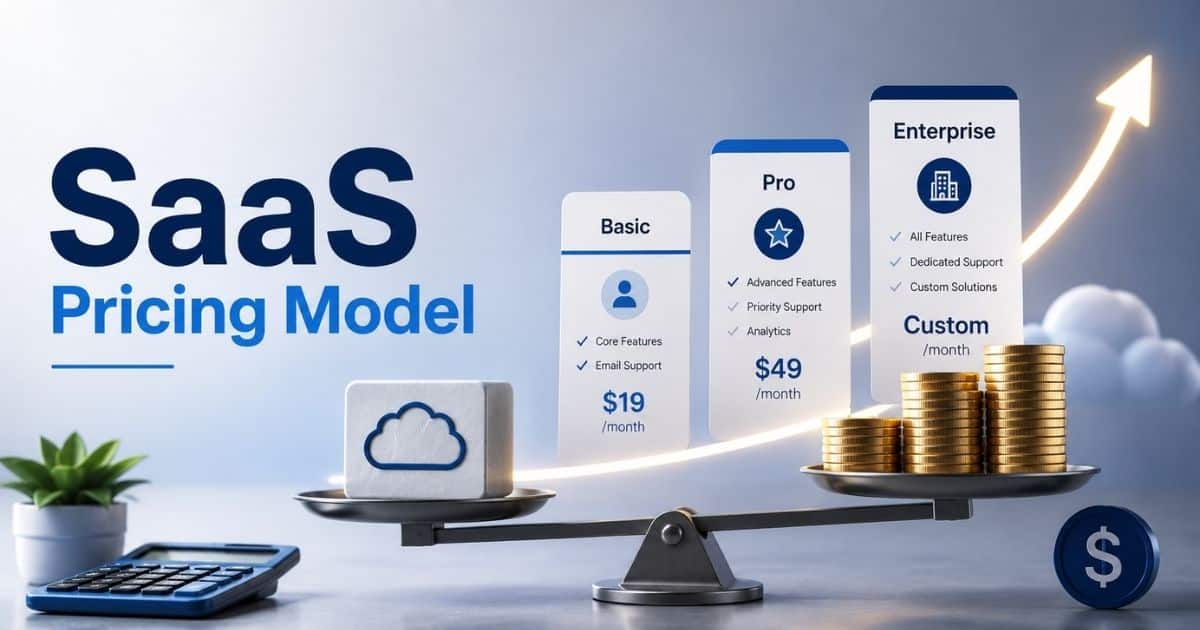
SaaS pricing models shape cash flow and growth strategy for startups. Most SaaS companies use subscription-based pricing to create predictable revenue. OpenView reports that over 70% of SaaS businesses rely on recurring revenue models. Clear cost structures help founders manage resources and scale sustainably.
| Pricing Model | How It Works | Best For | Cost Structure Impact |
|---|---|---|---|
| Subscription Based | Fixed monthly or yearly fee for access to the software platform | Early stage startups and SMBs | Predictable recurring revenue and stable budgeting |
| Freemium | Basic version free, paid upgrades for advanced features | Product led growth startups | Low customer acquisition cost but higher upgrade pressure |
| Usage Based | Charges depend on usage such as API calls, storage, or users | Data heavy or AI SaaS tools | Revenue scales with customer activity |
| Tiered Pricing | Multiple plans with different features and limits | Growing startups with diverse customer needs | Encourages upsell and expansion revenue |
| Per User Pricing | Fixed price per employee or active user | B2B SaaS companies | Direct link between team size and revenue growth |
| Enterprise Custom | Tailored pricing based on contract and services | Large clients with complex workflows | Higher deal size but longer sales cycles |
Key SaaS Metrics Startup Founders Must Track
SaaS for startups depends on measurable growth. Data, not assumptions, drives success. OpenView reports that top-performing SaaS companies monitor at least 10 core metrics weekly. Right SaaS tools and analytics platforms give founders visibility into sales, customer behavior, security, and operations from day one.
Monthly Recurring Revenue (MRR)
MRR shows predictable income from subscription-based software. It reflects the health of the SaaS business model. Investors often evaluate startups based on MRR growth rate. High-growth SaaS companies maintain 15% to 20% monthly growth in early stages.
A SaaS software platform tracks revenue automatically. Integration with sales tools and CRM ensures accurate customer data. Clear MRR visibility supports planning after recent funding and helps founders allocate resources wisely.
Customer Acquisition Cost (CAC)
CAC measures how much the company spends to acquire one customer. It includes marketing, sales, ads, and services. According to ProfitWell, efficient SaaS companies recover CAC within 12 months.
Analytics tools calculate CAC across channels. AI agents analyze campaign performance and feedback from the website. Lower CAC improves profitability. Wrong spending decisions increase burn rate and create financial challenges for startups.
Customer Lifetime Value (LTV)
LTV estimates total revenue from a customer over time. Healthy SaaS companies maintain an LTV to CAC ratio of 3:1 or higher. This ratio indicates sustainable growth and scalable operations.
Strong retention processes improve LTV. SaaS tools track usage, engagement, and renewal data. Customer success teams use work assistant apps to manage communication. Higher LTV strengthens long term business stability.
Churn Rate
Churn rate measures customer loss. Industry benchmarks show average SaaS churn ranges from 5% to 7% annually for B2B companies. High churn signals product or service problems.
Analytics platforms monitor cancellation patterns. Teams analyze feedback forms and usage data to identify issues. Security gaps, poor integration, or complex workflows often increase churn. Protecting customer satisfaction protects revenue.
Annual Recurring Revenue (ARR)
ARR reflects yearly subscription revenue. Investors and Y Combinator partners often evaluate SaaS startups using ARR milestones. Crossing $1 million ARR marks a key growth stage.
A scalable software platform automates ARR tracking. Finance and accounting apps integrate with CRM and sales systems. Accurate reporting improves credibility with investors and supports funding conversations.
Burn Rate And Runway
Burn rate shows how fast a startup spends capital. CB Insights reports that 38% of startups fail due to cash flow issues. Runway calculates how many months remain before funds run out.
Financial SaaS tools monitor expenses in real time. Integration across operations ensures accurate data. Careful planning protects company survival during early stages. Founders focus on sustainable growth, not short-term expansion.
Product Engagement Metrics
Engagement metrics measure how customers use the SaaS platform. Metrics include active users, feature adoption, and session frequency. High engagement correlates strongly with retention and revenue growth.
AI-powered analytics track user behavior inside apps. Developers analyze data to improve features and usability. Better product engagement supports scale, increases success rates, and strengthens competitive position in the future SaaS market.
SaaS Integration Strategy For Seamless Operations
SaaS for startups rarely works as a single software platform. Most companies use more than 30 SaaS tools across sales, marketing, finance, and HR. Poor integration creates data silos and workflow delays. A clear SaaS integration strategy ensures smooth operations, secure customer data, and scalable growth from day one.
Centralized Data Architecture
Centralized data reduces confusion. A connected SaaS platform syncs customer data across CRM, marketing, and analytics tools. Gartner estimates poor data quality costs organizations an average of $12.9 million annually.
Unified dashboards provide accurate insights. Teams access real-time data without manual exports. Developers avoid duplicate records and inconsistent reporting. Strong and scalable software architecture improves decision-making and supports long-term business stability.
API First Approach
Modern SaaS companies design software with APIs. An API first approach allows easy integration between apps and services. MuleSoft reports that organizations with strong integration strategies see 20% higher productivity.
Flexible APIs connect sales platforms, website forms, finance tools, and AI agents. This structure supports automation and reduces manual processes. Startups gain agility and respond faster to market changes.
Workflow Automation Systems
Automation improves efficiency. Integrated SaaS tools automate repetitive tasks across departments. McKinsey research shows automation can increase productivity by up to 30%.
Work assistant software and AI agents trigger actions based on customer behavior or internal processes. Sales updates sync with marketing campaigns. Finance software updates invoices automatically. Smooth workflows eliminate complex handoffs between teams.
Security And Compliance Controls
Integration must protect customer data. IBM reports the average cost of a data breach reached $4.45 million in 2023. Secure SaaS integration reduces risk exposure.
Encryption, access controls, and compliance tools protect sensitive information. Integrated systems monitor activity across apps. Founders maintain trust with customers and investors. Security remains a core part of operational strategy.
Scalable Infrastructure Planning
Growth demands preparation. A scalable SaaS integration strategy supports increasing users, employees, and transactions. High growth SaaS startups often double revenue year over year.
Planning infrastructure early prevents operational bottlenecks. Cloud-based SaaS development serviceshandle higher data loads without performance issues. Proper integration allows startups to scale operations smoothly while maintaining performance, security, and productivity across the organization.
Security And Compliance Risks Of SaaS Startups
SaaS for startups depends on trust. Customer data, payment details, and business analytics flow through multiple SaaS tools every day. IBM reports the average data breach cost reached $4.45 million in 2023. Weak security or poor compliance can damage growth, reputation, and future funding.
Data Breach Exposure
Data breaches remain a major threat. SaaS companies store large volumes of customer data across cloud software platforms. Hackers often target early stage startups due to weaker protection systems.
Verizon reports that 43% of cyberattacks target small businesses. A single breach can affect sales, marketing, and operations. Strong encryption, access control, and monitoring tools reduce exposure. Founders must protect sensitive data from day one.
Weak Access Management
Poor access control creates internal risk. Employees and developers often use multiple apps and services. Without role based permissions, sensitive information becomes vulnerable.
Okta research shows identity related breaches continue to rise each year. A centralized SaaS platform with secure login systems reduces unauthorized access. Multi factor authentication and strict policies protect customer and company data.
Regulatory Compliance Gaps
Compliance requirements vary by region and industry. GDPR, SOC 2, and other frameworks demand strict data handling practices. Non-compliance can result in heavy legal penalties.
Startups often underestimate legal responsibilities. Proper compliance tools track policies, contracts, and audit logs. Secure software platforms support reporting and documentation. Strong compliance builds investor confidence and supports future expansion.
Third Party Integration Risks
SaaS integration improves productivity but increases risk. Each connected app expands the attack surface. Gartner predicts that by 2026, 45% of organizations will experience supply chain-related cyber incidents.
Unsecured APIs or weak integration controls expose sensitive information. Regular audits and monitoring tools reduce third-party vulnerabilities. Startups must evaluate vendor security before integration.
Insufficient Security Planning
Rapid growth sometimes outpaces planning. Founders focus on product and customer acquisition. Security becomes a secondary priority. This approach creates long-term risk.
Cybersecurity Ventures estimates global cybercrime damages will reach $10.5 trillion annually by 2026. Early investment in secure SaaS tools protects business continuity. Security planning must align with scaling strategy and future growth objectives.
Common SaaS Mistakes That Slow Startup Growth
SaaS for startups promises speed and scale, but wrong decisions can limit success. Many founders adopt multiple SaaS tools without clear strategy. CB Insights reports that 38% of startups fail due to financial mismanagement and operational issues. Smart planning prevents avoidable setbacks.
Too Many Disconnected Tools
Tool overload creates complexity. Startups often adopt new apps for sales, marketing, analytics, and projects without integration planning. Disconnected systems produce data silos and duplicate customer data.
BetterCloud reports that companies use an average of 110 SaaS apps. Without proper integration, productivity declines. Teams switch between platforms and waste time. A unified software platform supports seamless operations and better visibility.
Ignoring Core Metrics
Data drives growth. Some founders focus only on product development and ignore SaaS metrics like MRR, CAC, and churn rate. OpenView research shows high-performing SaaS companies review metrics weekly.
Without analytics, wrong assumptions guide strategy. Sales and marketing budgets increase without measurable results. Reliable SaaS tools provide dashboards that support informed planning and sustainable scale.
Weak Security And Compliance
Security often becomes an afterthought. IBM reports that the average data breach cost reached $4.45 million in 2023. Early-stage startups face similar risks as larger companies.
Poor compliance processes increase legal exposure. Customer trust declines after security incidents. Secure SaaS platforms protect sensitive data and ensure regulatory alignment. Proactive security strategy safeguards growth.
Poor Customer Onboarding
Customer experience defines retention. SaaS companies with structured onboarding reduce churn significantly. Wyzowl reports that 86% of users stay loyal after strong onboarding support.
Lack of guidance confuses new customers. Complex workflows discourage adoption. AI powered work assistant tools improve user education and feedback collection. Clear onboarding processes improve lifetime value and revenue stability.
No Clear Integration Strategy
Integration mistakes disrupt operations. Each new service must align with existing systems. Gartner predicts that by 2026, 70% of organizations will struggle with integration complexity.
Absence of planning increases operational risk. Teams duplicate tasks and create inconsistent reports. Strategic integration ensures smooth data flow across software, improves productivity, and enables long-term business growth.
How To Evaluate And Select SaaS Vendors
SaaS for startups depends on the right vendor choice. A poor decision affects customer data, security, and daily operations. Gartner reports that 60% of SaaS buyers regret at least one software purchase. Careful evaluation protects budget, productivity, and long-term growth.
Product Fit And Scalability
Product fit comes first. The SaaS software platform must solve a clear business problem. Founders should review features, product roadmap, and long-term scalability. McKinsey reports that scalable cloud solutions improve operational efficiency by up to 20%.
A vendor must support growth stages. The platform should handle more users, data, and projects without performance issues. Flexible pricing and modular features help startups scale without switching tools later.
Integration And Technical Capability
Integration determines operational efficiency. The SaaS vendor should provide strong APIs and native connections with CRM, marketing, analytics, and finance apps. MuleSoft research shows companies with mature integration strategies achieve higher productivity.
Developers should review documentation quality and security standards. Poor integration creates complex workflows and data silos. Smooth data flow ensures accurate reporting and reduces manual processes across teams.
Security And Compliance Standards
Security protects reputation and customer trust. IBM reports that the average data breach cost reached $4.45 million in 2023. SaaS companies must demonstrate strong encryption and access controls.
Compliance certifications such as SOC 2 or GDPR alignment show maturity. Legal and regulatory risks decrease when vendors maintain clear audit trails. Strong security frameworks protect sensitive customer data and investor confidence.
Pricing Transparency And Support Quality
Pricing clarity prevents future surprises. Founders should analyze subscription tiers, usage costs, and hidden fees. OpenView data shows predictable pricing improves SaaS budgeting accuracy.
Customer support quality matters equally. Responsive service teams reduce downtime and operational risk. Reliable vendors provide onboarding resources, documentation, and work assistant tools. Strong support ensures smooth adoption and long-term success.
SaaS Optimization Strategies For Scaling Startups
SaaS for startups must evolve as the company grows. Early success does not guarantee long-term efficiency. BetterCloud reports that 53% of SaaS licenses go unused in many organizations. Optimization improves productivity, protects resources, and strengthens operations during scale.
Audit And Consolidate Tools
Tool sprawl reduces efficiency. Startups often accumulate multiple apps for similar tasks. A structured audit identifies redundant software and unnecessary costs. BetterCloud research shows companies waste thousands annually on unused SaaS tools.
Consolidation improves focus. A centralized software platform simplifies workflows and integration. Teams manage projects, customer data, and analytics in fewer systems. Lean stacks support cleaner processes and stronger performance.
Automate Core Workflows
Manual processes slow scaling. McKinsey estimates automation can increase productivity by up to 30%. SaaS tools with built-in AI agents reduce repetitive tasks across sales, marketing, and finance.
Automation ensures consistent execution. CRM updates sync with marketing campaigns. Invoices generate automatically from sales data. Work assistant apps reduce errors and free employees to focus on strategy and growth.
Strengthen Data Governance
Data becomes complex during scale. Multiple integrations increase risk of inconsistent reporting. Gartner reports poor data quality costs organizations an average of $12.9 million annually.
Clear governance policies protect customer data. Unified analytics platforms ensure accurate dashboards. Developers and operations teams align around consistent data standards. Reliable information improves planning and investor reporting.
Optimize Pricing And Revenue Models
Growth requires pricing review. OpenView reports that SaaS companies that adjust pricing regularly grow faster than static competitors. Pricing optimization improves MRR and long-term profitability.
Usage data reveals upgrade opportunities. Analytics tools identify high-value customers. Strategic pricing changes increase lifetime value and reduce churn. Revenue optimization supports sustainable expansion.
Enhance Security And Compliance Frameworks
Scaling increases exposure to risk. IBM reports average data breach costs reached $4.45 million in 2023. Security gaps become more expensive as customer volume grows.
Regular security audits reduce vulnerabilities. Compliance tools ensure regulatory alignment. Strong encryption and access controls protect sensitive information. Secure SaaS operations build trust with customers, partners, and investors during rapid growth.
How GainHQ Helps Startups Maximize SaaS Value
GainHQ helps startups make smarter SaaS decisions with a clear focus on value, growth, and operational success. The platform goes beyond basic software tools by providing structured insight, UI/UX clarity, and scalable SaaS solutions. GainHQ combines custom SaaS platforms, CRM systems, and AI-integrated tools to reduce complexity, streamline workflows, and improve customer data visibility for founders and teams.
Startups get a strategic technology partner that supports software planning, SaaS integration, and analytics with real business impact. GainHQ’s structured approach to build vs buy decisions helps startups choose the right SaaS tools, avoid fragmented software stacks, and focus resources on growth, not scattered apps. With scalable AI-powered SaaS products, teams manage sales, marketing, projects, and customer interactions from one unified platform, reducing common challenges and boosting productivity.
FAQs
Is SaaS For Startups Suitable For Bootstrapped Founders With Limited Resources?
Yes. SaaS for startups reduces upfront infrastructure costs and replaces heavy software investment with subscription models. Bootstrapped founders can use scalable SaaS tools to manage sales, marketing, analytics, and customer data without hiring large IT teams.
Can SaaS Tools Replace An In-House Development Team Completely?
No. SaaS tools simplify operations, but developers remain important for product innovation and integration. A SaaS software platform handles workflows, automation, and analytics, while internal teams focus on core product development and competitive advantage.
How Do AI Agents Improve SaaS Productivity For Startup Teams?
AI agents automate repetitive processes across apps and services. They analyze customer data, generate reports, and support sales forecasting. AI-powered work assistant software improves planning, reduces manual errors, and helps teams scale faster with fewer resources.
Is Vendor Lock In A Real Risk For SaaS Startups?
Yes. Poor integration planning can create dependency on a single software platform. Startups should evaluate API flexibility, data export options, and compliance standards before signing long-term contracts with SaaS companies.
How Do SaaS Platforms Support Remote Startup Teams?
Cloud-based software allows employees to manage projects, collaborate in Google Docs, and access analytics from anywhere. Real-time integration ensures customer data and sales updates stay synchronized across distributed teams.
Does SaaS Improve Investor Readiness And Recent Funding Outcomes?
Yes. Investors review metrics, security posture, and scalable processes before funding. SaaS platforms provide structured analytics, compliance tracking, and financial visibility. Strong data and clear reporting increase credibility during funding discussions.
What Role Does SaaS Play In Long Term Competitive Advantage?
SaaS enables startups to automate operations, protect security, and optimize customer experience. Right SaaS tools strengthen processes, improve decision-making, and support sustainable growth. Strategic software adoption builds long term business resilience and market differentiation.