How Software Replatforming Improves Digital Performance
by Daniel Wright | May 18, 2026 | Software Development Insights
Table of Contents
- What Is Software Replatforming And Why Businesses Choose It
- Signs Your Legacy System Needs Software Replatforming
- Software Replatforming Vs Rehosting Vs Refactoring Explained
- Key Benefits Businesses Gain From Software Replatforming
- Step-by-Step Software Replatforming Process For Modern Infrastructure
- Common Software Replatforming Challenges And How To Avoid Them
- Cloud Migration, DevOps, And Security Considerations In Software Replatforming
- Software Replatforming Best Practices For Long-Term Scalability And Performance
- How GainHQ Supports Successful Software Replatforming
- FAQs
Old software slows businesses down. Pages load slowly. Integrations break. Scaling becomes difficult. Teams spend more time fixing problems than building new features. At some point, patching a legacy system no longer makes sense. That is where software replatforming becomes important.
Software replatforming helps businesses modernize applications without rebuilding everything from scratch. It improves performance, flexibility, security, and long-term scalability. Many companies choose replatforming to move toward cloud infrastructure, support faster deployments, and reduce operational bottlenecks.
But replatforming is not just a technical upgrade. A wrong strategy can increase costs, create downtime, and disrupt workflows. This guide explains everything you need to know about software replatforming, from benefits and challenges to process, best practices, and common mistakes businesses should avoid.
What Is Software Replatforming And Why Businesses Choose It
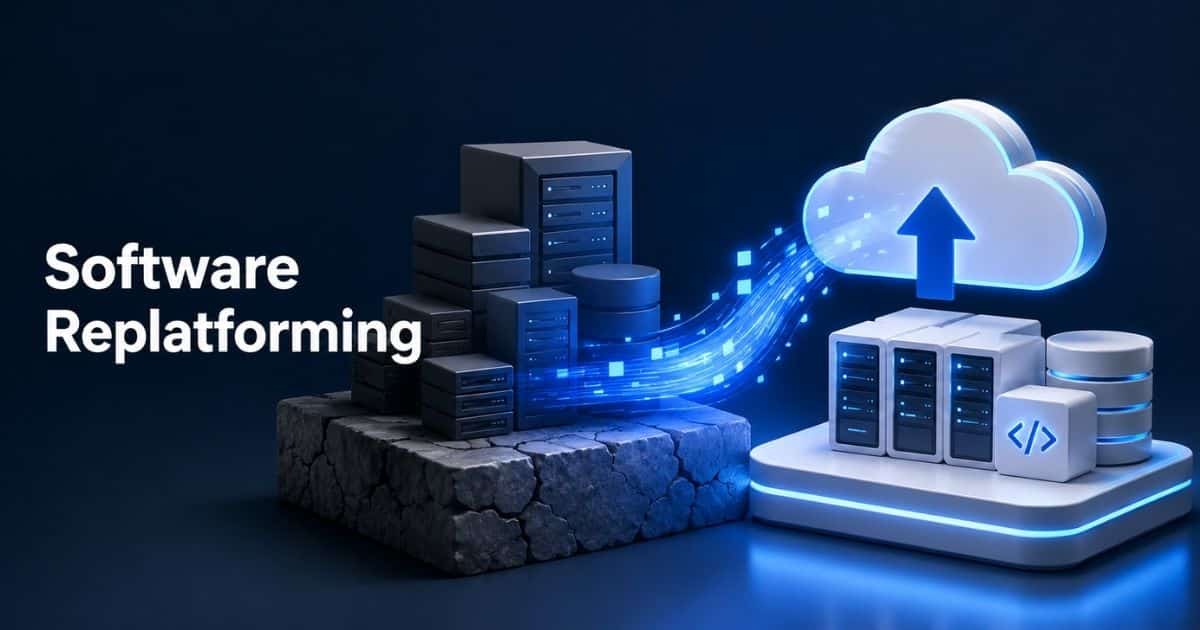
Software replatforming involves moving an existing application from a current platform to a new platform with minimal changes to the existing code. Businesses usually choose this approach when legacy systems, outdated systems, or on-premises infrastructure start limiting growth. The replatforming process helps companies reduce technical debt, improve cost efficiency, and unlock cloud native features without rebuilding the entire application’s technology stack.
Many businesses move toward a cloud environment like Google Cloud or Microsoft Azure to gain cloud capabilities, managed services, load balancing, and enhanced security. A strong cloud migration strategy for enterprises also improves resource utilization, operational continuity, and customer satisfaction. Modern platforms support cloud native technologies, continuous integration, managed databases, and advanced security features that older infrastructure often lacks.
Software replatforming also helps businesses align technology with business goals, regulatory or compliance requirements, and future business needs while keeping core functionality stable during the migration process.
Signs Your Legacy System Needs Software Replatforming
Many businesses continue using outdated systems for years. At first, the problems seem manageable, and teams may debate a software build vs buy approach similar to the scenario in a case study where custom software won. Over time, costs increase, performance drops, and security risks grow. A modern replatforming strategy helps businesses improve scalability, reduce technical debt, and align existing systems with long term business goals.
Slow Performance Hurts Daily Operations
Legacy applications often struggle with modern workloads. Pages load slowly, reports take longer to generate, and integrations fail more often. Poor resource utilization also affects customer satisfaction and employee productivity. Research from Gartner shows system downtime can cost businesses thousands of dollars every hour.
Old operating systems and outdated technology also limit cloud capabilities. Many businesses move to cloud-based platforms to improve performance and operational continuity. A new cloud platform supports load balancing, managed services, and cloud native tools that older infrastructure cannot handle properly.
Maintenance Costs Keep Rising
Many companies spend more money maintaining existing infrastructure than improving it. Small fixes become expensive because legacy systems often depend on outdated hardware and unsupported software. Skilled developers for older technologies are also harder to find today.
Research from IBM shows businesses can spend up to 70% of their IT budget maintaining current systems instead of building innovation. Software replatforming reduces technical debt and lowers long term maintenance costs. A cloud environment also improves cost efficiency through managed databases, serverless computing, and optimizing resource utilization.
Security And Compliance Risks Increase
Older systems often lack advanced security features and modern access controls. That creates serious data security risks for businesses handling customer information or financial records. Regulatory or compliance requirements also become harder to manage with outdated systems.
Modern cloud infrastructure offers enhanced security and built-in security features that improve protection across business operations. Cloud providers like Google Cloud and Microsoft Azure continuously update security standards. A proper cloud migration strategy helps businesses secure existing applications without disrupting core functionality.
Current Systems Cannot Support Growth
Business needs change quickly. Many legacy applications cannot support new features, larger workloads, or modern integration capabilities. Teams often face compatibility issues when trying to connect old systems with modern platforms or cloud native services.
Software replatforming helps businesses move toward a cloud native platform with minimal changes to existing code. A new environment improves scalability and supports continuous integration across different cloud services. Modern applications also perform better under heavy traffic and support faster deployment cycles across one platform.
Innovation Becomes Difficult And Slow
Old infrastructure slows product development. Teams spend more time fixing system issues than improving customer experience. Many businesses also struggle to adopt cloud native development practices because their existing tech stack limits flexibility.
A modern replatforming process begins with careful planning and a clear migration strategy. Businesses can move from on-premises infrastructure to a cloud platform without rebuilding everything from scratch. Platforms like Salesforce Commerce Cloud support modern applications, cloud native features, and improved integration capabilities that help businesses adapt faster to market changes.
Software Replatforming Vs Rehosting Vs Refactoring Explained
Businesses often confuse replatforming vs rebuilding decisions, rehosting, and refactoring during cloud migration planning. Each approach solves different problems. Some focus on speed, while others focus on flexibility and long term scalability. The right choice depends on business goals, existing infrastructure, budget, and technical requirements.
Factor | Software Replatforming | Rehosting | Refactoring |
|---|---|---|---|
Main Goal | Modernize applications with minimal changes | Move applications quickly to a cloud environment | Fully redesign the application architecture |
Common Approach | Optimize the existing application for a new cloud platform | Lift and shift migration | Rewrite major parts of the existing code |
Code Changes | Moderate changes | Very limited changes | Extensive code changes |
Migration Speed | Medium | Fast | Slow |
Initial Costs | Moderate | Lower upfront cost | High upfront investment |
Long-Term Cost Efficiency | High | Moderate | High |
Cloud Native Features | Partial support | Limited support | Full cloud native support |
Business Disruption | Low to medium | Low | Higher risk during transition |
Scalability | Better scalability than legacy systems | Limited scalability improvements | Maximum scalability |
Technical Debt Reduction | Reduces some technical debt | Keeps most technical debt | Removes major technical debt |
Best Use Case | Businesses modernizing outdated systems without rebuilding everything | Fast cloud migration with minimal downtime | Businesses building modern applications from scratch |
Infrastructure Support | Supports managed services and cloud native tools | Mostly copies the current system setup | Fully optimized for cloud native technologies |
Performance Improvement | Strong improvement | Limited improvement | Major performance gains |
Integration Capabilities | Better support for modern platforms and APIs | Existing limitations often remain | Advanced integration flexibility |
Popular Cloud Platforms | Google Cloud, Microsoft Azure | Amazon Web Services, Microsoft Azure | Cloud native platforms across multi-cloud environments |
Key Benefits Businesses Gain From Software Replatforming
Modern businesses need faster systems, better scalability, and stronger security, which often requires a broader software modernization approach. Legacy applications often cannot support those demands. Software replatforming helps companies modernize existing systems without rebuilding everything from scratch and is most effective when it fits into a future proof tech stack for scalable growth. It improves performance, lowers operational costs, and prepares businesses for long-term growth.
Better Application Performance
Old systems often struggle with high traffic, slow response times, and unstable workloads. A modern cloud platform improves speed, uptime, and overall system reliability. Businesses also gain better load balancing and optimized resource utilization across cloud infrastructure.
Research from Accenture shows cloud modernization can improve infrastructure performance by more than 40%. Cloud native services and managed databases also reduce pressure on existing infrastructure. Faster applications directly improve customer satisfaction and daily business operations.
Lower Maintenance Costs
Legacy systems usually require expensive maintenance and constant manual fixes. Businesses often spend large parts of their IT budgets supporting outdated systems instead of improving products or services. Older operating systems and unsupported software also increase technical debt over time.
Software replatforming reduces maintenance costs by moving applications to cloud-based platforms with managed services, especially when organizations follow smooth cloud migration planning for growing teams. A report from IBM found cloud migration can lower infrastructure expenses by up to 30%. Modern cloud environments also automate updates, backups, and system monitoring, which improves cost efficiency.
Stronger Security And Compliance
Older applications often lack advanced security features and proper access controls. That creates serious risks for customer data, payment systems, and internal operations. Regulatory or compliance requirements also become harder to manage with outdated technology.
Modern cloud providers like Google Cloud and Microsoft Azure offer enhanced security, built-in security features, and continuous threat monitoring. A proper replatforming strategy improves data security while keeping operational continuity stable during the migration process.
Faster Feature Deployment
Legacy applications slow development cycles. Teams often spend weeks testing compatibility issues before launching even small updates. That delay affects innovation and reduces market competitiveness.
Modern platforms support continuous integration, cloud native tools, and serverless computing, and adopting strong DevOps best practices helps teams fully benefit from these capabilities. Businesses can release new features faster without disrupting core functionality. Research from Deloitte shows companies using cloud native technologies deploy updates nearly 60% faster than businesses relying on traditional infrastructure.
Better Scalability For Future Growth
Business needs change quickly. Systems that work today may struggle after customer demand increases. Legacy infrastructure often limits scalability because it depends on fixed hardware and outdated architecture.
Software replatforming helps businesses move toward a cloud native platform that scales more efficiently and aligns well with proven SaaS scalability strategies for sustainable growth. Cloud services allow companies to expand storage, computing power, and integration capabilities without replacing the entire application’s technology stack. Modern applications also adapt better to new business goals, changing workloads, and future cloud capabilities.
Step-by-Step Software Replatforming Process For Modern Infrastructure
A successful software replatforming project needs more than cloud migration alone. Poor planning often leads to downtime, compatibility issues, and rising costs. A structured process helps businesses modernize existing systems while protecting operational continuity, customer experience, and long-term scalability.
Step 1: Audit Existing Systems
Every replatforming process begins with a full assessment of current systems, existing infrastructure, and business operations, an area where specialized tech consulting services that help modern businesses grow can add significant value. Teams need to review application dependencies, operating systems, databases, access controls, and integration capabilities before choosing a migration strategy.
Research from Gartner shows nearly 70% of cloud migration delays happen because businesses underestimate legacy system complexity. A proper audit also identifies technical debt, outdated technology, security gaps, and performance bottlenecks that affect business goals and future scalability.
Step 2: Define Business And Technical Goals
A clear replatforming strategy should connect technical upgrades with business needs, often supported by broader technology consulting services for modern business growth. Businesses must decide whether the goal is cost savings, enhanced security, better performance, cloud native features, or faster deployment cycles.
Many companies move toward cloud-based platforms to improve flexibility and resource utilization. Teams should also review regulatory or compliance requirements, customer expectations, and operational risks before selecting a new cloud platform. Clear planning reduces migration risks and keeps the entire replatforming process aligned with long-term business goals.
Step 3: Choose The Right Cloud Platform
The next step focuses on selecting the best cloud environment for the application’s technology stack. Businesses usually compare cloud providers based on pricing, scalability, managed services, security, and cloud native capabilities.
Platforms like Google Cloud and Microsoft Azure support cloud native services, managed databases, serverless computing, and advanced security features that underpin robust enterprise scalability strategies for growth. A strong cloud migration strategy also checks compatibility issues between the existing application and the new environment before replatforming involves moving critical workloads.
Step 4: Execute Data And Application Migration
After planning ends, businesses move applications, workloads, and data into the new infrastructure. Some projects use a lift and shift approach with minimal changes, while others optimize applications for cloud native technologies during migration.
Data migration requires careful planning because downtime or data loss can damage customer satisfaction and business operations. Research from Deloitte shows businesses with phased migration processes reduce deployment risks by nearly 40%. Proper testing also protects core functionality and operational continuity during the transition.
Step 5: Optimize And Monitor Performance
Migration does not end after deployment. Teams must monitor application performance, cloud infrastructure usage, security settings, and load balancing performance inside the new platform. Poor optimization can increase cloud costs and reduce cost efficiency over time.
Modern cloud platforms offer cloud native tools and dedicated SaaS monitoring tools that improve performance and UX for continuous integration, monitoring, and optimizing resource utilization. Businesses should also review access controls, cloud services usage, and integration performance regularly. A well-optimized cloud native platform improves scalability, reduces maintenance costs, and supports future business growth more effectively.
Common Software Replatforming Challenges And How To Avoid Them
Software replatforming can improve scalability, performance, and security. But the process also comes with risks. Poor planning, weak infrastructure analysis, and rushed migration decisions often create downtime, budget overruns, and operational issues. Businesses need a clear strategy to avoid expensive mistakes during cloud migration.
Compatibility Problems Between Systems
Many legacy systems were never built for modern cloud environments. Old operating systems, outdated databases, and unsupported software often create compatibility issues during migration. Some existing applications also rely on hardcoded dependencies that break after moving to a new platform.
Research from Gartner shows application compatibility problems are one of the top reasons cloud migration projects fail. A detailed infrastructure audit helps businesses identify risks early. Testing workloads before deployment also improves operational continuity and reduces system failures after migration.
Unexpected Migration Costs
Many businesses underestimate the real cost of software replatforming. Initial costs may look manageable at first, but expenses can rise quickly because of data migration, licensing, cloud services, and workload optimization. Poor resource utilization also increases monthly cloud spending.
A report from Flexera found that more than 30% of cloud spending goes to wasted resources. Businesses should build a realistic migration strategy before replatforming begins. Clear budgeting, phased deployment, and cloud cost monitoring help improve cost efficiency and long-term savings.
Security And Compliance Risks
Data security becomes a major concern during cloud migration. Sensitive customer records, payment systems, and internal business operations may become exposed if access controls and security policies are poorly configured. Regulatory or compliance requirements also create additional pressure during migration projects.
Modern cloud providers like Google Cloud and Microsoft Azure provide enhanced security and built-in security features. Still, businesses need careful planning to protect existing systems and maintain operational continuity. Regular security testing also helps reduce risks inside the new cloud environment.
Downtime And Performance Issues
Some businesses face unexpected downtime during the migration process. That affects customer satisfaction, internal productivity, and revenue generation. Legacy applications may also struggle after deployment if the application’s technology stack is not optimized for cloud native infrastructure.
Research from IBM shows downtime costs large enterprises thousands of dollars every minute. Businesses should use phased migration strategies instead of moving everything at once. Load balancing, cloud native tools, and performance testing also help improve stability after deployment on modern platforms.
Weak Internal Adoption And Planning
Technology upgrades often fail because teams are not prepared for the new environment. Employees may struggle with cloud native tools, new workflows, or modern cloud services. Poor communication between technical teams and business leaders also slows the replatforming process.
A strong replatforming strategy connects business goals with technical execution. Teams should receive proper training before migration starts. Businesses should also document workflows, integration capabilities, and support requirements clearly. Better preparation improves collaboration, reduces confusion, and helps organizations adapt faster to modern applications and cloud-based platforms.
Cloud Migration, DevOps, And Security Considerations In Software Replatforming
Software replatforming does more than move applications into a cloud environment. Businesses also need strong security, reliable DevOps workflows, and scalable cloud infrastructure. Without proper planning, migration projects can create downtime, security gaps, and performance problems that affect long-term business operations.
Cloud Strategy Shapes Migration Success
A weak cloud migration strategy creates delays, rising costs, and compatibility issues. Businesses must evaluate existing systems, workloads, and business goals before selecting a cloud platform. The right strategy also improves operational continuity during the migration process.
Research from Gartner shows more than half of failed cloud migration projects suffer from poor planning. Cloud providers like Google Cloud and Microsoft Azure offer managed services, cloud native tools, and flexible cloud capabilities that support modern applications and scalable infrastructure.
DevOps Improves Deployment Speed
DevOps helps businesses automate testing, deployment, and infrastructure management during software replatforming. Traditional workflows often slow development because teams handle updates manually across outdated systems and fragmented environments.
Modern cloud native technologies support continuous integration, automated monitoring, and faster deployment cycles. A report from Deloitte found businesses using DevOps practices release updates nearly twice as fast as companies relying on older development models. Strong DevOps processes also improve collaboration between operations and development teams across one platform.
Security Risks Need Early Attention
Data security becomes more complex during cloud migration. Legacy applications may contain outdated access controls, unsupported operating systems, or weak encryption standards. Those issues create serious risks when businesses move workloads into a new environment.
Modern cloud infrastructure includes enhanced security, threat monitoring, and built-in security features that complement broader SaaS security best practices for 2026. Still, businesses need regular audits and proper identity management to protect sensitive data. Research from IBM shows the average global data breach cost reached $4.45 million in recent years, which highlights the importance of careful security planning.
Infrastructure Optimization Reduces Costs
Poor resource utilization can increase cloud spending quickly after migration. Many businesses move existing applications into cloud-based platforms without optimizing workloads, storage, or computing resources. That reduces cost efficiency and limits scalability.
Cloud native services help businesses optimize infrastructure usage more effectively when they are built on scalable software architecture for high-growth products. Features like load balancing, serverless computing, and managed databases improve application performance while reducing maintenance costs. A proper replatforming strategy also helps businesses remove technical debt and modernize outdated technology without rebuilding the entire application’s technology stack.
Compliance Requirements Cannot Be Ignored
Many industries operate under strict regulatory or compliance requirements related to customer data, financial records, and operational security. Businesses that ignore compliance planning during migration may face legal risks and operational disruptions later.
Cloud providers offer compliance-ready cloud services for industries like healthcare, finance, and e-commerce. Platforms such as Salesforce Commerce Cloud also support advanced security features and integration capabilities for regulated business operations. Clear documentation, security testing, and policy management help businesses maintain compliance throughout the replatforming process.
Software Replatforming Best Practices For Long-Term Scalability And Performance
Software replatforming delivers better results when businesses follow a structured and long-term approach. Poor decisions during migration can reduce performance and increase cloud costs later. Strong planning, cloud optimization, and modern infrastructure practices help businesses build scalable and stable systems for future growth.
Choose A Scalable Cloud Architecture
A strong cloud architecture supports future business growth without major infrastructure changes. Many businesses struggle because their existing systems were built for limited workloads and fixed on-premises infrastructure. That creates performance bottlenecks as customer demand increases.
Modern cloud platforms support flexible scaling, load balancing, and cloud native services. Providers like Google Cloud and Microsoft Azure offer infrastructure that adapts to changing workloads automatically. A scalable cloud environment also improves operational continuity and long-term cost efficiency.
Reduce Technical Debt Early
Technical debt slows performance and increases maintenance costs over time. Legacy applications often contain outdated code, unsupported dependencies, and inefficient workflows that limit scalability inside a new platform.
Businesses should review the existing code and application’s technology stack before the replatforming process begins. A report from McKinsey & Company estimates technical debt can consume up to 40% of IT balance sheets in large organizations. Early modernization improves compatibility, cloud capabilities, and overall system performance after migration.
Use Cloud Native Technologies
Cloud native technologies improve speed, reliability, and resource utilization across modern applications. Traditional infrastructure often wastes computing resources because workloads depend on fixed hardware and manual scaling processes.
Cloud native platforms support serverless computing, managed databases, automated deployment, and continuous integration, all of which are key elements in best practices of SaaS architecture. Businesses also gain better flexibility through cloud native tools and managed services. A modern cloud infrastructure improves deployment speed while reducing downtime and operational complexity across cloud-based platforms.
Monitor Performance Continuously
Migration alone does not guarantee improved performance. Businesses need continuous monitoring to detect bottlenecks, security issues, and inefficient resource utilization after deployment. Poor monitoring can increase cloud spending and reduce customer satisfaction over time.
Modern cloud services provide advanced monitoring dashboards, analytics, and automated alerts. Research from Flexera shows many companies overspend on cloud infrastructure because they fail to optimize workloads properly. Regular monitoring helps businesses improve scalability, maintain operational stability, and reduce unnecessary infrastructure costs.
Align Technology With Business Goals
Technology decisions should support long-term business goals, not just short-term migration targets. Many businesses focus only on moving workloads into a cloud environment while ignoring future scalability and integration capabilities.
A strong replatforming strategy connects cloud migration with customer experience, security requirements, and business operations. Teams should also review regulatory or compliance requirements before selecting a new cloud platform. Clear alignment between infrastructure and business needs helps organizations adapt faster to market changes and future growth opportunities.
How GainHQ Supports Successful Software Replatforming
Software replatforming requires more than moving applications into a new cloud environment. Businesses also need a clear migration strategy, scalable cloud infrastructure, and strong operational continuity. GainHQ helps companies modernize legacy systems, reduce technical debt, and improve performance without disrupting core business operations.
We work closely with businesses to evaluate existing systems, cloud capabilities, integration requirements, and long-term business goals. GainHQ supports cloud native technologies, DevOps workflows, continuous integration, and scalable cloud-based platforms built for modern applications. We also focus on enhanced security, resource utilization, and cost efficiency during the replatforming process. Businesses gain better scalability, faster deployment cycles, and stronger infrastructure performance through modern cloud services and cloud native tools.
FAQs
Can Software Replatforming Reduce Cloud Costs?
Yes, software replatforming can reduce long-term cloud costs when businesses optimize workloads and resource utilization properly. Modern cloud infrastructure, managed services, and serverless computing help companies improve cost efficiency while lowering maintenance costs across existing systems.
Does Software Replatforming Require A Complete Code Rewrite?
No, software replatforming usually works with minimal changes to the existing code. Businesses move applications to a new cloud platform while keeping core functionality stable. That makes the migration process faster than full application refactoring.
How Long Does A Software Replatforming Project Usually Take?
Project timelines depend on the application’s technology stack, existing infrastructure, and migration strategy. Smaller cloud migration projects may take a few months, while complex legacy systems with multiple integration capabilities often require longer deployment cycles and careful planning.
Can Businesses Replatform Legacy Applications Without Downtime?
Yes, many businesses reduce downtime through phased migration strategies and cloud native tools. Load balancing, continuous integration, and modern cloud services help maintain operational continuity while applications move into a new environment.
Which Industries Benefit Most From Software Replatforming?
Industries with complex business operations and strict compliance requirements benefit the most, especially when they leverage custom software that transforms companies alongside replatforming investments. E-commerce, healthcare, finance, SaaS, and logistics companies often use software replatforming to improve scalability, enhanced security, cloud capabilities, and customer satisfaction across modern applications.