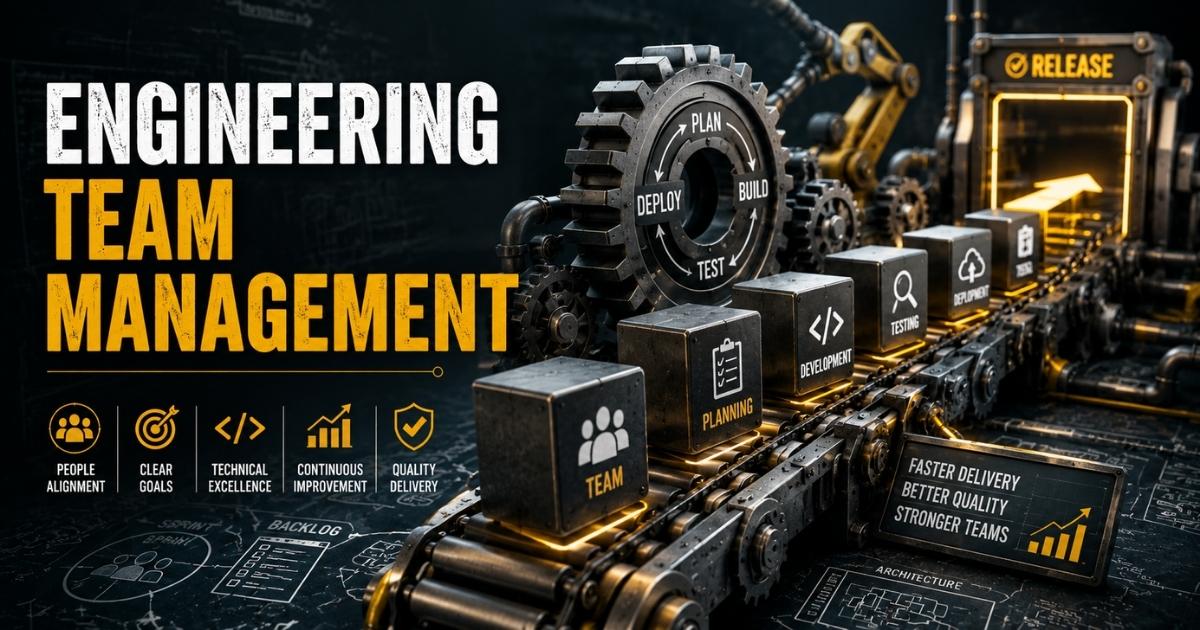
Engineering Team Management Tips For Faster Product Development Cycles
by Daniel Wright | May 18, 2026 | Startup & Product Growth
Table of Contents
- What Is Engineering Team Management In Modern Product Development
- Why Do Engineering Bottlenecks Slow Down Product Development Cycles
- How Does Strategic Goal Alignment Improve Engineering Team Performance
- Which Agile And Scrum Practices Help Engineering Teams Deliver Faster
- How Do DevOps Automation And CI CD Pipelines Improve Release Efficiency
- Why Does Cross-Functional Collaboration Matter In Software Development
- What Engineering Metrics Improve Delivery Speed And Product Quality
- How Can Businesses Scale Engineering Team Management Without Team Burnout
- Final Discussion
- FAQs
Fast product delivery is no longer just a competitive advantage. Every software company now depends on speed, collaboration, and consistent execution. But many engineering teams still struggle with missed deadlines, communication gaps, unclear priorities, and overloaded developers. As projects grow, small workflow issues quickly turn into major delivery bottlenecks, especially when organizations lack a strong custom software development partner to complement their internal capabilities.
Strong engineering team management helps solve those problems. It creates better alignment between developers, product managers, QA teams, and business goals. It also improves sprint planning, release cycles, code quality, and overall team productivity.
This guide breaks down practical strategies that help engineering teams work faster without sacrificing stability, performance, or developer experience.
What Is Engineering Team Management In Modern Product Development
Engineering team management is the process of leading an engineering team through software development projects with clear communication, technical direction, and strong project management. Engineering managers, engineering team leaders, and tech leads help team members understand project details, priorities, and the company’s goals. They also support knowledge sharing, code reviews, task breakdown, and decision making. Good engineering management keeps the entire team focused on project completion without duplicate work or missed deadlines.
Modern software engineering teams need more than technical expertise. Strong communication skills, active listening, and psychological safety now play a core part in project success. Engineering leaders must build trust, solve problems, and help remote workers collaborate effectively. A senior engineer or team leader also helps the organization align teams, manage resources, and maintain technical excellence while developing software in high-growth environments.
Why Do Engineering Bottlenecks Slow Down Product Development Cycles
Small workflow problems can slow down an entire engineering team. Delays in communication, poor task management, and unclear project details often create pressure across software development cycles. Many engineering leaders focus on speed, but weak processes and technical gaps usually become the real reason behind missed deadlines and slow project completion.
Poor Communication Between Teams
Strong communication skills are a core part of engineering team management. Product managers, developers, QA teams, and engineering managers must communicate clearly at every project stage. A lack of effective communication often creates confusion around priorities, deadlines, and technical direction.
Many software engineering teams also struggle with knowledge sharing. Remote workers may miss important updates or project details. According to Grammarly’s 2024 workplace report, businesses lose billions every year because of poor communication and collaboration issues. Good teams reduce delays through active listening, regular updates, and constructive feedback across the entire team.
Unclear Project Priorities
Engineering projects slow down when team members do not understand the bigger picture. A tech lead or team leader must connect daily tasks with the company’s goals and business metrics. Without clear priorities, teams waste time on duplicate work or low-impact tasks.
Project management plays a major role here. Poor task breakdown and weak decision-making often create confusion across software development workflows. Developers may switch focus too often or spend time solving the wrong problems. Strong technical roadmap planning helps connect day-to-day execution with longer-term priorities. Research from the Project Management Institute shows unclear goals remain one of the biggest causes of project failure in modern organizations.
Technical Debt And Outdated Systems
Technical debt can quietly damage project success. Many engineering teams rush to release features and ignore code quality, system updates, or code reviews, delaying important decisions about a refactor vs rebuild strategy. Over time, outdated architecture creates bigger technical challenges and slows product development cycles, which is why a structured technical debt management strategy becomes essential for long-term product health.
Engineering managers and senior engineers must balance speed with technical excellence. A weak system increases bugs, deployment failures, and maintenance work. Stripe reported that developers spend more than 40% of their time dealing with technical debt and broken processes instead of building new ideas. Modern engineering management requires long-term technical expertise, sustainable development practices, and realistic software development timelines.
Lack Of Ownership And Accountability
Project delays often happen when responsibilities are unclear. Team members may assume someone else will solve problems or manage blockers. A strong engineering leader creates accountability across the engineering team and helps people focus on clear responsibilities.
Ownership also improves psychological safety and trust. Developers feel more confident when managers support decision-making and problem-solving. Teams with strong accountability usually communicate faster and complete projects more efficiently. Engineering leaders who celebrate milestones and recognize progress often build stronger team culture and higher performance.
Resource And Skill Gaps
Many companies scale faster than their engineering resources. A big team without the right skills can still struggle with project completion. Engineering managers must understand team capacity, technical knowledge, and workload distribution before assigning tasks.
Skill gaps also affect software engineering quality. Junior developers may need support from a senior engineer or tech lead during complex projects. LinkedIn’s 2025 workforce data shows technical and communication skills remain among the most in-demand abilities in software development. Strong engineering management aligns resources, leadership, and technical expertise to keep projects on track.
How Does Strategic Goal Alignment Improve Engineering Team Performance
Engineering teams perform better when everyone works toward the same business goals. Clear alignment helps developers, engineering managers, and product leaders focus on the right priorities. It also reduces confusion, duplicate work, and delays across software development projects.
Clear Goals Improve Team Focus
Engineering team leaders must connect project goals with daily tasks. Team members work faster when they understand how their responsibilities support the company’s goals. Clear direction also helps the entire team stay focused during complex engineering projects.
A strong engineering management process reduces distractions and confusion. Developers can prioritize high-impact tasks instead of switching between unrelated projects. According to Asana’s 2024 Anatomy of Work report, employees lose nearly 58% of their time on work coordination rather than skilled work. Clear alignment improves focus, communication, and project completion across software engineering teams.
Shared Priorities Reduce Duplicate Work
Duplicate work slows software development and wastes technical resources. Engineering managers and tech leads must align teams around shared priorities and project details. A clear roadmap helps developers avoid overlapping tasks and repeated problem-solving.
Good project management also improves coordination between engineering leaders, QA teams, and product managers. Team members can make faster decisions when priorities stay consistent across the organization. Strong communication skills and active listening help teams manage workflows more effectively. This creates better collaboration and supports technical excellence throughout the development process.
Strong Alignment Supports Faster Decisions
Decision-making becomes easier when engineering leaders define clear technical direction. Developers do not need constant approvals when project priorities are already aligned with business metrics and customer needs. That saves time during product development cycles.
Fast decisions also improve agility inside high-growth companies. A senior engineer or team leader can solve technical challenges quickly without blocking the entire team, especially when supported by realistic software development budget planning that accounts for changing priorities. McKinsey research shows companies with aligned leadership teams often deliver stronger operational performance and faster project execution. Strong alignment creates confidence across engineering management and supports better technical outcomes.
Cross-Functional Teams Work Better Together
Software development depends on collaboration between multiple teams. Product managers, developers, designers, and QA specialists all need a shared understanding of project goals. Poor alignment often creates communication gaps and delays between departments.
Cross-functional collaboration improves when leaders build trust and psychological safety. Team members feel more comfortable sharing new ideas, concerns, and constructive feedback. Remote workers also benefit from clear processes and regular communication. Strong alignment helps the organization maintain smooth workflows while reducing friction between technical and non-technical teams.
Aligned Teams Deliver Better Business Results
Engineering team management is not only about writing code. It also supports business growth, customer satisfaction, and long-term project success. Teams that align technical expertise with company priorities often achieve better product quality and faster release cycles.
Engineering leaders also use alignment to measure performance against business metrics. Clear goals help managers track progress, manage resources, and improve accountability. Gallup’s 2024 workplace research found that aligned teams show higher engagement and stronger productivity. Companies that align engineering with strategy and follow proven scaling engineering team strategies often create more stable systems, better products, and stronger competitive advantage.
Which Agile And Scrum Practices Help Engineering Teams Deliver Faster
Modern engineering teams need fast and flexible workflows to handle changing product demands, often supported by flexible custom software solutions that match their processes. Agile and Scrum practices help software engineering teams improve collaboration, reduce delays, and manage projects more efficiently, especially when compared with more rigid Waterfall software development approaches. Strong workflows also support better communication, faster releases, and higher project success rates.
Sprint Planning Creates Clear Priorities
Sprint planning helps engineering teams organize tasks before development starts. Engineering managers, product managers, and team leaders review project details, technical challenges, and business priorities together. This process helps the entire team focus on the right work during each sprint cycle.
Clear planning also reduces confusion and missed deadlines. Developers understand responsibilities, timelines, and technical direction before they write code. According to the 2024 State of Agile report, more than 70% of software teams use Agile frameworks to improve delivery speed and project management. Strong sprint planning supports better execution and faster project completion.
Daily Standups Improve Team Communication
Daily standups help team members stay aligned throughout software development projects. Short meetings allow developers to share updates, discuss blockers, and ask for support. Engineering leaders can quickly identify workflow issues before they slow down the entire team.
Strong communication skills make standups more effective. Team members gain better understanding of priorities, dependencies, and project progress. Remote workers also stay connected through regular discussions and active listening. Good teams use standups to build trust, improve accountability, and strengthen collaboration across engineering projects.
Backlog Refinement Reduces Workflow Delays
A well-managed backlog keeps software engineering teams organized. Engineering managers and tech leads review tasks regularly to remove outdated priorities and clarify technical requirements. This process helps developers focus on high-value work without confusion.
Backlog refinement also improves decision-making and resource management. Teams can estimate effort more accurately and avoid duplicate work during development cycles. Poorly managed backlogs often create delays and unnecessary technical debt. Agile teams that maintain clear priorities usually complete projects faster and maintain stronger technical excellence across the organization.
Retrospectives Improve Team Performance
Retrospectives help engineering teams learn from completed sprint cycles. Team members discuss challenges, project success, workflow issues, and communication gaps after each release. This process creates space for constructive feedback and continuous improvement.
Engineering team leaders also use retrospectives to improve psychological safety and problem-solving. Developers feel more comfortable sharing concerns and new ideas in a supportive environment. Atlassian research shows teams that review workflows regularly often improve productivity and collaboration over time. Retrospectives help engineering management build stronger processes and maintain long-term development efficiency.
Small Releases Reduce Technical Risks
Large deployments often increase technical complexity and project delays. Agile engineering teams reduce risks through smaller and more frequent releases. Short release cycles help developers detect bugs faster and maintain system stability during software development.
Small releases also improve project management and customer feedback loops. Engineering leaders can test new ideas without affecting the entire system. Faster deployment cycles support better technical expertise and quicker response to business needs. Many high-growth companies now use Agile release practices to improve software quality, reduce downtime, and accelerate product delivery.
How Do DevOps Automation And CI CD Pipelines Improve Release Efficiency
Fast product delivery depends on stable and efficient release processes. DevOps automation and CI CD pipelines help engineering teams reduce manual work, improve software quality, and release updates faster, especially when teams understand how AI automation vs traditional automation can reshape their tooling and workflows. Modern software engineering teams use automation to maintain speed, consistency, and technical excellence across development cycles, often pairing these efforts with thoughtful cloud migration planning and following emerging DevOps best practices.
Automation Reduces Manual Deployment Errors
Manual deployments often create delays, bugs, and system failures. DevOps automation helps engineering teams standardize release processes and reduce human error. Developers can push updates faster without repeating the same technical tasks during every deployment cycle.
Engineering managers also gain better control over project management and release workflows. Automated deployments improve consistency across software development environments and reduce missed deadlines. According to the 2024 DORA report, high-performing engineering teams deploy code hundreds of times more frequently than low-performing teams. Automation helps organizations maintain speed while improving technical stability and project success.
CI CD Pipelines Improve Code Quality
CI CD pipelines help developers test and validate code before deployment. Automated workflows run code reviews, security checks, and testing processes during every release cycle. This helps engineering teams detect technical problems early.
Strong pipelines also improve collaboration between developers, QA teams, and engineering leaders. Team members can communicate issues quickly and maintain better technical direction across projects. Faster feedback loops reduce duplicate work and improve problem-solving. Engineering management teams often use CI CD systems to support continuous software development without sacrificing system reliability or code quality.
Faster Releases Improve Team Productivity
Long release cycles slow down software engineering teams. Developers may wait days or weeks before seeing changes move into production. DevOps practices reduce those delays through automated testing, integration, and deployment workflows.
Faster releases also improve focus and accountability across the entire team. Developers spend less time managing repetitive deployment tasks and more time building new ideas. GitLab’s 2024 DevSecOps report found that automation continues to improve developer productivity across high-growth engineering organizations. Quick release cycles help teams respond faster to customer feedback and business priorities.
Continuous Monitoring Improves System Stability
Release efficiency depends on system visibility after deployment. Engineering teams need real-time monitoring tools to track bugs, downtime, and performance issues, often combining monitoring with broader software observability practices. DevOps workflows help managers and developers identify technical challenges before they affect customers.
Strong monitoring also supports better decision-making and resource management. Engineering leaders can use performance data, follow SaaS performance optimization best practices, and rely on specialized SaaS monitoring tools to improve workflows and technical expertise across projects. Teams that monitor systems continuously often reduce downtime and maintain stronger software reliability. This process also helps organizations protect customer experience during rapid product development cycles.
Shared Ownership Strengthens Collaboration
DevOps culture promotes shared responsibilities between development and operations teams. Developers, QA specialists, and engineering managers work together throughout the software development lifecycle, often supported by a dedicated Site Reliability Engineering framework to protect uptime and performance. This improves communication, accountability, and project completion speed.
Shared ownership also creates stronger psychological safety inside engineering teams. Team members feel more comfortable solving technical problems together instead of working in isolated workflows. Atlassian research shows collaborative teams often deliver projects faster and maintain higher employee satisfaction. Strong DevOps practices help organizations align teams, improve leadership, and support long-term engineering success.
Why Does Cross-Functional Collaboration Matter In Software Development
Modern software development depends on teamwork across multiple departments. Developers, QA specialists, product managers, designers, and engineering leaders must work together to deliver successful projects, leveraging models such as offshore software development, especially in globally distributed agile offshore development setups. Strong collaboration helps engineering teams improve communication, reduce delays, and maintain faster product development cycles.
Shared Goals Improve Team Alignment
Cross-functional collaboration helps teams stay aligned around the company’s goals and product priorities. Engineering managers, product leaders, and team members can make better decisions when everyone understands the bigger picture. Clear alignment also improves accountability across software development projects.
Shared goals reduce confusion and duplicate work inside the organization. Developers spend less time solving avoidable problems when priorities stay consistent across teams. According to Asana’s 2024 collaboration research, teams with strong alignment complete projects more efficiently and experience fewer workflow delays. Better coordination helps engineering projects move faster without sacrificing quality.
Better Communication Reduces Delays
Strong communication skills are essential in software engineering. Cross-functional teams need clear updates, feedback, and project details throughout development cycles. Poor communication often creates missed deadlines, technical confusion, and workflow bottlenecks.
Effective communication also improves active listening and problem-solving. Developers, QA teams, and product managers can identify issues early before they affect project completion. Remote workers especially benefit from structured communication processes and regular collaboration. Engineering team leaders who encourage open discussions often build stronger trust and smoother workflows across projects.
Faster Feedback Improves Product Quality
Cross-functional collaboration creates faster feedback loops during software development. QA specialists, designers, and engineering teams can review features earlier in the release cycle. This process helps teams identify bugs, usability problems, and technical gaps before deployment.
Fast feedback also supports technical excellence and continuous improvement. Developers can adjust tasks quickly without wasting resources on unnecessary revisions. GitLab’s 2024 DevSecOps report shows collaborative engineering teams often release software faster while maintaining higher quality standards. Early feedback improves customer experience and strengthens project success across high-growth organizations.
Diverse Skills Improve Problem Solving
Software engineering projects often involve complex technical and business challenges. Cross-functional teams bring different perspectives, technical expertise, and mental models into the decision-making process. This helps organizations solve problems more effectively.
A senior engineer may focus on system performance while product managers prioritize customer needs. QA specialists may identify risks developers overlook during code reviews. Diverse skills improve creativity, technical direction, and innovation across engineering projects. Strong collaboration also helps team members learn from each other through knowledge sharing and constructive feedback.
Collaboration Builds Stronger Team Culture
Good teams depend on trust, support, and psychological safety. Cross-functional collaboration helps engineering teams build stronger relationships across departments and responsibilities. Team members feel more connected when they solve challenges together instead of working in isolated silos.
Strong culture also improves leadership and long-term development success. Engineering leaders who celebrate milestones and encourage communication often maintain higher employee engagement. Gallup’s 2024 workplace report found that collaborative teams usually show stronger productivity and job satisfaction. Healthy collaboration creates a more stable engineering environment and improves overall business performance.
What Engineering Metrics Improve Delivery Speed And Product Quality
Engineering teams need clear metrics to measure project success and improve software development performance. The right data helps engineering managers identify workflow gaps, reduce delays, and maintain technical excellence. Strong metrics also support better decision-making across product development cycles.
Deployment Frequency Shows Delivery Speed
Deployment frequency measures how often engineering teams release code into production. High-performing software engineering teams usually deploy updates more frequently without affecting system stability. This metric helps organizations understand release efficiency and workflow performance.
Frequent deployments also improve agility and customer responsiveness. Developers can release small updates faster instead of waiting for large deployment cycles. According to the 2024 DORA report, elite engineering teams deploy code multiple times per day while maintaining strong software reliability. Engineering leaders use this metric to evaluate DevOps automation, CI CD pipelines, and project management effectiveness.
Lead Time Measures Workflow Efficiency
Lead time tracks how long tasks take from development to deployment. This metric helps engineering managers identify delays across software engineering workflows. Long lead times often point to communication gaps, approval bottlenecks, or technical challenges.
Shorter lead times improve team productivity and project completion speed. Developers can respond faster to customer feedback and business priorities. Engineering team leaders also use this metric to improve task breakdown and resource management. Better workflow efficiency reduces missed deadlines and supports smoother software development across the organization.
Change Failure Rate Reflects Code Quality
Change failure rate measures how often deployments create bugs, outages, or rollback issues. This metric helps engineering teams evaluate software quality and technical stability. High failure rates usually signal weak testing, rushed releases, or poor code reviews.
Strong engineering management focuses on reducing deployment risks through better technical expertise and quality assurance processes. Teams with lower failure rates often maintain stronger customer trust and system reliability. Google Cloud research shows top-performing engineering organizations maintain lower failure rates while releasing software faster. Stable systems improve project success and long-term technical performance.
Recovery Time Measures Team Responsiveness
Mean Time To Recovery, often called MTTR, measures how quickly engineering teams solve production issues after failures happen. Fast recovery times show strong problem-solving skills, technical knowledge, and operational support across engineering projects.
Quick recovery also reduces downtime and protects customer experience. Engineering leaders often use monitoring tools, automation, and clear communication processes to improve incident response. Teams with lower recovery times usually maintain stronger collaboration between developers, QA specialists, and operations teams. Efficient response systems help organizations maintain business continuity during technical challenges.
Team Satisfaction Improves Long-Term Performance
Engineering metrics should not focus only on systems and releases. Team satisfaction also affects software development speed and product quality. Burnout, unclear responsibilities, and poor communication can reduce productivity across the entire team.
Strong engineering team management supports psychological safety, collaboration, and leadership development. Managers who encourage constructive feedback and celebrate milestones often build stronger team culture. Gallup’s 2024 workplace research found engaged employees show higher productivity and better job performance. Healthy engineering teams usually deliver projects faster and maintain stronger technical excellence over time.
How Can Businesses Scale Engineering Team Management Without Team Burnout
Fast company growth can put heavy pressure on engineering teams. More projects, tighter deadlines, and larger systems often increase stress across software development workflows, making it crucial to apply robust enterprise scalability strategies, especially as new software development trends for 2026 add complexity and technology choices. Businesses need scalable engineering management strategies that improve productivity without damaging team health, communication, or long-term performance.
Clear Workflows Reduce Team Pressure
Engineering teams struggle when workflows become disorganized. Clear project management processes help team members understand responsibilities, priorities, and project details. Strong structure also reduces confusion during fast-moving software development cycles.
Engineering managers should create realistic timelines and balanced task breakdowns. Developers perform better when workloads stay manageable across projects. Poor planning often leads to missed deadlines and unnecessary overtime. According to Asana’s 2024 workplace research, unclear processes remain one of the biggest causes of employee stress and productivity loss across organizations.
Balanced Workloads Prevent Burnout
A big team can still face burnout if managers distribute tasks poorly. Engineering leaders must understand team capacity, technical skills, and workload limits before assigning responsibilities. Balanced workloads improve project completion and maintain software quality.
Senior engineers and tech leads also play an important role in resource planning. Teams that constantly rush to meet deadlines often experience lower morale and weaker technical excellence. Gallup’s 2024 workplace report found burned-out employees show lower engagement and reduced job performance. Sustainable engineering management helps organizations maintain speed without exhausting the entire team.
Strong Leadership Builds Psychological Safety
Engineering team management depends heavily on leadership quality. Team leaders and engineering managers must build trust, support communication, and encourage constructive feedback. Psychological safety helps developers share concerns and solve problems without fear of blame.
Strong leadership also improves collaboration between remote workers and cross-functional teams. Developers feel more comfortable discussing technical challenges, new ideas, and workflow issues. Google’s Project Aristotle research found psychological safety remains one of the strongest factors behind high-performing teams. Healthy engineering culture improves both employee satisfaction and project success.
Knowledge Sharing Supports Team Growth
Fast-growing companies often depend too much on a few senior engineers. This creates bottlenecks and slows software engineering projects when key people become overloaded. Knowledge sharing helps engineering teams distribute technical expertise across the organization, which is especially critical in early-stage environments following a structured startup software development process.
Code reviews, internal documentation, and mentorship improve team understanding and reduce dependency risks. Junior developers gain stronger technical knowledge while senior engineers spend less time solving repetitive issues. Engineering leaders who promote collaboration usually create stronger long-term development processes. Shared knowledge also helps teams maintain stability during rapid company growth.
Automation Improves Long-Term Efficiency
Manual processes create extra pressure across software development teams. DevOps automation, CI CD pipelines, and workflow tools help engineering organizations reduce repetitive tasks and improve release efficiency. Intelligent, AI-powered productivity tools can further streamline coordination and routine work, particularly when built on a thoughtful AI software development strategy. Automation gives developers more time to focus on technical problem-solving and innovation.
Efficient systems also support better work-life balance across engineering projects. Teams can manage larger workloads without constant overtime or operational stress. GitLab’s 2024 DevSecOps report shows automation continues to improve developer productivity and deployment speed across modern engineering environments. Scalable automation helps businesses grow without sacrificing team health or software quality.
Final Discussion
Engineering team management plays a major role in modern software development. Strong leadership, clear communication, Agile workflows, DevOps automation, and cross-functional collaboration all help engineering teams deliver products faster. Companies that align technical direction with business goals usually improve project success, product quality, and delivery speed at the same time.
High-performing engineering teams also focus on people, not only processes. Psychological safety, balanced workloads, knowledge sharing, and constructive feedback help developers stay productive without burnout. Engineering managers and team leaders must create systems that support both technical excellence and long-term team stability.
As software projects become more complex, businesses that invest in better engineering management will build faster, scale more efficiently, and maintain a stronger competitive advantage in the market.
FAQs
What Skills Should Engineering Team Leaders Focus On?
Engineering team leaders need both technical expertise and strong communication skills. Technical knowledge helps with software development and decision-making, while leadership skills improve collaboration, project management, and team support.
Can Small Companies Benefit From Engineering Team Management Practices?
Yes. Small companies often face tighter deadlines, limited resources, and faster development cycles. Strong engineering team management helps small teams improve communication, organize tasks, and reduce duplicate work across projects.
How Does Remote Work Affect Engineering Team Performance?
Remote workers often face communication gaps and collaboration challenges during software development projects. Engineering leaders must create clear processes, regular updates, and strong knowledge-sharing systems to keep teams aligned.
Should Engineering Teams Track Employee Burnout Metrics?
Yes. Burnout directly affects project success, software quality, and team productivity. Recent industry reports show many developers experience stress from heavy workloads, unclear priorities, and constant delivery pressure.
What Makes High-Performing Engineering Teams Different?
High-performing engineering teams usually have clear goals, strong leadership, and effective communication across the organization. Team members understand project details, business priorities, and technical responsibilities from the start.