Choosing the right software vendor feels exciting at first. Promises look strong. Demos feel smooth. Pricing may even seem fair. But small warning signs often hide behind all that polish. Missing them early can lead to wasted budget, poor performance, and constant frustration later.
Many businesses rush into decisions and regret them later. A vendor that looks perfect today may fail when your needs grow. Weak support, hidden costs, or limited scalability can slow your entire operation. That is why spotting software vendor red flags early is not optional.
This guide breaks down the key signs you should never ignore. You will learn how to evaluate vendors with clarity and confidence before making a long-term commitment.
What Is A Software Vendor
A software vendor is a company that builds and sells software products or services. Businesses use these tools to manage daily work, improve productivity, and solve specific problems. Vendors can offer ready-made solutions or custom software based on business needs. Most modern vendors deliver software through the cloud, which makes access easy from anywhere.
A software vendor does more than just provide the product. It also handles updates, security, and ongoing support. Some vendors focus on one area like HR, CRM, or accounting. Others offer broader platforms that cover multiple functions.
Choosing the right vendor matters because the software becomes part of your daily operations. A reliable vendor helps your business grow. A poor choice can slow everything down.
Importance Of Evaluating Hidden Risks In Pricing, Contracts, And Commitments
Hidden risks often stay unnoticed during the sales process. A software vendor may highlight value but hide key contract terms. Small gaps can turn into big red flags later. Careful evaluation protects your budget, data, and long-term success.
Hidden Costs
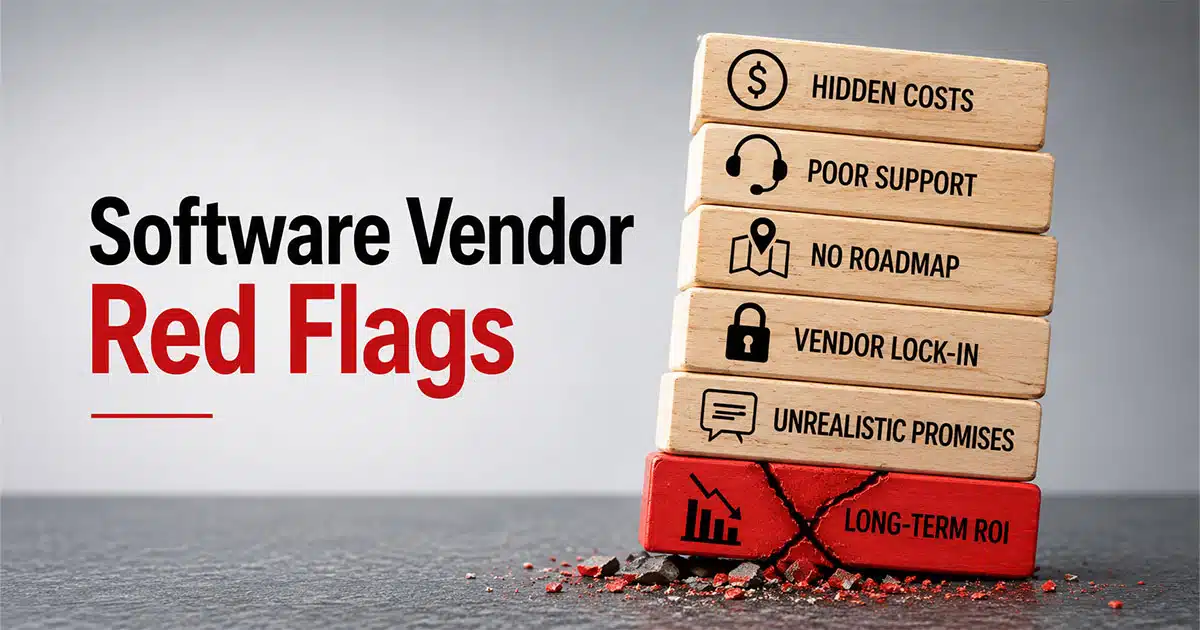
A software vendor may show a simple price at first. Later, extra costs appear. Setup fees, training, and add-ons increase total spend. Many companies report 20–30% higher costs after implementation due to hidden charges.
You must ask the real question early. What is the full cost of the software solution? A clear breakdown is a green flag. Hidden pricing is a big red flag. It affects your business and long-term planning.
Rigid Contracts
Contracts often look standard but contain strict terms. Some vendors lock you into long-term deals. Early exit may include heavy penalties. Around 60% of companies face issues with vendor lock-in.
Check every contract clause before signing contracts. A flexible agreement shows a reliable software partner. Rigid terms reduce control and increase risk. Your organization needs freedom to adapt as needs change.
Unclear Scope And Unrealistic Promises
Vendors may promise fast delivery and wide capabilities. Many fail to define project scope clearly. This creates confusion between the team and the software development partner.
Unrealistic timelines are a major warning sign. They lead to delays and low-quality outcomes. A strong vendor sets clear project goals and realistic expectations. That improves trust and long-term relationships.
Weak Data Control And Security Gaps
Data protection is a non-negotiable part of any software solution. Some vendors fail to explain access controls and compliance clearly. This creates a high risk of data breach.
Recent studies show that over 45% of breaches involve third-party vendors. You must check how data is stored and managed. A secure system protects your operations and users. Weak security is a serious red flag.
Poor Support And Communication After Signing
Support often drops after the deal closes. Many vendors focus only on the sales process. Poor communication leads to delays and frustration during implementation.
A reliable software partner offers ongoing support and clear communication. Regular team meetings and feedback loops help manage the project. Strong support ensures long-term success. Weak support is one of the most common software vendor red flags.
How To Assess Product Limitations, Integration Gaps, And Scalability Issues
Product fit goes beyond features. Many software vendor red flags appear after implementation. Limits in integration, growth, and flexibility can slow your business. A careful check helps you avoid gaps that hurt performance and long-term success.
Feature Gaps
A software solution may look complete during demos. Real use often reveals missing features. Teams then rely on workarounds or extra tools. Around 48% of companies say poor feature fit reduces productivity after launch.
Check how the system supports your project goals. Ask your software development partner for real use cases. A strong vendor aligns features with your business needs. Missing core capabilities is a big red flag that affects operations.
Weak Integration
Modern businesses depend on connected systems. A vendor that fails to integrate with your tools creates silos. Data stays scattered and hard to manage. Studies show 70% of digital transformation failures relate to poor integration.
Ask how the software connects with your current stack. Check APIs, documentation, and real examples. A reliable software partner ensures smooth data flow. Integration gaps slow your team and reduce the value from the system.
Scalability Limits
Your business will grow over time. The software must support that growth. Some vendors build solutions that work only for small teams. Scaling later becomes costly and complex.
A report shows 60% of companies switch vendors due to scalability issues. Check how the system handles more users, data, and processes. A scalable solution supports long-term success. Poor scalability is a clear warning sign, which is why you should also think about broader enterprise scalability strategies for growth when evaluating vendors.
Outdated Technology And Rigid Code Base
Outdated software creates risk and limits performance. Some vendors rely on old frameworks and closed systems. A black box approach hides how the product works. This reduces control and flexibility.
Ask about the code base and update cycle. A modern software development process and scalable software architecture ensure better performance and security. Outdated technology is a big red flag. It affects future upgrades and system stability.
Lack Of Customization And Future Flexibility
Every business has unique needs. A rigid system fails to adapt. Limited custom development options force teams to adjust their process instead of the tool. That reduces efficiency and is often a sign you may be ready for a custom software development solution that fits your workflows.
Check how the vendor supports customization and changes. A strong software partner offers flexible solutions and listens to feedback. Flexibility helps you manage future challenges. Lack of adaptability is one of the most common software vendor red flags.
How To Review Security, Compliance, And Data Ownership Concerns
Security and data control sit at the core of any software decision. Many software vendor red flags appear in this area after signing contracts. Weak protection, unclear ownership, and poor compliance can expose your business to serious risk.
Data Ownership Terms That Reduce Your Control
A software vendor may store and manage your data, but ownership must stay with you. Some contracts include vague clauses that limit your access or rights or push you toward rigid off-the-shelf tools instead of evaluating custom vs off-the-shelf software properly. This is a big red flag many companies miss during the sales process.
Ask who owns the data and how you can retrieve it. Clear ownership terms are non-negotiable. A reliable software partner gives full access and control. Weak data ownership terms can hurt your operations and long-term plans.
Weak Access Controls And Permission Management
Access controls define who can see and manage data in the system. Poor control increases the risk of misuse and internal errors. Around 74% of data breaches involve human error or misuse of access.
Check how the vendor manages roles and permissions. A secure system limits access based on job roles. Strong control protects your team and users. Weak access control is one of the most critical software vendor red flags.
Missing Compliance And Security Certifications
Compliance proves that a vendor follows industry standards. Many vendors claim security but fail to provide proof. Lack of certifications is a serious warning sign.
Look for standards like ISO 27001 or SOC 2. Around 65% of companies now require certified vendors before implementation. A compliant software solution reduces risk and builds trust. Missing compliance shows weak security practices.
High Risk Of Data Breach And Poor Protection Measures
Data breaches continue to rise across industries. Reports show that over 45% of breaches involve third-party vendors. Weak encryption and poor monitoring increase exposure.
Ask how the vendor protects data at every level. Check encryption, backup, and response plans. A strong software partner invests in security tools and processes. Poor protection measures can damage your business and client trust.
Limited Transparency In Security Practices And Updates
Transparency helps you understand how the system stays secure. Some vendors avoid sharing details about updates and security fixes. This creates hidden risk over time.
A good vendor shares regular updates and documentation. Clear communication is a green flag in any software development partner. Lack of transparency is a big red flag. It limits your ability to manage risk and maintain compliance.
What Are The Common Software Vendor Red Flags
Many risks appear early if you know where to look. Software vendor red flags often hide behind polished demos and strong promises. A careful review helps you avoid poor decisions and protect your business from long-term issues.
Poor Communication And Lack Of Clarity
A software vendor that avoids clear answers creates doubt. Poor communication during the sales process often leads to bigger issues later. Around 57% of failed projects link back to communication gaps.
Check how the team responds to questions. Direct and honest answers are green flags. Delays and vague replies are warning signs. A strong software partner values transparency from day one.
Unrealistic Promises And Timelines
Some vendors promise fast delivery and perfect results. Unrealistic timelines often hide gaps in planning or resources. Many software development projects exceed deadlines by 30–50%, which is why understanding a realistic software development timeline is critical before you sign.
Ask for a clear project scope and timeline. A reliable project manager sets realistic expectations. Overpromising is a big red flag. It often leads to delays and low-quality outcomes.
Hidden Costs And Unclear Pricing Structure
Pricing may look simple at first. Extra costs appear later during implementation. Training, support, and upgrades can increase the total cost by up to 25%.
Review the contract in detail before signing it. A clear pricing model shows a trustworthy vendor. Hidden fees reduce value and increase risk. Transparency in cost is a must for long-term success.
Limited Product Capabilities And Outdated Software
A software solution may not match your real needs. Outdated software and weak features reduce efficiency. Around 48% of companies report low productivity due to poor tool fit.
Check the code base and product roadmap. A modern system supports growth and change. Limited capabilities are strong red flags. They affect your daily operations and future plans and often signal a need for software modernization for modern businesses to restore performance and reduce risk.
Weak Support And Lack Of Ongoing Service
Support often drops after the deal closes. Many vendors focus only on closing the sale. Poor support slows down implementation and frustrates users.
A reliable software partner offers ongoing support and regular updates. Strong communication and training improve user adoption. Weak support is a common risk that affects long-term relationships and system performance.
Vendor Lock-In And Lack Of Flexibility
Some vendors design systems that are hard to exit. Data export may be limited. Custom development options may not exist. About 60% of companies face vendor lock-in challenges.
Check how easy it is to switch or scale. A flexible system gives you control over your data and tools. Lock-in is a major red flag. It limits your ability to adapt and grow.
How Software Vendor Red Flags Lead To Long-Term Business Risks
Small warning signs can turn into serious problems over time. Many software vendor red flags appear early but get ignored. Poor choices affect cost, performance, and growth. A weak software partner can slow your business and increase long-term risk.
Rising Costs That Reduce Business Value
Hidden fees and unclear pricing increase costs after implementation. Many companies report 20–30% budget overruns due to vendor-related issues. Extra charges for support, upgrades, and features reduce overall value.
A clear contract helps you manage cost and avoid surprises. A trusted software vendor shares full pricing early. Hidden costs are a big red flag. They affect your financial planning and long-term success, and a structured custom software cost comparison guide can help you understand total cost of ownership before you commit.
Project Delays And Failed Implementation
Unrealistic timelines and poor planning lead to delays. Around 45% of software projects exceed their schedule. Weak coordination between the vendor team and your project manager creates confusion.
A defined project scope and strong communication improve delivery. A reliable software development partner aligns with your project goals. Delays affect operations and waste resources. Poor execution is a major risk for any organization.
Security Gaps And Data Breach Exposure
Weak security practices increase the chance of a data breach. Reports show that over 45% of breaches involve third-party vendors. Poor access controls and lack of compliance create high risk.
You must check how the vendor protects data and systems. Strong security measures are non-negotiable. A secure software solution protects users and operations. Weak protection is one of the most serious red flags.
Low User Adoption And Productivity Loss
A complex or low-quality system frustrates users. Around 50% of employees avoid tools that are hard to use. Poor design and lack of training reduce adoption.
A good software partner offers proper training and support. Clear documentation and simple workflows improve user experience. Low adoption affects productivity and business outcomes. Poor usability is a warning sign you should not ignore.
Limited Scalability And Growth Challenges
A system that cannot scale blocks future growth. Many companies switch vendors due to scalability issues. Around 60% report challenges when expanding their system, especially SaaS products that lack clear SaaS scalability strategies from the start.
A scalable software solution supports more users, data, and processes. Check the code base and system capabilities early. Growth depends on flexibility and performance. Limited scalability is a big red flag that affects long-term plans.
How To Identify Software Vendor Red Flags Before Signing A Contract
Early checks reduce risk and save costs. Many software vendor red flags show up during demos, trials, and contract reviews. A structured process helps your team validate claims and avoid poor decisions before signing contracts, especially when you know how to choose a custom software development partner rather than a short-term vendor.
Validate Claims With Proof And Real Use Cases
A software vendor may promise strong results. Ask for proof. Request live demos with your data and real workflows. About 43% of buyers say vendor claims did not match reality after implementation.
Ask for case studies and client references. Check outcomes, not just features. A reliable software development partner proves value with data, such as real examples of how custom software transformed companies. Lack of proof is a big red flag. It signals risk for your project and business.
Review Documentation, Roadmap, And Code Base Access
Clear documentation shows maturity. You need API docs, user guides, and release notes. Around 58% of teams face delays due to poor documentation during software development.
Ask about the product roadmap and update cycle. Check if you can access the source code or export data. A black box system limits control. You should also understand whether you are choosing custom software vs SaaS and how that impacts control. Strong documentation and transparent plans are green flags for long-term success.
Test Integration And Performance In A Pilot
Run a pilot with your tools and data. Test key integrations and performance under load. About 70% of digital initiatives fail due to integration gaps and weak system fit, especially when planning complex SaaS application development for global users.
Involve your project manager and developers in the test. Measure speed, errors, and data flow. A capable software partner supports trials and fixes issues fast. Poor results in a pilot are clear warning signs.
Audit Security, Compliance, And Access Controls
Security must be non-negotiable. Review access controls, encryption, and incident response. Over 45% of data breach cases involve third-party vendors, and many organizations underestimate the hidden costs in software development that come from weak security and technical debt.
Ask for compliance reports and certifications. Verify how the vendor manages data and user access. A secure software solution protects your organization and users. Missing controls or vague answers are strong red flags.
Scrutinize Contract Terms And Exit Options
Read every contract clause before signing contracts. Focus on pricing, SLAs, data ownership, and exit terms. About 60% of companies report vendor lock-in challenges.
Check penalties, renewal terms, and data export rights. A fair contract gives you control and flexibility. A rigid agreement is a big red flag. It can limit your ability to switch and manage long-term risk.
How GainHQ Helps You Avoid Software Vendor Red Flags
GainHQ works as a reliable custom software development services partner that focuses on clarity and long-term value. It starts every project with a clear project scope and business alignment. This reduces confusion, hidden costs, and common software vendor red flags early.
The team follows a structured software development process with strong documentation, planning, and communication. This helps businesses avoid unrealistic timelines, poor integration, and low-quality outcomes. GainHQ also offers strategic tech consulting services and focuses on transparency in contracts and pricing, which reduces risk during the sales process.
Ongoing support, security planning, and scalable architecture ensure long-term success. GainHQ helps companies build smarter tools, build reliable systems, manage data control, and maintain performance as they grow.
FAQs
Do Small Software Vendor Red Flags Really Matter For Long-Term Success?
Yes, small red flags often grow into major risks. Studies show that up to 30% of data breaches involve third-party vendors. Ignoring early warning signs can impact your business, project, and long-term outcomes.
Can A Good Sales Process Hide Serious Vendor Issues?
Yes, a smooth sales process can hide gaps in product, support, or security. A strong demo does not always reflect real capabilities. You must validate the software solution beyond sales promises.
How Important Is The Role Of A Software Development Partner In Vendor Selection?
A software development partner helps identify software vendor red flags early. They review project scope, code base, and integration gaps. This ensures the vendor is the right match for your business and system.
Should You Always Choose A Vendor With The Most Features?
No, more features do not always mean better value. Low-quality features or outdated software can create more problems. Focus on usability, scalability, and how the solution fits your project goals.
What Are The Key Warning Signs In Vendor Behavior During Early Discussions?
Watch for poor communication, unclear answers, and lack of documentation. These warning signs often lead to delays, weak support, and failed implementation. A reliable software partner shows clarity, transparency, and strong communication early.