Modern businesses face a common challenge: generic software rarely fits the way they actually operate. Off the shelf software forces teams to adapt their processes to rigid features, creating friction and lost productivity. Custom business application development solves this by building software around your exact workflows, data requirements, and growth objectives.
Whether you need a logistics dispatch platform, a customer relationship management system with proprietary sales funnels, or internal tools for inventory management, custom apps deliver what shelf software cannot. This guide walks through the complete custom application development process, from initial discovery to deployment and iteration. You will learn how to scope requirements, select the right technology stack, and partner effectively with a development team to create solutions that drive real business outcomes.
What Is Custom Business Application Development
Custom business application development is the end-to-end process of designing, building, and maintaining software that is unique to a specific organization. Unlike generic tools, custom solutions embed your exact business logic, approval hierarchies, and compliance requirements directly into the application.
The scope includes enterprise web portals, mobile app solutions for field teams, back-office automation, and customer portals that pull data from multiple sources. Custom software can handle specific workflows that off-the-shelf tools simply cannot address, such as regional tax calculations, multi-tier approval chains, or industry-specific compliance validations.
Off-the-shelf solutions like generic CRMs or ERPs require businesses to adjust their processes to fit prebuilt features. Custom applications are built specifically to fit a business’s unique workflows, while off-the-shelf solutions often require businesses to adapt their processes to fit the software. Real-world software build vs buy case studies where custom won highlight how this fundamental difference determines whether technology accelerates your operations or creates friction.
Why Custom Business Applications Drive Growth In 2026
Modern businesses face constant pressure to adapt faster, serve customers better, and optimize operations. Custom business application development offers a strategic path to solve unique challenges while unlocking scalability, efficiency, and long-term competitive advantage across industries.
Custom Solutions Align With Business Processes
Custom app development ensures every feature aligns directly with internal business processes instead of forcing teams to adapt to generic tools. Off-the-shelf platforms often include unnecessary features, while such apps focus only on what matters.
Custom software development enables companies to build custom apps that mirror specific workflows, reduce friction, and improve productivity. Resources like a comprehensive custom software development guide covering benefits, types, and process can help teams plan effectively. Building software tailored to exact requirements helps eliminate inefficiencies and supports faster decision-making across departments.
Greater Control Over Software Development Strategy
Custom software application development gives organizations full ownership of their systems, from architecture to deployment. Unlike app stores that limit flexibility, custom solutions allow complete control over updates, integrations, and scalability.
Software development teams can choose the right technology stack, implement robust security layers, and adapt quickly to evolving needs. This level of control ensures the final product remains relevant and aligned with long-term goals.
Data-Driven Growth With Better Insights
Custom platforms unlock advanced data visualization capabilities that generic tools often lack. Businesses can access data in real time, track performance metrics, and generate actionable insights tailored to their operations.
When companies build custom apps, they create systems that collect, process, and present data in meaningful ways. Better insights lead to smarter strategies, improved customer experiences, and measurable growth outcomes.
Key Considerations Before Development
Key considerations include defining clear objectives, selecting the right development team, and planning scalability from the start. When selecting the right development team, organizations should follow best practices for choosing a custom software development partner to align expertise with business goals. Businesses must evaluate whether custom app development aligns with budget, timeline, and operational complexity.
Building software tailored to unique needs requires an initial investment, but the long-term value often outweighs the ongoing costs of generic alternatives. A well-executed custom software development strategy results in a powerful, scalable final product that supports continuous innovation and growth.
How To Build A Custom Business Application From Scratch
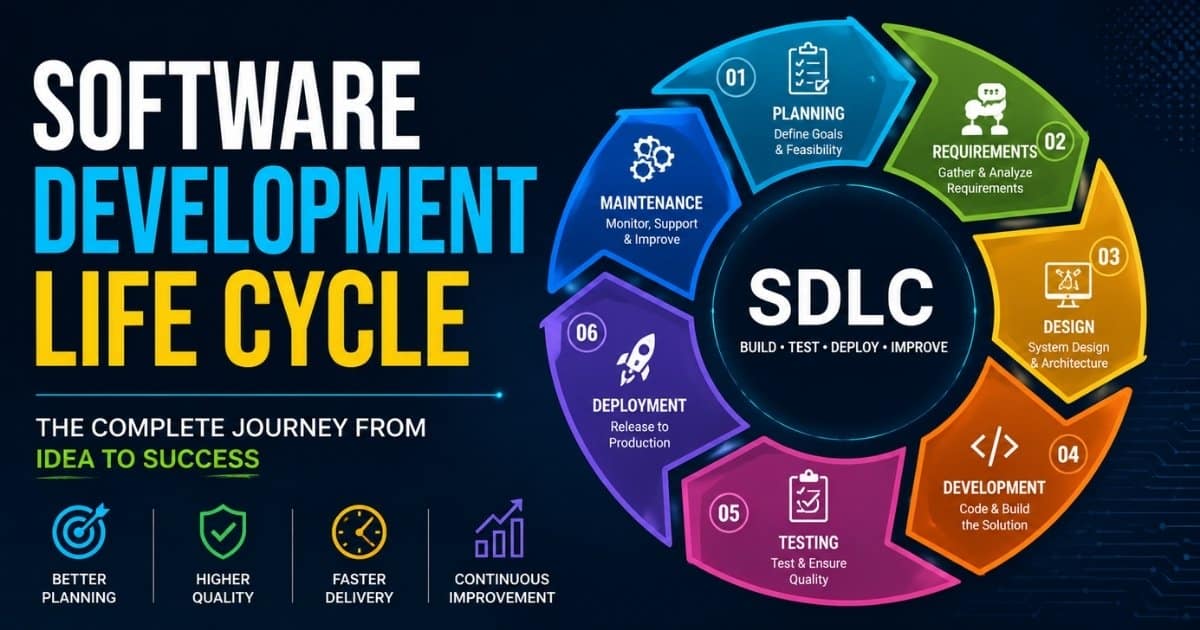
Building custom software from scratch follows six major phases: discovery, architecture, UX/UI design, development, testing, and deployment with iteration. This echoes proven custom software development services models that combine structured phases with agile delivery. This custom application development process applies whether you work with internal teams or partner with specialists like GainHQ.
Discovery And Requirements Gathering
The first step in building custom applications is to define the problem and gather requirements by collaborating with stakeholders to understand specific challenges and goals. This discovery phase typically consumes 10-20% of total project time, yet determines most of the project’s success.
Effective discovery involves stakeholder interviews, collaborative workshops using design thinking or Jobs-to-be-Done frameworks, and process mapping to document current-state inefficiencies. Defining measurable success criteria anchors the project, such as “reduce order processing from 2 days to 6 hours” or “cut manual errors by 40% via automated validations.”
User personas and user stories drive subsequent design and development. For example: “As a field technician, I need to upload photos and notes from my phone even when offline.” PMI’s Pulse of the Profession reports that 47% of projects fail due to unclear requirements, with overruns averaging 52%. Mitigate this risk through a version-controlled requirements traceability matrix updated throughout the project.
Solution Architecture And Technology Stack Selection
Architects design scalable blueprints balancing simplicity against resilience requirements. Stack selection depends on team expertise and business needs. Microsoft-focused organizations may favor .NET and SQL Server on Azure, while JavaScript teams often select React or Vue.js with Node.js backends.
Integration planning maps how the custom app will communicate with existing tools through REST APIs, webhooks, or event streams. Cloud platforms like AWS and Azure offer managed services that reduce operational overhead by up to 60%. Following scalable software architecture principles for high-growth products, container adoption now reaches 70% according to CNCF surveys, reflecting the shift toward modular, scalable deployments.
Custom applications can be architected from the start to support horizontal scaling, ensuring they perform well regardless of whether there are 10 users or 10,000. This architectural decision made early prevents expensive rewrites later as your organization grows.
UX And UI Design For Business Users
Good UX in business apps raises adoption rates and reduces training time. Studies from Nielsen Norman Group indicate that user-centered design can cut support tickets by 30-50% and training time by 25%. Business users need efficient interfaces, not just attractive ones.
Core activities include mapping user journeys, building low-fidelity wireframes, and creating interactive prototypes using tools like Figma. Accessibility via WCAG 2.2 standards and responsiveness across devices are essential, particularly for mobile versions used by field teams, where 40% of usage occurs on mobile devices.
A cluttered approval form transformed into a card-based prioritized view with one-tap actions can reduce clicks by 70%. This kind of user interface improvement directly impacts productivity and user adoption rates across the organization.
Development And Integration
The development phase involves in-depth coding to create a full version of the application, prioritizing modularity to facilitate easier updates and maintenance post-deployment. Development teams typically work in 2-4 week sprints with CI/CD pipelines enforcing code quality standards.
Low-code platforms suit dashboards and admin panels, saving 50-70% development time for standard components. Full custom code handles complex logic, performance-critical systems, and specific business challenges that no code platform solutions can address. Many organizations use a hybrid approach, combining both methods.
Custom applications can serve as integration hubs or middleware layers, managing data flow between disparate systems and transforming data formats as needed. Integrations connect to existing systems using secure OAuth2/SSO protocols, with API mocks enabling parallel development across teams. Best practices include test-driven development with 80% code coverage and domain events for loose coupling between services.
Testing And Quality Assurance
Testing is a critical phase in custom application development, which includes unit testing, integration testing, user acceptance testing, and security testing to ensure the application meets all requirements and is free of vulnerabilities.
IBM Systems Sciences Institute data shows that post-release bug fixes cost 100x more than fixes made during development, justifying 15-20% budget allocation for QA. Security scans using tools like OWASP ZAP and load tests simulating 5x peak loads validate that the application performs under real-world conditions.
Automation via Git-triggered test suites accelerates releases and reduces human error. For applications handling sensitive data, penetration testing uncovers approximately 80% of vulnerabilities before they reach the production environment.
Deployment, Monitoring, And Iteration
Blue-green or canary deployments minimize downtime to under five minutes with rollback capabilities via feature flags. Modern monitoring stacks track application performance, logs, and service level objectives to ensure ongoing support meets expectations.
After deployment, it is essential to monitor performance metrics and gather user feedback to identify areas for improvement and ensure the application remains efficient and relevant. Analytics tools and NPS surveys drive quarterly iterations that shape the roadmap for new features.
Custom applications are designed to grow with a business, allowing for updates and increased data volumes on the user’s timeline. This ongoing iteration transforms a static tool into a living asset that evolves alongside your operations.
Strategic Benefits Of Custom Business Application Development
Beyond technical capabilities, custom apps deliver measurable benefits of custom development across efficiency, cost, differentiation, compliance, and data quality that decision-makers should understand.
Operational Efficiency And Productivity
Custom applications can lead to an average productivity increase of about 25% after implementation, as they are built around specific workflows and eliminate unnecessary features. Automation removes repetitive tasks like data entry, reconciliations, and approvals that consume employee time.
A finance team replacing manual invoice approvals with a custom workflow that routes based on rules can cut cycle times from days to hours. Designing software around existing workflows reduces context switching and training time, resulting in faster onboarding and fewer errors. As teams use the app, they identify additional automation opportunities for iterative improvement.
Long-Term Cost Optimization
Development of custom software typically requires significant upfront investment for design, engineering, and testing. A mid-complexity custom enterprise application with integrations typically runs between $75,000 and $300,000, while large-scale mission-critical systems can exceed $1 million.
While custom applications usually require a larger upfront investment, they can lead to long-term cost savings by eliminating recurring subscription and licensing fees associated with off-the-shelf products. A detailed custom software cost comparison guide for 2026 helps teams evaluate these trade-offs over the full lifecycle. Total cost of ownership analysis should include maintenance and evolution costs, typically 15-20% annually, alongside the value of hours saved per month across teams.
Simple internal tools can often be delivered in 4-12 weeks, while complex multi-system applications may take 12-18 months but generate returns over several years. Teams can use a detailed custom software development cost breakdown for 2026 to estimate budgets across different project sizes. The initial investment pays back through consolidated licensing fees, reduced manual labor, and eliminated shadow IT workarounds.
Competitive Differentiation
Owning the intellectual property and unique features of custom software allows for faster innovation and exclusive customer experiences. When software directly reflects your processes and value proposition, competitors cannot easily copy it.
A logistics firm with a proprietary routing engine embedded in its dispatch app or a retailer with a custom personalization engine driving its customer portals gains a competitive advantage that generic tools cannot provide. Digital leaders treat internal systems as strategic assets, investing in continuous enhancement rather than one-off projects. Real-world examples of how custom software transformed companies show how this mindset translates strategy into software capabilities that define market position.
Compliance And Risk Management
Custom applications can be designed with specific security requirements and compliance standards in mind, ensuring that they meet industry regulations such as HIPAA, GDPR, and others. Security protocols in custom software can be tailored to address specific industry regulations, enhancing security and compliance.
Building custom applications allows organizations to implement necessary safeguards directly into the software, facilitating compliance with various regulations and providing detailed audit trails of data access. Automated checks, role-based access control, and encryption meet requirements more precisely than configurable generic software.
In regulated industries, ongoing management is required for custom applications to remain compliant with evolving regulations, which is a critical aspect of their development and maintenance. Collaboration between business analysts, legal, and security teams during build phases ensures data protection is built in, not bolted on.
Data Quality And Decision Making
Custom business applications can centralize and standardize data capture, improving consistency across departments. Leaders weighing custom vs off-the-shelf software often cite these integrated dashboards embedded in the application that allow managers to access data and see real-time metrics for throughput, error rates, or customer activity.
A custom operations dashboard consolidating live data from warehouse systems, transportation providers, and order management enhances forecasting 20-30%. Better data supports accurate planning and informs strategic decisions on staffing, inventory, and investment. Thoughtful architecture and seamless integration create a single source of truth for all the features your teams rely on.
Custom Application Planning: Scope, Budget, And Timeline
Even with a clear development process, organizations need realistic planning to avoid overruns. Custom projects are vulnerable to scope creep, budget overruns, and misaligned expectations without disciplined product management.
Scoping Business And Technical Requirements
Prioritize requirements into “must have,” “should have,” and “nice to have” categories aligned with measurable business outcomes. Capture technical constraints, including existing infrastructure, data residency needs, security policies, and integration points with legacy software.
Overambitious scope drives delays and budget increases. Many successful teams start with a minimum viable product focusing on core functionality. A distributor narrowing the scope for version one launched three months early, then iterated based on user feedback to develop a custom solution that matched exact needs. Using a structured software development budget planning guide for 2026 during scoping helps keep these iterations financially sustainable.
Estimating Budget And Total Cost Of Ownership
The cost of developing a custom application typically ranges from $10,000 to over $500,000, depending on factors such as complexity, required features, and the development approach. App development costs break down across discovery (10%), development (50%), integrations (15%), QA (10%), and maintenance (15%).
| Application Type | Typical Cost Range | Timeline |
|---|---|---|
| Simple internal tools | $20,000-$100,000 | 4-12 weeks |
| Mid-complexity enterprise apps | $75,000-$300,000 | 3-9 months |
| Large mission-critical systems | $300,000-$1M+ | 12-18 months |
Setting Realistic Timelines
Timelines vary based on complexity, team size, and decision-making speed. Iterative delivery often yields better outcomes than waiting for a massive release. Phased rollouts, such as piloting with one business unit before company-wide deployment, reduce risk.
Custom applications are designed to grow with your business, allowing developers to revisit certain areas of the process and tweak them to handle larger volumes of requests and data. Many teams consult a custom software vs SaaS decision guide when planning these long-term scalability trade-offs. Add 20-30% buffer for approvals and procurement processes that impact calendar time beyond development effort.
Managing Stakeholders And Governance
Clear ownership, regular communication, and decision-making structures prevent bottlenecks. Key roles include executive sponsor, product owner, technical lead, and user representatives from each impacted department. Bi-weekly reviews, RACI matrices, and risk logs improve project success rates by 40%.
Deciding Between In-House and Partnered Development
In-house development offers tighter control and domain knowledge but may lack specialized skills in modern architectures, DevOps, or cloud platforms. A development partner brings battle-tested processes and the ability to scale teams up or down, and many teams compare in-house versus outsourcing software development models before committing.
Select partners based on relevant case studies, technical capabilities, and cultural fit. Hybrid models work well: internal teams own product vision while external partners handle initial build or complex components using the right programming languages and project management tools.
Key Technical Considerations For Robust Custom Applications
Beyond business planning, technical foundations determine whether a custom app remains secure, scalable, and maintainable over many years.
Application Architecture And Modularity
Modular architecture breaks applications into components that can be developed, deployed, and scaled independently. Modern business apps use layered architectures separating presentation, business logic, and data access to simplify testing and build custom software that adapts over time.
Designing for modularity early is easier than refactoring tightly coupled systems later. This approach enables faster iteration cycles and easier onboarding of new developers.
Integration Strategy
Integration defines how the custom app communicates with ERP, CRM, HR platforms, and existing tools. Custom applications can seamlessly connect with existing systems, creating unified workflows that enhance operational efficiency. Organizations that build smarter tools with flexible software solutions typically define which systems are sources of truth for specific data domains to avoid inconsistency.
Common techniques include RESTful APIs, webhooks, message queues, and ETL pipelines. Poor integration creates manual workarounds and data silos that undermine the core features of your investment.
Security And Privacy
Security must be considered from design onward, especially for applications handling sensitive personal or financial data. Essentials include authentication and authorization, encryption in transit and at rest, secure coding practices, and regular vulnerability assessments.
Role-based access control and detailed audit logs support both security and regulatory audits. Custom solutions allow you to create custom applications with complete control over security measures that generic software cannot match, which is a key distinction explored in no-code vs custom development guides for 2026.
Performance And Scalability
Performance affects user satisfaction and productivity. Caching layers, database indexing, and autoscaling ensure applications handle growth without degradation. Applying SaaS performance optimization best practices and load testing against peak scenarios validates performance targets.
Cloud platforms offer autoscaling and managed databases that simplify scaling. Service level objectives and monitoring ensure performance targets are met over time, not just at launch.
Maintainability And Documentation
Maintainability determines long-term cost and risk. Coding standards, clear modular boundaries, and automated tests enable future changes. Structured documentation, including architecture diagrams and API catalogs, helps new team members become productive faster.
Using widely adopted frameworks makes it easier to find developers with relevant skills. Poorly documented custom apps become critical risks if key personnel leave or priorities shift.
How GainHQ Supports Custom Business Application Development
GainHQ helps organizations move from idea to production by providing services across discovery, UX/UI design, architecture, development, integration, and ongoing optimization. Its custom software development services leverage modern technologies, cloud platforms, and secure development practices to build custom software tailored to each client’s needs.
Engagement models include end-to-end delivery, dedicated teams to augment in-house staff, or modernization of legacy software into modern custom apps. Many clients also rely on GainHQ’s tech consulting services that help modern businesses grow alongside React, Node.js, and cloud-native stacks with Kubernetes for scalable deployments and secure CI/CD pipelines.
Partnering with GainHQ can shorten time to value, reduce execution risk, and ensure custom applications remain aligned with evolving business objectives. Case studies of successful SaaS launches supported by GainHQ show how quarterly roadmap reviews keep development efforts connected to changing business priorities and emerging opportunities.
Frequently Asked Questions
Who Owns The Code And Intellectual Property For A Custom Business Application?
Ownership depends on the contract, but standard work-for-hire arrangements grant the client ownership of the application’s code and IP upon completion and payment. Organizations should clarify IP terms in advance, covering source code, documentation, design assets, and any reusable components to avoid lock-in and ensure they can maintain or extend the app in the future.
When Should We Use a Low-Code Platform Versus Full Custom Development?
Low-code platforms are ideal for relatively standard internal workflows, dashboards, and data entry tools where speed matters more than complete control over every technical detail. Fully custom development is better for performance-critical systems, highly specialized logic, complex integrations, or products forming a core competitive advantage. Many organizations use a hybrid approach, combining low-code for simpler components with custom-built services for complex business rules.
How Do Custom Applications Work With Our Existing Legacy Systems?
Custom applications are often designed as a modernization layer on top of legacy systems, connecting via APIs, database connectors, or file-based interfaces where necessary. When legacy systems lack modern APIs, integration can involve building adapters, using middleware, or scheduling data synchronization jobs. This approach allows organizations to improve user experience without immediately replacing core systems, reducing risk and disruption.
How Do We Measure The Success Of A Custom Business Application After Launch?
Define success metrics during discovery, such as reduction in processing time, drop in error rates, higher user satisfaction, or revenue impact. Once live, analytics and monitoring track these metrics by measuring cycle times, transactions processed, or user engagement levels. Qualitative feedback through surveys and interviews captures usability issues and improvement ideas.
What Should We Prepare Internally Before Engaging GainHQ For A Custom Application Project?
Start by documenting high-level goals, key processes you want to improve, and main pain points in current tools or workflows. Identify core stakeholders and potential product owners who understand both business and operational details of the targeted area. An inventory of existing systems, data sources, and compliance requirements streamlines early discussions and accelerates the discovery phase.