
Internal Developer Platform Best Practices For Modern Software Teams
by Daniel Wright | May 31, 2026 | Software Development Insights
Table of Contents
- What Is An Internal Developer Platform And Why Does It Matter?
- Key Components That Make An Internal Developer Platform Successful
- Internal Developer Platform vs DevOps vs Platform Engineering
- How Internal Developer Platforms Improve Developer Experience And Productivity
- Key Benefits Of Internal Developer Platforms For Modern Engineering Teams
- How To Build An Internal Developer Platform Step By Step
- Common Internal Developer Platform Challenges And How To Avoid Them
- Internal Developer Platform Best Practices, Metrics, And Future Trends
- Final Thoughts
- FAQs
Software teams face constant pressure to deliver faster. New applications, features, and updates need to reach users quickly. At the same time, developers must deal with infrastructure setup, deployment processes, security requirements, and operational tasks. Many teams spend more time managing complexity than building products.
An internal developer platform helps solve this problem. It gives developers a self-service environment with the tools, workflows, and resources they need in one place. Instead of handling repetitive tasks manually, teams can focus on writing code and delivering value.
As platform engineering becomes a priority for modern organizations, internal developer platforms are gaining attention across the industry. This guide explains what an internal developer platform is, how it works, its key benefits, common challenges, and the best practices for successful adoption.
What Is An Internal Developer Platform And Why Does It Matter?
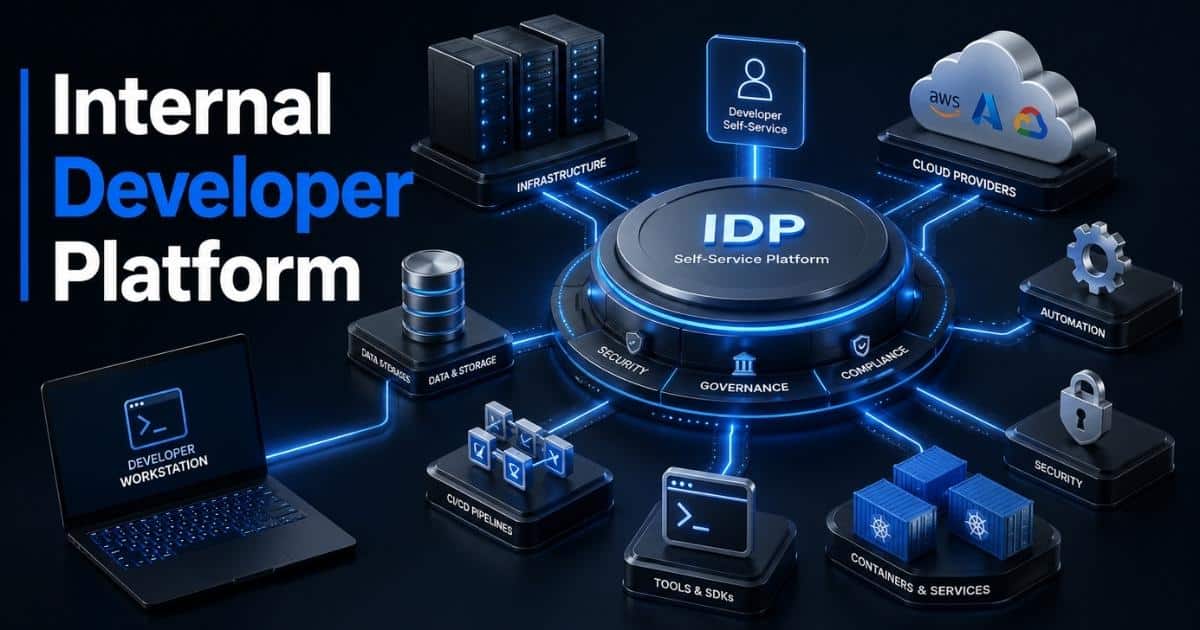
An internal developer platform (IDP) is a self-service platform that gives development teams a unified interface to access developer tools, cloud resources, development environments, and internal tools. It reduces the need for developers to spend time managing infrastructure or navigating multiple tools. Instead, platform engineering teams create standardized environments, automated processes, and golden paths that enable developer self-service. An internal developer portal often serves as the front end where developers interact with all the tools and services they need.
An internal developer platform matters because it improves developer experience and developer productivity across engineering organizations. Platform engineers and the platform team can provide developers with self-service access to environment provisioning, software delivery workflows, and cloud resources while maintaining security policies and compliance standards.
As software development becomes more complex, engineering leaders use internal developer platform capabilities to reduce cognitive load, simplify existing workflows, improve operational control, and help engineering teams ship software faster without sacrificing security or quality.
Key Components That Make An Internal Developer Platform Successful
A successful internal developer platform is more than a collection of developer tools. It brings people, processes, and technology together in one self-service platform. The right components help platform engineering teams reduce operational complexity, improve developer experience, and help engineering teams ship software faster while maintaining security and operational control.
Internal Developer Portal
An internal developer portal serves as the main entry point for developers. It provides a unified interface where development teams can access cloud resources, internal tools, software applications, and documentation.
A well-designed internal developer portal reduces cognitive load and eliminates the need to switch between multiple tools. According to the 2025 State of Platform Engineering report, more than 70% of engineering organizations now use developer portals to improve developer self-service and streamline developer workflows.
Self-Service Infrastructure Access
Self-service access is one of the most valuable internal developer platform capabilities. Developers can provision development environments, request cloud resources, and deploy services without waiting for operations teams.
This approach helps enable developer self-service while maintaining security policies and compliance standards. Recent industry research shows that high-performing engineering teams deploy code several times more frequently than their peers because automated processes remove bottlenecks from the development process, especially when those workflows are built on an API-first architecture for scalable systems.
Golden Paths And Standardized Workflows
Golden paths provide approved routes for common development tasks. They guide developers through software delivery using preconfigured templates, tools, and best practices.
Platform engineers create these workflows to reduce errors and improve consistency. Standardized environments help development teams work faster while reducing operational risks. They also help address potential issues early by embedding security and compliance requirements directly into existing workflows.
Automation And Environment Provisioning
Automation sits at the core of every modern developer platform. Automated environment provisioning allows teams to create development environments in minutes instead of days.
A strong platform orchestrator can connect cloud providers, internal tools, and existing tools into one automated system. This reduces the burden of managing infrastructure and supports modern software delivery, especially as AI in SaaS transforms products and operations. Engineering leaders often see measurable gains in developer productivity when repetitive tasks become fully automated.
Governance And Security Controls
Strong governance protects the underlying infrastructure without slowing down software development. Security teams can define security policies that apply across cloud resources, software applications, and development environments.
This balance between freedom and control is critical for large engineering organizations. A successful internal developer platform IDP gives developers the flexibility they need while maintaining operational control, which becomes even more important when organizations introduce AI governance frameworks for SaaS platforms. User feedback and user research also help platform teams refine platform management practices and keep the platform aligned with the needs of primary users.
Internal Developer Platform vs DevOps vs Platform Engineering
Many people use these terms interchangeably, but they are not the same. DevOps is a culture and set of practices. Platform engineering is a discipline. An internal developer platform is the product that platform engineering teams build to support software development and modern software delivery.
Aspect | Internal Developer Platform (IDP) | DevOps | Platform Engineering |
|---|---|---|---|
Definition | A self-service platform that provides developers with tools, workflows, and infrastructure access | A culture that improves collaboration between development and operations teams | A discipline focused on creating and managing internal platforms |
Primary Goal | Improve developer productivity and developer experience | Speed up software delivery and improve reliability | Reduce operational complexity through platform capabilities |
Main Users | Internal developers and development teams | Developers, operations teams, and security teams | Platform engineers and platform teams |
Focus Area | Self-service access, automation, and developer workflows | Collaboration, automation, and continuous delivery | Building developer portals, golden paths, and self-service capabilities |
Key Output | Internal developer portal and developer platform | Faster and more reliable software delivery | Internal developer platform capabilities and platform management |
Infrastructure Access | Developers access cloud resources through a unified interface | Teams often manage infrastructure through shared processes | Platform team abstracts the underlying infrastructure |
Developer Experience | Major priority | Secondary outcome | Core responsibility |
Security And Compliance | Built into automated processes and workflows | Shared across teams and practices | Embedded into platform capabilities and security policies |
Success Metric | Developer self-service, faster deployments, and reduced cognitive load | Faster releases, stability, and collaboration | Improved developer productivity and operational control |
Example | Self-service environment provisioning and deployment platform | CI/CD pipelines and collaborative workflows | Creating standardized environments and developer portals |
How Internal Developer Platforms Improve Developer Experience And Productivity
Developer experience has become a major priority for modern engineering organizations. When developers face too many manual tasks, productivity suffers. An internal developer platform removes friction, simplifies workflows, and gives teams faster access to the resources they need to build and ship software efficiently.
Faster Access To Development Resources
Many developers lose valuable time waiting for infrastructure, permissions, or development environments. An internal developer platform provides self-service access to cloud resources, databases, and internal tools through a unified interface.
This reduces delays across the development process. According to the 2024 DORA report, high-performing teams can deliver software significantly faster because developers spend less time waiting for operational support and more time building software applications.
Lower Cognitive Load
Modern software development often involves dozens of tools, services, and workflows. Constant context switching creates confusion and slows progress. An internal developer portal helps centralize all the tools developers need.
Platform engineering teams use developer portals and golden paths to simplify access to underlying technologies. This reduces cognitive load and helps developers focus on solving business problems instead of navigating complex systems.
More Consistent Developer Workflows
Different teams often follow different deployment methods, security practices, and setup procedures. This inconsistency creates errors and slows software delivery.
A developer platform standardizes developer workflows across engineering teams. Platform engineers can provide pre-approved templates, automated processes, and standardized environments. As a result, teams follow proven practices without sacrificing flexibility or speed.
Less Time Spent On Infrastructure Tasks
Developers rarely want to spend hours managing infrastructure. Yet many engineering teams still dedicate large portions of their week to operational work. An internal developer platform abstracts much of the underlying infrastructure.
Self-service capabilities allow developers to provision resources, deploy applications, and access services without direct assistance from operations teams. This shift improves developer productivity and gives teams more time for product development and innovation, including adopting modern artificial intelligence software for business use.
Better Collaboration Across Teams
Software delivery depends on cooperation between developers, operations teams, platform teams, and security teams. Miscommunication often creates bottlenecks and unnecessary delays.
An internal developer platform creates a shared foundation for all key stakeholders. Common workflows, security policies, and platform capabilities help teams work from the same standards, often complemented by smarter software tools that simplify day-to-day work. Recent industry research shows organizations with mature platform engineering practices report higher developer satisfaction and faster release cycles than teams without a dedicated platform strategy.
Key Benefits Of Internal Developer Platforms For Modern Engineering Teams
An internal developer platform delivers value beyond automation. It helps engineering teams work faster, reduce complexity, and improve software quality. With the right platform capabilities, organizations can streamline software delivery while giving developers more freedom and control over their daily work.
Higher Developer Productivity
Many developers spend hours every week on repetitive operational tasks. Infrastructure requests, environment setup, and manual deployments can slow progress. An internal developer platform reduces that overhead through self-service capabilities and automated processes.
Developers gain quick access to cloud resources, development environments, and internal tools without waiting for approvals. According to the 2024 State of DevOps research, teams with mature automation practices deliver changes faster and recover from failures more efficiently than low-performing teams.
Faster Software Delivery
Speed matters in modern software development. Delays in provisioning, testing, or deployment can affect release schedules and business goals. A self-service platform removes many of those bottlenecks.
Platform engineering teams create golden paths and standardized workflows that help development teams move from code to production faster. Consistent processes reduce friction across software delivery pipelines and allow teams to release software applications with greater confidence when combined with mature DevOps best practices for modern teams.
Stronger Security And Compliance
Security often becomes difficult when every team follows different processes. An internal developer platform helps organizations enforce security policies across all development environments and cloud providers.
Platform engineers can build compliance standards directly into developer workflows. This approach allows developers to move quickly without bypassing governance requirements and supports implementation of SaaS security best practices for 2026. Security teams also gain better visibility into platform management and resource usage across engineering organizations.
Lower Operational Complexity
Large organizations often rely on multiple tools, cloud services, and underlying technologies. Managing those systems separately increases operational complexity and creates unnecessary challenges for developers.
A developer platform centralizes access through an internal developer portal. Developers interact with a unified interface instead of navigating dozens of systems. This reduction in cognitive load allows teams to focus on building products rather than managing infrastructure.
Better Resource And Cost Control
Cloud spending can rise quickly when teams provision resources without clear oversight. Internal developer platform capabilities help organizations maintain operational control while still enabling developer self-service.
Platform teams can standardize resource allocation, automate environment provisioning, and monitor cloud cost management across projects. Industry studies show that companies can waste up to 30% of cloud spending through unused or underutilized resources. Better visibility helps engineering leaders optimize costs without limiting innovation.
How To Build An Internal Developer Platform Step By Step
A successful internal developer platform does not appear overnight. It requires careful planning, collaboration, and continuous improvement. The right approach helps platform engineering teams create a self-service platform that improves developer experience, supports software delivery, and reduces operational complexity across engineering organizations.
Step 1: Identify Developer Pain Points
Every internal developer platform should start with user research. Talk to development teams, operations teams, and security teams. Find out where developers spend the most time and what slows the development process.
Many engineering organizations discover issues around environment provisioning, infrastructure access, and fragmented developer tools. According to Gartner, organizations that prioritize developer experience often see higher productivity and stronger platform adoption, especially when they select the right custom software development partner to support platform initiatives. User feedback helps platform teams focus on problems that matter most to primary users.
Step 2: Define Platform Goals And Standards
Clear goals help shape platform capabilities and guide long-term decisions. Define what success looks like before selecting tools or designing workflows. Focus on outcomes such as faster software delivery, improved developer productivity, or stronger operational control.
This stage should also establish security policies, compliance standards, and governance requirements. Engineering leaders must align business objectives with technical priorities. A clear roadmap helps avoid scope creep and keeps the platform team focused on measurable results.
Step 3: Build Self-Service Workflows
Developer self-service sits at the heart of every internal developer platform IDP. Developers should access cloud resources, deployment tools, and development environments without opening support tickets.
Platform engineers can create golden paths that standardize common tasks. Automated processes reduce manual work and improve consistency, especially when teams embed AI software development for smarter products into these workflows. A self-service platform also reduces cognitive load because developers no longer need deep knowledge of underlying technologies or infrastructure to complete routine tasks.
Step 4: Create An Internal Developer Portal
An internal developer portal acts as the central hub for the developer platform. It brings together internal tools, documentation, workflows, and cloud resources through a unified interface.
Developer portals serve as a single destination where developers interact with all the tools they need. Organizations that invest in building developer portals often improve platform adoption because access becomes simpler and more intuitive. This approach also reduces friction across existing workflows and development environments.
Step 5: Measure, Improve, And Scale
A platform should evolve based on real usage data. Track developer productivity, deployment frequency, onboarding time, and platform adoption rates. Metrics help identify gaps and opportunities for improvement.
Ongoing maintenance is equally important. Platform engineering teams should collect user feedback regularly and address potential issues early. As adoption grows, the platform can expand to support additional cloud providers, software applications, and self-service capabilities without creating vendor lock-in or unnecessary complexity.
Common Internal Developer Platform Challenges And How To Avoid Them
An internal developer platform can transform software development, but success is not guaranteed. Many organizations face adoption, governance, and technical challenges along the way. Early planning and continuous improvement can help platform teams avoid common mistakes and maximize long-term value.
Low Platform Adoption
A platform only succeeds when developers actually use it. Many internal developer platforms fail because they focus on technology rather than developer needs. Complex workflows and poor user experience often discourage adoption.
User research and user feedback should guide every major decision. Platform engineering teams need to understand how developers interact with existing tools and workflows. Industry surveys show that platforms designed around developer experience achieve significantly higher adoption rates than those built without direct user input, especially when they incorporate emerging software development trends for 2026.
Tool Sprawl And Complexity
Many engineering organizations use dozens of developer tools, cloud services, and internal systems. Without proper coordination, an internal developer platform can become another layer of complexity instead of a solution.
A clear platform strategy helps avoid this problem. Platform engineers should focus on consolidating workflows through an internal developer portal and a unified interface. Fewer tools reduce cognitive load and help development teams work more efficiently across software delivery pipelines.
Weak Security And Governance
Developer self-service improves speed, but unrestricted access can create security risks. Poor governance may lead to compliance violations, unauthorized resource usage, and inconsistent security practices.
Security policies should be embedded directly into platform capabilities. Automated approvals, role-based access controls, and standardized environments help maintain operational control and align with SaaS security architecture best practices. Security teams should participate early to ensure the platform aligns with compliance standards and business requirements.
High Maintenance Requirements
Many organizations underestimate the effort required for ongoing maintenance. A developer platform is not a one-time project. New cloud providers, software applications, and developer workflows require regular updates.
A dedicated platform team helps keep the platform reliable and relevant. Regular reviews of platform management processes can identify gaps before they become larger issues, including decisions about replatform vs rebuild for long-term growth. Successful engineering teams treat the platform as an internal product that evolves with business needs.
Vendor Lock-In Risks
Some organizations build platform capabilities too closely around a single cloud provider or proprietary technology. This approach can limit flexibility and increase long-term costs.
Open standards and open source framework options can reduce vendor lock-in. Platform engineering teams should design the underlying infrastructure with portability in mind, especially when planning AI infrastructure for intelligent applications. A flexible architecture allows organizations to adapt to changing technology requirements while maintaining operational efficiency and cloud cost management.
Internal Developer Platform Best Practices, Metrics, And Future Trends
An internal developer platform delivers the best results when teams treat it as a product rather than a one-time project. Long-term success depends on clear goals, measurable outcomes, and continuous improvement. At the same time, new platform engineering trends continue to reshape how organizations support software development.
Focus On Developer Experience First
Many platform teams make the mistake of prioritizing technology over usability. A platform may have excellent capabilities, but developers will avoid it if workflows feel complicated or restrictive.
Developer experience should remain the primary focus. User research and user feedback help platform engineers understand what developers need most and ensure they invest in a future-proof tech stack for scalable growth. According to recent platform engineering surveys, organizations that prioritize developer experience report higher platform adoption and stronger developer productivity gains.
Successful IDPs often start small, following a Minimum Viable Platform (MVP) approach, and iterate quickly to demonstrate value to stakeholders.
Track The Right Performance Metrics
A successful internal developer platform needs measurable outcomes. Without metrics, it becomes difficult to justify investments or identify areas for improvement.
Engineering leaders often track deployment frequency, lead time for changes, onboarding speed, and self-service adoption rates. Many organizations also measure how much time developers spend on operational tasks and monitor reliability indicators aligned with a Site Reliability Engineering SaaS framework. These insights help platform teams evaluate platform capabilities and improve software delivery performance over time.
Build With Flexibility In Mind
Technology stacks change quickly. Cloud providers introduce new services, and engineering teams adopt new developer tools. A rigid platform can become outdated within a few years.
Flexible architecture reduces that risk. Open standards, modular components, and integration with existing tools help organizations adapt without major disruptions, especially when designing scalable software architecture for high-growth products. This approach also reduces vendor lock-in and gives teams greater operational control over the underlying infrastructure.
Use AI To Enhance Platform Operations
Artificial intelligence is becoming a major part of modern software delivery. Many internal developer platforms now use AI to simplify troubleshooting, automate documentation, and improve developer self-service through AI-driven automation in SaaS platforms.
Platform engineering teams are also exploring AI-powered internal developer portals that provide recommendations, automate environment provisioning, and answer technical questions by following structured approaches to integrate AI into SaaS products. Industry analysts expect AI-assisted developer workflows to become a standard feature of many developer platforms over the next few years.
Treat The Platform As A Product
The most successful engineering organizations manage their internal developer platform like a customer-facing product. The platform team continuously collects feedback, prioritizes improvements, and evaluates adoption trends.
Ongoing maintenance remains essential. New security policies, cloud resources, and software applications create new requirements over time as the future of SaaS development in a cloud-first world continues to evolve. A product mindset helps platform teams address potential issues early, improve platform management, and ensure long-term value for developers and key stakeholders.
Final Thoughts
An internal developer platform has become a key part of modern software development. It helps development teams work more efficiently by reducing operational complexity, simplifying access to cloud resources, and improving developer experience. Instead of spending valuable time on infrastructure management and repetitive tasks, developers can focus on building software applications that drive business value.
The most successful platforms combine self-service capabilities, strong governance, and user-focused design. Platform engineering teams that listen to user feedback and continuously improve platform capabilities often achieve higher adoption and better outcomes.
As software delivery continues to evolve, internal developer platforms will play an even bigger role in helping engineering organizations improve developer productivity, strengthen security, optimize cloud cost management, and deliver high-quality software faster.
FAQs
Can Small Engineering Teams Use An Internal Developer Platform?
Yes. Small teams can benefit from an internal developer platform even before they scale. A self-service platform helps reduce repetitive work, standardize developer workflows, and improve software delivery without requiring a large platform team.
Does An Internal Developer Platform Replace DevOps Teams?
No. An internal developer platform does not replace DevOps. Platform engineering teams use DevOps practices to create self-service capabilities, automate workflows, and improve developer experience across engineering organizations.
How Long Does It Take To Build An Internal Developer Platform?
The timeline depends on platform capabilities, team size, and existing infrastructure. Many organizations start with a small internal developer portal and expand gradually based on user feedback, platform adoption, and business needs.
Can An Internal Developer Platform Work Across Multiple Cloud Providers?
Yes. Modern developer platforms can connect with multiple cloud providers through automation, orchestration, and standardized environments. This approach improves operational control while reducing vendor lock-in risks.
Does An Internal Developer Platform Help Reduce Cloud Costs?
Yes. Internal developer platform capabilities often include cloud cost management, automated resource controls, and governance policies. Better visibility into cloud resources helps engineering leaders reduce waste and improve operational efficiency.