Online marketplaces are everywhere now. People book homes on Airbnb, order products from Amazon, and hire freelancers on Upwork. Behind every successful platform, there is a smart marketplace strategy and strong development process. Businesses are now investing heavily in marketplace platform development because it creates recurring revenue, faster growth, and scalable digital ecosystems.
But building a marketplace is not as simple as launching a normal e-commerce website. You need the right business model, vendor management system, payment flow, security setup, and user experience. A single mistake can hurt customer trust and platform growth. In this guide, you will explore everything about marketplace platform development, from features and tech stack to costs, challenges, and future trends.
What Is Marketplace Platform Development And How Does It Work?
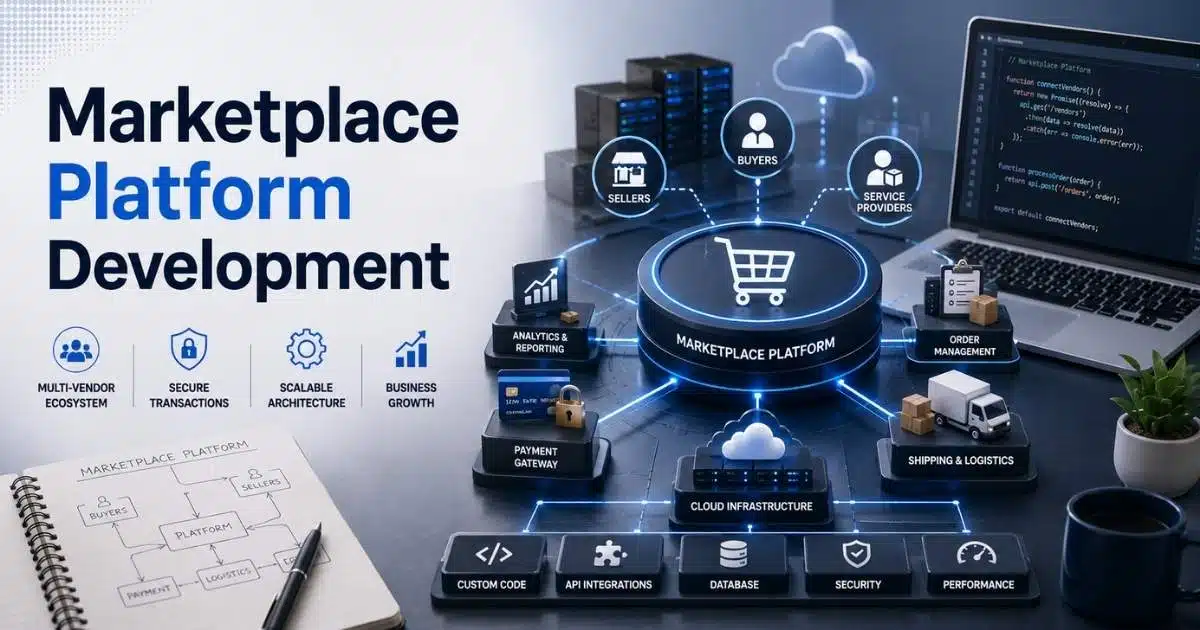
Marketplace platform development is the process of building an online marketplace where buyers and sellers connect through a single e-commerce platform. Unlike traditional e-commerce stores, a multi-vendor marketplace platform allows multiple vendors to manage product listings, inventory management, payments, and orders from one online platform. A marketplace owner controls the marketplace operations, vendor management, and revenue streams while sellers focus on selling products and services. Many businesses now invest in e-commerce marketplace development because it helps generate revenue faster and scale without managing large inventories.
A marketplace development company usually starts with market research, competitor analysis, and business model planning. Then the development team selects the right tech stack, builds the marketplace website, and adds key features like vendor onboarding, payment gateways, multi-vendor checkout, vendor dashboard, and advanced search filters. An experienced marketplace development company also creates custom workflows, mobile apps, and unique features based on the target audience and marketplace concept. Many businesses launch a minimum viable product first, collect user feedback, and improve marketplace scalability over time.
Types Of Marketplace Platforms Businesses Can Build Today
Online marketplaces now shape how people shop, book services, and hire professionals. Global ecommerce sales may cross $7.4 trillion in 2026, and marketplace platforms drive a huge share of that growth. Businesses now build niche and scalable marketplace models to attract customers, support multiple vendors, and create long-term revenue streams.
Product Marketplace
A product marketplace is the most common marketplace platform today. Amazon, Etsy, and Temu follow this marketplace model. Multiple sellers list physical products on one ecommerce platform, while the marketplace owner manages marketplace operations, payments, and vendor management. Product marketplaces work well for fashion, electronics, furniture, and niche retail businesses.
A strong e-commerce marketplace needs inventory management, advanced search filters, product listings, and multi-vendor checkout. Many businesses start with a minimum viable product before adding advanced features. A marketplace development company also focuses on marketplace scalability and mobile apps because mobile commerce now drives most online purchases globally.
Service Marketplace
A service marketplace connects buyers and sellers who offer services instead of physical products. Platforms like Upwork and Fiverr follow this marketplace concept. Users can book freelancers, consultants, home services, or educational institutions through one online platform. Service marketplaces usually focus more on trust, ratings, and communication tools.
Custom marketplace development for service platforms often includes vendor onboarding, scheduling tools, payment gateways, and custom workflows. The development team also builds AI-powered marketplace software with secure marketplace transactions and user review systems. A good marketplace platform improves the marketplace experience for both clients and service providers while helping marketplace operators generate revenue through commissions or subscriptions.
B2B Marketplace
A B2B marketplace serves wholesalers, manufacturers, and business buyers. Alibaba is one of the biggest examples in the e-commerce industry. This type of marketplace platform supports bulk orders, custom pricing, and large-scale business operations. Many companies now prefer digital marketplace systems instead of traditional e-commerce stores for faster procurement.
An experienced marketplace development company usually adds vendor dashboards, custom solutions, and advanced integrations for B2B ecommerce marketplace development. The tech stack also needs strong security and marketplace software capable of handling complex workflows. Research shows more than 90% of B2B organizations now use virtual sales models and digital commerce systems.
Rental Marketplace
Rental marketplaces allow users to rent products, properties, or vehicles for short periods. Airbnb is a leading example of this marketplace idea. This marketplace model helps businesses attract customers without managing product ownership directly. Many startups now build rental marketplace websites for equipment, coworking spaces, and fashion rentals.
Marketplace development services for rental platforms focus on booking systems, calendars, payment gateways, and vendor performance tracking. A development company also creates custom development plans for marketplace scalability and smooth user experiences. Real-time availability and secure payment systems are critical key features for every rental marketplace project.
Niche Marketplace
A niche marketplace targets a very specific target audience. Instead of serving everyone, vertical marketplaces focus on one category like handmade products, eco-friendly goods, or healthcare services. This business model often faces less competition and builds stronger customer loyalty than large e-commerce websites.
Custom marketplace platforms for niche industries need unique features and deeper market research. The development team works closely with the marketplace owner to match market trends and customer expectations. Many businesses also use competitor analysis and user feedback to improve the marketplace website after launch. A focused marketplace concept often creates a stronger brand identity and better long-term growth.
Essential Features Every Marketplace Platform Needs For Success
A successful marketplace platform depends on more than a good business idea. Buyers expect speed, trust, and simple navigation. Sellers want better control and smooth operations. Strong marketplace software with the right key features helps businesses attract customers, support marketplace scalability, and generate long-term revenue streams. Recent reports show online marketplaces now account for more than 67% of global e-commerce sales.
Vendor Management System
A multi-vendor marketplace platform needs a strong vendor management system. Sellers should easily manage product listings, orders, inventory management, and payouts from a dedicated vendor dashboard. Smooth vendor onboarding also improves the marketplace experience and helps marketplace operators scale faster.
An experienced marketplace development company usually adds vendor performance tracking and custom workflows to improve business operations. Clear seller policies and analytics tools help multiple vendors grow on the same ecommerce platform. Studies show marketplaces with better seller tools often retain vendors longer and improve platform activity rates.
Secure Payment Setup
Secure payments are one of the most important parts of marketplace platform development. Buyers expect fast and safe marketplace transactions across mobile apps and marketplace websites. A good marketplace platform should support multiple payment gateways, split payments, refunds, and multi-vendor checkout.
Custom marketplace development also focuses on fraud prevention and payment compliance. Many online marketplace development company teams now integrate digital wallets and local payment methods to improve conversions. Research shows nearly 70% of online shoppers leave checkout pages because of poor payment experiences.
Smart Search And Filters
Search features shape how users explore a digital marketplace. Buyers want quick access to products, services, or vendors without wasting time. Advanced search filters help users sort by price, location, ratings, availability, and categories. This improves customer satisfaction and marketplace operations.
A marketplace development company works closely with the development team to create personalized search experiences. AI-based search and recommendation systems are now common in e-commerce marketplace development. Many e-commerce platforms also use user feedback and market trends to improve search accuracy and product discovery over time.
Ratings And Review System
Trust is critical for every online platform. Ratings and reviews help buyers make better decisions and increase confidence in the marketplace model. Positive reviews also help sellers build credibility and attract customers faster. Service marketplace platforms especially depend on transparent review systems.
Custom marketplace platforms often include verified reviews, dispute handling, and moderation tools. A development company also creates reporting systems to reduce fake feedback and spam. Reports show more than 90% of buyers read reviews before purchasing products or services online.
Scalable Admin Dashboard
Marketplace owners need full control over marketplace software and business performance. A scalable admin dashboard helps manage vendors, commissions, customer activity, and revenue streams from one place. It also supports competitor analysis, analytics, and marketplace scalability.
A development team works with the right tech stack and agile development approach to build custom solutions for long term growth. Many marketplace development services now include automation tools and advanced reporting features. Strong admin controls help ecommerce marketplace businesses handle high traffic, multiple sellers, and rapid platform expansion without operational delays.
Marketplace Platform Development Process From Planning To Launch
A successful marketplace platform does not start with coding. Strong planning, clear goals, and the right business model shape the entire marketplace project. Businesses also need the right tech stack, marketplace strategy, and development team to create scalable and profitable online marketplace platforms. Reports show global e-commerce sales may exceed $7 trillion in 2026, which increases competition across digital marketplaces.
Market Research And Validation
Every successful marketplace idea starts with proper market research. Businesses need to study market trends, customer behavior, and competitor analysis before investing in marketplace development. A clear target audience helps marketplace operators understand demand, pricing, and customer expectations from the beginning.
An experienced marketplace development company also checks different business models and revenue streams before development starts. Many online marketplace development company teams recommend validating the marketplace concept with surveys and user feedback first. Research shows marketplaces now dominate a large share of global ecommerce sales, which makes niche positioning even more important.
Business Model Planning
A marketplace platform needs a clear business model before software development begins. Some e-commerce marketplace platforms earn through commissions, while others use subscriptions, listing fees, or advertising revenue. The marketplace owner must decide how buyers and sellers will interact on the online platform.
Custom marketplace development also depends on the type of marketplace model. Product marketplaces, service marketplace platforms, and rental marketplaces require different marketplace operations and custom workflows. A development company usually helps businesses select the best marketplace structure based on growth goals and marketplace scalability.
MVP And Feature Planning
A minimum viable product helps businesses launch faster with lower development cost. Instead of building every advanced feature at once, the development team focuses on core functions first. Lean startup MVP development keeps attention on validated learning and core assumptions. Key features often include vendor onboarding, payment gateways, product listings, vendor dashboard, and multi-vendor checkout.
A good marketplace platform improves over time through user feedback and data analysis. Many marketplace development services now follow an agile development approach to release updates faster. Post‑MVP development strategies focus on iterating based on real usage. Studies show businesses that launch MVPs early often reduce software development risks and improve product market fit.
Design And Development
After planning, the development team starts UI UX design and marketplace software development. Clean navigation, mobile-friendly layouts, and advanced search filters improve the marketplace experience for buyers and sellers. Mobile commerce also continues to grow rapidly across the e-commerce industry.
The right tech stack plays a major role in marketplace scalability and performance. An experienced marketplace development company builds secure e-commerce platforms with strong inventory management, vendor management, and marketplace transactions systems. Many businesses now prefer API-first, cloud-based e-commerce platform solutions for flexibility and faster growth.
Testing And Platform Launch
Testing helps businesses avoid major issues before the marketplace website goes live. A development company checks payment systems, vendor management tools, mobile apps, and marketplace operations during this stage. Security testing is also critical because online marketplaces process sensitive user and payment data daily.
After testing, the marketplace platform launches to the public. Marketplace operators then monitor vendor performance, customer activity, and business operations closely. Reports show online shopping continues to rise globally, so businesses that improve platform performance quickly often attract customers faster and scale more efficiently.
How To Choose The Right Tech Stack For Marketplace Platform Development
The right tech stack can shape the speed, security, and scalability of a marketplace platform. A poor setup often creates performance issues and higher development cost later. Businesses now focus on flexible marketplace technology that supports fast growth, better integrations, and smooth marketplace operations across web and mobile apps. API first and cloud-based architectures are becoming the standard for modern e-commerce marketplace development.
Frontend Technology Selection
Frontend technologies control how buyers and sellers interact with the marketplace website. Fast loading pages and smooth navigation improve the marketplace experience and help attract customers. Many custom marketplace development projects now use React, Vue.js, and Next.js for responsive e-commerce platform interfaces.
Mobile commerce also continues to grow rapidly across the e-commerce industry. Reports show smartphones generated around 69% of online shopping orders globally in recent years. Modern marketplace development services therefore focus heavily on mobile-friendly UI UX design and fast performance across devices.
Backend Framework And APIs
Backend systems manage marketplace operations, vendor management, marketplace transactions, and inventory management. A strong backend also supports multiple vendors, product listings, and payment gateways without slowing the online platform. Popular backend frameworks include Node.js, Laravel, Django, and Ruby on Rails, and many teams now integrate AI into SaaS backends to automate decisions and personalization.
Many marketplace development company teams now prefer API first architecture because it improves marketplace scalability and custom workflows. API based systems also connect easily with CRM platforms, logistics tools, and third-party services. Businesses that use modular marketplace software can scale faster and adapt to changing market trends more efficiently.
Cloud And Hosting Infrastructure
Cloud infrastructure plays a major role in marketplace platform development today. A scalable e-commerce marketplace needs stable hosting, secure storage, and fast global performance. Cloud services from AWS, Google Cloud, and Microsoft Azure support large traffic spikes and business operations more efficiently.
An experienced marketplace development company also focuses on uptime, data security, and flexible resource management. Research suggests nearly 90% of organizations may adopt hybrid cloud infrastructure by 2027 because businesses now need better cost control and scalability. Strong hosting infrastructure protects the marketplace platform during high traffic periods and seasonal demand.
Database And Security Systems
Databases store customer data, vendor information, and marketplace transactions. A good marketplace platform needs reliable database systems like PostgreSQL, MySQL, or MongoDB for smooth software development and long-term marketplace scalability. Fast databases also improve search speed and overall user experience.
Security is equally important for every online marketplace development company. Businesses must protect buyers and sellers from fraud, payment risks, and data leaks. Modern marketplace software now uses encryption, role-based access, and secure payment gateways to protect e-commerce website operations. Customer trust often depends on strong platform security and stable performance.
AI And Advanced Integrations
AI tools now play a major role in e-commerce marketplace development. Businesses use AI for personalized product recommendations, advanced search filters, fraud detection, and vendor performance tracking. AI MVP development helps teams validate these intelligent capabilities quickly. AI-powered personalization also helps marketplace operators improve customer engagement and generate revenue faster.
Custom marketplace platforms also need advanced integrations with ERP systems, analytics tools, shipping providers, and marketing platforms. A development team works closely with business owners to create custom solutions based on the marketplace concept and target audience, often aligning with modern MVP development trends for faster validation. Flexible marketplace technology gives businesses more control over future growth and marketplace expansion.
Marketplace Platform Development Cost Factors And Budget Planning
Marketplace platform development costs can vary widely based on features, business goals, and platform complexity. A simple marketplace website may cost far less than a scalable multi-vendor marketplace platform with AI tools and mobile apps. Smart budget planning helps businesses avoid hidden expenses and long-term technical problems, especially when you understand broader custom software development cost factors. Recent reports show marketplace app development costs can range from $30,000 to over $300,000, depending on scope and infrastructure.
Platform Type And Complexity
The type of marketplace platform has a direct impact on development cost. A basic e-commerce marketplace with simple product listings costs less than a service marketplace or rental marketplace with custom workflows and advanced integrations. Multi-vendor marketplace platforms also require more marketplace technology and backend systems.
A marketplace development company usually studies the marketplace model before estimating costs. Product marketplaces, B2B platforms, and vertical marketplaces all need different marketplace operations and software development structures. Research shows enterprise-level marketplace platforms often exceed $150,000 because of advanced features and scalability requirements.
Features And Custom Development
Core features play a major role in the development pricing. Functions like vendor onboarding, vendor dashboard, payment gateways, advanced search filters, and multi-vendor checkout increase software development time. MVP development cost benchmarks are useful when deciding which AI-powered recommendations and marketplace transactions systems to build first, since these also raise the overall budget.
Custom marketplace development costs more because businesses need unique features and tailored user experiences. A development team works closely with marketplace owners to create custom solutions based on the target audience and business operations, weighing the cost of custom software versus prebuilt tools. Reports show advanced marketplace software with AI and automation tools can push development costs above $200,000.
Tech Stack And Infrastructure
The selected tech stack also affects marketplace scalability and long-term maintenance expenses. Cloud hosting, APIs, databases, and security systems all shape the final marketplace project budget, along with the chosen software development pricing model. Businesses that choose scalable marketplace technology often reduce future upgrade costs and improve platform performance.
An experienced marketplace development company also recommends a cloud-based e-commerce platform infrastructure for better flexibility. Services like AWS and Google Cloud help online marketplace platforms handle traffic spikes and multiple sellers efficiently. Infrastructure decisions often influence both launch cost and ongoing business operations expenses.
Development Team Location
Development team location changes pricing significantly. Marketplace development services in North America usually cost much more than teams in South Asia or Eastern Europe. Hourly development rates in the US can reach $200, while offshore teams may charge $20 to $50 per hour.
A good marketplace platform still depends on technical expertise and project management quality. Many businesses now hire hybrid development teams to balance quality and budget planning and rely on specialized tech consulting services to guide architecture and tooling choices. An online marketplace development company with marketplace experience can also reduce costly mistakes and project delays during custom development.
Maintenance And Post-Launch Costs
Marketplace platform development does not end after launch. Businesses must budget for maintenance, security updates, cloud hosting, and user support. Marketplace operators also invest in performance optimization, mobile apps, and new advanced features based on user feedback and market trends.
Most development company experts suggest setting aside 15% to 25% of the original development cost every year for maintenance and upgrades. Strong post-launch planning helps marketplace owners improve marketplace scalability, attract customers, and stay competitive in the fast-growing e-commerce industry.
Common Marketplace Platform Development Challenges And Proven Solutions
Marketplace platform development offers huge growth opportunities, but the process also comes with serious challenges. Many businesses struggle with vendor management, user trust, scalability, and customer acquisition. A strong marketplace strategy and the right development team help marketplace owners reduce risks and build sustainable e-commerce marketplace platforms. Studies show nearly 90% of startups fail partly because of poor product-market fit and operational challenges.
Vendor And User Acquisition
A new marketplace platform often struggles to attract both buyers and sellers at the same time. Sellers avoid empty marketplaces, while buyers leave platforms with limited product listings or services. This creates a major challenge for many online marketplace businesses during the launch phase.
A marketplace development company usually recommends focusing on one niche target audience first. Referral programs, low commission models, and strong vendor onboarding systems also help attract multiple vendors faster. Many successful marketplace operators start with a minimum viable product and use user feedback to improve the marketplace experience gradually.
Trust And Platform Security
Trust is critical for every digital marketplace. Buyers want secure marketplace transactions, while sellers expect safe payment systems and reliable vendor management. Weak security can damage marketplace operations and customer confidence within days.
Custom marketplace development therefore, includes secure payment gateways, user verification, and fraud detection systems. An experienced marketplace development company also adds encryption and role-based access controls to protect customer data. Research shows global cybercrime costs may exceed $10 trillion annually, which makes marketplace security a top priority for e-commerce platforms.
Scalability And Performance
Marketplace scalability becomes a major issue as traffic and vendor activity increase. Slow marketplace websites and delayed mobile apps hurt customer satisfaction and reduce conversions. A growing e-commerce marketplace also needs stable infrastructure to support multiple sellers and marketplace transactions at scale.
A strong tech stack and cloud-based marketplace technology solve many of these issues. Development teams often use scalable APIs, caching systems, and flexible databases to improve performance. Businesses that invest in scalable marketplace software early usually avoid expensive technical rebuilds later and maintain smoother business operations.
Complex Payment Management
Payment systems in a multi-vendor marketplace platform are more complex than traditional e-commerce stores. Marketplace owners must handle split payments, commissions, refunds, taxes, and international payment gateways without delays or errors. Poor payment experiences can reduce customer trust quickly.
Marketplace development services now integrate automated payout systems and multi-currency support to simplify marketplace operations. A development company also focuses on compliance with financial regulations and payment security standards. Reports show payment-related issues remain one of the leading causes of e-commerce cart abandonment globally.
Feature Creep And Budget Issues
Many businesses try to add too many advanced features during early software development stages. This increases development cost, delays platform launch, and creates unnecessary complexity. Marketplace projects often fail because businesses ignore core marketplace needs and neglect disciplined MVP feature prioritization.
An agile development approach helps marketplace owners avoid this problem. Most experienced marketplace development company teams recommend launching with essential key features first, choosing between POCs, prototypes, and MVPs depending on the risk to validate. Businesses can later improve the online platform based on market trends, customer behavior, and competitor analysis. A phased custom development strategy usually delivers faster growth and better resource management.
Future Trends In Marketplace Platform Development For 2026 And Beyond
Marketplace platform development continues to evolve as customer expectations and marketplace technology change rapidly. Businesses now focus on smarter automation, personalized experiences, and scalable digital ecosystems. Modern e-commerce marketplace platforms also invest heavily in AI, mobile commerce, and flexible business models to stay competitive in the fast-growing e-commerce industry. Global retail ecommerce sales may surpass $8 trillion by 2027, which will further accelerate marketplace growth.
AI-Powered Marketplace Features
AI is becoming a core part of custom marketplace development. Modern marketplace software now uses AI for personalized product recommendations, fraud detection, customer support, and vendor performance analysis. AI-driven search tools also improve product discovery and customer satisfaction across e-commerce platforms.
Many marketplace development company teams now integrate chatbots, predictive analytics, and automation systems into marketplace projects. AI can also improve inventory management and marketplace transactions by reducing manual work. Research shows businesses that use AI personalization strategies often increase their e-commerce revenue and customer retention significantly.
Growth Of Mobile First Platforms
Mobile commerce continues to dominate the online marketplace industry. Buyers now prefer shopping, booking services, and managing orders directly through mobile apps. A good marketplace platform therefore, needs fast-loading pages, responsive layouts, and smooth mobile experiences.
Marketplace development services now prioritize mobile-first UI UX design during software development. Progressive web apps and native apps also improve customer engagement and marketplace scalability. Reports suggest mobile devices now generate nearly 70% of e-commerce traffic worldwide, which makes mobile optimization a critical business priority.
Expansion Of Vertical Marketplaces
Vertical marketplaces focus on niche industries instead of broad ecommerce categories. Businesses now create custom marketplace platforms for healthcare, education, fashion rentals, and professional services. This marketplace model helps marketplace operators attract customers with more targeted experiences and specialized features.
An experienced marketplace development company often recommends niche positioning for startups and mid-sized businesses. Vertical marketplaces also face less competition than traditional e-commerce stores. Strong market research, competitor analysis, and learnings from custom software transformation case studies help businesses identify underserved audiences and create unique marketplace concepts with long-term growth potential.
Rise Of Headless Commerce
Headless commerce is changing e-commerce marketplace development rapidly. In this setup, the frontend design works separately from backend marketplace technology. Businesses gain more flexibility to customize marketplace websites, mobile apps, and customer experiences across different platforms.
A development team can also launch updates faster with headless e-commerce platform architecture. Many online marketplace development company teams now use API based systems to support integrations and custom workflows more efficiently. Research shows more businesses are moving toward headless commerce because it improves scalability, speed, and omnichannel experiences.
Focus On Sustainable Marketplaces
Sustainability is becoming a major factor in marketplace platform development. Buyers now prefer e-commerce marketplace platforms that support eco-friendly products, ethical sourcing, and sustainable business operations. Circular economy marketplaces and resale platforms are also growing rapidly worldwide.
Marketplace owners now add carbon tracking, local sourcing filters, and eco-focused product listings to attract environmentally conscious users. Marketplace development company teams also create custom solutions for sustainable logistics and vendor management. Studies show younger consumers are more likely to support digital marketplace brands with strong sustainability values.
How GainHQ Helps With Marketplace Platform Development
GainHQ helps businesses build scalable and future-ready marketplace platforms with a strategy-driven development approach. The team works closely with marketplace owners to understand the business model, target audience, and marketplace concept before starting custom marketplace development. As a custom software development partner, GainHQ supports everything from e-commerce marketplace development and vendor onboarding to UI UX design and marketplace scalability, focusing on every stage of the marketplace project.
The company also helps businesses choose the right tech stack, payment gateways, and marketplace technology based on long-term growth goals. Real-world build-vs-buy software case studies and successful SaaS launch stories show how GainHQ supports long-term scaling. GainHQ’s development team builds secure marketplace software with advanced search filters, vendor dashboards, inventory management tools, and mobile apps for better user experiences. Whether you need a service marketplace, B2B platform, or multi-vendor marketplace platform, GainHQ delivers custom solutions that support smooth marketplace operations, strong performance, and sustainable revenue growth.
FAQs
How Long Does Marketplace Platform Development Usually Take?
Marketplace platform development timelines depend on the marketplace model, advanced features, and custom development requirements. A basic minimum viable product may take 3 to 6 months, while a scalable multi-vendor marketplace platform with mobile apps and custom workflows can take much longer.
Can A Small Business Build A Custom Marketplace Platform?
Yes, small businesses can launch a custom marketplace without massive upfront investment. Many companies start with an MVP, essential key features, and a flexible tech stack to control development cost and test the marketplace concept before scaling operations.
Does A Marketplace Platform Need Mobile Apps?
Yes, mobile apps are now critical for most e-commerce marketplace platforms. Mobile commerce continues to grow rapidly, and buyers expect smooth experiences across devices. A good marketplace platform should support both mobile apps and responsive marketplace websites for better customer engagement.
What Revenue Models Work Best For Online Marketplace Platforms?
Different business models work for different marketplace projects. Marketplace owners often generate revenue through commissions, subscriptions, listing fees, featured product listings, or advertising. The right revenue streams depend on the target audience, marketplace operations, and types of marketplaces.
Can Marketplace Platforms Scale With Multiple Vendors And High Traffic?
No, not every marketplace software can scale properly without the right marketplace technology and infrastructure. Businesses need scalable cloud hosting, strong vendor management systems, secure payment gateways, and an experienced marketplace development company to support long-term growth and high marketplace transactions.