
52 Micro SaaS Ideas To Build And Validate In 2026
by Rhea Collins | Jul 2, 2026 | SaaS
Table of Contents
- What Is A Micro SaaS
- Micro SaaS Vs Traditional SaaS
- Common Characteristics Of Successful Micro SaaS Products
- Why Micro SaaS Is Attractive For Solopreneurs
- How To Find Profitable Micro SaaS Ideas
- How To Validate A Micro SaaS Idea Before Building
- Micro SaaS Ideas By Category
- Micro SaaS Ideas By Budget
- How Much Does It Cost To Build A Micro SaaS?
- Recommended Tools To Build A Micro SaaS
- How To Launch A Micro SaaS
- Common Mistakes New Founders Make
- Real Examples Of Successful Micro SaaS Products
- Frequently Asked Questions
Micro SaaS has become one of the most attractive business models for founders, developers, and small business owners. Instead of building large software platforms, many entrepreneurs now focus on solving a single problem for a specific audience. That shift has created growing demand for profitable micro SaaS ideas.
Many micro SaaS products serve niche markets, support remote teams, and require fewer resources than traditional software businesses. Some focus on automation, while others improve productivity, sales, marketing, or operations.
This guide shares 52 micro SaaS ideas that can help founders identify opportunities in different industries and markets. Whether you want to build AI tools, productivity software, or industry-specific solutions, these SaaS ideas can help you discover opportunities and validate your next micro SaaS business.
The micro SaaS segment is also growing fast. Industry estimates put the broader market at roughly $15.70 billion in 2024, with projections reaching close to $59.60 billion by 2030 as more solo founders and small teams enter the space. Solo-run products commonly reach $5,000 to $50,000 in monthly recurring revenue within one to two years, which is part of why competition for strong niches keeps increasing every year.
What Is A Micro SaaS
A micro SaaS is a small software business that solves a specific problem for a niche audience. Unlike large SaaS platforms, a micro SaaS focuses on a single use case and often operates with a small team or a solo founder. Many products serve local businesses, service businesses, and remote teams with simple solutions.
A micro SaaS can be an AI tool, automation platform, or productivity application. Understanding how AI is reshaping the SaaS industry helps founders spot new opportunities and position their products effectively. Most successful products target markets with proven demand and generate recurring revenue from paying customers.
Micro SaaS Vs Traditional SaaS
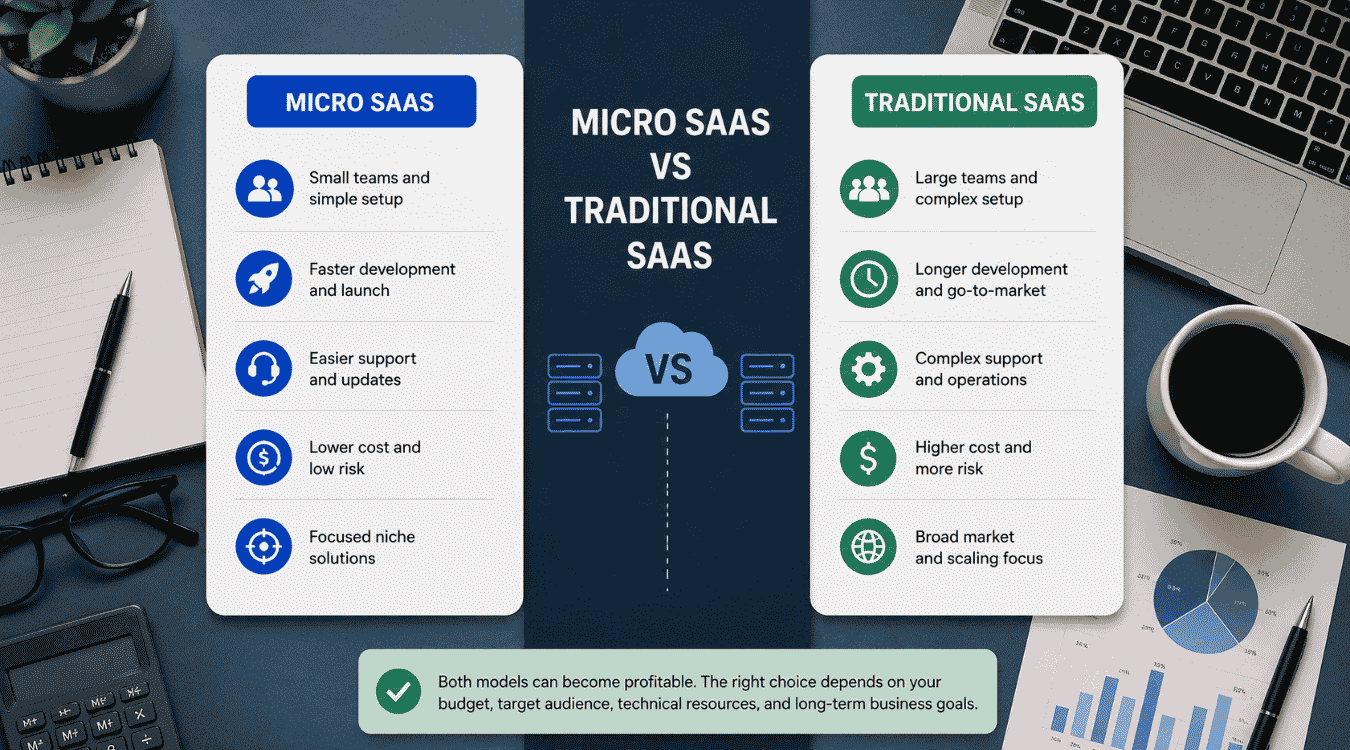
Micro SaaS and traditional SaaS follow very different business models. A micro SaaS focuses on solving one specific problem for a niche audience, while traditional SaaS platforms serve broader markets with multiple products and features.
Micro SaaS businesses are usually built by solo founders or small teams. They prioritize simplicity, faster execution, and sustainable growth. Traditional SaaS companies often require larger investments, bigger teams, and long-term scaling strategies.
Key differences include:
- Micro SaaS products focus on solving one clearly defined problem, which allows founders to build faster and deliver value to a specific audience.
- Traditional SaaS platforms often include multiple modules, features, and integrations to serve different customer segments and business needs.
- Micro SaaS founders can validate ideas, launch an MVP, and acquire customers with limited resources and lower operational costs.
- Traditional SaaS companies usually need larger teams, outside funding, and longer development cycles before reaching the market.
- Customer support, product updates, and business operations are generally easier to manage in a micro SaaS business because of the smaller customer base.
- Traditional SaaS companies often prioritize rapid growth, market expansion, and enterprise customers, which increases operational complexity.
Both models can become profitable. The right choice depends on your budget, target audience, technical resources, and long-term business goals.
Factor | Micro SaaS | Traditional SaaS |
|---|---|---|
Target Audience | Niche market | Broad market |
Team Size | Solo founder or small team | Large teams |
Development Time | Weeks or months | Months or years |
Startup Cost | Low investment | High investment |
Product Scope | One specific solution | Multiple solutions |
Customer Base | Smaller audience | Large customer segments |
Growth Strategy | Sustainable growth | Aggressive scaling |
Operations | Simple and lean | Complex and structured |
Common Characteristics Of Successful Micro SaaS Products
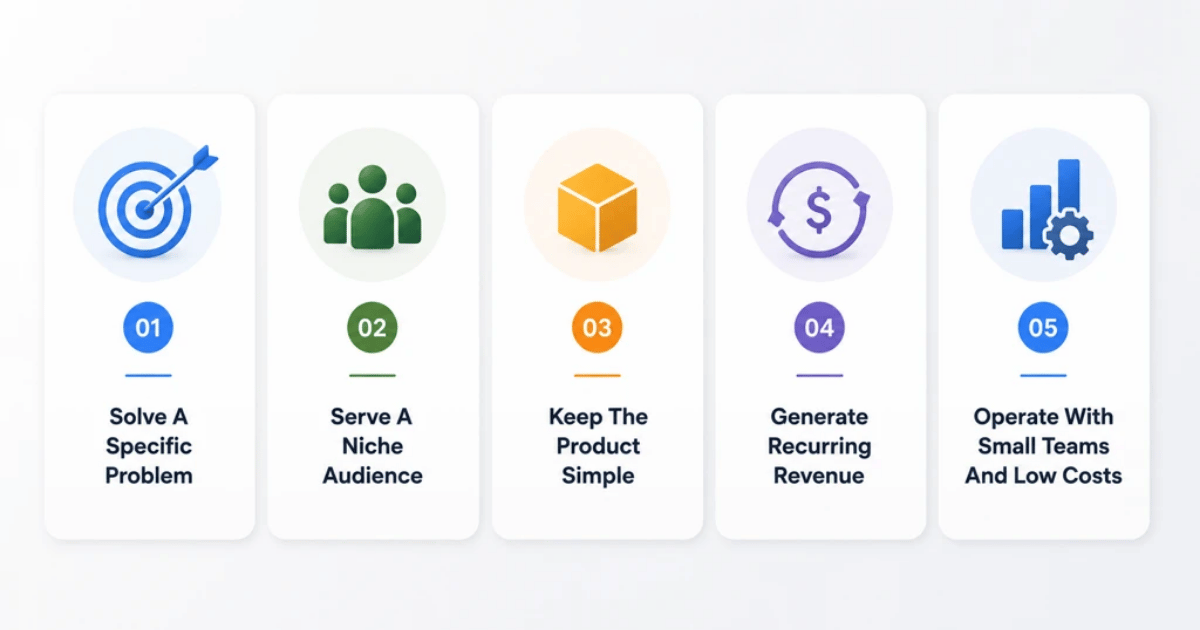
Successful micro SaaS products share several characteristics that help them grow with limited resources. Most profitable businesses focus on solving specific problems, serving niche audiences, and keeping operations simple.
Solve A Specific Problem
Successful micro SaaS products rarely try to solve multiple problems at once. They focus on a single pain point that affects a specific group of users. Many profitable products automate repetitive tasks, simplify manual work, or remove bottlenecks from daily operations.
Some of the best micro SaaS ideas started by fixing a small problem, such as appointment reminders, proposal approvals, or internal workflow tools. Products that solve one problem exceptionally well often gain customers faster than broad software platforms. Clear positioning also makes it easier to create a landing page, communicate value, and acquire users.
Serve A Niche Audience
Many founders fail because they target everyone. Successful micro SaaS companies focus on a well-defined audience, such as agencies, local businesses, consultants, real estate teams, or healthcare providers.
Niche markets usually have unique challenges that larger enterprise tools often ignore. A client portal built specifically for accountants or workflow tools designed for recruitment agencies can outperform larger competitors because they address industry-specific needs, especially when founders integrate AI into their SaaS products to deliver smarter, more personalized workflows.
Serving a niche audience also reduces competition and improves customer retention. Users are more likely to pay for software that understands their exact business problems.
Keep The Product Simple
Product simplicity is one of the biggest advantages of a micro SaaS. Users often prefer focused solutions over large platforms filled with unnecessary features.
Many successful productivity tools and no code app platforms win customers because they reduce complexity. A simple user interface, fast onboarding, and limited feature sets improve adoption rates and lower support costs.
Founders who continuously add features often create products that become difficult to maintain. Successful companies focus on core functionality and only build features that directly support customer needs.
Generate Recurring Revenue
Recurring revenue creates predictable cash flow and long-term stability. Most profitable micro SaaS businesses use monthly or annual subscription models.
Customers continue paying because the product becomes part of their daily workflow. Examples include AI powered content tools, reporting software, client portals, and automation platforms.
Recurring subscriptions allow founders to forecast growth, improve products, and invest in customer acquisition. Sustainable revenue models are one reason the micro SaaS market continues to grow within the broader SaaS industry.
Operate With Small Teams And Low Costs
Many successful micro SaaS businesses operate with one founder or a small remote team. Modern development tools, cloud infrastructure, automation platforms, and no code app builders have significantly reduced startup costs.
Small teams can move faster, respond to customer feedback quickly, and maintain lower operational expenses. Unlike large enterprise tools that require multiple departments, micro SaaS businesses often succeed with lean operations by leveraging smarter AI-powered software tools to automate routine work.
This efficiency allows founders to build profitable micro SaaS products without raising external funding while maintaining healthy profit margins and long-term growth.
Why Micro SaaS Is Attractive For Solopreneurs
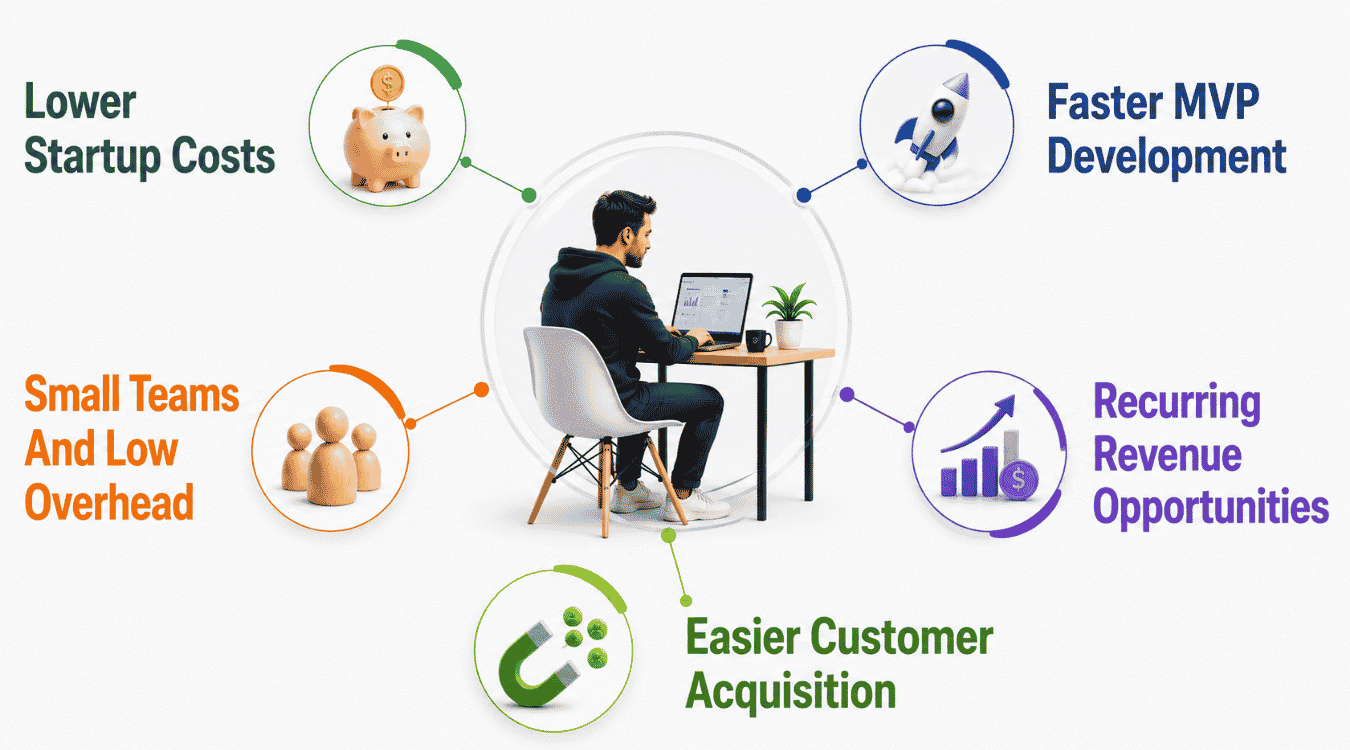
Successful micro SaaS businesses attract many solopreneurs because they require fewer resources and lower investment. Modern tools, automation, and niche markets allow founders to build profitable products without large teams, outside funding, or complex business operations.
Lower Startup Costs
Traditional software companies often require developers, designers, marketers, and large operational budgets. Micro SaaS businesses can launch with far lower costs. Many founders use no code platforms, cloud services, and affordable development tools to build products quickly.
A simple tool that solves a repetitive pain point usually requires fewer resources than large software products. Examples include form tools, automated reminders, file sharing applications, and lightweight management tools. Solopreneurs can test ideas without spending large amounts of money or risking significant capital.
This lower barrier helps founders avoid situations where they waste money before validating customer demand.
Faster MVP Development
Micro SaaS products focus on only what customers need. Instead of building large platforms with dozens of features, founders can launch a minimum viable product much faster.
Many successful products begin with one specific feature that solves a clear problem. A branded client portal, automated reminders, or a file sharing solution can often reach the market within weeks.
Faster development allows founders to gather feedback quickly, improve features, and reduce development risks. Existing solutions often contain unnecessary complexity, while micro SaaS products focus on delivering one outcome exceptionally well.
Small Teams And Low Overhead
Many profitable micro SaaS companies operate with one founder or a very small team. Automation, modern software tools, and outsourced services reduce operational requirements.
Small businesses and independent founders benefit from lower salaries, reduced office costs, and fewer management challenges. Marketing teams, support staff, and large administrative departments are often unnecessary during the early stages.
Lean operations allow founders to remain profitable with a relatively small customer base while maintaining flexibility and faster decision-making.
Recurring Revenue Opportunities
Subscription pricing creates predictable revenue. Customers continue paying because the product becomes part of their daily workflow.
Management tools, branded client portal software, automated reminders, and workflow applications often generate recurring income through monthly subscriptions. Stable revenue helps solopreneurs plan growth, improve products, and maintain long-term sustainability.
Even a small customer base can create consistent income when recurring subscriptions are in place.
Easier Customer Acquisition
Micro SaaS products target very specific audiences. Instead of competing with large software companies, founders can reach users through relevant communities, industry groups, and niche marketplaces.
Small businesses often search for specialized solutions that large software vendors do not provide. Solopreneurs can participate in online communities, gather feedback, and build relationships with potential customers.
By focusing on one audience and solving one problem, founders can attract customers more efficiently and compete against larger existing solutions.
How To Find Profitable Micro SaaS Ideas
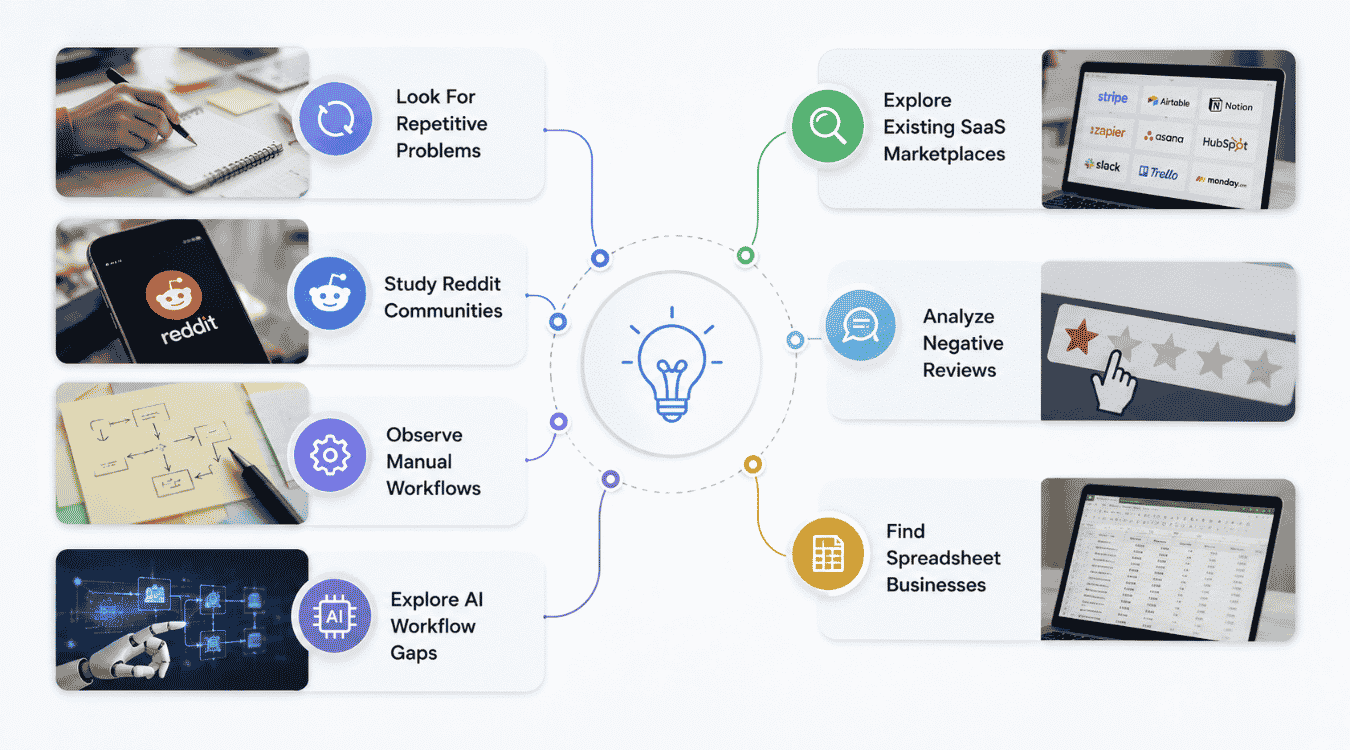
Successful micro SaaS products rarely start with random inspiration. Most founders build profitable businesses by identifying real problems, validating demand, and finding underserved markets. The following strategies can help you discover your next software idea.
Look For Repetitive Problems
The best micro SaaS products solve repetitive tasks that people deal with every day. Look at your work and ask yourself which activities consume time or require manual effort.
Examples include file sharing, approval processes, reporting, and user management. Problems that occur repeatedly are often good candidates for workflow automation and automation tools, and founders should understand the tradeoffs between AI automation and traditional automation when designing solutions. If people perform the same task manually every week, there is usually an opportunity to build a software solution.
Explore Existing SaaS Marketplaces
SaaS marketplaces are excellent places to discover opportunities. Browse directories and marketplaces to see which products are gaining traction and where gaps still exist.
Pay attention to:
- Customer reviews
- Competitor pricing
- Missing features
- Poor user experiences
A successful business idea does not always require creating something entirely new. Sometimes a smaller product with a niche focus can outperform larger competitors by serving a specific audience better.
Study Reddit Communities
Communities on Reddit, Facebook, and industry forums provide direct access to customer problems. People frequently discuss frustrations, ask for recommendations, and explain why existing solutions do not work for them.
Search for phrases such as:
- "I wish there was a tool for..."
- "Does anyone know a solution for..."
- "I still do this manually."
Those conversations provide valuable user feedback and can help founders validate demand before building a product.
Analyze Negative Reviews
Negative reviews are often a goldmine for founders. Read one-star and two-star reviews of existing products to understand what customers dislike.
Many users complain about:
- Missing features
- High prices
- Poor support
- Complex user management
- Lack of integrations
- Difficult workflows
These complaints reveal opportunities where a new platform addresses problems that competitors have ignored.
Observe Manual Workflows
Many businesses still rely on spreadsheets, emails, and communication tools to manage important processes. Manual workflows often create inefficiencies and increase the risk of errors.
Pay attention to industries that still use:
- Shared spreadsheets
- Email approvals
- Paper forms
- Manual reporting
Workflow automation can significantly improve these processes. A simple application that removes repetitive steps can become a profitable micro SaaS.
Find Spreadsheet Businesses
Many small companies run entire operations from spreadsheets. They use spreadsheets for project management, invoicing, scheduling, and reporting.
When a business depends heavily on spreadsheets, there is often an opportunity to build a specialized product that automates those activities. Spreadsheet-based processes frequently indicate an unmet market need and can become the foundation of a successful software idea.
Explore AI Workflow Gaps
AI continues to create new opportunities across multiple platforms. Founders who understand the broader landscape of artificial intelligence software and its uses can uncover gaps for niche products. However, many industries still lack specialized AI products.
Look for areas where businesses need generative capabilities, such as AI-generated content and creative applications:
- Content generation
- Customer support automation
- Reporting automation
- Data analysis
- Workflow automation
A niche focus often works better than building another general-purpose AI product. The most successful founders identify a specific problem, validate demand through user feedback, and create a solution that serves a clearly defined audience.
How To Validate A Micro SaaS Idea Before Building
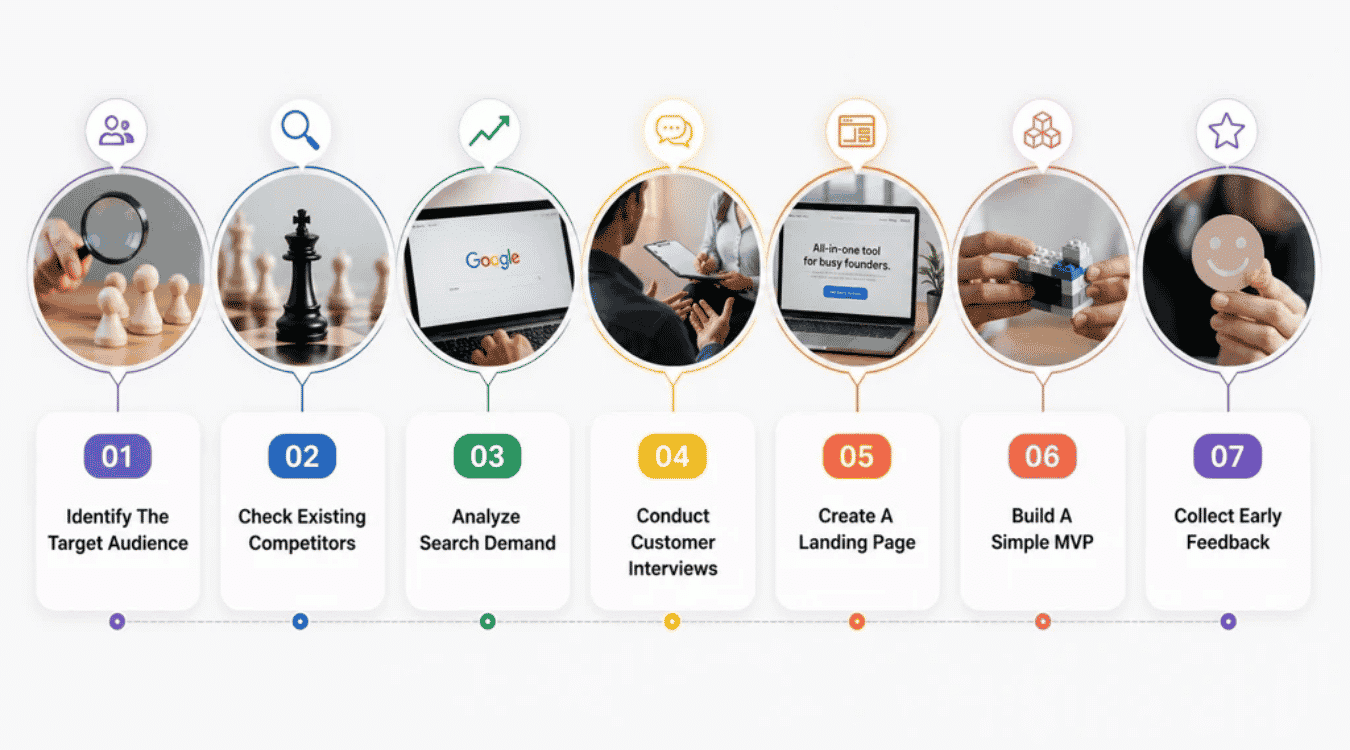
A good idea alone does not guarantee success. Many founders fail because they build products before confirming market demand. Validation helps reduce risks, understand customer needs, and ensure that people are willing to pay for the solution.
Identify The Target Audience
The first step is identifying the people who will benefit from the product. A micro SaaS should solve a problem for a specific audience instead of targeting everyone. Small brands, marketing agencies, e commerce businesses, consultants, and remote teams often have unique operational challenges that larger software products overlook. Strong market research helps founders understand customer pain points, budgets, and expectations before development begins.
Check Existing Competitors
Competitors can validate the market. Existing products show that customers already pay for similar solutions. Study pricing models, customer reviews, product limitations, and missing features. Many successful products enter established markets with better positioning or improved user experiences. Reviewing competitors helps founders identify opportunities and understand where current solutions fail.
Analyze Search Demand
Search demand can reveal whether users actively look for a solution. Keyword research helps founders understand how people describe their problems and what solutions they seek. Consistent search volume often indicates market demand. Understanding search behavior also helps position the product and supports future marketing efforts.
Conduct Customer Interviews
Customer interviews provide insights that market research tools cannot deliver. Speaking directly with potential users helps founders understand daily challenges, workflows, and current solutions. Marketing agencies, small brands, and e commerce businesses often reveal valuable information about operational problems that software can solve. These conversations validate assumptions and uncover opportunities before any development begins.
Create A Landing Page
A landing page allows founders to test demand before building the product. The page should explain the problem, present the proposed solution, and encourage visitors to join a waiting list. User signups, questions, and feedback provide early signals of interest. Many successful founders validate ideas before writing code or investing significant resources.
Build A Simple MVP
An MVP should focus on solving one problem. Founders do not need advanced technical skills to test an idea. Modern tools make it possible to build products without extensive development experience. Simple project tracking tools, internal dashboards, and business applications can often be created before investing heavily in development. Applying a Lean Startup MVP approach helps teams limit features, learn faster, and reduce unnecessary work.
Collect Early Feedback
Early users provide valuable insights that guide product decisions. Feedback reveals usability issues, missing features, and customer expectations. Continuous conversations help founders improve the product and prioritize future development. Validation does not end after launch. Listening to users ensures that the product continues to solve real problems and supports long-term growth.
Micro SaaS Ideas By Category
Successful micro SaaS products often focus on specific industries, workflows, or business problems. Categorizing ideas helps founders identify opportunities that match their experience, target audience, and technical capabilities. The following AI micro SaaS ideas address growing demand across multiple industries.
AI Micro SaaS Ideas
Artificial intelligence continues to create new opportunities for founders. Many businesses want specialized tools instead of large AI platforms. Understanding AI-driven automation in SaaS can also guide which problems to target. The following ideas solve practical problems, improve productivity, and help companies automate repetitive work.
1. AI Meeting Summary Tool
An AI meeting summary tool can transcribe conversations, identify action items, and generate summaries automatically. Remote teams often struggle to capture important decisions during meetings. This tool can integrate with video conferencing platforms and send summaries to participants. Small businesses and distributed teams can save time while improving communication and accountability when they apply best practices from modern AI software development for smarter products.
2. AI Proposal Writer
Many agencies and service businesses spend hours preparing proposals. An AI proposal writer can generate customized proposals based on client requirements, pricing, and project details. Users can create professional documents quickly while maintaining consistent formatting and messaging. Marketing agencies and consultants may find this particularly valuable.
3. AI Sales Assistant
An AI sales assistant can help sales teams draft emails, research prospects, summarize calls, and prepare follow-up messages. The software can reduce administrative work and allow representatives to spend more time selling. Small sales teams often benefit from affordable automation tools that improve productivity.
4. AI Customer Support Reply Tool
Customer support teams frequently answer similar questions. This tool can suggest responses, summarize tickets, and generate replies using company knowledge bases. Businesses can reduce response times and improve support quality while maintaining consistent communication with customers.
5. AI Content Repurposing Tool
Content creators often need to convert blogs into social posts, newsletters, videos, and emails. This software can automatically transform long-form content into multiple formats. Marketing teams can increase content output without creating everything manually.
6. AI Email Assistant
An AI email assistant can draft replies, summarize conversations, and prioritize important messages. Business owners and professionals who receive large volumes of emails can save time and improve communication efficiency.
7. AI Interview Notes Generator
Recruiters and hiring managers often spend significant time documenting interviews. This tool can summarize conversations, identify candidate strengths, and generate evaluation reports. HR teams can streamline hiring workflows and improve consistency.
8. AI SEO Brief Generator
Content teams require detailed SEO briefs before writing articles. An AI SEO brief generator can analyze keywords, identify topics, suggest headings, and recommend content structures, often powered by generative AI applications for content creation. Agencies, publishers, and content marketers can reduce research time while improving content quality.
Marketing Micro SaaS Ideas
Marketing teams constantly look for tools that save time, improve reporting, and automate repetitive work. Many small teams cannot afford large marketing platforms, which creates opportunities for focused products. The following ideas solve practical marketing problems and can serve agencies, startups, and non technical users.
9. SEO Reporting Dashboard
An SEO reporting dashboard can combine multiple data sources such as search rankings, traffic, backlinks, and conversions into a single interface. Agencies and consultants often spend hours preparing reports manually. The software can automate client reporting and provide simple visual insights for non technical users. Flexible pricing models can make the product attractive to freelancers and small agencies.
10. Local SEO Tracker
Local businesses need to monitor rankings, reviews, and business listings across different locations. A local SEO tracker can help companies monitor visibility and identify opportunities for improvement. Small teams managing multiple locations often need a simpler alternative to large SEO platforms.
11. Content Refresh Tool
Many websites lose traffic because their content becomes outdated. A content refresh tool can identify declining pages, recommend updates, and suggest fresh ideas based on search trends. Marketing teams can improve existing content instead of creating new articles from scratch.
12. Social Media Approval Workflow
Marketing teams often struggle with content approvals. This software can create approval workflows for posts, campaigns, and creative assets. Small teams can reduce delays and maintain brand consistency without relying on emails or spreadsheets.
13. Influencer Campaign Tracker
Brands and agencies need better ways to manage influencer campaigns. This tool can track campaign performance, engagement, budgets, and creator partnerships. Small businesses can manage multiple collaborations without expensive enterprise platforms.
14. UTM Builder
Many marketers create tracking URLs manually, which often causes reporting errors. A UTM builder can standardize campaign naming and generate tracking links automatically. Integration with Google Analytics can improve reporting accuracy and help teams measure campaign performance.
15. Internal Link Manager
Content-heavy websites often struggle to manage internal links. This tool can identify linking opportunities, track existing links, and recommend improvements. SEO teams can improve site structure and search visibility while reducing manual work.
16. Newsletter Analytics Tool
Email marketers need deeper insights into subscriber behavior. A newsletter analytics tool can track engagement, clicks, conversions, and campaign performance. The software can pull data from multiple data sources and provide simple reports for non technical users. Marketing teams can optimize email strategies and improve overall campaign performance.
Sales Micro SaaS Ideas
Sales teams often rely on multiple tools to manage leads, opportunities, and customer relationships. Many SaaS businesses need specialized solutions that solve individual sales problems without the cost and complexity of large CRM platforms. The following ideas target specific challenges and help teams improve productivity and user engagement.
17. Proposal Approval Tool
Many organizations have slow proposal approval processes involving managers, finance teams, and sales leaders. A proposal approval tool can automate approvals, track revisions, and reduce delays. Sales teams can close opportunities faster while maintaining internal compliance.
18. CRM Cleanup Assistant
CRM data often becomes outdated because of duplicate contacts, incomplete records, and inactive accounts. A CRM cleanup assistant can automatically identify errors and maintain data quality. SaaS businesses can improve reporting accuracy and sales productivity through cleaner records.
19. Lost Deal Analysis Tool
Many companies lose opportunities without understanding why. This tool can collect customer feedback, analyze lost deals, and identify trends. Sales leaders can gain a competitive advantage by understanding objections, competitor influence, and buying behavior.
20. Lead Qualification Tool
Sales teams spend considerable time evaluating prospects. A lead qualification tool can score leads based on company size, engagement, and buying signals. Businesses can focus their efforts on qualified opportunities that match their target audience.
21. Sales Call Scorecard
Managers often review sales calls manually. A sales call scorecard can evaluate conversations, identify coaching opportunities, and measure performance. Improved feedback helps increase user engagement among sales representatives and strengthens team performance.
22. Deal Risk Monitor
A deal risk monitor can identify stalled opportunities, inactive prospects, and missing activities. Sales managers receive early warnings before opportunities are lost. This visibility helps teams take action before revenue is affected.
23. Pipeline Health Tracker
Sales pipelines often contain inaccurate forecasts and outdated opportunities. A pipeline health tracker can monitor deal movement, conversion rates, and activity levels. Businesses gain better visibility into sales performance and forecasting.
24. Renewal Reminder Platform
Subscription businesses depend heavily on renewals. This platform can send automated reminders before contracts expire and help account managers maintain customer relationships. SaaS businesses can improve retention and reduce churn.
Productivity Micro SaaS Ideas
Remote work and hybrid work environments continue to create demand for productivity software. Small teams often prefer specialized solutions that improve focus, collaboration, and time management without overwhelming users with unnecessary features.
25. Standup Meeting Tool
Remote teams frequently struggle with daily updates. A standup meeting tool allows employees to share progress asynchronously. Teams save time while improving communication and accountability.
26. Focus Session Tracker
Distractions affect productivity across many industries. A focus session tracker can measure work sessions, track goals, and provide performance insights. The product can offer a free tier to attract individual users.
27. Time Blocking Assistant
This software helps users organize schedules and protect time for important work. Integration with Google Calendar allows automatic scheduling and better time management for busy professionals.
28. Team Availability Planner
Hybrid work environments make scheduling difficult. A team availability planner helps managers coordinate schedules, meetings, and office attendance. Businesses can improve collaboration while reducing scheduling conflicts.
29. Meeting Agenda Tool
Meetings often lack structure. A meeting agenda tool helps teams prepare topics, assign responsibilities, and document decisions. Small teams can improve productivity and reduce unnecessary meetings.
30. Task Prioritization Tool
Many professionals struggle to decide which tasks deserve immediate attention. This software ranks tasks based on urgency, deadlines, and business impact. Specialized solutions like this help users stay organized.
31. Habit Tracker For Teams
Organizations increasingly focus on employee development and consistency. A habit tracker allows teams to monitor goals, routines, and progress. Improved accountability can increase user engagement and support long-term performance improvements.
HR And Recruitment Micro SaaS Ideas
HR teams and growing companies often struggle with repetitive people management tasks. Specialized HR tools can simplify hiring, onboarding, employee management, and internal operations without the complexity of enterprise HR software.
32. Candidate Screening Tool
Recruiters often spend hours reviewing resumes and filtering applicants. A candidate screening tool can automatically score candidates based on skills, experience, qualifications, and job requirements. The software can reduce manual work and help hiring teams identify qualified applicants faster. Small businesses and recruitment agencies can improve hiring efficiency while maintaining consistent evaluation criteria throughout the recruitment process.
33. Interview Feedback Tracker
Interview feedback is often scattered across emails, spreadsheets, and documents. An interview feedback tracker allows hiring managers to collect, organize, and compare interviewer responses in one place. The platform can improve collaboration among hiring teams and reduce delays in decision-making. Companies can create structured evaluations that support better hiring decisions and improve candidate experiences.
34. Employee Recognition Tool
Employee engagement remains a major challenge for growing companies. An employee recognition tool allows managers and coworkers to celebrate achievements, milestones, and contributions. Recognition programs can improve morale, increase retention, and strengthen company culture. Small organizations often need affordable solutions that encourage positive workplace experiences without investing in expensive HR platforms.
35. Shift Scheduling Tool
Businesses that operate with hourly employees often face scheduling challenges. A shift scheduling tool can manage employee availability, work schedules, shift changes, and attendance. Retail stores, restaurants, and healthcare organizations can reduce scheduling conflicts and improve workforce planning. Automated notifications also help employees stay informed about schedule updates.
36. Onboarding Checklist Software
Employee onboarding involves multiple departments, documents, and tasks. An onboarding checklist platform helps HR teams assign tasks, track progress, and ensure new employees complete required activities. Organizations can create consistent onboarding experiences while reducing administrative work and improving employee productivity during the first weeks of employment.
37. PTO Approval Tool
Managing leave requests through emails often creates confusion. A PTO approval tool allows employees to submit requests while managers can review and approve them through a centralized system. The software helps companies maintain accurate leave records, reduce administrative work, and improve transparency regarding employee availability.
38. Internal Training Tracker
Companies invest heavily in employee development. An internal training tracker can monitor course completion, certifications, workshops, and learning programs. Managers can identify skill gaps and track employee progress over time. Growing organizations can maintain compliance requirements while supporting continuous learning.
Ecommerce Micro SaaS Ideas
Ecommerce businesses often require specialized tools to improve operations, increase profits, and automate daily tasks. Focused solutions can help online stores solve specific problems without purchasing expensive enterprise platforms.
39. Shopify Profit Calculator
Many store owners focus on revenue while overlooking profitability. A Shopify profit calculator can track expenses, advertising costs, shipping fees, and product margins. Store owners gain better visibility into actual profits and make more informed business decisions. This tool can become valuable for small ecommerce businesses.
40. Inventory Forecast Tool
Inventory management remains one of the biggest challenges for online stores. An inventory forecast tool can predict future stock requirements using historical sales data and seasonal trends. Businesses can avoid stock shortages and reduce excess inventory while improving purchasing decisions and cash flow management.
41. Product Description Generator
Creating descriptions for large product catalogs takes considerable time. A product description generator can produce optimized product content based on product information and features. Ecommerce businesses can improve efficiency while maintaining consistency across their stores and reducing manual writing efforts.
42. Review Management Tool
Customer reviews strongly influence buying decisions. A review management tool helps businesses collect reviews, monitor customer feedback, and respond to comments. Store owners can improve customer trust, identify product issues, and strengthen their online reputation through centralized review management.
43. Abandoned Cart Dashboard
Cart abandonment directly impacts revenue. An abandoned cart dashboard can track incomplete purchases, identify customer behavior, and trigger recovery campaigns. Businesses can analyze abandonment patterns and improve conversion rates through targeted follow-up strategies.
44. Supplier Performance Tracker
Many ecommerce businesses rely on multiple suppliers. A supplier performance tracker can monitor delivery times, product quality, pricing changes, and order accuracy. Better supplier visibility helps businesses reduce risks and improve inventory planning while maintaining strong vendor relationships.
45. Pricing Monitor
Competitor pricing changes frequently in ecommerce markets. A pricing monitor can track competitor prices, identify market trends, and notify businesses about important changes. Store owners can adjust pricing strategies, remain competitive, and protect profit margins through better market visibility.
Industry-Specific Micro SaaS Ideas
Vertical software continues to grow because many industries still rely on spreadsheets, emails, and manual processes. Building a niche SaaS product for a specific industry often reduces competition and creates stronger customer loyalty. Many founders use low code tools and simple MVPs to validate these opportunities before building production ready code.
46. Dental Practice Reminder Tool
Dental clinics frequently deal with missed appointments and scheduling issues. A reminder tool can send automated appointment notifications through email, SMS, or messaging platforms. Clinics can reduce no-shows and improve patient communication. Tiered pricing based on the number of patients or locations can create predictable recurring revenue. Smaller clinics often prefer affordable tools instead of large healthcare platforms.
47. Legal Deadline Tracker
Law firms manage court dates, filing deadlines, and compliance requirements every day. A legal deadline tracker can send reminders, track important dates, and prevent missed deadlines. Many smaller firms still rely on Google Sheets to manage schedules. A focused SaaS product can provide a more reliable solution while helping firms improve organization and client service.
48. Construction Inspection App
Construction companies often use paper forms and spreadsheets during inspections. A construction inspection app can allow supervisors to record issues, upload photos, and generate reports directly from job sites. Mobile-friendly software can reduce paperwork and improve communication between field teams and office staff. Low code tools can help founders validate this idea before developing production ready code.
49. Restaurant Labor Scheduler
Restaurants frequently struggle with shift planning, staff availability, and labor costs. A labor scheduling tool can automate schedules, manage employee availability, and reduce staffing conflicts. Small restaurant owners often need affordable software that fits their budgets. Flexible tiered pricing can attract independent restaurants and multi-location businesses.
50. Real Estate Follow-Up Tool
Real estate agents often lose opportunities because of inconsistent follow-ups. This software can automate reminders, manage lead communication, and track customer interactions. Agents can maintain stronger relationships while reducing manual work. Real estate professionals also create content regularly, which can help attract organic traffic through educational resources and industry-specific marketing.
51. Clinic Appointment Workflow
Medical clinics manage appointments, patient communications, and follow-up tasks every day. A workflow platform can automate scheduling, reminders, and administrative processes. Smaller healthcare providers often require specialized software instead of expensive enterprise systems. Subscription models and lifetime access offers can help attract early customers.
52. Accounting Client Portal
Accounting firms regularly exchange tax documents, financial reports, and client information. A secure client portal can simplify document sharing, approvals, and communication. Many firms still rely on email attachments and Google Sheets to manage client requests. A specialized SaaS product can improve security, reduce administrative work, and create long-term client relationships. Some founders may initially offer lifetime access plans to attract early adopters and validate demand.
Micro SaaS Ideas By Budget
Micro SaaS budgets vary depending on technical skills, product complexity, and target market. Some founders launch products with only a domain and a landing page, while others invest in development and marketing before acquiring customers. Reviewing a broader SaaS development cost guide can help align expectations. The key is matching the idea with the available budget and resources.
Budget Category | Typical Investment | Suitable Founders | Example Ideas |
|---|---|---|---|
Under $500 | Domain, hosting, no-code tools | Beginners and side hustlers | Client portal, appointment reminders, form tools |
Under $2,000 | MVP development and validation | Solopreneurs | Reporting tools, workflow software, niche SaaS |
No-Code Founders | Low-code subscriptions | Non-technical founders | Approval workflows, internal tools |
Developers | Development and infrastructure | Technical founders | AI tools, API products, automation software |
Agencies | Productized services | Service businesses | Client portals, reporting dashboards |
Ideas Under $500
A limited budget does not prevent founders from launching a micro SaaS. Many successful products begin with a landing page, a simple workflow, and a small group of early users.
Examples include appointment reminders, proposal approval tools, internal request forms, and lightweight client portals. No-code platforms and affordable cloud services allow founders to validate demand before making larger investments. Most of the budget typically goes toward a domain, hosting, and software subscriptions.
Ideas Under $2,000
A slightly larger budget allows founders to build a more complete MVP. This budget range often supports outsourced development, UI design, and early marketing efforts.
Reporting dashboards, CRM utilities, workflow automation tools, and niche productivity products often fit within this range. Founders can also test paid acquisition channels or build content assets to generate early traffic.
Ideas For No-Code Founders
Non-technical founders can now build software products without programming knowledge. No-code platforms make it possible to create internal tools, approval systems, booking applications, and customer portals.
Ideas such as employee onboarding workflows, content approval systems, and client management portals are often suitable for no-code development. Validation can happen before investing in custom development.
Ideas For Developers
Technical founders can pursue more advanced opportunities involving APIs, AI features, and automation. Developers often build products such as AI assistants, browser extensions, data tools, and workflow automation platforms.
Their technical advantage allows them to move quickly, reduce development costs, and iterate faster when they follow a structured startup software development process from discovery to scaling.
Ideas For Agencies
Agencies already understand client problems, making them strong candidates for micro SaaS development. Reporting dashboards, branded client portals, approval workflows, and campaign management tools often emerge directly from agency operations.
Many successful agency products begin as internal tools before becoming standalone software businesses.
How Much Does It Cost To Build A Micro SaaS?
Many founders assume that building a micro SaaS requires a large budget, but costs vary significantly based on technical skills, product complexity, and development approach. Some founders launch with less than $500, while others invest several thousand dollars to build advanced products with AI features and custom development. A detailed SaaS development services guide can clarify what each stage typically costs.
Cost Category | Estimated Cost | Notes |
|---|---|---|
Development Costs | $0 – $8,000+ | No-code tools or freelance developers |
Design Costs | $0 – $1,500 | Templates, freelancers, or custom UI |
AI API Costs | $10 – $500/month | Depends on usage volume |
Hosting Costs | $10 – $200/month | Cloud hosting and databases |
Marketing Costs | $100 – $3,000+ | Content, ads, and SEO |
Support Costs | $0 – $300/month | Help desk and customer support tools |
Development Costs
Development is usually the largest expense. Non-technical founders can build MVPs using no-code tools for less than $100 per month. Hiring freelance developers typically costs between $1,500 and $8,000 depending on complexity, especially when following an AI MVP development roadmap that factors in data, models, and integrations.
Simple client portals, workflow tools, and internal applications often require smaller budgets, while AI products and SaaS platforms with multiple integrations cost more and may require deliberate choices between microservices and monolithic architecture as they grow.
Design Costs
Founders can initially use templates or design systems at very low costs. UI kits generally cost between $50 and $200.
Hiring freelance designers for custom interfaces usually ranges from $500 to $1,500. Many successful micro SaaS products prioritize usability over complex design.
AI API Costs
AI-powered products often rely on external APIs. Most AI APIs operate on usage-based pricing.
- Small MVP: $10–$50/month
- Growing product: $50–$200/month
- High usage applications: $200–$500+/month
AI content tools, assistants, and automation products should carefully monitor API expenses because costs increase with user growth.
Hosting Costs
Modern cloud providers make hosting relatively affordable.
Hosting Stage | Estimated Monthly Cost |
|---|---|
MVP Stage | $10–$30 |
Early Customers | $30–$100 |
Growing Product | $100–$200+ |
Marketing Costs
Marketing expenses vary widely. Content marketing and SEO often require more time than money, while paid advertising can become expensive.
A typical monthly budget may include:
- SEO tools: $50–$200
- Content creation: $100–$500
- Paid ads: $200–$2,000+
Many founders attract their first customers through communities, content marketing, and social media before investing heavily in advertising.
Support Costs
Customer support costs remain relatively low during the early stages. Email support may be sufficient initially, while help desk software often costs between $20 and $100 per month.
As the customer base grows, businesses may invest in live chat, knowledge bases, and support automation tools.
Micro SaaS Type | Typical Initial Budget |
|---|---|
No-Code MVP | $200–$500 |
Simple SaaS Product | $500–$2,000 |
Custom SaaS Application | $2,000–$8,000 |
AI Micro SaaS | $3,000–$10,000+ |
Recommended Tools To Build A Micro SaaS
The right stack can cut development time in half and remove most infrastructure headaches. Most founders combine a handful of proven, well-known platforms rather than building everything from scratch.
| Category | Popular Tools | Best For |
| No-Code Builders | Bubble, Webflow, Softr | Non-technical founders building an MVP fast |
| Backend & Hosting | Supabase, Vercel, Firebase | Developers who want managed infrastructure |
| Payments & Billing | Stripe, Paddle, Lemon Squeezy | Recurring subscriptions and global tax handling |
| AI & LLM APIs | OpenAI, Anthropic, Replicate | AI-powered micro SaaS features |
| Analytics | Plausible, PostHog, Baremetrics | Privacy-friendly usage and revenue tracking |
How To Launch A Micro SaaS
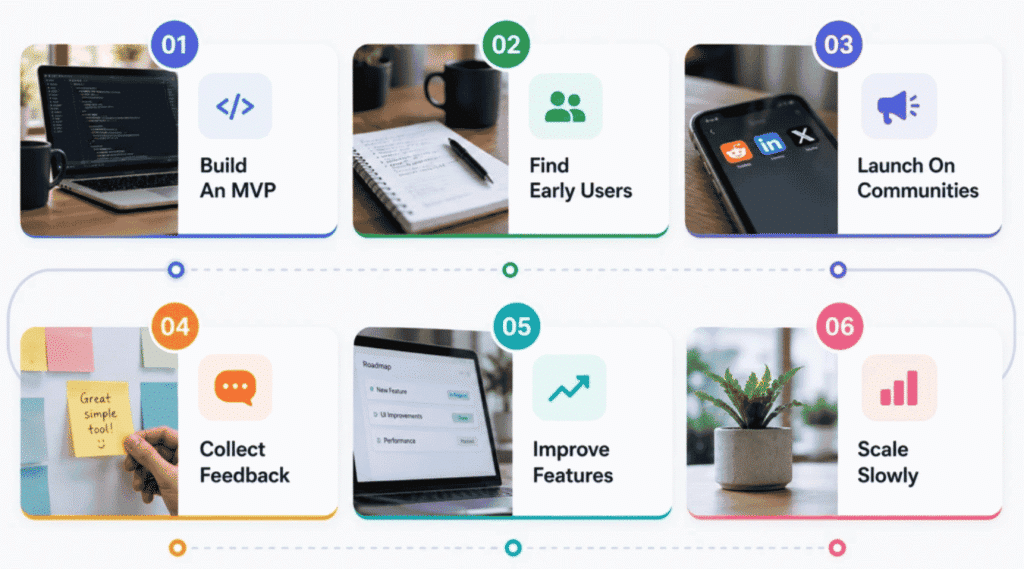
Launching a micro SaaS requires more than building software. Successful founders focus on validation, customer feedback, and gradual growth. A structured launch process helps reduce risks, attract early users, and improve the product before investing significant time or money.
Build An MVP
The first step is building a minimum viable product that solves one specific problem. The MVP should focus only on the core feature instead of trying to compete with larger software platforms.
Many founders fail because they build too many features before speaking with users. A simple product allows you to validate demand, reduce development costs, and launch faster. The goal is to solve one problem effectively rather than creating a complete platform.
Find Early Users
Early users provide the most valuable feedback. Start by reaching out to people who experience the problem your product solves. Existing professional networks, previous clients, online groups, and industry contacts often become the first customers.
Personal conversations help founders understand customer expectations and identify potential improvements. Early adopters are usually more willing to test products and provide honest feedback.
Launch On Communities
Online communities can generate early traction without large marketing budgets. Founders often launch products in niche communities where their target audience already participates.
Relevant communities may include:
- Reddit communities
- Indie founder groups
- Industry forums
- LinkedIn groups
- Product communities
Launching in the right communities helps founders attract qualified users who already understand the problem being solved.
Collect Feedback
Customer feedback should become part of the product development process. Interviews, surveys, emails, and support conversations reveal what users like, dislike, and expect.
Founders should pay attention to:
- Feature requests
- Usability problems
- Pricing concerns
- Missing functionality
- Customer goals
Listening to users helps prevent unnecessary development and ensures the product continues solving real problems.
Improve Features
Feature development should follow customer demand. Many successful micro SaaS products grow slowly by improving the features users request most often.
Small updates can significantly improve customer satisfaction and retention. Instead of adding numerous features, founders should focus on improvements that deliver measurable value.
This approach keeps the product simple while allowing the software to evolve based on actual customer needs.
Scale Slowly
Rapid growth is not always necessary for a micro SaaS business. Many profitable products grow gradually while maintaining low costs and healthy profit margins. After launch, a structured post-MVP development strategy helps teams refine features while staying lean.
Slow growth allows founders to improve customer support, strengthen operations, and maintain product quality. Revenue from early customers can fund future development without external investment.
A sustainable growth strategy often produces stronger businesses than pursuing rapid expansion before achieving product-market fit.
Common Mistakes New Founders Make
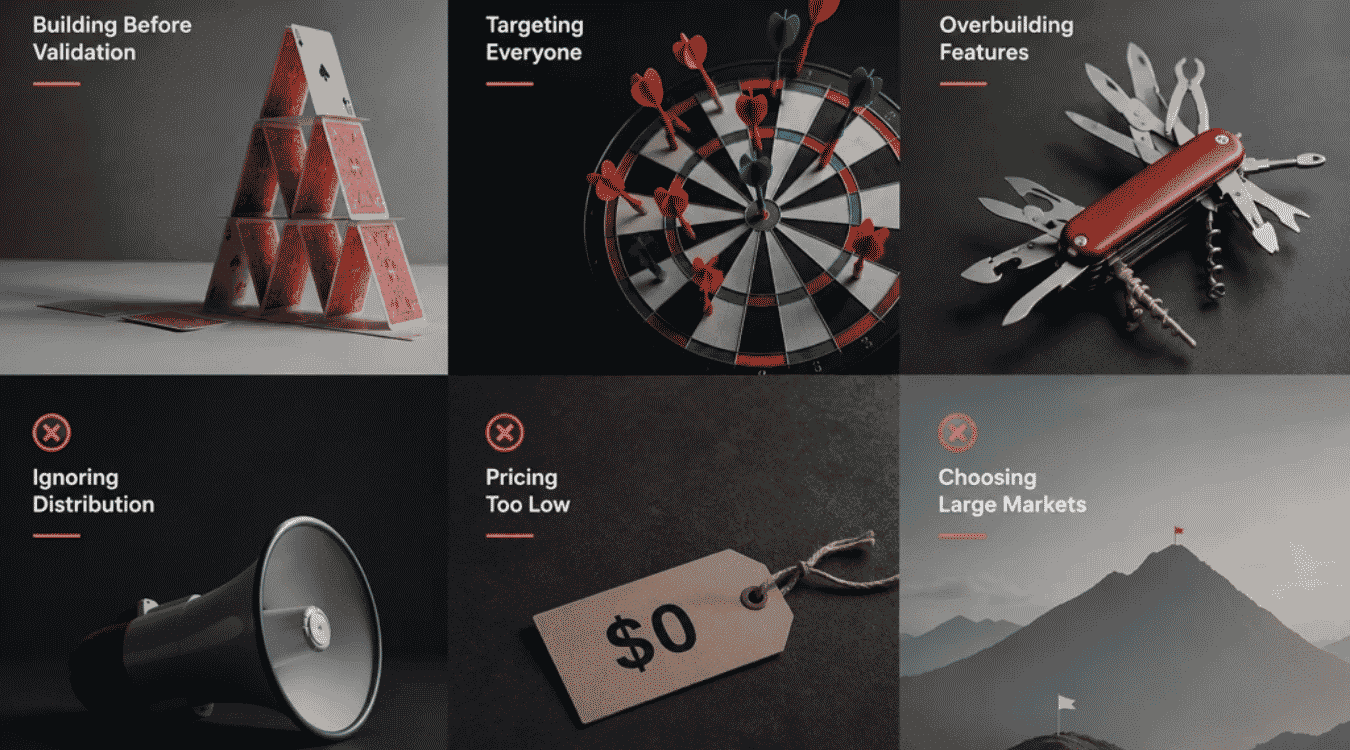
Many micro SaaS businesses fail because founders make avoidable mistakes during the early stages. Building a successful product requires validation, focus, and patience. Understanding common mistakes can help founders reduce risks, save money, and improve their chances of building a sustainable business.
Building Before Validation
Many founders spend months developing products before speaking with potential customers. They assume people will buy the software simply because the idea seems valuable.
Validation should always come before development. Customer interviews, landing pages, and early feedback help confirm whether people actually need the product. Building before validation often leads to wasted time, unnecessary expenses, and products that solve problems nobody is willing to pay for.
Targeting Everyone
Trying to serve every customer usually leads to weak positioning. Broad audiences create confusing messaging and make it difficult to compete against larger software companies.
Successful micro SaaS products focus on specific industries, business types, or user groups. A product designed for marketing agencies, accountants, or local businesses often performs better than software that attempts to serve every market. Clear positioning helps attract the right customers and improves marketing performance.
Overbuilding Features
Many founders believe more features create more value. As a result, they continue adding functionality before customers request it.
Feature overload increases development costs, complicates the user experience, and slows product launches. Successful micro SaaS products solve one problem extremely well. Additional features should only be added when customer feedback clearly supports them.
Keeping the product simple also reduces maintenance costs and improves customer adoption.
Ignoring Distribution
Some founders spend all their time building while ignoring customer acquisition. A great product alone does not guarantee growth, and even before launch, disciplined MVP feature prioritization is essential to keep scope manageable.
Distribution channels such as content marketing, communities, search traffic, partnerships, and social media are equally important. Founders should think about customer acquisition before development begins. Building an audience early often creates a stronger launch.
Pricing Too Low
Many new founders underestimate the value of their products. Low pricing may attract users, but it often creates sustainability problems.
Prices should reflect the value delivered to customers rather than the amount of work required to build the software. Higher pricing can attract more qualified customers and support future growth, product improvements, and customer support.
Choosing Large Markets
Large markets often attract established competitors with bigger budgets and larger teams. New founders may struggle to compete against well-funded companies.
Niche markets usually provide better opportunities for micro SaaS businesses. Smaller audiences often have specific problems that larger platforms ignore. Solving a focused problem for a defined audience allows founders to build authority, reduce competition, and achieve product-market fit more quickly.
Real Examples Of Successful Micro SaaS Products
Successful micro SaaS businesses prove that small teams and focused products can build sustainable companies. Most of these products solve one problem exceptionally well, serve a specific audience, and grow through word of mouth, content marketing, and product quality.
Transistor
Transistor is a podcast hosting platform built specifically for businesses, creators, and professional podcasters. Instead of becoming a complete media platform, the company focused on podcast hosting, analytics, and distribution. Its niche focus helped it compete against much larger platforms while maintaining a lean team and sustainable growth model.
Bannerbear
Bannerbear automates image generation through APIs and templates. Marketing teams use the platform to create social media graphics, banners, and visual assets automatically. The company succeeded by solving a specific automation problem for developers and marketers instead of building a large design platform.
Plausible
Plausible provides a lightweight analytics solution for website owners who want an alternative to traditional analytics platforms. The product focuses on simplicity, privacy, and easy reporting. By serving users who wanted a simpler analytics experience, Plausible built a strong position within a competitive market.
Carrd
Carrd allows users to create simple one-page websites without technical knowledge. Freelancers, creators, and small businesses use the platform to build landing pages, portfolios, and personal websites. Its straightforward approach and affordable pricing helped the product grow rapidly with a very small team.
Simple Analytics
Simple Analytics focuses on website analytics while prioritizing user privacy and ease of use. The product removes unnecessary complexity and provides only the metrics most businesses need. This focused approach helped the company attract customers who wanted a simpler alternative to traditional analytics platforms.
These examples demonstrate that successful micro SaaS products do not try to solve every problem. They focus on a specific audience, solve one core problem, and build sustainable businesses with small teams and clear positioning, as shown in a detailed case study of successful SaaS launches.
Final Thoughts
Micro SaaS continues to create opportunities for founders who want to build focused software businesses with limited resources. Instead of competing with large platforms, successful products solve specific problems for a well-defined audience. Small teams, lower costs, and recurring revenue make the model attractive for developers, agencies, and solopreneurs.
The ideas in this guide show that profitable opportunities exist across AI, marketing, sales, productivity, HR, ecommerce, and industry-specific markets. The key is identifying a real problem, validating demand, and launching a simple solution.
Building a successful micro SaaS does not require a large team or significant funding. Start with one problem, listen to customers, and improve the product over time. Consistent feedback, focused execution, and sustainable growth often produce better results than pursuing large markets too early.
Frequently Asked Questions
What Are The Best Micro SaaS Ideas For Beginners?
The best micro SaaS ideas for beginners usually solve a simple and specific problem. Products such as appointment reminder tools, client portals, proposal generators, content approval workflows, and internal reporting dashboards are often easier to build and validate. Beginners should focus on problems they already understand rather than entering highly competitive markets. Choosing a niche audience also increases the chances of finding early customers.
How Much Money Can A Micro SaaS Make?
Micro SaaS revenue varies depending on the market, pricing, and customer base. Some products generate a few hundred dollars per month, while others reach six or seven figures in annual recurring revenue. A product with 100 customers paying $30 per month can generate $3,000 in monthly recurring revenue. Consistent customer retention and recurring subscriptions often determine long-term profitability.
How Long Does It Take To Build A Micro SaaS?
Development time depends on product complexity and technical resources. A simple MVP built with no-code tools may take a few weeks. More advanced products with custom features, integrations, or AI capabilities may require several months. Many successful founders launch early versions quickly and improve the product based on customer feedback, choosing wisely between an MVP, prototype, or proof of concept at each stage.
Can One Person Build A Micro SaaS?
Yes. Many successful micro SaaS businesses are operated by solo founders. Modern development frameworks, no-code tools, cloud services, and automation platforms allow individuals to build, launch, and manage software products independently. Solopreneurs often handle product development, marketing, and customer support during the early stages.
Are AI Micro SaaS Products Profitable?
AI micro SaaS products have become increasingly profitable because businesses want specialized solutions instead of large AI platforms. Tools for content generation, customer support, sales assistance, and workflow automation continue to attract paying customers. Success usually depends on solving a specific problem rather than building a general AI application.
How Do You Validate A Micro SaaS Idea?
Validation begins by identifying the target audience and understanding their problems. Founders can conduct customer interviews, analyze competitors, research search demand, and create landing pages to measure interest. Early feedback helps determine whether people are willing to pay for the solution before significant development costs occur.