
White label SaaS lets you sell software without building it yourself. You pick a ready-made white-label SaaS platform, add your logo and colors, and launch it under your own brand. Customers never know that another company built it. This model works well for agencies, consultants, and startups who want to move fast without hiring developers.
Instead of spending months coding white label software from scratch, you license a proven product and focus on sales and support. Most platforms let you set your own pricing too, so you keep the profit. If you want a real software business under your own brand without the technical headache, this guide walks you through exactly how to start.
What Is White Label SaaS?
White label SaaS is saas software built by one company but sold by another company under its own name. You buy access to a white label solution, add your branding, and offer it as your own product. Some people call this label saas, while others compare it to private label, where the buyer usually gets more room to customize features. Either way, the idea stays the same.
You skip development and sell white label products fast, without writing a single line of code. Many white label saas services also include support, updates, and hosting, so the platform stays reliable while you focus on customers. To the outside world, it looks like you built the software yourself.
When Is White Label SaaS Right For You
Not every business needs white label saas. Before picking a white label platform, check if these five situations match where your business stands right now.
No In-House Dev Team
If you don't have a dev team, white label saas solutions save you months of work and a lot of money. Providers already built the proprietary software, tested it, and fixed the early bugs. You just add your own branding and launch. This makes sense if you want a white label website builder, a white label crm, or any niche tool without hiring engineers or managing a product roadmap yourself.
More Services, No Hires
Agencies often struggle to add new revenue streams without new hires or new tech debt. White label providers let you offer social media management software, marketing automation, or white label email marketing under your own name. Clients think you built it in-house. You keep the relationship and the billing, while the provider quietly handles hosting, updates, and support behind the scenes.
Your Brand, Your Domain
If having your own domain and your own logo on every screen actually matters to you, look for a true white label offer, not a rebranded skin with a logo swap. A solid white label platform should support a custom domain, remove all vendor branding, and keep the product looking fully yours from the login screen to the dashboard, so customers never spot who built it originally.
Speed Beats Building Slow
Startups racing to get a product live benefit the most from this model. Building your own social media scheduling tool or crm from scratch can easily take a year and burn through your budget. Licensing one from established white label providers gets you live in weeks instead, so you can start selling, gathering feedback, and adjusting your offer while competitors are still writing code.
Giving Up Some Control
White label only works if you accept a few trade-offs. You won't own the underlying code, and new features depend on the provider's release schedule, not yours. If trading full ownership for speed and lower cost sounds fair to you, white label saas fits well. If you need complete control over every feature, building your own may suit you better long term.
Cost Comparison: White Label SaaS VS Building In-House
Building your own saas platform costs far more than most online business owners expect. If you're considering building instead of buying, a detailed SaaS development cost guide for businesses can help you understand where the money really goes.
Software Development Costs Add Up Fast
A basic saas business built from scratch usually needs a team of developers, designers, and QA testers. Estimated cost: $50,000 to $250,000+ for an MVP alone, plus 6 to 12 months before launch. Digital marketing agencies rarely have this budget sitting around for one product.
White Label Plans Are Predictable
Most white label plans run on monthly or annual fees instead of large upfront costs. Estimated cost: $50 to $500 per month depending on service offerings, features, and client volume. You know your expense every month, which makes budgeting far easier for a growing online business.
Ongoing Maintenance Changes the Math
In-house software needs constant updates, bug fixes, and security patches. Estimated cost: $30,000 to $100,000+ per year in dev salaries and hosting. Businesses weighing these ongoing commitments against outsourcing can benefit from understanding in-house vs outsourcing software development. White label services usually include maintenance in the plan, so updates, uptime, and user interface improvements come at no extra charge.
Custom Features Cost Extra Either Way
Whether you build or license, custom work adds cost. Estimated cost for custom features on a white label saas platform: $500 to $5,000 per feature, compared to $10,000 to $50,000+ for the same feature built in-house. This applies to things like a white label landing page builder, seo tools, or lead generation add-ons.
Private label products often sit in the middle, offering more customization than standard white label plans but still cheaper than full software development, since the core code already exists, and they can be a useful reference point when comparing custom software versus SaaS solutions.
Cost Factor | Building In-House | White Label SaaS |
|---|---|---|
Initial Development | $50,000–$250,000+ | $0 (included in plan) |
Time to Launch | 6–12 months | 1–4 weeks |
Monthly Cost | Ongoing salaries, hosting | $50–$500/month |
Maintenance & Updates | $30,000–$100,000+/year | Included |
Custom Feature Cost | $10,000–$50,000+ | $500–$5,000 |
Own Pricing Plans | Full control | Full control (reseller side) |
Common White Label SaaS Pricing Models
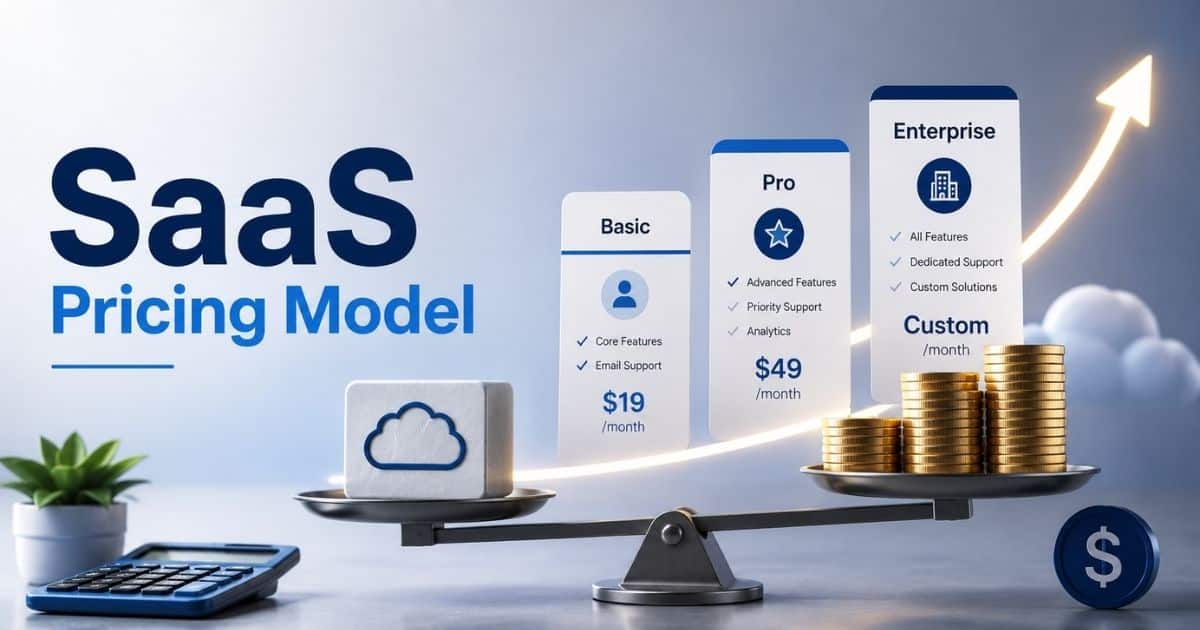
Providers structure white label pricing plans differently depending on who they serve. Understanding each model helps you predict development costs, protect margins, and pick tailored solutions that actually fit your business, much like broader software development pricing models guide how custom projects are structured financially.
Flat Monthly Fee
This is the simplest white label pricing plan. You pay one fixed amount every month, regardless of how many end clients you onboard. Providers who provide top tier software usually offer this to keep pricing predictable for smaller resellers. The tradeoff is real: as your client base grows, your costs stay flat, but so does the provider's incentive to add new features fast. A marketing agency handling 5 to 10 clients often finds this model easiest to forecast against their own service fees.
Per-Client or Per-Seat Pricing
Here, you pay based on how many end users or client accounts sit on the platform. This model scales with your revenue instead of against it, which matters if you're building new revenue streams from scratch. Mid market businesses managing dozens of accounts often prefer this because costs grow only when the business actually grows. The catch is margin compression at high volume, so negotiate volume discounts once you pass a certain client count.
Tiered Pricing Plans
Providers set feature limits at different price points, similar to how most saas products structure their own plans. Lower tiers restrict branding depth or client caps, while higher tiers unlock full white label saas products, priority support, and access across multiple channels like email, SMS, and social. This model rewards early testing at a cheap tier before committing budget to a plan built for scale.
Revenue Share or Rebilling
Instead of a flat license fee, the provider takes a cut of what you charge your own clients. This lowers upfront development costs significantly, since you're not paying until you're actually earning. It suits new resellers with tight cash flow, but long term, a strong revenue share deal can cost more than a flat fee once your client base matures, so recalculate this yearly and compare it against more traditional SaaS vs custom software cost and flexibility trade-offs.
Usage-Based Pricing
You pay according to actual consumption: API calls, emails sent, storage used, or active workflows. This fits tailored solutions built for unpredictable demand, especially tools tied to automation or high-volume messaging. Costs stay low when usage is light, but can spike fast during growth periods, so forecasting matters more here than in any other model.
What To Look For In A White Label SaaS Provider
Not every saas product delivers the same quality behind the scenes. Before signing anything, check these five things to make sure you get a provider that supports growth instead of limiting it, similar to how you'd evaluate a custom software development partner for long-term alignment.
True Customization, Not Just A Logo Swap
Real customizable solutions go beyond changing a color scheme. A strong provider lets you control brand identity across every touchpoint, from login screens to email footers to client dashboards. Investing in thoughtful UI/UX design services for SaaS products also helps keep these touchpoints consistent and intuitive. If white label options stop at swapping a logo, clients will eventually notice inconsistencies that make your business look less credible. Ask for a live demo with branding fully removed before committing, not just a sales screenshot.
Support That Actually Scales With You
As you take on multiple clients, support requests multiply fast. Top tier software providers offer dedicated onboarding, fast response times, and documentation built for resellers, not just end users. Weak support becomes your problem the moment a client complains, since they see your brand, not the provider's. Test their support speed yourself during the trial period before trusting them with real client accounts.
Pricing That Protects Your Own Price
A good provider structures fees so you can set your own price without losing margin as you scale. Watch for hidden costs like per-domain fees or setup charges that eat into profit once you pass a certain client count. The best pricing plans stay transparent from day one, so you're not recalculating your marketing services fees every quarter just to stay profitable.
Integration With Your Existing Tools
Your provider's platform needs to connect with the tools you already run, whether that's a CRM, email platform, or tools used for social media campaigns. Strong API access and native integrations save hours of manual work and keep client reporting accurate. Before signing, confirm the provider supports the specific tools your team already relies on daily.
Reliability You Can Stand Behind
Uptime and performance directly affect your reputation, since clients blame you, not the provider, when something breaks. Look for published uptime guarantees, a public status page, and a track record with other resellers running multiple clients on the same infrastructure. A provider with unreliable systems will quietly damage the trust you've built with every client on your platform.
White Label vs. Private Label vs. Reselling vs. Custom Software
These four models get confused constantly, but they differ in ownership, control, and cost. The same questions show up when businesses weigh custom software vs SaaS for long-term strategy or compare SaaS vs custom software for cost flexibility and scale. Here's exactly how each one compares side by side.
Factor | White Label | Private Label | Reselling | Custom Software |
|---|---|---|---|---|
Who Builds The Product | Third-party provider | Third-party provider | Third-party provider | Your own team |
Branding Control | Full branding, your logo and domain | Full branding plus some feature customization | Vendor's brand stays visible | Full control, built to your spec |
Product Customization | Limited to UI and branding | Moderate, some feature-level changes allowed | None, sold as-is | Unlimited |
Code Ownership | No | No | No | Yes |
Time To Launch | Weeks | Weeks to a few months | Days | 6–12+ months |
Upfront Cost | Low to moderate | Moderate | Very low | High ($50K–$250K+) |
Ongoing Cost | Monthly or usage-based fee | Monthly fee plus customization costs | Commission or referral fee | Salaries, hosting, maintenance |
Who The Customer Thinks Built It | You | You | The original vendor | You |
Best For | Agencies, consultants, startups scaling fast | Businesses needing tailored features under their brand | Affiliates and partners with no branding goals | Companies needing full ownership and control |
Biggest Tradeoff | No code ownership, vendor-dependent updates | Higher cost than standard white label | No brand equity built | Highest cost and longest timeline |
Exit Flexibility | Depends on contract terms | Depends on contract terms | Easy to stop anytime | Full control to pivot anytime |
How To Launch A White Label SaaS Product: A 30-Day Plan
Launching doesn't need a year of planning. With the right business model and a clear timeline, you can go from idea to your first client in 30 days, even though a typical software development timeline for SaaS can stretch much longer for full custom builds.
Days 1 To 5: Pick Your Niche And Provider
Start by deciding how much profit you actually need per client to make this worth running. Then shortlist 2 to 3 providers offering an enterprise plan or lower tier that fits your budget. If you're also considering building instead of licensing, a SaaS development services guide can clarify what's involved. Compare branding elements, pricing, and support before testing anything. Narrow your niche now, since a focused offer converts faster than a generic one later.
Days 6 To 12: Test And Rebrand The Platform
Run a trial on your top pick and check if the interface is easy to use, drag features work smoothly, and setup doesn't require a developer. Once confirmed, apply your logo, colors, and other visual elements across the dashboard and client-facing screens, borrowing best practices from well-designed UI/UX for SaaS products. Confirm your branded portal hides all vendor references completely before moving forward, since half-branded platforms hurt trust later.
Days 13 To 18: Set Your Pricing And Packages
Decide your own pricing plans based on the cost comparison you ran earlier, plus the margin you need to hit your revenue streams goals. Build 2 to 3 packages instead of one flat price, since tiered options convert better and support different client budgets. This is also when you finalize contracts covering support terms, renewal, and cancellation, making sure your own service structure aligns with sustainable software development pricing models and protects your margins as you grow.
Days 19 To 25: Soft Launch To A Small Group
Offer your product to 3 to 5 existing contacts or warm leads before a public launch. This tests your onboarding flow, support response time, and whether client relationships hold up once real money is involved, mirroring best practices from structured SaaS product development lifecycles. Fix friction points now, while the stakes are low and feedback is easy to collect directly.
Days 26 To 30: Launch Publicly And Start Selling
Open the offer to your full audience through email, social, or outbound outreach. Focus on landing your first 3 paying clients rather than perfecting every detail, since real feedback beats assumptions. As you grow, think about SaaS scalability strategies for sustainable growth so your white label setup can handle more clients without breaking. Once onboarded, prioritize recurring revenue by locking in monthly plans early, so your business model has predictable income from month one instead of one-off sales.
White Label SaaS Examples By Industry
White label works differently depending on the industry. Under the hood, many of these platforms rely on scalable SaaS tools that power global growth, but your role is packaging them for specific client needs. Here's how real businesses across five sectors use it, plus the key features that make each one worth reselling.
E-Commerce Platform Solutions For Online Sellers
Digital agencies often resell a white label e-commerce platform to clients launching online stores. Key features usually include product catalogs, checkout systems, and inventory tracking built by one company but sold under the agency's name. In some cases, agencies outgrow generic tools and move to custom software that transforms operations when they need deeper integrations or unique workflows. This gives smaller retailers enterprise-level tools without paying for custom development, while the agency earns recurring revenue and strengthens client relationships through ongoing store management and support.
Lead Generation Tools For Marketing Agencies
Generating leads is one of the most in-demand services agencies white label today. Providers build the forms, landing pages, and tracking systems, while agencies rebrand the tool and sell it as part of their marketing packages. For agencies that eventually want something more tailored, flexible custom software solutions can replicate these lead generation features while fitting unique processes. This offers significant advantages for agencies without dev teams, since they can promise measurable results to clients without building lead capture technology from scratch.
CRM Systems For Sales-Focused Businesses
A white label CRM lets consultants and agencies offer pipeline tracking, contact management, and deal reporting under their own brand. Clients see a fully branded system with the agency's logo and visual elements throughout, with no sign of the original provider anywhere in the interface. For businesses that later discover off-the-shelf CRMs can't match their workflows, case studies where companies chose to build custom software instead of buying multiple tools show how owning the core platform can simplify operations. This works especially well for consultants who already advise clients on the sales process but don't want to build software themselves.
Social Media Management For Digital Agencies
Digital agencies managing multiple client accounts often resell white-label social media scheduling and reporting tools. Clients get a branded dashboard showing their own posts, analytics, and calendars, while the agency avoids building scheduling infrastructure internally. This model works well because posting and analytics needs stay consistent across almost every client, making the tool easy to standardize and resell repeatedly.
Email Marketing Platforms For Client Campaigns
Agencies running client campaigns frequently license a white-label email marketing tool instead of building one. Features like automation, templates, and analytics come pre-built, so agencies only handle strategy, copy, and client relationships. This keeps overhead low while letting the agency present a fully branded platform, complete with its own domain and visual elements, as part of a premium service offering.
Build a Scalable White Label SaaS with GainHQ
GainHQ helps businesses turn a white label idea into an actual software product, not just a rebranded template. Their core custom software development services focus on building scalable, human-centric SaaS products around your business needs. Instead of settling for a rigid vendor platform, you get a solution built around your pricing strategy, your workflow, and your agency's offerings from day one. This matters most when you need to pull data from multiple sources, support a mobile app alongside a web dashboard, or scale past what off-the-shelf providers allow. Rather than compromising on someone else's roadmap, you own a system built for your specific market, backed by real-world experience from SaaS MVP launches in 90 days and successful SaaS launch case studies. If you want to dig deeper into approaches and best practices, the GainHQ blog on SaaS and custom software shares more examples and guidance. If you're ready to build a white label SaaS product designed around your business instead of squeezed into a template, GainHQ can help you plan and build it right.
FAQs
Is White Label SaaS Profitable Long Term?
Yes, if you pick a sticky product with recurring demand and keep your pricing plans sustainable as you scale. Profitability drops when businesses chase trendy tools instead of software clients need every month, or when they underprice just to win early clients.
Do I Need Any Technical Skills To Run A White Label SaaS Business?
No coding is required for most white label saas platforms, since the provider handles development, hosting, and updates. You still need basic skills around branding, client onboarding, and using the admin dashboard, but nothing close to software development knowledge.
Can I Switch White Label Providers Later Without Losing Clients?
It depends on the contract and how much client data lives inside the platform. Some providers allow data export, while others lock you in through proprietary formats or exclusivity clauses. Always confirm data portability terms before signing, so switching later doesn't mean starting over with every client.
What Happens If The White Label Provider Shuts Down Or Gets Acquired?
This is a real risk with any vendor-dependent business model. Acquisitions sometimes change pricing, features, or support quality overnight. Reduce this risk by choosing established providers with a track record, and by keeping your own client data backed up separately whenever the platform allows it.
How Many Clients Do I Need Before White Label SaaS Becomes Profitable?
This depends entirely on your pricing model and provider costs. Flat monthly fee models often break even around 3 to 5 clients, while usage-based or per-seat pricing can turn profitable sooner if margins per client are high enough. Run your own numbers against your specific provider's costs before assuming a universal number applies.