What Is A Software Escrow Agreement? Complete Guide For Businesses

by Daniel Wright | Jul 21, 2026 | Technology & Innovation
Table of Contents
- What Is A Software Escrow Agreement
- How Does A Software Escrow Agreement Work
- Why Businesses Use Software Escrow Agreements
- Who Needs A Software Escrow Agreement
- What Should A Software Escrow Agreement Include
- Software Escrow Agreement Vs Source Code Ownership
- How To Choose A Software Escrow Provider
- Common Release Conditions In A Software Escrow Agreement
- Software Escrow Agreement Best Practices
- How GainHQ Supports Secure Software Development
- FAQs
Every business that relies on custom software faces one hidden risk: what happens if the vendor disappears? That's exactly what software escrow agreements are built to solve. A software escrow agreement is a three-party arrangement between a software vendor, a business using that software, and a neutral escrow agent. The vendor places deposit materials, usually source code and documentation, with the escrow agent.
If the vendor goes bankrupt, stops supporting the product, or breaches the contract, the business can access those materials and keep operating. Below, we break down how software escrow actually works, what it protects, and why more businesses ask for one before signing a development contract.
What Is A Software Escrow Agreement
A software escrow agreement, sometimes called a source code escrow agreement, protects businesses that depend on custom software built by an outside vendor. The software vendor places a software escrow deposit, usually the source code and related build files, with a neutral third party called the escrow agent. This escrow deposit stays untouched until a specific trigger event occurs.
If the software vendor goes out of business, stops maintaining the product, or breaches the contract, the business gains access to the source code escrow. This gives them the ability to maintain or rebuild the software independently, without waiting on a vendor who can no longer deliver.
How Does A Software Escrow Agreement Work
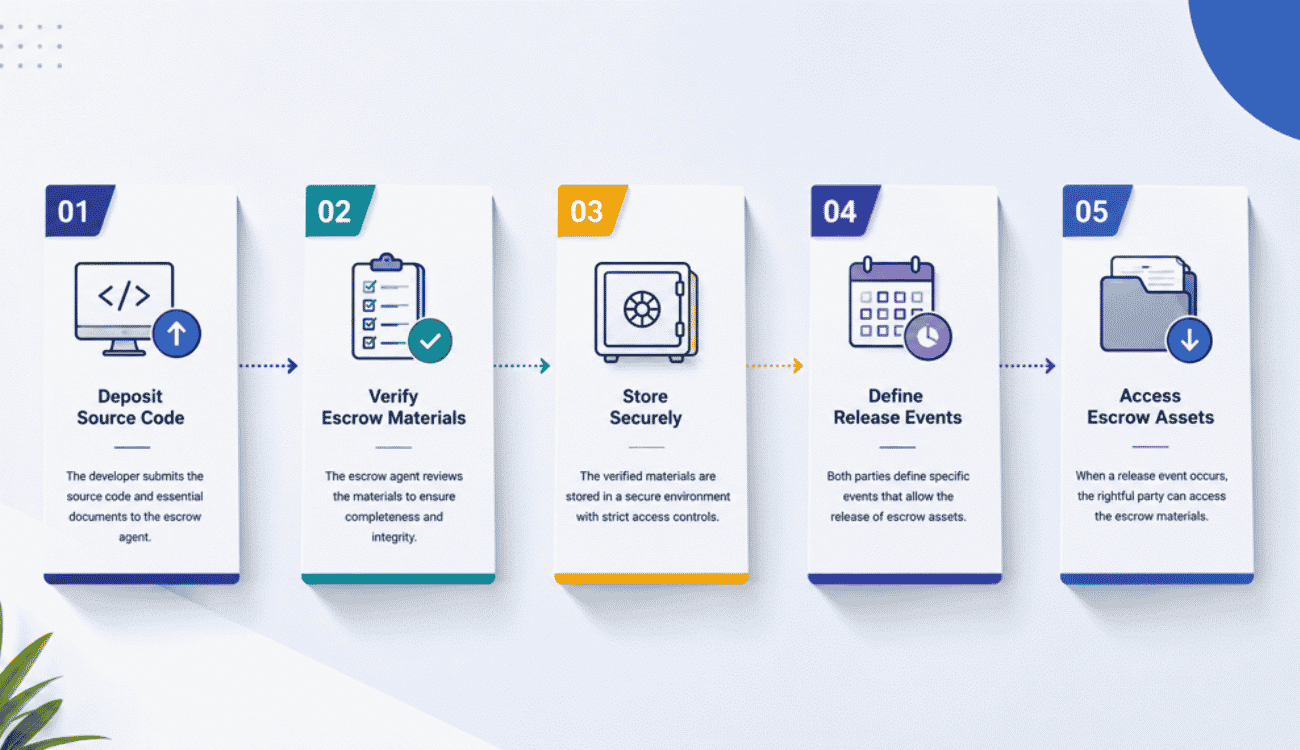
A strong software escrow agreement follows a clear process, not a single event. Understanding each step helps businesses see exactly how protection builds over time, from the first deposit to the moment access is needed.
Deposit Source Code
When a business signs a software license agreement with a vendor, the agreement should include a clause requiring regular deposits. The vendor sends the source code and technical documentation to the escrow agent, along with build instructions needed to compile a working version of the software.
This step protects businesses that depend on third-party software for daily operations. Without a documented deposit, there is nothing to fall back on if the vendor cannot maintain the software later.
Verify Escrow Materials
A deposit alone does not guarantee protection. Verification checks that the source code compiles, runs, and matches what the software vendor claims to have submitted. Skipping this step is one of the most common reasons escrow arrangements fail when they are needed most.
Technical documentation is reviewed alongside the code to confirm nothing critical is missing. This gives businesses real confidence that they can maintain the software independently if a release event ever occurs.
Store Securely
Once verified, materials are stored in secure, access-controlled facilities or encrypted systems managed by the escrow agent. Neither the vendor nor the business can access the deposit outside the agreed terms.
This separation is what makes a strong software escrow agreement work. It protects the vendor's intellectual property while guaranteeing the business a path to the source code if something goes wrong.
Define Release Events
Release events are the specific triggers that unlock the escrow deposit. Common examples include vendor bankruptcy, discontinued support, or material breach of the software license agreement.
For SaaS escrow, release events often center on business continuity instead, covering outages or the vendor losing access to hosting infrastructure. Clear, well-defined triggers prevent disputes when a business actually needs to invoke them.
Access Escrow Assets
When a release event is confirmed, the escrow agent releases the source code and technical documentation to the business. This gives them everything needed to maintain the software independently going forward.
This final step is the entire point of the arrangement. Without it, a software escrow agreement is just paperwork, not real protection for the business relying on third-party software.
Why Businesses Use Software Escrow Agreements
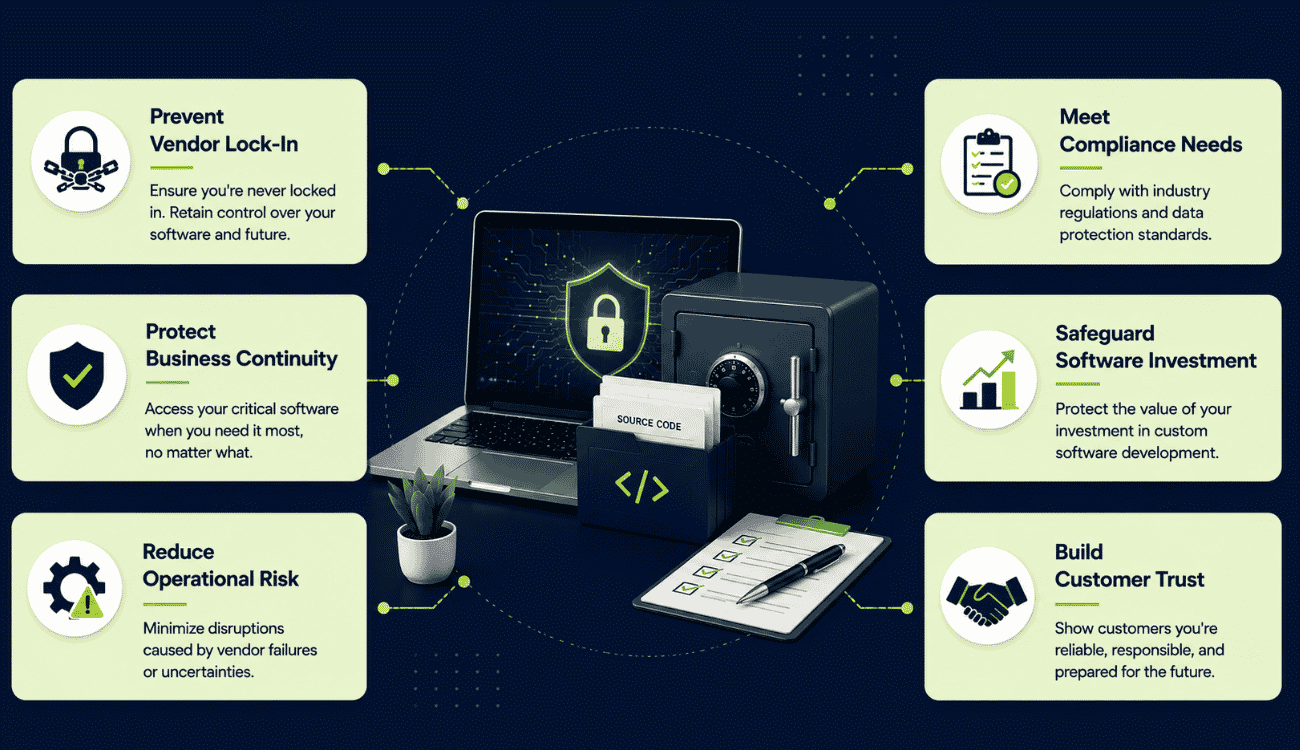
Software escrow agreements solve real business problems, not just legal formalities. From avoiding vendor dependency to evaluating enterprise software to meeting compliance standards, here are the key reasons businesses build these protections into every license agreement.
Prevent Vendor Lock-In
Relying on a single vendor for critical software creates dependency that can hurt a business later. Without escrow, switching providers or maintaining the software independently becomes almost impossible if that vendor fails.
A software escrow agreement removes this leverage imbalance. It ensures both the depositor and the business have clear rights and release conditions written into the license agreement, so the business is never fully at the vendor's mercy.
Protect Business Continuity
When a vendor fails to deliver updates or support, operations can grind to a halt. Software escrow agreements exist specifically to prevent that kind of disruption from becoming a full business crisis.
By securing access to the software source code under defined release conditions, businesses maintain operational continuity even during a vendor transition. This protection matters most for companies running mission-critical systems they cannot afford to lose.
Reduce Operational Risk
Every business that depends on external software carries some risk. Vendor bankruptcy, poor maintenance, or a company shutting down entirely can all leave a business exposed overnight.
Escrow agreements reduce that risk directly. With verification services confirming the deposit is complete and automated deposits keeping it current, businesses gain a dependable safety net instead of hoping the vendor stays in business indefinitely.
Meet Compliance Needs
Many industries require proof that critical software can survive a vendor failure. Auditors and regulators increasingly expect documented continuity plans, especially for businesses handling sensitive data or regulated operations.
A software escrow agreement provides that documentation. It demonstrates the key components of a real continuity strategy are in place, which helps businesses pass audits and satisfy partners who require proof of risk management.
Safeguard Software Investment
Custom software often represents a significant financial investment. If the vendor fails and no escrow exists, that investment can become worthless overnight, forcing a business to rebuild from scratch.
Escrow protects this investment by guaranteeing access to the source code and documentation needed to keep using it. Multi-beneficiary agreements can extend this protection further, covering partners or stakeholders who also depend on the same software.
Build Customer Trust
Offering escrow isn't only about protecting the business itself. It signals to customers and partners that operational continuity has been planned for, even in a worst-case scenario involving the vendor.
This builds real trust in vendor relationships. A business that can point to a signed escrow agreement demonstrates seriousness about reliability, which matters when customers are evaluating long-term partnerships.
Who Needs A Software Escrow Agreement
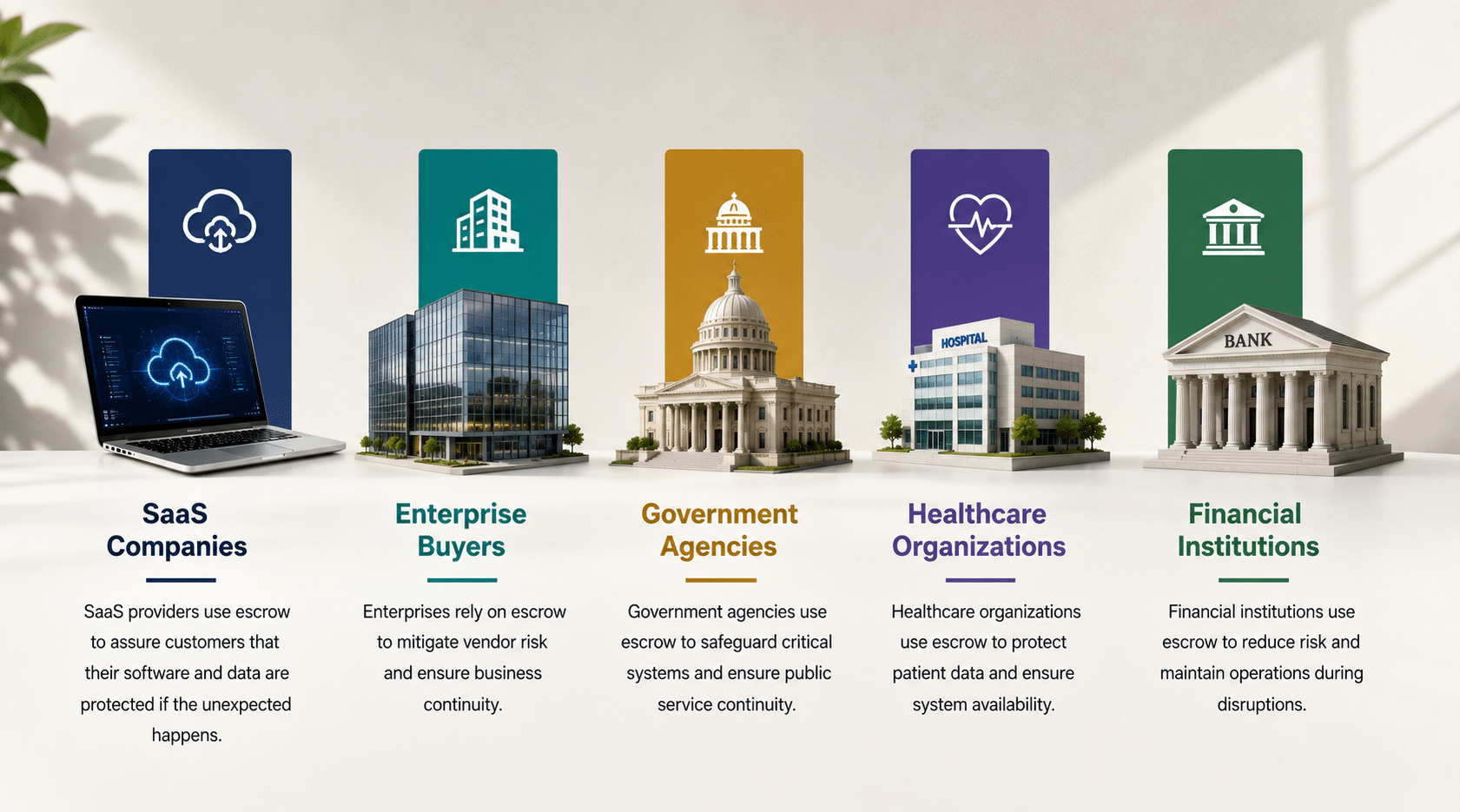
Software escrow agreements aren't only for large enterprises. Certain industries face higher stakes when a vendor fails, and many are already weighing SaaS vs custom software, making this protection a practical necessity rather than an optional safeguard.
SaaS Companies
SaaS companies often depend on third-party tools and infrastructure providers to keep their platform running, while also needing to follow SaaS security architecture best practices to protect customer data. If a critical provider fails, the ripple effect can disrupt service for every customer relying on that platform.
An escrow agreement with a neutral third party ensures business continuity even during a vendor failure, complementing the gains many see when custom software transforms their company. Confirming that files exist and are current through secure storage gives SaaS companies a documented recovery path instead of scrambling under pressure.
Enterprise Buyers
Large enterprises typically run mission-critical systems built or maintained by external vendors. A vendor failure at this scale can affect thousands of employees and disrupt operations across multiple departments at once.
Escrow protects these buyers by guaranteeing access to source code and access credentials if the provider fails. This lets enterprise teams maintain systems internally without waiting on a vendor that may no longer exist.
Government Agencies
Government agencies manage services the public depends on daily, from records systems to public safety tools, and must follow SaaS security best practices to meet strict regulatory expectations. These systems cannot simply go offline because a private vendor shut down or stopped offering support.
Escrow agreements give agencies a legal guarantee that critical software remains accessible under secure storage, regardless of what happens to the vendor. This protects public services from being held hostage by a single company's failure.
Healthcare Organizations
Healthcare organizations run software that manages patient records, scheduling, and clinical operations, where regular software product audits are often required. A provider fails without warning, and continuity of care can be seriously compromised almost immediately.
An escrow agreement ensures access credentials and source code remain available through a neutral third party. This keeps essential healthcare systems running even if the original vendor can no longer support them.
Financial Institutions
Financial institutions rely on software to process transactions, manage accounts, and maintain regulatory records, often triggering broader software modernization initiatives to keep core systems resilient. Any disruption here carries serious financial and legal consequences, especially if a vendor failure happens without notice.
Escrow protects these institutions by guaranteeing secure storage of source code and documentation. It ensures business continuity remains intact, satisfying both regulators and customers who expect uninterrupted financial services.
What Should A Software Escrow Agreement Include
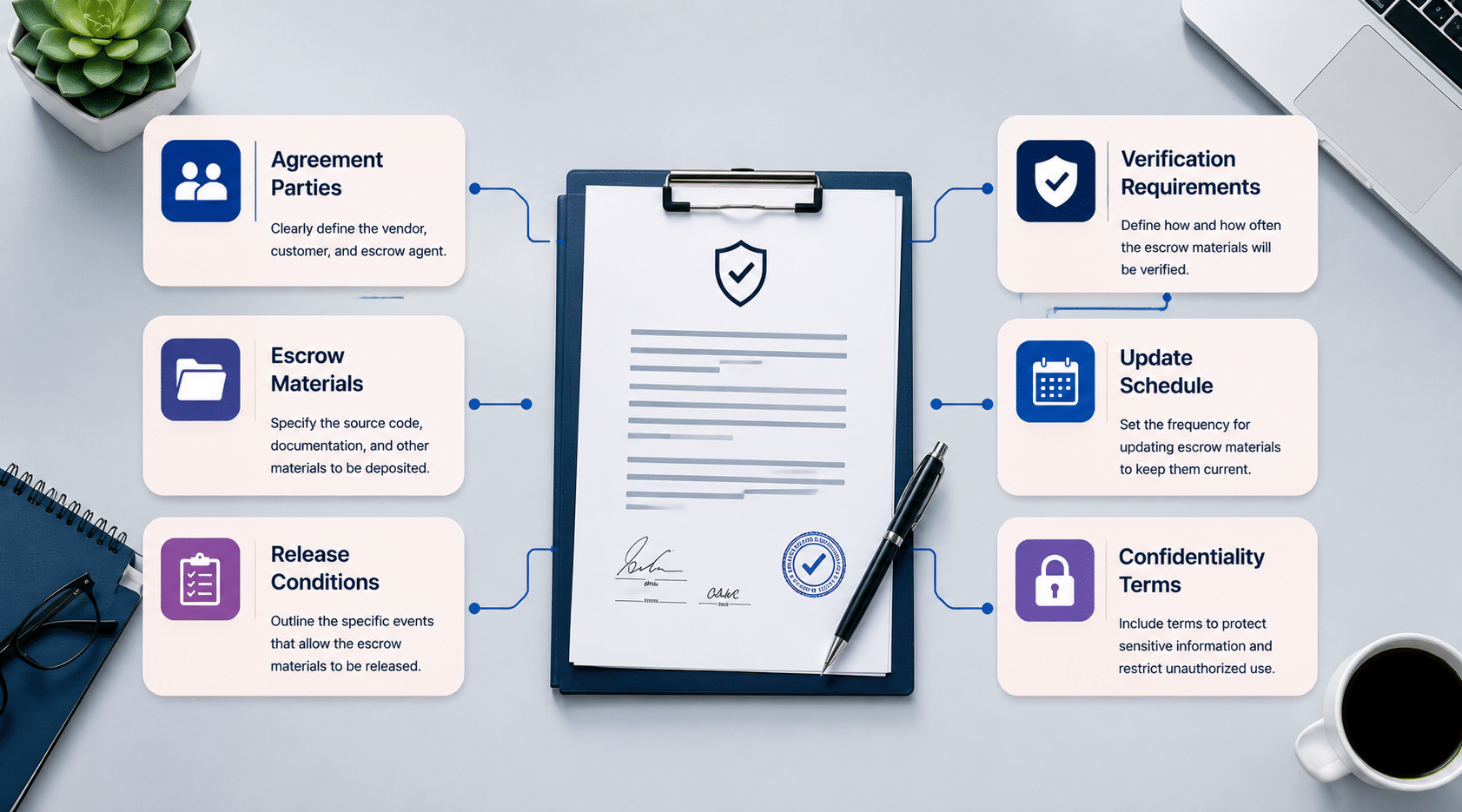
A well-drafted software escrow agreement needs specific components to actually work when it matters. Missing any of these leaves gaps that can delay or block access during a real crisis.
Agreement Parties
Every software escrow agreement starts as a three-party agreement between the vendor, the business, and the escrow agent. Each party's role and responsibilities need to be clearly defined from the start.
Vague terms about who does what create confusion later, especially during a release request. Businesses that require escrow should confirm all three parties sign the same document, not separate side agreements that could conflict.
Escrow Materials
The agreement must specify exactly what gets deposited, not just "source code" in general terms. This includes build instructions, deployment scripts, configuration files, and anything needed to recreate the hosting environment.
For mission-critical systems, missing even one file can make the deposit useless. Businesses should list every dependency the software needs to run, so nothing is left out when materials are actually needed.
Release Conditions
Escrow terms must clearly define what triggers a release, such as vendor bankruptcy or a failure to meet support obligations. Vague conditions lead to disputes exactly when speed matters most.
The agreement should also outline how a release request gets submitted and reviewed. Clear timelines prevent delays, ensuring businesses aren't stuck waiting on unclear language during an actual vendor failure.
Verification Requirements
A deposit means little if no one confirms it works. Verification requirements should state how often materials are checked and whether the escrow agent confirms the code builds successfully.
This step protects mission-critical systems from relying on an untested deposit. Without verification written into the agreement, businesses may discover their protection is worthless only after a release event occurs.
Update Schedule
Software changes constantly, so the agreement needs a defined update schedule for new deposits. This keeps the escrow materials current with the live version of the software vendors actually support.
Missing updates is one of the most common escrow failures. If a vendor stops meeting support obligations without regular deposits, the business ends up with outdated code that no longer matches production.
Confidentiality Terms
Since escrow materials often include sensitive source code, confidentiality terms need to protect the vendor's intellectual property throughout the arrangement. The escrow agent is bound to secrecy outside of a valid release.
This builds trust for vendors who require escrow but worry about exposure. Clear confidentiality terms reassure software vendors that deposited materials stay protected unless a legitimate release condition is met.
Software Escrow Agreement Vs Source Code Ownership
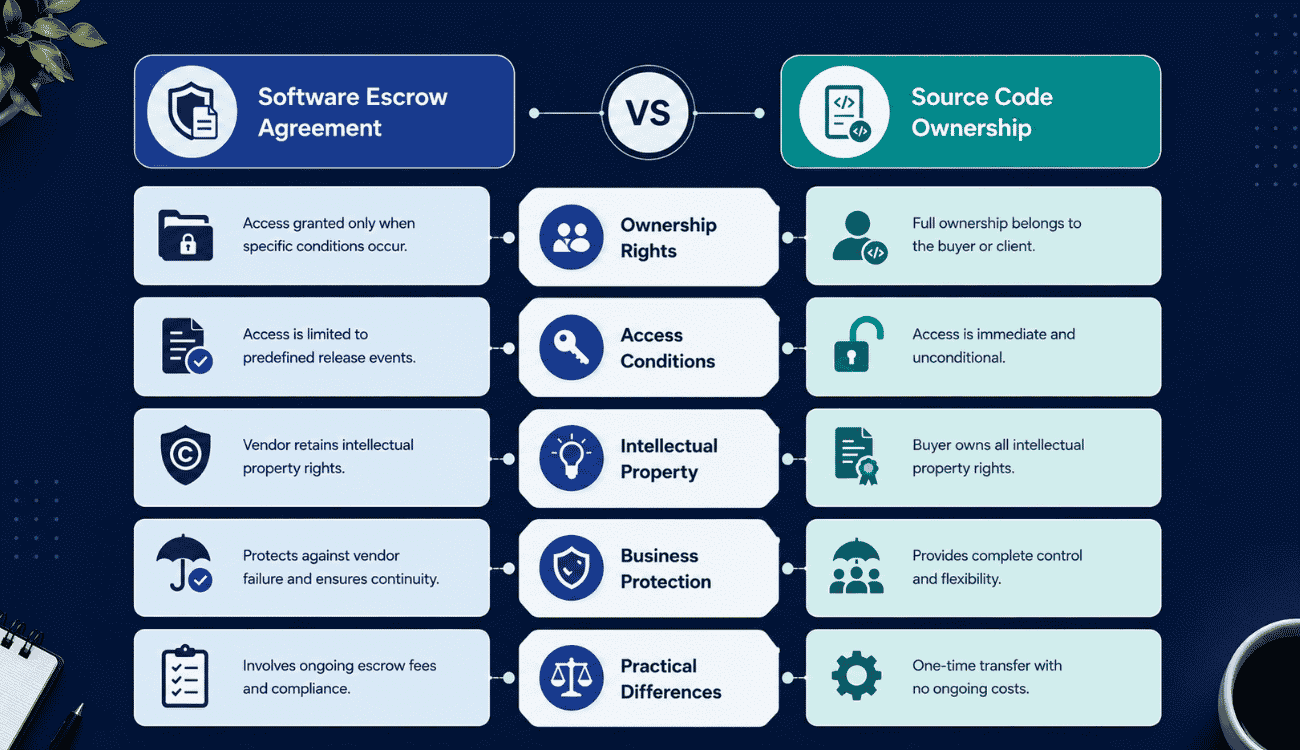
These two concepts often get confused, but they protect different things. Understanding the difference helps businesses know exactly what rights they actually hold over the software they use.
Ownership Rights
Source code ownership means the vendor legally holds the rights to the code, even when a business pays for custom development. A software escrow agreement does not change that ownership.
Instead, it gives the end user conditional access to escrowed materials under specific release events. Ownership stays with the vendor unless the contract explicitly transfers it, which is rare in most development deals.
Access Conditions
Owning software outright means unrestricted access at any time. Escrow works differently, releasing materials only after a written request confirms a valid release event, such as vendor bankruptcy or failure to support the product.
This makes escrow a conditional safety net rather than direct control. Businesses cannot access escrowed materials whenever they want, only when the agreed trigger conditions are actually met and verified.
Intellectual Property
Intellectual property protection stays with the vendor throughout an escrow arrangement. The business gains the ability to use and maintain the code, not ownership of the underlying IP itself.
This distinction matters for SaaS platforms especially, where data schemas and proprietary infrastructure often carry separate IP considerations. Escrow agreements are written to respect this line while still protecting the end user.
Business Protection
Source code ownership offers no protection if a business never actually owns it, which is the case in most vendor relationships. Escrow fills that gap without requiring a full IP transfer.
It protects continuity instead of ownership, giving businesses a path to keep operating inside a SaaS environment or on-premises system if the vendor can no longer support it, without dispute resolution dragging on for months.
Practical Differences
| Aspect | Source Code Ownership | Software Escrow Agreement |
|---|---|---|
| Who holds rights | Vendor or business, per contract | Vendor retains IP rights |
| Access timing | Anytime, if owned | Only after a verified release event |
| Purpose | Legal control of the code | Business continuity protection |
| Common scenario | Full IP transfer deals | Licensed software, SaaS platforms |
| Dispute handling | Governed by ownership contract | Governed by dispute resolution clauses in escrow terms |
How To Choose A Software Escrow Provider
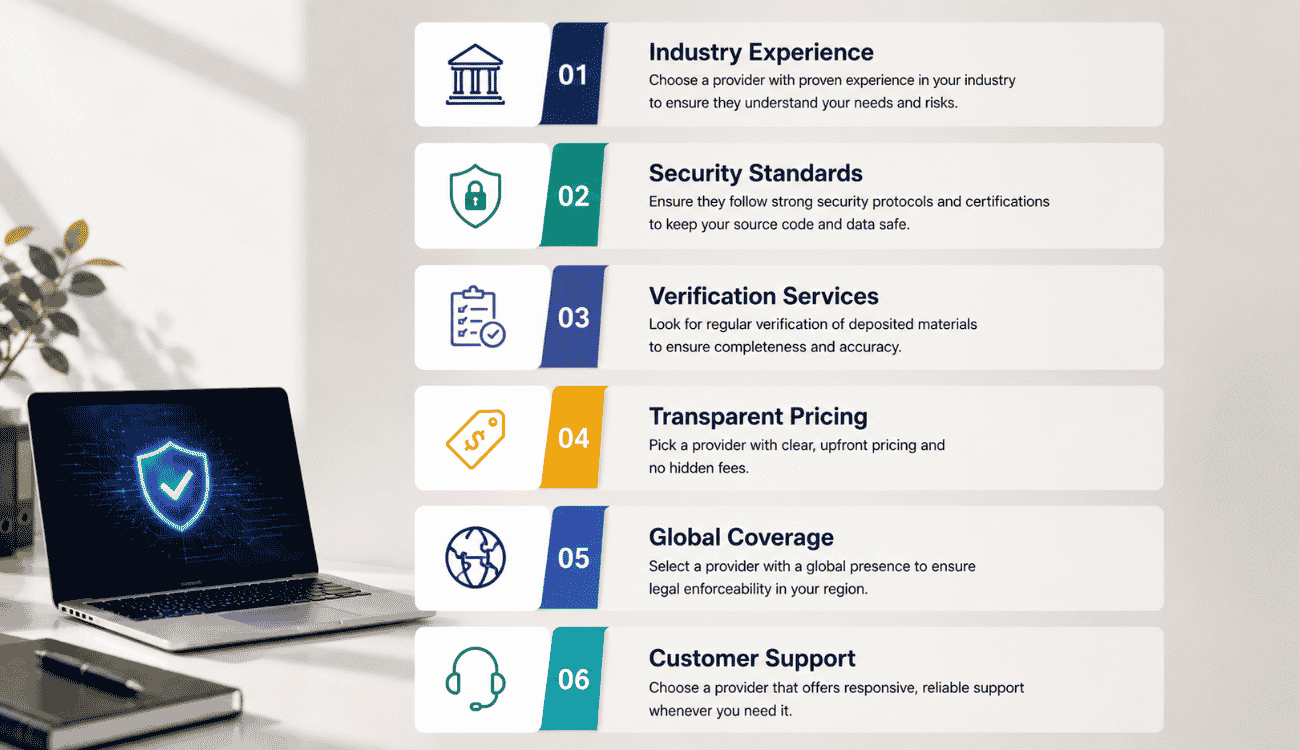
Not every escrow provider offers the same level of protection. Many of the same criteria used to choose a custom software development partner also apply here. These factors help businesses pick a provider that actually delivers when a trigger event occurs, not just paperwork.
Industry Experience
An experienced provider understands the components required for different software types, from simple applications to complex SaaS applications. This matters once materials go beyond basic code into more specialized territory.
Providers who have handled diverse cases know how to properly manage architecture diagrams, trade secrets, and other sensitive assets tied to the software, including in complex offshore software development arrangements. Newer providers may overlook details that only surface once a release actually happens, leaving businesses exposed at the exact moment protection matters most.
Security Standards
Escrow materials often contain a business's most valuable trade secrets, so security cannot be an afterthought during provider selection. Look for providers with recognized certifications and independently audited storage practices protecting every deposit.
Strong security also means tightly controlling who can access materials internally at the provider itself. The original developer's code deserves protection comparable to a bank vault holding physical assets, not casual file storage sitting on an unsecured server somewhere.
Verification Services
A provider should offer real verification services, not just accept files and store them untouched indefinitely. This means confirming the code actually compiles and matches what the original developer submitted during deposit.
Without proper verification, businesses only discover problems after a trigger event, when it's already too late to fix anything. Ask providers exactly how often verification happens, what gets checked during the process, and whether reports are shared after each review.
Transparent Pricing
Pricing structures vary widely across providers, and hidden fees can catch businesses off guard later in the relationship, much like choosing between time and material vs fixed price contracts in software development. A transparent provider clearly breaks down setup costs, annual fees, and charges for verification or release processing.
Avoid providers who won't disclose pricing upfront or bundle unclear charges into vague packages designed to confuse comparison. Businesses should be able to evaluate costs easily before committing to a long-term escrow relationship with any single provider.
Global Coverage
Businesses working with vendors across different countries need a provider that supports international deposits and varying legal frameworks. Global coverage ensures human-readable documentation and contracts hold up regardless of the jurisdiction involved.
This matters especially for companies relying on an original developer based overseas, which is increasingly common with custom software. A provider with genuine global reach avoids legal gaps that could complicate a release request when it crosses international borders.
Customer Support
When a trigger event happens, businesses need fast answers, not slow email chains dragging on for days. Responsive customer support makes the real difference between a smooth release and a stressful, drawn-out process.
Look for providers offering direct access to real support staff, not just automated ticketing systems that delay resolution. This becomes critical when timing matters most and a business is actively depending on quick, decisive action from their provider.
Common Release Conditions In A Software Escrow Agreement
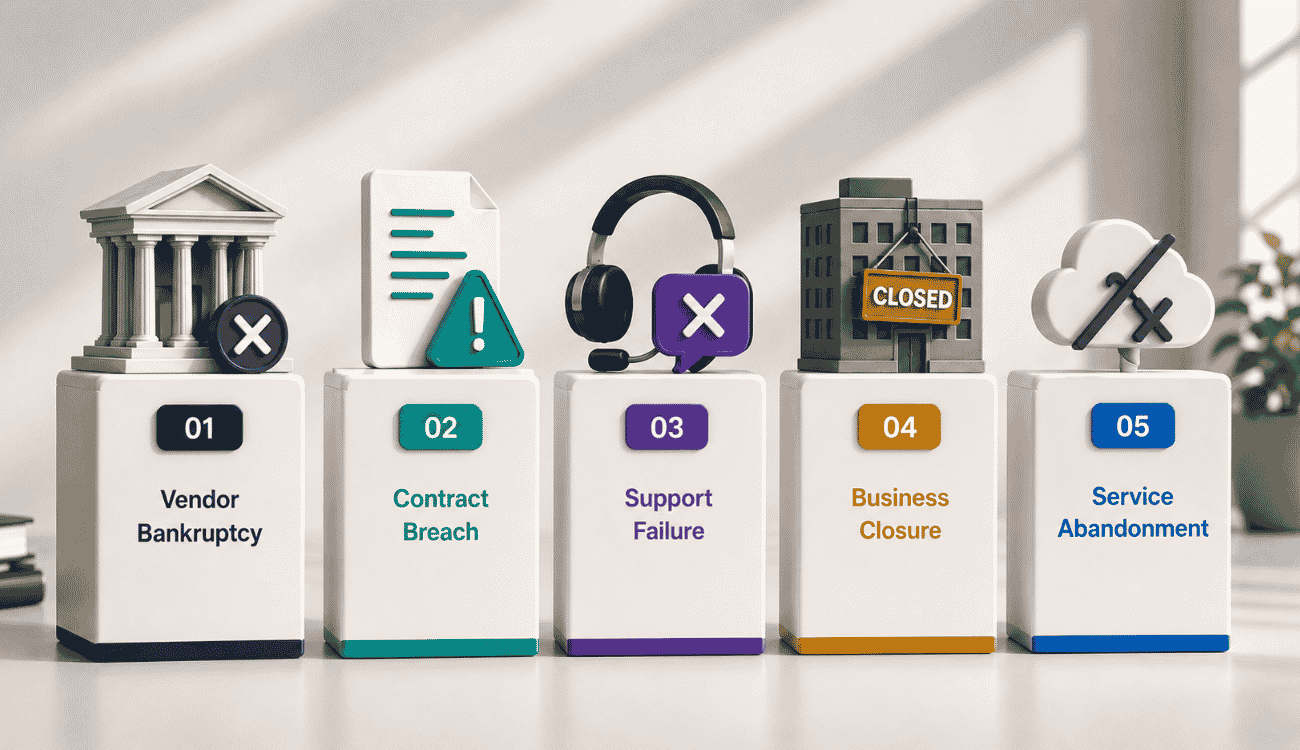
Release conditions define exactly when a business gains access to escrowed software. Clear terms here prevent disputes and delays right when a business needs to continue operating without interruption.
Vendor Bankruptcy
Vendor bankruptcy is the most common trigger written into a software escrow agreement. Once a vendor files for bankruptcy or enters insolvency proceedings, the business can request access to the materials needed to keep systems running.
Vague language around this condition creates real problems during legal proceedings, since courts and trustees may dispute what counts as bankruptcy. A well-drafted agreement specifies exact legal documentation required, so the business can continue operating without waiting on unclear terms.
Contract Breach
A material breach of the license agreement can also trigger release, especially when the vendor stops honoring core obligations. This might include failing to deliver promised updates or violating security requirements agreed upon at signing.
The agreement should define breach clearly, not leave it open to interpretation. Ambiguity here often delays release exactly when a business needs the software and build environment most, turning a simple contract dispute into a prolonged standoff.
Support Failure
When a vendor stops responding to support requests or fails to fix critical issues, this counts as a support failure under most escrow terms. This is common when a company shifts focus away from one customer's specific product line.
Escrow protects against this scenario by requiring build verification alongside deposited materials, so the business isn't left with an unusable deposit. Clear support failure definitions prevent vendors from technically staying operational while quietly abandoning maintenance responsibilities.
Business Closure
Complete business closure is a straightforward trigger, but agreements still need specific language defining what counts as closure. This might include dissolution, asset liquidation, or ceasing all operations without a formal bankruptcy filing.
Without this clarity, businesses may struggle to prove closure occurred, especially if the vendor simply goes quiet. A precise definition ensures the escrow agent can verify the situation quickly and release materials needed for continuity.
Service Abandonment
Service abandonment applies when a vendor stops maintaining software without officially closing the business or breaching the contract outright. This often happens quietly, with reduced updates and slower response times over months.
Because abandonment lacks a single clear moment, agreements need measurable criteria like missed deadlines or a defined period of inactivity. This prevents vague language from letting a vendor's slow fade go unaddressed while the business's software security silently weakens.
Software Escrow Agreement Best Practices
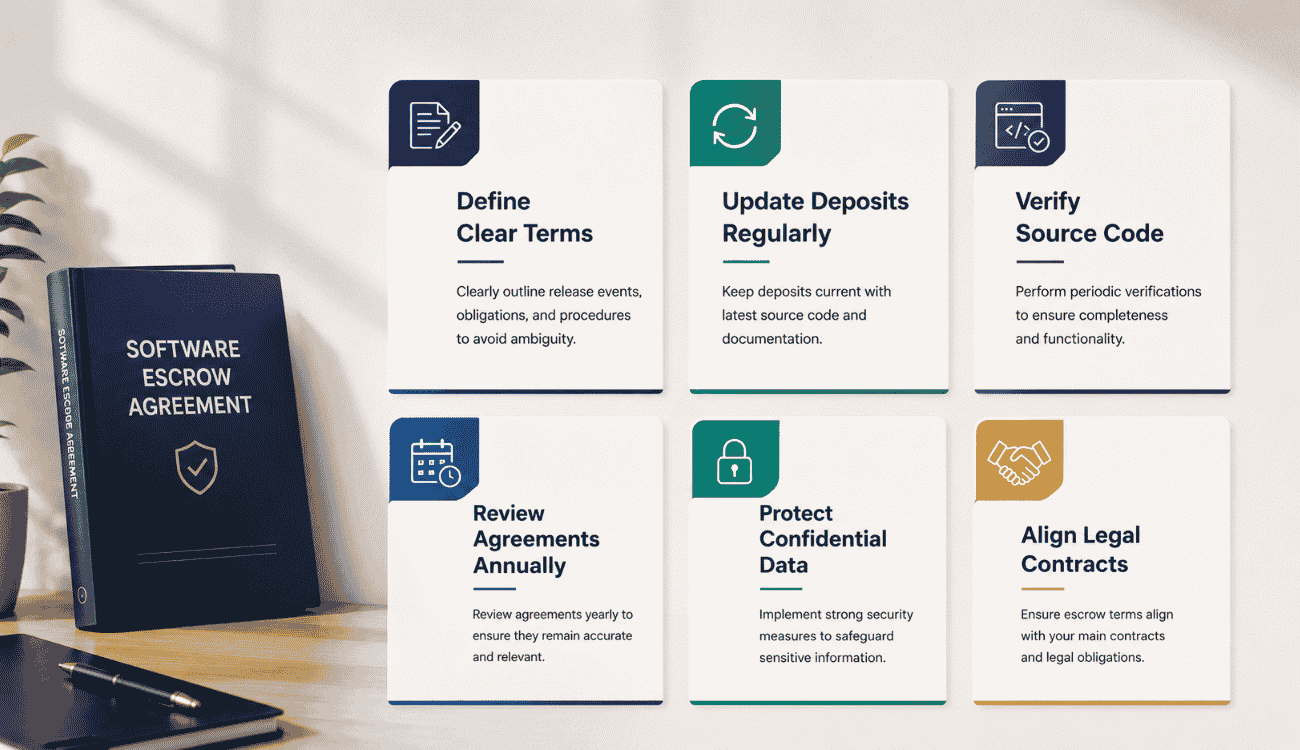
A software escrow agreement only works if it's set up and maintained properly. These best practices keep the arrangement effective, so protection is real when a business actually needs it.
Define Clear Terms
Every agreement should spell out exact responsibilities for each party, not rely on assumptions. This includes who submits deposits, how often, and what triggers a release under the contract.
Vague terms create confusion during a real crisis, when clarity matters most. Businesses and vendors should hold each other to the same level of detail across every clause, avoiding shortcuts that seem harmless until a dispute actually happens.
Update Deposits Regularly
A one-time fee and single deposit at signing isn't enough protection for software that keeps evolving. Vendors should submit updated code and build tools on a defined schedule tied to actual development progress.
Outdated deposits leave businesses with a version that no longer matches production. Regular updates ensure the escrow reflects the current state of the service, not a snapshot from months or years earlier that's already obsolete.
Verify Source Code
Simply depositing code isn't the same as knowing it works. Verification confirms the source code compiles successfully using the correct build tools, catching gaps before they become a real problem later.
Skipping this step means discovering issues only after a release event, which is far too late. Businesses should request verification reports periodically, not just at signing, to confirm the deposit stays usable over time.
Review Agreements Annually
Contracts signed years ago may no longer reflect how the software or business relationship has changed. An annual review catches outdated terms before they cause problems during an actual bankruptcy or dispute.
This is also the right time to confirm deposit schedules are being followed, and pricing still makes sense. Treating the agreement as a living document, not a one-time task, keeps protection aligned with current risk.
Protect Confidential Data
Escrow materials often include sensitive code and business logic, so confidentiality terms need strict enforcement throughout the agreement. The escrow agent should have clear limits on internal access to deposited materials.
This protects vendors from exposure while still giving businesses a path to access materials when needed. Confidentiality isn't optional here; it's what makes vendors comfortable agreeing to escrow in the first place.
Align Legal Contracts
The escrow agreement should directly reference and align with the underlying service or license contract, not exist as a separate, disconnected document. Mismatched terms between the two create loopholes during disputes.
Legal teams should review both documents together before signing, checking that release conditions in the escrow agreement match obligations defined in the main contract. This alignment prevents costly gaps discovered only after something goes wrong.
How GainHQ Supports Secure Software Development
We build software the same way whether a client asks for escrow or not, operating as a full stack web development partner. Every project runs on version control from day one, so there's always a clean history of the code, not just a final snapshot handed over at launch. Documentation gets written as we build, not rushed together afterward when someone asks for it.
That's the same foundation escrow actually needs to work. If a client wants an escrow clause added to their development agreement, we don't treat it as a red flag or extra hassle. It's a reasonable ask, and our codebases are already organized in a way that makes it easy to set up.
FAQs
What Is The Difference Between Software Escrow And Source Code Escrow?
These terms are often used interchangeably. Both describe depositing source code with a neutral third party. Some providers use "source code escrow" for code-only deposits, while "software escrow" can include documentation, build tools, and other supporting assets.
Can Open Source Software Be Protected With An Escrow Agreement?
Generally, no. Open source code is already publicly available, so escrow serves little purpose there. Escrow matters most for proprietary or custom-built software. Mixed projects can still escrow the proprietary code and configuration tying everything together.
How Long Does A Software Escrow Agreement Typically Last?
Most agreements run alongside the underlying license or service contract, renewing annually. There's no fixed universal term. Many agreements include automatic renewal clauses, so protection continues unless either party actively cancels the arrangement.
What Happens If Escrow Materials Are Outdated?
Outdated materials can make a release far less useful, since the deposit may not match the current production version. This is why regular deposit schedules and verification matter. Outdated materials should trigger an immediate update request.
Can A Software Escrow Agreement Be Added To An Existing Software Contract?
Yes. Existing contracts can be amended to include escrow terms anytime. It's easier before signing, but many businesses add escrow later through a contract amendment or supplementary agreement, provided both parties agree to the new terms.