
Growth brings opportunity, but it also brings pressure. When customer demand rises, systems either handle the load or start to break. A 2023 report showed network traffic rising by 27% during peak periods. Many companies struggle at that moment. Without proper enterprise scalability, even a successful business can slow down, lose performance, or face service disruptions.
Enterprise scalability helps a company grow without chaos. Systems, teams, and infrastructure stay stable even when demand expands quickly. A strong scalability strategy allows organizations to handle higher traffic, more data, and larger operations while keeping performance consistent.
Enterprise scalability creates a foundation for sustainable growth and long-term competitiveness.
What Is Enterprise Scalability
Enterprise scalability refers to the ability of a business to expand systems, processes, and infrastructure without compromising performance. As demand grows, enterprise systems must handle more users, data, and services while maintaining consistent performance. Scalable systems allow organizations to operate efficiently at enterprise scale. Teams rely on scalable infrastructure, strong resource utilization, and clear performance metrics to keep system performance stable during increased workloads or traffic spikes.
Modern enterprises use vertical scaling and horizontal scaling to support growth. Techniques such as load balancing, round robin routing, auto scaling, and distributed systems help manage increased load. Cloud computing also provides flexible computing power and high availability. Proper scaling avoids single points of failure and prevents performance bottlenecks in existing systems.
Enterprise scalability supports sustainable growth and long-term success. It allows businesses to adapt quickly to market changes, product launches, and new markets without sacrificing performance or customer satisfaction. Proven strategies help many enterprises overcome scalability challenges, future-proof operations, and maintain optimal performance, as explored in depth on the GainHQ blog covering software and digital transformation.
Evolution Of Scalability Models For Modern Enterprises
Scalability models have changed dramatically in the last two decades. What worked for enterprises in 2005 no longer meets what organizations operating at enterprise scale just need today. Understanding this development helps you choose the right approach for your business needs.
Traditional Vertical Scaling Approaches
Vertical scaling makes an existing system more powerful by adding CPU, RAM, and storage resources. Think of it as upgrading what you already have rather than buying more of it. Your server needs more processing power, so you add better processors. Memory runs low, and you increase RAM. A server can do more work by upgrading its internal components with this approach.
The appeal of vertical scaling lies in its simplicity. Minimal system changes make implementation easier and quicker, with fewer operational disruptions. You don't need to rearchitect your application or deal with complex load balancing. Adding CPU, memory, or storage improves performance without needing more servers.
Database management benefits especially when you have this model. Vertical scaling helps handle larger datasets or more complex queries by adding memory or computational power to an existing server. A MySQL server upgraded from 16 GB RAM to 64 GB can handle more queries without changing your database architecture. An e-commerce platform runs on a single large AWS EC2 instance with increased resources and demonstrates this approach.
Horizontal Scaling For Distributed Systems
Horizontal scaling adds more machines to a system and distributes workloads across multiple servers or nodes. Instead of making one machine stronger, you build an army of machines working together. This model works better for larger or fluctuating workloads that vertical scaling cannot handle.
Businesses handle growing or unpredictable workloads more easily by adding more machines. An e-commerce website experiencing holiday promotions can add multiple instances to handle unpredictable spikes in web traffic. Netflix scales different microservices independently across regions. Amazon Auto Scaling spins up more EC2 instances during peak shopping hours like Black Friday.
Systems become more reliable when you distribute workloads across multiple machines because it reduces the impact of a node failure. Other nodes take over and resume processing requests when one server fails. Workloads spread across multiple servers reduce bottlenecks and improve performance, especially in data-intensive applications. Horizontal scaling lets resources be allocated as needed using auto scaling in cloud environments.
Hybrid And Cloud-Based Scalability Models
Hybrid cloud combines public cloud, private cloud, and on-premises infrastructure to create a single, flexible IT infrastructure. This approach starts with vertical scaling for simplicity and transitions to horizontal scaling as demands grow. Diagonal scaling provides a smooth and cost-efficient scaling trajectory.
Organizations scale up first by upgrading database servers as demand grows. They distribute the database workload across multiple nodes using read replicas or sharded architecture once that instance hits its capacity limit or redundancy becomes critical. A startup might begin with a larger EC2 instance and eventually deploy multiple instances behind a load balancer.
Cloud-native solutions change how we think about enterprise scalability. Hybrid cloud gives organizations the flexibility to optimize placement across on-premises, private cloud, and public cloud based on latency, data residency, cost, and compliance needs. Flexible cloud infrastructure allows businesses to adjust resources such as storage and processing power according to changing needs easily.
Why Is Scalability Important For High-Growth Companies
High-growth companies often face sudden increases in users, data, and demand. Enterprise scalability ensures systems adapt without losing performance. Strong scalability supports stable operations, prevents outages, and helps businesses expand into new markets while maintaining efficiency and customer satisfaction.
Handle Rapid Demand Growth
High-growth companies often face sudden traffic spikes. Product launches, marketing campaigns, or expansion into new markets can bring thousands of new users in a short time. Without scalable systems, infrastructure can struggle to support increased workloads. System performance may drop, and customer experience may suffer.
Enterprise scalability allows systems to adapt quickly to increased demand. Horizontal scaling adds more machines to distribute traffic, while load balancing spreads requests across servers. According to Flexera’s 2023 State of the Cloud report, 87% of enterprises rely on multi-cloud strategies to support scalable infrastructure and high availability during traffic surges.
Maintain Consistent System Performance
Stable system performance becomes critical when a company grows quickly. More users, more data, and more services create pressure on enterprise systems. Without proper scalability, businesses may face performance bottlenecks, slow response times, or even service outages.
Scalable infrastructure allows systems to operate efficiently at enterprise scale. Vertical scaling increases computing power on a single machine, while distributed systems help manage large scale workloads. Google research shows that a delay of just 100 milliseconds can reduce conversion rates by up to 7%, which shows how strongly performance affects revenue.
Reduce Operational Risks And Downtime
Rapid growth can expose weaknesses in existing systems or legacy systems. Infrastructure that worked for a smaller business may fail under increased load. Downtime, data loss, or service disruptions can quickly damage customer trust and lead to lost revenue.
Enterprise scalability reduces these risks through proven strategies such as auto scaling, high availability architecture, and load balancing methods like round robin distribution. Uptime Institute reports that 60% of major outages cost organizations more than $100,000, which shows how critical scalable systems are for reliable operations.
Support Expansion Into New Markets
Growth companies often expand across regions, platforms, or multiple sites. New markets bring more users, higher demand, and complex business processes. Without scalable infrastructure, operations may struggle to adapt to market changes.
Enterprise scalability allows businesses to scale services across distributed systems and cloud platforms. Companies like Amazon manage millions of transactions daily through scalable architecture. According to Statista, global e-commerce sales reached over $6 trillion in 2024, which highlights how scalable enterprise systems support businesses that operate at a large scale.
Enable Long-Term Business Growth
Sustainable growth requires systems that evolve with business needs. Companies must support increased workloads, new services, and expanding teams without sacrificing performance or operational efficiency.
Enterprise scalability helps organizations future-proof their infrastructure and adapt quickly to change. Cloud computing, scalable systems, and smart resource utilization allow companies to cut costs while supporting growth. Gartner estimates that more than 85% of enterprises will adopt cloud-first strategies by 2027 to maintain scalability and high performance in modern digital environments, aligning closely with proven SaaS scalability strategies for sustainable growth.
Key Pillars Of Infrastructure Scalability
Building enterprise scalability requires four interconnected pillars that work together. Each pillar supports the others and creates a foundation strong enough to handle increased load without sacrificing performance. Your entire infrastructure weakens if you miss even one pillar.
Technology Infrastructure That Grows With You
How well you adapt to mounting challenges depends on your technology stack. Cloud computing provides unmatched flexibility for businesses building a future-proof technology stack for scalable growth. You can scale resources up or down in real time based on what you just need, which eliminates significant upfront investments in physical hardware. Cloud platforms offer vast computing power and storage capabilities needed to handle increased workloads without compromising performance.
Load balancing distributes workloads across multiple servers and ensures no single machine becomes overwhelmed. This distribution boosts system performance and improves fault tolerance by preventing failures from overloaded servers. You maintain high availability and responsiveness even during peak times by directing traffic to the most appropriate server based on current load.
Process And Workflow Automation
Automation removes friction from business processes and supports sustainable growth. Workflow automation streamlines operations by automating repetitive tasks, reducing errors, and boosting efficiency. Teams can focus on strategic initiatives rather than manual busywork, especially when they understand the difference between AI automation and traditional automation.
Automating routine tasks reduces the need for manual labor and cuts costs associated with fixing mistakes. Companies save on resources spent correcting errors. Workflow automation allows businesses to handle increased load without proportionally increasing their workforce. This supports expansion without compromising quality or operational efficiency.
Policy-driven workflows minimize manual intervention, decrease operational costs, and help maintain service levels as environments become more complex and distributed. Automation proves critical to managing storage at enterprise scale. Enterprise storage software increasingly has capabilities for automating provisioning, data migration, and lifecycle management.
Team Structure And Human Capital
Your organizational structure must accommodate growth without creating bottlenecks. Component tasks are work processes that support short and long-term goals. You can map how different processes affect one another by identifying these tasks and their interdependencies.
Departmentalization targets specific tasks through specialized teams. Clear departments with defined chains of command strengthen your structure. Span of control measures the number of employees reporting to each manager. You can ensure managers aren't overwhelmed, and employees have adequate support by identifying this metric.
Cross-functional teams bring together individuals from different departments to work on specific projects. This allows greater collaboration and efficiency as team members share unique expertise and perspectives. It breaks down silos and promotes integrated approaches to problem-solving.
Data Management And Storage Solutions
Storage architectures must accommodate exponential data growth and diverse enterprise workloads. Enterprise storage software should support easy scaling, either scale-up by adding resources to existing systems or scale-out by adding additional nodes or clusters, without disrupting availability or performance, and align with broader SaaS performance optimization best practices.
Effective resource pooling, elastic provisioning, and non-disruptive upgrades are fundamental to future-proof operations. Balancing performance across mixed workloads requires intelligent quality of service, automated tiering, and dynamic placement algorithms. These guarantee service levels across databases, virtual machines, backup jobs, and analytics tasks.
Data lifecycle management categorizes files based on value and access frequency, then applies appropriate storage and retention policies. You optimize costs and ensure data accessibility by tiering data and storing less frequently accessed information on cost-effective cold storage solutions. Redundant storage arrays, load balancing, and failover mechanisms ensure data availability.
Critical Challenges High-Growth Companies Face When Scaling
Scaling brings inevitable obstacles that threaten even promising enterprises. Approximately 75% of venture-backed startups fail, and behind many collapses lies a dangerous philosophy: scale fast or die.
Managing Faster Expansion Without Quality Loss
Faster expansion exposes four interconnected vulnerabilities that compromise operational efficiency. Companies build systems designed for speed rather than resilience. These work well when everything goes right but lack the flexibility needed when conditions change.
Take the case of WeWork. The company expanded from a single New York office in 2010 into 528 locations across 29 countries by 2019. Each space replicated the same formula, but ground estate doesn't scale like software. Occupancy rates plummeted from 72% in 2019 to 47% in 2021, and WeWork remained locked into billions in lease payments. The company filed for bankruptcy by 2023.
Maintaining Company Culture During Growth
Culture frays fast under pressure. Morale and alignment slip when hiring ramps up and everyone's stretched. New hires learn culture from other recently hired staff who may not have had time to learn how things work at your company as you hire faster. A toxic culture is 10.4x more powerful than compensation in predicting attrition rate.
Technical Debt And Legacy System Constraints
Legacy systems create massive bottlenecks for sustainable growth. CIOs estimate that 10% to 20% of their technical budget dedicated to new products is diverted to resolving issues related to technical debt in software teams. Worse, 60% to 80% of IT budget is allocated to keeping outdated systems running. Organizations that ignore technical debt spend up to 40% more on maintenance than peers who address it early, which often signals the need for software modernization for modern businesses.
Resource Allocation And Budget Planning
Budget planning becomes critical during faster scaling. Poor resource allocation is cited as the main cause of 23% of projects failing to meet their deadlines. Static budgets fail to keep up with changes that happen fast. Growth stage companies need flexible budgeting strategies that line up with evolving business goals and market realities, often supported by tech consulting services that help modern businesses grow.
How To Build A Scalable Enterprise For The Future
Building future-proof systems demands architectural choices you think over from day one. These proven strategies help you adapt to increased needs and maintain operational efficiency at the same time, starting with a resilient scalable software architecture for high-growth products.
Design Modular Systems From The Start
Modular architecture breaks systems into self-contained units that can evolve on their own. Organizations running monolithic applications experience 30% higher downtime during upgrades compared to modular systems, which is why choosing a future proof tech stack for scalable growth and following an expert tech stack guide for 2026 becomes so important. Each module owns a distinct responsibility with clear boundaries. Boundaries act like property lines when done right. Everyone knows which house they own. This clarity lets you update or replace components without derailing the rest of your platform.
Invest In Automation And Technology
Automation frees teams from repetitive work and supports sustainable growth. Mass General Brigham's finance department automated provider data collection and liberated front-line employees for higher-value work, often in tandem with smooth cloud migration planning for growing teams and strategic technology consulting services for modern business growth. Start with high-impact areas through phased implementation to minimize upfront expenses. Automation simplifies complex systems and reduces dependence on labor-intensive tasks. Scalable hardware can arrange with Industry 4.0 trends.
Create Standardized Processes Across Locations
Standardized workflows deliver consistency without sacrificing efficiency across multiple sites. Modern platforms enforce consistent capture, routing and storage rules while allowing local flexibility, much like robust SaaS design systems for scalable products do for digital experiences. Strong support from top leaders prevents undermining. Teams from all facilities should determine which business processes standardize and how. This approach reduces training complexity. Employees learn one system.
Plan For Capacity With Evidence-Based Forecasting
Capacity planning arranges production with customer needs without overspending. AI-driven forecasting reduces errors by 20% to 50%, which translates into up to 65% reduction in lost sales. Live data integration enables dynamic decision-making. Demand forecasting allows scenario analysis for best-case and worst-case projections. Your capacity planning strategies adapt flexibly when paired with disciplined SaaS performance optimization best practices.
Promote An Innovation-Ready Culture
Innovation cultures where teams accept risk and grant autonomy are 60% more likely to be innovation leaders. 3M's 15% rule gives employees time for side projects. One-third of sales come from products invented within the past five years. Create psychological safety where failure becomes a learning chance. Companies with diverse cultures are six times more likely to be innovative.
How GainHQ Supports Enterprise Scalability
Enterprise scalability helps businesses handle increased demand without sacrificing performance. GainHQ and its parent company Gain Solutions provide custom software development services and broader custom software development tailored to business growth that support scalable systems operating efficiently as workloads grow. The platform helps enterprises manage more users, data, and services while maintaining consistent performance. Scalable infrastructure and smart resource utilization allow enterprise systems to handle increased load without performance bottlenecks. Businesses maintain operational efficiency and customer satisfaction even during rapid growth.
GainHQ uses cloud computing and distributed systems to support enterprise-scale operations. Features like auto scaling and load balancing distribute traffic across more machines, following best practices of SaaS architecture and enabling scalable SaaS tools that power global business growth. Systems adapt quickly to increased workloads and market changes. Organizations can expand to new markets and multiple sites without compromising system performance.
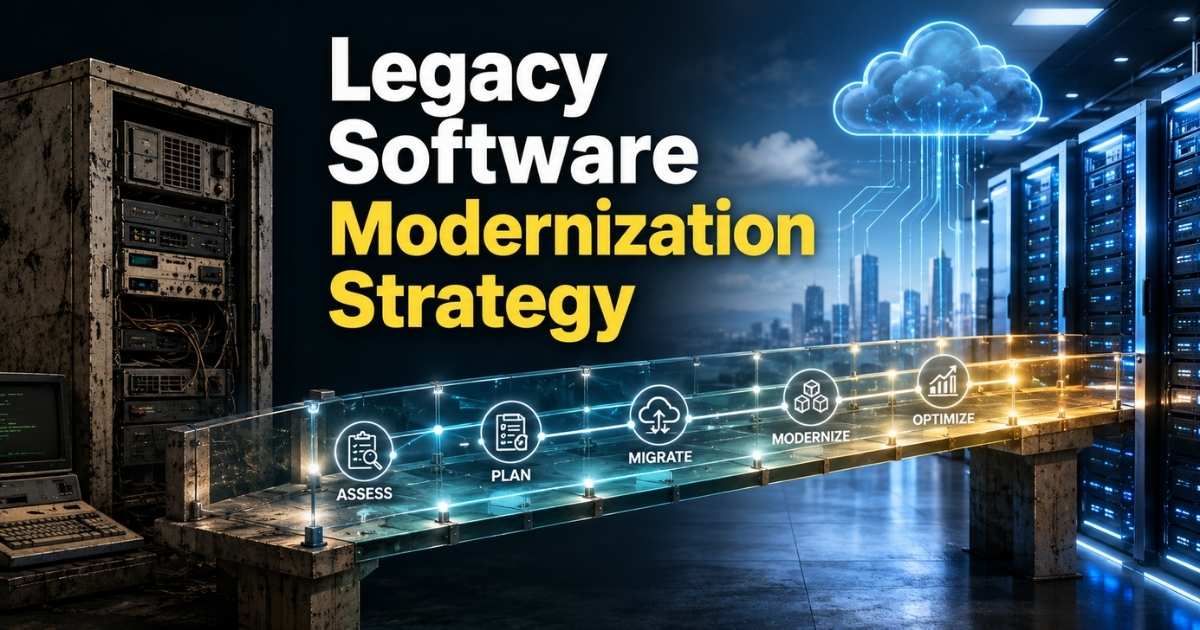
GainHQ also helps modernize legacy systems and strengthen business processes through custom software that transforms companies and end-to-end SaaS product development to build, launch, and scale successfully. Enterprises maintain high availability and optimal performance while preparing infrastructure for long-term success and sustainable growth.
FAQs
How do enterprises detect scalability bottlenecks before system performance drops?
Enterprises track performance metrics across enterprise systems to identify potential bottlenecks early. Monitoring tools analyze resource utilization, data flow, and increased workloads. Early detection allows teams to adjust infrastructure, add more machines, and maintain consistent performance.
Can enterprise scalability reduce infrastructure costs during rapid scaling?
Yes. Scalable infrastructure improves resource utilization and prevents unnecessary computing power from running continuously. Auto scaling in cloud computing environments allows systems to scale during increased demand and scale down during low traffic, which helps enterprises cut costs while maintaining optimal performance.
Do legacy systems create major scalability challenges for large enterprises?
Yes. Legacy systems often lack support for distributed systems, horizontal scaling, and modern load balancing. Such limitations can create performance bottlenecks and single points of failure. Many enterprises modernize their infrastructure to support enterprise-scale operations and high availability.
What role does load balancing play in enterprise-scale infrastructure?
Load balancing distributes incoming requests across multiple machines instead of a single machine. Techniques like round robin routing ensure even traffic distribution. Such architecture improves system performance, prevents potential bottlenecks, and allows enterprise systems to operate efficiently under increased load.
Can enterprise scalability improve resilience during high traffic events like product launches?
Yes. Enterprise scalability allows systems to adapt quickly to increased demand during product launches or major campaigns. Auto scaling, distributed systems, and scalable infrastructure help manage increased workloads without sacrificing performance or risking data loss.