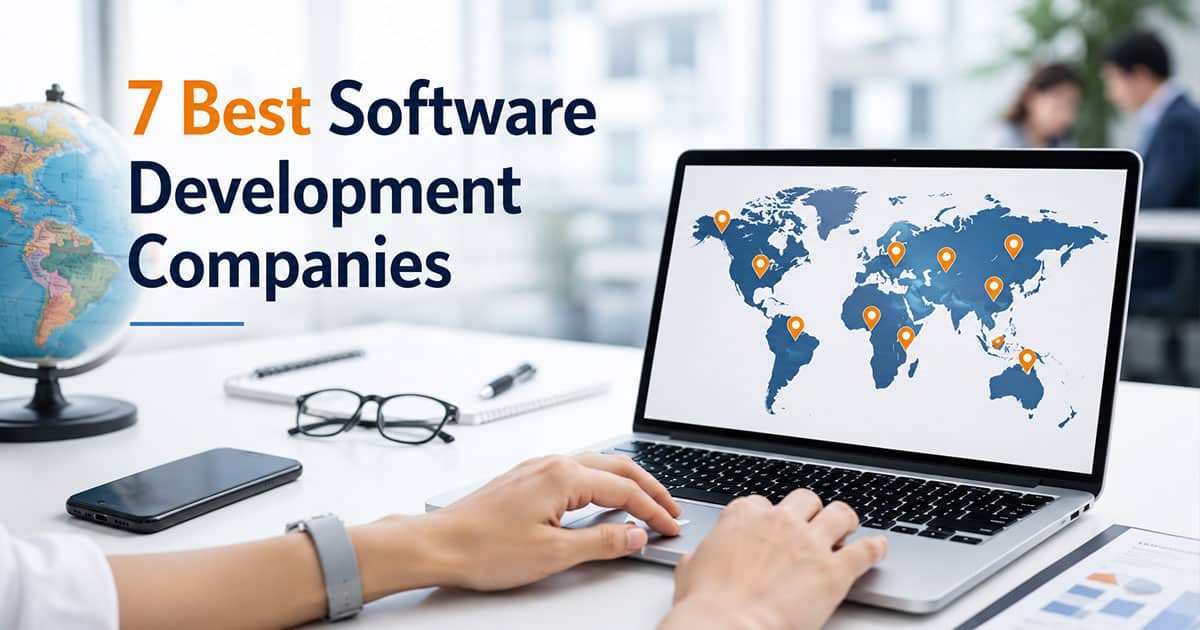
Choosing the right software development partner in 2026 directly impacts your ability to execute digital transformation, launch successful products, and protect your business from security threats. Global IT spending is projected to exceed 5 trillion dollars in 2025 and continue growing into 2026, driven by cloud adoption, AI integration, and widespread digital transformation initiatives. The software market alone is expected to reach 1.2 trillion dollars by 2027, with a compound annual growth rate of 11.7 percent. Software breaches now cost businesses an average of 4.88 million dollars per incident, making vendor selection a critical business decision rather than a simple procurement task.
Poor vendor selection leads to project failure rates of around 30 percent, according to industry research. This means nearly one in three software projects fails to meet objectives when organizations rush through the selection process or prioritize price over fit. A structured approach to evaluating the best software development companies can significantly reduce this risk and improve outcomes.
This guide focuses on seven proven software development companies with strong relevance for 2026 rather than presenting a generic directory.
How To Choose The Right Software Development Company
Vendor selection should follow a structured process rather than relying solely on referrals or comparing hourly rates. Projects with rigorous evaluation processes see measurably higher success rates compared to those where teams skip due diligence.
The following subsections break down key selection factors that matter most in 2026. Each factor represents a practical checkpoint for your evaluation process, helping you move from a long list of potential partners to a shortlist of qualified candidates, closely aligned with best practices for choosing a custom software development partner.
Evaluate Technical Expertise And Tech Stack
Assessing technical expertise goes beyond asking about programming languages. You need to understand how a company approaches architecture, development practices, and long-term code quality. Look for proficiency in technology stacks relevant to 2026 projects. Cloud platforms like AWS, Azure, and Google Cloud remain foundational. Modern frontends built with React 19 or Angular 18 deliver better user experiences. Backend technologies such as .NET 9, Java 23, and Node.js 24 power reliable, scalable systems.
DevOps practices reveal a lot about engineering quality. Teams using GitHub Actions or GitLab pipelines for CI/CD can automate deployments and catch issues early. Infrastructure as code with tools like Terraform or Pulumi indicates mature operations capabilities. Code quality tools like SonarQube help maintain standards across large codebases.
Look for concrete evidence of strong technical expertise. Review engineering blogs where companies share technical challenges they have solved. Check GitHub profiles for open source contributions. Request case studies showing measurable improvements such as latency reductions or performance gains. Ask specifically about automated testing practices, code review processes, and CI/CD pipelines. Teams with 70 percent or higher unit test coverage and deployment frequency under one hour typically deliver more maintainable software. Security standards like SOC 2 Type II compliance demonstrate commitment to protecting client data and systems.
Check Industry Experience And Case Studies
Sector-specific knowledge accelerates project discovery and reduces risk. A software development firm with healthcare portfolios understands HIPAA compliance requirements, encrypted data flows, and audit trail retention. Finance-focused firms know PCI DSS requirements and tokenization approaches. Retail specialists have handled high-traffic events and payment integrations. This domain expertise translates into faster requirements gathering and fewer surprises during development.
Verifiable signs of industry experience include published case studies on platforms like Clutch, domain certifications such as ISO 13485 for medical technology, and long-term client relationships spanning five years or more. Look for companies with verified client reviews showing 90 percent or higher retention rates.
Request recent case studies dated within the last two to three years. Older examples may not reflect current technology capabilities or business models. Ask vendors for anonymized project summaries that match your project size and complexity. A firm that has delivered 50-developer enterprise programs may not be the best fit for a 10-person MVP team, and vice versa. Recent examples demonstrate that the company stays current with emerging technologies and understands modern software development practices.
Assess Communication And Project Management
Effective communication correlates strongly with on-time delivery. Research indicates that projects with clear communication structures achieve delivery targets roughly 70 percent of the time, compared to significantly lower rates when communication breaks down. This makes project management practices a critical evaluation criteria for any software development partner.
Structured project management looks like this: clear roles documented in RACI matrices, plans captured in tools like Confluence, bi-weekly sprint reviews with stakeholder attendance, daily standups under 15 minutes, and risk tracking with mitigation strategies. Ask which frameworks the company uses. Scrum with two-week sprints works well for iterative product development. Kanban suits maintenance and operational work. Hybrid approaches using SAFe scale to larger enterprise programs.
Evaluate communication quality during initial calls. Note time zone overlap with your team, English proficiency, and responsiveness. A team that takes 24 hours to respond during sales conversations will likely be slower during active development. Ask how often they provide demos or progress updates. Bi-weekly demos via Figma prototypes and weekly dashboard updates showing burndown charts help client teams stay aligned with development progress.
Review Client Testimonials And Reputation
Third-party platforms with verified reviews reveal patterns that individual references may not. Look for companies with ratings above 4.8 on platforms like Clutch based on 100 or more verified reviews. Patterns in feedback about adaptability, reliability, and handling scope changes are more informative than a single high score.
Check how long a company has been in business. Established firms like Accenture with 75 years of history or TCS with 58 years demonstrate stability. Look for notable clients that companies can publicly name and industry recognitions that are verifiable, such as IAOP Global Outsourcing 100 listings or Inc 5000 appearances.
Authentic feedback with both strengths and areas for improvement is usually a positive sign. Reviews that mention minor UI iteration needs alongside praise for delivery speed indicate honest client relationships. Perfect scores across the board sometimes suggest curated testimonials rather than genuine client feedback.
Understand Pricing And Engagement Models
Understanding pricing models helps you select the right structure for your project. Fixed-price contracts suit well-defined scopes under 50,000 dollars where requirements are unlikely to change significantly. Include a 10 percent contingency for unexpected needs. Time-and-materials billing works better for discovery phases and iterative projects where scope may evolve. Dedicated teams billed monthly suit longer engagements requiring consistent capacity.
Regional rate ranges vary significantly. Developers in India typically bill 25 to 60 dollars per hour at scale, while Ukraine ranges from 40 to 80 dollars. US-based teams command 100 to 250 dollars per hour. However, the lowest hourly rate does not always deliver the lowest total cost. Rework, miscommunication, and poor code quality can multiply costs regardless of initial rates.
Ask what is included in quoted prices. UX design typically represents about 20 percent of project effort. QA accounts for roughly 25 percent. Project management adds another 10 percent. Post-launch support for 3 to 6 months should be explicitly addressed. Request phased proposals that align payments with milestones. A structure with 30 percent on design approval, 40 percent on beta delivery, and 30 percent on production release protects both parties. This approach reveals hidden costs early and ensures competitive pricing reflects actual deliverables.
Key Services Offered By Top Software Development Companies
Leading software development companies in 2026 provide end-to-end services across strategy, development, cloud operations, and ongoing support. A mature provider offers consulting services during discovery, engineering capabilities during build phases, and operational support after launch. Understanding these service categories helps you evaluate whether a potential partner can handle your complete project lifecycle or only portions of it.
The following subsections outline core service categories and what clients should expect from established providers in each area.
Custom Software Development Solutions
Custom software development means building tailored applications around your unique workflows rather than adapting off-the-shelf tools. This approach makes sense when existing products cannot meet your specific requirements or when software represents a core competitive advantage. As a result, understanding the meaning and benefits of custom software development becomes essential for teams deciding when to invest in tailored solutions. Examples include internal line-of-business systems, customer portals, B2B platforms, and specialized tools that are difficult to buy pre-built.
A strong custom software development company provides end-to-end capabilities: requirements discovery with user interviews, UX design through wireframes and prototypes, iterative development using agile methods, comprehensive QA with automated testing, deployment to production environments, and long-term maintenance. Scalability matters from day one. Systems should handle 10x load increases without major rewrites. Integrations via RESTful APIs connect custom solutions to existing enterprise systems.
Total cost of ownership often favors custom development for complex systems. Studies suggest five-year TCO for well-built custom applications runs 30 percent below in-house development costs when factoring in maintainability, expertise access, and operational efficiency. A detailed custom software development guide covering benefits, types, and process can help you structure these decisions and avoid the technical debt that plagues poorly planned projects.
Web And Mobile App Development
Top software development companies in 2026 support responsive web apps, native iOS and Android applications, and cross-platform frameworks like React Native or Flutter. Progressive web apps with service workers can cache 90 percent of assets for offline functionality. Native development with SwiftUI for iOS or Kotlin for Android delivers optimal performance, which is especially relevant when planning end-to-end SaaS development services for modern products. Cross-platform Flutter 3.22 shares code across devices while maintaining consistent user experiences.
UX UI design follows accessibility standards like WCAG 2.2 AA, ensuring screen reader compatibility and inclusive experiences. Performance optimization targets Core Web Vitals with largest contentful paint under 2.5 seconds. Mobile development extends beyond initial launch to include app store optimization, analytics integration, and ongoing update cycles.
Common use cases include e-commerce apps with payment integrations processing thousands of transactions hourly, self-service portals with secure authentication for large user bases, and on-demand marketplaces requiring real-time communication with low latency. Web platforms built with modern stacks handle diverse business requirements while maintaining responsive, accessible interfaces.
Cloud And DevOps Services
Leading development companies help clients design, migrate, and operate applications on major cloud platforms. Cloud solutions on AWS, Azure, or Google Cloud provide the foundation for modern scalable systems. Migration strategies can modernize monolithic applications to cloud native microservices architectures running on managed Kubernetes clusters with hundreds of pods.
DevOps elements include infrastructure as code for provisioning resources in minutes, CI/CD pipelines deploying code 50 times daily, and monitoring via tools like Datadog alerting on error rates before they impact users. Autoscaling handles traffic spikes by spinning up additional instances automatically.
Benefits include 50 percent faster release cycles, 40 percent infrastructure cost savings through spot instances and right-sizing, and more predictable operations. Practical examples include Dockerized services on managed Kubernetes serving 100,000 requests per second and automated database failover reducing downtime. Cloud computing expertise has become a baseline requirement for any serious development partner.
AI And Data Analytics Integration
By 2026, AI-driven features and data analytics have moved from niche add-ons to standard expectations in many software projects. Clients expect recommendation engines that lift conversions, predictive analytics dashboards that inform decisions, natural language interfaces that simplify complex queries, and personalization that improves user engagement.
Standard integrations leverage established AI services rather than requiring custom model development. APIs from providers like OpenAI enable natural language query capabilities. TensorFlow Serving powers recommendation engines. Cloud analytics platforms process terabytes of data daily. Responsible practices include bias audits, model drift detection with quarterly retraining, and explainability features that help users understand AI recommendations.
Not every software development firm delivers deep AI research, and most projects do not require it. Strong partners know how to integrate existing AI services reliably, implement data analytics that provide actionable insights, and build AI powered solutions that enhance operational efficiency without overcomplicating architectures.
Enterprise Software Development
Enterprise software development involves large-scale, mission-critical systems with complex integrations, compliance requirements, and long life cycles. These complex systems require robust architectures with 99.999 percent high availability, role-based access control federating thousands of users, and audit trails indexing millions of events daily.
Challenges typical of enterprise environments include legacy system transformation that cuts maintenance costs by 60 percent, ERP integrations syncing millions of inventory items, and CRM hooks connecting sales data across business units. Legacy modernization projects often involve migrating COBOL applications to modern Java or .NET stacks while maintaining business continuity.
Governance mandates 100 percent documentation coverage, service level agreements with four-hour response times for critical issues, and seamless integration with existing enterprise systems. Software development teams working on enterprise grade platforms need experience with regulatory requirements, complex data migrations, and long-term support contracts spanning multiple years.
Top 7 Best Software Development Companies In 2026
This section profiles seven widely recognized software development companies with global reach and proven track records. The descriptions rely on publicly known information and avoid unverifiable metrics or speculative claims. Companies are presented alphabetically, with GainHQ highlighted as a strong choice for product-focused development and scalable SaaS platforms.
1. BairesDev
BairesDev is a nearshore software development company founded in 2009, with headquarters in San Francisco and delivery teams across Latin America. It works with startups, SMBs, and enterprises to build scalable digital products with high-quality engineering talent.
Key Strengths
- Strong nearshore model aligned with US time zones
- Access to a large pool of vetted Latin American developers
- Fast team scaling and flexible hiring
- Proven track record with global brands and startups
Core Services
- Custom software development
- Web and mobile app development
- AI and data engineering
- QA and testing services
- DevOps and cloud solutions
Best For
Startups, SaaS companies, and mid-sized businesses need reliable development teams with real-time collaboration and faster turnaround.
Engagement Model
BairesDev primarily offers staff augmentation and dedicated development teams, allowing clients to scale resources based on project needs without long-term hiring commitments.
Notable Differentiator
A strong nearshore approach that combines time-zone alignment with high engineering standards, making collaboration smoother than traditional offshore outsourcing.
2. ScienceSoft
ScienceSoft is a US-based software development and IT consulting company founded in 1989. With decades of experience, it supports startups, SMBs, and enterprises by delivering reliable, scalable, and secure custom software solutions across multiple industries.
Key Strengths
- 30+ years of experience in software development and consulting
- Strong expertise in regulated industries like healthcare and finance
- High client retention with long-term partnerships
- Focus on security, compliance, and quality assurance
Core Services
- Custom software development
- Web and mobile application development
- IT consulting and system integration
- Data analytics and business intelligence
- Cybersecurity and testing services
Best For
Businesses that need stable, secure, and compliance-focused software solutions, especially in complex or regulated environments.
Engagement Model
ScienceSoft offers flexible engagement models, including project-based development, dedicated teams, and IT consulting services tailored to business needs.
Notable Differentiator
A strong balance of technical depth and industry-specific expertise, making it a reliable choice for complex and long-term software projects.
3. GainHQ
GainHQ is a modern software development company focused on building scalable, user-centric digital products. The company positions itself as a strategic technology partner, helping businesses turn ideas into reliable, high-impact software solutions aligned with long-term growth goals.
Key Strengths
- Strong focus on custom software development tailored to real business needs
- Product-first mindset with emphasis on usability and scalability
- Deep alignment with digital transformation and business goals
- Experience across SaaS, web apps, and enterprise-grade systems
Core Services
- Custom software development
- SaaS product development
- UI/UX design and product design
- MVP development for startups
- Technology consulting and system modernization
Best For
Startups, SaaS companies, and growing businesses that need a long-term technology partner rather than just a development vendor.
Engagement Model
GainHQ follows a collaborative, partnership-driven model. Teams work closely with clients across planning, development, and post-launch stages to ensure alignment with business outcomes and continuous improvement.
Notable Differentiator
GainHQ acts as a technical co-pilot, not just a service provider, focusing on building solutions that directly support business strategy and sustainable growth.
4. Fingent
Fingent is a global software development company founded in 2003, known for delivering custom digital solutions to startups, SMBs, and mid-sized enterprises. The company focuses on building scalable, business-oriented software that aligns with real operational needs across industries.
Key Strengths
- Strong emphasis on client communication and transparency
- Experience across multiple industries including real estate, healthcare, and finance
- Proven ability to handle long-term and complex projects
- Balanced approach between cost, quality, and delivery speed
Core Services
- Custom software development
- Web and mobile application development
- Enterprise software solutions
- Cloud application development
- AR/VR and emerging technology solutions
Best For
Mid-sized businesses and enterprises that need reliable, long-term development support with clear communication and structured processes.
Engagement Model
Fingent offers flexible engagement models, including fixed-price projects, dedicated development teams, and long-term partnerships based on business requirements.
Notable Differentiator
A strong focus on transparency and collaboration, making it a dependable choice for businesses that value consistent communication and predictable delivery.
5. Iflexion
Iflexion is a custom software development company established in 1999, delivering web, mobile, and enterprise solutions to businesses worldwide. It focuses on building reliable software systems that support operational efficiency and long-term scalability across industries.
Key Strengths
- Over two decades of experience in software development
- Strong expertise in business process software like CRM and ERP
- Balanced pricing with consistent delivery quality
- Ability to handle both mid-size and enterprise-level projects
Core Services
- Custom software development
- Web and mobile application development
- Enterprise solutions (CRM, ERP, BI)
- Application integration and modernization
- QA and testing services
Best For
Businesses that need structured, process-driven software solutions such as CRM, ERP, and internal systems to improve operations.
Engagement Model
Iflexion provides flexible models including project-based delivery, dedicated teams, and full-cycle development depending on project complexity and client needs.
Notable Differentiator
A strong focus on business process optimization, making it a reliable choice for companies aiming to improve efficiency through well-structured software systems.
6. Netguru
Netguru is a Poland-based software development company founded in 2008, known for building digital products with a strong focus on design, usability, and rapid delivery. It works closely with startups, scaleups, and enterprises to create user-centric applications.
Key Strengths
- Strong emphasis on UI/UX and product design
- Agile development approach with fast iteration cycles
- Experience working with startups and global brands
- High-quality delivery with a focus on user experience
Core Services
- Custom software development
- Web and mobile app development
- Product design and UX/UI services
- AI and data solutions
- DevOps and cloud services
Best For
Startups and scaleups that need design-driven, user-focused digital products with fast go-to-market timelines.
Engagement Model
Netguru typically works through dedicated teams and project-based models, with an agile methodology that ensures continuous collaboration and flexibility.
Notable Differentiator
A strong design-first approach that combines product thinking with engineering, making it ideal for businesses where user experience is a key priority.
7. Andela
Andela is a global talent marketplace founded in 2014 that connects companies with vetted software developers from around the world. Instead of acting as a traditional agency, it focuses on providing access to distributed engineering talent to meet flexible, scalable development needs.
Key Strengths
- Access to a large pool of pre-vetted global developers
- Strong focus on remote and distributed team models
- Flexible scaling based on project requirements
- Efficient matching process for faster hiring
Core Services
- Staff augmentation and developer hiring
- Dedicated remote engineering teams
- Software development support across technologies
- Technical talent sourcing and management
Best For
Companies that need to quickly scale development teams or hire remote engineers without going through long recruitment cycles.
Engagement Model
Andela operates on a talent marketplace model, allowing businesses to hire developers on a contract or long-term basis depending on project needs.
Notable Differentiator
A global-first talent approach that enables companies to build high-quality remote teams without geographical limitations.
Benefits Of Hiring A Leading Software Development Company
Partnering with an experienced development company can significantly reduce risk and accelerate results compared to building everything in-house from scratch. Research indicates that outsourcing to established firms reduces failure rates from 70 percent for in-house attempts to 30 percent with proven partners. Each of the following subsections focuses on one key benefit of working with best software development partners.
Faster Time To Market
Mature software development teams bring established processes, reusable components, and infrastructure knowledge that shorten delivery timelines. Agile iterations, continuous delivery, and DevOps tooling help get MVPs into users’ hands sooner than building capabilities from scratch internally.
Component libraries allowing 40 percent code reuse, two-week sprint cycles, and daily deployment capabilities via Jenkins or similar tools combine to deliver MVPs in 3 months versus 9 months for comparable in-house efforts. This acceleration proves critical in competitive spaces like SaaS, fintech, and e-commerce where first-mover advantage captures significant market share.
Faster time to market also means faster validation of business hypotheses. Teams can test assumptions with real users, gather client feedback, and iterate based on actual usage patterns rather than extended planning cycles.
Access To Skilled Development Teams
Leading software companies give clients access to cross-functional teams including software developers, architects, UX designers, QA engineers, and DevOps specialists. A typical project team includes five developers, two QA engineers, one architect, one project manager, and one designer working collaboratively.
This breadth proves difficult to replicate quickly with internal hiring, especially in specialized areas like Rust for blockchain development or Go for high-performance microservices. The ongoing shortage of roughly one million developers in the US market makes finding specialized talent particularly challenging.
Stable teams with low turnover around 10 percent versus 25 percent industry average provide continuity across multiple release cycles. This consistency improves project timelines and code quality compared to teams experiencing frequent personnel changes.
Scalable And Future-Ready Solutions
Top software development partners design systems to handle future growth in users, data volume, and functionality. Modular hexagonal architectures using domain-driven design scale to millions of users. API-first approaches with GraphQL federate services effectively. Cloud-native deployment patterns adapt to changing requirements and regulations.
Future-readiness also includes flexibility to integrate seamlessly with emerging technologies and adapt to new compliance requirements. Systems built with scalability in mind avoid the 50 percent rewrite costs that plague short-sighted implementations.
Architectural practices like containerization, managed Kubernetes, and event-driven patterns ensure systems remain relevant and maintainable as technology evolves and business needs change.
Cost Efficiency And Resource Optimization
Experienced vendors help optimize overall costs by avoiding rework, selecting appropriate technologies, and right-sizing infrastructure. Eastern European talent at 50 dollars per hour versus 200 dollars in the US can yield 60 percent savings while maintaining quality. Rework rates under 5 percent versus 20 percent for inexperienced teams further reduce total costs.
Total cost of ownership often runs 30 percent lower than in-house development when factoring in recruitment, training, turnover, and infrastructure management. Careful planning around budgets and scope, similar to structured MVP development cost breakdowns for 2026, helps ensure those savings materialize in practice. External teams let organizations focus internal staff on strategic initiatives rather than building every capability in-house.
Transparent scoping and incremental delivery help clients control budget while making progress. Phased approaches where payments align with deliverables ensure you pay for value received rather than estimates that balloon beyond original projections.
Stronger Product Quality And Security
Mature firms embed QA, code reviews, and automated testing into their development process to reduce defects and production incidents. Test automation covering 85 percent of test cases via Cypress or similar tools, combined with code reviews catching 90 percent of issues before merge, delivers measurably higher quality.
Security verification has become essential in 2026. Security service practices include SAST and DAST scanning reducing vulnerabilities by 70 percent before production deployment. Threat modeling, dependency scanning, and regular penetration testing protect against the breaches costing businesses millions annually.
High-quality, secure software proves essential for regulatory compliance and brand reputation in sensitive sectors. Organizations in healthcare, finance, and government particularly benefit from partners with strong engineering teams and security credentials.
Latest Trends In Software Development For 2026
Software development in 2026 reflects the influence of AI, cloud-native architectures, security demands, and evolving delivery models. Understanding industry trends helps you evaluate whether potential partners stay current with practical solutions and emerging technologies that matter for your projects, especially when compared with broader software development trends for 2026.
AI-Driven Development And Automation
AI-assisted coding tools, test generation, and code review have become standard in professional development workflows. Tools like Cursor AI generate 40 percent of code while Tabnine autocompletes 50 percent of lines. Test generation via CodiumAI covers 80 percent of branches automatically.
AI-driven features in products have moved from optional extras to common client expectations. Natural language query dashboards, personalization engines lifting average revenue per user by 25 percent, and intelligent search with 90 percent accuracy now appear regularly in project requirements.
Clients should ask vendors how they use AI to improve productivity and reliability without compromising code quality. Strong partners leverage AI tools while maintaining human oversight and engineering quality standards.
Cloud Native Application Development
Cloud-native principles including microservices, containers, and managed services on major cloud providers define modern application architectures. Microservices with gRPC cut latency by 50 percent compared to monolithic alternatives. Managed Kubernetes on AKS or GKE provides elastic scaling to handle 100x load variations and aligns with broader custom software development trends like cloud-native design.
By 2026, roughly 80 percent of new applications are designed cloud-first according to industry surveys. Legacy systems continue to be incrementally modernized using strangler patterns that replace components over time without disrupting operations.
Benefits include resilience through multi-region deployment, elasticity matching capacity to demand, and easier deployment pipelines. Mobile apps and web platforms built cloud-native handle traffic spikes gracefully while maintaining consistent user experiences.
Low Code And No Code Platforms
Low-code and no-code platforms accelerate delivery for internal tools, prototypes, and portions of business workflows. Platforms like OutSystems and Mendix build applications 10 times faster for standard CRUD operations. Prototypes that validate concepts can be ready in days rather than weeks, making the custom vs off-the-shelf software decision even more important for long-term flexibility.
Strong software development partners know when to combine low-code solutions with custom development for long-term flexibility. Hybrid approaches using 70 percent low-code and 30 percent professional code suit approximately 40 percent of internal tool requirements according to analyst estimates.
Buyers should ask vendors how they evaluate which components suit configurable platforms versus custom code. Practical solutions often blend approaches based on specific requirements rather than dogmatically choosing one path.
Cybersecurity First Development Approach
Security considerations in 2026 integrate from initial design through deployment rather than being added at the end. Shift-left practices include GitLab SAST scanning in pull requests, software bill of materials tracking dependencies, and quarterly penetration testing finding 95 percent of vulnerabilities early.
Certifications like ISO 27001 and NIST 800-53 compliance demonstrate commitment to security standards. European regulations like DORA mandate specific resilience requirements for financial services organizations.
Buyers should ask potential vendors about security certifications, policies, and testing routines. A cybersecurity-first approach protects against breaches while ensuring compliance with evolving regulatory requirements across industries.
Agile And DevOps Adoption
Agile methods and DevOps practices underpin most modern software delivery, focusing on small, frequent releases and continuous client feedback. SAFe 6.0 scales to thousand-person programs while GitOps with ArgoCD enables declarative deployments.
Top software development companies have refined these practices into predictable, transparent delivery models. Real-time backlogs with 90 percent velocity predictability help project managers and client teams plan confidently.
Buyers should look for vendors who explain their agile process clearly and demonstrate how it has worked on recent projects. Evidence of structured delivery with regular demos, sprint reviews, and retrospectives indicates mature practices rather than agile in name only.
Why GainHQ Stands Out Among Software Development Companies
GainHQ differentiates as a focused, product-oriented development partner rather than a generalist outsourcing provider. The company emphasizes building software products that achieve measurable business outcomes rather than simply delivering code to specifications.
Product Focused Development Approach
GainHQ emphasizes understanding product vision, target users, and business metrics before writing code. Discovery workshops map jobs-to-be-done, yielding validated feature priorities. Roadmaps created via specialized tools prioritize features based on impact, confidence, and effort scores.
This product mindset informs every phase from initial planning through ongoing iterations. Impact tracking via OKRs connects engineering effort to measurable growth outcomes. Teams focus on features that move business metrics rather than building everything in the backlog.
The product-focused approach proves particularly valuable for SaaS platforms and digital products that evolve rapidly after launch. Strong emphasis on understanding users and markets ensures development effort aligns with client expectations and business goals.
Expertise In SaaS And Scalable Platforms
GainHQ specializes in designing and building multi-tenant SaaS applications and platforms that grow with user demand. Experience patterns include subscription management with Stripe Billing for thousands of subscribers, tenant isolation via namespace controls, API ecosystems with schema safety, and analytics helping product teams understand user behavior, backed by scalable software architecture for high-growth products and real-world SaaS launch success case studies.
Architectural choices support performance, reliability, and maintainability for high-growth products. Cloud-native deployment on platforms like Vercel and AWS delivers high uptime while handling traffic variations gracefully, while structured software modernization for legacy systems ensures older platforms can reach similar levels of resilience.
Organizations scaling from initial launch to enterprise customers find GainHQ architectural approach prevents the rewrites that plague rapidly growing products. Innovative solutions built for scale from the start reduce long-term costs and accelerate growth.
Agile And Transparent Workflow
GainHQ uses agile methods with regular demos, sprint planning, and clear status updates keeping stakeholders informed. Scrum-ban hybrids with shared backlogs give visibility into priorities and progress. Daily standups and bi-weekly Figma demos at high approval rates maintain alignment, supported by broader tech consulting services that guide modern businesses.
Transparency includes documented decisions, open channels for feedback throughout projects, and shared access to project management tools. Client teams can see exactly what is being worked on, what is coming next, and how progress compares to plans.
This collaboration style suits both startups needing close involvement and established teams wanting tight alignment with external development partners. Feedback loops closing issues within the same sprint ensure rapid response to changing needs.
Cost-Effective Development Without Compromise
GainHQ balances cost effectiveness with quality using efficient processes and focusing on priorities that matter most to the product. Efficient scoping trims 20 percent waste by identifying features that deliver maximum impact. Senior-junior team ratios maintain quality while optimizing effective hourly rates.
Cost-effective does not mean cutting corners on architecture, security, or testing. Instead, teams reduce waste and over-engineering while maintaining code quality standards. Incremental delivery helps clients control budget by paying for value at each milestone rather than committing to fixed scopes that may change, especially when building flexible custom software solutions over rigid tools.
Transparent scoping and phased payments align costs with outcomes. Organizations can start with MVP budgets and expand as products prove market fit, maintaining flexibility throughout the development journey.
Long-Term Partnership And Support
GainHQ focuses on long-term relationships, including post-launch enhancements, performance tuning, and roadmap support. Continuous improvement cycles, feature experiments, and periodic technical reviews keep products evolving with user needs and market opportunities.
Post-launch CI/CD handovers ensure internal teams can maintain systems independently when appropriate. Quarterly improvement spikes deliver performance gains and address technical debt. Roadmaps evolve based on analytics insights for engagements spanning two to five years.
This orientation helps clients who see software as a core part of their business rather than a one-off project. A reliable partner committed to long-term client success delivers compounding value over time, reflected in case studies where custom software transformed companies and analyses of software build vs buy decisions where custom won.
FAQs
How Do I Shortlist Software Development Companies Before Contacting Them?
Start by defining goals, timeline, and budget. Compare software development companies using verified client reviews, client feedback, and case studies. Decide early whether custom platforms or SaaS products fit best by using a structured custom software vs SaaS decision guide. Focus on technical expertise, web development capability, and experience in outsourcing software development with global delivery models. Prioritize partners with specialized expertise and a clear service focus that are well-suited for mid-market clients and tailored solutions.
What Should Be Included In A Request For Proposal For Software Development?
Include project goals, features, integrations, and expectations from a custom software development company offering custom software development services. Add performance, security, cloud computing needs, and preferred technology stack, including most popular programming languages and other popular programming languages. Reference a detailed overview of custom software development services and best practices to frame requirements clearly. Define project timelines to ensure high-quality solutions and efficient execution.
How Can I Reduce The Risk Of Miscommunication With A Remote Development Team?
Set clear communication tools, meeting schedules, and documentation standards. Use structured workflows with defined roles, project managers, and shared updates to align software development teams. Clear expectations around development process, delivery quality, and collaboration help avoid delays and confusion.
What Internal Roles Do I Need If I Hire An External Development Company?
Assign a project lead, technical reviewer, and stakeholder for decisions. These roles help manage development teams, ensure code quality, and align with diverse business requirements. Strong internal coordination supports enterprise systems, legacy modernization, and long-term operational stability.
How Do I Know When It Is Time To Scale Down Or End A Development Engagement?
Track delivery quality, project timelines, and business impact. When internal teams stabilize and systems run efficiently, reduce reliance on external partners. Clients note improved operational efficiency, stable performance, and reduced dependency as key signals to scale down engagement.