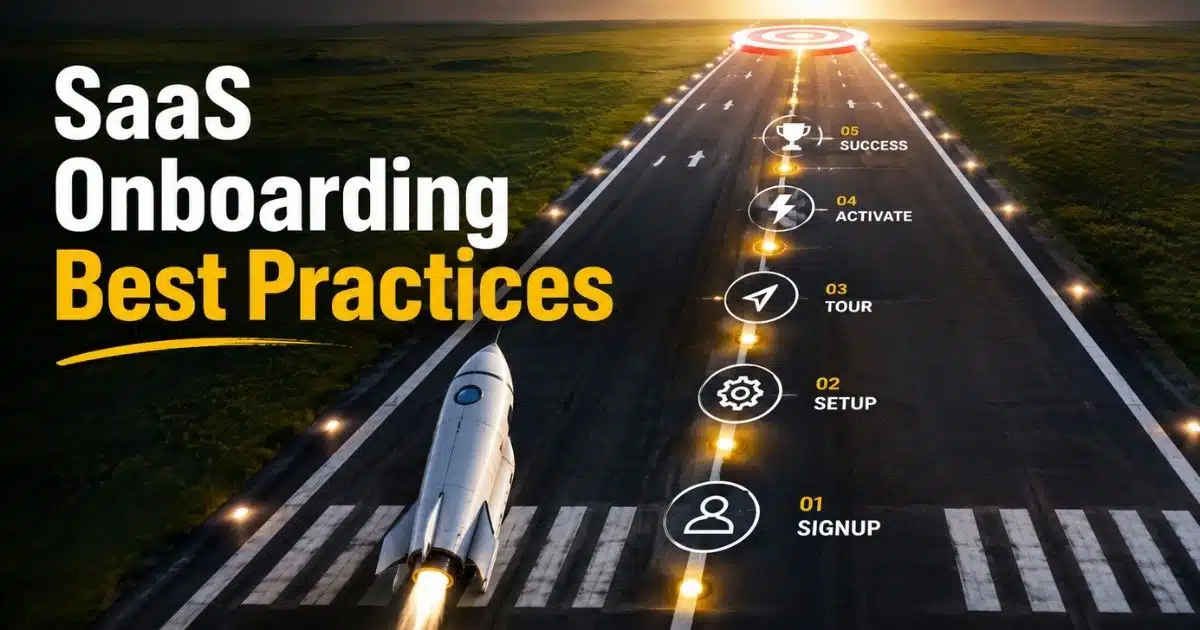
Getting users to sign up is only half the battle. The real challenge starts after registration. Many SaaS companies invest heavily in acquisition but lose users before they experience the product's value. In fact, 63% of customers consider onboarding when deciding whether to buy a product, and some SaaS businesses lose up to 75% of new users within the first week when onboarding falls short.
A great product alone is not enough. New users need clear guidance, quick wins, and a smooth path to success. When onboarding feels confusing or overwhelming, adoption slows, engagement drops, and churn rises. On the other hand, a well-designed onboarding experience helps users reach value faster, build confidence, and stay engaged long enough to become loyal customers.
This guide covers the most effective SaaS onboarding best practices, proven strategies, common mistakes, and key metrics that help reduce churn, improve retention, and turn new signups into long-term users, and it fits within a broader SaaS product development lifecycle from idea to scale.
What Is SaaS Onboarding And Why Is It Important?
SaaS onboarding is the process of helping new users understand your product and achieve their first success as quickly as possible. A strong SaaS onboarding process guides users from the signup process and account setup to product adoption and customer success. It includes product tours, onboarding checklists, onboarding flows, knowledge base resources, and ongoing support. The goal is simple: help users understand key features, build confidence, and create a positive onboarding experience. User onboarding is often the first real interaction people have with a product, making it a critical part of the customer journey.
For SaaS companies, onboarding directly impacts customer retention, customer engagement, and customer lifetime value. Research shows that 63% of customers consider onboarding when making a purchase decision, while poor onboarding can cause companies to lose up to 75% of new users within the first week.
Effective SaaS onboarding helps users achieve value faster, reduces churn, and turns first-time users into loyal customers. Whether you serve small businesses or enterprise clients, an effective onboarding process creates seamless workflows, improves customer satisfaction, and supports long-term growth. Successful onboarding is not just a best practice. It is a competitive advantage, especially when strong user experience design reduces SaaS churn and improves retention.
How To Build A SaaS Onboarding Strategy Around User Goals
A successful SaaS onboarding strategy starts with user goals, not product features. New users sign up because they want a specific outcome. Your onboarding process should help them reach that outcome as quickly as possible. When users see value early, adoption rises, engagement improves, and churn drops.
Define The User's First Success
Every SaaS onboarding process should focus on one clear goal. Ask yourself what success looks like for a new customer during the first session. It could be creating a project, inviting a teammate, or completing account setup.
That first win builds confidence. It also helps users understand the product faster. Research shows users who experience value early are more likely to stay active and continue their onboarding journey. A clear path to success creates a better user onboarding experience and supports long-term customer retention.
Build User Segments Early
Not all users have the same needs. Small businesses, enterprise clients, and individual users often expect different outcomes. A single onboarding flow rarely works for everyone.
User personas help onboarding teams create relevant experiences. Segmenting users by role, goals, or company size allows a more personalized customer onboarding process. Personalized onboarding can reduce churn by more than 40% and improve product adoption. Users feel understood when the SaaS onboarding experience matches their specific needs.
Focus On Time-To-Value
Time-To-Value measures how quickly users achieve a meaningful result. Strong SaaS onboarding best practices focus on shortening that timeline.
Complex steps can delay progress. Remove unnecessary fields, simplify the signup process, and prioritize core actions. Many SaaS businesses that accelerate onboarding during the first 30 days report stronger engagement and higher activation rates. Faster access to value keeps users motivated and increases the likelihood of converting them into paying customers.
Match Features To User Goals
New users do not need every feature on day one. Too much information can create confusion and slow the onboarding experience. Effective onboarding introduces features based on user behavior and goals.
Progressive disclosure works well here. Core features appear first, while advanced tools arrive later in the customer journey. This approach helps users understand the product naturally. It also improves customer satisfaction because users learn at a comfortable pace instead of feeling overwhelmed.
Measure And Improve Continuously
An effective SaaS onboarding strategy relies on data. Tracking onboarding metrics helps teams understand where users succeed and where they struggle. Important success metrics include onboarding completion rate, activation rate, Time-To-Value, and customer retention.
Customer feedback also provides valuable insights. Analytics can reveal friction points in the onboarding flow and identify drop-off stages. Regular improvements help create a successful onboarding program that evolves with user behavior. Small changes often lead to significant gains in customer engagement and product adoption.
SaaS Onboarding Best Practices For Faster Time To Value
Time-To-Value is one of the most important onboarding metrics in SaaS. It measures how quickly new users experience the value of your product. A shorter path to value often leads to better product adoption, stronger user engagement, and higher customer retention.
Show Value Immediately
New users should understand why they signed up within minutes. A welcome screen should clearly explain the product's core benefit. Confusing messages often slow down the onboarding process.
Research shows that many users decide whether to continue using a product during their first session. A strong SaaS onboarding experience focuses on quick wins. When users see results early, they stay motivated and move forward with confidence. This simple step can improve the entire customer onboarding experience.
Remove Signup Friction
Long forms create unnecessary barriers. Every extra field can increase drop-offs during the signup process. New customers want to access the product quickly.
Effective SaaS onboarding removes anything that delays value. Ask only for essential details during account setup. Additional information can come later. A smoother onboarding flow helps users reach key features faster. It also creates a more positive onboarding experience from the start.
Use Interactive Product Tours
Static guides often go unread. Interactive product tours help users learn by doing. They turn the onboarding journey into a hands-on experience.
Recent onboarding trends show that interactive walkthroughs drive higher engagement than traditional documentation. Users complete tasks faster when guidance appears inside the product. Contextual tips and in-app prompts help support users without interrupting their workflow. Aligning these patterns with a consistent SaaS design system for scalable products further streamlines the experience. This approach improves effective user onboarding and product adoption.
Delay Advanced Setup Steps
Many SaaS businesses ask for too much information too soon. Complex profile settings can overwhelm first-time users. Early friction often leads to abandonment.
An effective onboarding process introduces advanced options gradually. This approach is known as progressive disclosure. Users focus on core actions first and discover advanced features later. As a result, users understand the product better and stay engaged throughout the SaaS onboarding process.
Track Time-To-Value Closely
A successful onboarding program relies on data. Teams should measure how long it takes users to achieve their first meaningful outcome. This milestone is often called the "Aha!" moment.
Companies that monitor onboarding metrics can identify bottlenecks faster. Key success metrics include activation rate, onboarding completion rate, feature adoption, and customer engagement. Data-driven improvements help customer success teams refine onboarding flows and reduce churn over time. Faster Time-To-Value usually leads to stronger retention and more loyal customers.
User Segmentation And Personalization In SaaS Onboarding
Every user enters your product with different goals. A startup founder, marketer, and project manager will not use the same features in the same way. Personalization helps create a smoother onboarding journey and a more relevant customer onboarding experience.
Segment Users From Day One
User segmentation starts during signup. A few simple questions can reveal goals, company size, industry, or job role. That information helps create a more relevant onboarding flow.
Research from McKinsey shows that companies that personalize customer experiences can generate 40% more revenue from those activities than competitors. In SaaS onboarding, segmentation helps users see features that matter most to them. As a result, users understand the product faster and stay engaged longer.
Create Role-Based Journeys
Different users need different paths. A sales manager may focus on reporting tools, while a customer support leader may need ticket management features. One onboarding process cannot serve every role effectively.
Role-based onboarding helps users reach value faster. It removes distractions and focuses attention on relevant tasks. This approach improves product adoption and customer satisfaction because users see solutions that match their daily work. A personalized SaaS onboarding experience often leads to stronger engagement and retention.
Customize Welcome Experiences
The first screen sets expectations. A generic welcome message can feel impersonal. A customized welcome screen creates a stronger connection with new customers.
Simple personalization can make a big difference. Address users by name and highlight goals they selected during signup. A tailored onboarding experience helps encourage users to continue. It also creates a positive onboarding experience that supports customer success from the very beginning.
Adapt To User Behavior
User behavior provides valuable onboarding insights. Some users move quickly through setup, while others need more support. Analytics can reveal where users succeed and where they struggle.
An effective SaaS onboarding strategy adapts based on those actions. Users who skip important steps may receive contextual guidance or helpful resources. Active users may see advanced features sooner, especially when teams integrate AI into SaaS products for adaptive guidance. This dynamic approach helps support users at the right moment and improves the overall user onboarding experience.
Use Personalized Content
Personalized content helps users achieve goals faster. Tutorials, onboarding checklists, product tours, and lifecycle emails should match each user's needs and onboarding scenarios.
Recent studies show personalized experiences increase customer engagement and improve retention rates. Relevant content keeps users motivated throughout the customer journey. It also helps customer success teams deliver more value without increasing manual effort. When users receive the right guidance at the right time, effective onboarding becomes much easier to achieve.
Product Tours, Interactive Walkthroughs, And In-App Guidance
New users need help at the right moment, not a long manual they may never read. Interactive guidance shortens the learning curve and helps users reach value faster. A well-designed onboarding experience combines product tours, walkthroughs, and contextual support to improve engagement and product adoption.
Use Interactive Product Tours
Product tours introduce key features in a structured way. They help users understand where to start and what actions matter most. Unlike static tutorials, interactive tours encourage users to take action inside the product.
Research shows interactive onboarding experiences generate higher engagement than passive documentation. Users retain information better when they learn by doing. A strong SaaS onboarding process uses product tours to build confidence and support successful onboarding from the first session.
Provide Contextual Tooltips
Users often need guidance when they encounter a new feature. Contextual tooltips deliver support exactly when it is needed. This makes the onboarding flow feel natural and less overwhelming.
A tooltip should explain one task or feature at a time. Short and clear instructions work best. Customer success teams often use in-app guidance to reduce confusion and improve feature adoption. Small prompts can make a big difference in the overall customer onboarding experience.
Launch Guidance Based On Actions
User behavior provides valuable onboarding signals. A user who skips an important step may need extra help. A user who completes setup quickly may be ready for advanced features.
In-app triggers respond to those actions automatically. This creates a personalized onboarding journey for every user. Behavioral guidance helps support users without interrupting their workflow. As a result, users stay engaged and move through the SaaS onboarding process more efficiently.
Introduce Features Gradually
Many SaaS companies overwhelm users with too much information. A crowded interface can slow product adoption and increase drop-offs. Users need time to learn the basics first.
Progressive disclosure solves this problem. Core features appear first, while advanced tools appear later. This approach creates a better user onboarding experience and helps users understand the product step by step. Effective onboarding focuses on simplicity before complexity.
Turn Empty States Into Opportunities
Empty states appear when users have no data, projects, or activity yet. Many products waste this space. Smart SaaS onboarding turns empty states into useful guidance.
Placeholder content, quick actions, and setup suggestions help users take the next step. Empty states can encourage users to complete onboarding tasks and discover product value faster. This simple best practice improves user engagement, supports customer success, and helps reduce churn during the early stages of the customer journey.
Email Onboarding Workflows That Increase User Activation
Email remains one of the most effective onboarding channels in SaaS. Many users leave a product after signup and never return. Strategic onboarding emails keep users engaged, highlight value, and guide them toward meaningful actions that improve activation and retention.
Send A Strong Welcome Email
The welcome email sets the tone for the entire customer onboarding experience. It should arrive immediately after signup and explain the product's core value in simple terms.
Users often decide within the first few interactions whether a product is worth their time. A welcome email should include one clear action, such as completing account setup or exploring a key feature. A focused message helps users start their onboarding journey with confidence.
Highlight Quick Wins Early
New users want results fast. Long explanations can slow momentum and create confusion. Early onboarding emails should focus on simple actions that deliver value quickly.
A series of emails can introduce one important feature at a time. This approach supports effective user onboarding and reduces information overload. Users who experience early success are more likely to become active users and continue through the SaaS onboarding process.
Use Behavior-Based Triggers
Not every user follows the same path. Some complete setup quickly, while others stop after signup. Behavioral emails help customer success teams respond to those differences automatically.
For example, users who abandon account setup can receive a reminder email. Users who activate a feature can receive advanced tips. Personalized email workflows improve customer engagement because messages match real user behavior instead of assumptions.
Re-Engage Inactive Users
Many SaaS companies lose users simply because they stop returning. Lifecycle emails help bring those users back before they disappear completely. This is especially important during the first few weeks.
Research shows that effective onboarding can reduce churn by 45% or more. Re-engagement emails can highlight unused features, success stories, or helpful resources. A timely reminder often helps users rediscover value and continue their customer journey.
Measure Email Performance
Every onboarding email should support a clear goal. Open rates, click-through rates, activation rates, and onboarding completion rates reveal what works and what needs improvement.
Strong onboarding teams review these onboarding metrics regularly. Customer feedback and analytics help identify gaps in the onboarding flow. Data-driven optimization improves user engagement and customer retention over time. Small improvements across email campaigns can create a much stronger SaaS onboarding experience.
Common SaaS Onboarding Mistakes That Cause User Churn
Even the best SaaS product can lose customers if the onboarding experience falls short. Many churn problems begin during the first few days after signup. Small mistakes in the onboarding process can slow product adoption, lower engagement, and prevent users from reaching value quickly.
Too Much Information At Once
Many SaaS companies try to explain everything on day one. New users often see multiple features, tutorials, and messages before they understand the basics. This creates confusion instead of clarity.
A successful onboarding experience focuses on essential actions first. Users need a simple path to their first win. Progressive disclosure helps introduce features gradually. When the onboarding flow feels manageable, users stay motivated and continue their customer journey with confidence.
Complex Registration Forms
Long registration forms create friction before users even enter the product. Every extra field adds effort and increases the chance of abandonment. Many users leave before completing account setup.
Effective onboarding removes unnecessary steps. A simple signup process helps users access value faster. Additional profile details can be collected later. A smoother entry point improves the user onboarding experience and supports higher onboarding completion rates.
Lack Of Personalization
Different users have different goals. A generic onboarding journey often fails because it treats everyone the same. What works for a marketing manager may not work for a project manager or enterprise client.
Personalized onboarding uses user personas, behavior, and goals to create relevant experiences. Studies show personalized customer experiences can significantly improve engagement and retention. Users are more likely to stay active when the SaaS onboarding process aligns with their specific needs.
Delayed Value Delivery
Many onboarding projects focus on setup tasks instead of outcomes. Users want results, not a long list of requirements. A delayed "Aha!" moment often leads to frustration.
Research shows that companies that help users achieve value quickly see stronger product adoption and customer retention. Effective SaaS onboarding should highlight core benefits early. Faster Time-To-Value helps encourage users to continue using the product and become loyal customers.
Poor Follow-Up Support
Some onboarding teams stop communicating after signup. Users who face challenges may feel stuck and leave without asking for help. A lack of support can damage the customer experience.
Customer success teams should provide lifecycle emails, product tours, knowledge base resources, and in-app guidance throughout the onboarding journey. Ongoing support helps users understand key features and solve problems quickly. This approach improves customer satisfaction, reduces churn, and creates a stronger onboarding program.
Key SaaS Onboarding Metrics And KPIs To Track Success
A great onboarding experience should produce measurable results. Without clear data, it is difficult to know what works and what needs improvement. The right onboarding metrics help SaaS companies improve activation, retention, customer satisfaction, and long-term product adoption.
Track Time-To-Value
Time-To-Value measures how quickly users experience the product's core benefit. This is one of the most important success metrics in any SaaS onboarding process. A shorter Time-To-Value often leads to higher user engagement and stronger customer retention.
Users sign up because they want a result, not a tutorial. Effective SaaS onboarding helps users achieve that result quickly. When teams identify onboarding bottlenecks and remove friction, users reach their "Aha!" moment faster and become more active users.
Monitor Activation Rate
Activation rate shows how many new users complete key actions that indicate meaningful product usage. This metric helps onboarding teams understand whether the onboarding flow successfully guides users toward value.
A strong activation rate usually signals an effective onboarding process. Low activation often points to confusing product tours, poor onboarding scenarios, or unnecessary setup steps. Customer success teams can use activation data to improve the SaaS onboarding experience and increase product adoption.
Measure Completion Rate
Onboarding completion rate tracks how many users finish important onboarding tasks. This may include account setup, profile completion, team invitations, or feature activation.
Research consistently shows that higher onboarding completion rates correlate with better retention outcomes. Users who complete onboarding are more likely to understand key features and continue through the customer journey. A simple onboarding checklist can help encourage users to finish critical steps and stay engaged.
Watch Retention And Churn
Retention rate reveals how many users continue using the product over time. Churn rate shows how many users leave. Together, these metrics provide a clear picture of onboarding success.
Studies suggest effective onboarding can reduce churn by 45% or more. Poor onboarding often causes users to abandon a product before experiencing its value. SaaS businesses that focus on customer onboarding and ongoing support typically see stronger customer lifetime value and more loyal customers, especially when guided by a clear SaaS product roadmap for 2026 and beyond.
Analyze Feature Adoption
Feature adoption measures how often users engage with important product capabilities. This metric helps teams understand whether users fully explore the product after onboarding.
Analytics can reveal which features drive customer engagement and which features users ignore. A low adoption rate may indicate poor guidance or weak onboarding flows. Data-driven iteration allows SaaS companies to refine onboarding programs, improve user behavior, and create a better customer experience over time.
SaaS Onboarding Examples From High-Growth SaaS Companies
High-growth SaaS companies rarely leave onboarding to chance. They invest heavily in user education, product adoption, and customer success. Their onboarding strategies focus on helping users achieve value quickly while creating a smooth and engaging customer experience, as seen in successful SaaS launch stories by GainHQ.
Slack Focuses On Quick Collaboration
Slack's onboarding process centers on one goal: helping users start conversations quickly. New users receive simple prompts that encourage team invitations, channel creation, and message sharing.
This approach reduces the time between signup and first value. Users experience the product's core benefit almost immediately. Slack's onboarding flow removes unnecessary complexity and helps active users form habits early. That focus on fast value delivery supports strong product adoption and customer retention.
Canva Uses Guided Learning
Canva simplifies its user onboarding experience through interactive guidance. New users complete small tasks such as creating designs, editing templates, and customizing graphics.
Each action teaches a feature while helping users achieve a real outcome. This creates a positive onboarding experience because users learn by doing. Canva's onboarding journey also uses progressive disclosure, which introduces advanced capabilities later. As a result, users understand the platform without feeling overwhelmed.
HubSpot Personalizes The Journey
HubSpot serves multiple user personas, including marketers, sales teams, and customer service professionals. A single onboarding path would not meet every user's needs.
The platform personalizes the customer onboarding process based on goals and job roles. Relevant recommendations, product tours, and onboarding scenarios appear throughout the experience. This tailored approach improves customer engagement and helps users discover features that support their specific objectives.
Duolingo Uses Progress Motivation
Duolingo demonstrates how motivation can improve onboarding success. New users select goals early and receive a personalized learning path. Progress indicators keep users focused on the next step.
This strategy creates momentum throughout the onboarding process. Small achievements encourage users to continue. The platform also uses visual rewards and milestone tracking to keep users motivated. Similar techniques can strengthen SaaS onboarding experiences and improve onboarding completion rates.
Notion Encourages Self-Discovery
Notion combines templates, onboarding checklists, and contextual guidance to help users get started. Instead of forcing every user through the same onboarding flow, it provides flexible paths based on use cases.
Users can choose project management, note-taking, documentation, or team collaboration templates. This freedom supports different onboarding journeys while still providing structure. The result is a customer onboarding experience that feels personal, useful, and aligned with user goals. It is a strong example of effective SaaS onboarding built around flexibility and value.
Future Trends Shaping SaaS Onboarding In 2026 And Beyond
SaaS onboarding continues to evolve as user expectations rise. Modern users want faster results, personalized experiences, and less friction. Companies that adapt to new onboarding trends can improve product adoption, increase customer retention, and create stronger customer experiences while planning for SaaS scalability strategies for sustainable growth.
AI-Powered Personalization
Artificial intelligence is changing how SaaS companies approach onboarding. Instead of showing the same onboarding flow to everyone, AI can adapt experiences based on user behavior, goals, and actions, reflecting the broader impact of AI in SaaS, its benefits, challenges, and future trends.
Personalized recommendations help users discover relevant features faster. AI can also identify onboarding bottlenecks before they affect customer satisfaction. As SaaS onboarding software becomes more advanced, personalized onboarding experiences will become a standard part of effective onboarding rather than an optional feature.
Predictive Churn Detection
Many SaaS businesses now use predictive analytics to identify users who may leave. Early warning signals such as low engagement, incomplete setup, or reduced activity help customer success teams act quickly.
Predictive onboarding systems can trigger lifecycle emails, product tours, or support resources automatically. This proactive approach helps reduce churn before it happens and aligns closely with broader AI-driven automation in SaaS for business leaders. Since customer churn remains one of the biggest challenges in SaaS, predictive insights will play a larger role in future onboarding programs.
Real-Time User Assistance
Users increasingly expect instant help. Long support wait times can disrupt the onboarding journey and create frustration. Real-time assistance solves problems when they occur.
In-app chat, AI assistants, and contextual guidance now support users directly inside products. These tools help users complete tasks without leaving the platform. Faster support creates a better user onboarding experience and helps users achieve value sooner during the customer journey.
Dynamic Onboarding Paths
Traditional onboarding processes often follow a fixed sequence. Future onboarding flows will become more flexible and responsive to individual user needs.
Dynamic onboarding adjusts based on progress, goals, and feature usage. Users receive different experiences depending on their actions. This approach helps create more effective onboarding because each user follows the path most relevant to their objectives and aligns well with user-centered design for scalable SaaS platforms. Personalized journeys also improve user engagement and product adoption.
Data-Driven Optimization
Successful SaaS onboarding increasingly relies on analytics rather than assumptions. Companies now track onboarding metrics such as Time-To-Value, activation rate, onboarding completion rate, and feature adoption more closely than ever.
Data helps onboarding teams understand where users struggle and where they succeed. Continuous optimization allows businesses to improve onboarding experiences over time and should go hand in hand with SaaS performance optimization best practices. As analytics tools become more sophisticated, data-driven decisions will remain one of the most important SaaS onboarding best practices for long-term customer success.
How GainHQ Optimizes SaaS Onboarding And Improves User Adoption
A strong onboarding process can make the difference between an active customer and a lost opportunity. Many SaaS companies struggle with user activation, product adoption, and customer retention because new users often fail to experience value quickly. GainHQ helps solve this challenge with a structured approach to SaaS onboarding, backed by custom software development services for scalable SaaS products.
GainHQ enables teams to create clear onboarding workflows, track onboarding progress, and guide users through every stage of the customer journey. From personalized onboarding experiences and task management to onboarding metrics and customer success tracking, the platform helps reduce friction and accelerate Time-To-Value, especially when paired with expert UI/UX design services for SaaS products.
By helping users achieve meaningful outcomes faster, GainHQ improves user engagement, supports customer retention, and increases customer lifetime value. The result is a more effective SaaS onboarding experience that turns new users into active, loyal customers.
FAQs
How Long Should A SaaS Onboarding Process Last?
No, there is no fixed timeline for every SaaS onboarding process. The ideal length depends on product complexity and user goals. Most SaaS companies focus on helping users achieve their first success as quickly as possible to improve product adoption and customer retention.
Can Small SaaS Businesses Benefit From Personalized Onboarding?
Yes, personalized onboarding is valuable for businesses of all sizes. Tailored onboarding flows help users discover relevant features faster, improve customer engagement, and create a better user onboarding experience without requiring a large customer success team.
Does SaaS Onboarding Affect Customer Lifetime Value?
Yes, effective SaaS onboarding can have a direct impact on customer lifetime value. Users who understand key features early are more likely to become active users, remain loyal customers, and continue using the product for a longer period.
What Role Does Customer Feedback Play In SaaS Onboarding?
Customer feedback helps onboarding teams identify friction points in the onboarding journey. Insights from surveys, support requests, and user behavior data can improve onboarding flows, customer satisfaction, and the overall customer experience.
Which Tools Support A Better SaaS Onboarding Experience?
SaaS onboarding software can support onboarding checklists, product tours, lifecycle emails, onboarding metrics, and in-app guidance. The right tools help customer success teams create seamless workflows and deliver a more effective onboarding process, especially when built on scalable SaaS tools that power global growth.