Legacy systems rarely fail overnight. They become slower, harder to maintain, and more expensive with every update. What once helped a business grow can eventually limit innovation, create security risks, and make it difficult to keep up with changing customer expectations. That is why modernization has become a priority for organizations that want to stay competitive.
A successful legacy software modernization strategy is not just about replacing old technology. It is about understanding what to keep, what to improve, and what to transform. Businesses must evaluate their existing applications, choose the right modernization approach, and follow a roadmap that reduces risk while delivering measurable value.
This guide covers everything you need to know about a legacy software modernization strategy. You will learn the most important frameworks, modernization approaches, roadmap planning steps, common challenges, and best practices that help organizations modernize with confidence and achieve long-term business goals.
What Is A Legacy Software Modernization Strategy
A legacy software modernization strategy is a structured approach to updating legacy systems so they can support current business goals and future growth. Many organizations still rely on legacy software that powers critical operations, but aging systems often come with high maintenance costs, security vulnerabilities, outdated code, and growing technical debt. Over time, those issues reduce operational efficiency and make it harder to respond to market demands. Legacy software modernization helps businesses leverage modern technologies, improve business processes, and unlock greater business value through application modernization and digital transformation.
A successful modernization strategy goes beyond replacing outdated software. It starts with assessing existing systems, legacy applications, legacy code, and business logic to identify risks and opportunities. Organizations may choose cloud migration, cloud-native development, data migration, or other software modernization approaches depending on their needs. The goal is to achieve a smooth transition while preserving core functionality and business continuity.
Modernized systems deliver enhanced security, lower operational costs, better user interface experiences, and faster access to new features. They also simplify data management, reduce operational risk, improve cloud readiness, and support future development. Whether the focus is transforming legacy systems, optimizing existing code, or modernizing legacy applications, a well-planned application modernization journey is a strategic investment that helps businesses stay competitive and adaptable.
How To Assess Legacy Systems Before Modernization Begins
A strong legacy software modernization strategy starts with a clear understanding of what already exists. Many modernization projects struggle because teams rush into changes without fully assessing their legacy systems. A detailed evaluation reduces risk, uncovers hidden issues, and creates a roadmap for successful modernization.
Review The Technical Foundation
Every modernization process should begin with a review of the current technical foundation. Legacy software often relies on outdated systems, aging infrastructure, and unsupported technologies. Those issues can increase operational costs and create security vulnerabilities.
A technical assessment helps teams understand how existing systems support business operations. It also reveals whether current software systems can integrate with modern technologies, cloud infrastructure, or cloud native environments and informs an overall cloud migration strategy for enterprises. A clear picture of the foundation helps avoid costly surprises later.
Analyze Code Quality And Data Constraints
Legacy code can become difficult to maintain after years of updates and patches. Poor documentation, outdated development frameworks, and complex business logic often slow future development and increase technical debt.
Data management deserves equal attention. Industry research shows that data migration remains one of the leading causes of delays in modernization initiatives. A review of existing code, databases, and data dependencies helps ensure a seamless data migration and supports successful implementation.
Map Business Processes And System Dependencies
Many legacy applications support critical operations that have evolved over decades. Teams often discover undocumented workflows and hidden integrations only after modernization efforts begin.
Process mapping helps identify how legacy functionality connects with business processes across departments. It also uncovers integration challenges between old and new systems. A full dependency map, often guided by expert technology consulting services for modern business growth, reduces operational risk and supports business continuity throughout the transformation process.
Identify Risks And Improvement Opportunities
A comprehensive assessment should measure both strengths and weaknesses. Some legacy software may still provide strong core functionality and business value. Other areas may create bottlenecks that limit business growth and operational efficiency.
Assessment results help prioritize modernization efforts. Teams can identify outdated code, security gaps, performance issues, accumulated technical debt, and user interface limitations. That information helps align modernization strategy with desired outcomes and business goals.
Create A Modernization Readiness Plan
Assessment findings should lead to a clear action plan. Organizations need to evaluate cloud readiness, resource requirements, risk management priorities, and modernization approaches before execution begins.
A readiness plan helps determine whether rehosting, refactoring, replatforming, or legacy application modernization is the right path. It also creates a smooth transition strategy for modernizing legacy applications. Companies that complete a thorough assessment are far more likely to achieve successful software modernization for modern businesses and substantial cost savings from their strategic investment.
Key Frameworks For Legacy Software Modernization
A successful legacy system modernization strategy needs a framework. Without one, modernization projects often become expensive, slow, and difficult to manage. The right framework helps organizations reduce risk, prioritize investments, and choose the best path for transforming legacy systems while supporting business goals.
The 5 R's Framework
The 5 R's framework is one of the most common models in legacy software modernization. It helps organizations evaluate legacy applications and choose the most suitable modernization approach based on business value, technical debt, and operational needs.
The framework includes Rehost, Refactor, Rearchitect, Rebuild, and Replace. Each option offers a different balance between cost, complexity, and long-term key benefits. Many modernization initiatives start with this framework because it provides a structured path for application modernization and digital transformation.
Rehost For Fast Migration
Rehosting moves legacy software to a new environment with minimal code changes. Many businesses use this approach during cloud migration because it offers a faster path to modern cloud platforms.
This method keeps existing code and core functionality largely unchanged. It reduces upfront effort and helps lower operational costs. Rehosting is often a good option when organizations need cloud readiness quickly but are not yet ready for deeper modernization efforts.
Refactor And Optimize Code
Refactoring improves software systems by restructuring code without changing external behavior. This approach helps software developers reduce technical debt and improve maintainability.
Legacy code often becomes difficult to support after years of updates. Refactoring helps optimize existing code, improve performance, and prepare applications for future development. It also supports modern development frameworks and creates a stronger foundation for cloud native architectures and modernized systems.
Rearchitect For Modern Applications
Rearchitecting changes the structure of an application to support modern technologies. Many organizations choose this path when legacy systems limit scalability, flexibility, or integration capabilities.
Microservices architecture is a common outcome of rearchitecting. Instead of relying on large monolithic applications, businesses break software into smaller services. This improves agility, simplifies maintenance, and supports seamless integration with cloud infrastructure, especially when teams carefully compare microservices vs monolithic architecture and follow a structured monolith to microservices migration guide. Research from Gartner shows that modular architectures help organizations respond faster to changing business requirements.
Rebuild Or Replace When Necessary
Some outdated systems reach a point where modernization no longer delivers enough value. Legacy functionality may depend on outdated code, unsupported tools, or aging systems that create high maintenance costs.
A rebuild creates a new system from the ground up while preserving important business logic. A replacement swaps legacy software for a modern solution. Although these approaches require larger investments, they often provide substantial cost savings, enhanced security, improved user interface experiences, and stronger support for business growth over the long term.
Legacy Software Modernization Approaches: Rehosting, Replatforming, Refactoring, Rebuilding, And Replacing
No single modernization approach works for every business. The right choice depends on your legacy systems, business goals, budget, and technical requirements. Some organizations need quick wins, while others need deep transformation. Understanding each approach helps reduce risk and improve the chances of successful modernization.
Rehost For Faster Cloud Adoption
Rehosting moves legacy software from its current environment to modern cloud platforms with minimal code changes. Many organizations choose this option when they need cloud migration without major disruption to business operations.
This approach keeps existing code and core functionality largely intact. It offers faster deployment, lower upfront costs, and improved cloud readiness. Rehosting also helps reduce maintenance costs by moving outdated systems to more reliable cloud infrastructure. For many modernization projects, it serves as a practical first step.
Replatform For Better Performance
Replatforming moves applications to modern infrastructure while making small changes to improve performance. Unlike rehosting, this approach allows teams to optimize parts of the application without a complete rebuild.
Businesses often use replatforming to take advantage of cloud native services, automation tools, and modern technologies. The result is better scalability, stronger operational efficiency, and improved support for future development. Replatforming also creates a smoother path toward broader application modernization initiatives, especially when teams weigh replatform vs rebuild for long term platform growth.
Refactor To Reduce Technical Debt
Refactoring focuses on improving the internal structure of software systems. The goal is to optimize existing code without changing how the application works for users.
Legacy code often becomes harder to maintain over time. Refactoring helps software developers remove outdated code, improve performance, and simplify future updates. Continuous refactoring also keeps applications agile and lowers long-term maintenance burdens. This approach works well when the existing business logic still delivers strong business value.
Rebuild For Long-Term Flexibility
Some legacy applications contain outdated architectures that limit growth. In those cases, a rebuild may offer the best long-term solution, especially when teams compare refactor vs rebuild to choose the right scope. This approach creates a new system while preserving critical business processes and core functionality.
A rebuild allows teams to leverage modern technologies, modern development frameworks, and microservices architecture. Microservices improve agility by breaking large applications into smaller and more manageable components. This creates greater flexibility, easier maintenance, and faster delivery of new features on top of a scalable software architecture for high-growth products.
Replace When Legacy Systems Hold You Back
Replacement involves retiring legacy software and adopting a modern solution. Organizations often choose this option when legacy functionality no longer supports business growth or digital transformation goals.
A replacement can eliminate high maintenance costs, security vulnerabilities, and integration challenges. It also provides access to enhanced security, modern user interface design, and seamless integration with other business applications. Although this approach requires careful planning, it often delivers substantial cost savings and stronger business outcomes over time.
Encapsulation is another valuable technique that can support any of these approaches. It wraps legacy systems in APIs, allowing old and new systems to work together. When paired with an API-first architecture for scalable systems, this helps organizations modernize gradually while maintaining business continuity throughout the transformation process.
How To Build A Legacy Software Modernization Roadmap Step By Step
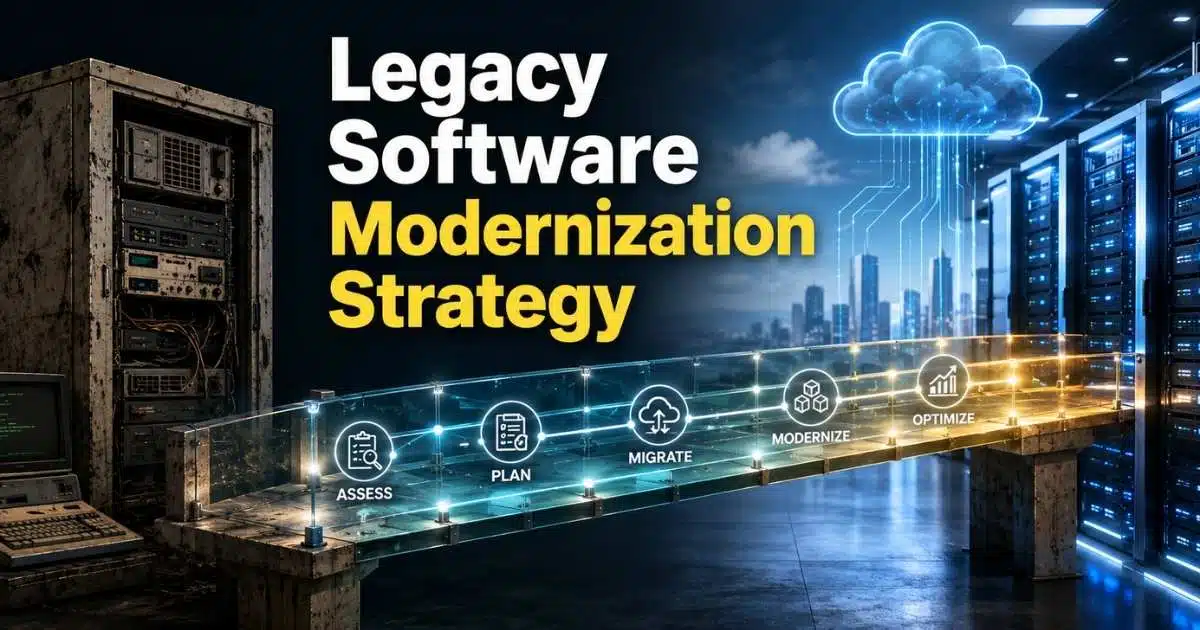
A successful legacy software modernization strategy needs more than the right technology. It needs a clear roadmap. A structured plan helps reduce operational risk, control costs, and keep modernization projects aligned with business goals, much like a well-structured SaaS product roadmap for 2026. Each step builds a stronger foundation for long-term success.
Step 1: Define Business Objectives
Every modernization strategy should start with clear business goals. Teams need to understand why they want to modernize legacy systems and what outcomes they expect. Common goals include lower operational costs, better customer experience, enhanced security, and faster business growth.
A clear vision helps prioritize modernization initiatives. It also ensures that technology decisions support business value. Without defined objectives, modernization efforts can become expensive projects with unclear results.
Step 2: Assess Current Systems
A full assessment provides the foundation for successful modernization. Teams should evaluate legacy applications, existing systems, business processes, legacy code, and data management practices as a basis for smooth cloud migration planning for growing teams. This step often reveals technical debt, outdated software, and hidden integration challenges.
A comprehensive audit also uncovers undocumented dependencies that may affect business continuity. Assessment results help organizations understand operational risk and identify opportunities to improve operational efficiency before the transformation process begins.
Step 3: Prioritize Applications And Data
Not every application requires the same modernization approach. Some legacy software may need rehosting or replatforming, while others require refactoring, rebuilding, or replacement. Prioritization helps organizations focus resources where they can create the greatest business value.
Data migration deserves special attention. Many experts consider data migration the most complex part of legacy application modernization. A dedicated migration plan helps protect critical information and supports seamless data migration across old and new systems, especially when dealing with large-scale ERP modernization for digital business growth.
Step 4: Execute In Phases
A phased approach reduces risk and limits disruption to business operations. Rather than replacing everything at once, organizations can modernize smaller components over time. This method allows teams to validate progress and address issues early.
Incremental modernization often includes running old and new systems together. Techniques such as feature flags and the Strangler Fig Pattern support a smooth transition while preserving core functionality. This approach also strengthens risk management throughout modernization projects.
Step 5: Monitor And Optimize Continuously
Modernization does not end after deployment. Modernized systems need ongoing monitoring to maintain performance, security, and scalability. Regular reviews help identify new opportunities for optimization and future development.
Continuous refactoring keeps software systems agile and easier to maintain. Organizations can also leverage modern technologies, cloud native services, and cloud infrastructure to improve performance over time. A focus on continuous improvement helps ensure successful implementation and long-term business success from the application modernization journey.
Common Challenges, Risks, And Mistakes In Legacy Software Modernization
Every legacy software modernization strategy comes with challenges. Even well-funded modernization projects can face delays, cost overruns, and unexpected technical issues. A clear understanding of common risks helps organizations make better decisions and improve the chances of successful modernization.
Hidden System Complexity
Many legacy systems have evolved over decades. New features, patches, and integrations often create layers of complexity that are not fully documented. As a result, teams may underestimate how much work a modernization process requires.
A full assessment helps uncover hidden dependencies, outdated code, and legacy functionality tied to critical operations. Without that visibility, modernization efforts can stall and business continuity may be affected. Complex systems require careful planning and realistic timelines.
Data Migration Failures
Data migration is often the most difficult part of legacy application modernization. Business data may exist across multiple databases, applications, and storage environments. A single mistake can affect operations and customer trust.
Many organizations discover data quality issues only after migration begins. Poor planning can lead to missing records, corrupted information, or failed integrations. A dedicated data migration workstream helps reduce operational risk and supports seamless data migration between old and new systems.
Integration And Dependency Issues
Legacy software rarely operates alone. Most legacy applications connect with external tools, databases, and internal business processes. Many of those connections may not be documented properly.
Integration challenges often appear late in modernization initiatives. Teams may find dependencies that affect existing systems, cloud migration plans, or business logic. A detailed system audit and process mapping exercise help identify these risks before major changes take place.
Resistance To Organizational Change
Technology is only one part of the transformation process. Employees often rely on familiar workflows and established business processes. New technologies can create uncertainty if teams are not prepared.
Resistance to change is one of the most common barriers to successful implementation. Clear communication, employee training, and stakeholder involvement help improve adoption. Modernized systems should make work easier, improve operational efficiency, and support better user experiences across the organization.
Poor Planning And Execution
A weak modernization strategy can create more problems than it solves. Some organizations rush into transforming legacy systems without defining business goals, risk management plans, or desired outcomes.
A phased approach reduces disruption and improves control throughout the application modernization journey. Incremental modernization, continuous testing, and regular reviews help organizations adapt as challenges arise. Careful execution also helps balance technical debt, operational costs, and business value while supporting long-term business growth.
Best Practices For Managing Cost, Security, Governance, And Change During Modernization
A strong legacy software modernization strategy is not only about technology. Cost control, security, governance, and change management all play a major role in project success. Organizations that balance these areas are more likely to achieve business goals, reduce risk, and maximize business value.
Set Clear Business Priorities
Every modernization strategy should start with clear objectives. Teams need to define what success looks like before modernization efforts begin. Common goals include reducing operational costs, improving customer experience, increasing operational efficiency, and strengthening security.
Business priorities help guide every decision throughout the modernization process. They also prevent scope creep and keep modernization projects aligned with long-term business growth and broader enterprise scalability strategies. A clear roadmap makes it easier to measure progress and desired outcomes.
Adopt A Phased Execution Model
Large-scale transformations often carry significant operational risk. A phased approach reduces disruption and allows teams to validate results before moving forward. This method supports business continuity while modernizing legacy systems.
Many successful modernization initiatives use incremental modernization techniques. Old and new systems can operate together during the transition period. Feature flags, staged releases, and continuous testing help create a smooth transition and reduce the chance of costly failures.
Prioritize Security From Day One
Legacy software often contains security vulnerabilities that increase risk. Outdated software, unsupported components, and aging systems can expose sensitive business data to cyber threats.
Enhanced security should be built into every modernization effort. Security reviews, access controls, encryption, and regular audits help protect critical operations. Cloud platforms and modern technologies also provide stronger security capabilities than many legacy systems when properly configured.
Establish Strong Governance Controls
Governance helps organizations maintain consistency throughout the application modernization journey. Clear ownership, accountability, and decision-making processes reduce confusion and improve execution.
A governance framework should cover risk management, compliance requirements, budget controls, and performance tracking. Regular reviews help ensure modernization initiatives remain aligned with business goals. Strong governance also improves communication between business leaders, software developers, and technical teams.
Prepare Employees For Change
Technology alone does not guarantee successful modernization. Employees must understand how modernized systems will affect daily business processes and workflows. Resistance to change can slow adoption and limit project success.
Training programs, stakeholder engagement, and clear communication help teams adapt to new technologies. Employees who understand the benefits of modernized software are more likely to support the transformation process. Better adoption leads to higher productivity, improved user experiences, and stronger returns on a strategic investment.
How To Measure Success And Maximize ROI From A Legacy Software Modernization Strategy
A legacy software modernization strategy should deliver measurable results, not just technical upgrades. Organizations need clear metrics to evaluate progress and business impact. The right measurements help prove business value, justify investment, and guide future modernization initiatives.
Track Cost Reduction Metrics
One of the biggest goals of legacy software modernization is reducing operational costs. Legacy systems often require expensive maintenance, specialized support, and frequent fixes. Those expenses can increase over time and limit business growth.
Teams should compare maintenance costs, infrastructure expenses, and support costs before and after modernization. Modernized systems that run on cloud infrastructure often reduce operating expenses while improving operational efficiency. Cost savings provide one of the clearest indicators of modernization success.
Measure Business Agility
Modern technologies should help organizations respond faster to changing market demands. Faster releases, shorter development cycles, and quicker deployment of new features are strong signs of progress.
Agility metrics may include release frequency, deployment speed, and time needed to launch new products or services. Modernized software supported by cloud native architectures and microservices can help businesses adapt more quickly while supporting future development and innovation.
Evaluate Security Improvements
Security remains a critical measurement area. Legacy software often contains outdated code, unsupported components, and security vulnerabilities that increase operational risk.
Organizations should monitor incident rates, vulnerability counts, compliance results, and response times. Enhanced security demonstrates that modernization efforts are reducing exposure to cyber threats. Strong security outcomes also support business continuity and protect critical business operations.
Assess User And Employee Experience
A successful modernization strategy should improve the experience for both customers and employees. Slow applications, outdated interfaces, and inefficient workflows often create frustration across the organization.
Key metrics include user satisfaction scores, employee productivity, support ticket volume, and adoption rates. Modernized systems with a better user interface and streamlined business processes can improve satisfaction while helping teams work more efficiently.
Measure Long-Term Business Impact
Technical improvements matter, but business results matter more. Organizations should evaluate whether modernization initiatives support broader business goals and desired outcomes.
Business impact metrics may include revenue growth, customer retention, operational efficiency, scalability, and business value creation. A strong application modernization journey should reduce technical debt, improve data management, support seamless integration, and create a foundation for long-term digital transformation. When modernization aligns with strategic objectives, ROI continues to grow long after implementation is complete.
Final Discussion
Legacy software modernization is no longer a technical upgrade that organizations can postpone. Legacy systems create rising maintenance costs, security risks, operational inefficiencies, and barriers to innovation. A well-defined legacy software modernization strategy helps businesses address those challenges while creating a stronger foundation for future growth.
Success starts with a thorough assessment of existing systems, a clear modernization roadmap, and the right modernization approach. Whether the goal is cloud migration, application modernization, microservices adoption, or technical debt reduction, every decision should align with business goals and long-term objectives. Organizations that take a phased approach, prioritize security, and invest in proper governance are more likely to achieve successful modernization outcomes.
The most effective modernization efforts balance technology, people, processes, and risk. When executed correctly, modernized systems deliver greater agility, enhanced security, improved customer experiences, lower operational costs, and stronger business value. Modernization is not simply about replacing old technology. It is about creating a flexible, scalable, and future-ready business.
FAQs
How Long Does A Legacy Software Modernization Project Usually Take?
No, there is no fixed timeline for legacy software modernization. Project duration depends on the complexity of legacy systems, technical debt, data migration requirements, and the chosen modernization strategy. Small modernization initiatives may take a few months, while large enterprise modernization projects can take several years.
Can Legacy Software Be Modernized Without Replacing The Entire System?
Yes, many organizations modernize legacy software without a complete replacement. Approaches such as rehosting, refactoring, replatforming, encapsulation, and the Strangler Fig Pattern allow businesses to preserve core functionality while gradually adopting modern technologies and cloud infrastructure.
What Role Does AI Play In Legacy Software Modernization?
AI can help analyze legacy code, identify hidden dependencies, and automate parts of the modernization process. It also supports dependency mapping, testing, risk analysis, and data management tasks, helping teams accelerate modernization efforts and reduce operational risk.
Should Data Migration Be Handled As A Separate Modernization Workstream?
Yes, data migration should be treated as an independent workstream. Business data is often spread across multiple legacy applications and software systems. A dedicated migration plan helps reduce data loss risks and supports seamless data migration throughout the application modernization journey.
How Does Legacy Software Modernization Affect Employee Productivity?
Modernized systems often simplify business processes and reduce manual work. Better user interfaces, seamless integration, and improved operational efficiency help employees complete tasks faster. As a result, organizations often see higher productivity and greater employee satisfaction after successful modernization.