Pricing is one of the biggest growth levers in SaaS, yet many companies treat it as an afterthought. A great product can still struggle if the pricing feels confusing, expensive, or disconnected from customer value. The right SaaS pricing model does more than generate revenue. It shapes customer acquisition, retention, and long-term growth.
From flat-rate pricing and freemium plans to usage-based and hybrid models, SaaS companies have more choices than ever. Research shows that even a 1% improvement in monetization can increase profit by 12.7%, proving that pricing decisions have a massive business impact. Modern SaaS pricing is also evolving fast, with many companies adopting hybrid models that combine subscriptions with usage-based billing.
In this guide, you’ll learn how SaaS pricing works, explore popular pricing models, and discover how to choose a strategy that aligns with customer value and maximizes growth.
What Is A SaaS Pricing Model?
A SaaS pricing model defines how software companies charge customers for access to their products. It determines how customers pay, what features they receive, and how businesses generate recurring revenue. The right pricing model helps SaaS companies attract users, retain customers, and maximize revenue over time.
Common SaaS pricing models include flat rate pricing, per user pricing, usage-based pricing, freemium pricing, and tiered pricing. Each pricing strategy serves different customer needs and business goals. For example, a usage-based pricing model charges based on consumption, while a tiered pricing model offers multiple pricing tiers at different price points.
Choosing the right SaaS pricing model is not just about setting a price. A successful pricing structure should align pricing with customer value, target market expectations, and long-term revenue growth. When pricing reflects the perceived value of a SaaS product, both businesses and customers win.
Why SaaS Pricing Is Important
Pricing is more than a number on your pricing page. It shapes how customers see your product, how much revenue you earn, and how fast your business grows. A strong SaaS pricing strategy helps attract buyers, retain customers, and create predictable revenue over time.
Pricing Impacts Revenue Growth
A good pricing model can unlock growth without changing your product. Many SaaS companies focus heavily on acquisition but overlook pricing. That can leave money on the table.
Research shows that even a 1% improvement in monetization can increase profit by 12.7%. Small pricing changes often create a bigger impact than adding new features. The right SaaS pricing model helps maximize revenue while protecting your profit margin. Smart pricing decisions also improve monthly recurring revenue and long-term business health.
Customers Buy Value, Not Features
People do not buy software because it has more buttons. They buy solutions that solve problems. Customer value matters more than feature count.
Value-based pricing works because it aligns pricing with the results customers receive. Different customer segments see value differently. A startup may care about cost, while an enterprise may prioritize efficiency. When your pricing reflects perceived value and customer needs, customers pay with confidence and stay longer. Strong alignment also improves customer loyalty and customer lifetime value.
The Right Model Builds Predictable Revenue
Recurring revenue is one of the biggest advantages of SaaS businesses. A subscription-based pricing structure helps companies predict revenue and plan future growth.
The recurring revenue model gives stability to both businesses and customers. Fixed monthly price plans create reliable cash flow, while pricing tiers support expansion revenue as customers grow. Many successful SaaS companies combine subscriptions with usage-based pricing to balance flexibility and predictability. Hybrid models now dominate modern SaaS pricing strategies.
Modern SaaS Pricing Is Changing Fast
The SaaS market looks very different today than it did a few years ago. Customer expectations continue to evolve, and pricing models must evolve along with underlying SaaS development services and practices.
Recent reports show that 61% of SaaS companies now use hybrid pricing models that combine subscriptions with usage-based pricing. AI-driven SaaS products have accelerated this shift because customer usage patterns vary widely. Dynamic pricing and flexible plans help businesses adapt faster and stay competitive in changing markets.
Clear Pricing Builds Customer Trust
Complex pricing creates confusion. Buyers want simple plans and transparent costs before they commit.
Customers prefer clear price points, usage limits, and upgrade paths. Transparent pricing reduces friction and improves customer retention. Clear communication also matters when companies introduce price increases or launch new pricing plans. Businesses that explain pricing changes well often reduce churn and build stronger relationships with existing customers. Trust remains one of the biggest competitive advantages in SaaS pricing.
Popular SaaS Pricing Models Explained
No single pricing model works for every SaaS business. The right choice depends on your product, customers, and growth goals. Understanding different pricing models helps you choose a pricing strategy that matches customer value and supports long-term revenue growth.
Flat Rate Pricing
Flat rate pricing is one of the simplest SaaS pricing models. Customers pay one fixed monthly price for access to the product. Everyone gets the same features, regardless of company size or usage.
This pricing structure is easy to understand and simple to manage. It works well for niche SaaS products with a clear value proposition. However, a flat rate pricing model may limit revenue growth because heavy users and small teams pay the same amount. As customer needs evolve, many SaaS companies move beyond one price and adopt more flexible pricing models and strategies.
Per User Pricing
Per-user pricing charges customers based on the number of users on an account. Many B2B SaaS companies use this model because costs scale as teams grow.
The model makes revenue easy to predict and creates a strong recurring revenue model. Yet it has drawbacks. Customers may hesitate to add users because costs rise with every seat. Some businesses now use per active user pricing to align pricing more closely with customer usage patterns. That approach often improves customer retention and expansion revenue.
Usage-Based Pricing
Usage-based pricing charges customers according to actual product usage. Customers pay for API calls, storage, messages, or other usage metrics. This based pricing model aligns cost with value.
The model has become more popular in recent years. Research shows that 61% of SaaS companies now use hybrid or usage-based approaches as customer demand shifts toward flexible pricing. Companies with usage-based pricing often see stronger growth because customers pay for the value they receive. This model works especially well for AI tools and products with changing usage limits.
Tiered And Feature-Based Pricing
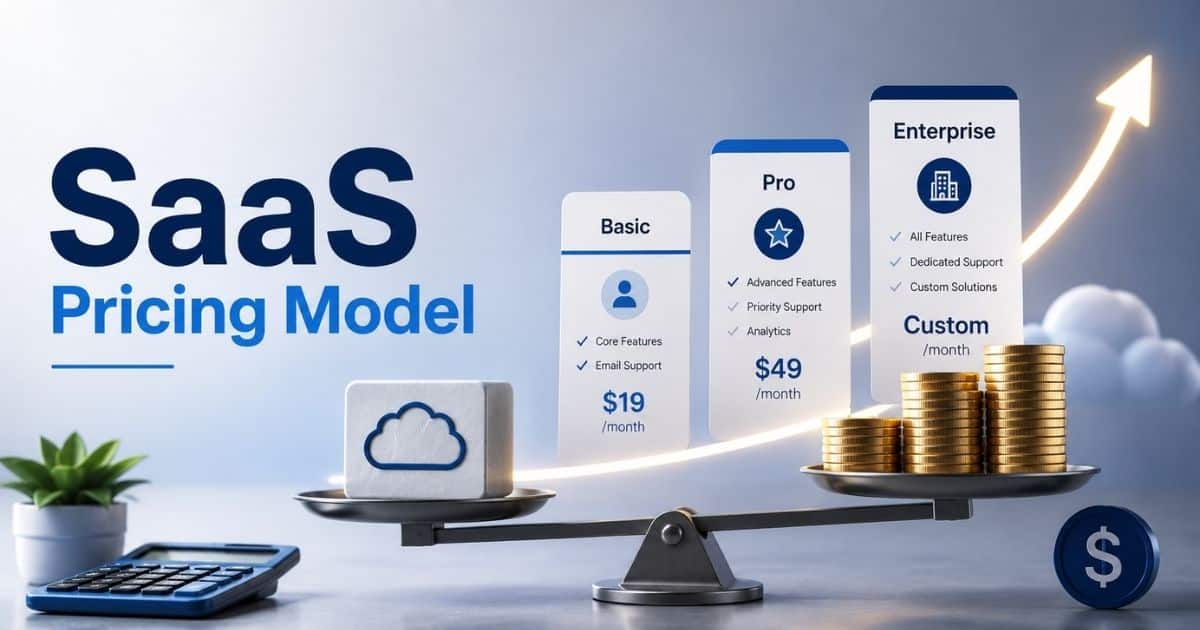
Tiered pricing offers multiple pricing tiers at different price points. Each plan includes a different set of advanced features, limits, or support options. Feature-based pricing focuses on access to specific capabilities.
This approach helps SaaS businesses serve different customer segments. Small companies can start with lower plans, while enterprises choose premium options. Studies show that tiered pricing remains one of the most common SaaS pricing models because it balances flexibility and predictable recurring revenue. Many successful SaaS companies combine tiered pricing with usage elements to maximize revenue.
Freemium And Hybrid Pricing
Freemium pricing gives free users access to basic features while charging for premium functionality. The freemium model lowers adoption barriers and helps attract potential customers.
Many companies later upgrade users to paid plans through a well-designed pricing plan. Modern SaaS pricing is also shifting toward hybrid models that combine subscriptions with usage-based pricing. Industry reports show that 61% of SaaS companies now use hybrid pricing because it supports predictable revenue and customer flexibility. Hybrid approaches help businesses align pricing with customer value while maintaining strong growth.
How To Choose The Right SaaS Pricing Model For Your Business
No pricing model works for every SaaS business. The best choice depends on your product, customers, and growth goals. A smart SaaS pricing strategy balances customer value, predictable revenue, and long-term scalability while helping you stay competitive in the market.
Know Your Customers
Your pricing should start with your customers, not your competitors. Different customer segments have different budgets, goals, and expectations. A startup and an enterprise company rarely see value in the same way.
Customer research helps you understand customer needs, price sensitivity, and customer usage patterns. Value-based pricing works best when you know what outcomes buyers truly care about and apply user-centered design for SaaS platforms. Companies that align pricing with customer value often see stronger customer retention and higher customer lifetime value. The better you know your target market, the easier it becomes to choose the right pricing model.
Match Pricing To Value
Customers pay for results, not features. A pricing model should reflect the value people receive from your SaaS product. When prices feel fair, buyers are more likely to convert and stay longer.
Value-based pricing aligns costs with perceived value. Some customers may pay more for advanced features, while others only need core tools. Successful SaaS companies focus on customer value instead of cost-plus pricing cost. Research shows companies with strong monetization strategies can significantly improve profits with even small pricing changes. A 1% improvement in monetization can increase profit by 12.7%.
Study Competitor Pricing
Competitor research helps you understand market expectations. It also shows where your product stands compared to alternatives. A good pricing strategy creates differentiation without starting a price war.
Review competitor pricing, pricing tiers, feature sets, and pricing pages carefully. Look for gaps in the market and different price points that competitors may ignore. Your goal is not to copy other pricing models. The goal is to create a competitive advantage that matches your unique value. Strong market positioning often matters more than offering the lowest price.
Choose A Scalable Model
Your pricing model should grow with your business. A wrong pricing model may limit expansion revenue or reduce profit margin as customer needs change.
Tiered pricing, per-user pricing, and usage-based pricing often scale well for growing SaaS businesses. Research shows that hybrid pricing models combining subscriptions and usage have become increasingly popular, with 61% of SaaS companies now using hybrid approaches. Companies using hybrid models also report stronger growth rates than pure subscription models when they pair them with deliberate SaaS scalability strategies.
Review Pricing Regularly
SaaS pricing is not a set-it-and-forget-it decision. Markets change, competitors evolve, and customer expectations shift over time, just as your SaaS product roadmap evolves. Regular reviews help keep your pricing structure competitive.
Many experts recommend reviewing pricing at least twice a year. Customer feedback, churn data, and monthly recurring revenue trends can reveal new opportunities. Frequent reviews also help businesses manage price increases and adjust pricing plans without surprising existing customers. Companies that revisit pricing more often tend to adapt faster and drive stronger revenue growth.
Key Factors To Consider Before Setting SaaS Pricing
Setting SaaS pricing is not about choosing random numbers. The best pricing models balance customer value, business goals, and market demand. A thoughtful pricing strategy helps SaaS companies attract customers, increase revenue, and build long-term growth.
Understand Customer Value
Customers buy outcomes, not software features. Your pricing model should reflect the value people receive from your SaaS product. When prices match results, customers feel they get a fair deal.
Value-based pricing focuses on customer value instead of development costs. Different customer segments often view the same product differently. A startup may seek affordability, while an enterprise may prioritize efficiency. Companies that align pricing with perceived value often improve customer loyalty and customer lifetime value. Strong pricing starts with understanding customer needs and expectations.
Study Your Target Market
Every target market has unique buying habits. A pricing strategy that works for small businesses may fail with enterprise buyers. Understanding your audience reduces the risk of choosing the wrong pricing model.
Customer research helps uncover price sensitivity, budgets, and usage patterns. Some customers prefer a fixed monthly price, while others favor usage-based pricing or other software services consumption models. Market insights also reveal which pricing tiers customers expect. Businesses that tailor pricing to different customer segments often improve conversion rates and retention. The more you know your audience, the easier it becomes to set effective SaaS pricing models.
Analyze Competitor Pricing
Competitor pricing offers valuable market signals. It shows how other SaaS companies position their products and what customers already expect to pay across different software development pricing models. Research helps you compete on value rather than price alone.
Review competitor pricing pages, price points, and feature sets. Compare advanced features, usage limits, and support levels across plans. Your goal is not to copy competitors. Instead, find gaps that create a competitive advantage and inform your broader SaaS product development strategy. Smart pricing models and strategies help your SaaS product stand out while protecting profit margin and revenue growth.
Focus On Revenue Predictability
A good pricing structure should support stable growth. Predictable revenue helps SaaS businesses forecast cash flow, invest confidently, and scale faster. That is why subscription models remain popular.
Recurring revenue gives businesses financial stability. Models like tiered pricing, per user pricing, and usage-based pricing balance flexibility with growth. Many successful SaaS companies now combine subscriptions with usage charges. Hybrid pricing has become more common because it supports both customer flexibility and predictable revenue streams. Industry data shows pricing flexibility continues to grow across SaaS markets.
SaaS Pricing Model Examples From Popular Companies
Looking at real companies makes SaaS pricing easier to understand. Many successful SaaS companies use different pricing models based on their products and customers. Real-world SaaS launch case studies show how their strategies and the right pricing model can drive growth, retention, and recurring revenue.
Slack Uses Per-User Pricing
Slack is one of the best examples of per-user pricing. Businesses pay based on the number of active users on their workspace. As teams grow, costs increase with the number of users.
This user pricing approach creates a predictable recurring revenue model for Slack. It also aligns pricing with customer growth. To reduce costs for customers, Slack charges only for active users instead of every registered account. Per-user pricing remains one of the most common SaaS pricing models, especially in collaboration software.
AWS Relies On Usage-Based Pricing
Amazon Web Services (AWS) popularized usage-based pricing in cloud computing. Customers pay only for storage, computing power, and other resources they use. Costs rise or fall with actual consumption.
This usage-based pricing model gives businesses flexibility. Small companies can start cheaply, while larger customers scale without changing plans. Usage-based pricing works well when customer usage patterns vary widely. AI and infrastructure platforms increasingly adopt this model because it closely matches customer value.
HubSpot Combines Multiple Models
HubSpot uses a hybrid pricing strategy. Its pricing structure combines tiered pricing, per-user pricing, and usage-based elements. Customers choose plans based on business size and feature needs.
Different pricing tiers help HubSpot serve startups and enterprises alike. Customers can upgrade as they grow and unlock advanced features. Hybrid models like this have become increasingly popular because they support expansion revenue while keeping predictable recurring revenue, especially as teams adopt cloud-first SaaS development practices. Many experts now view hybrid pricing as the future of SaaS pricing.
Zoom Grows With Seat-Based Pricing
Zoom mainly follows a per-user pricing model. Companies purchase seats for employees who need access to meetings and collaboration tools. Costs increase as teams expand.
This pricing model is simple and easy to understand. Customers know exactly what they will pay each month. Seat-based pricing remains popular because businesses can predict revenue more accurately. Yet many companies now add usage limits or extra features to create more flexible pricing plans.
Dropbox Wins With Freemium Pricing
Dropbox became famous for its freemium model. Free users receive limited storage, while paid plans unlock more space and premium tools. Freemium pricing lowers barriers for potential customers.
The strategy allows users to experience product value before paying. Once storage needs increase, customers often upgrade to paid plans. Many SaaS businesses use freemium pricing to boost adoption and customer acquisition. A strong freemium pricing model can turn free users into loyal paying customers over time.
Common SaaS Pricing Mistakes And How To Avoid Them
Even great products can fail with poor pricing. A weak SaaS pricing strategy hurts revenue, increases churn, and slows growth. Knowing the most common mistakes can help you build a pricing model that attracts customers and supports long-term success.
Ignore Customer Value
Many SaaS companies set prices based on costs or competitors. That approach often leads to a wrong pricing model. Customers care about results, not your expenses.
Value-based pricing works because it aligns pricing with customer value. Different customer segments see value differently, so one price rarely fits everyone. Companies that understand perceived value can maximize revenue without adding new features. Research shows that pricing tied to value often improves margins and customer retention. A pricing model should reflect the value customers receive, not just the cost to build the product.
Create Complex Pricing
A confusing pricing page can drive buyers away. Too many pricing tiers, hidden fees, or unclear usage limits make decisions harder. Customers want simple choices.
Clear pricing builds trust and improves customer loyalty. Studies show that most SaaS buyers prefer transparent pricing because it reduces uncertainty during purchase decisions. Around 75% of SaaS companies publicly display pricing in some form, highlighting the growing importance of transparency. A simple pricing structure helps potential customers compare plans quickly and choose the right fit.
Copy Competitor Pricing
Competitor pricing provides useful insights, but copying it blindly can be risky. Your SaaS product may serve a different target market or solve a different problem.
Effective SaaS pricing models depend on customer needs and product value. A pricing strategy should create a competitive advantage instead of matching competitors. Businesses that rely only on competitor pricing often leave revenue on the table. Experts warn that pricing should reflect your unique value proposition and customer expectations rather than market averages alone.
Skip Pricing Reviews
Market conditions change fast. Customer expectations evolve, and competitors launch new offers. Pricing that worked two years ago may no longer fit today.
Regular reviews help SaaS businesses stay competitive. Many pricing experts recommend reviewing pricing at least twice a year. Companies that revisit pricing regularly often achieve faster revenue growth and better monetization. Research also suggests that annual pricing reviews can contribute to stronger business performance over time. Small adjustments can have a major effect on recurring revenue and profit margin.
Offer Excessive Discounts
Discounts can help close deals, but too many discounts reduce profit. Customers may also delay purchases if they expect lower prices later.
Research shows that a 10% discount can reduce profit significantly even when sales volume rises. Instead of heavy discounts, focus on customer value and long-term customer lifetime value. Smart SaaS pricing strategies use discounted price offers carefully and communicate value clearly. Strong pricing discipline protects profit margin while helping businesses retain existing customers and attract new ones.
How To Test And Optimize Your SaaS Pricing Strategy
Great pricing is never permanent. Markets change, competitors adjust, and customer expectations evolve over time. The best SaaS companies treat pricing as an ongoing process. Regular testing helps optimize revenue, improve retention, and keep your pricing model competitive.
Listen To Customer Feedback
Your customers can tell you whether pricing feels fair or confusing. Customer feedback reveals pain points that analytics alone may miss. It also helps uncover what features customers value most.
Survey both paying and free users regularly. Ask what they would pay for and which features matter most. Different customer segments often have different expectations. Strong feedback loops help align pricing with customer value and reduce churn. Companies that listen to customers often build stronger customer loyalty and better long-term retention. Pricing decisions work best when customer needs stay at the center.
Run Pricing Experiments
Testing pricing changes reduces guesswork. Small experiments help businesses discover the right pricing model without affecting the entire customer base. A/B testing remains one of the most effective methods.
Test different price points, pricing tiers, or feature bundles with new users first. You can also compare monthly and annual plans or trial offers. Pricing experiments should measure more than conversions. Customer lifetime value, retention, and expansion revenue matter too. Experts recommend testing pricing carefully because even small changes can affect trust and brand perception.
Track Key Revenue Metrics
Data should guide every pricing strategy. Metrics help SaaS businesses understand whether their pricing structure supports growth. Without data, pricing decisions become risky.
Monitor monthly recurring revenue, churn, customer lifetime value, and profit margin regularly. Watch how price increases affect customer retention and revenue growth. Research shows that many SaaS companies now focus more on monetization as acquisition costs continue to rise and SaaS development costs become more scrutinized. A strong recurring revenue model depends on healthy unit economics and sustainable growth.
Review Competitor Changes
Competitor pricing changes frequently. A pricing plan that worked last year may no longer fit today's market. Regular reviews help maintain your competitive advantage.
Study competitor pricing pages, usage limits, and advanced features at least twice a year. Look for gaps in different price points and customer segments. The goal is not to copy competitors. Instead, use market insights to improve your own SaaS pricing strategy. Smart companies adapt quickly while keeping customer value at the center of every pricing decision. Continuous review supports long-term revenue growth.
Adjust Pricing Over Time
A pricing strategy should evolve with your product. New features, customer usage patterns, and market trends often require updates. Static pricing can limit growth.
Modern SaaS pricing models change as businesses scale. Many companies now experiment with hybrid approaches that combine subscriptions and usage-based pricing. Research shows that pricing optimization and SaaS performance optimization best practices are some of the fastest ways to increase revenue without building new features. Regular reviews help maximize revenue while keeping existing customers satisfied. Small changes made consistently often create the biggest long-term gains.
Essential SaaS Metrics To Influence Pricing Decisions
Great pricing is built on data, not guesswork. The right metrics show how customers behave, how much value they receive, and where revenue comes from. Tracking key SaaS metrics helps businesses optimize pricing and make smarter growth decisions.
Watch Monthly Recurring Revenue
Monthly recurring revenue is one of the most important SaaS metrics. It shows how much predictable income your business generates every month. Strong MRR helps SaaS companies predict revenue and plan future growth.
A rising MRR often means your pricing model is working well. If MRR slows down, your pricing strategy may need adjustments. Track revenue from new customers, existing customers, and expansion revenue separately. Businesses with stable recurring revenue usually have stronger financial health and better long-term growth opportunities. MRR also helps measure the impact of price increases and new pricing plans.
Measure Customer Lifetime Value
Customer lifetime value shows how much revenue a customer generates over time. The metric helps businesses understand whether customer acquisition costs are sustainable and whether their underlying scalable software architecture supports profitable growth. A higher customer lifetime value often signals a healthy business.
Pricing directly affects customer lifetime value. Strong value-based pricing can increase revenue without adding new features. Experts suggest an LTV ratio above 3:1 for sustainable growth, while many top-performing SaaS companies achieve ratios above 3.6:1. Businesses that improve retention often see significant gains in profitability and customer loyalty.
Track Customer Churn Rate
Customer churn measures how many customers cancel subscriptions over time. High churn can signal poor product fit or a wrong pricing model. Even a great SaaS product struggles when customers leave too quickly.
Recent benchmarks show that average B2B SaaS churn is around 4.9% annually, while top companies often maintain churn below 1% per month. Customer feedback, strong SaaS UX that reduces churn, and pricing reviews help reduce churn and improve retention. A pricing structure that aligns pricing with customer value usually keeps customers longer and increases recurring revenue.
Monitor Acquisition Costs
Customer acquisition cost measures how much you spend to acquire each customer. The metric helps determine whether your pricing model supports profitable growth. Rising costs can quickly reduce profit margin.
Recent industry data shows that acquisition costs have increased across SaaS markets in recent years. Companies now spend about $2 to acquire every $1 of new ARR at the median level. Businesses should regularly compare acquisition costs with customer lifetime value to maximize revenue and maintain healthy growth. Efficient SaaS pricing strategies often improve both profitability and scalability.
Review Revenue Retention
Net revenue retention measures revenue growth from existing customers after upgrades, downgrades, and churn. The metric reveals whether customers expand their spending over time. Strong retention often signals a successful pricing strategy.
Industry benchmarks suggest that healthy SaaS businesses maintain net revenue retention above 100%, while top-performing companies exceed 110%. Strong pricing tiers, advanced features, and flexible plans encourage expansion revenue from existing customers. Businesses with high retention usually grow faster because customer value increases over time. A good SaaS pricing model should support both retention and expansion.
Impact Of SaaS Pricing Trends On The Future Of Software Businesses
SaaS pricing is changing faster than ever. AI, customer expectations, and new technologies are pushing companies to rethink how they charge for software and how they invest in scalable SaaS tools and development. Businesses that adapt early can improve growth, strengthen customer relationships, and stay ahead of competitors.
Hybrid Pricing Is Becoming The Standard
Traditional pricing models are losing ground. Many SaaS companies now combine subscriptions with usage-based pricing to create more flexible plans, which must sit on top of robust SaaS architecture best practices. Customers want predictable costs while paying for actual value.
Recent industry data shows that 61% of SaaS companies use hybrid pricing models, and adoption continues to rise. Hybrid approaches help businesses balance recurring revenue with expansion revenue opportunities. Companies with hybrid models often report stronger growth because pricing aligns more closely with customer usage patterns and needs.
AI Is Changing Pricing Models
AI tools have changed how software delivers value. Many AI products rely on tokens, API calls, or compute usage instead of seat counts. Traditional per user pricing does not always fit this model.
As AI adoption grows, usage-based pricing and dynamic pricing are becoming more common. Businesses now charge based on customer activity rather than the number of users. This shift creates fairer pricing and helps customers pay only for what they use. Integrating AI into SaaS products and AI-driven pricing models also help SaaS businesses maximize revenue while keeping costs aligned with customer value.
Value-Based Pricing Gains Momentum
Customers care less about features and more about outcomes. A pricing model that reflects customer value often performs better than one based on costs alone. That is why value-based pricing continues to grow.
Companies that align pricing with perceived value often see stronger customer loyalty and better customer retention. Different customer segments place different values on the same product. Businesses that understand those differences can create effective SaaS pricing models and improve profit margin without adding new features. Value-based pricing is becoming a key competitive advantage in modern SaaS markets.
Transparent Pricing Builds Trust
Customers expect clear pricing and predictable bills. Hidden fees and complex pricing structures can hurt trust and increase churn. A simple pricing page often performs better than a confusing one.
Modern SaaS companies focus on transparency by showing usage limits, price points, and billing details clearly. Real-time usage tracking has also become more common in usage-based pricing models. Businesses that communicate pricing changes effectively often maintain stronger relationships with existing customers and improve customer satisfaction. Transparency has become an essential part of every successful pricing strategy.
Continuous Optimization Drives Growth
The future of SaaS pricing will not be static. Companies regularly test pricing plans, collect customer feedback, and adjust their pricing structure as markets evolve. Regular reviews help businesses stay competitive.
Research shows that pricing optimization can deliver outsized returns. Even a 1% improvement in monetization can significantly increase profit. Experts also recommend reviewing pricing at least twice a year to adapt to changing customer needs and market conditions. Businesses that treat pricing as an ongoing process often achieve stronger revenue growth and long-term success.
Final Thoughts
Choosing the right SaaS pricing model is not about finding a perfect formula. It is about understanding your customers, testing different approaches, and adapting as your business grows. The best pricing strategy aligns with customer value, supports recurring revenue, and creates room for long-term growth.
Modern SaaS companies no longer rely on one fixed approach. Hybrid pricing, value-based pricing, and usage-based pricing are becoming more common as customer expectations evolve. Research even shows that a 1% improvement in monetization can increase profit by 12.7%, proving how powerful pricing decisions can be.
The key is to keep pricing simple, transparent, and flexible. Review your pricing regularly, listen to customer feedback, and refine your model over time. A strong SaaS pricing strategy does more than generate revenue. It helps build trust, improve retention, and create a lasting competitive advantage in an increasingly crowded market.
FAQs
Can A SaaS Company Change Its Pricing Model Later?
Yes, SaaS companies can change their pricing model as customer needs and markets evolve. Many businesses move from flat rate pricing to hybrid or usage-based pricing models as they grow. Clear communication about price changes helps maintain customer trust and customer retention.
Is A Freemium Pricing Model Right For Every SaaS Product?
No, a freemium pricing model does not work for every SaaS product. Freemium pricing is most effective when free users can quickly experience value and upgrade for advanced features. Products with high support or infrastructure costs may struggle with this pricing strategy.
How Often Should SaaS Companies Update Their Pricing Page?
Your pricing page should be reviewed regularly, especially after feature updates, market changes, or competitor pricing shifts. Many experts recommend reviewing SaaS pricing at least twice a year to ensure your pricing structure remains competitive and aligned with customer value.
Can Dynamic Pricing Improve Revenue In SaaS?
Yes, dynamic pricing can help SaaS businesses maximize revenue by adjusting prices based on customer usage patterns, demand, or market conditions. This pricing strategy is becoming more common in AI and cloud-based SaaS products that rely on usage-based pricing.
What Is The Difference Between Per User Pricing And Per Active User Pricing?
Per-user pricing charges customers for every user added to the platform, while per active user pricing bills only for users who actively use the software. Many SaaS companies prefer per active user pricing because it better aligns pricing with customer value and usage.