Software Architecture Patterns For Modern SaaS In 2026
by Rhea Collins | Jun 7, 2026 | Technology & Innovation
Table of Contents
- Software Architecture Patterns For SaaS Platforms
- SaaS Architecture Fundamentals And Multi-Tenancy
- Distributed Systems Patterns In SaaS Architecture
- Feature Flags, Experimentation, And SaaS Evolution
- Right Architecture Pattern For Your SaaS
- How GainHQ Helps Teams Design And Evolve SaaS Architectures
- FAQs
Modern SaaS has moved far beyond the single-tenant web apps that dominated the late 2000s. AWS launched S3 in March 2006 and EC2 in August 2006, which gave software teams elastic storage and compute for the first time at broad commercial scale. Kubernetes arrived in 2014 and made container orchestration mainstream. Serverless then grew through the late 2010s and early 2020s for bursty workloads, background jobs, and event-based data processing.
Modern SaaS Architecture In Context means a platform must support high availability, automated scaling, secure data storage, rapid software development, and strong cost efficiency. SaaS architecture must ensure high availability and scalability because multiple customers depend on the same product every day. Multi-tenancy is a key requirement in SaaS architecture, and each tenant expects performance, privacy, and reliability even when shared resources are involved.
Architecture patterns are not the same as design patterns. Architecture patterns define the overall structure of the system, such as monolith, microservices architecture, event-driven architecture, or serverless.
Software Architecture Patterns For SaaS Platforms
Software architecture patterns provide reusable solutions for structural issues in software systems. Enterprise architecture patterns address system-wide concerns in software development, and these patterns help reduce technical risk in critical business systems. Well-chosen patterns provide flexibility for future growth and change, but choosing an appropriate pattern depends on project-specific requirements and complexity, and aligns closely with broader best practices of SaaS architecture.
Layered And Modular Monolith Architectures
Layered architecture organizes components into horizontal layers. Common layers include presentation, business logic, and data access. Layered architecture organizes components into horizontal layers for specific roles, and layered architecture organizes components into horizontal layers for clarity. A typical saas application may include a web interface, an application layer for business logic, and a data access layer that manages database queries.
Layered architecture is suitable for traditional enterprise applications because responsibilities are easy to understand. A modular monolith improves the model by dividing the entire application into modules such as billing, user authentication, reporting, tenant administration, and notifications. Seed-stage saas startups with fewer than 10 engineers often benefit from a modular monolith because deployment, debugging, and local development stay simple, especially when they compare microservices vs monolith architecture for their product.
Microservices Architecture For Core SaaS Domains
Microservices architecture enables independent development and scaling of services. Microservices architecture enables independent deployment of services, and microservices architecture allows independent scaling of application components. In SaaS, independent services often map to business capabilities such as Auth, Tenant, Billing, Usage Tracking, Reporting, and Notification, which is key when designing scalable software architecture for high-growth products.
Microservices are independently deployable and can be developed using different programming languages. A billing service may use Java, a notification service may use Node.js, and a reporting service may use Python if those choices support the team. Microservices are ideal for large applications with diverse functionalities, especially when different teams need to own different domains.
Microservices architecture requires a mature DevOps culture for success. Mature CI/CD, automated rollback, monitoring tools, distributed tracing, and strong incident response are not optional.
Event Driven Architecture For Real Time SaaS Features
Event-driven architecture uses events such as SubscriptionCreated, InvoicePaid, FeatureFlagUpdated, or SeatAdded. Event-driven architecture relies on producing and consuming events. Components communicate through events rather than direct calls, which creates loose coupling between services.
Event-driven architecture allows components to communicate through events asynchronously. Event-driven architecture is suitable for real-time data processing applications. It is well-suited for real-time data processing applications such as usage metering, audit trails, and real-time dashboards. Event-driven architecture enables real-time data processing through events and can enhance system flexibility and scalability.
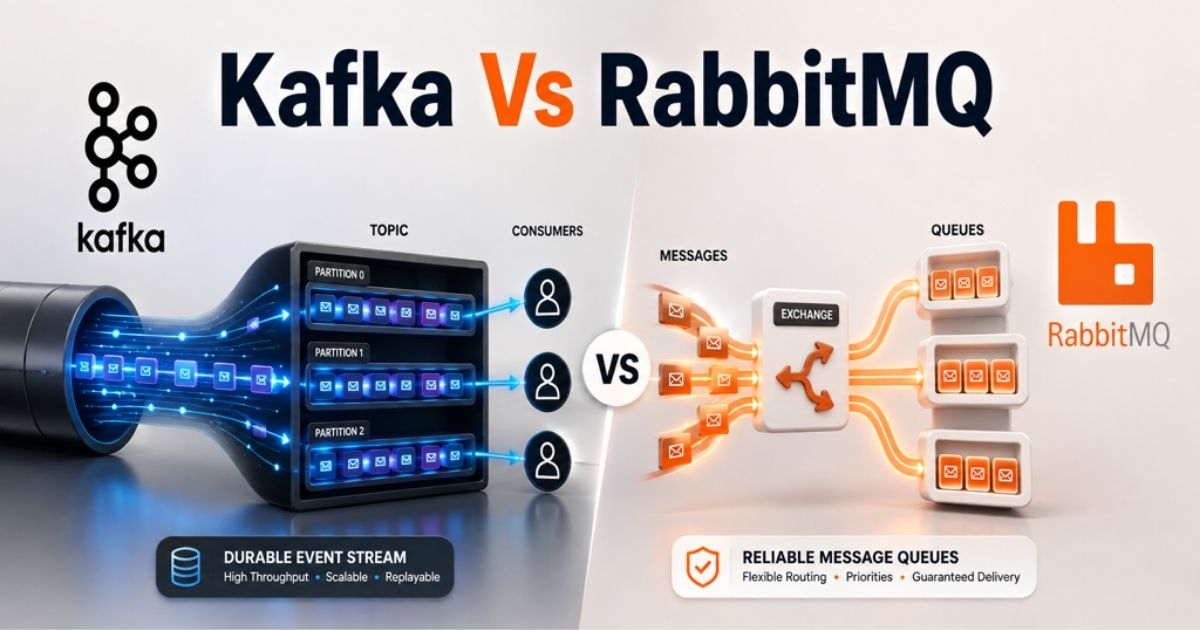
Kafka, AWS Kinesis, Google Pub/Sub, and other event brokers are common implementation options. The main design work includes event versioning, schema evolution, idempotent consumers, and careful handling of at-least-once delivery.
Hexagonal And Clean Architectures For Core Services
Hexagonal architecture, also called ports and adapters, separates core business logic from infrastructure. A PricingService can depend on interfaces for plan catalogs, discount rules, and payment providers rather than concrete databases, queues, or external APIs.
The result is better testability and fewer direct dependencies. If a saas platform changes from PostgreSQL to a managed data storage service, or replaces a third-party billing API, only adapters should change. The business logic remains stable.
Clean architecture works well inside a monolith and inside a microservices architecture. It is especially useful for domains where rules change often, such as pricing, permissions, tenant limits, and entitlements.
CQRS And Event Sourcing In Usage Heavy SaaS
CQRS separates read and write operations for independent optimization. A subscription command model may handle upgrades, downgrades, and seat changes, while a read model supports dashboards and reporting. CQRS separates read and write operations for independent optimization when read traffic is much higher than write traffic.
Event sourcing stores changes as a sequence of events such as SeatAdded, SeatRemoved, or PlanChanged. The current state is reconstructed from event history, often with snapshots for performance. Regulated industries may value event sourcing because audit trails become part of the data model.
CQRS and event sourcing can improve reporting and compliance, but they add storage overhead, projection rebuild work, and developer learning cost. A PaaSAGE research prototype using Akka, Cassandra, Kafka, and Neo4J showed horizontal scalability across read and write models, but failed implementations also exist when tooling and data models do not match the workload, underscoring general principles of scalable software architecture for high-growth products.
Serverless And Managed Services In SaaS Architectures
Serverless architecture minimizes operational costs and engineering time on infrastructure. AWS Lambda, Azure Functions, and Google Cloud Functions work well for bursty jobs such as CSV imports, webhook handling, image processing, scheduled reports, and background data processing.
A SaaS team may keep the main saas application in a modular monolith or microservices architecture while offloading spiky workloads to serverless functions triggered by queues or object storage events. Pay-per-use economics help cost efficiency when workloads are irregular and align with future of SaaS development in a cloud-first world practices.
Cold starts, debugging complexity, vendor lock-in, and observability gaps still matter. Serverless works best when latency is not ultra-critical and when development teams want to reduce infrastructure ownership for narrow, well-bounded tasks.
SaaS Architecture Fundamentals And Multi-Tenancy
Multi-tenancy and tenant-aware architecture are defining traits of SaaS. The architecture affects cost structure, data isolation, security measures, resource utilization, and the trust enterprise clients place in the product, and it underpins many SaaS scalability strategies for sustainable growth.
Tenant Isolation Strategies And Data Models
The three common data models are shared schema, schema-per-tenant, and database-per-tenant. A shared schema uses the same database and tenant_id columns for row-level separation. It is cost-efficient and easy to operate, but missing tenant filters can expose data, and heavy tenants can slow others.
Schema-per-tenant gives stronger logical separation. Database-per-tenant gives the strongest isolation and is often preferred for regulated industries, but broad use can cost 3 to 5 times more than shared models. Some Postgres production guidance places shared row-level systems around 5,000 tenants per cluster, separate schemas up to about 3,000 schemas per database, and database-per-tenant around 200 to 500 databases per cluster before sharding or cross-cluster operations become difficult.
Core Services In A Multi Tenant SaaS Platform
core services usually include Identity, Tenant Management, Billing, Feature Management, Notification, and Audit Logging. Each service must carry tenant context through requests, events, logs, and permissions.
User authentication should confirm both the user and the tenant. Tenant Management should control quotas, limits, plans, and region placement. Audit Logging should capture who changed what, when, and under which tenant.
Centralized services reduce duplication, but too much shared business logic in one service creates bottlenecks. Better service boundaries keep services loosely coupled through APIs, events, or contracts.
Multi Region And Data Residency Considerations
Global SaaS often needs multi-region architecture to reduce latency and satisfy data residency requirements. EU customers may require EU-only data storage, while other regions may have their own retention, encryption, or access rules.
Active-active architecture lets multiple regions serve reads and writes. Active-passive architecture uses a primary region and a failover region. Each model needs clear recovery point objectives, recovery time objectives, backups, and regular failover tests.
Configuration, feature flags, and schemas must stay consistent across regions while tenant data remains isolated where required. Automated scaling adjusts resources based on current demands, but regional operations still need careful runbooks, similar to what is recommended in many cloud migration strategy initiatives.
Security, Compliance, And Tenant Trust
Data security involves encryption at rest and in transit. Strong SaaS security also requires secrets management, fine-grained RBAC, least-privilege IAM policies, secure object storage, protected caches, and tenant-specific access controls, all of which are pillars of a robust SaaS security architecture best practices guide.
SOC 2, ISO 27001, PCI DSS, and HIPAA programs become easier when architecture supports traceable access, environment separation, immutable audit logs, and controlled deployment paths. Regular security assessments help identify vulnerabilities before they become incidents and should be combined with forward-looking SaaS security best practices for 2026.
Shared infrastructure needs the same care as databases. Queues, caches, search indexes, and file storage must include tenant context and access controls so one tenant cannot see another tenant’s data.
Performance, Scalability, And Noisy Neighbors
Noisy neighbor problems occur when one tenant consumes enough CPU, memory, database capacity, or queue throughput to hurt others. Rate limiting, quotas, query timeouts, tenant tiers, and workload isolation reduce the risk.
Vertical scaling adds more power to existing nodes. Horizontal scaling adds more nodes, shards, replicas, or workers. Patterns facilitate horizontal scaling and modularization when the system is structured around clear modules and service boundaries.
Useful metrics include P95 latency by endpoint, throughput by tenant, error rate, queue lag, database load, and per-tenant resource utilization. Free, standard, and enterprise tiers may need different SLAs at the architecture level.
Distributed Systems Patterns In SaaS Architecture
A SaaS product becomes a distributed system when services run across processes, networks, or regions. Distributed systems introduce partial failures, latency variance, retries, and eventual consistency. Good system design treats those risks as normal operating conditions.
API Gateway And Edge Routing
An API gateway provides one entry point for client traffic. It can handle TLS termination, authentication, authorization, routing, request transformation, throttling, and rate limiting.
A practical setup places the api gateway in front of Auth, Tenant, Billing, Reporting, and Usage services. The gateway can enforce tenant quotas, route API versions, and support gradual migration during modernization.
OpenAPI specifications, version headers, and canary routing help teams introduce new features safely. Centralized gateway logs also improve observability across other services.
Circuit Breakers, Timeouts, And Bulkheads
Circuit breakers stop repeated calls to a failing dependency so one outage does not cascade through the platform. Hystrix popularized the idea, while modern Java teams often use Resilience4j and cloud-native controls.
Timeouts should be explicit. Retries should be limited. Fallbacks should match the customer impact. Email delivery can retry later, but payment confirmation may need stronger guarantees.
Bulkheads isolate resources between tenants, APIs, or service groups. One overloaded reporting job should not block order processing, login, or subscription changes.
Saga Pattern For Cross Service Workflows
The saga pattern coordinates multi-step workflows without relying on distributed transactions. A signup flow may create an identity record, tenant record, billing subscription, usage account, and default permissions.
Orchestration uses a central coordinator. Choreography lets services react to events. Orchestration is easier to trace, while choreography often gives more loose coupling.
Compensating actions keep data consistency acceptable when partial failure happens. If billing succeeds but entitlement setup fails, the saga may retry entitlement setup, pause access, or reverse the billing change.
Message Queues And Pub/Sub
Queues and pub-sub topics decouple slow or unreliable work from customer-facing requests. Email delivery, invoice reconciliation, webhook retries, analytics, and data warehouse exports are common examples.
Point-to-point queues are useful when one worker group owns a job. Pub-sub works when analytics, notifications, and audit services all need the same event. Idempotency and deduplication are essential for billing and financial events.
Managed services such as AWS SQS and SNS, Google Pub/Sub, or Azure Event Hubs reduce operational load for saas development teams.
Service Discovery, Configuration, And Observability
service discovery helps services locate each other as containers scale up, restart, or move. Kubernetes DNS, cloud registries, and service meshes can support discovery, although some teams now avoid heavy meshes unless the operational value is clear.
Configuration management should cover database connection strings, secrets, feature flags, tenant limits, and region settings. Secure storage and versioned changes reduce deployment risk.
Observability should include structured logs, metrics, traces, SLOs, and alerts. Standard SLIs include latency, availability, error rate, saturation, and queue delay.
Feature Flags, Experimentation, And SaaS Evolution
Feature flags let teams ship software to production while controlling which tenants, users, regions, or plans can access new behavior. They support safer releases, product experiments, operational kill switches, and entitlement management, and are a recurring topic across our GainHQ blog.
Types Of Feature Flags In SaaS Architectures
Release toggles hide unfinished new features. Experiment toggles support A/B tests. Operational toggles act as kill switches. Permission flags control plan access for tenants.
A SaaS team might enable a new analytics module only for enterprise clients, or route 5% of tenants to a revised billing engine. Flags can apply at user, tenant, region, environment, or plan level.
Flag configuration should live in an audit-friendly system instead of hardcoded constants. The platform should record who changed a flag and why.
Feature Flag System Architecture
Feature flag implementation options include an in-house configuration service, a third-party platform, or a hybrid model. The best choice depends on latency, compliance, cost, and integration needs.
Flag checks happen often, so local caching matters. Streaming updates or periodic refreshes can keep backend services, frontends, and mobile clients consistent.
Multi-region SaaS needs controlled propagation. A flag that disables a failing feature should update quickly, but sensitive regional overrides must respect local compliance rules.
Experimentation And Data-Driven Product Decisions
Product teams use feature flags to test user onboarding flows, pricing pages, activation paths, and feature adoption. Strong experiments need event tracking, stable tenant and user identifiers, reliable analytics pipelines, and privacy controls, all of which benefit from consistent SaaS design systems for scalable products.
A team may compare a new user onboarding flow with the current one and measure activation rate, support tickets, and retention. Guardrail metrics such as latency, errors, and failed payments prevent product experiments from harming reliability. Statistical discipline matters. Small samples and unclear success metrics can lead to bad product decisions.
Operational Safety, Kill Switches, And Rollbacks
Operational flags give teams a fast way to disable risky behavior without redeploying. A failing report generator, slow recommendation feature, or unstable third-party integration can be turned off for one tenant, one region, or the whole product.
Critical flags need owners, permissions, and audit logs. Incident responders should know which flags can reduce blast radius and who is allowed to change them.
Clear naming helps engineers understand purpose and risk. A flag named billing_v2_enterprise_rollout is safer than new_billing_flag.
Feature Flag Lifecycle And Debt
Stale flags create branching logic, confusing tests, and hard-to-predict behavior. Patterns improve maintainability by promoting structured codebases, but feature flag debt can still damage maintainability over time.
Each flag should have an owner, purpose, expiry date, and cleanup task. Automated reports can show flags that are always on or always off in production.
Healthy flag governance keeps the saas platform adaptable as new features, regions, and pricing plans appear.
Right Architecture Pattern For Your SaaS
The right architecture pattern should match business goals, current constraints, and future needs. Trend-driven architecture often creates cost and complexity before the product needs it, so it should always be evaluated in the broader context of end-to-end SaaS product development.
Product Stage And Team Size
Pre-product-market-fit teams usually need speed of learning more than distributed sophistication. A single-region modular monolith is often enough for early saas products, as illustrated in several successful SaaS launch stories.
When the user base grows, different teams form around domains, and release frequency increases, service decomposition becomes more useful. Billing, authentication, and reporting are common early extraction candidates.
A practical path may move from MVP monolith to modular monolith, then to selected independent services. Full microservices architecture should wait until the team can operate it well.
Domain Complexity And Compliance Requirements
Complex workflows, fast-changing rules, and multiple bounded contexts make stronger architecture more valuable. Domain-Driven Design workshops can identify where robust boundaries are worth the cost.
Healthcare, fintech, HR, and government SaaS often need stronger data isolation, audit trails, retention policies, and regional controls. Database-per-tenant and event sourcing may be justified for regulated industries, much like the tailored platforms described in our work on how custom software transformed companies.
Legal, security, compliance, product, and engineering stakeholders should shape architectural decisions together. Compliance discovered late often becomes expensive rework.
Scale, Reliability, And Cost Efficiency
Good planning starts with 12 to 24-month scenarios: expected tenants, traffic per tenant, storage growth, integrations, and support needs. Those numbers guide compute, data storage, caching, and scaling choices and form the basis of effective SaaS scalability strategies.
A monolith usually has the lowest initial operational cost. Microservices add CI/CD, networking, observability, and testing costs. Serverless can reduce idle cost for bursty jobs but may add debugging and vendor constraints.
Reliability targets such as 99.9% or 99.95% uptime should guide redundancy, failover, backups, and distributed systems patterns. Simple, observable architecture often beats complex architecture at moderate scale.
Incremental Modernization And Strangler Patterns
The strangler pattern helps teams replace legacy parts gradually. An api gateway can route selected traffic to a new billing service while the old monolith still handles the rest.
Good candidates for extraction are domains with clearer boundaries, high business value, or operational pain. Reporting, billing, notification, and authentication often fit, as seen in our case study on software build vs buy where custom software won.
Data synchronization, duplicate writes, migration scripts, and rollback plans need careful attention. Feature flags help teams shift traffic safely and reverse changes quickly.
Architecture Governance And Documentation
Growing SaaS organizations need lightweight governance so architecture does not diverge across teams. Architecture guilds, design reviews, service catalogs, and Architecture Decision Records keep decisions visible and complement broader SaaS product development practices around planning, launch, and scale.
Documentation should include diagrams, APIs, owners, dependencies, runbooks, and known trade-offs. Living documentation helps new engineers build a good understanding of the overall structure.
Governance should not slow delivery. The goal is clearer decisions, safer changes, and better alignment between software architecture and business needs.
How GainHQ Helps Teams Design And Evolve SaaS Architectures
GainHQ helps founders, product teams, and growing businesses make practical architecture decisions for custom software development services, SaaS Solutions, MVP Development, UI and UX Design, Technology Consulting, and AI-Integrated SaaS Solutions.
Our work starts with the real product and business context. We assess the current architecture, service boundaries, data flows, deployment process, observability, tenant model, security measures, and performance risks. The goal is to identify where the architecture supports growth and where it creates drag, similar to our broader tech consulting services that help modern businesses grow.
GainHQ helps teams choose architecture patterns that fit their stage. A startup may need a modular monolith with clean modules and strong test coverage. A scaling SaaS company may need selected independent services, event-driven architecture for usage data, or a clearer multi-tenancy model. A regulated product may need stronger audit logging, data isolation, and compliance-ready workflows, often in parallel with a well-planned cloud migration strategy for enterprises.
We also support migration roadmaps. That may mean moving from a monolith to a microservices architecture, improving feature flags, introducing an api gateway, hardening core services, or preparing data models for enterprise clients. Each recommendation focuses on delivery speed, reliability, cost efficiency, and long-term adaptability.
FAQs
How Early Should A SaaS Startup Invest In Complex Architecture Patterns?
Very early, teams should usually avoid complex distributed architecture. A well-structured modular monolith, clear module boundaries, automated tests, and secure multi-tenancy often matter more than microservices. Security and tenant isolation still need attention from day one, especially if early decisions will later impact smooth cloud migration planning for growing teams.
Can A SaaS Product Successfully Move From Monolith To Microservices Later?
Yes. Many SaaS products move from monolith to microservices gradually. The safest path uses the strangler pattern, strong observability, clear service boundaries, and incremental extraction of domains such as billing, authentication, reporting, or notifications.
How Do Architecture Patterns Affect SaaS Compliance Efforts?
Architecture can make compliance easier or harder. Event sourcing, centralized audit logging, environment separation, encryption, and database-per-tenant models can make access and change history easier to prove. Unstructured shared data stores and unclear integrations can slow audits and raise risk.
What Is The Relationship Between Design Patterns And Architecture Patterns In SaaS?
Architecture patterns shape the system structure, such as microservices architecture, event-driven architecture, serverless, or layered architecture. Design patterns solve smaller implementation problems inside modules and services. Strong SaaS systems usually need both.
How Often Should A SaaS Team Revisit Its Architecture Decisions?
A SaaS team should review architectural decisions at least annually and after major changes such as entering a regulated market, doubling active tenants, expanding to a new region, or adding major enterprise requirements. Architecture Decision Records and operational metrics help teams identify needed changes early.